The Brookings Institute hypothesizes that a heightened police presence reduces violent crime. Yet as Malcolm X points out, Black neighborhoods have some of the highest violent crime rates even though they are some of the most heavily policed areas in the country. Malcolm X’s question is still relevant fifty years later. Does an increased police presence have the adverse effect of agitating community violence?
Thepresumption of innocence, an ancienttenet of Criminal Law, is actually a misnomer.According to theU.S.SupremeCourt,thepresumption of theinnocence of a criminaldefendant is bestdescribed as an assumption of innocencethat is indulged in theabsence of contraryevidence (Taylor v. Kentucky, 436U.S.478, 98S. Ct.1930, 56 L. Ed. 2d 468[1978]). It is notconsideredevidence of the defendant’sinnocence,and it doesnotrequirethat a mandatoryinferencefavorable to thedefendant be drawnfromanyfacts in evidence. Continue reading The Presumption of Innocence→
“Theology is an understanding which both grows and, in a certain sense, changes. If the commitment of the Christian community in fact takes different forms throughout history, the understanding which accompanies the vicissitudes of this commitment will be constantly renewed and will take untrodden paths.”
“Much contemporary theology seems to start from the challenge of the nonbeliever. He questions our religious world and faces it with a demand for profound purification and renewal.
…But the challenge in a continent like Latin America does not come primarily from the man who does not believe, but from the man who is not a man, who is not recognized as such by the existing social order: he is in the ranks of the poor, the exploited; he is the man who scarcely knows that he is a man. His challenge is not aimed first at our religious world, but at our economic, social, political, and cultural world; therefore, it is an appeal for a revolutionary transformation of the very basis of a dehumanizing society.
The question is not therefore how to speak of God in an adult world, but how to proclaim Him as a Father in a world that is not human.”
– Gustavo Gutierrez, “Liberation, Theology, and Proclamation” (1974)
“In our theological efforts we have called this ‘Theology of Liberation’ because ‘liberation’ is very often translated to ‘salvation.’ How do we say to the poor, ‘God loves you’? This question is larger than our answers. It means it is an open question, and we try in this liberation theology, and I can say in the different liberation theologies, to try to answer this point.”
– Gustavo Gutierrez, remarks at Elmhurst College (2009)
Love of Neighbor
“One of the teachers of the law came and heard them debating. Noticing that Jesus had given them a good answer, he asked him, “Of all the commandments, which is the most important?
“The most important one,” answered Jesus, “is this: ‘Hear, O Israel: The Lord our God, the Lord is one. Love the Lord your God with all your heart and with all your soul and with all your mind and with all your strength.’ The second is this: ‘Love your neighbor as yourself.’ There is no commandment greater than these.”
– Mark 12:28-31, New International Version
“Love of neighbor is an essential component of Christian life. But as long as I apply that term only to the people who cross my path and come asking me for help, my world will remain pretty much the same. Individual almsgiving and social reformism is a type of love that never leaves its own front porch.
… On the other hand my world will change greatly if I go out to meet other people on their path and consider them as my neighbor, as the good Samaritan did… The Gospel tells us that the poor are the supreme embodiment of our neighbor. It is this option that serves as the focus for a new way of being human and Christian in today’s Latin America.”
– Gustavo Gutierrez, “Liberation Praxis and Christian Faith” (1979)
Christian Duty to Address Social Injustice
“Defend the cause of the weak and fatherless; maintain the rights of the poor and oppressed. Rescue the weak and needy; deliver them from the hand of the wicked.”
– Psalm 82:3-4, New International Version
“The Christian faithful are also obliged to promote social justice and, mindful of the precept of the Lord, to assist the poor.”
– 1983 CIC, canon 222.2
“According to Catholic teaching, through one’s words, prayers and deeds one must show solidarity with, and compassion for, the poor. Therefore, when instituting public policy one must always keep the ‘preferential option for the poor’ at the forefront of one’s mind. Accordingly, this doctrine implies that the moral test of any society is; ‘how it treats its most vulnerable members.’ The poor have the most urgent moral claim on the conscience of the nation. We are called to look at public policy decisions in terms of how they affect the poor.”
– Option for the Poor, Major themes from Catholic Social Teaching, Archdiocese of St. Paul & Minneapolis.
“I am not refusing the necessity, even today, of immediate help to the poor, but I say it is not enough. Today the call is to try to change the social structure and to change some mental categories—to be clearer about mental categories, the feeling of superiority, for example, to some cultures. This is a mental category and we need to change this.
In the ultimate analysis, poverty means death; unjust and early death. Missionaries of the 16th century, some years after their arrival on this continent, said, ‘The Indians are dying before their time.’ Well, it was true certainly, but it’s true today also. The poor are dying before their time because poverty means death—unjust and early death.”
– Gustavo Gutierrez, remarks at Elmhurst College (2009)
“It is not a question of idealizing poverty, but rather of taking it on as it is—an evil—to protest against it and to struggle to abolish it. As Paul Ricoeur says, you cannot really be with the poor unless you are struggling against poverty. Because of this solidarity—which manifests itself in specific action, a style of life, a break with one’s social class—one can also help the poor and exploited to become aware of their exploitation and seek liberation from it.
Christian poverty, and expression of love, is solidarity with the poor and is a protest against poverty. This is the concrete, contemporary meaning of the witness of poverty. It is a poverty lived not for its own sake, but rather as an authentic imitation of Christ; it is a poverty which means taking on the sinful human condition to liberate humankind from sin and all its consequences.”
“But God will never forget the needy; the hope of the afflicted will never perish.”
– Psalm 9:18, New International Version
“We must also engage in our work hopefully. Hope is not the same thing as optimism. Optimism merely reflects the desire that external circumstances may one day improve. There is nothing wrong with optimism, but we may not always have reasons for it.
The theological virtue of hope is much more than optimism. Hope is based on the conviction that God is at work in our lives and in the world. Hope is ultimately a gift from God given to sustain us during difficult times. Charles Péguy described hope as the ‘little sister’ that walks between the ‘taller sisters’ of faith and charity; when the taller sisters grow tired, the little one instills new life and energy into the other two. Hope never allows our faith to grow weak or our love to falter.”
Racism – A History was first broadcast on BBC Four in March 2007 to mark the bicentenary of the Slave Trade Act 1807 which abolished the slave trade in the British Empire. The three-part documentary series closely examines the development of Racism over the last 500 years, revealing some uncomfortable truths about how racist attitudes came into being and were spread into popular culture.
Though the institution of slavery dates back to ancient civilizations, the modern concept of racism began with the African Slave Trade in the sixteenth century. The self interested desire to economically exploit Africans gave birth to the European concept that different races of human beings existed, distinguished by the colour of their skin.
Episode 1: The Colour of Money
The series begins by examining how the development of modern racist attitudes can be attributed to the colonial powers’ desire to justify the African slave trade. Professor James Walvin, Professor of History Emeritus at the University of York explains,
“the British don’t become slave traders and slavers because they are racist; they became racist because they use slaves for great profit in the Americas and devise a set of attitudes towards black people that justifies what they’ve done. The real engine behind the slave system is economics.”
It was this desire to legitimize the exploitation of Africans for cheap labor that ultimately fueled the creation of the idea that an hierarchy of the races existed. This notion was subsequently supported by religious and philosophic apologists which shifted public perception into believing the subjugation and dehumanization of Blacks was an acceptable social practice.
Episode 2: Fatal Impacts
Part Two examines how the practice of racial classification and scientific racism developed in European societies during the Nineteenth Century. Religious dogmas and discredited sciences such as Phrenology created the myth that Negroes were a sub-species giving European colonists the moral justification they needed to justify the mistreatment and exploitation of indigenous populations. These theories would eventually evolve into the discipline of Eugenics and the Nazi vision of the “Master Race,” which would lead to the forced labor and mass genocide of over eight million European Jews, Slavics and Romanians.
Episode 3: A Savage Legacy
Part three of the series examines the impact of racism in the 20th Century. By 1900, European colonial expansion had reached deep into the heart of Africa. Under the rule of King Leopold II, The Belgian Congo was turned into a vast rubber plantation. Men, women and children who failed to gather their latex quotas would have their limbs dismembered. The country became the scene of one of the century’s greatest racial genocides, as an estimated 10 million Africans perished under colonial rule. The final episode also explores the Jim Crow Era in America, the Apartheid regime which developed in South Africa and the institutional racism which still affects the United Kingdom.
Fair Use Notice
This video may contain copyrighted material. Such material is made available for educational purposes only in an effort to advance the understanding of human rights and social justice issues and is distributed without profit to those who have expressed a prior interest in receiving the included information for research and educational purposes. This constitutes a ‘fair use’ of any such copyrighted material in accordance with Title 17 U.S.C. Section 107 of the U.S. Copyright Law.
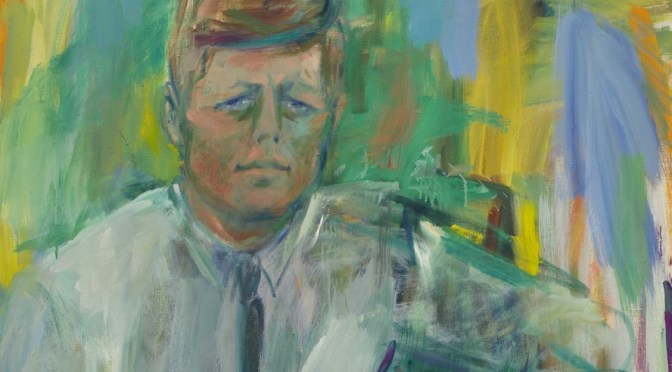
Following the protests in Birmingham, President Kennedy addressed the “moral crisis” of racial segregation and called for national participation in ensuring that America becomes the “land of the free” for all of its citizens.
President John F. Kennedy’s Civil Rights Address
June 11, 1963
This afternoon, following a series of threats and defiant statements, the presence of Alabama National Guardsmen was required on the University of Alabama to carry out the final and unequivocal order of the United States District Court of the Northern District of Alabama. This order called for the admission of two clearly qualified young Alabama residents who happen to have been born Negro.
That they were admitted peacefully on the campus is due in good measure to the conduct of the students of the University of Alabama, who met their responsibilities in a constructive way.
I hope that every American, regardless of where he lives, will stop and examine his conscience about this and other related incidents. This nation was founded by men of many nations and backgrounds. It was founded on the principle that all men are created equal, and that the rights of every man are diminished when the rights of one man are threatened.
Today we are committed to a worldwide struggle to promote and protect the rights of all who wish to be free. When Americans are sent to Vietnam or West Berlin, we do not ask for whites only. It ought to be possible, therefore, for American students of any color to attend any public institution they select without having to be backed up by troops.
It ought to be possible for American consumers of any color to receive equal service in places of public accommodation, such as hotels and restaurants and theaters and retail stores, without being forced to resort to demonstration in the street. It ought to be possible for American citizens of any color to register and to vote in a free election without interference or fear of reprisal.
It ought to be possible, in short, for every American to enjoy the privileges of being American without regard to his race or his color. In short, every American ought to have the right to be treated as he would wish to be treated, as one would wish his children to be treated. But this is not the case today.
The Negro baby born in America today, regardless of the section of the nation in which he is born, has about one half as much chance of completing high school as a white baby born in the same place on the same day, one third as much chance of completing college, one third as much chance of becoming a professional man, twice as much chance of becoming unemployed, about one seventh as much chance of earning $10,000 a year or more, a life expectancy which is seven years shorter, and the prospects of earning only half as much.
This is not a sectional issue. Difficulties over segregation and discrimination exist in every city, in every state of the Union, producing in many cities a rising tide of discontent that threatens the public safety. Nor is this a partisan issue. In a time of domestic crisis men of goodwill and generosity should be able to unite regardless of party or politics. This is not even a legal or legislative issue alone. It is better to settle these methods in the courts than on the streets, and new laws are needed at every level, but law alone cannot make men see right.
We are confronted primarily with a moral issue. It is as old as the Scriptures and is as clear as the American Constitution.
The heart of the question is whether all Americans are to be afforded equal rights and equal opportunities, whether we are going to treat our fellow Americans as we want to be treated. If an American, because his skin is dark, cannot eat lunch in a restaurant open to the public, if he can not send his children to the best public school available, if he cannot vote for the public officials who represent him, if, in short, he cannot enjoy the full and free life which all of us want, then who among us would be content to have the color of his skin changed and stand in his place? Who among us would be content with the counsels of patience and delay?
One hundred years have passed since President Lincoln freed the slaves, yet their heirs, their grandsons, are not fully free. They are not yet freed from the bonds of injustice. They are not yet freed from social and economic oppression. And this nation, for all its hopes and all its boasts, will not be fully free until all its citizens are free.
We preach freedom around the world, and we mean it, and we cherish our freedom here at home; but are we to say to the world, and, much more importantly, for each other, that this is a land of the free except for the Negroes; that we have no second-class citizens except Negroes; that we have no class or caste system, no ghettos, no master race, except with respect to Negroes?
Now the time has come for this nation to fulfill its promise. The events in Birmingham and elsewhere have so increased the cries for equality that no city or state or legislative body can prudently choose to ignore them.
The fires of frustration and discord are burning in every city, North and South, where legal remedies are not at hand. Redress is sought in the streets, in demonstrations, parades, and protests which create tensions and threaten violence and threaten lives.
We face, therefore, a moral crisis as a country and as a people. It cannot be met by repressive police action. It cannot be left to increased demonstrations in the streets. It cannot be quieted by token moves or talk. It is a time to act in the Congress, in your state and local legislative bodies and, above all, in all of our daily lives.
It is not enough to pin the blame on others, to say this is a problem of one section of the country or another, or deplore the facts that we face. A great change is at hand, and our task, our obligation, is to make that revolution, that change, peaceful and constructive for all.
Those who do nothing are inviting shame as well as violence. Those who act boldly are recognizing right as well as reality.
Next week I shall ask the Congress of the United States to act, to make a commitment it has not fully made in this century to the proposition that race has no place in American life or law. The federal judiciary has upheld that proposition in the conduct of its affairs, including the employment of federal personnel, the use of federal facilities, and the sale of federally financed housing.
But there are other necessary measures which only the Congress can provide, and they must be provided at this session. The old code of equity law under which we live commands for every wrong a remedy, but in too many communities, in too many parts of the country, wrongs are inflicted on Negro citizens and there are no remedies at law. Unless the Congress acts, their only remedy is in the streets.
I am, therefore, asking the Congress to enact legislation giving all Americans the right to be served in facilities which are open to the public — hotels, restaurants, theaters, retail stores, and similar establishments.
This seems to me to be an elementary right. Its denial is an arbitrary indignity that no American in 1963 should have to endure. But many do.
I have recently met with scores of business leaders urging them to take voluntary action to end this discrimination, and I have been encouraged by their response. In the last two weeks over seventy-five cities have seen progress made in desegregating these kinds of facilities. But many are unwilling to act alone, and for this reason, nationwide legislation is needed if we are to move this problem from the streets to the courts.
I am also asking Congress to authorize the federal government to participate more fully in lawsuits designed to end segregation in public education. We have succeeded in persuading many districts to desegregate voluntarily. Dozens have admitted Negroes without violence. Today, a negro is attending a state-supported institution in every one of our fifty states. But the pace is very slow.
Too many Negro children entering segregated grade schools at the time of the Supreme Court’s decision nine years ago will enter segregated high schools this fall, having suffered a loss which can never be restored. The lack of an adequate education denied the Negro a chance to get a decent job.
The orderly implementation of the Supreme Court decision, therefore, cannot be left solely to those who may not have the economic resources to carry the legal action or who may be subject to harassment.
Other features will also be requested, including greater protection for the right to vote. But legislation, I repeat, cannot solve this problem alone. It must be solved in the homes of every American in every community across our country.
In this respect, I want to pay tribute to those citizens, North and South, who have been working in their communities to make life better for all. They are acting not out of a sense of legal duty but out of a sense of human decency. Like our soldiers and sailors in all parts of the world, they are meeting freedom’s challenge on the firing line, and I salute them for their honor and courage.
My fellow Americans, this is a problem which faces us all — in every city of the North as well as the South. Today there are Negroes, unemployed — two or three times as many compared to whites — with inadequate education, moving into the large cities, unable to find work, young people particularly out of work and without hope, denied equal rights, denied the opportunity to eat at a restaurant or lunch counter or go to a movie theater, denied the right to a decent education… It seems to me that these are matters which concern us all, not merely Presidents or congressmen or governors, but every citizen of the United States.
This is one country. It has become one country because all the people who came here had an equal chance to develop their talents…
We have a right to expect that the Negro community will be responsible and will uphold the law; but they have a right to expect that the law will be fair, that the constitution will be color blind, as Justice Harlan said at the turn of the century.
This is what we are talking about. This is a matter which concerns this country and what it stands for, and in meeting it I ask the support of all our citizens.
(Cover art: Portrait of President John F. Kennedy, by Elaine de Kooning)
There are paradigm shifting moments in human history when our perception of the world is changed forever. When these events occur, humanity’s collective consciousness irreversibly matures.
On Wednesday, August 28, 1963, at the Lincoln Memorial in Washington D.C., Dr. Martin Luther King, Jr. made an impassioned emotional appeal for racial equality which helped change the course of American history. King’s “I Have a Dream” speech has motivated generations of Americans to continue the struggle for a better society……
Dr. Martin Luther King Jr.’s “I Have A Dream” Speech, Washington, D.C., August 28, 1963
Cover Art: Tribute to Martin Luther King Jr. by Delawer-Omar
Bill Moyer and economist Paul Krugman discuss French economist, Thomas Pickety’s concept of Patrimonial Capitalism. Krugman explains how inherited wealth is creating tremendous inequalities in income and wealth in the United States which threaten our system of participatory democracy. He points out that as wealth continues to concentrate political influence has become limited to a very small percentage of American society which is becoming increasingly hostile to the concerns of ordinary Americans.
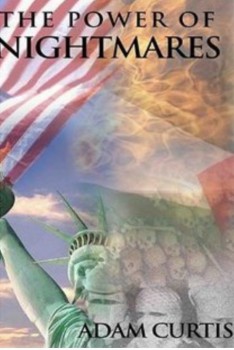
The Power of Nightmares is Adam Curtis’ documentary series about the use of fear for political purposes. It first aired on BBC Two in the Autumn of 2004 as a series of three one hour documentaries questioning whether Western concerns over terrorism and the threat of al-Qaeda were exaggerated by politicians seeking to maintain their power and authority.
The three part series assesses whether the threat from a hidden and organized terrorist network is an illusion. Should we be worried about the threat from this terrorist organization or is it simply a phantom menace being used to prevent the erosion of our faith in government?
Part one, examines the origins of the neo-conservatives and the radical Islamists in the 1950s.
In the past our politicians offered us dreams of a better world. Now they promise to protect us from nightmares.
The most frightening of these is the threat of an international terror network. But just as the dreams were not true, neither are these nightmares.
The Power of Nightmares examines whether the belief that the West is threatened by a hidden and organised terrorist network is an illusion.
At the heart of the story are two groups: the American neo-conservatives and the radical Islamists. Both were idealists who were born out of the failure of the liberal dream to build a better world.
These two groups have changed the world but not in the way either intended. Together they have created today’s nightmare vision of an organised terror network. This is a useful illusion which politicians have found restores faith in their leadership during a disillusioned age.
The rise of the politics of fear begins in 1949 with two men whose radical ideas would inspire the attack of 9/11 and influence the neo-conservative movement that dominates Washington.
Both these men believed that modern liberal freedoms were eroding the bonds that held society together.
The two movements they inspired set out, in their different ways, to rescue their societies from this decay. But in an age of growing disillusion with politics, the neo-conservatives turned to fear in order to pursue their vision.
They would create a hidden network of evil run by the Soviet Union that only they could see.
The Islamists were faced by the refusal of the masses to follow their dream and began to turn to terror to force the people to “see the truth”‘.
Part two, the Phantom Victory, looks at how radical Islamists and neo-conservatives came together to defeat the Soviet Union in Afghanistan
On 25 December 1979, Soviet forces invaded Afghanistan.
Moscow was able to install a friendly government in a neighbouring country but at a price.
The invasion gave a common cause to an extraordinary alliance of radical Islamists in Afghanistan and around the world and to the neo-conservatives in the US.
It was a key battleground of the Cold War.
Washington provided money and arms including even Stinger missiles capable of shooting down Soviet helicopters.
But it was Islamic Mujahideen fighters who would fire them.
Among the many foreigners drawn to Afghanistan was a young, wealthy Saudi called Osama Bin Laden.
After nearly 10 years of fighting, Soviet troops pulled out of Afghanistan.Long before 9/11, he would have been seen by neo-conservatives in Washington as one of their foot soldiers, helping fight America’s cause.
Both the neo-conservatives and the Islamists believed that it is they who defeated the “evil empire” and now had the power to transform the world.
But both failed in their revolutions.
In response, the neo-conservatives invented a new fantasy enemy, Bill Clinton, focusing on the scandal surrounding him and Monica Lewinsky.
Meanwhile, the Islamists descend into a desperate cycle of violence and terror to try to persuade the people to follow them.
Out of all this comes the seeds of the strange world of fantasy, deception, violence and fear in which we now live.
The final episode explores how the illusion was created and who benefits from it.
In the wake of the shock and panic created by the devastating attack on the World Trade Center on 11 September, 2001, the neo-conservatives reconstructed the radical Islamists in the image of their last evil enemy, the Soviet Union – a sinister web of terror run from the centre by Osama Bin Laden in his lair in Afghanistan.
There are dangerous and fanatical individuals and groups around the world who have been inspired by extreme Islamist ideas, and who will use the techniques of mass terror – the attacks on America and Madrid make this only too clear.
But the nightmare vision of a uniquely powerful hidden organisation waiting to strike our societies is an illusion.
Wherever one looks for this al-Qaeda organisation, from the mountains of Afghanistan to the “sleeper cells” in America, the British and Americans are chasing a phantom enemy.
But the reason that no-one questions the illusion is because this nightmare enemy gives so many groups new power and influence in a cynical age – and not just politicians.
Those with the darkest imaginations have now become the most powerful.
Fair Use Notice
This video may contain copyrighted material. Such material is made available for educational purposes only in an effort to advance the understanding of human rights and social justice issues and is distributed without profit to those who have expressed a prior interest in receiving the included information for research and educational purposes. This constitutes a ‘fair use’ of any such copyrighted material in accordance with Title 17 U.S.C. Section 107 of the U.S. Copyright Law.
The BBC was inundated with correspondence and Viewers were invited to put their questions to the creator of the series, Adam Curtis. Here are some of the Questions and Responses:
“The Trap” is a three part documentary series by award-winning producer Adam Curtis which explores whether the economic model that human behavior is motivated by rational self interest has created a culture of suspicion which actually threatens individual liberties and reduces the quality of our lives.
The series chronicles how the introduction of game theory has led political leaders to adopt a simplistic model of human behavior which views social interaction as series of self interested transactions designed to maximize individual outcomes. This paradigm shift has transitioned governments away from their traditional role in promoting the public interest into institutions which act to appease the wants of citizens. At the same time, citizens have begun to identify themselves as simplistic beings whose freedom is associated with the fulfillment of desires. As a result, both politicians and the masses have embraced an egocentric concept of freedom which has caused us to accept an economical model of supply and demand politics which seeks to maintain relevance by meeting short term desires rather than improving our overall social condition.
Curtis proposes a more substantive and fulfilling form of freedom which allows us not only to fill immediate wants and desires, but to transform the overall quality of our living standards. This hope of improving the society we live in, he suggests, has been abandoned by policymakers in favor of a safer, less satisfying form of democracy which robs our lives of their intrinsic value.
Episode 1: F**k You Buddy
Part one examines how Game Theory and the idea that human behavior is driven by rational self interest has molded the political, economic and social behavior of Western Democracies.
Episode one explores John Nash’s hypothesis that human behavior is motivated by rational, self interested decisions to maximize potential outcomes. Using self interest as his first premise, Nash proposes that individual behavior is motivated by rational choices, rather than any sense of duty towards others. Therefore, in any social transaction an individual maximizes their potential benefits by acting in their own self interest. Curtis chronicles how this concept has influenced politicians, economists, anthropologists and even geneticists to embrace a market based supply and demand approach which has transformed the goal of government from seeking the public good to fulfilling public demand.
Episode 2: The Lonely Robot
Part two chronicles how a transition to an economic model of government administration has produced a controlling, dispassionate system of bureaucratic management driven by statistical analysis and desired outcomes. Curtis shows how the call for increased government efficiency and delivery of services, measured by numerical calculations, has resulted in increased institutional rigidity, inefficiency and corruption as administrators have resorted to manipulating statistics to meet performance targets rather than enacting the desired reforms.
Episode 3: We Will Force You To Be Free
Part three focuses on how the introduction of Isaiah Berlin’s concept of positive and negative liberties has influenced the Western concept of social progress. Berlin argues that the negative consequences of social revolutions can be avoided by enforcing negative, rather than positive liberties. Berlin reasons that the exercise of positive liberty always brings oppression because it requires the government to coerce an unwilling populace into embracing the desired social change. Therefore, Berlin suggests that it is safer for democracies to limit the government’s ability to cause harm through the exercise of negative liberty, allowing individuals greater autonomy over their own lives. However, Berlin warns, the idea of negative liberty can never become so absolute and inflexible, that democracy evolves into the very tyranny it seeks to avoid.
Curtis chronicles how Western leaders have ignored Berlin’s warning through an extreme vision of negative liberty which seeks to end global tyranny and maintain the peace through the use of state sponsored violence. At the same time, Western democracies have attempted to maintain domestic tranquility by suppressing passionate dissent and retreating to the safety of rational objectivism. As a result, Curtis argues, we are trapped within a false paradigm which stifles democracy and robs our lives of meaning.
Fair Use Notice
This video may contain copyrighted material. Such material is made available for educational purposes only in an effort to advance the understanding of human rights and social justice issues and is distributed without profit to those who have expressed a prior interest in receiving the included information for research and educational purposes. This constitutes a ‘fair use’ of any such copyrighted material in accordance with Title 17 U.S.C. Section 107 of the U.S. Copyright Law.





 After nearly 10 years of fighting, Soviet troops pulled out of Afghanistan.Long before 9/11, he would have been seen by neo-conservatives in Washington as one of their foot soldiers, helping fight America’s cause.
 But the nightmare vision of a uniquely powerful hidden organisation waiting to strike our societies is an illusion.
 Camden Civil Rights Project