All posts by Lawrence Christopher Skufca, J.D.

My name is Lawrence Christopher Skufca. I am a civil rights activist and community organizer in the Camden, New Jersey area. I hold a Juris Doctor from Rutgers School of Law; a B.A. in Political Science from Furman University; and an A.A. in the Social Sciences from Tri-County Technical College.

The “Moral Crisis” of Racial Inequality

Following the protests in Birmingham, President Kennedy  addressed the “moral crisis” of racial segregation and called for national participation in ensuring that America becomes the “land of the free” for all of its citizens.

President John F. Kennedy’s Civil Rights Address

June 11, 1963

This afternoon, following a series of threats and defiant statements, the presence of Alabama National Guardsmen was required on the University of Alabama to carry out the final and unequivocal order of the United States District Court of the Northern District of Alabama. This order called for the admission of two clearly qualified young Alabama residents who happen to have been born Negro.

That they were admitted peacefully on the campus is due in good measure to the conduct of the students of the University of Alabama, who met their responsibilities in a constructive way.

I hope that every American, regardless of where he lives, will stop and examine his conscience about this and other related incidents. This nation was founded by men of many nations and backgrounds. It was founded on the principle that all men are created equal, and that the rights of every man are diminished when the rights of one man are threatened.

Today we are committed to a worldwide struggle to promote and protect the rights of all who wish to be free. When Americans are sent to Vietnam or West Berlin, we do not ask for whites only. It ought to be possible, therefore, for American students of any color to attend any public institution they select without having to be backed up by troops.

It ought to be possible for American consumers of any color to receive equal service in places of public accommodation, such as hotels and restaurants and theaters and retail stores, without being forced to resort to demonstration in the street. It ought to be possible for American citizens of any color to register and to vote in a free election without interference or fear of reprisal.

It ought to be possible, in short, for every American to enjoy the privileges of being American without regard to his race or his color. In short, every American ought to have the right to be treated as he would wish to be treated, as one would wish his children to be treated. But this is not the case today.

The Negro baby born in America today, regardless of the section of the nation in which he is born, has about one half as much chance of completing high school as a white baby born in the same place on the same day, one third as much chance of completing college, one third as much chance of becoming a professional man, twice as much chance of becoming unemployed, about one seventh as much chance of earning $10,000 a year or more, a life expectancy which is seven years shorter, and the prospects of earning only half as much.

This is not a sectional issue. Difficulties over segregation and discrimination exist in every city, in every state of the Union, producing in many cities a rising tide of discontent that threatens the public safety. Nor is this a partisan issue. In a time of domestic crisis men of goodwill and generosity should be able to unite regardless of party or politics. This is not even a legal or legislative issue alone. It is better to settle these methods in the courts than on the streets, and new laws are needed at every level, but law alone cannot make men see right.

We are confronted primarily with a moral issue. It is as old as the Scriptures and is as clear as the American Constitution.

The heart of the question is whether all Americans are to be afforded equal rights and equal opportunities, whether we are going to treat our fellow Americans as we want to be treated. If an American, because his skin is dark, cannot eat lunch in a restaurant open to the public, if he can not send his children to the best public school available, if he cannot vote for the public officials who represent him, if, in short, he cannot enjoy the full and free life which all of us want, then who among us would be content to have the color of his skin changed and stand in his place? Who among us would be content with the counsels of patience and delay?

One hundred years have passed since President Lincoln freed the slaves, yet their heirs, their grandsons, are not fully free. They are not yet freed from the bonds of injustice. They are not yet freed from social and economic oppression. And this nation, for all its hopes and all its boasts, will not be fully free until all its citizens are free.

We preach freedom around the world, and we mean it, and we cherish our freedom here at home; but are we to say to the world, and, much more importantly, for each other, that this is a land of the free except for the Negroes; that we have no second-class citizens except Negroes; that we have no class or caste system, no ghettos, no master race, except with respect to Negroes?

Now the time has come for this nation to fulfill its promise. The events in Birmingham and elsewhere have so increased the cries for equality that no city or state or legislative body can prudently choose to ignore them.

The fires of frustration and discord are burning in every city, North and South, where legal remedies are not at hand. Redress is sought in the streets, in demonstrations, parades, and protests which create tensions and threaten violence and threaten lives.

We face, therefore, a moral crisis as a country and as a people. It cannot be met by repressive police action. It cannot be left to increased demonstrations in the streets. It cannot be quieted by token moves or talk. It is a time to act in the Congress, in your state and local legislative bodies and, above all, in all of our daily lives.

It is not enough to pin the blame on others, to say this is a problem of one section of the country or another, or deplore the facts that we face. A great change is at hand, and our task, our obligation, is to make that revolution, that change, peaceful and constructive for all.

Those who do nothing are inviting shame as well as violence. Those who act boldly are recognizing right as well as reality.

Next week I shall ask the Congress of the United States to act, to make a commitment it has not fully made in this century to the proposition that race has no place in American life or law. The federal judiciary has upheld that proposition in the conduct of its affairs, including the employment of federal personnel, the use of federal facilities, and the sale of federally financed housing.

But there are other necessary measures which only the Congress can provide, and they must be provided at this session. The old code of equity law under which we live commands for every wrong a remedy, but in too many communities, in too many parts of the country, wrongs are inflicted on Negro citizens and there are no remedies at law. Unless the Congress acts, their only remedy is in the streets.

I am, therefore, asking the Congress to enact legislation giving all Americans the right to be served in facilities which are open to the public — hotels, restaurants, theaters, retail stores, and similar establishments.

This seems to me to be an elementary right. Its denial is an arbitrary indignity that no American in 1963 should have to endure. But many do.

I have recently met with scores of business leaders urging them to take voluntary action to end this discrimination, and I have been encouraged by their response. In the last two weeks over seventy-five cities have seen progress made in desegregating these kinds of facilities. But many are unwilling to act alone, and for this reason, nationwide legislation is needed if we are to move this problem from the streets to the courts.

I am also asking Congress to authorize the federal government to participate more fully in lawsuits designed to end segregation in public education. We have succeeded in persuading many districts to desegregate voluntarily. Dozens have admitted Negroes without violence. Today, a negro is attending a state-supported institution in every one of our fifty states. But the pace is very slow.

Too many Negro children entering segregated grade schools at the time of the Supreme Court’s decision nine years ago will enter segregated high schools this fall, having suffered a loss which can never be restored. The lack of an adequate education denied the Negro a chance to get a decent job.

The orderly implementation of the Supreme Court decision, therefore, cannot be left solely to those who may not have the economic resources to carry the legal action or who may be subject to harassment.

Other features will also be requested, including greater protection for the right to vote. But legislation, I repeat, cannot solve this problem alone. It must be solved in the homes of every American in every community across our country.

In this respect, I want to pay tribute to those citizens, North and South, who have been working in their communities to make life better for all. They are acting not out of a sense of legal duty but out of a sense of human decency. Like our soldiers and sailors in all parts of the world, they are meeting freedom’s challenge on the firing line, and I salute them for their honor and courage.

My fellow Americans, this is a problem which faces us all — in every city of the North as well as the South. Today there are Negroes, unemployed — two or three times as many compared to whites — with inadequate education, moving into the large cities, unable to find work, young people particularly out of work and without hope, denied equal rights, denied the opportunity to eat at a restaurant or lunch counter or go to a movie theater, denied the right to a decent education… It seems to me that these are matters which concern us all, not merely Presidents or congressmen or governors, but every citizen of the United States.

This is one country. It has become one country because all the people who came here had an equal chance to develop their talents…

We have a right to expect that the Negro community will be responsible and will uphold the law; but they have a right to expect that the law will be fair, that the constitution will be color blind, as Justice Harlan said at the turn of the century.

This is what we are talking about. This is a matter which concerns this country and what it stands for, and in meeting it I ask the support of all our citizens.

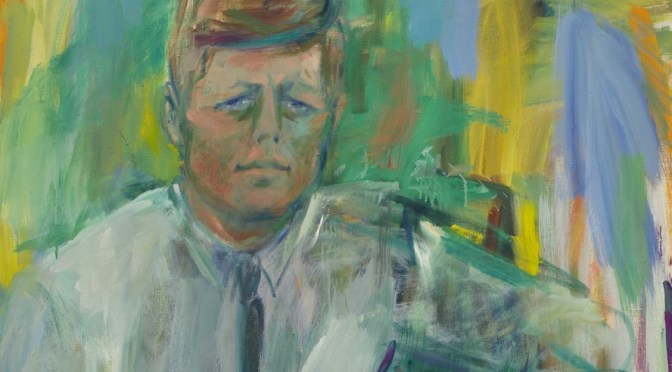
(Cover art: Portrait of President John F. Kennedy, by Elaine de Kooning)

I Have A Dream…

There are paradigm shifting moments in human history when our perception of the world is changed forever. When these events occur, humanity’s collective consciousness irreversibly matures.

On Wednesday, August 28, 1963, at the Lincoln Memorial in Washington D.C., Dr. Martin Luther King, Jr. made an impassioned emotional appeal for racial equality which helped change the course of American history. King’s “I Have a Dream” speech has motivated generations of Americans to continue the struggle for a better society……

Dr. Martin Luther King Jr.’s “I Have A Dream” Speech, Washington, D.C., August 28, 1963

Cover Art: Tribute to Martin Luther King Jr. by Delawer-Omar

Paul Krugman: The U.S. is Becoming an Oligarchy

Bill Moyer and economist Paul Krugman discuss French economist, Thomas Pickety’s concept of Patrimonial Capitalism. Krugman explains how inherited wealth is creating tremendous inequalities in income and wealth in the United States which threaten our system of participatory democracy. He points out that as wealth continues to concentrate political influence has become limited to a very small percentage of American society which is becoming increasingly hostile to the concerns of ordinary Americans.

Paul Krugman is a Distinguished Professor of Economics at the Graduate Center of the City University of New York, and an op-ed columnist for the New York Times. In 2008, Krugman was awarded the Nobel Memorial Prize in Economic Sciences for his contributions to New Trade Theory and New Economic Geography.

Suggested Reading:

Gilens, Martin and Benjamin I. Page. 2014. Testing Theories of American Politics: Elites, Interest Groups, and Average Citizens. American Political Science Association, Washington, DC.

Stable URL (Accessed 10/27/2015): http://journals.cambridge.org/download.php?file=%2FPPS%2FPPS12_03%2FS1537592714001595a.pdf&code=db94ea7da72b76485eecd461067b11c3

Macfarquhar, Larissa. 2010. The Deflationist: How Paul Krugman Found Politics. The New Yorker Magazine. New York City, NY.

Stable URL (accessed 10/29/2015): http://www.newyorker.com/magazine/2010/03/01/the-deflationist

The Century of the Self (2002)

Adam Curtis’ acclaimed series Century of the Self examines how the introduction of Sigmund Freud’s theory of Psychoanalysis has come to shape American culture. The series advances the thesis that Freud’s views of the unconscious set the stage for corporations, and later politicians, to manipulate public behavior through appeals to our unconscious fears and desires. Curtis’ detailed examination of how Psychoanalytic theories have been used to create a desire based consumer economy, manufacture public consent for unpopular military intervention and to emotionally manipulate the public in political campaigns raises important ethical questions about whether the utilization of psychological conditioning techniques to direct group behaviors is consistent with Democratic ideals.

Episode 1: Happiness Machines

Episode one explores the evolution of the American public relations industry and the use of Freud’s theories of Psychoanalysis to appeal to the subconscious desires of consumers. Freud’s cousin, Edward Bernays, first introduced the these principles in the United States by convincing American corporations that they could increase their sales by appealing to individual’s unconscious emotions.

Bernays created marketing innovations such as celebrity endorsements and the sexualization  of consumer products. One of Bernays more controversial campaigns succeeded in breaking the taboo on female smoking by linking cigarettes with the Suffragette movement. Bernays successfully persuaded woman to adopt the harmful habit by referring to cigarettes as “liberty sticks” and symbolizing the act of smoking as an expression of liberation and independence. By satisfying the inner irrational desires that his uncle had identified, people could be persuaded to act in ways they would not normally behave.

It was the beginning of organizational psychology and the social engineering practices which the soon come to dominate American society.

Episode 2: The Engineering of Consent

Part two explores how policymakers in post World War II America came to embrace Freud’s underlying premise that human behavior was influenced by irrational subconscious desires and used Bernay’s propaganda techniques to engineer public consent. Public officials became mistrustful of the general public, concerned that if individuals were left alone to act on their irrational  desires, the atrocities committed by Germany in World War II could repeat themselves in America. As a result, policy planners became preoccupied with installing social controls to identify and suppress the public’s potentially dangerous desires through social indoctrination.

Psychoanalysis gained increasing influence throughout American society as it proposed that dangerous behaviors could  be controlled by conditioning individuals to obey social norms. Psychoanalysists were employed to create organizational models as this ideology rapidly spread through the corporate and public sectors. However, this rigid system of social conformity created problems of it’s own as rates of depression, anxiety and disillusionment began to rise within the general public. As the failures mounted, the tenets of psychoanalysis would be placed into question.

Episode 3: There is a Policeman Inside All of Our Heads, He Must Be Destroyed

The third segment explores how the perceived failures of psychoanalysis led to the public rejection of social conformity in favor of individual expression. Beginning in the 1960s, a group of psychotherapists influenced by the theories of  Wilhelm Reich began to challenge the validity of the psychoanalytic model in explaining human behavior. They asserted that unleashing  an individual’s subconscious desires led to empowerment and creativity. As the individual empowerment movement spread, the idea that individuals could transform society through political activism was soon replaced with the notion that a better society could only be achieved through individual transformation. Corporate marketers learned to capitalize on the ideological shift by persuading consumers to express their individuality through the products they purchased.

Episode 4: Eight People Sipping Wine In Kettering

This final installment of the series examines how politicians in the U.S. and Britain discovered the advantages of incorporating psychoanalytic principles into their political campaigns. Curtis explores the introduction of political focus groups to gather information about the  subconscious  motivations of voters and the ideological shift away from the public good towards fulfillment of individual desires. The segment focuses on the how politicians began pandering to individual self interest in an effort to maintain public office. Curtis raises the ethical question of whether the political shift towards egocentrism is actually capable of producing a more democratic society or if it simply exploits the public desires for self-liberation to maintain the existing power structure.

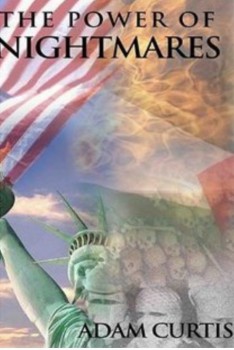
The Power of Nightmares: The Rise of the Politics of Fear (2004)

The Power of Nightmares is Adam Curtis’ documentary series about the use of fear for political purposes. It first aired on BBC Two in the Autumn of 2004 as a series of three one hour documentaries questioning whether Western concerns over terrorism and the threat of al-Qaeda were exaggerated by politicians seeking to maintain their power and authority.

The three part series assesses whether the threat from a hidden and organized terrorist network is an illusion. Should we be worried about the threat from this terrorist organization or is it simply a phantom menace being used to prevent the erosion of our faith in government?

Episode 1: Baby It’s Cold Outside

 Part one, examines the origins of the neo-conservatives and the radical Islamists in the 1950s.

In the past our politicians offered us dreams of a better world. Now they promise to protect us from nightmares.

The most frightening of these is the threat of an international terror network. But just as the dreams were not true, neither are these nightmares.

The Power of Nightmares examines whether the belief that the West is threatened by a hidden and organised terrorist network is an illusion.

UK Prime Minister and US President George W Bush stand behind a picture of Osama Bin Laden

At the heart of the story are two groups: the American neo-conservatives and the radical Islamists. Both were idealists who were born out of the failure of the liberal dream to build a better world.

These two groups have changed the world but not in the way either intended. Together they have created today’s nightmare vision of an organised terror network. This is a useful illusion which politicians have found restores faith in their leadership during a disillusioned age.

The rise of the politics of fear begins in 1949 with two men whose radical ideas would inspire the attack of 9/11 and influence the neo-conservative movement that dominates Washington.

Both these men believed that modern liberal freedoms were eroding the bonds that held society together.

The two movements they inspired set out, in their different ways, to rescue their societies from this decay. But in an age of growing disillusion with politics, the neo-conservatives turned to fear in order to pursue their vision.

They would create a hidden network of evil run by the Soviet Union that only they could see.

The Islamists were faced by the refusal of the masses to follow their dream and began to turn to terror to force the people to “see the truth”‘.

Episode 2: The Phantom Victory

Part two, the Phantom Victory, looks at how radical Islamists and neo-conservatives came together to  defeat the Soviet Union in Afghanistan

On 25 December 1979, Soviet forces invaded Afghanistan.

Moscow was able to install a friendly government in a neighbouring country but at a price.

The invasion gave a common cause to an extraordinary alliance of radical Islamists in Afghanistan and around the world and to the neo-conservatives in the US.

It was a key battleground of the Cold War.

Washington provided money and arms including even Stinger missiles capable of shooting down Soviet helicopters.

But it was Islamic Mujahideen fighters who would fire them.

Among the many foreigners drawn to Afghanistan was a young, wealthy Saudi called Osama Bin Laden.

Mujahideen fightersAfter nearly 10 years of fighting, Soviet troops pulled out of Afghanistan.Long before 9/11, he would have been seen by neo-conservatives in Washington as one of their foot soldiers, helping fight America’s cause.

Both the neo-conservatives and the Islamists believed that it is they who defeated the “evil empire” and now had the power to transform the world.

But both failed in their revolutions.

In response, the neo-conservatives invented a new fantasy enemy, Bill Clinton, focusing on the scandal surrounding him and Monica Lewinsky.

Meanwhile, the Islamists descend into a desperate cycle of violence and terror to try to persuade the people to follow them.

Out of all this comes the seeds of the strange world of fantasy, deception, violence and fear in which we now live.

Episode 3: The Shadows in the Cave

The final episode explores how the illusion was created and who benefits from it.

In the wake of the shock and panic created by the devastating attack on the World Trade Center on 11 September, 2001, the neo-conservatives reconstructed the radical Islamists in the image of their last evil enemy, the Soviet Union – a sinister web of terror run from the centre by Osama Bin Laden in his lair in Afghanistan.

There are dangerous and fanatical individuals and groups around the world who have been inspired by extreme Islamist ideas, and who will use the techniques of mass terror – the attacks on America and Madrid make this only too clear.

Osama Bin LadenBut the nightmare vision of a uniquely powerful hidden organisation waiting to strike our societies is an illusion.

Wherever one looks for this al-Qaeda organisation, from the mountains of Afghanistan to the “sleeper cells” in America, the British and Americans are chasing a phantom enemy.

But the reason that no-one questions the illusion is because this nightmare enemy gives so many groups new power and influence in a cynical age – and not just politicians.

Those with the darkest imaginations have now become the most powerful.

Fair Use Notice

This video may contain copyrighted material. Such material is made available for educational purposes only in an effort to advance the understanding of human rights and social justice issues and is distributed without profit to those who have expressed a prior interest in receiving the included information for research and educational purposes. This constitutes a ‘fair use’ of any such copyrighted material in accordance with Title 17 U.S.C. Section 107 of the U.S. Copyright Law.

PREVIOUS RESPONSE TO VIEWERS BY ADAM CURTIS

The BBC was inundated with correspondence and Viewers were invited to put their questions to the creator of the series, Adam Curtis. Here are some of the Questions and Responses:

Page 1: http://news.bbc.co.uk/2/hi/programmes/4202741.stm

Page 2: http://news.bbc.co.uk/2/hi/programmes/3973195.stm

Suggested Reading:

Hungerford, J. M.. The Exploitation of Superstitions for Purposes of Psychological Warfare. Santa Monica, CA: RAND Corporation, 1950. http://www.rand.org/pubs/research_memoranda/RM365. Available in .pdf form at:  http://www.rand.org/content/dam/rand/pubs/research_memoranda/2008/RM365.pdf

Lemnitzer, L.L. Northwoods Report: Justification for U.S. Military Intervention in Cuba. Washington, D.C.: The Joint Chiefs of Staff, 1963.  http://nsarchive.gwu.edu/news/20010430/northwoods.pdf

National Security Agency. Gulf of Tonkin Index. Washington, D.C.: NSA, 2005-06.  https://www.nsa.gov/public_info/declass/gulf_of_tonkin/

Hashtag Activism Isn’t a Cop-Out

An organizer of Ferguson protests argues that social-media tools encourage demonstrations, rather than deflating them.

download

Mainstream-media figures often portray social media as a buzzing hive of useless outrage. Thinkpieces present hashtag activism as vanity activism, in which narcissistic pronouncements substitute for actual engagement, and anger is leveraged at best for petty entertainment and at worst for coordinated harassment.

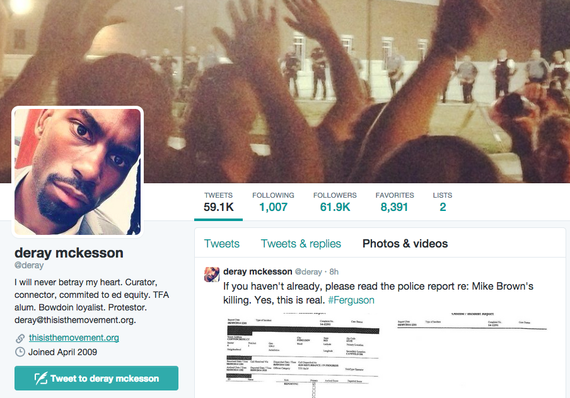
Yet activists themselves often argue that social media is important to their work. DeRay Mckesson, who has emerged as one of a number of leading organizers and activists against police brutality, has spoken on his feed about how vital Twitter is for boosting a movement. When he first drove from his home in Minneapolis—where he works as a school administrator, traveling for protests mainly on weekends—to Ferguson to participate in the protests, Mckesson knew no one; he didn’t even know where he would sleep. Facebook networks found him a couch, and social media was vital in connecting him with the community of protestors. Mckesson reports live from protests through Twitter, where his following has ballooned from 800 followers to more than 61,000 since he began his activism. He’s also used social networks to raise awareness and to organize, by for example creating a text-message alert that informed thousands the instant the grand jury in Ferguson returned a no-indictment verdict in the Michael Brown case.

I talked to Mckesson about social media, protest, and the connections between the two. This interview has been edited for length and clarity.

Noah Berlatsky: What role has social-media activism played in the movement against police brutality that started in Ferguson?

DeRay Mckesson: Missouri would have convinced you that we did not exist if it were not for social media. The intensity with which they responded to protestors very early—we were able to document that and share it quickly with people in a way that we never could have without social media. We were able to tell our own stories.

The history of blackness is also a history of erasure. Everybody has told the story of black people in struggle except black people. The black people in the struggle haven’t had the means to tell the story historically. There were a million slaves but you see very few slave narratives. And that is intentional. So what was powerful in the context of Ferguson is that there were many people able to tell their story as the story unfolded.

The other thing I will add is that Twitter specifically has been interesting because we’re able to get feedback and responses in real time. If we think about this as community building, and we think of community building as a manifestation of love, and we think about love being about accountability, and accountability about justice, what’s interesting is that Twitter has kept us honest. There’s a democracy of feedback. I’ve had really robust conversations with people who aren’t physically in the space, but who have such great ideas. And that’s proven to be invaluable.
Berlatsky: The civil-rights movement of the ’60s obviously didn’t have Twitter or social media or the Internet, but it was able to get its message out to the media in other ways. Why wouldn’t traditional media be adequate now?

Mckesson: Ferguson exists in a tradition of protest. But what is different about Ferguson, or what is important about Ferguson, is that the movement began with regular people. There was no Martin, there was no Malcolm, there was no NAACP, it wasn’t the Urban League. People came together who didn’t necessarily know each other, but knew what they were experiencing was wrong. And that is what started this. What makes that really important, unlike previous struggle, is that—who is the spokesperson? The people. The people, in a very democratic way, became the voice of the struggle.

Our access to information is also so much greater than in the past. For instance, there’s an officer in Ferguson who is really aggressive with protestors for no reason. And I was able to take a picture of him—he would cover his badge with his hand, he would not show his name. So I took a picture of him, put it online, and within 30 minutes they knew everything about him. And that’s a different way of empowering people.

Berlatsky: It sounds like you’re saying that Twitter allowed the movement to be a lot more decentralized. Is that an advantage or a disadvantage? It seems like it might be a disadvantage in terms of settling on specific goals, for example.
Mckesson: It is not that we’re anti-organization. There are structures that have formed as a result of protest, that are really powerful. It is just that you did not need those structures to begin protest. You are enough to start a movement. Individual people can come together around things that they know are unjust. And they can spark change. Your body can be part of the protest; you don’t need a VIP pass to protest. And Twitter allowed that to happen.

I think that what we are doing is building a radical new community in struggle that did not exist before. Twitter has enabled us to create community. I think the phase we’re in is a community-building phase. Yes, we need to address policy, yes, we need to address elections; we need to do all those things. But on the heels of building a strong community.

A screenshot of Mckesson's Twitter profile (Twitter)
A screenshot of Mckesson’s Twitter profile (Twitter)

Berlatsky: You also publish—along with Johnetta (Netta) Elzie—an online newsletter about the protest movement called Words to Action. Do you see yourself as a journalist? Or as an activist? Or both? How important is social media to those roles, or to combining them?

Mckesson: I see myself as a protestor who is also telling the story as it happens. The newsletter started—I remember when Trayvon died, I wanted to follow the case, but I didn’t know what was fact or fiction. I didn’t want that to be the story of Mike Brown. There was so much news; there was so much stuff that was unclear. There were so many questions. The goal was to create a space where people could go to get true news.
Now the movement has spread beyond St. Louis, we cover stories from around the country. So the goal was to be a hub of information. I think the first newsletter that went out had 400 subscribers, and we’re at a little bit less than 14,000 now. And we did a text-message alert for the no-indictment—you could sign up to get a text when the decision came out. And 21,000 people signed up in 10 days, which was wild. So the work is focused on, how can we use the tools we have access to in order to create infrastructure for the movement.

And that’s what Netta and I have been focused on. None of this takes away from our protesting. We don’t put the newsletter out when we’re out until 4 in the morning protesting. The trade-off always veers in the favor of protest. It’s rooted in the confrontation and disruption that is protest. We want to make structures to empower people. The newsletter is a way to empower people. Because we believe that the truth is actually so damning that we can just tell you all the news that’s happening and you should be radicalized. We believe that.

Berlatsky: I saw you talking about Iggy Azalea and issues of appropriation on Twitter a little bit back. That’s the sort of cultural issue that I think many people would say is just a distraction, or is just a way for people to express outrage without working for social change. Do you see cultural conversations around Iggy, or similar issues, as a distraction from your work as an organizer? Or are they complementary?
Mckesson: Good lord. Iggy. (laughs) You’re really trying to get me in trouble.

When people think about protest, they think that protest is always confrontation, protest is always disruption. But protest is also intellectual confrontation and disruption. So part of what we do when the police speak is that we question. The thing about people like Iggy is that we also question. We question what it means to have your success be on a medium and a platform that was born of black struggle, like hip-hop or rap, and what does it mean that you identify with everything but the struggle part? Which is the Iggy issue.

We question these issues of race and struggle and white privilege, because we know that those issues are real, and because those issues have real implications in black communities. And white supremacy is not only dangerous but it is deadly. We know this to be true.

Berlatsky: Do you get a lot of harassment on social media?

Mckesson: Yeah, the death threats aren’t fun. They put my address out there, that’s not fun. I get called a nigger more than I’ve ever been called that in my entire life. I’ve blocked over 9,000 people, so I don’t personally see it as much anymore, but my friends do. So that sort of stuff I don’t love.

But what social media has done is that it has exposed the intensity of hatred in America. People who you wouldn’t expect to be racist … some of the tweets are from people who are well-intentioned but racist. And I appreciate that that’s exposed. People now understand where you’re coming from. And it’s deeply problematic. But we don’t have to guess anymore; we get it.

The harassment is never a good thing. But there’s something valuable in making sure you’re not surrounded by people who think like you. It helps you understand what you think better. And I appreciate that about Twitter. It’s a cacophony of voices. Even when you don’t agree, you at least understand different perspectives. The medium itself sets that up.

Sex Trafficking in the U.S.

E-mail Print


download

 Sex trafficking is a form of modern slavery that exists throughout the United States and globally.

Sex traffickers use violence, threats, lies, debt bondage, and other forms of coercion to force women, men and children to engage in commercial sex against their will. Under federal law, any minor under the age of 18 years induced into commercial sex is a victim of sex trafficking—regardless of whether or not the trafficker used force, fraud, or coercion.

Sex traffickers may lure their victims with the false promise of a high-paying job. Others promise a romantic relationship, where they first establish an initial period of false love and feigned affection. During this period they offer gifts, compliments, and sexual and physical intimacy, while making elaborate promises of a better life, fast money, and future luxuries. However, the trafficker eventually employs a variety of control tactics, including physical and emotional abuse, sexual assault, confiscation of identification and money, isolation from friends and family, and even renaming victims.

U.S. citizens, foreign nationals, women, men, children, and LGBTQ individuals can be victims of sex trafficking. Runaway and homeless youth, victims of domestic violence, sexual assault, war or conflict, or social discrimination are frequently targeted by traffickers.

Sex trafficking exists within diverse venues including fake massage businesses, online escort services, residential brothels, in public on city streets and in truck stops, strip clubs, hotels and motels, and elsewhere.

In street-based sex trafficking, victims are often expected to earn a nightly quota, ranging from $500 to $1000 or more, which is confiscated by the pimp. Women in brothels disguised as massage businesses typically live on-site where they are coerced into providing commercial sex to 6 to 10 men a day, 7 days a week.

Learn more about sex trafficking, including specific details of the venues where sex trafficking frequently occurs, at www.traffickingresourcecenter.org.


KEY STATISTICS


WHAT YOU CAN DO:

  • Learn to Recognize the Signs of human trafficking in your community.
  • Call the hotline at 1-888-373-7888 if you or someone you know is a victim of human trafficking.
  • Send a text to BeFree (233733) if you need help.
  • Visit our Action Center to find opportunities to tell your elected officials to take action against sex trafficking.


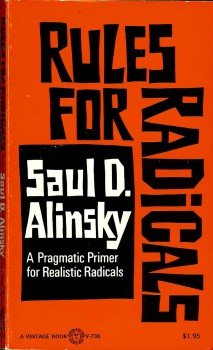
Rules for Radicals: A Pragmatic Primer for Realistic Radicals

Rules for Radicals, written by Saul Alinsky is a classic treatise on grassroots organizing. The first paragraph of Alinsky’s seminal work is as confrontational as his tactics:

“What follows is for those who want to change the world from what it is to what they believe it should be. The Prince was written by Machiavelli for the Haves on how to hold power. Rules for Radicals is written for the Have-Nots on how to take it away.”

Alinsky championed new ways to organize the poor and powerless which created a backyard revolution in cities across America. In the 1950s, he succeeded in organizing Chicago’s  African-American ghettos, which ignited similar movements in New York City, Detroit, MI, Oakland, CA, and dozens of other affected communities. His strategies were later adopted by young, counterculture-era organizers to challenge racial segregation and the U.S. war efforts in Vietnam. Conservative author William F. Buckley has credited Alinsky with being “very close to an organizational genius.”

For Alinsky, community organizing was the process of highlighting the problem to be solved, then convincing individuals change was possible. Alinsky recognized that If individuals do not believe they can change their circumstances, they will simply ignore the problem. Therefore, a movement must be sustained through hope and encouragement that the desired outcome can be achieved.

Alinsky advocated a form of militant diplomacy which forces power to respond to the activist. Some of his suggestions included:

“Ridicule is man’s most potent weapon. There is no defense. It’s irrational. It’s infuriating. It also works as a key pressure point to force the enemy into concessions.” (Rule #5)

and

“Pick the target, freeze it, personalize it, and polarize it.” Cut off the support network and isolate the target from sympathy. Go after people and not institutions; people hurt faster than institutions.” (Rule #12)

Alinsky’s controversial tactics are not for everyone, but anyone who is serious about social change should read his book. It is an essential primer for understanding and preparing against the tactics you can expect to face when challenging the status quo.

A free .pdf version of the book can be found here:

Click to access Rules_for_Radicals.pdf

download (3)
More Saul Alinsky Quotes:
A reformation means that masses of our people have reached the point of disillusionment with past ways and values. They don’t know what will work but they do know that the prevailing system is self-defeating, frustrating, and hopeless. They won’t act for change, but won’t strongly oppose those who do. The time is then ripe for revolution. — Rules for Radicals: A Pragmatic Primer for Realistic Radicals, p. xxii
Curiosity and irreverence go together. Curiosity cannot exist without the other. Curiosity asks, “Is this true?” “Just because this has always been the way, is the best or right way of life, the best or right religion, political or economic value, morality?” To the questioner, nothing is sacred. He detests dogma, defies any finite definition of morality, rebels against any repression of a free, open search of ideas no matter where they may lead. He is challenging, insulting, agitating, discrediting. He stirs unrest.
The organizer becomes a carrier for the contagion of curiosity, for a people asking “why” are beginning to rebel.

Society has good reason to fear the radical. Every shaking advance of mankind toward equality and justice has come from the radical. He hits, he hurts, he is dangerous.

― Reveille for Radicals

Further Reading 
Reveille for Radicals, by Saul D. Alinsky

America’s True History of Religious Tolerance

The idea that the United States has always been a bastion of religious freedom is reassuring—and utterly at odds with the historical record

Smithsonian Magazine | Subscribe
October 2010

Wading into the controversy surrounding an Islamic center planned for a site near New York City’s Ground Zero memorial this past August, President Obama declared: “This is America. And our commitment to religious freedom must be unshakeable. The principle that people of all faiths are welcome in this country and that they will not be treated differently by their government is essential to who we are.” In doing so, he paid homage to a vision that politicians and preachers have extolled for more than two centuries—that America historically has been a place of religious tolerance. It was a sentiment George Washington voiced shortly after taking the oath of office just a few blocks from Ground Zero.

But is it so?

In the storybook version most of us learned in school, the Pilgrims came to America aboard the Mayflower in search of religious freedom in 1620. The Puritans soon followed, for the same reason. Ever since these religious dissidents arrived at their shining “city upon a hill,” as their governor John Winthrop called it, millions from around the world have done the same, coming to an America where they found a welcome melting pot in which everyone was free to practice his or her own faith.

The problem is that this tidy narrative is an American myth. The real story of religion in America’s past is an often awkward, frequently embarrassing and occasionally bloody tale that most civics books and high-school texts either paper over or shunt to the side. And much of the recent conversation about America’s ideal of religious freedom has paid lip service to this comforting tableau.
From the earliest arrival of Europeans on America’s shores, religion has often been a cudgel, used to discriminate, suppress and even kill the foreign, the “heretic” and the “unbeliever”—including the “heathen” natives already here. Moreover, while it is true that the vast majority of early-generation Americans were Christian, the pitched battles between various Protestant sects and, more explosively, between Protestants and Catholics, present an unavoidable contradiction to the widely held notion that America is a “Christian nation.”

First, a little overlooked history: the initial encounter between Europeans in the future United States came with the establishment of a Huguenot (French Protestant) colony in 1564 at Fort Caroline (near modern Jacksonville, Florida). More than half a century before the Mayflower set sail, French pilgrims had come to America in search of religious freedom.

The Spanish had other ideas. In 1565, they established a forward operating base at St. Augustine and proceeded to wipe out the Fort Caroline colony. The Spanish commander, Pedro Menéndez de Avilés, wrote to the Spanish King Philip II that he had “hanged all those we had found in [Fort Caroline] because…they were scattering the odious Lutheran doctrine in these Provinces.” When hundreds of survivors of a shipwrecked French fleet washed up on the beaches of Florida, they were put to the sword, beside a river the Spanish called Matanzas (“slaughters”). In other words, the first encounter between European Christians in America ended in a blood bath.

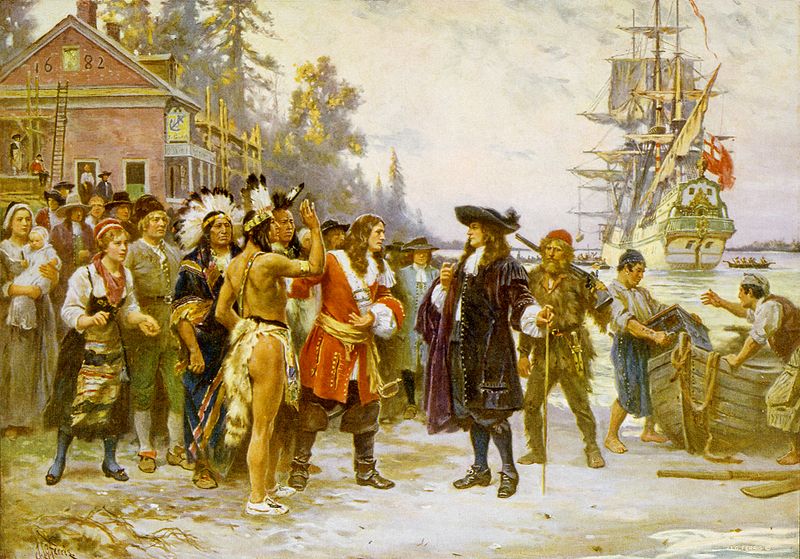
The much-ballyhooed arrival of the Pilgrims and Puritans in New England in the early 1600s was indeed a response to persecution that these religious dissenters had experienced in England. But the Puritan fathers of the Massachusetts Bay Colony did not countenance tolerance of opposing religious views. Their “city upon a hill” was a theocracy that brooked no dissent, religious or political.

indian1

The most famous dissidents within the Puritan community, Roger Williams and Anne Hutchinson, were banished following disagreements over theology and policy. From Puritan Boston’s earliest days, Catholics (“Papists”) were anathema and were banned from the colonies, along with other non-Puritans. Four Quakers were hanged in Boston between 1659 and 1661 for persistently returning to the city to stand up for their beliefs.

Throughout the colonial era, Anglo-American antipathy toward Catholics—especially French and Spanish Catholics—was pronounced and often reflected in the sermons of such famous clerics as Cotton Mather and in statutes that discriminated against Catholics in matters of property and voting. Anti-Catholic feelings even contributed to the revolutionary mood in America after King George III extended an olive branch to French Catholics in Canada with the Quebec Act of 1774, which recognized their religion.

When George Washington dispatched Benedict Arnold on a mission to court French Canadians’ support for the American Revolution in 1775, he cautioned Arnold not to let their religion get in the way. “Prudence, policy and a true Christian Spirit,” Washington advised, “will lead us to look with compassion upon their errors, without insulting them.” (After Arnold betrayed the American cause, he publicly cited America’s alliance with Catholic France as one of his reasons for doing so.)

In newly independent America, there was a crazy quilt of state laws regarding religion. In Massachusetts, only Christians were allowed to hold public office, and Catholics were allowed to do so only after renouncing papal authority. In 1777, New York State’s constitution banned Catholics from public office (and would do so until 1806). In Maryland, Catholics had full civil rights, but Jews did not. Delaware required an oath affirming belief in the Trinity. Several states, including Massachusetts and South Carolina, had official, state-supported churches.

In 1779, as Virginia’s governor, Thomas Jefferson had drafted a bill that guaranteed legal equality for citizens of all religions—including those of no religion—in the state. It was around then that Jefferson famously wrote, “But it does me no injury for my neighbor to say there are twenty gods or no God. It neither picks my pocket nor breaks my leg.” But Jefferson’s plan did not advance—until after Patrick (“Give Me Liberty or Give Me Death”) Henry introduced a bill in 1784 calling for state support for “teachers of the Christian religion.”

Future President James Madison stepped into the breach. In a carefully argued essay titled “Memorial and Remonstrance Against Religious Assessments,” the soon-to-be father of the Constitution eloquently laid out reasons why the state had no business supporting Christian instruction. Signed by some 2,000 Virginians, Madison’s argument became a fundamental piece of American political philosophy, a ringing endorsement of the secular state that “should be as familiar to students of American history as the Declaration of Independence and the Constitution,” as Susan Jacoby has written in Freethinkers, her excellent history of American secularism.

Among Madison’s 15 points was his declaration that “the Religion then of every man must be left to the conviction and conscience of every…man to exercise it as these may dictate. This right is in its nature an inalienable right.”

Madison also made a point that any believer of any religion should understand: that the government sanction of a religion was, in essence, a threat to religion. “Who does not see,” he wrote, “that the same authority which can establish Christianity, in exclusion of all other Religions, may establish with the same ease any particular sect of Christians, in exclusion of all other Sects?” Madison was writing from his memory of Baptist ministers being arrested in his native Virginia.

Bible riots
Philadelphia’s Bible Riots of 1844 reflected a strain of anti-Catholic bias and hostility that coursed through 19th-century America. (Granger Collection, New York)

As a Christian, Madison also noted that Christianity had spread in the face of persecution from worldly powers, not with their help. Christianity, he contended, “disavows a dependence on the powers of this world…for it is known that this Religion both existed and flourished, not only without the support of human laws, but in spite of every opposition from them.”

Recognizing the idea of America as a refuge for the protester or rebel, Madison also argued that Henry’s proposal was “a departure from that generous policy, which offering an Asylum to the persecuted and oppressed of every Nation and Religion, promised a lustre to our country.”

After long debate, Patrick Henry’s bill was defeated, with the opposition outnumbering supporters 12 to 1. Instead, the Virginia legislature took up Jefferson’s plan for the separation of church and state. In 1786, the Virginia Act for Establishing Religious Freedom, modified somewhat from Jefferson’s original draft, became law. The act is one of three accomplishments Jefferson included on his tombstone, along with writing the Declaration and founding the University of Virginia. (He omitted his presidency of the United States.) After the bill was passed, Jefferson proudly wrote that the law “meant to comprehend, within the mantle of its protection, the Jew, the Gentile, the Christian and the Mahometan, the Hindoo and Infidel of every denomination.”

Madison wanted Jefferson’s view to become the law of the land when he went to the Constitutional Convention in Philadelphia in 1787. And as framed in Philadelphia that year, the U.S. Constitution clearly stated in Article VI that federal elective and appointed officials “shall be bound by Oath or Affirmation, to support this Constitution, but no religious Test shall ever be required as a Qualification to any Office or public Trust under the United States.”

This passage—along with the facts that the Constitution does not mention God or a deity (except for a pro forma “year of our Lord” date) and that its very first amendment forbids Congress from making laws that would infringe of the free exercise of religion—attests to the founders’ resolve that America be a secular republic. The men who fought the Revolution may have thanked Providence and attended church regularly—or not. But they also fought a war against a country in which the head of state was the head of the church. Knowing well the history of religious warfare that led to America’s settlement, they clearly understood both the dangers of that system and of sectarian conflict.

It was the recognition of that divisive past by the founders—notably Washington, Jefferson, Adams and Madison—that secured America as a secular republic. As president, Washington wrote in 1790: “All possess alike liberty of conscience and immunity of citizenship. …For happily the Government of the United States, which gives to bigotry no sanction, to persecution no assistance requires only that they who live under its protection should demean themselves as good citizens.”

He was addressing the members of America’s oldest synagogue, the Touro Synagogue in Newport, Rhode Island (where his letter is read aloud every August). In closing, he wrote specifically to the Jews a phrase that applies to Muslims as well: “May the children of the Stock of Abraham, who dwell in this land, continue to merit and enjoy the good will of the other inhabitants, while every one shall sit in safety under his own vine and figtree, and there shall be none to make him afraid.”

As for Adams and Jefferson, they would disagree vehemently over policy, but on the question of religious freedom they were united. “In their seventies,” Jacoby writes, “with a friendship that had survived serious political conflicts, Adams and Jefferson could look back with satisfaction on what they both considered their greatest achievement—their role in establishing a secular government whose legislators would never be required, or permitted, to rule on the legality of theological views.”

Late in his life, James Madison wrote a letter summarizing his views: “And I have no doubt that every new example, will succeed, as every past one has done, in shewing that religion & Govt. will both exist in greater purity, the less they are mixed together.”

While some of America’s early leaders were models of virtuous tolerance, American attitudes were slow to change. The anti-Catholicism of America’s Calvinist past found new voice in the 19th century. The belief widely held and preached by some of the most prominent ministers in America was that Catholics would, if permitted, turn America over to the pope. Anti-Catholic venom was part of the typical American school day, along with Bible readings. In Massachusetts, a convent—coincidentally near the site of the Bunker Hill Monument—was burned to the ground in 1834 by an anti-Catholic mob incited by reports that young women were being abused in the convent school. In Philadelphia, the City of Brotherly Love, anti-Catholic sentiment, combined with the country’s anti-immigrant mood, fueled the Bible Riots of 1844, in which houses were torched, two Catholic churches were destroyed and at least 20 people were killed.

At about the same time, Joseph Smith founded a new American religion—and soon met with the wrath of the mainstream Protestant majority. In 1832, a mob tarred and feathered him, marking the beginning of a long battle between Christian America and Smith’s Mormonism. In October 1838, after a series of conflicts over land and religious tension, Missouri Governor Lilburn Boggs ordered that all Mormons be expelled from his state. Three days later, rogue militiamen massacred 17 church members, including children, at the Mormon settlement of Haun’s Mill. In 1844, a mob murdered Joseph Smith and his brother Hyrum while they were jailed in Carthage, Illinois. No one was ever convicted of the crime.

Even as late as 1960, Catholic presidential candidate John F. Kennedy felt compelled to make a major speech declaring that his loyalty was to America, not the pope. (And as recently as the 2008 Republican primary campaign, Mormon candidate Mitt Romney felt compelled to address the suspicions still directed toward the Church of Jesus Christ of Latter-day Saints.) Of course, America’s anti-Semitism was practiced institutionally as well as socially for decades. With the great threat of “godless” Communism looming in the 1950s, the country’s fear of atheism also reached new heights.
America can still be, as Madison perceived the nation in 1785, “an Asylum to the persecuted and oppressed of every Nation and Religion.” But recognizing that deep religious discord has been part of America’s social DNA is a healthy and necessary step. When we acknowledge that dark past, perhaps the nation will return to that “promised…lustre” of which Madison so grandiloquently wrote.

About the Author

Kenneth C. Davis is the author of Don’t Know Much About History and A Nation Rising, among other books.
Original Source: http://www.smithsonianmag.com/history/americas-true-history-of-religious-tolerance-61312684/#c8EfBVpuT4FxW7kC.99

Where the right to know comes from

cjr_full_logo

By Michael Schudson

OCTOBER 14, 2015

Wikimedia Commons, treatment by CJR.

IN 2003, DEAN BAQUET, then managing editor of the Los Angeles Times, along with then-Editor John S. Carroll, considered—and ultimately rejected—delaying publication of a damaging story on gubernatorial candidate  Arnold Schwarzenegger. Just five days before the October 7 special election, the paper ran the story, which detailed multiple allegations of sexual harassment. Continue reading Where the right to know comes from

“If we desire respect for the law, we must first make the law respectable.” – U.S. Supreme Court Justice Louis D. Brandeis