Synopsis: Harvard Law Professor, Lawrence Lessig, makes the case that our democracy has become corrupt with money, leading to the concerns of ordinary Americans being ignored. Leesig argues that only 0.02% of the United States population actually determines who’s in power and introduces a study conducted by Princeton researchers which suggests that public opinion no longer has any quantifiable influence on public policy. Lessig contends that this fundamental breakdown of the democratic system must be fixed before we will ever be able to address major challenges like racial inequality, economic disparity and climate change.
Synopsis: A just society has fair laws. But most societies aren’t like that. So what can you do? The opponent of slavery, Henry David Thoreau, gave one answer in his essay ‘On Civil Disobedience’: follow your conscience and break the law on moral grounds rather than be a cog in an unjust system. Ghandi, Rosa Parks and Martin Luther King have all inspired generations to make changes to unjust laws through civil disobedience. Stephen Fry explains its origins.
Synopsis: Designer/Researcher Lisa Ma speaks at TEDxEastEnd about the possibility of a passive activism which shifts away from the traditional model of confrontation with power towards creative acts of public service. Lisa Ma writes and lectures about fringe communities, ethnographic research and speculative design.
Synopsis: Chris Hedges with RealNews.com interviews Noam Chomsky, Professor Emeritus at MIT, about the future of majoritarian social movements. Chomsky discusses the historical attempts by those in power to suppress public dissent and the success of Twentieth Century labor movements. Chomsky asserts protest tactics, such as, Occupy Wall Street help to affect public discourse which can undermine the existing power structure and create tomorrow’s social institutions.
Synopsis: In this brief five minute video, Municipal consultant, Dr. Amara Enyia, shares some insights on effective community organizing. She educates young activists on the importance of gaining a better understanding of their own motivations, the key issues their community faces, the existing power dynamics within the community, and the people skills required to collaborate within existing community networks. Amara Enyia serves as the Chief Executive Officer of ACE Municipal Partners LLC, a full service municipal consulting firm that works with small and mid-sized cities in the Chicago/NW Indiana area, Central America, South America, and Africa. She’s also the founder and lead author of the blog “The Municipal Maven,” which features the intersection of politics, policy and the public through the lens of municipalities.
Synopsis: Political Scientist, Erica Chenowith, speaks about her research on the impressive historical record of civil resistance in the 20th century and discusses the promise of unarmed struggle in the 21st century. According to her research, from 1900-2006, campaigns of nonviolent civil resistance were twice as likely to succeed as violent campaigns. Chenowith asserts a “3.5% rule”—the notion that no government can withstand a challenge of 3.5% of its population without either accommodating the movement or (in extreme cases) disintegrating. Chenowith is a faculty member and Ph.D. program co-director at the University of Denver’s Josef Korbel School of International Studies.
Synopsis: Matt Damon, a lifelong friend of Howard Zinn, reads excerpts from Zinn’s 1970 speech on civil disobedience. Zinn delivered the speech at Johns Hopkins University in Baltimore as his opening statement in a debate on civil disobedience with the philosopher Charles Frankel. Zinn was a social activist and political science professor at Boston University during the civil rights era who has authored over twenty books, including his seminal work, A People’s History of the United States.
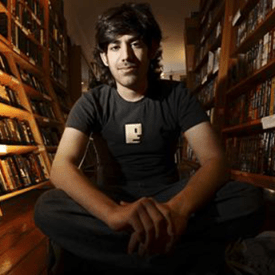
Synopsis: Filmmaker Brian Knappenberger explores the life and work of programming prodigy and internet activist Aaron Swartz. The documentary presents a dynamic and tragic portrait of the life of Reddit co-founder Aaron Swartz, a champion of open access who grew up to lead the internet community into a new age of data sharing and free speech. The film examines how the suppression of information and lack of government transparency has been used to avoid public scrutiny and prevent informed participation in the democratic process.
Synopsis: When Julian Assange first launched his whistle-blower website, Wikileaks, he was heralded as a public hero for exposing government and corporate corruption. Public opinion quickly shifted as Western governments who had been exposed launched a full scale campaign to marginalize Assange and paint him as a threat to national security. Swedish Television’s Jesper Huor and Bosse Lindquist investigate the history of WikiLeaks and its mission through the lens of Wikileaks founder Julian Assange, his partner Daniel Domscheit Berg, the editorial teams at the Guardian, Der Spiegel and New York Times newspapers, and the US State Department officials who were forced to address and contain the early leaks.
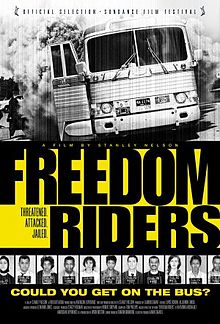
Synopsis: An award winning PBS documentary which tells the story of a courageous band of civil rights activists calling themselves Freedom Riders, who challenged racial segregation in the American South. The film recounts the harrowing and inspirational story of a tight knit band of civil rights activists that risked their lives by touring the South on buses and trains to challenge Jim Crow laws which prevented blacks from utilizing “white only” facilities. The activists were met with bitter racism and mob violence along the way, severely testing their faith in the possibility of non-violent change.

 Camden Civil Rights Project