Category Archives: Racial Equality

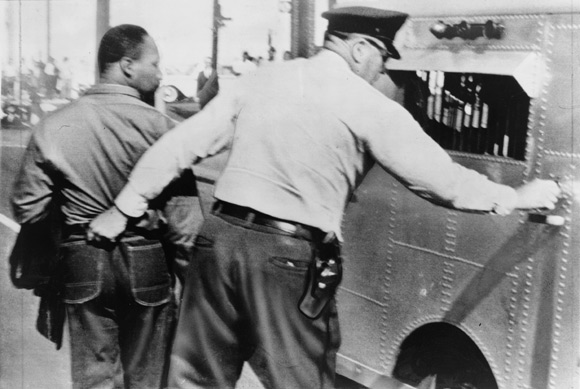
Driving While Black

BY

“Oh, God, help me! Oh, my God! Oh, no no no! Oh, God, help me! Help me, God! Help me, God! Please, God, save me! Oh, God! Oh, my God!”

Our instructors call him the Screamer. We are not told his name, which is just as well. That added bit of humanity would make his debasement all the more difficult to watch.

Judging from the enthusiasm of the California Highway Patrol officers who are training us, the Screamer promises to be a high point of sorts in our lessons. Several times during this morning’s classes, when the lectures have dragged, one or another of our uniformed instructors has called out from the back of the classroom, “Play the Screamer!” And so, eventually, they do.

As the video equipment is being readied, a sergeant briefs us on what we are about to see: a tape of an actual search made by an Operation Pipeline team in rural Arkansas. The tape will demonstrate several things, we are told, not the least of which is the effectiveness of the training we are receiving. We will see with our own eyes just how well Operation Pipeline works.

The television monitor flickers on and we see a smeary black-and-white shot of a gangly man in a checkered shirt. He is standing by a car, alongside some highway in the boondocks, trailer trucks roaring by. On the tape, it is the dead of winter, overcast and blustery, and the man keeps brushing long strands of hair from his eyes as he nervously answers questions from the two Arkansas state troopers towering over him. He is nobody, some jobless hillbilly plucked from the traffic stream by two cops who have been specially trained–like us–to spot suspicious characters.

The troopers give the man the once-over and tell him they want to search his car. He reluctantly agrees and is shoved into the backseat of their unoccupied prowl car, behind the dash-mounted video camera, and from then on, we watch through his eyes as the Pipeline team searches his car.

When the trunk lid pops open, the man begins to whimper. When one of the troopers reaches in and tosses a black plastic garbage bag onto the hood of the patrol car, he lets loose with a piercing off-camera shriek.

“Help me! Help me, God! Help me, God! Please, God, save me! Oh, God! Oh, my God!”

He keeps it up, alternating between wails and moans, for what seems like an eternity, gibbering at the visions he is conjuring of his near future. Just when he seems finished, when it seems certain his lungs can take no more, he starts up again, screaming even louder than before. “Oh, God, save me! Oh, sweet God, please! Please save me!”

“Now, look, look,” our instructor says excitedly, pointing at the screen. “The troopers are finally gonna hear him!”

As a gut-wrenching howl erupts from inside the patrol car, one of the cops looks up slowly from the Screamer’s trunk and gives the camera a puzzled glance. Comedy.

The classroom explodes with laughter.


CURTIS V. RODRIGUEZ IS A SAN JOSE LAWYER. He looks far younger than his forty years, has a couple kids, owns a house, drives a nice car. He’s a prime example of an emerging army in California: educated urban professionals who happen not to have white skin.

Last June, he and a friend, fellow attorney Arturo Hernandez, drove Rodriguez’s Mazda Millenia to Merced on a mundane legal task: taking pictures of a client’s house. On their way through the windy Pacheco Pass, in the mountain range separating the Pacific coast from the dusty farms of the San Joaquin Valley, they saw some cars that had been pulled over and were being searched by California Highway Patrol officers. In every instance, it seemed, the car’s driver was a dark-skinned male.

On the way back, hours later, they saw more. One after another, every couple of miles.

“After seeing the third car in a row–same deal, driver is a dark-skinned Latino and the cops have them standing off on the side of the road–Art and I looked at each other and said, ‘Do you believe this?’ ” Rodriguez says. “It was obvious whom they were stopping. It’s not like there are that many dark-skinned Latinos on the road, but that’s all they had. Art got the camera out and started taking pictures of the stops, because we figured no one would believe us.”

Hernandez began snapping away, getting photos of a fourth car whose dusky occupants were being questioned by the roadside. As the Millenia whizzed by the fifth such vehicle, a highway patrolman looked up and saw Hernandez with the Olympus. Soon, the Mazda’s rearview mirror was filled with the chrome grille of the trooper’s hard-charging Crown Victoria.

“I’m driving like a saint,” Rodriguez recalls. “I’m going under the speed limit, straight down the middle of the lane. There’s nothing he can do to me. But he turns on his lights and pulls me over. He walks up and tells me I was weaving, which is a total lie, because I was driving that car like it was on rails.”

The trooper then told Rodriguez he wanted to search the Mazda, and Rodriguez scoffed. To hell with that, he thought. I didn’t go to law school for nothing. No way, he told the officer, am I consenting to a search. I know my constitutional rights. Art and I are criminal lawyers. The Fourth Amendment protects us from this kind of nonsense. If you want to search the car, get a warrant. Otherwise, just give me a ticket and let me go.

The trooper was unmoved. He looked at the two attorneys calmly and ordered them out of the vehicle. I’m in fear for my life, he informed them in a monotone. The passenger made suspicious motions, which gives me the right to search your car–for my own safety. Rodriguez’s license and registration were taken back to the cruiser, where a drug dog sniffed at them indifferently. Not surprisingly, the search turned up nothing.

Rodriguez was dumbfounded. “The whole thing was about as illegal as you can get. He had no cause to pull me over. He had no reason to search my car. He knows I’m a lawyer, and he goes ahead and does it anyway! So the thing I’m wondering is, what happens to the people who aren’t lawyers?”

What sometimes happens is this: They get frisked, and sniffed by dogs, their luggage gets dumped out and pawed, on occasion their cars are towed away and dismantled back at the police station. Other times, their vehicles are taken apart on the spot. If they’re lucky, they are simply left standing alongside the road, frightened and mystified, holding an expensive traffic ticket they didn’t deserve and wondering why, out of all the cars on the highway, the police came after them.

In most cases, it can be summed up in two words: Operation Pipeline. Like tens of thousands of other innocent motorists, Curtis Rodriguez had been sucked up and spit out by one of the federal government’s more secretive antidrug campaigns, a giant vacuum cleaner of a program financed by the U. S. Drug Enforcement Administration and run by hundreds of state and local police agencies across the country. Over the past thirteen years, Operation Pipeline has been waging an expanding and largely invisible war on the nation’s highways against “mules,” people who haul cash and drugs for dope dealers. In its time, Pipeline has scored some impressive victories. But as with any war, it has left considerable collateral damage in its wake: legions of law-abiding motorists who have been ticketed, interrogated, and searched simply because they looked or acted funny–or happened not to be white.

“It isn’t just blacks and Hispanics, though they do seem to be the majority,” says Utah attorney W. Andrew McCullough. “In my experience, any motorist who looks different is a candidate for getting pulled over by these folks.”

Complaints of racially motivated traffic enforcement are nothing new, of course. But in the last couple of years, these complaints have become louder and more persistent. Some legal experts, such as constitutional-law professor David A. Harris of the University of Toledo, believe we are in the midst of a “national epidemic of race-based traffic enforcement.”

That perception has been strengthened by recent civil-rights suits filed in Maryland and New Jersey and statistical studies done in North Carolina and Florida proving that on some highways, the traffic laws have been enforced far more stringently against dark-skinned drivers. Because of these documented cases of roadside racism, Democratic congressman John Conyers of Michigan was able to persuade the Republicans in the House last year to pass a bill requiring traffic police to record the race of the drivers they stop so that the phenomenon could be studied nationwide, but the measure died in the Senate. Last September, the California legislature overwhelmingly passed a similar bill–sponsored by Senator Kevin Murray of Los Angeles, who himself had been subjected to a questionable search–only to see it vetoed by Governor Pete Wilson.

For the most part, police characterize these cases as isolated lapses in judgment by rogue officers or insensitive police commanders who’ve sent out the “wrong signal” to the troops. But what no one has seemed to notice so far is the thread that connects many of these seemingly unrelated cases: this unheralded federal program called Operation Pipeline.

I ended up inside Pipeline last summer as an investigator for the California Legislature after hearing stories from law-enforcement sources about special CHP units that were pulling Latino motorists off the interstates on a whim and rousting them in an effort to find guns, cash, and drugs. What was happening on California’s highways, I discovered, was happening across the country–methodically and with increasing frequency.

Operation Pipeline has helped give rise to a new catchphrase in the minority community: DWB, Driving While Black, or Driving While Brown. Yet few outside of law-enforcement circles have even heard of Operation Pipeline.

The DEA, Operation Pipeline’s federal sponsor, doesn’t talk about it much, which is odd, since the agency considers Pipeline to be “one of the nation’s most effective drug-interdiction programs.”

But with 301 police commands in forty-eight states now participating in Pipeline in some fashion–from the tiny Picayune Police Department in Mississippi to the New York State Police–the program is in danger of becoming a victim of its own excess. The problems have become so obvious to the CHP that the agency recently embarked on a major overhaul of its Pipeline program.

Two months before Curtis Rodriguez had his car tossed, a reporter had asked a veteran California Highway Patrol sergeant to explain the operating principle behind this campaign to remove contraband from highway travelers. The answer: volume, volume, volume.

“It’s sheer numbers,” he said. “Our guys make a lot of stops. You’ve got to kiss a lot of frogs before you find a prince.” California Highway Patrol canine units kissed nearly thirty-four thousand frogs in 1997. Only 2 percent of them were carrying drugs. In other states, up to 95 percent of all Pipeline searches have been found to be dry holes.

An Ohio trooper testified in a drug-seizure case a few years ago that he’d personally conducted 786 searches in a single year, sometimes for no other reason than to keep in practice. The state judge, James Brogan, was outraged.

“If we multiply this among all agencies and officers who are currently using routine traffic stops to search the vehicles of citizens they suspect of no crime, the number of individual citizens being asked to relinquish their privacy rights . . . is staggering,” Brogan wrote.

Within the past year, according to one DEA official, Attorney General Janet Reno and her top aides have begun asking questions about Pipeline, wondering why the program keeps spawning complaints from black and Hispanic motorists and lawsuits accusing the police of racism and selective enforcement.

Frankly, it’s not much of a mystery. The answer can be found in the muddy median strip of I-95, a four-lane concrete corridor that cuts through the desolate coastal swamps of Florida. It’s where Operation Pipeline arose and where it grew to become what it is today.


LIKE THE PHRENOLOGISTS OF THE NINETEENTH CENTURY, who believed that a person’s personality could be divined from the shape of his skull, Robert L. Vogel Jr. believes he can spot drug traffickers from the general cut of their jib.

“Bob has a God-given sixth sense,” Vogel’s dark-haired wife, Jeannie, says earnestly. “A lot of people are jealous of that or can’t understand it.”

Vogel discovered his unusual talent in the mid-1980s, while working as a Florida state trooper, cruising I-95 outside Daytona Beach and Port Orange, looking for traffic miscreants. Certain drivers, he noticed, just gave him a bad feeling inside. When he searched their cars, he would frequently find drugs or weapons.

A compact, soft-spoken Vietnam vet who bears a faint resemblance to Richard Gere, Bob Vogel is a deliberate, methodical man, serious about his job, so he began compiling his observations about the drivers who set off the alarm bells in his head. He discovered common traits among them and gathered these together into a list of “indicators,” which he began mentally checking off whenever he pulled someone over.

He broke down the indicators into two types: physical and behavioral. The physical indicators were the ones he could see as he scanned the interior of his quarry’s car. Such things as car phones and pagers, radar detectors and radio scanners, were obvious. But there were many others. Cops regard the indicators as something akin to a magician’s secrets. Our Pipeline instructor warned against disclosing them in court lest “the bad guys” find out. But in truth, records of them can be found in a good public library. Among the most common:

Air fresheners, especially the ones that look like leaves or little pine trees. Pipeline cops call them “the felony forest.” They can be used to mask the odor of drugs. Having fabric softener, coffee grounds, or laundry detergent lying around is also a sign something could be amiss.
Fast-food wrappers on the floor. Evidence of “hard travel”; suggests a desire not to leave the drug load, even to get a sit-down meal. Pillows and blankets in the car fall under this rubric as well.
Maps with cities circled on them. A circled “drug source” or “drug destination”–which covers just about all major cities–is more evidence of a motorist’s true nature.
Tools on the floor, for easy access to those hidden compartments full of drugs and money. Tinted windows, new tires on an older car, or high mileage on a new car are also worrisome signs.
A single key in the ignition. Most people, presumably, have lots of keys on their key chains. Solitary keys suggest someone just handed the driver a key.
Not enough luggage for a long trip or too much luggage for a short one. Rental cars are extremely suspicious, as is an auto-registration certificate in someone else’s name.
Vogel acknowledges that each of these indicators can be found in the cars of innocent citizens and, by itself, is no indication of criminal activity. But when they are found in combination, he insists, it means you’ve got a potential drug mule on your hands. Spotting them is nothing more than good, basic police work, he says, and, as shown by the thousands of drug seizures Pipeline units make every year, obviously he is right.

But it’s when you get to the next step–the behavioral indicators–that things get a bit trickier, that Vogel’s sixth sense comes into play. It’s also when good, basic police work can sometimes mutate into racism and stereotyping. In a deposition in 1997, Utah state trooper Paul Mangelson, one of the nation’s best-known Operation Pipeline instructors and a frequent consultant to other police agencies, offered an insight into how the behavioral indicators work: “The secret of criminal interdiction is being able to read people. And there are things about people and things they do that are a definite tip-off,” Mangelson explained. “I don’t necessarily teach this, but on a freeway, prior to stopping somebody, I like to pull up in the inside lane, traffic permitting, and observe the individual.”

“Now, when you pull up alongside of somebody and take a look at them,” Mangelson was asked, “would this be any joe motorist or somebody that has already attracted your attention?”

“Somebody that I’ve already decided I’m going to stop. I want to see his reaction as I pull up alongside of him. For example, will he make eye contact with me? And I maintain that if a guy is doing something illegal, ninety-nine times out of a hundred he won’t look at you. Number two, he knows good and well that you are there, and he is going to have a death grip on that steering wheel, and you can probably see that his knuckles are turning white. That’s a very good indicator that guy is dirty. Something is illegal in that car.”

Other indicators, he said, are adornments like “earrings, nose rings, eyelid rings. Those are things that are common denominators with people who are involved with crimes. Tattoos would go along with that,” particularly tattoos of “marijuana leaves.”

Bumper stickers also give him a feel for the soul of the driver. “Deadhead stickers are things that almost–the people in those kinds of vehicles are almost always associated with drugs.”

How about ACLU stickers? “Yeah, I look for them.”

“What about, for instance, Hispanics in an out-of-state vehicle?”

“A lot of Hispanics are transporting narcotics,” Mangelson said. “That’s common knowledge. I don’t think it matters whether they’re in an out-of-state vehicle or not.”

What if he saw pornography in the car? “I would certainly have a belief that drugs could be in the vehicle.”

Not surprisingly, such unorthodox crime-fighting techniques were not immediately embraced by the courts. In Florida, Bob Vogel was viewed as something of an oddball at first. Judges, he learned, were simply unwilling to make allowances for a cop with clairvoyance.

When the federal eleventh-circuit court of appeals got a look at Vogel’s police work, the judges denounced it as illegal, unconstitutional, and possibly un-American. You mean you pulled over someone because you thought he looked like a drug dealer? the judges gasped. What was your probable cause?

“That trooper Vogel’s ‘hunch’ about the appellants proved correct is perhaps a tribute to his policeman’s intuition, but it is not sufficient to justify, ex post facto, a seizure,” the judges wrote in a 1986 opinion. To condone Vogel’s methods, they wrote, would mean that every car on the road could be pulled over and searched, which “would run counter to our Constitution’s promise against unreasonable searches and seizures.”

Undeterred by the stinging judicial rebuke and the queasiness of some of his bosses, Vogel plowed ahead. “No one else was doing this but me, and there were some people who were nervous about it, but there always has to be someone to test the waters,” Vogel says quietly. “I’ve never been a quitter.”

He looked over the legal opinions and slightly changed his approach. Instead of pulling over a driver merely for looking suspicious, he would find other reasons to stop the shifty-looking ones. He found them by the hundreds in the thick volumes of the Florida vehicle code: rarely enforced laws against driving with burned-out license-plate lights, out-of-kilter headlights, obscured tags, and windshield cracks. State codes bulge with such niggling prohibitions, some dating from the days of the horseless carriage.

“The vehicle code gives me fifteen hundred reasons to pull you over,” one CHP officer told me.

For Vogel, it was the perfect solution to his problem. Since it’s nearly impossible for drivers to go ten feet without violating some obscure ordinance, Vogel would simply tag along and wait for it to happen. Then he would pounce. Nobody could complain about that; he was duly enforcing the traffic laws of the State of Florida. And with that one refinement, Operation Pipeline was up and running.

After Vogel pulled a car over, he would search it, and, sure enough, sometimes he would find drugs. Once in a while, he would find a lot of drugs. Newspaper reporters started writing stories about him, marveling at the way he was able to turn a routine traffic stop into a major drug bust.

Within a year of being publicly flayed by the highest federal appeals court in the Southeast, Bob Vogel was honored four times with law-enforcement awards. 60 Minutes sent down a camera crew and produced a flattering profile depicting a dedicated, hardworking policeman trying his best to fight the drug war. Vogel became a local hero. In 1988, he was elected sheriff of Volusia County, and one of his first official acts was to set up a special antidrug unit in his image: the oddly named Selective Enforcement Team, handpicked deputies who had Vogel’s training methods instilled by the master himself.

Vogel had his admirers in Washington as well. By 1987, the DEA had formally adopted his highway drug-interdiction system and begun funding a training program to preach Vogel’s gospel around the country. (Though Vogel did not invent the notion of using profiles to spot potential drug couriers, he pioneered their adaptation to highway travelers, and my CHP instructors credited him as Pipeline’s creator. Previous police use of drug-courier profiles had been largely confined to airports.)

With DEA financing, training courses were set up, and they began churning out thousands of Pipeline graduates a year, officers who would return home and train thousands more.

It spread like a virus.
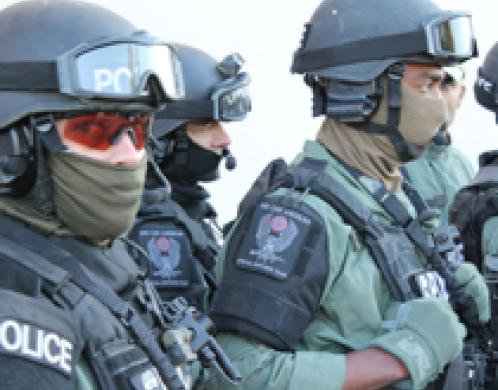
 

IF YOU COME INTO CONTACT WITH ONE OF THE ESTIMATED TWENTY-SEVEN THOUSAND Operation Pipeline grads currently cruising the highways, chances are you’ll never know it. The officer who pulls you over will look the same as any other traffic cop. Same hat. Same badge. Same car. He will not tell you he is a narcotics officer, and you will never suspect it, because, after all, who ever heard of drug agents passing out tickets for broken taillights?

The mechanics of a Pipeline stop are much like a minuet, except the trooper is the only one who hears the music or knows the steps–all of which lead inexorably to a thorough search of your car.

“I’m looking for anything that will get me in that car or get him out of the car,” Utah trooper Mangelson explained in his 1997 deposition.

Because of various court rulings and constitutional impediments, things must be done delicately and in the proper order, so as not to overtly violate your rights.

It will begin like any traffic stop. You’ll be asked for your license and registration, and while looking over your papers, the officer will ask you a series of questions about your travel plans. He’ll be friendly and polite: Where are you heading? How long will you be there? He’ll ask what you do for a living, or something equally innocuous.

“And when I’m doing this, you know, I’m not sitting there grilling you,” Mangelson said. “I’m doing it in a way that you probably don’t even realize what I’m doing.”

What he’s doing is called an interrogation, and your responses are being watched very closely. Did you have to think before answering? Did you repeat his questions? Are you being too helpful, too cooperative, or too talkative? Those are all bad signs, as bad as monosyllabic answers. If you have a passenger, the passenger will be taken off to the side and interrogated separately. The officer will check to see if your stories match.

“Criminals on the road are–how can I put it? I’ve always used this theory. If a guy can convince me of his legitimacy of being where he is or where he’s going, then there’s probably not much criminal activity going on,” Mangelson said. “But by the same token, if he tells me he’s going to Salt Lake, and I say, ‘What takes you to Salt Lake?’ and he goes, ‘I’m going to see a friend.’ If I say, ‘What’s your friend’s name?’ and he doesn’t know the friend’s name or he rattles some name off the wall, [I ask] ‘What’s his address?’ He’s now becoming extremely nervous, and he can’t tell me the friend’s address, doesn’t know the phone number. ‘How are you going to visit your friend if you don’t know his address or phone number?’ By now, he’s trembling. The veins are poking out on the side of the neck and you can see his heart beating there and his hands are shaking and his mouth is so dry, he can’t even talk to you. You know he’s dirty. And he knows I’m on to him.”

The indicators are tallied up. No indicators, no problem. Unless you’ve got a gun or a kilo of cocaine lying on the front seat, you’ll be kicked loose. You may not even get a ticket. Many Pipeline officers don’t write them or write only enough of them to maintain the facade that they are traffic policemen.

If your indicators are on the high side, however, this is what will happen. You’ll be given your papers back, and then the officer will hang around and strike up a conversation. What most drivers don’t realize is that at this point, they have magically crossed into a whole new legal universe. At the moment your license and registration are returned, you are technically free to leave. In the eyes of the law, the traffic stop is over. Now you and Officer Friendly are just having a “consensual” chat. And your new friend is free to ask you anything.

From here, it’s almost a script.

You’ll be told that the local police have been having a problem with people ferrying guns and drugs along this part of the highway, but they’re doing their best to stop it. Good, you may say. Glad to hear it. The officer will nod and say he’s happy you see it that way. By the way, you wouldn’t happen to have any guns or drugs in your car, would you?

Me? you will ask. Oh, no. Of course not.

Then the officer will look at you and say, Then you don’t mind if I take a look-see, do you?

If you’re like nine out of ten people who get asked this question, you’ll gulp and say, No, no, officer, go right ahead.

You’ll be asked to consent–orally or on paper–to a search, but don’t think too hard or hesitate to comply, because those are more indicators of drug trafficking, as is refusing to allow the search. (And here’s where things can get dangerous, where the psychopath who won’t be taken might pull his gun. A 1992 Pipeline stop in South Carolina resulted in a shoot-out that killed the officer and wounded his suspect. And this past January, a veteran Pipeline officer in Georgia was murdered during a stop.)

“If they refuse, the stuff’s in the trunk,” our CHP instructor tells us matter-of-factly. A refusal justifies calling out the dogs and letting a drug-sniffing canine take a walk around your car. If Fido gets a whiff of something, the cop doesn’t need your permission anymore.

Most drivers consent. This can authorize a complete search of everything, including your luggage and your person. It allows the officer literally to take your car apart with an air hammer, which has happened. One of the CHP’s first Pipeline officers, Richard Himbarger, was legendary for carrying an electric screwdriver in his patrol car and removing heater ducts, fenders, trunk lids, and interior body panels, right by the side of the road.

“Once they’ve given consent,” our CHP instructor tells us, “they’ve dug their own grave.”


DEPUTY LOU GARCIA WAS ASSIGNED TO SHERIFF VOGEL’S SELECTIVE ENFORCEMENT TEAM IN 1989. A canine-unit officer, Garcia would be summoned at all hours to walk his drug dog, Condor, near the cars the SET squad had pulled over on I-95. Lots of times, he’d be out on the highway at 3:00 a.m., splashing through swamps with Condor, chasing down panic-stricken motorists who’d bolted into the darkness. He didn’t mind. Garcia was thrilled to have been chosen to work with Vogel’s crew. The sheriff took good care of his boys: overtime, fancy Stetson hats, rapid promotions. By all accounts, Vogel was equally thrilled to have Lou Garcia on his team, and he commended the officer repeatedly.

“Thanks to you, our drug- and money-interdiction program is working,” Vogel wrote in one enthusiastic letter.

The son of a New Mexico coal miner, Garcia had come to the Volusia County Sheriff’s Office after fifteen years in the U. S. Army as a paratrooper, a military policeman, and a drill instructor. He hired on at the sheriff’s office in 1985 at $10.50 an hour and was in paradise. “When I finally got to be a deputy, I felt I had achieved my goal in life.”

But his wife, Angie, began noticing that her husband was increasingly moody after his shift. “He’d get home sometimes after being out on that highway,” she says, “and he’d just be shaking his head, and I’d ask him what was wrong, and he’d say, ‘You won’t believe what they’re doing out there.’ ”

Garcia says he soon discovered the secret of Vogel’s highly touted highway interdiction program: The cops concentrated on minority drivers, narrowing the universe of motorists to those they thought most likely to have drugs or guns, even though, in reality, drugs and guns turn up in searches of their vehicles with the same frequency as in those of white drivers. Garcia says he was present at a gathering of deputies on the median of I-95 when Vogel instructed them to focus their attention on black and Hispanic drivers. Vogel denies that happened, but another deputy, Frank Josenhans, corroborates Garcia’s story.

Still, it wasn’t as if Garcia needed to hear it from the sheriff’s mouth. “I knew who they were stopping. I saw the people. It was blacks, mostly, and they were all being pulled over for weaving. The black race was the only race I knew of that wasn’t able to stay in a lane. Black people just couldn’t seem to do it.”

What Garcia was witnessing in Volusia County was not an aberration. As more and more police departments signed up for Operation Pipeline, it began happening in other places, too. Sometimes the police didn’t even bother to hide it. Georgia state troopers told an Atlanta reporter in 1987 that they watched for rented cars from south Florida driven by blacks or Latinos.

Officer Richard Curtis of the Lexington, Kentucky, police department admitted under oath in a drug-interdiction case that race was one of the indicators looked at, as were out-of-state license plates. In another case, Alabama state trooper John Guthrie tes-tified that his indicators included “Texas plates” and “Mexicans.”

The “cocaine-courier profile” used by the New Mexico State Police along I-40 surfaced in court in the late 1980s. The very first indicator: “The vehicle occupants are usually resident aliens from Colombia.” This profile, it turned out, had been sent to police departments nationwide by the DEA’s El Paso Intelligence Center, the department that manages the Pipeline program and provides its annual funding of roughly $800,000.

Ironically, that’s the same amount of money the taxpayers of Eagle County, Colorado–which encompasses the ski resort of Vail–forked over to settle a class-action suit filed on behalf of 402 black and Hispanic drivers who had been stopped and searched by the High Country Drug Task Force, a Pipeline unit funded directly by the DEA. The task force “systematically violated the constitutionally protected rights of blacks and Hispanics to travel and be free from unreasonable seizures,” U. S. district judge James Carrigan wrote in a blistering criticism of the program in 1990. The evidence that race was used as an indicator, Carrigan ruled, was “undeniable,” and such practice amounted to “a racist assumption.”

Federal public defender Bryan Lessley obtained internal Oregon State Police records showing that the number of Hispanics being stopped on the highways near Grants Pass by a Pipeline unit was “grossly out of proportion” to the number of Hispanics on the road. He uncovered state-police training manuals that told Pipeline students a “high percentage” of narcotics traffickers were Hispanic.

In New Jersey, state-police Pipeline units assigned to the southern end of the New Jersey Turnpike were found by a superior-court judge to have had “at least a de facto policy . . . of targeting blacks for investigation and arrest,” which resulted in the dismissal of six hundred cases. A former New Jersey state trooper, Kenneth Wilson, admitted in a sworn statement that he was trained to target blacks and Hispanics. A statistical analysis by John Lamberth of Temple University backed up Wilson’s claims. Lamberth found that though blacks made up only 13 percent of the drivers on the turnpike, they accounted for nearly half the stops made by drug-seeking troopers.
The Maryland State Police made perhaps the biggest tactical blunder in the program’s history in 1992, when a Pipeline unit pulled over a black family in a rental car outside Washington, D. C., ordered them out into the rain, and then ran a drug-sniffing dog in and out of their car, over their repeated objections. The driver turned out to be a Harvard Law graduate, Robert Wilkins, a public defender who was on his way home from a family funeral in Chicago. Wilkins slapped the Maryland State Police with a civil-rights suit and accepted a settlement that forced the cops to keep detailed records of their Pipeline stops for the next three years. The results were more proof of Pipeline’s unique affinity for minorities: Of the 732 people who were detained and searched during 1995 and 1996, 75 percent were black and 5 percent Hispanic. The Maryland ACLU has filed another civil-rights suit based on those figures.


A GRANDMOTHERLY WOMAN IN A SLAB-SIDED PLYMOUTH FURY III ZIPS BY. Not a chance, I think. Next is a man in a suit, driving a gigantic white Lincoln Navigator, cell phone pressed to his ear. Mr. Business. With my luck, he’d turn out to be a lawyer. Pass. A teenage girl in her mom’s station wagon. Ditto. Then comes the carload of Mexicans.

They look as though they’re having one hell of a time, laughing, arms hanging out the window. Then they spot the CHP cruiser I’m sitting in, and the party is over. They look around furtively, sit up straight, won’t meet my steely gaze. The driver begins practicing the ten-and-two hand position on the steering wheel that he probably hasn’t used since driver’s ed. Bingo. A whole bunch of indicators right there. These guys are mine.

That is the result of my first drill using the lessons I gained from Pipeline school. I am sitting in the front seat of the head instructor’s patrol car, shaded by a giant oak. We are parked perpendicular to a bucolic two-lane highway in the hills beyond Susanville, California, checking out the sparse midmorning traffic. It is day two of my Pipeline training class, and I am putting my newly acquired observational skills to the test.

No one has instructed me to look for Mexicans; in fact, we were informed that racial profiling is illegal and frowned upon. But we were also taught that it is the Colombians and the Mexicans whose cartels are bringing most of the dope in and that a lot of drug mules are hired off the streets of Tijuana for $500 in cash. Not many gringos I’ve seen fit that description.

Plus, the Mexicans just look shifty to me. What are they doing, I wonder, driving around, yukking it up at 10:30 in the morning in the middle of the week? I am at work. Why aren’t they? And if they are unemployed, where’d they get the money for that nice Mercury?

And then I realize the problem with Operation Pipeline.

If I were looking for unsafe drivers, as most patrolmen do, it wouldn’t make any difference to me what the driver looked like or how he acted when he drove by or whether I thought he could afford his car. All I would care about would be how he was driving.

But that’s not my job as a Pipeline officer. My job is to get drugs and guns off the highway, so I look for people who look like they might have them. And since I have only a limited time out on the highway each day, I’m not going to waste it pulling over people who look like upstanding citizens–people who look like me and my friends, for instance.

I remember what my instructors told me repeatedly. If something appears “abnormal,” investigate. Always ask yourself whether this is something that you would do or say. If not, be suspicious. And suddenly, the baseline for determining who gets pulled over and searched is a forty-three-year-old white suburbanite’s vision of normalcy. Most of the white people I have seen driving by, I have to admit, look pretty normal to me. But the Mexicans don’t. Plus, there are all those indicators: their nervousness upon seeing a police car, the air freshener dangling from the mirror, their goddamn refusal to look at me.

It’s no wonder, I realize, that 90 percent of the people arrested by the CHP’s Pipeline units during the last two years have been minorities. They never stood a chance.

If I were empowered to do so, I could pull them over on some pretext to satisfy my curiosity. Maybe I would find something–drug-tainted money, a loaded gun, a kilo or two of cocaine or methamphetamine. Or maybe just a peaceable carload of people going from here to there, not owing me or anyone else an explanation. But if I do this long enough and use the indicators I’ve learned to pull over a volume of people, I will invariably find criminals. That was a big bag of dope in the Screamer’s trunk, after all. But does that justify scaring the bejesus out of the thousands of other motorists–the honest ones whose taxes pay my salary and pave these roads–whom I will misjudge? Will they think being interrogated and searched was a fair trade?

And what of the enormous waste of police manpower that goes into stopping and searching thousands of cars in which nothing more incriminating than old gum wrappers is found? Even the cops admit that highway seizures don’t make a dent in the quarter-trillion-dollar-a-year American narcotics industry. So, in the end, one is left to wonder: What is the point of all this harassment, this inefficiency, this futility? Is it really a way of finding contraband? Or is it, perhaps, a way of acclimating us to a future in which we will be routinely shadowed, stopped, and frisked by the police–a nation of suspects?


IN 1996, THE U. S. SUPREME COURT UNANIMOUSLY ENDORSED BOB VOGEL’S METHOD OF STOPPING PEOPLE FOR MINOR TRAFFIC VIOLATIONS IN ORDER TO SEARCH THEIR CARS FOR DRUGS. An officer’s real reason for pulling over a car didn’t matter a whit, the justices said, so long as some type of traffic offense–no matter how trivial–occurred first. It made no difference that the motor-vehicle codes gave the cops a license to “single out almost whomever they wish for a stop,” Justice Antonin Scalia wrote. It was not the role of the Supreme Court to decide whether there were too many traffic laws or which ones should no longer be enforced.
Since that ruling, known as the Whren decision, state and local police participation in Operation Pipeline has soared. Enrollments in DEA training schools are way up. “After Whren,” one of my CHP instructors told me, “the game was over. We won.”

Last fall, another Supreme Court decision, rejecting the search of an Iowa motorist’s car without probable cause, was widely hailed in the media as reinforcing the privacy rights of drivers. But since Pipeline officers are trained to legally justify a “reasonable suspicion,” or, of course, get the driver’s permission, before searching a car, this court decision may actually boost the popularity of Operation Pipeline.

That’s why it’s so ironic that Bob Vogel is no longer on the front lines of this particular war. Though his methods have received the stamp of unanimous approval from the highest court in the land, he’s quit teaching and has mothballed his drug-interdiction program. After a while, he said, it just wasn’t worth it.

In 1992, The Orlando Sentinel began printing stories that essentially accused Vogel’s SET unit of being racist thugs who were stealing money from innocent travelers. The newspaper said it found nearly two hundred cases in which deputies had taken a driver’s cash but made no arrests, and 90 percent of those cases involved minority drivers.

And then the tapes came out. It seemed Vogel’s boys had been videotaping their stops for posterity, and 148 hours of them were turned over to the newspaper. Example: a May 16, 1990, stop of a white driver. SET sergeant Dale Anderson strolls up to the car and asks the man how he’s doing.

“Not very good,” the driver replies.

“Could be worse,” Anderson reminds him. “Could be black.”

The civil-rights suits flew fast and furious after that. The U.S. Justice Department announced an investigation, and FBI agents started snooping around. A federal grand jury was empaneled.

The Sentinel won a Pulitzer prize for its exposé, a fact that grates on Vogel to this day. “Anybody who saw those stories would have thought I was some racist, tobacco-chewing, Billy Bob, redneck southern sheriff,” he complains. He leans forward slightly and asks me, mistakenly, if I was aware that the editor who oversaw the Sentinel’s coverage was an African-American.

“I’ll bet they didn’t tell you that part,” he says.

Eventually, the hubbub subsided. The discrimination suits were dismissed after federal judges declared that they had not seen convincing evidence of racial injustice. And the Justice Department, while muttering darkly about Vogel’s methods, declined to prosecute him on civil-rights charges, reportedly because it didn’t think a jury would convict him.

Critics called the investigation a whitewash, but there was more involved than that. History, for one thing. For more than a decade, Bob Vogel’s controversial system has been officially endorsed, financed, and espoused by the DEA–an arm of the Justice Department. Having Operation Pipeline’s creator brought up on federal civil-rights charges would have put the Justice Department and every other police agency involved in a rather awkward spot, especially when so many civil-rights suits were pending.

Vogel sees this as total vindication. “I’ve been investigated by just about everyone–the FBI, the Justice Department, the NAACP, the ACLU–and they haven’t been able to win a solitary case,” he says. “This whole thing is something that drug lawyers grabbed ahold of to try to beat some arrests by dragging race into it.”

If that’s true, he is asked, then why has this program had such lopsided racial results in state after state? Why are the statistics so one-sided?

Vogel stiffens. “Let me have my assistant, Lenny Davis, come in and answer that question for you. He might have an explanation for it.” A few minutes later, Chief Deputy Davis, a large, friendly black man, sits down and solemnly assures me that the reason so many blacks and Hispanics are being pulled over is because so many of them are involved in the drug business.

Vogel sits next to his chief deputy, nodding. But he doesn’t say a word.

This article originally appeared in the April 1999 edition of Esquire Magazine

Maladjusted

Modern Psychology has a word that is probably used more than any other word in Psychology. It is the word maladjusted. It is the ringing cry of modern child psychology — maladjusted. Now of course we all want to live the well adjusted life in order to avoid neurotic and schizophrenic personalities. But as I move toward my conclusion, I would like to say to you today, in a very honest manner, there’s some things in our society, and some things in our world, for which I am proud to be maladjusted. And I call upon all men of good will to be maladjusted to these things until the Good Society is realized.

I must honestly say to you that I never intend to adjust myself to racial segregation and discrimination. I never intend to adjust myself to religious bigotry. I never intend to adjust myself to economic conditions that will take necessities from the many to give luxuries to the few and leave millions of God’s children smothering in an airtight cage of poverty in the midst of an affluent society.

Martin Luther King, Jr. (1963)

Does an Increased Police Presence Agitate Community Violence?

The Brookings Institute hypothesizes that a heightened police presence reduces violent crime. Yet as Malcolm X points out, Black neighborhoods have some of the highest violent crime rates even though they are some of the most heavily policed areas in the country. Malcolm X’s question is still relevant fifty years later. Does an increased police presence have the adverse effect of agitating community violence?

Racism: A History (2007)

Racism – A History was first broadcast on BBC Four in March 2007 to mark the bicentenary of the Slave Trade Act 1807 which abolished the slave trade in the British Empire. The three-part documentary series closely examines the development of Racism over the last 500 years, revealing some uncomfortable truths about how racist attitudes came into being and were spread into popular culture.

Though the institution of slavery dates back to ancient civilizations, the modern concept of racism began with the African Slave Trade in the sixteenth century. The self interested desire to economically exploit Africans gave birth to the European concept that different races of human beings existed, distinguished by the colour of their skin.

Episode 1: The Colour of Money

https://www.youtube.com/watch?v=efI6T8lovqY

The series begins by examining how the development of modern racist attitudes can be attributed to the colonial powers’ desire to justify the African slave trade. Professor James Walvin, Professor of History Emeritus at the University of York explains,

“the British don’t become slave traders and slavers because they are racist; they became racist because they use slaves for great profit in the Americas and devise a set of attitudes towards black people that justifies what they’ve done. The real engine behind the slave system is economics.”

It was this desire to legitimize the exploitation of Africans for cheap labor that ultimately fueled the creation of the idea that an hierarchy of the races existed. This notion was subsequently supported by religious and philosophic apologists which shifted public perception into believing the subjugation and dehumanization of Blacks was an acceptable social practice.

Episode 2: Fatal Impacts

https://www.youtube.com/watch?v=IdBDRbjx9jo

Part Two examines how the practice of racial classification and scientific racism developed in European societies during the Nineteenth Century. Religious dogmas and discredited sciences such as Phrenology created the myth that Negroes were a sub-species giving European colonists the moral justification they needed to justify the mistreatment and exploitation of indigenous populations. These theories would eventually evolve into the discipline of Eugenics and the Nazi vision of the “Master Race,”  which would lead to the forced labor and mass genocide of over eight million European Jews, Slavics and Romanians.

Episode 3: A Savage Legacy

https://www.youtube.com/watch?v=oCJHJWaNL-g

Part three of the series examines the impact of racism in the 20th Century. By 1900, European colonial expansion had reached deep into the heart of Africa. Under the rule of King Leopold II, The Belgian Congo was turned into a vast rubber plantation. Men, women and children who failed to gather their latex quotas would have their limbs dismembered. The country became the scene of one of the century’s greatest racial genocides, as an estimated 10 million Africans perished under colonial rule. The final episode also explores the Jim Crow Era in America, the Apartheid regime which developed in South Africa and the institutional racism which still affects the United Kingdom.

Fair Use Notice

This video may contain copyrighted material. Such material is made available for educational purposes only in an effort to advance the understanding of human rights and social justice issues and is distributed without profit to those who have expressed a prior interest in receiving the included information for research and educational purposes. This constitutes a ‘fair use’ of any such copyrighted material in accordance with Title 17 U.S.C. Section 107 of the U.S. Copyright Law.

The “Moral Crisis” of Racial Inequality

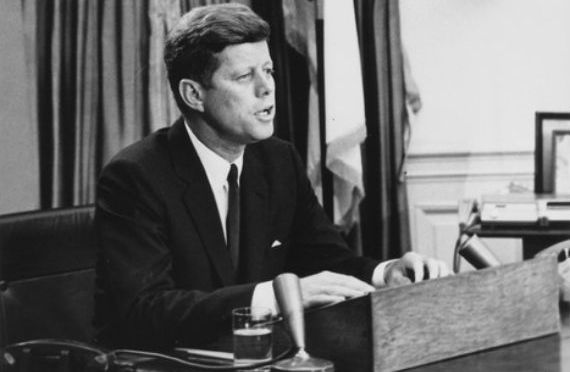
Following the protests in Birmingham, President Kennedy  addressed the “moral crisis” of racial segregation and called for national participation in ensuring that America becomes the “land of the free” for all of its citizens.

President John F. Kennedy’s Civil Rights Address

June 11, 1963

This afternoon, following a series of threats and defiant statements, the presence of Alabama National Guardsmen was required on the University of Alabama to carry out the final and unequivocal order of the United States District Court of the Northern District of Alabama. This order called for the admission of two clearly qualified young Alabama residents who happen to have been born Negro.

That they were admitted peacefully on the campus is due in good measure to the conduct of the students of the University of Alabama, who met their responsibilities in a constructive way.

I hope that every American, regardless of where he lives, will stop and examine his conscience about this and other related incidents. This nation was founded by men of many nations and backgrounds. It was founded on the principle that all men are created equal, and that the rights of every man are diminished when the rights of one man are threatened.

Today we are committed to a worldwide struggle to promote and protect the rights of all who wish to be free. When Americans are sent to Vietnam or West Berlin, we do not ask for whites only. It ought to be possible, therefore, for American students of any color to attend any public institution they select without having to be backed up by troops.

It ought to be possible for American consumers of any color to receive equal service in places of public accommodation, such as hotels and restaurants and theaters and retail stores, without being forced to resort to demonstration in the street. It ought to be possible for American citizens of any color to register and to vote in a free election without interference or fear of reprisal.

It ought to be possible, in short, for every American to enjoy the privileges of being American without regard to his race or his color. In short, every American ought to have the right to be treated as he would wish to be treated, as one would wish his children to be treated. But this is not the case today.

The Negro baby born in America today, regardless of the section of the nation in which he is born, has about one half as much chance of completing high school as a white baby born in the same place on the same day, one third as much chance of completing college, one third as much chance of becoming a professional man, twice as much chance of becoming unemployed, about one seventh as much chance of earning $10,000 a year or more, a life expectancy which is seven years shorter, and the prospects of earning only half as much.

This is not a sectional issue. Difficulties over segregation and discrimination exist in every city, in every state of the Union, producing in many cities a rising tide of discontent that threatens the public safety. Nor is this a partisan issue. In a time of domestic crisis men of goodwill and generosity should be able to unite regardless of party or politics. This is not even a legal or legislative issue alone. It is better to settle these methods in the courts than on the streets, and new laws are needed at every level, but law alone cannot make men see right.

We are confronted primarily with a moral issue. It is as old as the Scriptures and is as clear as the American Constitution.

The heart of the question is whether all Americans are to be afforded equal rights and equal opportunities, whether we are going to treat our fellow Americans as we want to be treated. If an American, because his skin is dark, cannot eat lunch in a restaurant open to the public, if he can not send his children to the best public school available, if he cannot vote for the public officials who represent him, if, in short, he cannot enjoy the full and free life which all of us want, then who among us would be content to have the color of his skin changed and stand in his place? Who among us would be content with the counsels of patience and delay?

One hundred years have passed since President Lincoln freed the slaves, yet their heirs, their grandsons, are not fully free. They are not yet freed from the bonds of injustice. They are not yet freed from social and economic oppression. And this nation, for all its hopes and all its boasts, will not be fully free until all its citizens are free.

We preach freedom around the world, and we mean it, and we cherish our freedom here at home; but are we to say to the world, and, much more importantly, for each other, that this is a land of the free except for the Negroes; that we have no second-class citizens except Negroes; that we have no class or caste system, no ghettos, no master race, except with respect to Negroes?

Now the time has come for this nation to fulfill its promise. The events in Birmingham and elsewhere have so increased the cries for equality that no city or state or legislative body can prudently choose to ignore them.

The fires of frustration and discord are burning in every city, North and South, where legal remedies are not at hand. Redress is sought in the streets, in demonstrations, parades, and protests which create tensions and threaten violence and threaten lives.

We face, therefore, a moral crisis as a country and as a people. It cannot be met by repressive police action. It cannot be left to increased demonstrations in the streets. It cannot be quieted by token moves or talk. It is a time to act in the Congress, in your state and local legislative bodies and, above all, in all of our daily lives.

It is not enough to pin the blame on others, to say this is a problem of one section of the country or another, or deplore the facts that we face. A great change is at hand, and our task, our obligation, is to make that revolution, that change, peaceful and constructive for all.

Those who do nothing are inviting shame as well as violence. Those who act boldly are recognizing right as well as reality.

Next week I shall ask the Congress of the United States to act, to make a commitment it has not fully made in this century to the proposition that race has no place in American life or law. The federal judiciary has upheld that proposition in the conduct of its affairs, including the employment of federal personnel, the use of federal facilities, and the sale of federally financed housing.

But there are other necessary measures which only the Congress can provide, and they must be provided at this session. The old code of equity law under which we live commands for every wrong a remedy, but in too many communities, in too many parts of the country, wrongs are inflicted on Negro citizens and there are no remedies at law. Unless the Congress acts, their only remedy is in the streets.

I am, therefore, asking the Congress to enact legislation giving all Americans the right to be served in facilities which are open to the public — hotels, restaurants, theaters, retail stores, and similar establishments.

This seems to me to be an elementary right. Its denial is an arbitrary indignity that no American in 1963 should have to endure. But many do.

I have recently met with scores of business leaders urging them to take voluntary action to end this discrimination, and I have been encouraged by their response. In the last two weeks over seventy-five cities have seen progress made in desegregating these kinds of facilities. But many are unwilling to act alone, and for this reason, nationwide legislation is needed if we are to move this problem from the streets to the courts.

I am also asking Congress to authorize the federal government to participate more fully in lawsuits designed to end segregation in public education. We have succeeded in persuading many districts to desegregate voluntarily. Dozens have admitted Negroes without violence. Today, a negro is attending a state-supported institution in every one of our fifty states. But the pace is very slow.

Too many Negro children entering segregated grade schools at the time of the Supreme Court’s decision nine years ago will enter segregated high schools this fall, having suffered a loss which can never be restored. The lack of an adequate education denied the Negro a chance to get a decent job.

The orderly implementation of the Supreme Court decision, therefore, cannot be left solely to those who may not have the economic resources to carry the legal action or who may be subject to harassment.

Other features will also be requested, including greater protection for the right to vote. But legislation, I repeat, cannot solve this problem alone. It must be solved in the homes of every American in every community across our country.

In this respect, I want to pay tribute to those citizens, North and South, who have been working in their communities to make life better for all. They are acting not out of a sense of legal duty but out of a sense of human decency. Like our soldiers and sailors in all parts of the world, they are meeting freedom’s challenge on the firing line, and I salute them for their honor and courage.

My fellow Americans, this is a problem which faces us all — in every city of the North as well as the South. Today there are Negroes, unemployed — two or three times as many compared to whites — with inadequate education, moving into the large cities, unable to find work, young people particularly out of work and without hope, denied equal rights, denied the opportunity to eat at a restaurant or lunch counter or go to a movie theater, denied the right to a decent education… It seems to me that these are matters which concern us all, not merely Presidents or congressmen or governors, but every citizen of the United States.

This is one country. It has become one country because all the people who came here had an equal chance to develop their talents…

We have a right to expect that the Negro community will be responsible and will uphold the law; but they have a right to expect that the law will be fair, that the constitution will be color blind, as Justice Harlan said at the turn of the century.

This is what we are talking about. This is a matter which concerns this country and what it stands for, and in meeting it I ask the support of all our citizens.

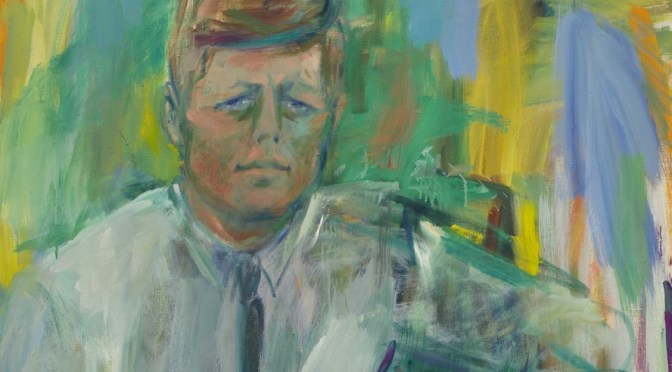
(Cover art: Portrait of President John F. Kennedy, by Elaine de Kooning)

I Have A Dream…

There are paradigm shifting moments in human history when our perception of the world is changed forever. When these events occur, humanity’s collective consciousness irreversibly matures.

On Wednesday, August 28, 1963, at the Lincoln Memorial in Washington D.C., Dr. Martin Luther King, Jr. made an impassioned emotional appeal for racial equality which helped change the course of American history. King’s “I Have a Dream” speech has motivated generations of Americans to continue the struggle for a better society……

Dr. Martin Luther King Jr.’s “I Have A Dream” Speech, Washington, D.C., August 28, 1963

Cover Art: Tribute to Martin Luther King Jr. by Delawer-Omar

Race Equality Is Still a Work in Progress

download

AUG. 22, 2013

Fewer than one in three black Americans and not even half of whites say the United States has made “a lot” of progress toward achieving racial equality in the half-century since the Rev. Dr. Martin Luther King Jr. declared he had “a dream” that one day freedom, justice and brotherhood would prevail and that his children would “not be judged by the color of their skin but by the content of their character.”

As the nation is poised to observe the 50th anniversary next week of the March on Washington that Dr. King led, the poll and an analysis of racial disparities by the Pew Research Centerconclude that while five decades’ progress has been palpable on some fronts, Dr. King’s goal remains elusive on others.

Blacks and whites generally agree that the two races get along well, but about 7 in 10 blacks and more than 1 in 4 whites also concur that blacks are treated unequally by the criminal justice system. A majority of blacks also say they are treated less fairly than whites in public schools and in the workplace. Fully 1 in 3 blacks, 1 in 5 Hispanic Americans and 1 in 10 whites said they were treated unfairly within the last year because of perceptions of their race.

Though gaps in life expectancy and high school graduation rates have all but been eliminated, disparities in poverty and homeownership rates are about the same. Compared with five decades ago, imbalances in household income and wealth, marriage and incarceration rates have widened.

Rich Morin, an author of the Pew report, said he was struck by the disparity in perceptions of progress by race and political affiliation. “Whites and blacks view their communities very differently in terms of how blacks are treated,” Mr. Morin said. Over all, he said, “we’re clearly headed in the right direction.”

“People saw progress,” he said, “but they want more.”

The average three-member black household makes about 59 percent of what a similar white household makes — up from 55 percent in 1967 — but the income gap in actual dollars widened to $27,000 from $19,000. (The gap has widened between whites and Hispanic people, too.)

The median net worth of white households is 14 times that of black households, and blacks are nearly three times as likely to be living below the federal poverty threshold. The disparity in homeownership rates is the widest in four decades. As the Pew study noted, those realities are not lost on most Americans, only 1 in 10 of whom said the average black person is better off financially than the average white person (although more than 4 in 10 white and Hispanic respondents said the average black is about as well off as the average white).

Though marriage rates have generally declined over all, about 55 percent of whites and 31 percent of blacks 18 and older are married, compared with 74 percent of whites and 61 percent of blacks in 1960, a reflection, in part, of differences in educational attainment.

The gap in college completion rates rose to 13 percentage points from 6 (although the black completion rate, as a percentage of the white rate, has improved to 62 percent from 42 percent. The Hispanic rate remains at 42 percent).

In 1960, black men were five times as likely as white men to be in local, state or federal prison. Fifty years later, black men are six times as likely as white men to be incarcerated and Hispanic men three times as likely.

The historic disparity in voter turnout evaporated in 2012 with the re-election of President Obama, yet euphoria over his election has faded. Both blacks and whites were much less likely this year to say black people were better off than five years earlier than they did in a 2009 Pew survey after Mr. Obama’s first election. The latest nationwide survey of 2,200 adults was conducted this month after the Supreme Court in June effectively gutted the Voting Rights Act of 1965, freeing nine states to change their election laws without advance federal approval.

“Our country has changed,” Chief Justice John G. Roberts Jr. wrote for the majority.

Not so much, though, that nearly half of all Americans — 49 percent in all, or 44 percent of whites, 48 percent of Hispanics and 79 percent of blacks — said a lot more progress needed to be made to achieve Dr. King’s vision of a colorblind society. Republicans are more likely than Democrats to believe there has been racial progress. Fully 80 percent of all Americans say at least some more needs to be done.

The Day President Kennedy Embraced Civil Rights—and the Story Behind It

50 years ago, the president gave his now-famous Civil Rights Address. But it was Martin Luther King Jr. and the Birmingham protesters who deserved the credit.

download

JONATHAN RIEDER   JUN 11, 2013

“Can you believe that white man not only stepped up to the plate, he hit it over the fence!” That was Martin Luther King, Jr.’s private verdict on President John F. Kennedy’s famous Civil Rights Address, delivered fifty years ago on June 11, 1963.

If King’s elation made sense, so did his incredulity. Kennedy had hardly been a beacon of moral resolve on civil rights. It required the Birmingham civil rights movement — and the tough-minded theory of social change that King spelled out in the “Letter from Birmingham Jail” — to provoke his speech into being. And once pushed into taking a stand with the address, Kennedy and his speechwriter Theodore Sorensen filled it with rhetoric often remarkably similar to King’s. Though the address came, ostensibly, in response to a different event — the fight over the integration at the University of Alabama — it was full of echoes of “Letter from Birmingham Jail.” In a powerful sense, King and the movement were the authors of the president’s oratory.
The speech was a dramatic moment in a season jammed with dramatic events, as America staggered toward non-racial democracy. In his fiery inaugural speech in January of 1963, the new governor of Alabama, George Wallace had pledged, “segregation now, segregation tomorrow, segregation forever.” In defiance of Wallace, King and the local movement launched civil rights protests in April in the furiously racist city of Birmingham. With the movement faltering, King decided to violate an injunction banning protests of any sort, and was, as a result, jailed on Good Friday, April 12.

Kennedy’s speech constituted an about-face, and King grasped that the Birmingham campaign had instigated it.
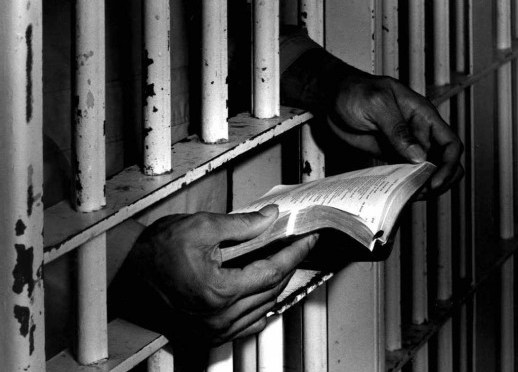
While in jail, King read a statement by eight of the leading moderate white clergy in Alabama, condemning the protests and branding King an extremist. The indignant, frazzled leader poured his rejoinder onto newspaper margins and toilet tissue. The iconic document that emerged from those jottings, the “Letter from Birmingham Jail,” was always more than a spirited defense of civil disobedience. It was an indictment of white indifference. “Few members of the oppressor race,” King insisted, “can understand the … passionate yearnings of the oppressed race.” It was also a declaration of black self-sufficiency (“If the inexpressible cruelties of slavery could not stop us, the opposition we now face will surely fail.”) and a stirring refusal of patience. “The word ‘Wait!'” wrote King, “rings in the ear of every Negro with piercing familiarity.” The “Letter” was radical in the scope of its rebuke. King’s key targets were not the Klan and Wallace but the very core of American culture, every sort of moderate “who paternalistically believes he can set the timetable for another man’s freedom.”

Neither King’s sacrificial act nor his roiling anger was enough to jumpstart the movement, even after he got out of jail on April 20. But in early May, the city’s black youth renewed the insurgency. After singing rousing verses of “I Woke Up With My Mind Stayed on Freedom,” they burst through the doors of the Sixteenth Street Baptist Church and faced down Bull Connor’s dogs and fire hoses. Within days, an agreement was forged to desegregate the city. The nation had begun its lurch toward the March on Washington, King’s “I Have a Dream” speech, and the Civil Rights Act of 1964.

Meanwhile, the federal court-ordered integration of the University of Alabama loomed on June 11. Governor Wallace vowed to stand in the schoolhouse door to block the mixing of races. Kennedy’s speech, the one that so impressed and surprised King, came just hours after forcing Wallace to step aside. “We are confronted primarily with a moral issue,” he declared. “It is as old as the scriptures and is as clear as the American Constitution.” The president was finally using language the demonstrators could appreciate: “We preach freedom around the world,” he said, “but are we to say to the world, and . . .to each other that this is the land of the free except for the Negroes …?”

Throughout the speech Kennedy seemed to be channeling the “Letter from Birmingham Jail.” King had invited white people to put themselves in a black person’s shoes: “When you have seen vicious mobs lynch your mothers and fathers at will,” or ” when your first name becomes ‘nigger,’ your middle name becomes ‘boy,’ … then you will understand why we find it difficult to wait.” Kennedy, too, used the place-trading device: “If a Negro can’t enjoy the full and free life which all of us want, then who among us would be content to have the color of his skin changed and stand in his place?”
The president’s address also resembled King’s “Letter” in rejecting the idea that blacks should have to wait for equality. “Who among us,” Kennedy demanded, “would then be content with counsels of patience and delay?” He mimicked King’s critique of “appalling silence”: “Those who do nothing are inviting shame as well as violence.” The president even picked up the mass meeting chant — “Now is the time!” Said Kennedy, “Now the time has come for this Nation to fulfill its promise.”

Despite that drumbeat of immediacy, Kennedy’s call to conscience was belated as well as brave. The president had long epitomized the moderates whom King had blasted in the “Letter” as the true “stumbling block” to justice. In his inaugural address, Kennedy promised to “pay any price” to spread freedom around the globe but he hadn’t been willing to do that for black people in the United States. Kennedy, the ever risk-averse pragmatist, kept telling King to “wait” — exactly the reaction King deplored in the “Letter.” When Attorney General Robert Kennedy, afraid that a black child might be maimed in the protests, called King to get him to call off the insurgency of the young, King retorted, “[Black children] are hurt every day.”

So Kennedy’s speech constituted an about-face, and King grasped that the Birmingham campaign had instigated it. In the May 10 mass meeting at which the victory in Birmingham was announced, a jubilant, downhome King recounted,

Those business and professional leaders were sayin’, “We’re tired of these niggers, and there’s nothing to do but tell the government to send the National Guard here and get this thing under martial law. . . . These niggers are just not gonna stop.” And when they got out for lunch, and saw all those Negroes standing on the sidewalk singing “We shall overcome” and they “Won’t let nobody turn me round,” I heard that when they got back in there after the lunch hour, they started sayin’, “Now, let’s see, I think we could grant part one,” and they moved down to part two and extended that.

NEWS FILE/ANTHONY FALLETTA June 15, 1963 Protests in Birmingham spread to other cities including Gadsden where these demonstrators gather on a sidewalk under the taunts of whites. The protests in Gadsden were not widely reported in Birmingham. Earlier the same week Gov. George Wallace came out against Vivian Malone's enrollment at the University of Alabama.
NEWS FILE/ANTHONY FALLETTA June 15, 1963 Protests in Birmingham spread to other cities including Gadsden where these demonstrators gather on a sidewalk under the taunts of whites. The protests in Gadsden were not widely reported in Birmingham. Earlier the same week Gov. George Wallace came out against Vivian Malone’s enrollment at the University of Alabama.

King had no doubt that the protests were working the same magic on the president and nudging him toward a more energetic stance on civil rights. “When things started happening down here, Mr. Kennedy got disturbed . . . He is battling for the minds and the hearts of men in Asia and Africa. . . And they’re not gonna respect the United States of America if she deprives men and women of the basic rights of life because of the color of their skin. Mr. Kennedy knows this.” On May 3, a photographer captured the iconic image of a German Shepherd that seemed to be lunging to bite a young black boy. “And when that picture went all over Asia and Africa and England and France, Mr. Kennedy said, ‘Bobby, you better get your assistant down there and look into this matter. It’s a dangerous situation for our image abroad.'”

The truth went further than King imagined, though. The picture had in fact aroused something in Kennedy beyond concerns about America’s image. At a private but recorded White House meeting on May 4, he said the picture “made him sick.” Kennedy sounds befuddled: he decries the black situation in Birmingham as “intolerable”; he exudes frustration (“what law can you pass to do anything about [local] police power”); he concedes “we have done not enough [on civil rights]”; yet he careens, “but we have shoved and pushed . . . and there’s nothing my brother’s given more time to.”

“If I were a Negro, I would be awfully sore,” the president acknowledged. And then, as if responding to King’s argument in the “Letter” that when whites said “wait” they really meant “never,” Kennedy added: “I’m not saying anybody ought to be patient.”
In the end, Kennedy’s turn-about vindicated the key premise of the “Letter from Birmingham Jail”: Blacks could not bank on moral appeal or empathy alone, let alone some intrinsic force of “American exceptionalism,” to awaken the conscience of whites. The unruliness of “creative tension” was required to galvanize the state to act on behalf of the suffering. As the president put it on June 4, “And this may be the only way these things come to a head. We’re going to end up with the National Guard in there and all sorts of trouble.”

“All sorts of trouble” underscores an ironic, unsettling truth: the white fear of violence pushed events forward too. In his June 11 address, President Kennedy observed, “The fires of frustration and discord are burning in every city, North and South … Redress is sought in the streets. . .which create[s] tensions and threaten[s] violence.” Surely, that specter of mayhem ran counter to King’s faith in nonviolence. And yet its power to transfix a president confirmed the “Letter’s” recognition: “Freedom is never voluntarily given by the oppressor; it must be demanded by the oppressed.” Fifty years ago today, as the president delivered his address, Martin Luther King, Jr., celebrated a victory wrought by that hardboiled truth.

*The recording of Martin Luther King Jr.’s remarks on May 10, celebrating the victory in Birmingham, is posted here courtesy of the Birmingham Civil Rights Institute. The recording was made by Reverend C. Herbert Oliver.

Reverend C. Herbert Oliver was a pioneering activist for racial justice in Birmingham beginning in the 1940s. He was one of the founders of the Inter-Citizens Committee, which gathered affidavits to document racist violence and police brutality. He was preparing to testify before the United States Commission on Civil Rights at hearings scheduled for late April 1963, which were cancelled when the SCLC-ACMHR campaign was launched.

ABOUT THE AUTHOR

JONATHAN RIEDER is a professor of sociology at Barnard College, Columbia University, and the author of the recently published Gospel of Freedom: Martin Luther King, Jr.’s Letter From Birmingham Jail and the Struggle That Changed a Nation and The Word of the Lord is Upon Me: The Righteous Performance of Martin Luther King, Jr.

Letter from Birmingham Jail

Dr. Martin Luther King, Jr.

16 April 1963

My Dear Fellow Clergymen:

While confined here in the Birmingham city jail, I came across your recent statement calling my present activities “unwise and untimely.” Seldom do I pause to answer criticism of my work and ideas. If I sought to answer all the criticisms that cross my desk, my secretaries would have little time for anything other than such correspondence in the course of the day, and I would have no time for constructive work. But since I feel that you are men of genuine good will and that your criticisms are sincerely set forth, I want to try to answer your statement in what I hope will be patient and reasonable terms.

I think I should indicate why I am here in Birmingham, since you have been influenced by the view which argues against “outsiders coming in.” I have the honor of serving as president of the Southern Christian Leadership Conference, an organization operating in every southern state, with headquarters in Atlanta, Georgia. We have some eighty five affiliated organizations across the South, and one of them is the Alabama Christian Movement for Human Rights. Frequently we share staff, educational and financial resources with our affiliates. Several months ago the affiliate here in Birmingham asked us to be on call to engage in a nonviolent direct action program if such were deemed necessary. We readily consented, and when the hour came we lived up to our promise. So I, along with several members of my staff, am here because I was invited here. I am here because I have organizational ties here.

But more basically, I am in Birmingham because injustice is here. Just as the prophets of the eighth century B.C. left their villages and carried their “thus saith the Lord” far beyond the boundaries of their home towns, and just as the Apostle Paul left his village of Tarsus and carried the gospel of Jesus Christ to the far corners of the Greco Roman world, so am I compelled to carry the gospel of freedom beyond my own home town. Like Paul, I must constantly respond to the Macedonian call for aid.

Birmingham-CharlesMoore

Moreover, I am cognizant of the interrelatedness of all communities and states. I cannot sit idly by in Atlanta and not be concerned about what happens in Birmingham. Injustice anywhere is a threat to justice everywhere. We are caught in an inescapable network of mutuality, tied in a single garment of destiny. Whatever affects one directly, affects all indirectly. Never again can we afford to live with the narrow, provincial “outside agitator” idea. Anyone who lives inside the United States can never be considered an outsider anywhere within its bounds.

You deplore the demonstrations taking place in Birmingham. But your statement, I am sorry to say, fails to express a similar concern for the conditions that brought about the demonstrations. I am sure that none of you would want to rest content with the superficial kind of social analysis that deals merely with effects and does not grapple with underlying causes. It is unfortunate that demonstrations are taking place in Birmingham, but it is even more unfortunate that the city’s white power structure left the Negro community with no alternative.

In any nonviolent campaign there are four basic steps: collection of the facts to determine whether injustices exist; negotiation; self purification; and direct action. We have gone through all these steps in Birmingham. There can be no gainsaying the fact that racial injustice engulfs this community. Birmingham is probably the most thoroughly segregated city in the United States. Its ugly record of brutality is widely known. Negroes have experienced grossly unjust treatment in the courts. There have been more unsolved bombings of Negro homes and churches in Birmingham than in any other city in the nation. These are the hard, brutal facts of the case. On the basis of these conditions, Negro leaders sought to negotiate with the city fathers. But the latter consistently refused to engage in good faith negotiation.

aa_king_jail_1_e

Then, last September, came the opportunity to talk with leaders of Birmingham’s economic community. In the course of the negotiations, certain promises were made by the merchants–for example, to remove the stores’ humiliating racial signs. On the basis of these promises, the Reverend Fred Shuttlesworth and the leaders of the Alabama Christian Movement for Human Rights agreed to a moratorium on all demonstrations. As the weeks and months went by, we realized that we were the victims of a broken promise. A few signs, briefly removed, returned; the others remained. As in so many past experiences, our hopes had been blasted, and the shadow of deep disappointment settled upon us. We had no alternative except to prepare for direct action, whereby we would present our very bodies as a means of laying our case before the conscience of the local and the national community. Mindful of the difficulties involved, we decided to undertake a process of self purification. We began a series of workshops on nonviolence, and we repeatedly asked ourselves: “Are you able to accept blows without retaliating?” “Are you able to endure the ordeal of jail?” We decided to schedule our direct action program for the Easter season, realizing that except for Christmas, this is the main shopping period of the year. Knowing that a strong economic-withdrawal program would be the by product of direct action, we felt that this would be the best time to bring pressure to bear on the merchants for the needed change.

Then it occurred to us that Birmingham’s mayoral election was coming up in March, and we speedily decided to postpone action until after election day. When we discovered that the Commissioner of Public Safety, Eugene “Bull” Connor, had piled up enough votes to be in the run off, we decided again to postpone action until the day after the run off so that the demonstrations could not be used to cloud the issues. Like many others, we waited to see Mr. Connor defeated, and to this end we endured postponement after postponement. Having aided in this community need, we felt that our direct action program could be delayed no longer.

You may well ask: “Why direct action? Why sit ins, marches and so forth? Isn’t negotiation a better path?” You are quite right in calling for negotiation. Indeed, this is the very purpose of direct action. Nonviolent direct action seeks to create such a crisis and foster such a tension that a community which has constantly refused to negotiate is forced to confront the issue. It seeks so to dramatize the issue that it can no longer be ignored. My citing the creation of tension as part of the work of the nonviolent resister may sound rather shocking. But I must confess that I am not afraid of the word “tension.” I have earnestly opposed violent tension, but there is a type of constructive, nonviolent tension which is necessary for growth. Just as Socrates felt that it was necessary to create a tension in the mind so that individuals could rise from the bondage of myths and half truths to the unfettered realm of creative analysis and objective appraisal, so must we see the need for nonviolent gadflies to create the kind of tension in society that will help men rise from the dark depths of prejudice and racism to the majestic heights of understanding and brotherhood. The purpose of our direct action program is to create a situation so crisis packed that it will inevitably open the door to negotiation. I therefore concur with you in your call for negotiation. Too long has our beloved Southland been bogged down in a tragic effort to live in monologue rather than dialogue.

download (1)

One of the basic points in your statement is that the action that I and my associates have taken in Birmingham is untimely. Some have asked: “Why didn’t you give the new city administration time to act?” The only answer that I can give to this query is that the new Birmingham administration must be prodded about as much as the outgoing one, before it will act. We are sadly mistaken if we feel that the election of Albert Boutwell as mayor will bring the millennium to Birmingham. While Mr. Boutwell is a much more gentle person than Mr. Connor, they are both segregationists, dedicated to maintenance of the status quo. I have hope that Mr. Boutwell will be reasonable enough to see the futility of massive resistance to desegregation. But he will not see this without pressure from devotees of civil rights. My friends, I must say to you that we have not made a single gain in civil rights without determined legal and nonviolent pressure. Lamentably, it is an historical fact that privileged groups seldom give up their privileges voluntarily. Individuals may see the moral light and voluntarily give up their unjust posture; but, as Reinhold Niebuhr has reminded us, groups tend to be more immoral than individuals.

We know through painful experience that freedom is never voluntarily given by the oppressor; it must be demanded by the oppressed. Frankly, I have yet to engage in a direct action campaign that was “well timed” in the view of those who have not suffered unduly from the disease of segregation. For years now I have heard the word “Wait!” It rings in the ear of every Negro with piercing familiarity. This “Wait” has almost always meant “Never.” We must come to see, with one of our distinguished jurists, that “justice too long delayed is justice denied.”

We have waited for more than 340 years for our constitutional and God given rights. The nations of Asia and Africa are moving with jetlike speed toward gaining political independence, but we still creep at horse and buggy pace toward gaining a cup of coffee at a lunch counter. Perhaps it is easy for those who have never felt the stinging darts of segregation to say, “Wait.” But when you have seen vicious mobs lynch your mothers and fathers at will and drown your sisters and brothers at whim; when you have seen hate filled policemen curse, kick and even kill your black brothers and sisters; when you see the vast majority of your twenty million Negro brothers smothering in an airtight cage of poverty in the midst of an affluent society; when you suddenly find your tongue twisted and your speech stammering as you seek to explain to your six year old daughter why she can’t go to the public amusement park that has just been advertised on television, and see tears welling up in her eyes when she is told that Funtown is closed to colored children, and see ominous clouds of inferiority beginning to form in her little mental sky, and see her beginning to distort her personality by developing an unconscious bitterness toward white people; when you have to concoct an answer for a five year old son who is asking: “Daddy, why do white people treat colored people so mean?”; when you take a cross county drive and find it necessary to sleep night after night in the uncomfortable corners of your automobile because no motel will accept you; when you are humiliated day in and day out by nagging signs reading “white” and “colored”; when your first name becomes “nigger,” your middle name becomes “boy” (however old you are) and your last name becomes “John,” and your wife and mother are never given the respected title “Mrs.”; when you are harried by day and haunted by night by the fact that you are a Negro, living constantly at tiptoe stance, never quite knowing what to expect next, and are plagued with inner fears and outer resentments; when you are forever fighting a degenerating sense of “nobodiness”–then you will understand why we find it difficult to wait. There comes a time when the cup of endurance runs over, and men are no longer willing to be plunged into the abyss of despair. I hope, sirs, you can understand our legitimate and unavoidable impatience. You express a great deal of anxiety over our willingness to break laws. This is certainly a legitimate concern. Since we so diligently urge people to obey the Supreme Court’s decision of 1954 outlawing segregation in the public schools, at first glance it may seem rather paradoxical for us consciously to break laws. One may well ask: “How can you advocate breaking some laws and obeying others?” The answer lies in the fact that there are two types of laws: just and unjust. I would be the first to advocate obeying just laws. One has not only a legal but a moral responsibility to obey just laws. Conversely, one has a moral responsibility to disobey unjust laws. I would agree with St. Augustine that “an unjust law is no law at all.”

mlk-birmingham

Now, what is the difference between the two? How does one determine whether a law is just or unjust? A just law is a man made code that squares with the moral law or the law of God. An unjust law is a code that is out of harmony with the moral law. To put it in the terms of St. Thomas Aquinas: An unjust law is a human law that is not rooted in eternal law and natural law. Any law that uplifts human personality is just. Any law that degrades human personality is unjust. All segregation statutes are unjust because segregation distorts the soul and damages the personality. It gives the segregator a false sense of superiority and the segregated a false sense of inferiority. Segregation, to use the terminology of the Jewish philosopher Martin Buber, substitutes an “I it” relationship for an “I thou” relationship and ends up relegating persons to the status of things. Hence segregation is not only politically, economically and sociologically unsound, it is morally wrong and sinful. Paul Tillich has said that sin is separation. Is not segregation an existential expression of man’s tragic separation, his awful estrangement, his terrible sinfulness? Thus it is that I can urge men to obey the 1954 decision of the Supreme Court, for it is morally right; and I can urge them to disobey segregation ordinances, for they are morally wrong.

Let us consider a more concrete example of just and unjust laws. An unjust law is a code that a numerical or power majority group compels a minority group to obey but does not make binding on itself. This is difference made legal. By the same token, a just law is a code that a majority compels a minority to follow and that it is willing to follow itself. This is sameness made legal. Let me give another explanation. A law is unjust if it is inflicted on a minority that, as a result of being denied the right to vote, had no part in enacting or devising the law. Who can say that the legislature of Alabama which set up that state’s segregation laws was democratically elected? Throughout Alabama all sorts of devious methods are used to prevent Negroes from becoming registered voters, and there are some counties in which, even though Negroes constitute a majority of the population, not a single Negro is registered. Can any law enacted under such circumstances be considered democratically structured?

Sometimes a law is just on its face and unjust in its application. For instance, I have been arrested on a charge of parading without a permit. Now, there is nothing wrong in having an ordinance which requires a permit for a parade. But such an ordinance becomes unjust when it is used to maintain segregation and to deny citizens the First-Amendment privilege of peaceful assembly and protest.

I hope you are able to see the distinction I am trying to point out. In no sense do I advocate evading or defying the law, as would the rabid segregationist. That would lead to anarchy. One who breaks an unjust law must do so openly, lovingly, and with a willingness to accept the penalty. I submit that an individual who breaks a law that conscience tells him is unjust, and who willingly accepts the penalty of imprisonment in order to arouse the conscience of the community over its injustice, is in reality expressing the highest respect for law.

Letter_from_a_Birmingham_Jail_fs

Of course, there is nothing new about this kind of civil disobedience. It was evidenced sublimely in the refusal of Shadrach, Meshach and Abednego to obey the laws of Nebuchadnezzar, on the ground that a higher moral law was at stake. It was practiced superbly by the early Christians, who were willing to face hungry lions and the excruciating pain of chopping blocks rather than submit to certain unjust laws of the Roman Empire. To a degree, academic freedom is a reality today because Socrates practiced civil disobedience. In our own nation, the Boston Tea Party represented a massive act of civil disobedience.

We should never forget that everything Adolf Hitler did in Germany was “legal” and everything the Hungarian freedom fighters did in Hungary was “illegal.” It was “illegal” to aid and comfort a Jew in Hitler’s Germany. Even so, I am sure that, had I lived in Germany at the time, I would have aided and comforted my Jewish brothers. If today I lived in a Communist country where certain principles dear to the Christian faith are suppressed, I would openly advocate disobeying that country’s antireligious laws.

I must make two honest confessions to you, my Christian and Jewish brothers. First, I must confess that over the past few years I have been gravely disappointed with the white moderate. I have almost reached the regrettable conclusion that the Negro’s great stumbling block in his stride toward freedom is not the White Citizen’s Counciler or the Ku Klux Klanner, but the white moderate, who is more devoted to “order” than to justice; who prefers a negative peace which is the absence of tension to a positive peace which is the presence of justice; who constantly says: “I agree with you in the goal you seek, but I cannot agree with your methods of direct action”; who paternalistically believes he can set the timetable for another man’s freedom; who lives by a mythical concept of time and who constantly advises the Negro to wait for a “more convenient season.” Shallow understanding from people of good will is more frustrating than absolute misunderstanding from people of ill will. Lukewarm acceptance is much more bewildering than outright rejection.

I had hoped that the white moderate would understand that law and order exist for the purpose of establishing justice and that when they fail in this purpose they become the dangerously structured dams that block the flow of social progress. I had hoped that the white moderate would understand that the present tension in the South is a necessary phase of the transition from an obnoxious negative peace, in which the Negro passively accepted his unjust plight, to a substantive and positive peace, in which all men will respect the dignity and worth of human personality. Actually, we who engage in nonviolent direct action are not the creators of tension. We merely bring to the surface the hidden tension that is already alive. We bring it out in the open, where it can be seen and dealt with. Like a boil that can never be cured so long as it is covered up but must be opened with all its ugliness to the natural medicines of air and light, injustice must be exposed, with all the tension its exposure creates, to the light of human conscience and the air of national opinion before it can be cured.

kinginjail

In your statement you assert that our actions, even though peaceful, must be condemned because they precipitate violence. But is this a logical assertion? Isn’t this like condemning a robbed man because his possession of money precipitated the evil act of robbery? Isn’t this like condemning Socrates because his unswerving commitment to truth and his philosophical inquiries precipitated the act by the misguided populace in which they made him drink hemlock? Isn’t this like condemning Jesus because his unique God consciousness and never ceasing devotion to God’s will precipitated the evil act of crucifixion? We must come to see that, as the federal courts have consistently affirmed, it is wrong to urge an individual to cease his efforts to gain his basic constitutional rights because the quest may precipitate violence. Society must protect the robbed and punish the robber. I had also hoped that the white moderate would reject the myth concerning time in relation to the struggle for freedom. I have just received a letter from a white brother in Texas. He writes: “All Christians know that the colored people will receive equal rights eventually, but it is possible that you are in too great a religious hurry. It has taken Christianity almost two thousand years to accomplish what it has. The teachings of Christ take time to come to earth.” Such an attitude stems from a tragic misconception of time, from the strangely irrational notion that there is something in the very flow of time that will inevitably cure all ills. Actually, time itself is neutral; it can be used either destructively or constructively. More and more I feel that the people of ill will have used time much more effectively than have the people of good will. We will have to repent in this generation not merely for the hateful words and actions of the bad people but for the appalling silence of the good people. Human progress never rolls in on wheels of inevitability; it comes through the tireless efforts of men willing to be co workers with God, and without this hard work, time itself becomes an ally of the forces of social stagnation. We must use time creatively, in the knowledge that the time is always ripe to do right. Now is the time to make real the promise of democracy and transform our pending national elegy into a creative psalm of brotherhood. Now is the time to lift our national policy from the quicksand of racial injustice to the solid rock of human dignity.

You speak of our activity in Birmingham as extreme. At first I was rather disappointed that fellow clergymen would see my nonviolent efforts as those of an extremist. I began thinking about the fact that I stand in the middle of two opposing forces in the Negro community. One is a force of complacency, made up in part of Negroes who, as a result of long years of oppression, are so drained of self respect and a sense of “somebodiness” that they have adjusted to segregation; and in part of a few middle-class Negroes who, because of a degree of academic and economic security and because in some ways they profit by segregation, have become insensitive to the problems of the masses. The other force is one of bitterness and hatred, and it comes perilously close to advocating violence. It is expressed in the various black nationalist groups that are springing up across the nation, the largest and best known being Elijah Muhammad’s Muslim movement. Nourished by the Negro’s frustration over the continued existence of racial discrimination, this movement is made up of people who have lost faith in America, who have absolutely repudiated Christianity, and who have concluded that the white man is an incorrigible “devil.”

0e1857167_blog-mlkheader

I have tried to stand between these two forces, saying that we need emulate neither the “do nothingism” of the complacent nor the hatred and despair of the black nationalist. For there is the more excellent way of love and nonviolent protest. I am grateful to God that, through the influence of the Negro church, the way of nonviolence became an integral part of our struggle. If this philosophy had not emerged, by now many streets of the South would, I am convinced, be flowing with blood. And I am further convinced that if our white brothers dismiss as “rabble rousers” and “outside agitators” those of us who employ nonviolent direct action, and if they refuse to support our nonviolent efforts, millions of Negroes will, out of frustration and despair, seek solace and security in black nationalist ideologies–a development that would inevitably lead to a frightening racial nightmare.

Oppressed people cannot remain oppressed forever. The yearning for freedom eventually manifests itself, and that is what has happened to the American Negro. Something within has reminded him of his birthright of freedom, and something without has reminded him that it can be gained. Consciously or unconsciously, he has been caught up by the Zeitgeist, and with his black brothers of Africa and his brown and yellow brothers of Asia, South America and the Caribbean, the United States Negro is moving with a sense of great urgency toward the promised land of racial justice. If one recognizes this vital urge that has engulfed the Negro community, one should readily understand why public demonstrations are taking place. The Negro has many pent up resentments and latent frustrations, and he must release them. So let him march; let him make prayer pilgrimages to the city hall; let him go on freedom rides -and try to understand why he must do so. If his repressed emotions are not released in nonviolent ways, they will seek expression through violence; this is not a threat but a fact of history. So I have not said to my people: “Get rid of your discontent.” Rather, I have tried to say that this normal and healthy discontent can be channeled into the creative outlet of nonviolent direct action. And now this approach is being termed extremist. But though I was initially disappointed at being categorized as an extremist, as I continued to think about the matter I gradually gained a measure of satisfaction from the label. Was not Jesus an extremist for love: “Love your enemies, bless them that curse you, do good to them that hate you, and pray for them which despitefully use you, and persecute you.” Was not Amos an extremist for justice: “Let justice roll down like waters and righteousness like an ever flowing stream.” Was not Paul an extremist for the Christian gospel: “I bear in my body the marks of the Lord Jesus.” Was not Martin Luther an extremist: “Here I stand; I cannot do otherwise, so help me God.” And John Bunyan: “I will stay in jail to the end of my days before I make a butchery of my conscience.” And Abraham Lincoln: “This nation cannot survive half slave and half free.” And Thomas Jefferson: “We hold these truths to be self evident, that all men are created equal . . .” So the question is not whether we will be extremists, but what kind of extremists we will be. Will we be extremists for hate or for love? Will we be extremists for the preservation of injustice or for the extension of justice? In that dramatic scene on Calvary’s hill three men were crucified. We must never forget that all three were crucified for the same crime–the crime of extremism. Two were extremists for immorality, and thus fell below their environment. The other, Jesus Christ, was an extremist for love, truth and goodness, and thereby rose above his environment. Perhaps the South, the nation and the world are in dire need of creative extremists.

f1a4b79e2

I had hoped that the white moderate would see this need. Perhaps I was too optimistic; perhaps I expected too much. I suppose I should have realized that few members of the oppressor race can understand the deep groans and passionate yearnings of the oppressed race, and still fewer have the vision to see that injustice must be rooted out by strong, persistent and determined action. I am thankful, however, that some of our white brothers in the South have grasped the meaning of this social revolution and committed themselves to it. They are still all too few in quantity, but they are big in quality. Some -such as Ralph McGill, Lillian Smith, Harry Golden, James McBride Dabbs, Ann Braden and Sarah Patton Boyle–have written about our struggle in eloquent and prophetic terms. Others have marched with us down nameless streets of the South. They have languished in filthy, roach infested jails, suffering the abuse and brutality of policemen who view them as “dirty nigger-lovers.” Unlike so many of their moderate brothers and sisters, they have recognized the urgency of the moment and sensed the need for powerful “action” antidotes to combat the disease of segregation. Let me take note of my other major disappointment. I have been so greatly disappointed with the white church and its leadership. Of course, there are some notable exceptions. I am not unmindful of the fact that each of you has taken some significant stands on this issue. I commend you, Reverend Stallings, for your Christian stand on this past Sunday, in welcoming Negroes to your worship service on a nonsegregated basis. I commend the Catholic leaders of this state for integrating Spring Hill College several years ago.

But despite these notable exceptions, I must honestly reiterate that I have been disappointed with the church. I do not say this as one of those negative critics who can always find something wrong with the church. I say this as a minister of the gospel, who loves the church; who was nurtured in its bosom; who has been sustained by its spiritual blessings and who will remain true to it as long as the cord of life shall lengthen.

When I was suddenly catapulted into the leadership of the bus protest in Montgomery, Alabama, a few years ago, I felt we would be supported by the white church. I felt that the white ministers, priests and rabbis of the South would be among our strongest allies. Instead, some have been outright opponents, refusing to understand the freedom movement and misrepresenting its leaders; all too many others have been more cautious than courageous and have remained silent behind the anesthetizing security of stained glass windows.

In spite of my shattered dreams, I came to Birmingham with the hope that the white religious leadership of this community would see the justice of our cause and, with deep moral concern, would serve as the channel through which our just grievances could reach the power structure. I had hoped that each of you would understand. But again I have been disappointed.

MLK

I have heard numerous southern religious leaders admonish their worshipers to comply with a desegregation decision because it is the law, but I have longed to hear white ministers declare: “Follow this decree because integration is morally right and because the Negro is your brother.” In the midst of blatant injustices inflicted upon the Negro, I have watched white churchmen stand on the sideline and mouth pious irrelevancies and sanctimonious trivialities. In the midst of a mighty struggle to rid our nation of racial and economic injustice, I have heard many ministers say: “Those are social issues, with which the gospel has no real concern.” And I have watched many churches commit themselves to a completely other worldly religion which makes a strange, un-Biblical distinction between body and soul, between the sacred and the secular.

I have traveled the length and breadth of Alabama, Mississippi and all the other southern states. On sweltering summer days and crisp autumn mornings I have looked at the South’s beautiful churches with their lofty spires pointing heavenward. I have beheld the impressive outlines of her massive religious education buildings. Over and over I have found myself asking: “What kind of people worship here? Who is their God? Where were their voices when the lips of Governor Barnett dripped with words of interposition and nullification? Where were they when Governor Wallace gave a clarion call for defiance and hatred? Where were their voices of support when bruised and weary Negro men and women decided to rise from the dark dungeons of complacency to the bright hills of creative protest?”

Yes, these questions are still in my mind. In deep disappointment I have wept over the laxity of the church. But be assured that my tears have been tears of love. There can be no deep disappointment where there is not deep love. Yes, I love the church. How could I do otherwise? I am in the rather unique position of being the son, the grandson and the great grandson of preachers. Yes, I see the church as the body of Christ. But, oh! How we have blemished and scarred that body through social neglect and through fear of being nonconformists.

There was a time when the church was very powerful–in the time when the early Christians rejoiced at being deemed worthy to suffer for what they believed. In those days the church was not merely a thermometer that recorded the ideas and principles of popular opinion; it was a thermostat that transformed the mores of society. Whenever the early Christians entered a town, the people in power became disturbed and immediately sought to convict the Christians for being “disturbers of the peace” and “outside agitators.”‘ But the Christians pressed on, in the conviction that they were “a colony of heaven,” called to obey God rather than man. Small in number, they were big in commitment. They were too God-intoxicated to be “astronomically intimidated.” By their effort and example they brought an end to such ancient evils as infanticide and gladiatorial contests. Things are different now. So often the contemporary church is a weak, ineffectual voice with an uncertain sound. So often it is an archdefender of the status quo. Far from being disturbed by the presence of the church, the power structure of the average community is consoled by the church’s silent–and often even vocal–sanction of things as they are.

mlk-553x290

But the judgment of God is upon the church as never before. If today’s church does not recapture the sacrificial spirit of the early church, it will lose its authenticity, forfeit the loyalty of millions, and be dismissed as an irrelevant social club with no meaning for the twentieth century. Every day I meet young people whose disappointment with the church has turned into outright disgust.

Perhaps I have once again been too optimistic. Is organized religion too inextricably bound to the status quo to save our nation and the world? Perhaps I must turn my faith to the inner spiritual church, the church within the church, as the true ekklesia and the hope of the world. But again I am thankful to God that some noble souls from the ranks of organized religion have broken loose from the paralyzing chains of conformity and joined us as active partners in the struggle for freedom. They have left their secure congregations and walked the streets of Albany, Georgia, with us. They have gone down the highways of the South on tortuous rides for freedom. Yes, they have gone to jail with us. Some have been dismissed from their churches, have lost the support of their bishops and fellow ministers. But they have acted in the faith that right defeated is stronger than evil triumphant. Their witness has been the spiritual salt that has preserved the true meaning of the gospel in these troubled times. They have carved a tunnel of hope through the dark mountain of disappointment. I hope the church as a whole will meet the challenge of this decisive hour. But even if the church does not come to the aid of justice, I have no despair about the future. I have no fear about the outcome of our struggle in Birmingham, even if our motives are at present misunderstood. We will reach the goal of freedom in Birmingham and all over the nation, because the goal of America is freedom. Abused and scorned though we may be, our destiny is tied up with America’s destiny. Before the pilgrims landed at Plymouth, we were here. Before the pen of Jefferson etched the majestic words of the Declaration of Independence across the pages of history, we were here. For more than two centuries our forebears labored in this country without wages; they made cotton king; they built the homes of their masters while suffering gross injustice and shameful humiliation -and yet out of a bottomless vitality they continued to thrive and develop. If the inexpressible cruelties of slavery could not stop us, the opposition we now face will surely fail. We will win our freedom because the sacred heritage of our nation and the eternal will of God are embodied in our echoing demands. Before closing I feel impelled to mention one other point in your statement that has troubled me profoundly. You warmly commended the Birmingham police force for keeping “order” and “preventing violence.” I doubt that you would have so warmly commended the police force if you had seen its dogs sinking their teeth into unarmed, nonviolent Negroes. I doubt that you would so quickly commend the policemen if you were to observe their ugly and inhumane treatment of Negroes here in the city jail; if you were to watch them push and curse old Negro women and young Negro girls; if you were to see them slap and kick old Negro men and young boys; if you were to observe them, as they did on two occasions, refuse to give us food because we wanted to sing our grace together. I cannot join you in your praise of the Birmingham police department.

It is true that the police have exercised a degree of discipline in handling the demonstrators. In this sense they have conducted themselves rather “nonviolently” in public. But for what purpose? To preserve the evil system of segregation. Over the past few years I have consistently preached that nonviolence demands that the means we use must be as pure as the ends we seek. I have tried to make clear that it is wrong to use immoral means to attain moral ends. But now I must affirm that it is just as wrong, or perhaps even more so, to use moral means to preserve immoral ends. Perhaps Mr. Connor and his policemen have been rather nonviolent in public, as was Chief Pritchett in Albany, Georgia, but they have used the moral means of nonviolence to maintain the immoral end of racial injustice. As T. S. Eliot has said: “The last temptation is the greatest treason: To do the right deed for the wrong reason.”

thekings01

I wish you had commended the Negro sit inners and demonstrators of Birmingham for their sublime courage, their willingness to suffer and their amazing discipline in the midst of great provocation. One day the South will recognize its real heroes. They will be the James Merediths, with the noble sense of purpose that enables them to face jeering and hostile mobs, and with the agonizing loneliness that characterizes the life of the pioneer. They will be old, oppressed, battered Negro women, symbolized in a seventy two year old woman in Montgomery, Alabama, who rose up with a sense of dignity and with her people decided not to ride segregated buses, and who responded with ungrammatical profundity to one who inquired about her weariness: “My feets is tired, but my soul is at rest.” They will be the young high school and college students, the young ministers of the gospel and a host of their elders, courageously and nonviolently sitting in at lunch counters and willingly going to jail for conscience’ sake. One day the South will know that when these disinherited children of God sat down at lunch counters, they were in reality standing up for what is best in the American dream and for the most sacred values in our Judaeo Christian heritage, thereby bringing our nation back to those great wells of democracy which were dug deep by the founding fathers in their formulation of the Constitution and the Declaration of Independence.

Never before have I written so long a letter. I’m afraid it is much too long to take your precious time. I can assure you that it would have been much shorter if I had been writing from a comfortable desk, but what else can one do when he is alone in a narrow jail cell, other than write long letters, think long thoughts and pray long prayers?

If I have said anything in this letter that overstates the truth and indicates an unreasonable impatience, I beg you to forgive me. If I have said anything that understates the truth and indicates my having a patience that allows me to settle for anything less than brotherhood, I beg God to forgive me.

I hope this letter finds you strong in the faith. I also hope that circumstances will soon make it possible for me to meet each of you, not as an integrationist or a civil-rights leader but as a fellow clergyman and a Christian brother. Let us all hope that the dark clouds of racial prejudice will soon pass away and the deep fog of misunderstanding will be lifted from our fear drenched communities, and in some not too distant tomorrow the radiant stars of love and brotherhood will shine over our great nation with all their scintillating beauty.

Yours for the cause of Peace and Brotherhood,

Martin Luther King, Jr.

Further Reading

Rieder, Jonathan. “The Day President Kennedy Embraced Civil Rights—and the Story Behind It.The Atlantic,  June 11, 2013.

Snowden Willing to go to prison, waiting on answer from U.S.

(CNN) Edward Snowden says he’s offered “many times” to go to prison in the United States as part of a deal to return from exile in Russia but is still waiting for an answer from the American government.

https://www.youtube.com/watch?v=cKi2enIH4Qk

The former National Security Agency contractor who leaked documents about top secret mass surveillance programs told the BBC in an interview he would be willing to reach a plea bargain with U.S. authorities.

“I’ve volunteered to go to prison with the government many times. What I won’t do is I won’t serve as a deterrent to people trying to do the right thing in difficult situations,” Snowden said in the interview in Moscow, where he took refuge two years ago after his revelations about the scale of the NSA’s snooping activities sent shock waves around the globe.

“So far, they’ve said they won’t torture me, which is a start, I think, but we haven’t gotten much further than that,” he said.

Asked whether he and his lawyers were actively discussing a deal with the government, Snowden replied, “We’re still waiting for them to call us back.”

U.S. authorities have long said they would be open to a plea deal with him, but finding common ground between the two sides appears challenging. Snowden didn’t say how long he had proposed to spend in prison.

Justice Department seeking prosecution

Former Attorney General Eric Holder generated headlines in July when he told Yahoo News that the “possibility exists” for the Justice Department to cut a deal that would allow Snowden to return to the United States.

Holder, who left office in April, also said Snowden’s disclosures “spurred a necessary debate” about the program to collect in bulk phone records on tens of millions of Americans. That program was curtailed in June when Congress passed a law requiring the U.S. government to obtain a warrant in order to get phone metadata from telecommunications companies.

But following Holder’s comments, the Justice Department said that its stance on the matter hadn’t changed and that Snowden would face criminal prosecution were he to return to the United States.

Later in July, the White House rejected a petition that had gathered more than 167,000 signatures calling for President Obama to pardon Snowden, who has been charged with three felony counts, including violations of the U.S. Espionage Act.

‘I feel blessed’

Snowden told the BBC he didn’t think the charges were fair.

“The Espionage Act finds anyone guilty who provides any information to the public, regardless of whether it is right or wrong,” he said. “You aren’t even allowed to explain to a jury what your motivations were for revealing this information. It is simply a question of ‘did you reveal information?’ If yes, you go to prison for the rest of your life.”

He said he doesn’t regret his decision to bring the hidden surveillance programs to light.

“I regret I didn’t come forward sooner, because the longer you wait with programs like this, the more deeply entrenched they become,” Snowden said. “I have paid a price but I feel comfortable with the decisions that I have made. If I’m gone tomorrow, I’m happy with what I had. I feel blessed.”