Human Resources: Social Engineering in the 20th Century, explores the complex interaction between mechanical philosophy, behaviorism, and capitalism which seeks to modify human behavior to maximize modern production. The film examines the development of scientific management – social engineering and hierarchical control mechanisms which developed through corporate funded Eugenics research which classifies individuals by race, ethnicity and desirable genetic traits.
The film discusses the broad social aspects of large scale attempts to manipulate employee behavior. The initial desire to increase workplace efficiency and reduce worker rebellion has led to adverse social effects such as increased anxiety, neurosis and dysfunctional social relationships. The emphasis on individual competition has increased hostilities by pitting individuals against one another.
The frustration-aggression hypothesis suggests that an individual’s feelings of aggression increase in direct proportion with the perceived frustration of their desired goals. When the source of the frustration cannot be challenged, aggression is displaced onto an innocent target leading to scapegoating and heightened cultural violence. These responses are in turn, manipulated by unscrupulous individuals seeking to deflect attention away from systematic and institutional controls to maintain the status quo.
The filmmaker’s propose that the solution to resolving much of our social conflict is through allowing individuals greater participation in their economic outcomes through employee ownership and workplace democracy. The heightened perception of fairness and equity results in increased creativity, collaboration and heightened personal fulfillment, leading to a less aggressive and higher functioning society.
One hundred and fifty years ago, the Corporation was a relatively insignificant entity. Today, it is a vivid, dramatic and pervasive presence in all our lives. Like the Church, the Monarchy and the Communist Party in other times and places, the Corporation is today’s dominant institution. In this complex, exhaustive and highly entertaining documentary, Mark Achbar, co-director of the influential and inventive Manufacturing Consent: Noam Chomsky and the Media, teams up with co-director Jennifer Abbott and writer Joel Bakan to examine the far-reaching repercussions of the Corporation’s increasing preeminence.
Based on Bakan’s book The Corporation: The Pathological Pursuit of Profit and Power, the film is a timely, critical inquiry that invites CEOs, whistle-blowers, brokers, gurus, spies, players, pawns and pundits on a graphic and engaging quest to reveal the Corporation’s inner workings, curious history, controversial impacts and possible futures. Corporation (2004) is a satisfyingly dense, thought-provoking rebuttal to some of capitalism’s central arguments.
Cory Booker, Chris Christie, and Mark Zuckerberg had a plan to reform Newark’s schools. They got an education.
May 19, 2014 ISSUE
BY DALE RUSSAKOFF
I. THE PACT
Late one night in December, 2009, a black Chevy Tahoe in a caravan of cops and residents moved slowly through some of the most dangerous neighborhoods of Newark. In the back sat the Democratic mayor, Cory Booker, and the Republican governor-elect of New Jersey, Chris Christie. They had become friendly almost a decade earlier, during Christie’s years as United States Attorney in Newark, and Booker had invited him to join one of his periodic patrols of the city’s busiest drug corridors.
The ostensible purpose of the tour was to show Christie one of Booker’s methods of combatting crime. But Booker had another agenda that night. Christie, during his campaign, had made an issue of urban schools. “We’re paying caviar prices for failure,” he’d said, referring to the billion-dollar annual budget of the Newark public schools, three-quarters of which came from the state. “We have to grab this system by the roots and yank it out and start over. It’s outrageous.”
Booker had been a champion of vouchers and charter schools for Newark since he was elected to the city council, in 1998, and now he wanted to overhaul the school district. He would need Christie’s help. The Newark schools had been run by the state since 1995, when a judge ended local control, citing corruption and neglect. A state investigation had concluded, “Evidence shows that the longer children remain in the Newark public schools, the less likely they are to succeed academically.” Fifteen years later, the state had its own record of mismanagement, and student achievement had barely budged.
Christie often talked of having been born in Newark, and Booker asked his driver to take a detour to Christie’s old neighborhood. The Tahoe pulled to a stop along a desolate stretch of South Orange Avenue, where Christie said he used to take walks with his mother and baby brother. His family had moved to the suburbs in 1967, when he was four, weeks before the cataclysmic Newark riots. An abandoned three-story building, with gang graffiti sprayed across boarded-up windows, stood before them on a weedy, garbage-strewn lot. Dilapidated West Side High School loomed across the street. About ninety per cent of its students qualified for free or reduced-price lunches, and barely half of the freshmen made it to graduation. Three West Side seniors had been shot and killed by gangs the previous school year, and the year before that, on a warm summer night, local members of a Central American gang known as MS-13, wielding guns, a machete, and a steak knife, had murdered three college-bound Newark youths, two of them from West Side. Another West Side graduate had been badly maimed.
In the back seat of the S.U.V., Booker proposed that he and Christie work together to transform education in Newark. They later recalled sharing a laugh at the prospect of confounding the political establishment with an alliance between a white suburban Republican and a black urban Democrat. Booker warned that they would face a brutal battle with unions and machine politicians. With seven thousand people on the payroll, the school district was the biggest public employer in a city of roughly two hundred and seventy thousand. As if spoiling for the fight, Christie replied, “Heck, I got maybe six votes in Newark. Why not do the right thing?”
So began one of the nation’s most audacious exercises in education reform. The goal was not just to fix the Newark schools but to create a national model for how to turn around an entire school district.
The abysmal performance of schools in the poorest communities has been an escalating national concern for thirty years, with universities, governments, and businesses devoting enormous resources to the problem. In the past decade, a reform movement financed by some of the nation’s wealthiest philanthropists has put forward entrepreneurial approaches: charter schools, business-style accountability for teachers and principals, and merit bonuses for top performers. President Obama and Secretary of Education Arne Duncan created Race to the Top, a $4.3-billion initiative to induce states to approve more charter schools and to rate teachers based on student performance.
Christie’s response to Booker—“Why not do the right thing?”—reflected the moral tone of the movement. Reformers compared their cause to the civil-rights movement, aware that many of their key opponents were descendants of the old civil-rights establishment: unions and urban politicians determined to protect thousands of public jobs in cities where secure employment was rare. Decades of research have shown that experiences at home and in neighborhoods have far more influence on children’s academic achievement than classroom instruction. But reformers argued that well-run schools with the flexibility to recruit the best teachers could overcome many of the effects of poverty, broken homes, and exposure to violence. That usually meant charter schools, which operated free of the district schools’ large bureaucracies and union rules. “We know what works,” Booker and other reformers often said. They blamed vested interests for using poverty as an excuse for failure, and dismissed competing approaches as incrementalism. Education needed “transformational change.” Mark Zuckerberg, the twenty-six-year-old head of Facebook, agreed, and he pledged a hundred million dollars to Booker and Christie’s cause.
Almost four years later, Newark has fifty new principals, four new public high schools, a new teachers’ contract that ties pay to performance, and an agreement by most charter schools to serve their share of the neediest students. But residents only recently learned that the overhaul would require thousands of students to move to other schools, and a thousand teachers and more than eight hundred support staff to be laid off within three years. In mid-April, seventy-seven members of the clergy signed a letter to Christie requesting a moratorium on the plan, citing “venomous” public anger and “the moral imperative” that people have power over their own destiny. Booker, now a U.S. senator, said in a recent interview that he understood families’ fear and anger: “My mom—she would’ve been fit to be tied with some of what happened.” But he characterized the rancor as “a sort of nadir,” and predicted that in two or three years Newark could be a national model of urban education. “That’s pretty monumental in terms of the accomplishment that will be.”
Booker was part of the first generation of black leaders born after the civil-rights movement. His parents had risen into management at I.B.M., and he grew up in the affluent, almost all-white suburb of Harrington Park, about twenty miles from Newark. Six feet three, gregarious, and charismatic, Booker was an honors student and a football star. He graduated from Stanford and went on to Oxford as a Rhodes Scholar and then to Yale Law School. Ed Nicoll, a forty-year-old self-made millionaire who was studying law at Yale, became one of his close friends. He recalled Booker telling inspirational stories about his family during abstract class discussions, invariably ending with a point about social justice. “He got away with it and he enchanted everyone from left to right,” Nicoll said. “In a class where everybody secretly believed they’d be the next senator or the next President of the United States, it was absolutely clear that Cory had leadership written all over him.”
Instead of pursuing lucrative job prospects, Booker worked as a lawyer for Newark tenants; he was paid by a Skadden fellowship in 1997. He lived in low-income housing in an area of the Central Ward that was riddled with drugs and crime, and he got to know community activists and members of the national media. Later, CBS News and Time featured him staging hunger strikes to demand more cops in drug corridors. He ran for city council with enthusiastic support from public-housing tenants. Nicoll took time off before going back to finance to help Booker raise money. His advice was simple: tell wealthy donors your own story. Over lunch at Andros Diner, Booker told me that Nicoll taught him an invaluable lesson: “Investors bet on people, not on business plans, because they know successful people will find a way to be successful.”
Booker raised more than a hundred and forty thousand dollars, an unheard-of sum for a Newark council race. A Democratic operative said of enthusiasts on Wall Street, “They let Cory into their boardrooms and offices, introduced him to people they worked with in hedge funds. As young finance people, they looked at a guy like Cory at this stage as if they were buying Google at seventy-five dollars a share. They were talking about him being the first black President before he even got elected to the city council, and they all wanted to be a part of that ride.” In the spring of 1998, Booker, at the age of twenty-nine, edged out the four-term councilman George Branch.
“This better be important.”
The school-reform movement, then dominated by conservative white Republicans, saw Booker as a valuable asset. In 2000, he was invited to speak at the Manhattan Institute, in New York. He was an electrifying speaker, depicting impoverished Newark residents as captives of nepotistic politicians, their children trapped in a “repugnant” school system. “I define public education not as a publicly guaranteed space and a publicly run, publicly funded building where our children are sent based on their Zip Code,” he said. “Public education is the use of public dollars to educate our children at the schools that are best equipped to do so—public schools, magnet schools, charter schools, Baptist schools, Jewish schools.”
Booker told me that the speech launched his national reputation: “I became a pariah in Democratic circles for taking on the Party orthodoxy on education.” But he gained “all these Republican donors and donors from outside Newark, many of them motivated because we have an African-American urban Democrat telling the truth about education.” He became a sought-after speaker at fund-raisers for charter and voucher organizations, including a group of hedge-fund managers who ultimately formed Democrats for Education Reform. They supported Democrats who backed reforms opposed by teachers’ unions, including the 2004 U.S. Senate candidate from Illinois, Barack Obama.
There was no question that the Newark school district needed reform. For generations, it had been a source of patronage jobs and sweetheart deals for the connected and the lucky. As Ross Danis, of the nonprofit Newark Trust for Education, put it, in 2010, “The Newark schools are like a candy store that’s a front for a gambling operation. When a threat materializes, everyone takes his position and sells candy. When it recedes, they go back to gambling.”
The ratio of administrators to students—one to six—was almost twice the state average. Clerks made up thirty per cent of the central bureaucracy—about four times the ratio in comparable cities. Even some clerks had clerks, yet payroll checks and student data were habitually late and inaccurate. Most school buildings were more than eighty years old, and some were falling to pieces. Two nights before First Lady Michelle Obama came to Maple Avenue School, in November, 2010, to publicize her Let’s Move! campaign against obesity—appearing alongside Booker, a national co-chair—a massive brick lintel fell onto the front walkway. Because the state fixed only a fraction of what was needed, the school district spent ten to fifteen million dollars a year on structural repairs—money that was supposed to be used to educate children.
What happened inside many buildings was even worse. In a third of the district’s seventy-five schools, fewer than thirty per cent of children from the third through the eighth grade were reading at grade level. The high-school graduation rate was fifty-four per cent, and more than ninety per cent of graduates who attended the local community college required remedial classes. Booker was elected mayor in 2006, and, with no power over district schools, he set out to recruit charter schools. He raised twenty million dollars for a Newark Charter School Fund from several Newark philanthropies; from the Gates, Walton, Robertson, and Fisher foundations; and from Laurene Powell Jobs. With his encouragement, Newark spawned some of the top charter schools in the country, including fifteen run by Uncommon Schools and KIPP. Parents increasingly enrolled children in charters—particularly in wards with the highest concentrations of low-income and black residents, which had the worst public schools. Many district schools were left with a preponderance of the students who most needed help.
It wasn’t always this way. The Newark public schools had a reputation for excellence well into the nineteen-fifties, when Philip Roth graduated from the predominantly Jewish Weequahic High School and Amiri Baraka (then LeRoi Jones), the late African-American poet, playwright, and revolutionary, attended the predominantly Italian-American Barringer High School. But Newark’s industrial base had been declining since the Depression, and it collapsed in the sixties, just as the migration of mostly poor African-Americans from the rural South reached its peak. Urban renewal, which was supposed to revive inner cities, displaced a higher percentage of poor residents in Newark than in any other city. As slums and dilapidated buildings were bulldozed to make way for office towers and civic plazas, displaced families were concentrated in five large housing projects in the city’s Central Ward. The program became known, there and elsewhere, as “Negro removal.”
Middle-class whites fled the city. Interstate 280, which linked downtown to the western suburbs and had an exit for Livingston, where the Christies moved, decimated stable Newark neighborhoods. Within a decade, the city’s population shifted from two-thirds white to two-thirds black. According to Robert Curvin, the author of the forthcoming book “Inside Newark,” it was the fastest and most tumultuous turnover of any American city except Detroit and Gary, Indiana. Remaining white students transferred out of largely African-American schools, where substitutes taught up to a quarter of the classes. “In schools with high Negro enrollments,” the N.A.A.C.P. reported, “textbooks were either not available or so outmoded and in such poor condition as to be of no value.” Some classrooms contained nothing but comic books.
Many in Newark still refer to the 1967 riots as “the rebellion.” A flagrantly corrupt and racist Italian-American political machine controlled City Hall and the school district. The mayor, Hugh Addonizio, previously a U.S. representative, said, when he returned, “There’s no money in Washington, but you can make a million bucks as the mayor of Newark.” In 1970, he was convicted, with four others, of having extorted $1.4 million from city contractors. The next two mayors, Kenneth Gibson and Sharpe James, both African-American, also became convicted felons. Booker is the first Newark mayor in fifty years not to be indicted.
In 1967, Governor Richard Hughes appointed a committee to investigate the causes of the riots. The report concluded of urban renewal, “In the scramble for money, the poor, who were to be the chief beneficiaries of the programs, tended to be overlooked.” And, because of “ghetto schools,” most poor and black children “have no hope in the present situation. A few may succeed in spite of the barriers. The majority will not. Society cannot afford to have such human potential go to waste.”
The legislature rejected a bid by Hughes to take over the schools, and the cycle of neglect and corruption continued. In 1994, Department of Education investigators found that the district was renting an elementary school infested with rats and containing asbestos and high levels of lead paint. The school board was negotiating to buy the building, worth about a hundred and twenty thousand dollars, for $2.7 million. It turned out to be owned, through a sham company, by two school principals prominent in Italian-American politics. (They were indicted on multiple charges and acquitted.) In a series of rulings in the nineties, the state Supreme Court found that funding disparities among school districts violated the constitutional right to an education for children in the poorest communities. The legislature was instructed to spend billions of dollars to equalize funding. In 1995, the state seized control of the Newark district. Christie, though, has allocated less than is required for low-income districts, pleading financial constraints.
Decades after the Hughes report, Newark’s education system was still dominated by “ghetto schools.” Forty per cent of babies born in Newark in 2010 received inadequate prenatal care or none at all—disadvantaged before drawing their first breath. Forty-four per cent of children lived below the poverty line—about twice the national rate—and many were traumatized by violence. Ninety-five per cent of students in the school district were black or Latino.
The history of abandonment and failed promises sowed a deep sense of isolation and a wariness of outsiders. “Newark suffers from extreme xenophobia,” Ronald C. Rice, a city councilman, said. “There’s a feeling that whites abandoned the city after the rebellion but there will come a time they will come back and take it away from us.”
Early in the summer of 2010, Booker presented Christie with a proposal, stamped “Confidential Draft,” titled “Newark Public Schools—A Reform Plan.” It called for imposing reform from the top down; a more open political process could be taken captive by unions and machine politicians. “Real change has casualties and those who prospered under the pre-existing order will fight loudly and viciously,” the proposal said. Seeking consensus would undercut real reform. One of the goals was to “make Newark the charter school capital of the nation.” The plan called for an “infusion of philanthropic support” to recruit teachers and principals through national school-reform organizations; build sophisticated data and accountability systems; expand charters; and weaken tenure and seniority protections. Philanthropy, unlike government funding, required no public review of priorities or spending. Christie approved the plan, and Booker began pitching it to major donors.
In the previous decade, the foundations of Microsoft’s Bill Gates, the California real-estate and insurance magnate Eli Broad, the Walton family (of the Walmart fortune), and other billionaires from Wall Street to Silicon Valley had come to dominate charitable funding to education. Dubbed “venture philanthropists,” they called themselves investors rather than donors and sought returns in the form of sweeping changes to public schooling. In addition to financing the expansion of charter schools, they helped finance Teach for America and the development of the Common Core State Standards to increase the rigor of instruction.
“Have you tried turning off your conscious mind and turning it back on again?”
At the start of Booker’s career, Ed Nicoll had introduced him to a Silicon Valley venture capitalist named Marc Bodnick, who became an admirer. Bodnick was an early investor in Facebook, and he married the sister of Sheryl Sandberg, who later became the company’s chief operating officer. In June, 2010, Bodnick tipped off Booker that Mark Zuckerberg was planning “something big” in education. Bodnick also told him that in July Sandberg and Zuckerberg would be attending a media conference in Sun Valley, Idaho, where Booker was scheduled to speak. Booker said Bodnick told him to be sure to seek out Sandberg, who would connect him to Zuckerberg.
Booker by then was a national celebrity. Since his election as mayor of Newark, he had won widespread attention for presiding over a major decline in homicides—from a hundred and five in 2006 to sixty-seven in 2008. That year, for the first time in almost half a century, there were forty-three days without a single murder. Developers were negotiating deals to build the first downtown hotels in forty years, the first supermarkets in more than twenty. Philanthropists were paying to redevelop parks. A popular cable-TV series—“Brick City,” a reality show about Booker’s battle against crime—was about to begin its second season. Booker spoke at college commencements and charity dinners and appeared on late-night talk shows. His Twitter following, which was more than a million, outnumbered Newark residents almost four to one. Oprah Winfrey, a friend since the early two-thousands, pronounced him the “rock-star mayor of Newark.”
Booker met Zuckerberg over dinner on the deck of the Sun Valley retreat of Herbert Allen, the New York investment banker who hosted the conference. Zuckerberg invited Booker to go for a walk. He said that he was looking for a city that was ready to revolutionize urban education. Booker remembered responding, “The question facing cities is not ‘Can we deal with our most difficult problems—recidivism, health care, education?’ The real question is ‘Do we have the will?’ ” He asked, Why not take the best models in the country for success in education and bring them to Newark? You could flip a whole city! Zuckerberg told reporters, “This is the guy I want to invest in. This is a person who can create change.”
Zuckerberg was disarmingly open regarding how little he knew about urban education or philanthropy. Six years earlier, as a sophomore at Harvard, he had dropped out to work on Facebook. He had recently joined Gates and Warren Buffett in pledging to give half his wealth to charity. He’d never visited Newark, but he said he planned to learn from the experience and become a better philanthropist in the process.
Zuckerberg and his wife, Priscilla Chan, whom he met at Harvard, embarked on education philanthropy as a couple, but they brought different perspectives. Chan grew up in what she has described as a disadvantaged family in Quincy, Massachusetts. Her Chinese-Vietnamese immigrant parents worked eighteen hours a day, and her grandparents took care of her. Chan was the first in her immediate family to go to college, and credited public-school teachers with encouraging her to reach for Harvard. While there, she volunteered five days a week at two housing projects in Dorchester, helping children with academic and social challenges. She had since become a pediatrician, caring for underserved children. She came to see their challenges at school as inseparable from their experience with poverty, difficulties at home, and related health issues, both physical and emotional.
Zuckerberg told me that he had been more influenced by a year, after college, that Chan spent teaching science at an affluent private school in San Jose. People that he and Chan met socially often “acted like she was going to do charity,” he said. “My own view was: you’re going to have more of an impact than a lot of these other people who are going into jobs that are paying a lot more. And that’s kind of a basic economic inefficiency. Society should value these roles more.” Zuckerberg had come to see teaching in urban schools as one of the most important jobs in the country, and he wanted to make it as attractive to talented college graduates as working at Facebook. He couldn’t succeed in business without having his pick of the best people—why should public schools not have the same?
Zuckerberg attracted young employees to Facebook with signing bonuses far exceeding the annual salary of experienced Newark teachers. The company’s workspace had Ping-Pong tables, coolers stocked with Naked juice, and red-lettered motivational signs: “STAY FOCUSED AND KEEP SHIPPING”; “MOVE FAST AND BREAK THINGS”; “WHAT WOULD YOU DO IF YOU WEREN’T AFRAID?” In the Newark schools, nothing moved fast, and plenty of people were afraid. Like almost every public-school district, Newark paid teachers based on seniority and on how many graduate degrees they had earned, although neither qualification guaranteed effectiveness. Teachers who changed students’ lives were paid on the same scale as the deadwood. “Who would want to work in a system like that?” Zuckerberg wanted to know.
A month after their walk in Sun Valley, Booker gave Zuckerberg a six-point reform agenda. Its top priority was a new labor contract that would significantly reward Newark teachers who improved student performance. “Over the long term, that’s the only way they’re going to get the very best people, a lot of the very best people,” Zuckerberg told me. He proposed that the best teachers receive bonuses of up to fifty per cent of their salary, a common incentive in Silicon Valley but impossible in Newark. The district couldn’t have sustained it once Zuckerberg’s largesse ran out.
Booker asked Zuckerberg for a hundred million dollars over five years. “We knew it had to be big—we both thought it had to be bold, eye-catching,” he said. Zuckerberg stipulated that Booker would have to raise a second hundred million dollars, and that he would release his money only as matching dollars came in. Booker also promised that the current superintendent would be replaced by a “transformational leader.” Christie recounted his call from Booker afterward: “He said, ‘Governor, I believe I can close this deal. I really do. I need you, though.’ ” Christie did not grant Booker’s request for mayoral control of the schools but made him an unofficial partner in all decisions, beginning with the selection of a superintendent.
Zuckerberg and Chan flew to Newark Liberty Airport and met Booker and Christie in the Continental Airlines Presidents Club. Booker got Zuckerberg to agree to announce the gift on “The Oprah Winfrey Show,” timed to coincide with the début of the documentary “Waiting for ‘Superman,’ ” and its major marketing campaign. The film chronicled families’ desperate efforts to get children out of failing traditional public schools and into charters, and blamed the crisis largely on teachers’ unions.
Sheryl Sandberg, who vetted the agreement for Zuckerberg, e-mailed updates to Booker’s chief fund-raiser, Bari Mattes: “Mark is following up with Gates this week. I will call David Einhorn”—a hedge-fund manager—“this week (my cousin). Mark is scheduling dinner with Broad. . . . AMAZING if Oprah will donate herself? Will she? I am following up with John Doerr/NewSchools Venture Fund.” Doerr is a venture capitalist.
Ray Chambers, a Newark native who made a fortune in private equity and for decades had donated generously to education, learned of the deal and offered to coördinate a million-dollar gift from local philanthropies as a show of community support. But Mattes wrote to Booker in an e-mail, “I wouldn’t bother. $1 M as a collective gift over 5 years is just too insignificant for this group.” The e-mails were obtained by the A.C.L.U. of New Jersey.
On September 24, 2010, the team described their plan for Newark on “Oprah.” “So, Mr. Zuckerberg,” Oprah asked, “what role are you playing in all of this?” He replied, “I’ve committed to starting the Startup:Education Foundation, whose first project will be a one-hundred-million-dollar challenge grant.” Winfrey interrupted: “One. Hundred. Million. Dollars?” The audience delivered a standing ovation. When Winfrey asked Zuckerberg why he’d chosen Newark, he gestured toward Booker and Christie and said, “Newark is really just because I believe in these guys. . . . We’re setting up a one-hundred-million-dollar challenge grant so that Mayor Booker and Governor Christie can have the flexibility they need to . . . turn Newark into a symbol of educational excellence for the whole nation.” This was the first that Newark parents and teachers had heard about the revolution coming to their schools.
Zuckerberg knew that there had been resistance to education reform in other cities, particularly in Washington, D.C., where voters had rebelled against the schools chancellor Michelle Rhee’s autocratic leadership and driven Mayor Adrian Fenty from office. But he was confident that Booker, twice elected by wide margins, had the city behind him. On the day of the “Oprah” announcement, Zuckerberg posted a note on his Facebook page saying that Booker would focus as single-mindedly on education in his second term as he had on crime in his first.
A very different picture of Newark appeared, however, in the daily reports of the Star-Ledger. The city was experiencing its bloodiest summer in twenty years. As Booker negotiated the Zuckerberg gift, he was facing a potentially ruinous deficit, aggravated by the recession. He was laying off a quarter of the city’s workforce, including a hundred and sixty-seven police officers—almost every new recruit hired in his first term. The city council was in revolt over Booker’s bid to borrow heavily from the bond market to repair a failing water system. Meanwhile, he was managing a busy speaking schedule, which frequently took him out of the city. Disclosure forms show $1,327,190 in revenue for ninety-six speeches given between 2008 and May, 2013. “There’s no such thing as a rock-star mayor,” the historian Clement Price, of Rutgers University, told me. “You can be a rock star or you can be a mayor. You can’t be both.”
Three days after “Oprah,” Booker appeared on MSNBC’s “Morning Joe” with Christie and Arne Duncan, and vowed, “We have to let Newark lead and not let people drop in from outside and point the way.” But Newark wasn’t leading. As matching dollars were pledged, Zuckerberg’s gift moved from his foundation, in Palo Alto, into the new Foundation for Newark’s Future, in Newark. F.N.F.’s board included the Mayor and those donors who contributed ten million dollars or more. (The figure was later reduced to five million, still far beyond the budget of local foundations.) F.N.F. agreed to appoint a community advisory board, but it wasn’t named for another two years, and by then most of the money was committed—primarily to new labor contracts and to the expansion and support of charter schools. In one of the foundation’s first expenditures, it paid Tusk Strategies, in New York, $1.3 million to manage the community-engagement campaign. Its centerpiece was ten public forums in which residents were invited to make suggestions to improve the schools. Bradley Tusk had managed Michael Bloomberg’s 2009 reëlection campaign and was a consultant to charter schools in New York.
Hundreds of residents came to the first few forums and demanded to be informed and involved. People volunteered to serve as mentors for children who lacked adult support. Shareef Austin, a recreation director at Newark’s West Side Park, said, “I have kids every day in my program, their homes are broken by crack. Tears come out of my eyes at night worrying about them. If you haven’t been here and grown up through this, you can’t help the way we can.” Calvin Souder, a lawyer who taught for five years at Barringer High while he was in law school, said that some of his most challenging students were the children of former classmates who had dropped out of school and joined gangs.
Austin said that he and others who volunteered to help were never contacted: “I guess those ideas look little to the people at the top, but they’re big to us, because we know what it can mean to the kids.”
Booker participated in several of the meetings. He was excited to hear principals asking for more autonomy—one of his goals. He told one crowd, “It’s destiny that we become the first city in America that makes its whole district a system of excellence. We want to go from islands of excellence to a hemisphere of hope.”
Meanwhile, teachers worried about their students’ bleak horizons. David Ganz devised a poetry exercise for his all-boys freshman literacy class at Central High School. He put the word “hope” on the board and gave students a few minutes to write. Fourteen-year-old Tyler read his poem to the class:
We hope to live,
Live long enough to have kids
We hope to make it home every day
We hope we’re not the next target to get sprayed. . . .
We hope never to end up in Newark’s dead pool
I hope, you hope, we all hope.
Another student, Mark, wrote, “My mother has hope that I won’t fall victim to the streets. / I hope that hope finds me.” And Tariq wrote, “Hope—that’s one thing I don’t have.”
Booker asked Christopher Cerf, his longtime unofficial education adviser, to plan the overhaul. Cerf, then fifty-six, had become a central switching station for the education-reform movement. Until 2005, he led Edison Schools, a for-profit manager of public schools. He attended Eli Broad’s management training program for public-school leaders. In 2006, he became chief deputy to the New York schools chancellor, Joel Klein, sometimes called the “granddaddy of reform.” For the Newark project, Cerf created a consulting firm, Global Education Advisers. Booker solicited grants from the Broad Foundation and Goldman Sachs, to begin paying the firm.
Cerf set out to develop a “fact base” of Newark’s financial, staffing, and accountability systems so that a new superintendent could move swiftly to make changes. He explained to me, “My specialty is system reform—micro-politics, selfishness, corruption, old customs unmoored from any clear objectives.” Ultimately, Zuckerberg and matching donors paid the firm and its consultants $2.8 million, although Cerf emphasized that he personally accepted no pay, and he left the firm in December, 2010. That month, Christie chose Cerf to be New Jersey’s education commissioner, which meant that the district’s chief consultant went on to become its chief overseer.
Speaking to representatives of Newark’s venture philanthropists, Cerf said, “I’m very firmly of the view that when a system is as broken as this one you cannot fix it by doing the same things you’ve always done, only better.” It was time for “whole district reform.” Newark presented a unique opportunity. The district, Cerf said, “is manageable in size, it’s led by an extraordinary mayor, and it’s managed by the state. We still control all the levers.” With no superintendent in place, Cerf’s office effectively ran the schools, with the consultants providing technical support.
During the next two years, more than twenty million dollars of Zuckerberg’s gift and matching donations went to consulting firms with various specialties: public relations, human resources, communications, data analysis, teacher evaluation. Many of the consultants had worked for Joel Klein, Teach for America, and other programs in the tight-knit reform movement, and a number of them had contracts with several school systems financed by Race to the Top grants and venture philanthropy. The going rate for individual consultants in Newark was a thousand dollars a day. Vivian Cox Fraser, the president of the Urban League of Essex County, observed, “Everybody’s getting paid, but Raheem still can’t read.”
II. THE OPPOSITION
In February, 2011, the Star-Ledger obtained a confidential draft of recommendations by Global Education Advisers that contained a scenario to close or consolidate eleven of the lowest-performing district schools, and to make way for charters and five themed public high schools, to be funded by the Foundation for Newark’s Future. The newspaper ran a front-page article listing the schools likely to be affected and disclosed that Cerf, the state commissioner, had founded the consulting firm.
Newark’s school advisory board happened to be meeting the night the article was published. The board has no real power, since it’s under state control, and meetings were normally sleepy and sparsely attended. Teachers’ union leaders had been poised to attack the reform effort, and that evening more than six hundred parents and union activists showed up. One mother shouted, “We not having no wealthy white people coming in here destroying our kids!” From aisles and balconies, people yelled, “Where’s Christie!” “Where’s Mayor Hollywood!” The main item on the agenda—a report by the Newark schools’ facilities director on a hundred and forty million dollars spent in state construction funds, with little to show for it—reinforced people’s conviction that someone was making a killing at their children’s expense. “Where’d the money go? Where’d the money go?” the crowd chanted.
On a Saturday morning later that month, Booker and Cerf met privately on the Rutgers-Newark campus with twenty civic leaders who had hoped that the Zuckerberg gift would unite the city in the goal of improving the schools. Now they had serious doubts. “It’s as if you guys are going out of your way to foment the most opposition possible,” Richard Cammarieri, a former school-board member who worked for a community-development organization, told them.
Booker acknowledged the missteps, but said that he had to move quickly. He and Christie could be out of office within three years. If a Democrat defeated Christie in 2013, he or she would have the backing of the teachers’ unions and might return the district to local control. “We want to do as much as possible right away,” Booker said. “Entrenched forces are very invested in resisting choices we’re making around a one-billion-dollar budget.” Participants in the meeting, who had worked for decades in Newark, were doubtful that reforms imposed over three years would be sustainable.
“I liked you better as a distant memory.”
Cerf said his motives were altruistic: “Public education embodies the noble ideal of equal opportunity. I know equal opportunity was a massive lie. It’s a lie in Newark, in New York, in inner cities across the country. Call me a nut, but I am committing my life to try to fix that.” He and Booker pledged to engage Newark residents, and Booker asked the group of civic leaders for their public support. “If the purpose is right for kids, I’m willing to go down in a blaze of glory,” he said, leaning over the table with both fists clenched.
Ras Baraka, the principal of Central High School and a city councilman, emerged as the leading opponent of change. His father, Amiri Baraka, was the most prominent radical voice in recent Newark history. Ras Baraka delivered speeches in the style of a street preacher, rousing Newark’s dispossessed as forcefully as Booker inspired philanthropists. The Booker-Christie-Zuckerberg strategy was doomed, he said, since it included no systemic assault on poverty. He told his students that Christie needed them to fail so that he could close Central High and turn it over to charters. “Co-location is more like colonization,” he said of placing charters in unused space inside district schools. Powerful interests wanted the district’s billion dollars.
Many reformers saw Baraka as the symbol of all that ailed urban education. Like a number of New Jersey politicians, he held two public jobs, and he earned more than two hundred thousand dollars a year. His brother was on his city-council payroll. Central High had abysmal scores on the proficiency exam in 2010, Baraka’s first year as principal, and it was in danger of being closed under the federal No Child Left Behind law. But Baraka mounted an aggressive turnaround strategy, using some of the reformers’ techniques. “I stole ideas from everywhere,” he told me. With a federal school-improvement grant, he extended the school day, introduced small learning academies, greatly intensified test prep, and hired consultants to improve literacy instruction. He also summoned gang members who had roamed the halls with impunity for years and told them their battles had to stop at the school door. Students anointed him B-Rak.
Still, results were mixed. In 2011, Central’s proficiency scores rose dramatically, and Cerf spoke at an assembly to congratulate the students. But only five per cent of Central students qualified as “college ready” in reading, based on their A.C.T. scores.
In private, Baraka supported many of the reformers’ critiques of the status quo, including revoking tenure for teachers with the lowest evalutions. Although he publicly embraced the unions’ positions, he told me he opposed paying teachers based on seniority and degrees, as Newark did under its union contract. “We should make a base pay, and the only way to go up is based on student performance,” he said. He told me that many in Newark quietly agreed. But, he insisted, “this dictatorial bullying is a surefire way to get people to say, ‘No, get out of here.’ ” He laughed. “They talk about ‘Waiting for “Superman.” ’ Well, Superman is not real. Did you know that? And neither is his enemy.”
In 2011, Booker paid a visit to SPARK Academy, a charter elementary school run by Newark’s KIPP network. He was accompanied by Cari Tuna, the girlfriend (now the wife) of Facebook’s co-founder, the billionaire Dustin Moskovitz. Booker wanted her to witness the teachers’ intensive training program. Tuna and Moskovitz had started their own foundation, and Booker hoped they would help match Zuckerberg’s hundred million dollars. (They later pledged five million dollars.) SPARK had recently moved to George Washington Carver Elementary School, taking over the third floor. Carver was in one of the most violent neighborhoods in Newark. Joanna Belcher, the SPARK principal, asked the Mayor to give the teachers a talk on the “K” in SPARK, which stands for “keep going.” Booker invoked the Selma march for voting rights, in 1965, and thanked the SPARK teachers for advancing the cause—“freedom from the worst form of bondage in humanity, imprisonment in ignorance.” (My son later took a teaching job at a KIPP school in New York.)
Disagreements over school reform tended to center on resources shifting from traditional public schools to charter schools. When students moved to charters, public money went with them. The battle often intensified when spare classroom space in district schools was turned over to charters, with their extra resources and freedom to hire the best teachers. But Belcher and her staff developed a close working relationship with Carver’s principal, Winston Jackson. They were alarmed that Carver, whose students had among the lowest reading scores in the city, had for years been a dumping ground for weak teachers. Several SPARK teachers asked Booker what he planned to do for children who occupied the other floors of the building.
“I’ll be very frank,” Booker said. “I want you to expand as fast as you can. But, when schools are failing, I don’t think pouring new wine into old skins is the way. We need to close them and start new ones.”
Jackson had never got the police to respond adequately to his pleas for improved security. Gangs periodically held nighttime rites on school grounds, and Jackson reported them without result. One night, a month after SPARK settled into Carver, a security camera captured images of nine young men apparently mauling another. When Jackson and Belcher arrived the next morning, they found bloody handprints on the wall and blood on the walkway. His and Belcher’s calls to police and e-mails to the superintendent’s staff went unanswered. At Jackson’s request, Belcher e-mailed the Mayor, attaching three pictures of the bloody trail on “the steps our K-2 scholars use to enter the building.” Twenty minutes later, Booker responded: “Joanna, your email greatly concerned me. I have copied this email to the police director who will contact you as soon as possible. Cory.” The police director, Sam DeMaio, called, and the precinct captain and the anti-gang unit visited the school. Police presence was stepped up, and the gang moved on.
III. POT OF GOLD
Zuckerberg and Sandberg were increasingly concerned. Six months after the announcement on “Oprah,” Booker and Christie had no superintendent, no comprehensive reform plan, and no progress toward a new teachers’ contract. On Saturday, April 2, 2011, they met with Booker at Facebook’s headquarters, in Palo Alto. If these are the wrong metrics for measuring progress, they asked, what are the right ones? They were holding Booker accountable for performance, just as he intended to hold teachers and principals accountable. Booker was contrite. “Guilty as charged,” he replied.
Zuckerberg urged him to find a strong superintendent quickly, and after the meeting he sent him one of Facebook’s motivational posters: “DONE IS BETTER THAN PERFECT.” Booker, Christie, and Zuckerberg had tried to recruit John King, at that time the Deputy Commissioner of Education for New York State, who had led some of the most successful charter schools in Boston and New York City, but he had turned down the job. According to several of his friends, King worried that everyone involved was underestimating how long the work would take. One of them recalled him saying, “No one has achieved what they’re trying to achieve—build an urban school district serving high-poverty kids that gets uniformly strong outcomes.” He had questions about a five-year plan overseen by politicians who were likely to seek higher office.
After Booker returned from California, Cami Anderson emerged as the leading candidate. Thirty-nine years old, she was the daughter of a child-welfare advocate and the community-development director for the Los Angeles mayor Tom Bradley. She had spent her entire career in reform circles. She’d taught in Wendy Kopp’s Teach for America, then joined her executive team in New York. Anderson later worked at New Leaders for New Schools, which trained principals as reform leaders. One of its founders, Jon Schnur, became an architect of Race to the Top. She’d been a senior strategist for Booker’s 2002 mayoral campaign and had been superintendent of alternative high schools under Joel Klein, in New York.
Anderson had two apparent marks against her: she was white and she was known for an uncompromising management style. Since 1973, Newark had had only African-American superintendents. But Anderson had an interesting backstory. She often mentioned that she had grown up with nine adopted siblings who were black and brown. Her partner, Jared Robinson, is African-American, and their son is named after Frederick Douglass. As for her methods, her friend Rebecca Donner, a novelist, said, “She has her own vision and she won’t stop at anything to realize it. If you’re faint of heart, if you’re easily cowed, if you disagree with her, you’re going to feel intimidated.” Cerf and Booker came to see that as a virtue. As Cerf put it, “Nobody gets anywhere in this business unless you’re willing to get the shit absolutely kicked out of you and keep going. That’s Cami.”
“There’s always one annoying piece left over.”
Christie appointed Anderson in May, 2011. It quickly emerged that she differed with her bosses about the role of charter schools in urban districts. She pointed out that, with rare exceptions, charters served a smaller proportion than the district schools of children who lived in extreme poverty, had learning disabilities, or struggled to speak English. Moreover, charter lotteries disproportionately attracted the “choosers”—parents with the time to navigate the process. Charters in Newark were expected to enroll forty per cent of the city’s children by 2016. That would leave the neediest sixty per cent in district schools. Booker, Christie, and Zuckerberg expected Anderson to revive the district, yet as children and revenue were siphoned off she would have to close schools and dismiss teachers. Because of the state’s seniority rules, the most junior teachers would go first. Anderson called this “the lifeboat theory of education reform,” arguing that it could leave a majority of children to sink as if on the Titanic. “Your theories of change are on a collision course,” she told Cerf and Booker. As Anderson put it to me, “I told the Governor . . . I did not come here to phase the district out.”
Anderson acknowledged the successes of the top charter schools, but Newark faced the conundrum common to almost every urban school system: how to expand charters without destabilizing traditional public schools. Christie and Booker agreed to her request for time to work on a solution, even though Zuckerberg and other donors had already committed tens of millions of dollars to expand charters.
Anderson turned her immediate attention to the district’s schools. She gave principals more flexibility and introduced new curricula aligned to the Common Core standards. Using $1.8 million from the Foundation for Newark’s Future, she hired the nonprofit consulting group TNTP, in part to develop more rigorous evaluation systems. In her first year, the foundation gave her a four-million-dollar grant to hire consultants at her own discretion.
One of her prime initiatives in her first two years was to close and consolidate the twelve lowest-performing kindergarten-through-eighth-grade schools into eight “renew schools.” Each was assigned a principal who, borrowing from the charter model, would choose his or her own teaching staff. The schools also got math and literacy coaches and smart boards, along with the new curricula. Teachers worked an extended day and two extra weeks in the summer. Anderson intended to create “proof points” that would show how to turn around failing district schools.
The eight consolidated schools opened in the fall of 2012, and most won strong support from parents. At the hundred-year-old Peshine Avenue School, in the South Ward, Chaleeta Barnes, the new principal, and Tameshone Lewis, the vice-principal, both had deep Newark roots, and parents, teachers, and children responded well to their insistence on higher standards. They replaced more than half the previous year’s teachers, and the new staff coördinated efforts to improve instruction and address individual students’ academic and discipline issues.
Teachers worked closely with children who couldn’t keep up, and many of them saw improvement, but the effects of children’s traumas outside school posed bigger problems. The father of a student in Shakel Nelson’s fifth-grade math class had been murdered early in the school year. When Nelson sat beside his desk and encouraged him, he sometimes solved problems, but as she moved on he put his head down and dropped his pencil. A girl who was excelling early in the year stopped trying when her estranged, emotionally disturbed parents resumed contact and began fighting.
The quality of teaching and the morale in most of the renew schools improved, but only Peshine made modest gains in both math and literacy on state tests. Six others declined in one subject or both, and the seventh remained unchanged in one and increased in one. This wasn’t surprising. It takes more than a year for reforms to take hold and show up in test scores. Across the district, in Anderson’s first two years, the percentage of students passing the state’s standardized tests declined in all but two of the tested grades. She questioned the validity of the tests, saying that they had become harder and the students needier, although she used them to determine which schools were failing and required overhaul. After her first year, she announced a ten-per-cent gain in the high-school graduation rate, but A.C.T. scores indicated that only two per cent of juniors were prepared for college.
Anderson recognized that the schools needed more social and emotional support, but pointed out that Newark already spent more money per student than almost every other district in the country. She urged principals to shift their existing budgets accordingly. “There’s no pot of gold,” she said.
In fact, there was a pot of gold, but much of it wasn’t reaching students. That was the reformers’ main argument against the wasteful administrations of urban schools. More than half of the Newark district’s annual budget paid for services other than instruction—often at inordinate prices. Charter schools received less public money per pupil, but, with leaner bureaucracies, more dollars reached the classroom. SPARK’s five hundred and twenty students were needier than those in most Newark charters. To support them, the principal, Joanna Belcher, placed two teachers in each kindergarten class and in each math and literacy class in grades one through three. Peshine could afford only one in each. SPARK also had more tutors and twice as many social workers, who provided weekly counselling for sixty-five children. Last year, SPARK’s inaugural class took New Jersey’s third-grade standardized tests. Eighty-three per cent passed in language arts and eighty-seven per cent in math, outscoring the district by almost forty points in each.
Reformers also argued that teachers must be paid according to competency. “Abolish seniority as a factor in all personnel decisions,” Zuckerberg wrote in September, 2010, in a summary of his agreement with Booker. Tenure and seniority protections were written into state law, so the negotiations took place both in the legislature and at the bargaining table. After arduous talks with the state teachers’ union—the biggest contributor to New Jersey politicians—a major reform measure was passed that made tenure harder to achieve and much easier to revoke. But, in return for union support, the legislature left seniority protections untouched.
Soon afterward, in November, 2012, the Newark Teachers Union agreed to a new contract that, for the first time, awarded raises only to teachers rated effective or better under the district’s rigorous new evaluation system. Those who got the top rating would receive merit bonuses of between five thousand and twelve thousand five hundred dollars.
All of this came at a steep price. The union demanded thirty-one million dollars in back pay for the two years that teachers had worked without raises—more than five times what top teachers would receive in merit bonuses under the three-year contract. Zuckerberg covered the expense, knowing that other investors would find the concession unpalatable. The total cost of the contract was about fifty million dollars. The Foundation for Newark’s Future also agreed to Anderson’s request to set aside another forty million dollars for a principals’ contract and other labor expenses. Zuckerberg had hoped that promising new teachers would move quickly up the pay scale, but the district couldn’t afford that along with the salaries of veteran teachers, of whom five hundred and sixty earned more than ninety-two thousand dollars a year. A new teacher consistently rated effective would have to work nine years before making sixty thousand dollars.
The seniority protections proved even more costly. School closings and other personnel moves had left the district with three hundred and fifty teachers that the renew principals hadn’t selected. If Anderson simply laid them off, those with seniority could “bump” junior colleagues. She said this would have a “catastrophic effect” on student achievement: “Kids have only one year in third grade.” She kept them all on at full pay, at more than fifty million dollars over two years, according to testimony at the 2013 budget hearing, assigning them support duties in schools. Principals with younger staffs were grateful. Far fewer of the teachers left than Anderson had anticipated. She hoped Christie would grant her a waiver from the seniority law, allowing her to lay off the lowest-rated teachers, a move that both the legislature and the national teachers’ union promised to fight.
Improbably, a district with a billion dollars in revenue and two hundred million dollars in philanthropy was going broke. Anderson announced a fifty-seven-million-dollar budget gap in March, 2013, attributing it mostly to the charter exodus. She cut more than eighteen million dollars from school budgets and laid off more than two hundred attendance counsellors, clerical workers, and janitors, most of them Newark residents with few comparable job prospects. “We’re raising the poverty level in Newark in the name of school reform,” she lamented to a group of funders. “It’s a hard thing to wrestle with.”
School employees’ unions, community leaders, and parents decried the budget cuts, the layoffs, and the announcement of more school closings. Anderson’s management style didn’t help. At the annual budget hearing, when the school advisory board pressed for details about which positions and services were being eliminated in schools, her representatives said the information wasn’t available. Anderson’s budget underestimated the cost of the redundant teachers by half.
The board voted down her budget and soon afterward gave a vote of no confidence—unanimously, in both cases, but without effect, given their advisory status. At about the same time, Ras Baraka declared his candidacy for mayor, vowing to “take back Newark” from the control of outsiders. He made Anderson a prime target. “We are witnessing a school-reform process that is not about reforming schools,” he told a packed auditorium in his South Ward district. He gave no hint that although he detested the reformers’ tactics, he shared a number of their goals.
“Forgive the informality – my secretary is on vacation.”
In May, with Baraka leading the charge, the city council unanimously passed a resolution calling for a moratorium on all Anderson’s initiatives until she produced evidence that they raised student achievement. Later that month, Anderson sent a deputy to ask Baraka to take a leave of absence as principal of Central High. She argued that he had a conflict of interest: as a mayoral candidate, he was opposing initiatives that he was obliged to carry out as a principal. He refused, and a video of his defiant account of the incident was e-mailed to supporters with the question “Are we all going to stand by like chumps, and allow this ‘Interloping Outsider’ to harass one of our own?”
Hundreds of Baraka’s supporters, including union leaders and activists, attended a school-board meeting that month, to defend him and to denounce Anderson. Her assistant superintendent asked renew-school leaders and parents to testify at the meeting. As Peshine parents and teachers spoke, Anderson’s opponents held aloft signs saying “Paid for by Cami Anderson.” A Peshine teacher confronted Donna Jackson, an activist and perennial detractor of Booker and Anderson, asking why she would deride Newark teachers who were helping children. “I’m sick of hearing these good things about Peshine,” she said. “That just gives Cami an excuse to close more schools.”
On September 4, 2013, Christie said he planned to reappoint Anderson when her term expired, at the end of the school year: “I don’t care about the community criticism. We run the school district in Newark, not them.” But Anderson was increasingly on her own. Christie was campaigning for reëlection and laying the groundwork for a Presidential campaign. Booker was running for the Senate in a special election to replace the late Frank Lautenberg. Six weeks later, he won, and left for Washington.
Many reformers were unhappy with Anderson, too. They objected to her postponement of the dramatic expansion of charter schools that Booker had promised, saying she was denying children the chance for a better education.
IV. ONE NEWARK
Anderson spent much of the fall working with data analysts from the Parthenon Group, an international consulting firm that received roughly three million dollars over two years from Newark philanthropy. She wanted to come up with a plan that would resolve the overlapping complexities of urban schooling. How could she insure that charters, as they expanded, enrolled a representative share of Newark’s neediest children? How could district schools be improved fast enough to persuade families to stick with them? How could she close schools without devastating effects on the neighborhoods? How could she retain the best teachers, given that, by her estimate, she would have to lay off a thousand teachers in the next three years? “This is sixteen-dimensional chess,” she said.
She called her plan One Newark. Rather than students being assigned to neighborhood schools, families would choose among fifty-five district schools and sixteen charter schools. An algorithm would give preference to students from the lowest-income families and those with special needs. In a major accomplishment for Anderson, sixteen of twenty-one charter organizations had agreed to participate, in the name of reducing selection bias. Of the four neighborhood elementary schools in the South Ward slated to close, three were to be taken over by charters, and the fourth would become an early-childhood center. In all, more than a third of Newark’s schools would be closed, renewed, relocated, phased out, repurposed, or redesigned. Beginning in early January, thousands of students would need to apply to go elsewhere. Anderson said that the entire plan had to be enacted; removing any piece of it would jeopardize the whole, and hurt children.
In the fall, she held dozens of meetings explaining the rationale for One Newark to charter-school leaders, business executives, officials of local foundations, elected officials, clergy, and civic leaders. But participants said she didn’t present the specific solutions, because they weren’t yet available. Similarly, parents learned in the fall that their schools might be closed or renewed, but they would not get details until December. During the week before the Christmas vacation, Anderson sent her deputies to hastily scheduled school meetings to release the full plan to parents. She anticipated an uproar—“December-palooza,” she called it to her staff—which she hoped would diminish by January.
Instead, parents demanded answers and didn’t get them. Anderson said that students with learning disabilities would be accommodated at all district schools, but the programs hadn’t yet been developed. Families without cars asked how their children would get to better schools across town, since the plan didn’t provide transportation. Although Anderson initially announced that charters would take over a number of K-8 schools, it turned out that the charters agreed to serve only K-4; children in grades five through eight would have to go elsewhere.
The biggest concern was children’s safety, particularly in the South Ward, where murders had risen by seventy per cent in the past four years. The closest alternative to Hawthorne Avenue School, which was losing its fifth through eighth grades, was George Washington Carver, half a mile to the south. Jacqueline Edward and Denise Perry-Miller, who have children at Hawthorne, knew the dangers well. Gangs had tried to take over their homes, tearing out pipes, sinks, and boilers, and stealing their belongings, forcing both families temporarily into homeless shelters. Edward and Perry-Miller took me on a walk along the route to Carver. We crossed a busy thoroughfare over I-78, then turned onto Wolcott Terrace, a street with several boarded-up houses used by drug dealers.
Edward said, “I will not allow my daughter to make this walk. My twenty-eight-year-old started off in a gang, and we fought to get him out. My twenty-two-year-old has a lot of anger issues because Daddy wasn’t there. I just refuse to see another generation go that way.” Then, as if addressing Anderson, she asked, “Can you guarantee me my daughter’s safety? . . . Did you think this through with our children in mind or did you just do this to try to force us to leave because big business wants us out of here?” Anderson told me that she will address all safety issues, either with school buses or by accommodating middle-schoolers in their neighborhoods. Hawthorne parents said they had not heard this.
Shavar Jeffries, Baraka’s thirty-nine-year-old opponent in the mayoral election, to be held May 13th, could have been a key ally for Anderson. He was a member of the school advisory board when she arrived, and supported most of her agenda, including the expansion of charter schools and reforms in district schools. But he was also a strong opponent of state control, and he challenged her publicly a number of times, saying she had not shared enough information with the board. He was among those who voted against her 2013 budget. Afterward, according to former aides to Anderson, she told potential donors to his campaign that he was not a real reformer, citing his vote against her budget. (Anderson denied saying this.)
He believed that public schools and charter schools could work in tandem and that education reform could take hold in Newark, but only if residents’ voices were heard and respected. “Our superintendent, unfortunately, has in recent times run roughshod over our community’s fundamental interests,” he said in a campaign speech on education. “I say this as a father of two: no one is ever going to do anything that’s going to affect my babies without coming to talk to me.”
The day after the release of One Newark, Ras Baraka held a press conference in front of Weequahic High School, denouncing the plan as “a dismantling of public education.… It needs to be halted.” Enrollment at Weequahic was plummeting, and Anderson intended to phase it out over three years, moving a new all-girls and an all-boys academy into the building. Weequahic was the alma mater of the long-decamped Jewish community and of thousands of Newark community leaders, politicians, athletes, and teachers, who were protesting vociferously. Photos and video footage of Baraka in front of the building, which has a famous W.P.A. mural—the “Enlightenment of Man”—appeared in newspapers, on television, and on blogs and Web sites. “You could feel a shift in the momentum on that day,” Bruno Tedeschi, a political strategist, told me. “I said to myself, ‘He’s trying to turn the election into a referendum on her. From this point on, it doesn’t matter what she does.’ She’s a symbol of Christie and the power structure that refuses to give Newark what it feels rightly entitled to.” Civic leaders and clergy, whom she expected to endorse the plan, backed off. Several weeks later, Anderson agreed to keep Weequahic intact for at least two years.
Christie met with Anderson in Trenton in late December and promised to support her no matter how vocal the opposition. But two weeks later the Bridgegate scandal broke, and Christie had his own career to consider. Anderson moved out of Newark, telling friends she feared for her family’s safety.
“I’m trapped in an elevator – wait, it gets worse.”
On January 15th, at the Hopewell Baptist Church, Baraka held a rally for people affected by One Newark. Four principals of elementary schools in the South Ward argued that deep staff cuts over four years had made failure inevitable. Anderson suspended them, and instructed her personnel staff to investigate whether the principals were thwarting enrollment in One Newark. The move set off such a furor that Joe Carter, the pastor of the New Hope Baptist Church, told Christie he feared civil unrest. Christie told Cerf to get a handle on the matter, and within a week Anderson lifted the suspensions. The principals have since filed a federal civil-rights case alleging violation of their freedom of speech.
In late January, Randi Weingarten, the president of the American Federation of Teachers, spoke at a school-board meeting at First Avenue School in Newark. Five hundred people filled the auditorium; another three hundred and fifty listened in the cafeteria, and more than a hundred stood outside, demanding entry. Weingarten pledged the A.F.T.’s support “until this community gets its schools back,” and declared, “The nation is watching Newark.” Baraka demanded Anderson’s immediate removal, prompting the crowd to cheer and chant “Cami’s gotta go!” as they hurled invective and waved signs reading “Cami, Christie, stop the bullying!”
Then the mother of an honor-roll student at Newark Vocational High School, which Anderson planned to close, stood up and demanded of her, “Do you not want for your brown babies what we want for ours?” She said that Anderson “had to get off East Kinney because too many of us knew where you were going.” Anderson reddened, shook her head, and said again and again, “Not my family!” Moments later, she gathered her papers and left. She has not attended a school-board meeting since. “The dysfunction displayed within this forum sets a bad example for our children,” she wrote in a statement distributed by the district. Antoinette Baskerville-Richardson, who was the board president at the time, responded, “You own this situation. For the third year in a row, you have forced your plans on the Newark community, without the measure of stakeholder input that anyone, lay or professional, would consider adequate or respectful.”
“This is the post-Booker era,” Ras Baraka said recently at the New Jersey Performing Arts Center, in downtown Newark. “The stage has been set, the lights are on, people are in the theatre—it’s time for us to perform.” He was speaking about this week’s mayoral election, which he was favored to win, but he could have been describing the city’s battle over education. Baraka is heavily backed by education workers’ unions, and Jeffries by the school-reform movement. Booker has maintained a public silence about the Newark schools since being sworn in as a senator. Christie has been trying to salvage his Presidential prospects. Almost all of Zuckerberg’s hundred million dollars has been spent or committed. He and Chan gave almost a billion dollars to a Silicon Valley foundation to go toward unspecified future gifts, but they have not proceeded with reforms in other school districts, as originally planned. Cerf left his job as New Jersey’s education commissioner in March to join Joel Klein, who, in 2010, had resigned as New York schools chancellor to run Rupert Murdoch’s new education-technology division at News Corp. Anderson declined to say whether she had signed a new three-year contract. She said that she could have done more to engage the community, but she’d worried that the process would be coöpted by “political forces whose objective is to create disruption.” Nor could she vet the plan as it evolved with individual families. “That is the nature of sixteen-dimensional chess,” she said. “You can’t create concessions in one place that then create problems in another.”
Across the country, the conversation about reform is beginning to change. On April 30th, the NewSchools Venture Fund, a nonprofit venture-philanthropy firm, which donated ten million dollars to the Newark effort, held its annual summit for the education-reform movement. “The people we serve have to be a part of their own liberation,” Kaya Henderson, the successor to Michelle Rhee, in Washington, D.C., said. James Shelton, Arne Duncan’s deputy at the Department of Education, acknowledged the need for more racial diversity among those making the decisions. “Who in here has heard the phrase that education is the civil-rights movement of our age?” he asked. “If we believe that, then we have to believe that the rest of the movement has to come with it.”
In Newark, the solutions may be closer than either side acknowledges. They begin with getting public-education revenue to the children who need it most, so that district teachers can provide the same level of support that SPARK does. And charter schools, given their rapid expansion, need to serve all students equally. Anderson understood this, but she, Cerf, Booker, and the venture philanthropists—despite millions of dollars spent on community engagement—have yet to hold tough, open conversations with the people of Newark about exactly how much money the district has, where it is going, and what students aren’t getting as a result. Nor have they acknowledged how much of the philanthropy went to consultants who came from the inner circle of the education-reform movement.
Shavar Jeffries believes that the Newark backlash could have been avoided. Too often, he said, “education reform . . . comes across as colonial to people who’ve been here for decades. It’s very missionary, imposed, done to people rather than in coöperation with people.” Some reformers have told him that unions and machine politicians will always dominate turnout in school-board elections and thus control the public schools. He disagrees: “This is a democracy. A majority of people support these ideas. You have to build coalitions and educate and advocate.” As he put it to me at the outset of the reform initiative, “This remains the United States. At some time, you have to persuade people.” ♦
Synopsis: In 2008, the Wall Street giant Lehman Brothers collapsed triggering the worst financial crisis since the Great Depression. Unlike the New Deal era reforms, the financial response to our modern crisis was to entrench existing wealth through government assistance. Meanwhile, millions of working class Americans lost their homes, pensions and employment. During the economic recovery period, the top 1 percent of Americans have captured approximately 95 percent of the income gains while the middle class has been forced to accept pay cuts. As a result, the current divide between the top 1 percent of Americans and the lowest 99 percent is the greatest it ever been since the Great Depression.
Bill Moyer and political economist, Robert Reich, discuss the growing income equality in America. Reich warns the middle class in America is shrinking at an alarming rate and the record income gap is undermining our democracy. Reich is currently Chancellor’s Professor of Public Policy at the Goldman School of Public Policy at the University of California, Berkeley. He served in the administrations of presidents Gerald Ford and Jimmy Carter and was Secretary of Labor from 1993-1997 under the Bill Clinton administration.
Synopsis: Noam Chomsky delivered his lecture on the goals of Public Education on March 16, 2012, at St. Phillip’s Episcopal Church in Harlem, NY. Chomsky discusses the longstanding tradition of utilizing public education as a means of breeding civic passivity and conformity, while discouraging free and independent thought. Chomsky sets forth the premise that the ruling class utilizes public education to naturalize individuals into the established corporate ethos and to dissuade them from challenging the dominant ideology and economic structure. Chomsky cuts through the political rhetoric with a detailed historical analysis of the Western practice of using social institutions to indoctrinate the young.
“Oh, God, help me! Oh, my God! Oh, no no no! Oh, God, help me! Help me, God! Help me, God! Please, God, save me! Oh, God! Oh, my God!”
Our instructors call him the Screamer. We are not told his name, which is just as well. That added bit of humanity would make his debasement all the more difficult to watch.
Judging from the enthusiasm of the California Highway Patrol officers who are training us, the Screamer promises to be a high point of sorts in our lessons. Several times during this morning’s classes, when the lectures have dragged, one or another of our uniformed instructors has called out from the back of the classroom, “Play the Screamer!” And so, eventually, they do.
As the video equipment is being readied, a sergeant briefs us on what we are about to see: a tape of an actual search made by an Operation Pipeline team in rural Arkansas. The tape will demonstrate several things, we are told, not the least of which is the effectiveness of the training we are receiving. We will see with our own eyes just how well Operation Pipeline works.
The television monitor flickers on and we see a smeary black-and-white shot of a gangly man in a checkered shirt. He is standing by a car, alongside some highway in the boondocks, trailer trucks roaring by. On the tape, it is the dead of winter, overcast and blustery, and the man keeps brushing long strands of hair from his eyes as he nervously answers questions from the two Arkansas state troopers towering over him. He is nobody, some jobless hillbilly plucked from the traffic stream by two cops who have been specially trained–like us–to spot suspicious characters.
The troopers give the man the once-over and tell him they want to search his car. He reluctantly agrees and is shoved into the backseat of their unoccupied prowl car, behind the dash-mounted video camera, and from then on, we watch through his eyes as the Pipeline team searches his car.
When the trunk lid pops open, the man begins to whimper. When one of the troopers reaches in and tosses a black plastic garbage bag onto the hood of the patrol car, he lets loose with a piercing off-camera shriek.
“Help me! Help me, God! Help me, God! Please, God, save me! Oh, God! Oh, my God!”
He keeps it up, alternating between wails and moans, for what seems like an eternity, gibbering at the visions he is conjuring of his near future. Just when he seems finished, when it seems certain his lungs can take no more, he starts up again, screaming even louder than before. “Oh, God, save me! Oh, sweet God, please! Please save me!”
“Now, look, look,” our instructor says excitedly, pointing at the screen. “The troopers are finally gonna hear him!”
As a gut-wrenching howl erupts from inside the patrol car, one of the cops looks up slowly from the Screamer’s trunk and gives the camera a puzzled glance. Comedy.
The classroom explodes with laughter.
CURTIS V. RODRIGUEZ IS A SAN JOSE LAWYER. He looks far younger than his forty years, has a couple kids, owns a house, drives a nice car. He’s a prime example of an emerging army in California: educated urban professionals who happen not to have white skin.
Last June, he and a friend, fellow attorney Arturo Hernandez, drove Rodriguez’s Mazda Millenia to Merced on a mundane legal task: taking pictures of a client’s house. On their way through the windy Pacheco Pass, in the mountain range separating the Pacific coast from the dusty farms of the San Joaquin Valley, they saw some cars that had been pulled over and were being searched by California Highway Patrol officers. In every instance, it seemed, the car’s driver was a dark-skinned male.
On the way back, hours later, they saw more. One after another, every couple of miles.
“After seeing the third car in a row–same deal, driver is a dark-skinned Latino and the cops have them standing off on the side of the road–Art and I looked at each other and said, ‘Do you believe this?’ ” Rodriguez says. “It was obvious whom they were stopping. It’s not like there are that many dark-skinned Latinos on the road, but that’s all they had. Art got the camera out and started taking pictures of the stops, because we figured no one would believe us.”
Hernandez began snapping away, getting photos of a fourth car whose dusky occupants were being questioned by the roadside. As the Millenia whizzed by the fifth such vehicle, a highway patrolman looked up and saw Hernandez with the Olympus. Soon, the Mazda’s rearview mirror was filled with the chrome grille of the trooper’s hard-charging Crown Victoria.
“I’m driving like a saint,” Rodriguez recalls. “I’m going under the speed limit, straight down the middle of the lane. There’s nothing he can do to me. But he turns on his lights and pulls me over. He walks up and tells me I was weaving, which is a total lie, because I was driving that car like it was on rails.”
The trooper then told Rodriguez he wanted to search the Mazda, and Rodriguez scoffed. To hell with that, he thought. I didn’t go to law school for nothing. No way, he told the officer, am I consenting to a search. I know my constitutional rights. Art and I are criminal lawyers. The Fourth Amendment protects us from this kind of nonsense. If you want to search the car, get a warrant. Otherwise, just give me a ticket and let me go.
The trooper was unmoved. He looked at the two attorneys calmly and ordered them out of the vehicle. I’m in fear for my life, he informed them in a monotone. The passenger made suspicious motions, which gives me the right to search your car–for my own safety. Rodriguez’s license and registration were taken back to the cruiser, where a drug dog sniffed at them indifferently. Not surprisingly, the search turned up nothing.
Rodriguez was dumbfounded. “The whole thing was about as illegal as you can get. He had no cause to pull me over. He had no reason to search my car. He knows I’m a lawyer, and he goes ahead and does it anyway! So the thing I’m wondering is, what happens to the people who aren’t lawyers?”
What sometimes happens is this: They get frisked, and sniffed by dogs, their luggage gets dumped out and pawed, on occasion their cars are towed away and dismantled back at the police station. Other times, their vehicles are taken apart on the spot. If they’re lucky, they are simply left standing alongside the road, frightened and mystified, holding an expensive traffic ticket they didn’t deserve and wondering why, out of all the cars on the highway, the police came after them.
In most cases, it can be summed up in two words: Operation Pipeline. Like tens of thousands of other innocent motorists, Curtis Rodriguez had been sucked up and spit out by one of the federal government’s more secretive antidrug campaigns, a giant vacuum cleaner of a program financed by the U. S. Drug Enforcement Administration and run by hundreds of state and local police agencies across the country. Over the past thirteen years, Operation Pipeline has been waging an expanding and largely invisible war on the nation’s highways against “mules,” people who haul cash and drugs for dope dealers. In its time, Pipeline has scored some impressive victories. But as with any war, it has left considerable collateral damage in its wake: legions of law-abiding motorists who have been ticketed, interrogated, and searched simply because they looked or acted funny–or happened not to be white.
“It isn’t just blacks and Hispanics, though they do seem to be the majority,” says Utah attorney W. Andrew McCullough. “In my experience, any motorist who looks different is a candidate for getting pulled over by these folks.”
Complaints of racially motivated traffic enforcement are nothing new, of course. But in the last couple of years, these complaints have become louder and more persistent. Some legal experts, such as constitutional-law professor David A. Harris of the University of Toledo, believe we are in the midst of a “national epidemic of race-based traffic enforcement.”
That perception has been strengthened by recent civil-rights suits filed in Maryland and New Jersey and statistical studies done in North Carolina and Florida proving that on some highways, the traffic laws have been enforced far more stringently against dark-skinned drivers. Because of these documented cases of roadside racism, Democratic congressman John Conyers of Michigan was able to persuade the Republicans in the House last year to pass a bill requiring traffic police to record the race of the drivers they stop so that the phenomenon could be studied nationwide, but the measure died in the Senate. Last September, the California legislature overwhelmingly passed a similar bill–sponsored by Senator Kevin Murray of Los Angeles, who himself had been subjected to a questionable search–only to see it vetoed by Governor Pete Wilson.
For the most part, police characterize these cases as isolated lapses in judgment by rogue officers or insensitive police commanders who’ve sent out the “wrong signal” to the troops. But what no one has seemed to notice so far is the thread that connects many of these seemingly unrelated cases: this unheralded federal program called Operation Pipeline.
I ended up inside Pipeline last summer as an investigator for the California Legislature after hearing stories from law-enforcement sources about special CHP units that were pulling Latino motorists off the interstates on a whim and rousting them in an effort to find guns, cash, and drugs. What was happening on California’s highways, I discovered, was happening across the country–methodically and with increasing frequency.
Operation Pipeline has helped give rise to a new catchphrase in the minority community: DWB, Driving While Black, or Driving While Brown. Yet few outside of law-enforcement circles have even heard of Operation Pipeline.
The DEA, Operation Pipeline’s federal sponsor, doesn’t talk about it much, which is odd, since the agency considers Pipeline to be “one of the nation’s most effective drug-interdiction programs.”
But with 301 police commands in forty-eight states now participating in Pipeline in some fashion–from the tiny Picayune Police Department in Mississippi to the New York State Police–the program is in danger of becoming a victim of its own excess. The problems have become so obvious to the CHP that the agency recently embarked on a major overhaul of its Pipeline program.
Two months before Curtis Rodriguez had his car tossed, a reporter had asked a veteran California Highway Patrol sergeant to explain the operating principle behind this campaign to remove contraband from highway travelers. The answer: volume, volume, volume.
“It’s sheer numbers,” he said. “Our guys make a lot of stops. You’ve got to kiss a lot of frogs before you find a prince.” California Highway Patrol canine units kissed nearly thirty-four thousand frogs in 1997. Only 2 percent of them were carrying drugs. In other states, up to 95 percent of all Pipeline searches have been found to be dry holes.
An Ohio trooper testified in a drug-seizure case a few years ago that he’d personally conducted 786 searches in a single year, sometimes for no other reason than to keep in practice. The state judge, James Brogan, was outraged.
“If we multiply this among all agencies and officers who are currently using routine traffic stops to search the vehicles of citizens they suspect of no crime, the number of individual citizens being asked to relinquish their privacy rights . . . is staggering,” Brogan wrote.
Within the past year, according to one DEA official, Attorney General Janet Reno and her top aides have begun asking questions about Pipeline, wondering why the program keeps spawning complaints from black and Hispanic motorists and lawsuits accusing the police of racism and selective enforcement.
Frankly, it’s not much of a mystery. The answer can be found in the muddy median strip of I-95, a four-lane concrete corridor that cuts through the desolate coastal swamps of Florida. It’s where Operation Pipeline arose and where it grew to become what it is today.
LIKE THE PHRENOLOGISTS OF THE NINETEENTH CENTURY, who believed that a person’s personality could be divined from the shape of his skull, Robert L. Vogel Jr. believes he can spot drug traffickers from the general cut of their jib.
“Bob has a God-given sixth sense,” Vogel’s dark-haired wife, Jeannie, says earnestly. “A lot of people are jealous of that or can’t understand it.”
Vogel discovered his unusual talent in the mid-1980s, while working as a Florida state trooper, cruising I-95 outside Daytona Beach and Port Orange, looking for traffic miscreants. Certain drivers, he noticed, just gave him a bad feeling inside. When he searched their cars, he would frequently find drugs or weapons.
A compact, soft-spoken Vietnam vet who bears a faint resemblance to Richard Gere, Bob Vogel is a deliberate, methodical man, serious about his job, so he began compiling his observations about the drivers who set off the alarm bells in his head. He discovered common traits among them and gathered these together into a list of “indicators,” which he began mentally checking off whenever he pulled someone over.
He broke down the indicators into two types: physical and behavioral. The physical indicators were the ones he could see as he scanned the interior of his quarry’s car. Such things as car phones and pagers, radar detectors and radio scanners, were obvious. But there were many others. Cops regard the indicators as something akin to a magician’s secrets. Our Pipeline instructor warned against disclosing them in court lest “the bad guys” find out. But in truth, records of them can be found in a good public library. Among the most common:
Air fresheners, especially the ones that look like leaves or little pine trees. Pipeline cops call them “the felony forest.” They can be used to mask the odor of drugs. Having fabric softener, coffee grounds, or laundry detergent lying around is also a sign something could be amiss.
Fast-food wrappers on the floor. Evidence of “hard travel”; suggests a desire not to leave the drug load, even to get a sit-down meal. Pillows and blankets in the car fall under this rubric as well.
Maps with cities circled on them. A circled “drug source” or “drug destination”–which covers just about all major cities–is more evidence of a motorist’s true nature.
Tools on the floor, for easy access to those hidden compartments full of drugs and money. Tinted windows, new tires on an older car, or high mileage on a new car are also worrisome signs.
A single key in the ignition. Most people, presumably, have lots of keys on their key chains. Solitary keys suggest someone just handed the driver a key.
Not enough luggage for a long trip or too much luggage for a short one. Rental cars are extremely suspicious, as is an auto-registration certificate in someone else’s name.
Vogel acknowledges that each of these indicators can be found in the cars of innocent citizens and, by itself, is no indication of criminal activity. But when they are found in combination, he insists, it means you’ve got a potential drug mule on your hands. Spotting them is nothing more than good, basic police work, he says, and, as shown by the thousands of drug seizures Pipeline units make every year, obviously he is right.
But it’s when you get to the next step–the behavioral indicators–that things get a bit trickier, that Vogel’s sixth sense comes into play. It’s also when good, basic police work can sometimes mutate into racism and stereotyping. In a deposition in 1997, Utah state trooper Paul Mangelson, one of the nation’s best-known Operation Pipeline instructors and a frequent consultant to other police agencies, offered an insight into how the behavioral indicators work: “The secret of criminal interdiction is being able to read people. And there are things about people and things they do that are a definite tip-off,” Mangelson explained. “I don’t necessarily teach this, but on a freeway, prior to stopping somebody, I like to pull up in the inside lane, traffic permitting, and observe the individual.”
“Now, when you pull up alongside of somebody and take a look at them,” Mangelson was asked, “would this be any joe motorist or somebody that has already attracted your attention?”
“Somebody that I’ve already decided I’m going to stop. I want to see his reaction as I pull up alongside of him. For example, will he make eye contact with me? And I maintain that if a guy is doing something illegal, ninety-nine times out of a hundred he won’t look at you. Number two, he knows good and well that you are there, and he is going to have a death grip on that steering wheel, and you can probably see that his knuckles are turning white. That’s a very good indicator that guy is dirty. Something is illegal in that car.”
Other indicators, he said, are adornments like “earrings, nose rings, eyelid rings. Those are things that are common denominators with people who are involved with crimes. Tattoos would go along with that,” particularly tattoos of “marijuana leaves.”
Bumper stickers also give him a feel for the soul of the driver. “Deadhead stickers are things that almost–the people in those kinds of vehicles are almost always associated with drugs.”
How about ACLU stickers? “Yeah, I look for them.”
“What about, for instance, Hispanics in an out-of-state vehicle?”
“A lot of Hispanics are transporting narcotics,” Mangelson said. “That’s common knowledge. I don’t think it matters whether they’re in an out-of-state vehicle or not.”
What if he saw pornography in the car? “I would certainly have a belief that drugs could be in the vehicle.”
Not surprisingly, such unorthodox crime-fighting techniques were not immediately embraced by the courts. In Florida, Bob Vogel was viewed as something of an oddball at first. Judges, he learned, were simply unwilling to make allowances for a cop with clairvoyance.
When the federal eleventh-circuit court of appeals got a look at Vogel’s police work, the judges denounced it as illegal, unconstitutional, and possibly un-American. You mean you pulled over someone because you thought he looked like a drug dealer? the judges gasped. What was your probable cause?
“That trooper Vogel’s ‘hunch’ about the appellants proved correct is perhaps a tribute to his policeman’s intuition, but it is not sufficient to justify, ex post facto, a seizure,” the judges wrote in a 1986 opinion. To condone Vogel’s methods, they wrote, would mean that every car on the road could be pulled over and searched, which “would run counter to our Constitution’s promise against unreasonable searches and seizures.”
Undeterred by the stinging judicial rebuke and the queasiness of some of his bosses, Vogel plowed ahead. “No one else was doing this but me, and there were some people who were nervous about it, but there always has to be someone to test the waters,” Vogel says quietly. “I’ve never been a quitter.”
He looked over the legal opinions and slightly changed his approach. Instead of pulling over a driver merely for looking suspicious, he would find other reasons to stop the shifty-looking ones. He found them by the hundreds in the thick volumes of the Florida vehicle code: rarely enforced laws against driving with burned-out license-plate lights, out-of-kilter headlights, obscured tags, and windshield cracks. State codes bulge with such niggling prohibitions, some dating from the days of the horseless carriage.
“The vehicle code gives me fifteen hundred reasons to pull you over,” one CHP officer told me.
For Vogel, it was the perfect solution to his problem. Since it’s nearly impossible for drivers to go ten feet without violating some obscure ordinance, Vogel would simply tag along and wait for it to happen. Then he would pounce. Nobody could complain about that; he was duly enforcing the traffic laws of the State of Florida. And with that one refinement, Operation Pipeline was up and running.
After Vogel pulled a car over, he would search it, and, sure enough, sometimes he would find drugs. Once in a while, he would find a lot of drugs. Newspaper reporters started writing stories about him, marveling at the way he was able to turn a routine traffic stop into a major drug bust.
Within a year of being publicly flayed by the highest federal appeals court in the Southeast, Bob Vogel was honored four times with law-enforcement awards. 60 Minutes sent down a camera crew and produced a flattering profile depicting a dedicated, hardworking policeman trying his best to fight the drug war. Vogel became a local hero. In 1988, he was elected sheriff of Volusia County, and one of his first official acts was to set up a special antidrug unit in his image: the oddly named Selective Enforcement Team, handpicked deputies who had Vogel’s training methods instilled by the master himself.
Vogel had his admirers in Washington as well. By 1987, the DEA had formally adopted his highway drug-interdiction system and begun funding a training program to preach Vogel’s gospel around the country. (Though Vogel did not invent the notion of using profiles to spot potential drug couriers, he pioneered their adaptation to highway travelers, and my CHP instructors credited him as Pipeline’s creator. Previous police use of drug-courier profiles had been largely confined to airports.)
With DEA financing, training courses were set up, and they began churning out thousands of Pipeline graduates a year, officers who would return home and train thousands more.
It spread like a virus.
IF YOU COME INTO CONTACT WITH ONE OF THE ESTIMATED TWENTY-SEVEN THOUSAND Operation Pipeline grads currently cruising the highways, chances are you’ll never know it. The officer who pulls you over will look the same as any other traffic cop. Same hat. Same badge. Same car. He will not tell you he is a narcotics officer, and you will never suspect it, because, after all, who ever heard of drug agents passing out tickets for broken taillights?
The mechanics of a Pipeline stop are much like a minuet, except the trooper is the only one who hears the music or knows the steps–all of which lead inexorably to a thorough search of your car.
“I’m looking for anything that will get me in that car or get him out of the car,” Utah trooper Mangelson explained in his 1997 deposition.
Because of various court rulings and constitutional impediments, things must be done delicately and in the proper order, so as not to overtly violate your rights.
It will begin like any traffic stop. You’ll be asked for your license and registration, and while looking over your papers, the officer will ask you a series of questions about your travel plans. He’ll be friendly and polite: Where are you heading? How long will you be there? He’ll ask what you do for a living, or something equally innocuous.
“And when I’m doing this, you know, I’m not sitting there grilling you,” Mangelson said. “I’m doing it in a way that you probably don’t even realize what I’m doing.”
What he’s doing is called an interrogation, and your responses are being watched very closely. Did you have to think before answering? Did you repeat his questions? Are you being too helpful, too cooperative, or too talkative? Those are all bad signs, as bad as monosyllabic answers. If you have a passenger, the passenger will be taken off to the side and interrogated separately. The officer will check to see if your stories match.
“Criminals on the road are–how can I put it? I’ve always used this theory. If a guy can convince me of his legitimacy of being where he is or where he’s going, then there’s probably not much criminal activity going on,” Mangelson said. “But by the same token, if he tells me he’s going to Salt Lake, and I say, ‘What takes you to Salt Lake?’ and he goes, ‘I’m going to see a friend.’ If I say, ‘What’s your friend’s name?’ and he doesn’t know the friend’s name or he rattles some name off the wall, [I ask] ‘What’s his address?’ He’s now becoming extremely nervous, and he can’t tell me the friend’s address, doesn’t know the phone number. ‘How are you going to visit your friend if you don’t know his address or phone number?’ By now, he’s trembling. The veins are poking out on the side of the neck and you can see his heart beating there and his hands are shaking and his mouth is so dry, he can’t even talk to you. You know he’s dirty. And he knows I’m on to him.”
The indicators are tallied up. No indicators, no problem. Unless you’ve got a gun or a kilo of cocaine lying on the front seat, you’ll be kicked loose. You may not even get a ticket. Many Pipeline officers don’t write them or write only enough of them to maintain the facade that they are traffic policemen.
If your indicators are on the high side, however, this is what will happen. You’ll be given your papers back, and then the officer will hang around and strike up a conversation. What most drivers don’t realize is that at this point, they have magically crossed into a whole new legal universe. At the moment your license and registration are returned, you are technically free to leave. In the eyes of the law, the traffic stop is over. Now you and Officer Friendly are just having a “consensual” chat. And your new friend is free to ask you anything.
From here, it’s almost a script.
You’ll be told that the local police have been having a problem with people ferrying guns and drugs along this part of the highway, but they’re doing their best to stop it. Good, you may say. Glad to hear it. The officer will nod and say he’s happy you see it that way. By the way, you wouldn’t happen to have any guns or drugs in your car, would you?
Me? you will ask. Oh, no. Of course not.
Then the officer will look at you and say, Then you don’t mind if I take a look-see, do you?
If you’re like nine out of ten people who get asked this question, you’ll gulp and say, No, no, officer, go right ahead.
You’ll be asked to consent–orally or on paper–to a search, but don’t think too hard or hesitate to comply, because those are more indicators of drug trafficking, as is refusing to allow the search. (And here’s where things can get dangerous, where the psychopath who won’t be taken might pull his gun. A 1992 Pipeline stop in South Carolina resulted in a shoot-out that killed the officer and wounded his suspect. And this past January, a veteran Pipeline officer in Georgia was murdered during a stop.)
“If they refuse, the stuff’s in the trunk,” our CHP instructor tells us matter-of-factly. A refusal justifies calling out the dogs and letting a drug-sniffing canine take a walk around your car. If Fido gets a whiff of something, the cop doesn’t need your permission anymore.
Most drivers consent. This can authorize a complete search of everything, including your luggage and your person. It allows the officer literally to take your car apart with an air hammer, which has happened. One of the CHP’s first Pipeline officers, Richard Himbarger, was legendary for carrying an electric screwdriver in his patrol car and removing heater ducts, fenders, trunk lids, and interior body panels, right by the side of the road.
“Once they’ve given consent,” our CHP instructor tells us, “they’ve dug their own grave.”
DEPUTY LOU GARCIA WAS ASSIGNED TO SHERIFF VOGEL’S SELECTIVE ENFORCEMENT TEAM IN 1989. A canine-unit officer, Garcia would be summoned at all hours to walk his drug dog, Condor, near the cars the SET squad had pulled over on I-95. Lots of times, he’d be out on the highway at 3:00 a.m., splashing through swamps with Condor, chasing down panic-stricken motorists who’d bolted into the darkness. He didn’t mind. Garcia was thrilled to have been chosen to work with Vogel’s crew. The sheriff took good care of his boys: overtime, fancy Stetson hats, rapid promotions. By all accounts, Vogel was equally thrilled to have Lou Garcia on his team, and he commended the officer repeatedly.
“Thanks to you, our drug- and money-interdiction program is working,” Vogel wrote in one enthusiastic letter.
The son of a New Mexico coal miner, Garcia had come to the Volusia County Sheriff’s Office after fifteen years in the U. S. Army as a paratrooper, a military policeman, and a drill instructor. He hired on at the sheriff’s office in 1985 at $10.50 an hour and was in paradise. “When I finally got to be a deputy, I felt I had achieved my goal in life.”
But his wife, Angie, began noticing that her husband was increasingly moody after his shift. “He’d get home sometimes after being out on that highway,” she says, “and he’d just be shaking his head, and I’d ask him what was wrong, and he’d say, ‘You won’t believe what they’re doing out there.’ ”
Garcia says he soon discovered the secret of Vogel’s highly touted highway interdiction program: The cops concentrated on minority drivers, narrowing the universe of motorists to those they thought most likely to have drugs or guns, even though, in reality, drugs and guns turn up in searches of their vehicles with the same frequency as in those of white drivers. Garcia says he was present at a gathering of deputies on the median of I-95 when Vogel instructed them to focus their attention on black and Hispanic drivers. Vogel denies that happened, but another deputy, Frank Josenhans, corroborates Garcia’s story.
Still, it wasn’t as if Garcia needed to hear it from the sheriff’s mouth. “I knew who they were stopping. I saw the people. It was blacks, mostly, and they were all being pulled over for weaving. The black race was the only race I knew of that wasn’t able to stay in a lane. Black people just couldn’t seem to do it.”
What Garcia was witnessing in Volusia County was not an aberration. As more and more police departments signed up for Operation Pipeline, it began happening in other places, too. Sometimes the police didn’t even bother to hide it. Georgia state troopers told an Atlanta reporter in 1987 that they watched for rented cars from south Florida driven by blacks or Latinos.
Officer Richard Curtis of the Lexington, Kentucky, police department admitted under oath in a drug-interdiction case that race was one of the indicators looked at, as were out-of-state license plates. In another case, Alabama state trooper John Guthrie tes-tified that his indicators included “Texas plates” and “Mexicans.”
The “cocaine-courier profile” used by the New Mexico State Police along I-40 surfaced in court in the late 1980s. The very first indicator: “The vehicle occupants are usually resident aliens from Colombia.” This profile, it turned out, had been sent to police departments nationwide by the DEA’s El Paso Intelligence Center, the department that manages the Pipeline program and provides its annual funding of roughly $800,000.
Ironically, that’s the same amount of money the taxpayers of Eagle County, Colorado–which encompasses the ski resort of Vail–forked over to settle a class-action suit filed on behalf of 402 black and Hispanic drivers who had been stopped and searched by the High Country Drug Task Force, a Pipeline unit funded directly by the DEA. The task force “systematically violated the constitutionally protected rights of blacks and Hispanics to travel and be free from unreasonable seizures,” U. S. district judge James Carrigan wrote in a blistering criticism of the program in 1990. The evidence that race was used as an indicator, Carrigan ruled, was “undeniable,” and such practice amounted to “a racist assumption.”
Federal public defender Bryan Lessley obtained internal Oregon State Police records showing that the number of Hispanics being stopped on the highways near Grants Pass by a Pipeline unit was “grossly out of proportion” to the number of Hispanics on the road. He uncovered state-police training manuals that told Pipeline students a “high percentage” of narcotics traffickers were Hispanic.
In New Jersey, state-police Pipeline units assigned to the southern end of the New Jersey Turnpike were found by a superior-court judge to have had “at least a de facto policy . . . of targeting blacks for investigation and arrest,” which resulted in the dismissal of six hundred cases. A former New Jersey state trooper, Kenneth Wilson, admitted in a sworn statement that he was trained to target blacks and Hispanics. A statistical analysis by John Lamberth of Temple University backed up Wilson’s claims. Lamberth found that though blacks made up only 13 percent of the drivers on the turnpike, they accounted for nearly half the stops made by drug-seeking troopers.
The Maryland State Police made perhaps the biggest tactical blunder in the program’s history in 1992, when a Pipeline unit pulled over a black family in a rental car outside Washington, D. C., ordered them out into the rain, and then ran a drug-sniffing dog in and out of their car, over their repeated objections. The driver turned out to be a Harvard Law graduate, Robert Wilkins, a public defender who was on his way home from a family funeral in Chicago. Wilkins slapped the Maryland State Police with a civil-rights suit and accepted a settlement that forced the cops to keep detailed records of their Pipeline stops for the next three years. The results were more proof of Pipeline’s unique affinity for minorities: Of the 732 people who were detained and searched during 1995 and 1996, 75 percent were black and 5 percent Hispanic. The Maryland ACLU has filed another civil-rights suit based on those figures.
A GRANDMOTHERLY WOMAN IN A SLAB-SIDED PLYMOUTH FURY III ZIPS BY. Not a chance, I think. Next is a man in a suit, driving a gigantic white Lincoln Navigator, cell phone pressed to his ear. Mr. Business. With my luck, he’d turn out to be a lawyer. Pass. A teenage girl in her mom’s station wagon. Ditto. Then comes the carload of Mexicans.
They look as though they’re having one hell of a time, laughing, arms hanging out the window. Then they spot the CHP cruiser I’m sitting in, and the party is over. They look around furtively, sit up straight, won’t meet my steely gaze. The driver begins practicing the ten-and-two hand position on the steering wheel that he probably hasn’t used since driver’s ed. Bingo. A whole bunch of indicators right there. These guys are mine.
That is the result of my first drill using the lessons I gained from Pipeline school. I am sitting in the front seat of the head instructor’s patrol car, shaded by a giant oak. We are parked perpendicular to a bucolic two-lane highway in the hills beyond Susanville, California, checking out the sparse midmorning traffic. It is day two of my Pipeline training class, and I am putting my newly acquired observational skills to the test.
No one has instructed me to look for Mexicans; in fact, we were informed that racial profiling is illegal and frowned upon. But we were also taught that it is the Colombians and the Mexicans whose cartels are bringing most of the dope in and that a lot of drug mules are hired off the streets of Tijuana for $500 in cash. Not many gringos I’ve seen fit that description.
Plus, the Mexicans just look shifty to me. What are they doing, I wonder, driving around, yukking it up at 10:30 in the morning in the middle of the week? I am at work. Why aren’t they? And if they are unemployed, where’d they get the money for that nice Mercury?
And then I realize the problem with Operation Pipeline.
If I were looking for unsafe drivers, as most patrolmen do, it wouldn’t make any difference to me what the driver looked like or how he acted when he drove by or whether I thought he could afford his car. All I would care about would be how he was driving.
But that’s not my job as a Pipeline officer. My job is to get drugs and guns off the highway, so I look for people who look like they might have them. And since I have only a limited time out on the highway each day, I’m not going to waste it pulling over people who look like upstanding citizens–people who look like me and my friends, for instance.
I remember what my instructors told me repeatedly. If something appears “abnormal,” investigate. Always ask yourself whether this is something that you would do or say. If not, be suspicious. And suddenly, the baseline for determining who gets pulled over and searched is a forty-three-year-old white suburbanite’s vision of normalcy. Most of the white people I have seen driving by, I have to admit, look pretty normal to me. But the Mexicans don’t. Plus, there are all those indicators: their nervousness upon seeing a police car, the air freshener dangling from the mirror, their goddamn refusal to look at me.
It’s no wonder, I realize, that 90 percent of the people arrested by the CHP’s Pipeline units during the last two years have been minorities. They never stood a chance.
If I were empowered to do so, I could pull them over on some pretext to satisfy my curiosity. Maybe I would find something–drug-tainted money, a loaded gun, a kilo or two of cocaine or methamphetamine. Or maybe just a peaceable carload of people going from here to there, not owing me or anyone else an explanation. But if I do this long enough and use the indicators I’ve learned to pull over a volume of people, I will invariably find criminals. That was a big bag of dope in the Screamer’s trunk, after all. But does that justify scaring the bejesus out of the thousands of other motorists–the honest ones whose taxes pay my salary and pave these roads–whom I will misjudge? Will they think being interrogated and searched was a fair trade?
And what of the enormous waste of police manpower that goes into stopping and searching thousands of cars in which nothing more incriminating than old gum wrappers is found? Even the cops admit that highway seizures don’t make a dent in the quarter-trillion-dollar-a-year American narcotics industry. So, in the end, one is left to wonder: What is the point of all this harassment, this inefficiency, this futility? Is it really a way of finding contraband? Or is it, perhaps, a way of acclimating us to a future in which we will be routinely shadowed, stopped, and frisked by the police–a nation of suspects?
IN 1996, THE U. S. SUPREME COURT UNANIMOUSLY ENDORSED BOB VOGEL’S METHOD OF STOPPING PEOPLE FOR MINOR TRAFFIC VIOLATIONS IN ORDER TO SEARCH THEIR CARS FOR DRUGS. An officer’s real reason for pulling over a car didn’t matter a whit, the justices said, so long as some type of traffic offense–no matter how trivial–occurred first. It made no difference that the motor-vehicle codes gave the cops a license to “single out almost whomever they wish for a stop,” Justice Antonin Scalia wrote. It was not the role of the Supreme Court to decide whether there were too many traffic laws or which ones should no longer be enforced.
Since that ruling, known as the Whren decision, state and local police participation in Operation Pipeline has soared. Enrollments in DEA training schools are way up. “After Whren,” one of my CHP instructors told me, “the game was over. We won.”
Last fall, another Supreme Court decision, rejecting the search of an Iowa motorist’s car without probable cause, was widely hailed in the media as reinforcing the privacy rights of drivers. But since Pipeline officers are trained to legally justify a “reasonable suspicion,” or, of course, get the driver’s permission, before searching a car, this court decision may actually boost the popularity of Operation Pipeline.
That’s why it’s so ironic that Bob Vogel is no longer on the front lines of this particular war. Though his methods have received the stamp of unanimous approval from the highest court in the land, he’s quit teaching and has mothballed his drug-interdiction program. After a while, he said, it just wasn’t worth it.
In 1992, The Orlando Sentinel began printing stories that essentially accused Vogel’s SET unit of being racist thugs who were stealing money from innocent travelers. The newspaper said it found nearly two hundred cases in which deputies had taken a driver’s cash but made no arrests, and 90 percent of those cases involved minority drivers.
And then the tapes came out. It seemed Vogel’s boys had been videotaping their stops for posterity, and 148 hours of them were turned over to the newspaper. Example: a May 16, 1990, stop of a white driver. SET sergeant Dale Anderson strolls up to the car and asks the man how he’s doing.
“Not very good,” the driver replies.
“Could be worse,” Anderson reminds him. “Could be black.”
The civil-rights suits flew fast and furious after that. The U.S. Justice Department announced an investigation, and FBI agents started snooping around. A federal grand jury was empaneled.
The Sentinel won a Pulitzer prize for its exposé, a fact that grates on Vogel to this day. “Anybody who saw those stories would have thought I was some racist, tobacco-chewing, Billy Bob, redneck southern sheriff,” he complains. He leans forward slightly and asks me, mistakenly, if I was aware that the editor who oversaw the Sentinel’s coverage was an African-American.
“I’ll bet they didn’t tell you that part,” he says.
Eventually, the hubbub subsided. The discrimination suits were dismissed after federal judges declared that they had not seen convincing evidence of racial injustice. And the Justice Department, while muttering darkly about Vogel’s methods, declined to prosecute him on civil-rights charges, reportedly because it didn’t think a jury would convict him.
Critics called the investigation a whitewash, but there was more involved than that. History, for one thing. For more than a decade, Bob Vogel’s controversial system has been officially endorsed, financed, and espoused by the DEA–an arm of the Justice Department. Having Operation Pipeline’s creator brought up on federal civil-rights charges would have put the Justice Department and every other police agency involved in a rather awkward spot, especially when so many civil-rights suits were pending.
Vogel sees this as total vindication. “I’ve been investigated by just about everyone–the FBI, the Justice Department, the NAACP, the ACLU–and they haven’t been able to win a solitary case,” he says. “This whole thing is something that drug lawyers grabbed ahold of to try to beat some arrests by dragging race into it.”
If that’s true, he is asked, then why has this program had such lopsided racial results in state after state? Why are the statistics so one-sided?
Vogel stiffens. “Let me have my assistant, Lenny Davis, come in and answer that question for you. He might have an explanation for it.” A few minutes later, Chief Deputy Davis, a large, friendly black man, sits down and solemnly assures me that the reason so many blacks and Hispanics are being pulled over is because so many of them are involved in the drug business.
Vogel sits next to his chief deputy, nodding. But he doesn’t say a word.
This article originally appeared in the April 1999 edition of Esquire Magazine
Gary Webb was an award winning investigative journalist who is best known for his 1996 series of articles in the San Jose Mercury News, entitled “Dark Alliance.” The series exposed a crack-cocaine drug trafficking ring operated by associates of the Nicaraguan Contra Rebels, acting with the knowledge and protection of the CIA, which extended from Los Angeles, CA, to the Midwestern United States. Continue reading Gary Webb: The Suppression of Uncomfortable Inquiries→
For Immediate Release: Wednesday, November 20, 2013
For More Information Contact: Gary Ruskin (202) 387-8030
Spooky Business: A New Report on Corporate Espionage Against Non-profits
Giant corporations are employing highly unethical or illegal tools of espionage against nonprofit organizations with near impunity, according to a new report by Essential Information. The report, titled Spooky Business, documents how corporations hire shady investigative firms staffed with former employees of the Central Intelligence Agency (CIA), National Security Agency (NSA), US military, Federal Bureau of Investigations (FBI), Secret Service and local police departments to target nonprofit organizations.
“Corporate espionage against nonprofit organizations is an egregious abuse of corporate power that is subverting democracy,” said Gary Ruskin, author of Spooky Business. “Who will rein in the forces of corporate lawlessness as they bear down upon nonprofit defenders of justice?”
Many of the world’s largest corporations and their trade associations — including the U.S. Chamber of Commerce, Walmart, Monsanto, Bank of America, Dow Chemical, Kraft, Coca-Cola, Chevron, Burger King, McDonald’s, Shell, BP, BAE, Sasol, Brown & Williamson and E.ON – have been linked to espionage or planned espionage against nonprofit organizations, activists and whistleblowers.
Many different types of nonprofit organizations have been targeted with corporate espionage, including environmental, anti-war, public interest, consumer, food safety, pesticide reform, nursing home reform, gun control, social justice, animal rights and arms control groups.
Corporations and their trade associations have been linked to a wide variety of espionage tactics against nonprofit organizations. The most prevalent tactic appears to be infiltration by posing a volunteer or journalist, to obtain information from a nonprofit. But corporations have been linked to many other human, physical and electronic espionage tactics against nonprofits. Many of these tactics are either highly unethical or illegal.
Founded in 1982 by Ralph Nader, Essential Information is a Washington, DC-based nonprofit, tax-exempt organization. It is involved in a variety of projects to promote corporate accountability, a more just economy, public health and a sustainable planet. It has published a bi-monthly magazine, books and reports, sponsored conferences, provided writers with grants to pursue investigations, published daily news summaries, operated clearinghouses that disseminate information to grassroots organizations in the United States and developing countries worldwide, and has hosted scores of conferences focusing on government and corporate accountability.
More information about Essential Information can be found at: www.essential.org,
More information about the Center for Corporate Policy can be found at: www.corporatepolicy.org.
According to the reservation between us, of taking up one of the subjects of our correspondence at a time, I turn to your letters of Aug. 16. and Sep. 2.
The passage you quote from Theognis, I think has an Ethical, rather than a political object. The whole piece is a moral exhortation,, and this passage particularly seems to be a reproof to man, who, while with his domestic animals he is curious to improve the race by employing always the finest male, pays no attention to the improvement of his own race, but intermarries with the vicious, the ugly, or the old, for considerations of wealth or ambition. It is in conformity with the principle adopted afterwards by the Pythagoreans, and expressed by Ocellus in another form. etc.– . Which, as literally as intelligibility will admit, may be thus translated. “Concerning the interprocreation of men, how, and of whom it shall be, in a perfect manner, and according to the laws of modesty and sanctity, conjointly, this is what I think right. First to lay it down that we do not commix for the sake of pleasure, but of the procreation of children. For the powers, the organs and desires for coition have not been given by god to man for the sake of pleasure, but for the procreation of the race. For as it were incongruous for a mortal born to partake of divine life, the immortality of the race being taken away, god fulfilled the purpose by making the generations uninterrupted and continuous. This therefore we are especially to lay down as a principle, that coition is not for the sake of pleasure.” But Nature, not trusting to this moral and abstract motive, seems to have provided more securely for the perpetuation of the species by making it the effect of the oestrum implanted in the constitution of both sexes. And not only has the commerce of love been indulged on this unhallowed impulse, but made subservient also to wealth and ambition by marriages without regard to the beauty, the healthiness, the understanding, or virtue of the subject from which we are to breed. The selecting the best male for a Haram of well chosen females also, which Theognis seems to recommend from the example of our sheep and asses, would doubtless improve the human, as it does the brute animal, and produce a race of veritable [aristocrats]. For experience proves that the moral and physical qualities of man, whether good or evil, are transmissible in a certain degree from father to son. But I suspect that the equal rights of men will rise up against this privileged Solomon, and oblige us to continue acquiescence under the [the degeneration of the race of men] which Theognis complains of, and to content ourselves with the accidental aristoi produced by the fortuitous concourse of breeders. For I agree with you that there is a natural aristocracy among men. The grounds of this are virtue and talents. Formerly bodily powers gave place among the aristoi. But since the invention of gunpowder has armed the weak as well as the strong with missile death, bodily strength, like beauty, good humor, politeness and other accomplishments, has become but an auxiliary ground of distinction. There is also an artificial aristocracy founded on wealth and birth, without either virtue or talents; for with these it would belong to the first class. The natural aristocracy I consider as the most precious gift of nature for the instruction, the trusts, and government of society. And indeed it would have been inconsistent in creation to have formed man for the social state, and not to have provided virtue and wisdom enough to manage the concerns of the society. May we not even say that that form of government is the best which provides the most effectually for a pure selection of these natural aristoi into the offices of government? The artificial aristocracy is a mischievous ingredient in government, and provision should be made to prevent it’s ascendancy. On the question, What is the best provision, you and I differ; but we differ as rational friends, using the free exercise of our own reason, and mutually indulging it’s errors. You think it best to put the Pseudo-aristoi into a separate chamber of legislation where they may be hindered from doing mischief by their coordinate branches, and where also they may be a protection to wealth against the Agrarian and plundering enterprises of the Majority of the people. I think that to give them power in order to prevent them from doing mischief, is arming them for it, and increasing instead of remedying the evil. For if the coordinate branches can arrest their action, so may they that of the coordinates. Mischief may be done negatively as well as positively. Of this a cabal in the Senate of the U. S. has furnished many proofs. Nor do I believe them necessary to protect the wealthy; because enough of these will find their way into every branch of the legislation to protect themselves. From 15. to 20. legislatures of our own, in action for 30. years past, have proved that no fears of an equalisation of property are to be apprehended from them.
I think the best remedy is exactly that provided by all our constitutions, to leave to the citizens the free election and separation of the aristoi from the pseudo-aristoi, of the wheat from the chaff. In general they will elect the real good and wise. In some instances, wealth may corrupt, and birth blind them; but not in sufficient degree to endanger the society.
It is probable that our difference of opinion may in some measure be produced by a difference of character in those among whom we live. From what I have seen of Massachusets and Connecticut myself, and still more from what I have heard, and the character given of the former by yourself, who know them so much better, there seems to be in those two states a traditionary reverence for certain families, which has rendered the offices of the government nearly hereditary in those families. I presume that from an early period of your history, members of these families happening to possess virtue and talents, have honestly exercised them for the good of the people, and by their services have endeared their names to them.
In coupling Connecticut with you, I mean it politically only, not morally. For having made the Bible the Common law of their land they seem to have modelled their morality on the story of Jacob and Laban. But altho’ this hereditary succession to office with you may in some degree be founded in real family merit, yet in a much higher degree it has proceeded from your strict alliance of church and state. These families are canonised in the eyes of the people on the common principle “you tickle me, and I will tickle you.” In Virginia we have nothing of this. Our clergy, before the revolution, having been secured against rivalship by fixed salaries, did not give themselves the trouble of acquiring influence over the people. Of wealth, there were great accumulations in particular families, handed down from generation to generation under the English law of entails. But the only object of ambition for the wealthy was a seat in the king’s council. All their court then was paid to the crown and it’s creatures; and they Philipised in all collisions between the king and people. Hence they were unpopular; and that unpopularity continues attached to their names. A Randolph, a Carter, or a Burwell must have great personal superiority over a common competitor to be elected by the people, even at this day.
At the first session of our legislature after the Declaration of Independance, we passed a law abolishing entails. And this was followed by one abolishing the privilege of Primogeniture, and dividing the lands of intestates equally among all their children, or other representatives. These laws, drawn by myself, laid the axe to the root of Pseudoaristocracy. And had another which I prepared been adopted by the legislature, our work would have been compleat. It was a Bill for the more general diffusion of learning. This proposed to divide every county into wards of 5. or 6. miles square, like your townships; to establish in each ward a free school for reading, writing and common arithmetic; to provide for the annual selection of the best subjects from these schools who might receive at the public expense a higher degree of education at a district school; and from these district schools to select a certain number of the most promising subjects to be compleated at an University, where all the useful sciences should be taught. Worth and genius would thus have been sought out from every condition of life, and compleatly prepared by education for defeating the competition of wealth and birth for public trusts.
My proposition had for a further object to impart to these wards those portions of self-government for which they are best qualified, by confiding to them the care of their poor, their roads, police, elections, the nomination of jurors, administration of justice in small cases, elementary exercises of militia, in short, to have made them little republics, with a Warden at the head of each, for all those concerns which, being under their eye, they would better manage than the larger republics of the county or state. A general call of ward-meetings by their Wardens on the same day thro’ the state would at any time produce the genuine sense of the people on any required point, and would enable the state to act in mass, as your people have so often done, and with so much effect, by their town meetings. The law for religious freedom, which made a part of this system, having put down the aristocracy of the clergy, and restored to the citizen the freedom of the mind, and those of entails and descents nurturing an equality of condition among them, this on Education would have raised the mass of the people to the high ground of moral respectability necessary to their own safety, and to orderly government; and would have compleated the great object of qualifying them to select the veritable aristoi, for the trusts of government, to the exclusion of the Pseudalists: and the same Theognis who has furnished the epigraphs of your two letters assures us that “[“Curnis, good men have never harmed any city”]. Altho’ this law has not yet been acted on but in a small and inefficient degree, it is still considered as before the legislature, with other bills of the revised code, not yet taken up, and I have great hope that some patriotic spirit will, at a favorable moment, call it up, and make it the key-stone of the arch of our government.
With respect to Aristocracy, we should further consider that, before the establishment of the American states, nothing was known to History but the Man of the old world, crouded within limits either small or overcharged, and steeped in the vices which that situation generates. A government adapted to such men would be one thing; but a very different one that for the Man of these states. Here every one may have land to labor for himself if he chuses; or, preferring the exercise of any other industry, may exact for it such compensation as not only to afford a comfortable subsistence, but wherewith to provide for a cessation from labor in old age. Every one, by his property, or by his satisfactory situation, is interested in the support of law and order. And such men may safely and advantageously reserve to themselves a wholsome controul over their public affairs, and a degree of freedom, which in the hands of the Canaille of the cities of Europe, would be instantly perverted to the demolition and destruction of every thing public and private. The history of the last 25. years of France, and of the last 40. years in America, nay of it’s last 200. years, proves the truth of both parts of this observation.
But even in Europe a change has sensibly taken place in the mind of Man. Science had liberated the ideas of those who read and reflect, and the American example had kindled feelings of right in the people. An insurrection has consequently begun, of science, talents and courage against rank and birth, which have fallen into contempt. It has failed in it’s first effort, because the mobs of the cities, the instrument used for it’s accomplishment, debased by ignorance, poverty and vice, could not be restrained to rational action. But the world will recover from the panic of this first catastrophe. Science is progressive, and talents and enterprize on the alert. Resort may be had to the people of the country, a more governable power from their principles and subordination; and rank, and birth, and tinsel-aristocracy will finally shrink into insignificance, even there. This however we have no right to meddle with. It suffices for us, if the moral and physical condition of our own citizens qualifies them to select the able and good for the direction of their government, with a recurrence of elections at such short periods as will enable them to displace an unfaithful servant before the mischief he meditates may be irremediable.
I have thus stated my opinion on a point on which we differ, not with a view to controversy, for we are both too old to change opinions which are the result of a long life of inquiry and reflection; but on the suggestion of a former letter of yours, that we ought not to die before we have explained ourselves to each other. We acted in perfect harmony thro’ a long and perilous contest for our liberty and independance. A constitution has been acquired which, tho neither of us think perfect, yet both consider as competent to render our fellow-citizens the happiest and the securest on whom the sun has ever shone. If we do not think exactly alike as to it’s imperfections, it matters little to our country which, after devoting to it long lives of disinterested labor, we have delivered over to our successors in life, who will be able to take care of it, and of themselves.
The Adams-Jefferson Letters: The Complete Correspondence between Thomas Jefferson and Abigail and John Adams. Edited by Lester J. Cappon. 2 vols. Chapel Hill: University of North Carolina Press for the Institute of Early American History and Culture, Williamsburg, Virginia, 1959.

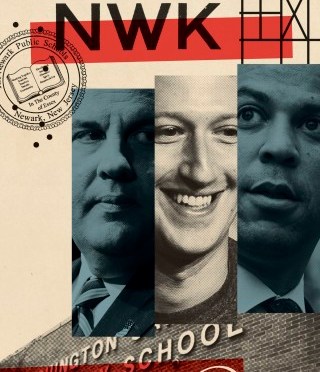








 , and this passage particularly seems to be a reproof to man, who, while with his domestic animals he is curious to improve the race by employing always the finest male, pays no attention to the improvement of his own race, but intermarries with the vicious, the ugly, or the old, for considerations of wealth or ambition. It is in conformity with the principle adopted afterwards by the Pythagoreans, and expressed by Ocellus in another form.


 etc.–
etc.–


 . Which, as literally as intelligibility will admit, may be thus translated. “Concerning the interprocreation of men, how, and of whom it shall be, in a perfect manner, and according to the laws of modesty and sanctity, conjointly, this is what I think right. First to lay it down that we do not commix for the sake of pleasure, but of the procreation of children. For the powers, the organs and desires for coition have not been given by god to man for the sake of pleasure, but for the procreation of the race. For as it were incongruous for a mortal born to partake of divine life, the immortality of the race being taken away, god fulfilled the purpose by making the generations uninterrupted and continuous. This therefore we are especially to lay down as a principle, that coition is not for the sake of pleasure.” But Nature, not trusting to this moral and abstract motive, seems to have provided more securely for the perpetuation of the species by making it the effect of the oestrum implanted in the constitution of both sexes. And not only has the commerce of love been indulged on this unhallowed impulse, but made subservient also to wealth and ambition by marriages without regard to the beauty, the healthiness, the understanding, or virtue of the subject from which we are to breed. The selecting the best male for a Haram of well chosen females also, which Theognis seems to recommend from the example of our sheep and asses, would doubtless improve the human, as it does the brute animal, and produce a race of veritable
  [aristocrats]. For experience proves that the moral and physical qualities of man, whether good or evil, are transmissible in a certain degree from father to son. But I suspect that the equal rights of men will rise up against this privileged Solomon, and oblige us to continue acquiescence under the

 [the degeneration of the race of men] which Theognis complains of, and to content ourselves with the accidental aristoi produced by the fortuitous concourse of breeders. For I agree with you that there is a natural aristocracy among men. The grounds of this are virtue and talents. Formerly bodily powers gave place among the aristoi. But since the invention of gunpowder has armed the weak as well as the strong with missile death, bodily strength, like beauty, good humor, politeness and other accomplishments, has become but an auxiliary ground of distinction. There is also an artificial aristocracy founded on wealth and birth, without either virtue or talents; for with these it would belong to the first class. The natural aristocracy I consider as the most precious gift of nature for the instruction, the trusts, and government of society. And indeed it would have been inconsistent in creation to have formed man for the social state, and not to have provided virtue and wisdom enough to manage the concerns of the society. May we not even say that that form of government is the best which provides the most effectually for a pure selection of these natural aristoi into the offices of government? The artificial aristocracy is a mischievous ingredient in government, and provision should be made to prevent it’s ascendancy. On the question, What is the best provision, you and I differ; but we differ as rational friends, using the free exercise of our own reason, and mutually indulging it’s errors. You think it best to put the Pseudo-aristoi into a separate chamber of legislation where they may be hindered from doing mischief by their coordinate branches, and where also they may be a protection to wealth against the Agrarian and plundering enterprises of the Majority of the people. I think that to give them power in order to prevent them from doing mischief, is arming them for it, and increasing instead of remedying the evil. For if the coordinate branches can arrest their action, so may they that of the coordinates. Mischief may be done negatively as well as positively. Of this a cabal in the Senate of the U. S. has furnished many proofs. Nor do I believe them necessary to protect the wealthy; because enough of these will find their way into every branch of the legislation to protect themselves. From 15. to 20. legislatures of our own, in action for 30. years past, have proved that no fears of an equalisation of property are to be apprehended from them.


 [“Curnis, good men have never harmed any city”]. Altho’ this law has not yet been acted on but in a small and inefficient degree, it is still considered as before the legislature, with other bills of the revised code, not yet taken up, and I have great hope that some patriotic spirit will, at a favorable moment, call it up, and make it the key-stone of the arch of our government.
 Camden Civil Rights Project