Category Archives: Corporate Responsibility

New Jersey Political Boss Loses Control Of Newspaper

download (1)

FUHGEDDABOUDIT I Posted 05.27.14 4:20 PM ET

By Olivia Nuzzi

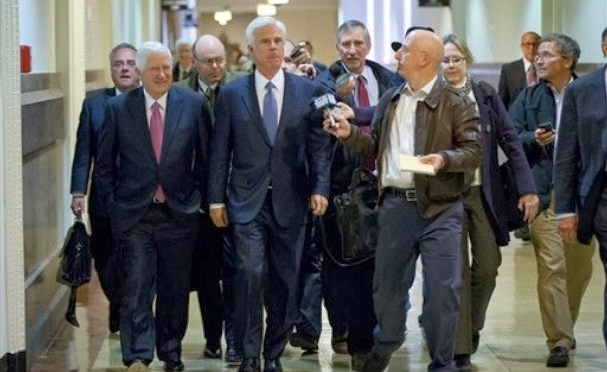
George Norcross, the most powerful politico in New Jersey, lost control of the Philadelphia Inquirer Tuesday to his estranged business partner.
The most powerful man in New Jersey became a lot less powerful Tuesday—and it’s not Chris Christie.

George Norcross III, white-haired like a cartoon villain, is South Jersey’s Democratic boss. If Norcross’s press is to be believed, he is to Jersey politics what Voldemort was to Hogwarts. But Tuesday, he lost control of the Philadelphia Inquirer and the Philadephia Daily News, the two major newspapers in the Philadelphia metropolitan area, which includes almost all of South Jersey.

In April 2012, the well-respected Inquirer and its more tabloid-ey sister, the Daily News—were sold for the fifth time in six years, for $55 million, to a group of influential locals, led by Norcross and Lew Katz, himself a successful businessman with ties to the Democratic Party (he was an early supporter of Bill Clinton and Ed Rendell). The relationship between the partners soured and devolved into ugly squabbling and litigation. Tuesday morning Katz finally wrestled control of Interstate General Media, the parent company of the papers (and Philly.com), out of Norcross’s hands with an $88 million bid.
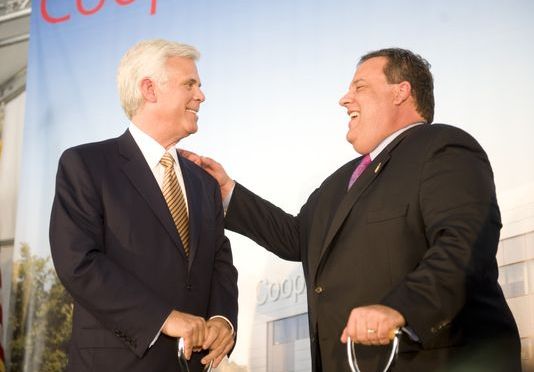
Norcross and Gov. Christie’s relationship has been vital to Christie getting things done with the support of Democrats (which allows him to perpetuate the image of a leader capable of working in a bipartisan fashion). At an event after Bridgegate, Norcross joked in Christie’s presence that he was the only one who could close a bridge in New Jersey.

The son of a union boss, Norcross dropped out of college and “started his [insurance] business with a fold-up card table and a phone,” New Jersey Senate President and Norcross ally Stephen Sweeney told me in a recent interview. Norcross’s business became a success and turned him into a millionaire.

Beginning in the early 1990s, Norcross began financing campaigns and installing candidates in local and state office. He became so powerful that, in his own words—according to secret recordings released after Norcross was investigated for corruption (he’s never been found guilty of a crime)—”in the end, the McGreeveys, the Corzines, they’re all going to be with me…Not that they like me, but because they have no choice.” Norcross was also recorded recalling a threat he made, “If I catch you one more time doing it, you’re going to get your fucking balls cut off.”

As the U.S. Attorney, Christie chose not to indict Norcross, saying that the attorney general had screwed up his investigation—which Democrats have long considered a political move by Christie. Whether or not it was, it no doubt helped him when he moved onto his next job: governor.

The scope of Norcross’s power extends even beyond South Jersey, making the power of Democratic bosses in North Jersey seem feeble in comparison. A relationship with Norcross would be vital to any governor, and Christie is no exception. The legislators from Norcross’s territory—Sen. Sweeney among them—allowed Christie to pass things like pension and property tax reform in his first term.

In 2012, before Norcross and Katz partnered to buy the papers, Daily News reporter Wendy Ruderman told NPR that she thought the proposed deal was “about buying access. I can’t imagine that someone like George Norcross is being philanthropic…He absolutely despises the media.”

Some sources maintain that it was Norcross’s attempt to have editorial control that created friction between him and Katz—it has been charged that Norcross’s 26-year-old daughter, Lexie, wielded editorial control over Philly.com, which some worried she was trying to turn “into BuzzFeed.”

Newsroom Shaken by Norcross Campaign Solicitation

Spokesman says solicitation was an accident; reporters worry they’re being compromised.

images

This is what inevitably comes of having a political boss as a newspaper owner, perhaps: The newsrooms of the Inquirer and Daily News are again restless after some reporters received a campaign fund-raising letter from one of the paper’s co-owners, South Jersey political boss George Norcross.

Norcross’s spokesman, Daniel Fee, said the solicitation was inadvertent and wouldn’t happen again. Nonetheless, the Inquirer reports:

Newspaper Guild president Howard Gensler said the invitations on behalf of New Jersey State Sen. Donald Norcross (D., Camden), a South Jersey congressional candidate, nevertheless raised concerns.

“The Newspaper Guild objects to the use of company e-mail and company mail delivery for any political purposes,” he said. “It puts unfair pressure on our members to get invited to a political fund-raiser by one of our owners.”

Kelly McBride, a senior faculty member and ethicist at the Poynter Institute, a journalism organization, said that whether or not the invitations were sent intentionally, they could be perceived as a conflict for George Norcross, a prominent South Jersey Democratic leader.

“As a boss, you don’t ask your employees to contribute to a cause, because it could be seen as coercive,” she said. “It could also be seen as a not-so-subtle hint to reporters to skew their coverage.”

The hubub occurs, of course, as Norcross battles fellow co-owners Lewis Katz and Gerry Lenfest in court over the paper’s ownership going forward.

Read more at http://www.phillymag.com/news/2014/03/14/newsroom-shaken-norcross-campaign-solicitation/#IVJr0afgbCDeOmzk.99

Norcross, bank enjoy marriage of convenience

download (3)

 Aug. 23, 2007

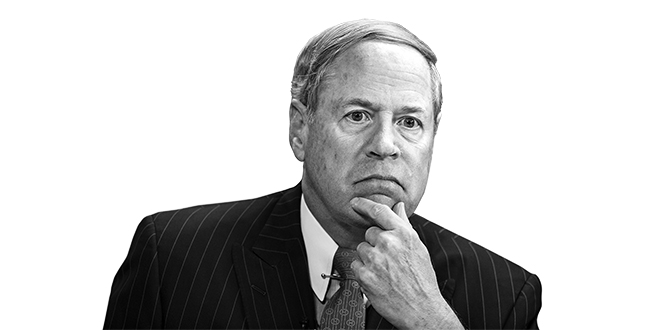
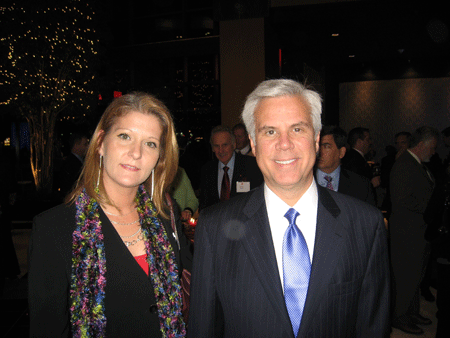
Vernon W. Hill II (above), CEO and founder of Commerce Bancorp, heads a profitable company that benefits from more than 1,000 government accounts in four states. Government deposits increased ninefold after South Jersey power broker George E. Norcross III (below) joined the bank in 1996. / STAFF FILE PHOTOS

 CHERRY HILL — South Jersey’s most influential power broker and the institution that calls itself “America’s Most Convenient Bank” have proved to be a winning combination — both George E. Norcross III and Commerce Bancorp have profited from their relationship.
In 23 years, Commerce’s share of government deposits — the money towns and counties use for payroll and other expenses — has tripled, from 7 percent of total bank deposits in 1981 to 21 percent in 2003, with more than 1,000 government accounts in four states. The industry average is less than 5 percent.At least part of that success is attributed to Norcross, CEO of Commerce’s insurance division.

“George helped to grow the government deposits and the insurance — and that’s important,” said Claire Percarpio, a financial analyst with the Philadelphia investment bank Janney Montgomery Scott, who has covered Commerce for eight years. “It’s also helpful to be politically connected in opening new branches because it really speeds the approval process.”

Last year, Norcross was paid $1.23 million at Commerce, second only to CEO and founder Vernon W. Hill II.

Norcross owns, or has an interest in, Commerce stock that is valued at more than $60 million, according to Securities and Exchange Commission filings.

The Cherry Hill-based company consistently generates record earnings, reporting a net profit of $194 million in 2003.

On Wall Street, Commerce stock has outperformed Microsoft over the past decade. If you invested $10,000 in both Commerce and Microsoft on Dec. 31, 1993, and cashed it out on Dec. 31, 2003, the bank investment would have been worth $115,820 vs. $108,631 for the software giant.

Norcross declined requests for an interview and did not respond to written questions.

Commerce National Insurance, headed by Norcross, generated $66.5 million in revenue in 2003, making it one of the top sources of non-interest income for the bank.

The company said that approximately 15 percent to 20 percent of that business is from negotiated, or no-bid, contracts with municipalities.

“We have a lot of business in New Jersey because we’re the biggest broker in the region,” Commerce spokesman David Flaherty said.

He attributed the growth to acquisitions rather than political influence.

“Most of our insurance business was gained by acquiring firms that already had municipal business,” Flaherty said.

Commerce brokers insurance for 31 of 37 municipalities in its home base of Camden County. Commerce also administers the Municipal Excess Liability Joint Insurance Fund, which includes more than 300 of New Jersey’s 566 municipalities. The fund is a protection pool for the member towns in case one is hit with a huge liability case or judgment.

Throughout the first half of the 1980s, when Commerce had fewer than 10 locations, it held less than $5 million in government deposits, constituting less than 5 percent of overall deposits. Those figures began to climb as the company grew and as it became more closely aligned with Norcross.

Today, the bank’s government deposits alone would more than double the total deposits of its biggest South Jersey-based competitor, Sun National Bancorp Inc. of Vineland.

Banker Gerard M. Banmiller said that before 1990, when Commerce began to take a dominant role in government banking, his former Community National Bank had some government deposits, along with the forerunners of Wachovia and PNC.

“Commerce was simply not a player in government deposits,” said Banmiller, now president of 1st Colonial National Bank, based in Collingswood. “It was spread among many banks. Simply stated, that is not the case now.”

By 1991, the ties between Commerce and Norcross had solidified. That year, as chairman of the Camden County Democrats, Norcross faced the task of Democrats retaking control of the Board of Freeholders from the Republicans.

To finance that critical election, Commerce lent the county Democrats $450,000, or nearly half the money spent in the successful campaign. The practice was legal at the time, but new laws have since restricted the amount a supporter may lend to a candidate or party, ranging from $2,200 to $37,000.

The money helped to fund a successful media blitz, which included television commercials for the local Democrats aired during the World Series in October. The Democrats won, taking control of the board.

In 1992, Norcross moved his firm, Keystone National Insurance Cos., to space inside the Commerce Bank Atrium building on Route 70. Although he was not formally associated with the bank, he was a business partner with Hill in the development of Galloway National Golf Club near Atlantic City.

Banking deregulation provided Norcross with an opportunity to officially join Commerce. The repeal of the federal Glass-Steagall Act of 1933, phased out between 1989 and 1999, permitted banks to market insurance and other products.

“The idea is to cross-sell,” said Kasturi Rangan, a banking professor at Case Western Reserve University in Cleveland. “The whole name of the game is you make a loan to a firm, and then you try and sell it insurance, you try and sell it risk-management services, you try and underwrite its securities, you do (mergers and acquisitions) .’.’. for it.”

In 1996, Commerce purchased Keystone, and Norcross became the chief executive of Commerce National Insurance.

The bank also acquired Buckelew & Associates of Toms River, owned by former Ocean County Republican Chairman Joseph Buckelew. The deal paid the owners of the two firms a total of about $25 million in Commerce stock, according to SEC filings.

Commerce also has helped Norcross to prosper in other business pursuits.

In 2002, the bank approved a $32.5 million line of credit for Norcross; his brother, Philip; Commerce board member William Schwartz Jr.; and Assembly Majority Leader Joseph J. Roberts Jr., D-Camden, to buy a majority share in Glendora-based U.S. Vision Inc. Schwartz is CEO of the provider of eyeglasses and contact lenses.

Roberts and Philip Norcross have since sold their interests.

In 1998, Commerce added to its Central Jersey board then-state Sen. John A. Lynch Jr., the Middlesex County Democratic superboss, and Dale Florio, the Somerset County Republican boss whose lobbying firm works for Commerce.

But Commerce’s political involvement has been a double-edged sword. Its political action committee, Compac, was closed in 2003 following criticism from the financial community.

Earlier this year in Philadelphia, federal prosecutors indicted a former Commerce regional board member and two bank executives, among a dozen people accused in an alleged kickback scheme to win business from City Hall.

The former and current Commerce officials pleaded innocent. The bank has not been charged with wrongdoing.

After the indictment, Commerce said it would no longer participate in no-bid bond deals but did not mention any change in its no-bid insurance work.

In a conference call with analysts earlier this year, CEO Hill promised to establish a “gold standard” for ethical behavior at the company.

A Banker’s Last Day at the Office, in a Bank He Built Aggressively

MOORESTOWN, N.J., July 24 — There are no grand sendoffs planned. No speeches, either. In fact, Vernon W. Hill II, who founded Commerce Bank 34 years ago, is not even planning to go to the office on Tuesday.

Faced with a federal threat of not being allowed to open any more bank branches unless he stepped aside, the board members of Commerce Bancorp, which Mr. Hill hand-picked, voted last month to remove him as chairman and chief executive effective July 31.

How Mr. Hill rose to become so influential a figure in New Jersey business and politics is the story of an ambitious real estate developer who cultivated powerful friends as he built a network of Burger Kings and then banks across the state. It is also a story of pride and excess.

“It’s a Greek tragedy,” said Allen Starkie, an executive recruiter at Knightsbridge Advisers, who lured several senior managers to Commerce. “Vernon was an incredibly gifted protagonist who challenged the fates and won, but he developed such extreme hubris that in the end, it undermined his success.”

Mr. Hill’s career has been defined more than anything else by a willingness to defy the establishment. He founded Commerce with a plan to make retail banking more like retail shopping, opening spacious branches when the rest of the industry was scaling back. And in the highly regulated world of public corporations, he openly awarded tens of millions of dollars of contracts to friends and relatives, including about $50 million for his wife, who decorated and designed many of the nearly 450 branches.

In Moorestown, the well-heeled South Jersey town he calls home, he built a 46,000-square-foot Tuscan-style mansion where a farmhouse once stood. Construction of the home, complete with a 4,000-square-foot gym and fountains inside and out, so alienated his neighbors that Moorestown established a historic preservation commission.

But last month the establishment pushed back.

Under the terms of a cease-and-desist order with federal bank regulators, Commerce agreed to stop signing contracts that entangled the bank with businesses run by its board members, officers and members of their families.

But his troubles have not ended there. The federal Office of the Comptroller of the Currency, the bank’s primary regulator, says it is continuing to look into possible insider dealing at Commerce, and two people close to the investigation say the 61-year-old Mr. Hill is at the center of the examination.

Mr. Hill’s lawyer, Robert S. Bennett, said in a telephone interview that his client did not believe he had done anything improper. “I can’t believe that he would ever put his interests above those of the bank,” Mr. Bennett said, noting that the business deals in question were all publicly disclosed. “These things were done in the sunshine.”

Mr. Hill declined to be interviewed for this article.

This was not Commerce Bank’s first brush with the law. In 2004, a federal grand jury indicted two Commerce executives, Glenn K. Holck and Stephen M. Umbrell, on charges of giving loans to the Philadelphia city treasurer in exchange for the city’s financial business. In 2005, the two executives were convicted of conspiracy and the treasurer was found guilty of fraud and conspiracy. Although investigators disclosed that they had taped Mr. Hill talking about business with the treasurer, Mr. Hill was never charged.

The son of a prosperous Virginia real estate developer, Mr. Hill ran the bank as if it were his own personal patronage system. He hired numerous people with deep connections to New Jersey municipal and state governments, and then he hired their relatives. He befriended George E. Norcross III, one of New Jersey’s most influential Democratic politicians, and appointed him chief executive of Commerce Bank’s insurance business. The bank has done business for more than 30 years with the law firm in which Mr. Norcross’s brother is a managing partner, and last year it paid the firm $1.4 million for legal services, a move the bank said in a regulatory filing was not approved by the board.

Ever since he opened the first Commerce branch in Marlton, N.J., in 1973 at the age of 27, Mr. Hill was a self-styled maverick with little patience for tradition. Owner of more than 40 Burger Kings, he brought a retail mindset to the banking industry, which never operated that way.

When rivals were closing their branches, Commerce aggressively opened new “stores,” as Mr. Hill called them, and kept them open long past the closing times of other banks. Today it is New Jersey’s largest bank and has reached into New York City, Washington and Palm Beach, Fla. In light of its recent legal troubles, Commerce has scaled back plans to open new branches this year from 65 to about 50.

As its presence in the state grew, so did its political influence. Today the Commerce board includes not only Mr. Norcross, but also a former Senate president and acting governor,Donald T. DiFrancesco, who came on in 2002, and a former chairman of the Ocean County Republican Party, Joseph Buckelew. On the same day in 1996, Mr. Hill purchased the insurance businesses of both Mr. Norcross and Mr. Buckelew and folded them into Commerce.

As much as Mr. Hill’s departure from Commerce raises questions about how the bank, based in Cherry Hill, N.J., will fare without its founder — analysts have already speculated that it will soon be sold — it also raises questions about the possible collateral damage to Mr. Norcross.
3commerce

“The power in South Jersey has been George Norcross,” said Senator Raymond J. Lesniak, a Democratic senator from Union County and former chairman of the Budget and Appropriations Committee. “Vernon was just part of the political empire built by George Norcross.”

As Alene Ammond, a former Democratic senator in New Jersey who has clashed publicly with Mr. Norcross, put it: “They formed a cartel. It was a very happy marriage. With George Norcross’s clout as a political boss, he then paved the way throughout the state for them to establish themselves with bonds, insurance — town by town, county by county.”

In the late 1990s and early 2000s, Commerce Bank was the largest underwriter of municipal bonds in New Jersey. Indeed, by 2002 it was underwriting more than half of them.

Even as its bond business grew, Commerce was making contributions to Democratic and Republican politicians alike through its political action committees. It stopped making the political donations in 2003, as Wall Street analysts and others questioned whether they created conflicts of interest.

As far back as 1993 a state grand jury was investigating whether the design company operated by Mr. Hill’s wife, Shirley, was awarded business from Camden County, where Mr. Norcross was then the Democratic Party chairman. When the grand jury subpoenaed phone records, the county said they were inadvertently destroyed. Neither Mrs. Hill nor any county official was ever charged.

The business arrangement at Commerce that has attracted the most scrutiny is its relationship with InterArch, the architectural and design company owned by Mrs. Hill. Over the past decade, the bank has paid the company about $50 million to design and furnish bank branches. Last year alone, it paid Mrs. Hill $9.2 million for her services.

In addition to her role as the bank’s chief interior designer, Mrs. Hill became the bank’s de facto protocol officer, making surprise inspections — sometimes with her Yorkie, Sir Duffield, in tow — to ensure that employees were complying with company standards.

050113_vernonhill_600

Mrs. Hill and her husband shared a flare for the flamboyant.

At Christmas, he has held lavish parties at their home, Villa Collina, with a different theme, and food, in each room after being greeted by trumpeters and served canapés while Broadway entertainers performed.

The bank held annual “Wow Awards” to honor its best employees, renting out Radio City Music Hall for a night of festivities for hundreds of workers, with Mr. Hill escorted to the stage arm-in-arm with two sequined Rockettes.

Mr. Hill’s neighbors are familiar with his grand scale. When the couple was building their mansion on a wooded 44 acres here, they complained of a parade of construction vehicles: earth movers, dump trucks, water tankers to fill the artificial ponds on the property. Then there were the helicopters overhead at all hours. One neighbor said she asked why the helicopters were necessary, and was told by a construction worker it was so Mrs. Hill could give orders to construction crews through a megaphone.

“I work at home, and when I say there was one dump truck a minute going in and out, I’m not kidding,” said Jeannie Roulet, a quilt maker who lives on the street the Hills use to get to their service entrance. “I have the cracks in our plaster to prove it.”

Power Broker Flexing Muscle, Caught on Tape

download

APRIL 1, 2005

By DAVID KOCIENIEWSKI

TRENTON, March 31 – In a series of secretly recorded conversations, the Democratic power broker George E. Norcross III made threats, discussed patronage jobs and offered vaguely worded inducements to persuade a small-town councilman to fire a defiant municipal employee. The conversations were on audio tapes released on Thursday by the New Jersey attorney general’s office.

The tapes, which were recorded in early 2001 by a Palmyra councilman, John Gural, offer a rare glimpse of the volatile but media-shy Mr. Norcross flexing his political muscle: bragging about his access to powerful elected officials like United States Senator Jon S. Corzine and flaunting his ability to shower his allies with coveted jobs and to destroy the careers of his adversaries. At one point in the conversations, Mr. Norcross says he wants to make an example of a Democrat who defied him, Ted Rosenberg, and urges Mr. Gural to fire Mr. Rosenberg as the Palmyra town solicitor.

In subsequent discussions, Mr. Norcross offers to help place Mr. Gural in a patronage job at the Board of Elections in exchange for firing Mr. Rosenberg. And on January 29, 2001, when Mr. Gural says his employers told him that Mr. Norcross had promised to steer extra municipal contracts to the firm as a reward for firing Mr. Rosenberg, Mr. Norcross replies, “We’d like to see you derive a little bit of that benefit.”

Release of the tapes came after a long court battle between the attorney general’s office, which had fought to keep them private, and Mr. Rosenberg, who argued that they held evidence of attempted extortion. Several news organizations, including The New York Times, also pressed for release of the tapes and, given the succession of corruption scandals in the state, they stoked furious speculation by reporters and political analysts.

But many of Mr. Norcross’s most provocative statements had already been leaked to the press, so the tapes released yesterday offered more insight into his particularly Hobbesian political style than into his efforts to topple Mr. Rosenberg.

Mr. Norcross’s lawyer, William Tambussi, had urged the attorney general to release the tapes, saying they would show that the allegations by Mr. Gural and Mr. Rosenberg were baseless. In a statement released last night, Mr. Tambussi said that the entire episode was a vendetta by Mr. Gural and Mr. Rosenberg because Mr. Norcross had not supported their candidacies for party and legislative offices.

“These two men are nothing more than malcontents and political shakedown artists, and the tapes prove it,” Mr. Tambussi said. Mr. Rosenberg and Mr. Gural had said that Mr. Norcross would be heard making death threats, but no such remarks were found on the tapes. “The tapes show that Mr. Gural and Mr. Rosenberg invented, fabricated and lied in all their wild accusations,” Mr. Tambussi said.

The investigation ended with three officials of Mr. Gural’s company, JCA Associates, pleading guilty to tax fraud and campaign finance charges. Mr. Norcross was not charged with any wrongdoing.

Advertisement

Continue reading the main story
Advertisement

Continue reading the main story

Mr. Gural and Mr. Rosenberg have strongly criticized Attorney General Peter Harvey for not pursuing Mr. Norcross more aggressively in the case, and at one point, a Superior Court judge also criticized the attorney general’s office for offering JCA officials a plea deal the judge found too lenient.

However they are interpreted legally, the tapes offer vibrant sound bites for government watchdog groups that complain about New Jersey’s political culture being marred by backroom deals intended to benefit insiders.

During his conversation with Mr. Gural on January 3, 2001, Mr. Norcross recounts the ways he helped JCA win government contracts, and unapologetically justifies the practice of steering government contracts to political allies.

“To be the most qualified, the best, the honest — you know, all that stuff — and not that you don’t do what’s right, but you consider politics,” Mr. Norcross said. “And there’s nothing wrong with considering if you can help a friend, as long as a friend’s doing a good job.”

Mr. Norcross also took credit for helping South Jersey residents get a larger share of tax dollars and political appointments by challenging the other Democratic leaders who backed Mr. Corzine’s candidacy for the United States Senate in 2000. Mr. Norcross’s decision to back Gov. James Florio for the Democratic nomination ignited a fierce battle within the party, and Mr. Norcross joked that it cost Mr. Corzine an $35 million by forcing him to run in a contested primary. But Mr. Norcross said the turmoil was worth it because that move had transformed his South Jersey organization into a major player in state politics and would prevent the region from being shortchanged in the future.

“Never again will that happen,” he said. “Because we put up the gun and we pulled the trigger and we blew their brains out. They know it. We’re just like Hudson County and Essex County now. That’s the way it works.”

Cooper Hospital Releases Report Citing $18.8 Million In Fraud

The Camden Center’s Action Came Under Legal Pressure. Overcharges Also Were Found.

images

POSTED: November 04, 1998

Under pressure from a federal court suit, the management of Cooper Hospital-University Medical Center yesterday released an internal report that shows that the hospital has lost at least $18.8 million to fraud since 1987.

The 256-page report, which Cooper’s management had fought in court to keep secret, says publicly for the first time that the Camden hospital lost an approximate total of $21.6 million, including the $18.8 million, through a combination of fraud, overcharging and questionable contract charges. In earlier statements filed in court, the hospital had estimated it had lost $13 million to fraud, largely through the actions of two former Cooper financial executives who pleaded guilty to federal charges in 1994. Most of the lost money was taken through bills submitted to the hospital by a collection agency and a computer-assistance firm employed by the hospital, according to the report.

The two former Cooper officials convicted of fraud, P. John Lashkevich and John M. Sullivan, received a portion of the stolen money between 1987 and 1994 from one of the companies, the report says.

The report says high-ranking officials of the hospital, including chairman of the board Peter Driscoll and president Kevin Halpern, often locked horns with committee members charged with investigating the missing money. The report says some board members wanted a completely independent investigation of fraud at the hospital, while Driscoll objected.

The report says Driscoll and other hospital managers knew about a federal corruption investigation of Cooper for a year before they informed the hospital board of the investigation.

“Cooper has been the victim of a massive crime wave,” the report says. “The criminal activity which has been conclusively admitted in federal court has been both massive and pervasive. It is equally disturbing that Cooper’s own systems did not detect or were readily manipulated to permit the fraud and prevent its detection,” the report says.

The report, written by a seven-member Ad Hoc Internal Control Committee, including Driscoll and Halpern, was released to the public after a federal judge ruled that Cooper had to hand over the report to the hospital’s former outside auditors, whom Cooper has sued to recoup damages.

Driscoll and Halpern could not be reached for comment yesterday.

In a sweeping indictment of financial procedures at the hospital, the committee recommended numerous changes to avoid future fraud.

“The committee remains unconvinced that contractual debacles . . . are prevented or reliably detected by . . . Cooper’s new contract policies,” the report says.

The report, written in 1997, says there are “reasonable grounds” to investigate 10 more areas of hospital business, including about $800,000 in wire transfers. It also suggests that all outside collection agencies used during the period of the fraud should be reviewed.

The corruption at Cooper could have exceeded $18.8 million, the report says. “The fact that a potential area of subject is not discussed in this report does not mean that it has been given a `clean bill of health,’ ” the report says.

Hospital spokeswoman Peggy Leone said that “each area listed has been examined on an individual basis and evaluated on its own merit by various bodies both within and outside the institution, including our financial committee, our audit committee and our external auditors.” She said the hospital was confident that the problems had been resolved to the satisfaction of the board of trustees.

The document outlined what it called “massive fraud” by Lashkevich, Cooper’s former controller, and Sullivan, the hospital’s former executive vice president for finance. The two men pleaded guilty to money-laundering and other corruption charges in July 1994 and are in prison. They subsequently cooperated with the hospital’s internal investigation.

According to the report, the two men and some business associates were able to obtain millions in kickbacks and fraudulent payments through collection firms, finance companies and accounting firms. The report says Sullivan began taking kickbacks from a collection firm, Financial Management Corp., in 1987. Direct embezzlement began in 1989 with Lashkevich, the report says.

The men helped divert about $7.5 million through J-Jet, a collections agency employed by Cooper to collect unpaid hospital bills, according to the report.

About $2.1 million was stolen from bank accounts set up for a proposed Cooper takeover of the former Metropolitan Hospital in Philadelphia, the report says. The takeover never occurred.

The report also lists about $7.5 million lost through Flexco, a joint computer consulting venture of Cooper Hospital, and Flex/Sys, a New York data corporation. The report says $5.6 million was lost to fraud, $739,000 to contract overcharges, and $1.1 million in questionable contract charges. In July 1996, Cooper filed a civil lawsuit against the Flex entities, seeking to recoup the money. No criminal charges have been filed in the Flexco matter.

In each instance, the frauds were made possible because of a lack of financial controls, the report says.

“Virtually all of the internally generated fraudulent transactions were questionable from an accounting control perspective,” the reports says. It says Lashkevich either transferred or fired accounting staff members who attempted to warn management of problems.

In details not previously publicized, the report shows how Lashkevich and Sullivan had unsupervised control over tens of millions of dollars of Cooper funds, and manipulated the system for nearly seven years without drawing any attention from hospital administrators.

“The ability to bypass or defeat controls grew from an institutional culture that delegated and outsourced too much responsibility, without developing effective controls to regulate the delegated responsibility,” the report says.

The report says that some board members believed that Cooper’s investigating committee was not independent. The report says: “The minutes reveal a continuing concern by the Board (and an appreciation by the Board of the public’s concern) that the investigation be conducted objectively and free from conflicts of interest.”

The report says Driscoll, the board chairman, did not want a fully independent committee. The report quotes Driscoll as saying, “It would be a mistake to have a committee that did not have a commitment to Cooper and its mission.”

Cooper said it had recovered about $5 million, including restitution by Lashkevich and Sullivan. It is pursuing other civil litigation to recoup other lost money.

The internal report became public yesterday as the result of a civil lawsuit.

In 1997, Cooper Hospital sued its former accounting firm, KPMG Peat Marwick, alleging that the firm was responsible for allowing some of the fraud to go undetected at Cooper. Peat Marwick has consistently denied that accusation in court.

Lawyers for Peat Marwick sought the hospital’s internal investigation through a discovery motion in court. The motion was granted, thus making the report part of the public court record.

Christie’s Camden tax breaks reward political insiders

images

Jeff Horwitz and Geoff Mulvihill, Associated Press

11:20 a.m. EDT March 17, 2015

CAMDEN — During Chris Christie’s first term as governor, he made tax incentives a cornerstone of a promised “New Jersey Comeback” that would lure new businesses to the state.

With New Jersey’s job growth still poor at the beginning of his second term last year, the governor doubled down.

New Jersey’s Economic Development Authority has handed out more than $2 billion in tax breaks since 2014, more than the total amount issued during the decade before Christie took office.

The aid has gone disproportionately to businesses in Camden, a city of 77,000 that ranks among the nation’s most impoverished. Development projects in the city received $630 million in future tax breaks last year. Because of those grants, Christie said in his State of the State address, Camden is “seeing a new tomorrow.”

Most of the jobs coming to Camden are filled by existing employees who currently work just a few miles away. One tax break exceeded the value of the company that received it. Another went to a developer who owes New Jersey millions of dollars in long-unpaid loans. And nearly all the recipients boast notable political connections — either through an affiliation with a prominent southern New Jersey power broker, Democrat George Norcross, or through donations to Christie and the Republican Governors Association during his tenure overseeing it.

New Jersey’s Camden incentives raise questions about his administration’s stewardship of New Jersey’s finances — and whether Christie’s claims of revitalizing Camden will resonate with Republican voters opposed to corporate welfare. For conservatives, incentives buck the free market and could undermine New Jersey’s prospects for legitimate tax reform.

“Giving huge subsidies to companies moving from the suburbs of Camden to the city is just off-the-charts crazy territory,” said Michael Doherty, a Republican state senator. “If you’re a high-profile individual, you can get the EDA to make decisions to your benefit.”

Christie spokesman Kevin Roberts said in an email that critics of the tax breaks “offer no alternative plans for creating jobs, growing the economy or renewing our urban centers.”

Driving the 4 miles from Subaru’s current U.S. headquarters in Cherry Hill to its new home in nearby Camden takes eight minutes. Tax credits granted by the state of New Jersey will make that trip worth nearly $118 million for the company.

Subaru’s short trip is not an exception: Most of New Jersey’s incentives for Camden have gone to projects shifting existing employees from nearby locations. Holtec International Inc., a manufacturer of nuclear reactor components, is receiving $260 million for relocating 160 nearby jobs and adding 235 more. Cooper University Hospital will receive $40 million, mostly for returning 353 employees that it previously moved to the suburbs. The Philadelphia 76ers will receive $82 million for bringing 250 jobs across the Delaware River, just a few thousand feet from the Pennsylvania state line.

The low bar for incentive payouts is justified due to Camden’s dire circumstances, said Timothy Lizura, president of the Economic Development Authority.

A top economist at Rutgers University’s Center for Urban Policy Research, Nancy Mantell, said: “It always concerns me that you’re just moving people around, not creating anything particularly new to the regional economy. And this is not going to help the places the companies left.”

The scale of New Jersey’s generosity has bolstered one profitable new industry: the resale of tax incentives by businesses that can’t use them.

Economic development incentives are transferrable under state law. When New Jersey awards tax breaks in excess of a company’s tax bill, the recipient can sell them to an unrelated corporation looking to pay less in taxes. The 76ers, for example, told the AP last year that the team expects to sell a portion of its $82 million in New Jersey incentives — the NBA franchise doesn’t make enough money to use them all.

In at least one case, the value of the tax credits outstripped the value of the business that received them. In November, a Maryland medical testing startup, DioGenix Inc., received a $7.9 million tax incentive to relocate to Camden. Two months later, DioGenix sold itself for between $8 million and $10.9 million to a buyer that announced it would resell the tax breaks for at least $6 million.

Lizura said he was unaware of DioGenix’s upcoming sale when it received its state tax credits but called the sale evidence of success. The incentives are awarded only when companies meet their job and investment obligations.

“If a capitalized company comes in and buys a startup company and they live up to the approval we had, how great is that?” he said.

Diogenix’s buyer, Amarantus Biosciences Holdings Inc. of San Francisco, has been unprofitable since its founding in 2008, has less than $2 million in assets and warned investors in November that there is substantial doubt about whether it can stay in business, according to Securities and Exchange Commission filings. The company did not return phone calls from The Associated Press over several weeks.

Many of the tax breaks involve projects connected to Norcross, the Democratic power broker, whose tacit support for Christie is widely viewed as vital to his 2009 victory over then-Gov. Jon Corzine.

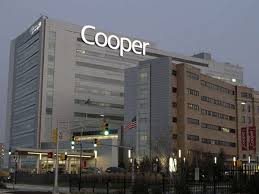
Norcross is on the board of Holtec, the nuclear equipment manufacturer. He also sits on the board of Cooper Hospital, which both received a grant and is the indirect beneficiary of two more — one to build housing for its students and the other to DioGenix, which the state authority said moved to Camden to work with Cooper.

Some recipients also have business relationships with Norcross and his family. Over the last three years, Cooper has paid more than $1 million to Norcross’s insurance brokerage and more than $2 million to a law firm partially owned by his brother Philip, though the hospital’s financial statements said those relationships predate George Norcross’s tenure on its board. Along with his firm’s work for Cooper, Philip Norcross’s firm represented the Philadelphia 76ers for the negotiation of the team’s $82 million in tax credits.

Dan Fee, a spokesman for Norcross, said in an email that there’s nothing wrong with his interest. “He’s been an active and regular cheerleader for companies to relocate to the city, so it’s not a surprise that he has relationships with many of their leaders — he’s been personally advocating for them to move to Camden.”

Lizura said it’s the board, not Norcross, who decides what deals get made.

“Each approval stands on its own merits,” said Lizura, the head of the Economic Development Authority. “The more cheerleaders, the better.”

As money has flowed to development in Camden, some trickled back into politics. The lead investor in the 76ers, Joshua Harris, donated $50,000 to the Republican Governors Association during the time Christie ran it, and other part-owners of the team have given tens of thousands more to the group or to Christie’s campaigns. A political committee supported by employees of Lockheed Martin, another recipient of a Camden grant, pumped more than $100,000 into the governors’ group during Christie’s tenure.

No donations are as notable as those from Pennsylvania developer Israel Roizman. Last February, the state awarded incentives worth $13.4 million to Broadway Associates 2010 LLC, a real estate development company he controls. The project in question: refurbishing 175 low-income housing units that deteriorated under two decades of Roizman’s ownership.

Roizman received the tax breaks despite having failed to repay a state loan on the nearby Camden Townhouses development. A company he owns owes New Jersey’s Housing and Mortgage Finance Agency a total of $6.2 million in unpaid principal and interest on a loan that has been overdue by several years.

The agency does not consider the loan in default because it is still hoping to work out a repayment deal and does not believe it would gain much by foreclosing, spokeswoman Tammori Petty said.

Roizman is one of the region’s top political donors, giving as much as $100,000 each year and raising six-figure sums for national candidates. Though his contributions have overwhelmingly supported Democratic entities — Roizman was a campaign bundler for President Barack Obama — he cut a $10,000 check to the Christie-led governors association in late 2013, just before Christie became chairman and a few months before receiving his tax breaks. Last year, when Christie was at the helm, he gave the group the same amount.

The AP asked Roizman how he received additional money from New Jersey despite owing the state so much money.

“Why don’t you call the state and let them explain that to you?” Roizman said, then hung up.

New Jersey housing officials said that near the end of its multi-decade loan to the Roizman Camden development, the property ceased being profitable. Because Roizman did not personally guarantee the loans, the state has no recourse against the developer himself.

Copyright 2015 The Associated Press. All rights reserved.

Palmyra Tapes Case Timeline

download (3)

SUMMER 2001: Gural cooperates with state investigators, secretly tape-recording conversations with Norcross. Gural claims Norcross promised rewards for Gural if he voted to not reappoint Rosenberg. Norcross denies this.

NOVEMBER 2001: State investigators raid West Deptford municipal offices, searching for records of contracts awarded to JCA.

MARCH 2003: A former JCA employee — William Hampton Jr., the son of a founder of the company — pleads guilty to stealing $360,000 from the firm. Hampton took checks from municipalities and deposited them into his personal account.

DEC. 12, 2003: Three top executives at JCA agree to a plea bargain with the state Attorney General’s Office. The three — Mark Neisser, Henry Chudzinski and William Vukoder — say they will resign from the company and plead guilty to making illegal donations of more than $84,000 to West Deptford Democrats.

FEB. 17, 2004: West Deptford Democratic campaign treasurer Daniel Wilson is found guilty of tampering with public records and failing to report illegal campaign donations by JCA. Wilson is found innocent of charges he stole $28,000 in campaign funds.

MARCH 25, 2004: State Sen. Diane Allen, R-Edgewater Park, calls for an independent investigation of JCA by U.S. Attorney Christopher Christie.

MARCH 26, 2004: Superior Court Judge John Almeida throws out the plea bargain between JCA and Attorney General Peter Harvey. Almeida complains that JCA’s attorney, Kevin Marino, also personally represented Harvey in another ethics case. “The proposed plea agreement is not in the interest of justice,” Almeida said. “It is rejected.”

MARCH 31, 2004: Harvey fires back at Almeida, insisting the judge made “a rather serious error” in dismissing the three guilty pleas.

APRIL 2, 2004: Sen. Joseph Kyrillos, the state Republican chairman, calls for the U.S. attorney, a special prosecutor or a new attorney general to take over the criminal case against JCA.

MAY 1, 2004: The Schools Construction Corp. announces it intends to bar JCA and five of its top officers from working on the state’s school construction program for five years.

JUNE 8, 2004: Two months after rejecting a similar deal, Almeida agrees to a plea bargain involving the three former JCA executives. Almeida says circumstances have changed enough to convince him there was “no valid reason” to reject or delay a plea. Under terms of the deal, Neisser, Chudzinski and Vukoder will plead guilty to income tax evasion stemming from the campaign law infraction in West Deptford.

FEB. 25, 2005: Superior Court Assignment Judge John Sweeney orders that 330 hours of secret recordings of conversations between Gural and South Jersey power brokers, including Norcross, be released by the state within 15 days. Rosenberg, who filed a lawsuit to have the recordings released by state criminal investigators, said they will show “blatant examples of criminal behavior,” including Norcross attempting to bribe him. Norcross’ attorney, William Tambussi, said the recordings include just two conversations with his client and that state investigators have already found no evidence of wrongdoing.

APRIL 1, 2005: In the first series of released recordings, Norcross is heard denigrating a host of fellow Democrats, bragging about his influence with former Gov. James E. McGreevey and then-U.S. Sen. Jon S. Corzine, and describing the judiciary as a place to “get rid” of troublesome people. Tambussi says the tapes show Norcross to be a “tough fighter” for his party and South Jersey, and that “Mr. Gural and Mr. Rosenberg invented, fabricated and lied in all their wild accusations.”

JUNE 1, 2005: About 60 hours of new recordings are released. In one recording made in 2001, R. Louis Gallagher, then the chairman of the Burlington County Democratic Party, is heard telling Gural he should get a reward for agreeing to fire Rosenberg as borough solicitor at the behest of Norcross.

JUNE 27, 2005: A newly released tape shows that in July 2001, Norcross went to a high-ranking official in the Attorney General’s Office and asked that the investigation into allegations of political corruption in South Jersey be killed. “I’m not a thief. I’m not a crook. I can sleep at night,” Norcross told Anthony Zarrillo, then deputy director of the attorney general’s Division of Criminal Justice. “The only thing I have to worry about is a prosecutor or investigator who has an evil agenda.”

JULY 6, 2005: U.S. Attorney for New Jersey Christopher Christie says his office is “fully investigating” the Palmyra tapes case.

WEDNESDAY: Christie announces the federal government would not be able to prosecute Norcross even if he broke the law because the state Attorney General’s Office botched its investigation.

Informant Details Norcross Tape

John Gural says the Democratic leader bragged about his influence in a secretly recorded chat

images

POSTED: March 11, 2005

At a critical juncture in a political-corruption probe four years ago, the New Jersey Division of Criminal Justice made a decision: Put a body wire on then-Palmyra Councilman John Gural and send him into the Commerce Bank office of Democratic power broker George E. Norcross III.

Investigators already had taped a Norcross telephone call. Now they wanted Gural to meet him. For about 90 minutes as the hidden tape recorder rolled, Gural joined Norcross and Mark Neisser, president of the politically connected engineering firm that was the subject of the same probe.

What was said that day in January 2001 has remained locked up in an evidence vault in the Division of Criminal Justice’s office in Cherry Hill. But with the investigation now over, a state Superior Court judge has ordered that tape and dozens of others released – barring an expected appeal by the state attorney general.

“Norcross talked for almost an hour and half,” Gural said in a recent interview. “He talks about how he could influence judicial appointments in New Jersey. He talks about how he wanted to deal with some of his political opponents. And he talked about how he wanted to eliminate the ‘fringe elements’ in Burlington County Democratic politics.

“But most of all, he talked about how powerful he was and how much influence he had” with Jim McGreevey, the soon-to-be governor, Gural said.

A state bid to keep the tapes secret was rejected last week by Judge John A. Sweeney. He ordered them released to Ted Rosenberg, a whistle-blower who sued for their release.

The state promptly filed a motion to bar the release before a March 21 deadline but withdrew it late yesterday. Officials at the Attorney General’s Office said yesterday that they had the right to renew the motion but declined to discuss what legal action was planned.

In all, 330 hours of conversations are at issue. Some were in the offices of JCA Associates Inc., the Moorestown engineering company where Gural worked as a project manager. Others were with now-Superior Court Judge John Harrington; there are three tapes with Lou Gallagher Jr., then chairman of the Burlington County Democratic Party, and one with Alice Furia, the party’s vice chair.

Rosenberg and Gural have said the tapes – especially the one with Norcross – offer a rare inside look at power politics and could embarrass some political figures.

William Tambussi, attorney for Norcross, said that the tapes showed “absolutely no evidence of any criminal wrongdoing against anyone,” and that Gural and Rosenberg had political motives in pushing for their release.

“Rosenberg and Gural live in a fantasy world. This is all about politics and their political failures,” he said.

The meeting with Norcross was arranged through Neisser, then president of JCA. The company has since been absorbed by another engineering firm. Last year, Neisser pleaded guilty to minor tax charges in a deal related to the case.

At the time of the recordings, a political battle was being waged in Burlington County, and Rosenberg, the solicitor in Palmyra, was opposing Norcross.

According to Gural, Neisser told him that Norcross wanted Rosenberg ousted as the town’s attorney. If Gural agreed to that, the Democrats would reward him, he was told. If not, he would lose his job at JCA.

Incensed at what he perceived as a threat, Gural approached the state, which agreed to begin an investigation.

In early January, investigators equipped Gural with an F-BIRD (FBI Research and Development), a high-tech electronic listening device the size of a business card. Gural slipped the device in his shirt pocket and headed to Norcross’ office.

The meeting, Gural said, was held in a posh conference room at Commerce Bank’s corporate offices in Cherry Hill, overlooking a busy stretch of Route 70.

Norcross, dressed impeccably in a dark suit and white shirt, welcomed him and Neisser and immediately launched into a monologue, Gural said.

“He began talking to Neisser about the influence he was amassing with McGreevey and how he had been named the co-finance chairman for the gubernatorial campaign,” Gural said.

The conversation quickly turned to Rosenberg, who had sought the chairmanship of the Burlington County Democratic Party without Norcross’ blessing.

“He said he wanted to punish Rosenberg for his actions in defying him,” Gural said.

“He was trying to be as forceful as he could in getting me to toe the line. He wanted me, very clearly, to fire Rosenberg as the solicitor.”

The men disagreed about Harrington’s role in Burlington County politics.

Norcross supported him; Gural did not.

“Norcross said he understood that Harrington wasn’t the most popular person and that Harrington’s involvement in the county party was causing friction,” Gural said.

“Norcross said he was going to resolve that by working to make Harrington a judge.”

Gural said the conversation shifted to professional contracts.

“He asked me who the engineers were in Palmyra, and I told him Dick Alaimo. He snapped at Neisser, asking him, ‘How did that happen?’ ” Gural said. “To tell you the truth, he startled me.

“He discussed Commerce Insurance’s appointment in Palmyra as well, asking me if I was going to reappoint Commerce as the township’s insurance broker.

“I assured him we would,” Gural said. (The next year, Commerce lost the contract).

Gural, at the direction of the Division of Criminal Justice, then asked Norcross whether he could arrange to have him appointed to a post at the county Board of Elections, a part-time paid position.

“Norcross took out a piece of paper and wrote it down,” Gural said. “Then he put the paper in his pocket and nodded, leading me to believe he was going to look into it.

“The meeting itself went fairly well,” Gural said. “At the end, Norcross told Neisser to invite me to the next fund-raiser at the Tavistock County Club. Two days later, I went. I knew the tickets were pretty expensive.

“But they comped me.”

Contact staff writer Maureen Graham at 856-779-3802 or mgraham@phillynews.com.

Cooper Health System Pays $12.6 Million To Resolve False Claims Lawsuit Over Kickbacks Paid To Referring Physicians

logo-prn

PHILADELPHIA, Jan. 24, 2013 /PRNewswire

A federal lawsuit filed by prominent Delaware Valley cardiologist Nicholas L. DePace, M.D., sparked a multi-year investigation by the United States Department of Justice and the New Jersey Attorney General’s Office that has resulted in New-Jersey based Cooper Health System, and Cooper University Hospital paying $12,600,000 to settle Medicare and Medicaid fraud allegations.

The qui tam lawsuit filed in federal district court in New Jersey in 2008 by Dr. DePace alleged that the Cooper Health System and Cooper University Hospital (collectively referred to as “Cooper”) paid millions of dollars in illegal kickbacks to physicians to induce them to refer patients to Cooper for expensive in-patient and out-patient cardiac services.  A copy of Dr. DePace’s qui tam Complaint, which both the United States and the State of New Jersey joined, along with a copy of the Settlement Agreement can be found atwww.falseclaimsact.com; and www.usdoj.gov/usao/nj/The United States and State of New Jersey did not file their own Complaint.

Details of Cooper’s Alleged Kickback Scheme

According to Dr. DePace’s Complaint, since 2004, Cooper funneled illegal kickbacks to referring physicians through an advisory board known as the Cooper Heart Institute Advisory Board (“CHIAB”).  Cooper established the CHIAB in 2004, with the stated purpose of utilizing prominent New Jersey physicians to advise the Cooper Heart Institute regarding innovative technologies, new management strategies, community needs, and appropriate educational and research initiatives.

In reality, the CHIAB was a sham, in which Cooper paid physicians with high-volume medical practices upwards of $18,500 each to do little more than watch four lectures per year hosted at an elegant banquet facility.  These lectures consisted mostly of marketing presentation on cardiac care at Cooper.  Additional lectures included generic subjects that were irrelevant to the stated mission of the CHIAB, including a 2008 lecture entitled: “The Healthcare Plans of the Two Presidential Candidates.”

Relator Dr. Nicholas L. DePace

Dr. Nicholas L. DePace is a nationally-recognized expert in cardiology, a prolific author, and noted philanthropist.  He runs a busy solo-cardiology practice with offices in Philadelphia and Sewell, New Jersey.

Dr. DePace has practiced medicine in New Jersey and Pennsylvania for more than 30 years.  He is Board Certified in both Cardiology and Internal Medicine.  He is also certified in Echocardiology, Nuclear Cardiology, and Lipidology.  Dr. DePace has, since age 33, served on the faculty of numerous medical schools, including the Medical College of Pennsylvania, Thomas Jefferson University, andDrexel University College of Medicine (formerly Hahnemann University).  He is a Fellow of the American College of Cardiology and the American College of Chest Physicians.

Dr. DePace is a prolific and widely-acclaimed author.  He has written more than 70 manuscripts, contributed to 7 medical text books, and was a co-author of the book:  “The Heart Repair Manual: The Philadelphia Formula for Preventing & Reversing Atherosclerosis,” published by W.W. Norton & Company.  Additionally, Dr. DePace has served on the Editorial Board of the American Journal of Cardiology.

Dr. DePace is also a well-known philanthropist.  He has founded several non-profit organizations in the Delaware Valley.  Dr. DePace also received national recognition when, in 2011, he aided the Order of the Sisters of Notre Dame by salvaging a failed commitment to purchase a 100-year old Honus Wagner baseball card that had been donated to the Roman Catholic religious order.  See “A Windfall in Cardboard,” New York Times, Jan. 31, 2011.  This aided in subsidizing dozens of foreign missions run by the religious order.  That card, which was later blessed by the Archbishop of Camden, New Jersey, will be included in a sports museum for public display.

Dr. DePace Exposes Cooper’s Kickback Scheme

In the spring of 2007, Cooper invited Dr. DePace to join the CHIAB.  After attending his first CHIAB lecture, Dr. DePace quickly realized that the CHIAB was a thinly-veiled kickback scheme.  Dr. DePace observed that the other CHIAB members were family physicians with high-volume practices.  These physicians were all in the position to direct millions of dollars in patient care to Cooper.

Dr. DePace also observed that the CHIAB physicians were paid $18,500 for doing nothing more than sitting and listening to marketing presentations and lectures on irrelevant topics.  The physicians did not discuss the lecture topics, and were not required to perform any additional work in exchange for the payments from Cooper.

In exchange for Cooper’s kickback payments, CHIAB physicians referred their patients to the Cooper Heart Institute for expensive in-patient and out-patient cardiac services.  At least one CHIAB member admitted to Dr. DePace that, when making referrals, he knew that Cooper, through the CHIAB, “butters his bread.”

Dr. DePace was alarmed by the CHIAB scheme because patients were being referred to Cooper because of the kickbacks paid to physicians, instead of basing that referral on the best medical interests of the patients.  Dr. DePace filed his qui tam lawsuit in 2008 in an effort to stop this kickback scheme.

Cooper’s Scheme Violated Federal and State Anti-Kickback Statutes and Physician Self-Referral Laws

Cooper’s scheme is alleged to have violated federal and state Anti-Kickback Statutes, Physician Self-Referral laws, and the federal and New Jersey False Claims Act.

The federal Anti-Kickback Statute, along with similar state laws, generally prohibits the offering or paying anything of value to induce the referral of a service or item paid for by the Medicare or Medicaid programs.  42 U.S.C. Sec.1320a-7b(b)(1) and (2), and N.J.S.A. 30:4D-17(c).

Because of the extent to which a physician controls the health care decisions of his or her patients, federal and state law regulates patient referrals between a physician and an entity in which the physician (or an immediate family member) has a financial interest.  The federal Stark Law, also referred to as the Physician Self-Referral Law, and New Jersey‘s analogous Codey Law, sets forth extensive civil prohibitions on the referrals that physicians can make to any entity in which they have a financial interest.

Details of the Government Settlement

The settlement with the United States, and the State of New Jersey, announced today, will require Cooper to pay the United States$10,000,000 and the State of New Jersey $2,600,000.  The settlement is one of the largest against a hospital for operating a kickback scheme, and is one of the largest recoveries for the State of New Jersey under its recently passed state False Claims Act.  Cooper denies that it is liable for violating federal or state laws.

As required by statute, Dr. DePace is entitled to receive a minority share of the governments’ recovery for reporting Cooper’s fraudulent kickback scheme.  In addition, the False Claims Act requires Cooper to pay Dr. DePace’s reasonable attorneys’ fees and costs expended in the investigation and prosecution of this case.

In keeping with his lifelong commitment to charity, Dr. DePace plans to donate a portion of his recovery in this case to the Sisters ofNotre Dame along with other charitable organizations.

Dr. DePace was represented by Marc S. Raspanti, Michael A. Morse, and Pamela C. Brecht, of the national whistleblower law firm of Pietragallo Gordon Alfano Bosick & Raspanti, LLP.

Attorney Marc S. Raspanti praised Dr. DePace’s courageousness in exposing Cooper’s kickback scheme, adding: “Dr. DePace exhibited tremendous courage exposing a kickback scheme run by one of the largest, most-powerful hospitals and health systems inNew Jersey. Dr. DePace’s motivation throughout this case was to ensure that decisions on patient care are based solely on the medical needs of the patient, and not because of the kickbacks Cooper paid to the referring physicians.”

Attorney Michael A. Morse commented: “The government team at the United States Department of Justice, the United StatesAttorney’s Office in New Jersey, and the New Jersey Attorney General’s Office, have done a tremendous job investigating Dr. DePace’s case and in recovering millions of dollars in taxpayer funds.  The close partnership forged between Dr. DePace, his attorneys, and the tenacious federal and state prosecutors and investigators was essential to the successful recovery reached in this complex case.  It was an honor to represent Dr. DePace throughout this important case.”

Attorney Pamela C. Brecht added: “If every doctor had the courage to do what Dr. DePace did in this case, the Medicare and Medicaid programs would be better protected against fraud, waste, and abuse.”

The Federal False Claims Act

The False Claims Act allows private persons (known as “relators”) to file a lawsuit against those business and individuals that have directly or indirectly defrauded the federal government.  The False Claims Act was enacted by Congress at the request of President Lincoln, who signed it into law on March 2, 1863.  The Act was strengthened in 1986, and again with amendments enacted in 2009 and 2010.  The Act is the government’s primary tool against fraud by its contractors, as evidenced by the recovery of more than $33 billion since 1986.

Pietragallo Gordon Alfano Bosick & Raspanti, LLP, is one of the largest and most successful whistleblower law firms in the United States.  Lawyers in the nationwide whistleblower practice group of Pietragallo Gordon Alfano Bosick & Raspanti have served for more than 25 years as lead counsel in whistleblower cases that have recovered more than $1.8 billion for federal and state taxpayers.