Category Archives: Camden News Archives

Charter School Networks and Shady Political Dealings: The Camden, N. J. Story

download (1)

Guest post by Julia Sass Rubin.

[Editor’s note: A clarification has been added at the end of this post.]

Last week, while many of us were busy making plans for the summer, something much more sinister was happening in the halls of the State Capital in Trenton, N. J..

At 11 p.m., on Tuesday, June 24th, legislation was discussed and voted on by the New Jersey Senate and Assembly Budget Committees, without all the legislators understanding what they were approving.  “We didn’t have the bills in advance,” complained one of the Senators, “I didn’t know what the hell the bills were.” This legislation was then quickly pushed through the full New Jersey Senate and Assembly.

The legislation revised a 2012 law known as Urban Hope in order to enable two charter chains – Mastery and Uncommon Schools – to claim a large share of Camden’s public education dollars.  The charters’ efforts had been imperiled by the grassroots group Save Our Schools NJ, which had sent a series of letters in May to New Jersey Education Commissioner David Hespe.  The letters detailed how the two charter chains and the Camden state-appointed Superintendent Paymon Rouhanifard were violating various aspects of the Urban Hope law in their efforts to open new renaissance charter schools in Camden next fall.  The violations included using temporary facilities instead of building new schools; failing to provide key information required by the application; and not giving Camden residents the opportunity to review and comment on their applications.

Rather than stopping their illegal activities in response to the letters, the Mastery and Uncommon charter chains and the Camden Superintendent turned to their friends in the legislature to “fix” the problem by amending the Urban Hope legislation so that what had been illegal could now be legal. [Editor’s Note: See clarification at the end of this post.]

Mastery and Uncommon also retroactively provided some of the information that had been missing from their renaissance charter applications, although they still did not make this information available to Camden residents, as required by the Urban Hope law.  Instead, the information could only be obtained through an Open Public Records (OPRA) request.

The public education advocacy group Education Law Center filed such a request and discovered that the Mastery charter network planned to create 6 renaissance charter schools in Camden, which could enroll up to 4,654 students. The Uncommon Schools charter network planned to create an additional four renaissance charter schools, which could enroll up to 2,260 students. A third renaissance charter, the KIPP Cooper Norcross Academy, had been previously approved to build 4 schools that could enroll up to 2,800 students.  This could bring the total enrollment in KIPP, Mastery and Uncommon renaissance charter schools to almost 10,000 students by 2019.  At that level, the three renaissance charter schools would represent a significant majority of the 14,000 students currently enrolled in Camden’s public and traditional charter schools.

As part of last week’s revisions to the Urban Hope Law, legislators also added an extra year to the program’s duration, so that a fourth renaissance charter chain – the maximum allowed by the program – could be rushed through the application process and opened by the fall of 2015.  In total, the four  renaissance charter school chains could result in the complete destruction of Camden’s public schools.

The negative fiscal impact of the renaissance charter program is already being felt on the Camden District’s public schools.  Hundreds of teachers and staff members were fired this spring because of projected budget shortfalls caused by payments the district has to make to renaissance and regular charter schools.  Over the next few years, Camden parents are likely to see many more public school teachers laid off and extensive school reorganizations and closings as the privately-managed renaissance charters open more and more schools, aggressively competing for the public school dollars.

Camden parents already lament the constant harassment by those charter chains, whose representatives approach them at every venue, come to their homes, and even try to recruit their children on school playgrounds. One Camden father recounted to me that he had repeatedly told the paid renaissance charter recruiters who came to his house that he did not want to send his child to their charter school, only to have them return the next morning and resume their recruitment efforts.

The charter chains also send marketing emails and letters to parents’ homes.  Sometimes, this has been done with the assistance and endorsement of the state-appointed Camden District Superintendent, who has mailed the charter chains’ recruitment materials to parents along with District correspondence.  But parents also report receiving personally-addressed mail sent directly by the charter chains.  A Camden mother told me that she called the Mastery charter chain’s offices in Philadelphia after receiving such a personally-addressed recruitment letter from them and spoke with a woman who asked for her name and the names of her children and then found their address on a list in front of her.  Based on such experiences, Camden parents are convinced that the Camden School District’s state-appointed superintendent is giving their children’s personal information to the charter chains in order to facilitate the chains’ enrollment growth.

Rouhanifard, the Camden superintendent, is undeniably allied with the charter chains.  He was instrumental in recruiting Mastery and Uncommon to apply for renaissance  charter status and he preliminarily approved those chains to open schools in Camden in September.

Camden parents understand that the superintendent works for the governor rather than for them.  They also know that they cannot expect their political representatives to protect their public schools.  The District has no elected Board of Education and even the appointed Board that served prior to the 2013 state takeover of the District has been replaced by individuals willing to rubber stamp the Christie Administration’s actions.  Camden’s political establishment, at both the local and state levels, is closely aligned with the South Jersey political machine of George Norcross, who was the primary force behind the creation of the Urban Hope program and whose name graces one of the renaissance charter schools.  And Norcross is a close ally of the Governor.

In contrast to the corporate education reformers’ mantra of greater parental choice, many Camden parents feel that they have no real choices.  Not only are they barraged by the aggressive and relentless recruitment efforts of the charter chains, they also are concerned about the impact on their children of having to be transferred multiple times as their local public schools are sequentially closed due to the expansion of renaissance charters.

Many parents – and Camden public school administrators – also believe that a complete charter takeover of the district is inevitable and beyond their control.  There is even a publicly-availableblueprint that details the Christie Administration’s intentions to convert Camden into a New Orleans style all-charter district that includes a few remaining public schools to educate the children too challenging for the charter chains to take on – children with significant special needs; children who are not English proficient; and children whose families are too economically or emotionally distressed to meet the charter networks’ parental-involvement requirements.  To minimize the uncertainty that they see ahead for the district and for their families, some parents have decided to move their children to a charter school now to avoid subjecting them to multiple possible future transfers.

But there are Camden parents who are mobilizing against the destruction of their public schools.  They reject the Christie Administration’s mantra that their public schools are all failures because their personal experiences show that to be a lie.  And they do not want to give up on public schools that accept every child rather than weeding out those who do not score well on standardized tests or who are more challenging to educate.

These parents express shock at the Mastery charter chain’s reported practice of having children carry a “demerit card” on a lanyard around their necks, with demerits issued for such minoroffenses as students having their shirts untucked or chewing gum, and with eight demerits leading to a detention.

They do not want their children to attend a charter school that touts its 100 percent  graduation rate while only half of the children who start in 5th grade manage to make it to 12th grade (and only 40 percent of the students who are Black and male), as is the case for the UncommonSchools charter chain.

Parents also are increasingly aware of what has happened in Detroit and New Orleans and even parts of Washington D.C.:  Once the local public schools are gone, there is no way to get them back.  Consequently, the children who do not conform to the “no excuses” charter models end up with no place to turn.

Two and a half years ago, when the Urban Hope legislation that created the renaissance charter program was first introduced and rushed through the New Jersey Legislature, in the waning hours of a legislative session, it was not sold as a way of privatizing Camden’s public schools.  Instead, Senator Donald Norcross, the bill’s primary Senate sponsor and George Norcross’s brother, argued that the legislation was urgently needed because Governor Christie had frozen the work of the State’s Schools Development Authority, which had been  tasked with building and renovating schools in 31 of New Jersey’s highest-poverty school districts.  That is the reason that the legislation authorized renaissance charter schools to be funded at 95 percent of their home school district’s average per pupil expenditure levels vs. 90 percent   for regular charters – to give the renaissance charters the financial resources to build those critically needed new schools.

However, revisions to the law that were snuck through the New Jersey legislature last week gave the renaissance charters the option of renovating existing facilities rather than having to build new schools, upending the entire premise for the renaissance charter program. Now, the renaissance charters will receive more of the taxpayers’ dollars for doing exactly what most existing charter schools already do – renovating an existing facility.

For all the efforts by the Mastery and Uncommon charter chains to characterize their work as being driven by what is best for the children, the Camden story suggests that their true motivation is a relentless push for greater market share and a willingness to abuse power, and even to break the law, in order to accomplish that objective.

Clarification: This post characterizes some of the Renaissance schools’ activities  as “illegal” with respect to the original 2012 Urban Hope law. However, neither the charter-management organizations in question nor the Camden school district has in any way been found to be out of compliance with the law or its supporting regulations. The groups’ applications were approved by the state on Monday, July 7.  

Julia Sass Rubin is an associate professor at the Edward J. Bloustein School of Planning and Public Policy at Rutgers University and a visiting associate professor of public affairs at the Woodrow Wilson School of Public and International Affairs at Princeton University. She is researching the community response to public education privatization efforts in Camden and Newark. Dr. Rubin also is one of the founding members of the grassroots, pro-public education group Save Our Schools NJ.
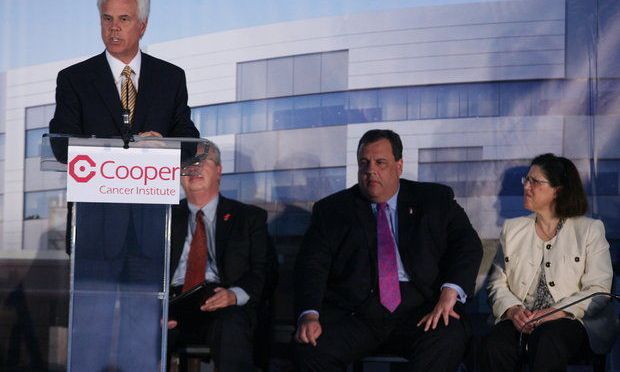

Christie signs bill giving EMS contract to hospital chaired by power broker Norcross

download

Susan K. Livio | NJ Advance Media for NJ.com
By Susan K. Livio | NJ Advance Media for NJ.com
on July 06, 2015 at 7:29 PM, updated July 07, 2015 at 10:33 AM


TRENTON — Gov. Chris Christie on Monday signed a bill that wrests control of emergency ambulance services in Camden from one south Jersey hospital chain and gives it its competitor, Cooper Health, overseen by south Jersey power broker George Norcross.

Virtua Health, with hospitals in Voorhees, Marlton and Berlin in suburban Camden County, has provided advanced life support and paramedic services in the city of Camden since 1977. Cooper University Hospital, the level one trauma center located in Camden and serving south Jersey, trains Virtua’s paramedics.

But under legislation that raced through the Assembly and Senate last month in the final days before the summer break, Cooper would take over emergency medical services for the city. State Assemblyman Gilbert “Whip” Wilson (D-Camden), one of the bill’s sponsors, argued Cooper was best suited to provide these services because their paramedics intend to provide follow-up care after patients — many of whom live in Camden — are discharged.

The budget Christie signed last month for the fiscal year that began July 1 also dedicates $2.5 million to Cooper to buy new ambulances and other equipment.

Norcross is the chairman of the board at Cooper, and is the widely considered the most influential Democrat in the state, with ties to Gov. Chris Christie, a Republican. There was no statement from Christie along with the announcement that he’d signed the bill on Monday.

The legislation sparked a public feud between the two hospital systems. Virtua argued the bill was a blatant power grab because it circumvents the state Health Department’s authority to decide who should provide EMS services. Virtua executives also argued they do a commendable job providing the service without needing to take money from the state budget.

Cooper supporters argued that when Virtua closed down its acute-care hospital in the city 15 years ago, it had abandoned the Camden, despite providing outpatient services there. Paramedic response time data released by Camden County the night before the legislature approved the bill on June 22 called into question Virtua’s service record.

According to the bill, (S2980), “A hospital which is designated a Level 1 trauma center shall be exclusively authorized to develop and maintain advanced life support services in the municipality in which the trauma center is located, and shall have the right of first refusal to provide both advanced life support and basic life support in the municipality.” Cooper is not named in the bill, but it is the only level one trauma center in the state does not provide EMS services to its host city’s hospital.

Cooper officials intend to bid on the basic life support ambulance service contract provided by University Hospital, based in Newark with a substation in Camden.

“The governor’s action today, in addition to the overwhelming, bipartisan support of the legislature, will allow advanced life support services in Camden to finally be fully integrated within the region’s only level 1 Trauma Center,” according to a statement released by Cooper spokeswoman Wendy Marano. “Camden residents will now receive the same level of care as others in the state.”

Richard P. Miller, Virtua President & CEO, said he was “extremely disappointed” the governor signed the bill, and hinted he may sue.

“The best practice model for EMS across the nation supports regionalization of EMS services, not creating a new program for one municipality,” Miller said in a statement released late Monday night.

“When every minute counts, Virtua paramedics are the best in the state, having served all municipalities in Camden and Burlington counties with distinction for more than 38 years,” Miller said. “For the City of Camden, Virtua exceeds the State Department of Health’s guidelines for response time, delivering even faster response times than guidelines established by the Department’s Emergency Medical Services Blue Ribbon Panel.”

“We will explore all options, including the possibility of litigation, and will provide additional information as appropriate,” according to Miller’s statement.

Susan K. Livio may be reached at slivio@njadvancemedia.com. Follow her on Twitter @SusanKLivio. Find NJ.com Politics on Facebook.

Christie’s chief of staff headed to Cooper Hospital Job

Gov. Christie’s chief of staff, Kevin O’Dowd, will step down this month to work for Cooper University Hospital in Camden, nearly a year after the governor named O’Dowd his pick for attorney general.

O’Dowd, whose selection as attorney general never moved forward after controversy arose over lane closures on the George Washington Bridge, will serve as senior executive vice president and chief administrative officer at Cooper, where he will focus on business development, Christie officials said. He will start at Cooper in January.

In a telephone interview, Christie said O’Dowd told him two or three weeks ago he had received the job offer from Cooper and was thinking about it.

“Kevin and I both decided this was the next best step for his future,” Christie said. “He served me extraordinarily well for 11 years. I don’t think I can ask a whole lot more out of somebody.”

O’Dowd, a former federal prosecutor, also worked for Christie while the future governor was U.S. attorney for New Jersey.

“It was an honor and a privilege to serve the people of the State of New Jersey for the last five years,” O’Dowd said in a statement. “While I will miss interacting with my colleagues in the executive and legislative branches, I am very much looking forward to joining the Cooper team and beginning the next phase of my career.”

O’Dowd’s wife, Mary, serves as commissioner of the state Department of Health.

Christie said the prospect that his chief of staff would face questions about the bridge scandal during a confirmation process before a Democratic-controlled Senate “didn’t play a role in this at all.” He noted that O’Dowd had already faced hours of questions about the matter from a legislative committee.

Christie, a Republican, has sought to move past the bridge scandal as he considers running for president in 2016.

O’Dowd testified before the committee in June that he had played no role in the September 2013 lane closures, which jammed traffic in Fort Lee. Lawmakers questioned why O’Dowd hadn’t asked more questions about the controversy, which erupted in January after documents revealed that a now-fired Christie aide, Bridget Kelly, had sent an e-mail calling for “traffic problems in Fort Lee.”

O’Dowd, who supervised Kelly, was never directly implicated in the controversy.

State Senate President Stephen Sweeney (D., Gloucester) said he approached O’Dowd around the time of his testimony to ask whether he wanted to be attorney general.

“I said, ‘Kevin, what are you going to do?’ ” Sweeney said. “He said, ‘Steve, I just want to move on.’ ”

Sweeney added, “If Kevin wanted to be attorney general, he would be the attorney general right now. He had the votes to get passed. I was extremely supportive and would have testified in favor of him.”

A confirmation hearing “wouldn’t have been horribly contentious,” Sweeney said, noting that O’Dowd was well-respected in the Legislature and had already testified before the investigative committee.

Sweeney described O’Dowd’s departure as an end of an era and added, “I trust him with my life.”

Assembly Speaker Vincent Prieto (D., Hudson) praised O’Dowd as “a person of compromise” who would be “sorely missed.”

Over the summer, Christie publicly supported O’Dowd for attorney general but said O’Dowd needed to determine what he wanted to do.

At Cooper, O’Dowd’s focus will include the MD Anderson Cooper cancer partnership and the AmeriHealth New Jersey relationship, Christie officials said. He will also oversee marketing, human resources, compliance oversight, and corporate real estate development.

Adrienne Kirby, Cooper’s chief executive officer and president, praised O’Dowd’s “proven track record of strong management, development and implementation of strategic plans, as well as improving organization performance and productivity.”

O’Dowd’s arrival will be the latest management shake-up at Cooper.

Kirby took over as CEO after her predecessor, John Sheridan, and his wife, Joyce, died Sept. 28 in a mysterious house fire. The case remains under investigation.

Cooper spokeswoman Lori Shaffer said O’Dowd’s hiring was unrelated to Sheridan’s death.

Cooper does not disclose employee salaries, she said. O’Dowd made $141,000 as Christie’s chief of staff.

In the interview, Christie said he never spoke with George E. Norcross III, chairman of Cooper’s board of trustees and South Jersey Democratic leader, about O’Dowd’s move.

“Obviously, Kevin has had a relationship with a number of folks in South Jersey,” including Norcross, Sweeney, and Assembly Majority Leader Lou Greenwald (D., Camden), Christie said.

Revenue at Cooper University Health Care will surpass $1 billion this year, and O’Dowd is the “perfect choice” to manage its growth, Norcross said in a statement.

Christie said he would consider making another nomination for attorney general, “now that Kevin has taken himself out of the running.” John Hoffman has served as acting attorney general since June 2013, when then-Attorney General Jeffrey S. Chiesa was appointed to the U.S. Senate.

Regina Egea, director of the authorities unit, will replace O’Dowd as chief of staff at the end of the month.

O’Dowd, 42, who lives in Princeton, has been Christie’s chief of staff since January 2012. He previously served as deputy chief counsel to Christie, starting in 2010.

O’Dowd worked in the U.S. Attorney’s Office for the District of New Jersey from 2003 to 2010, including as chief of the office’s Securities and Healthcare Fraud Unit. He also served as chair of the office’s Healthcare Fraud Task Force. He twice received the integrity award from the Inspector General of the U.S. Department of Health and Human Services.

He was educated at Catholic University of America and St. John’s University School of Law.


mhanna@phillynews.com609-989-8990

@maddiehanna

www.philly.com/christiechronicles

Camden superintendent announces 241 layoffs at city schools

 download

Jason Laday | South Jersey Times

By Jason Laday | South Jersey Times
Follow on Twitter
on May 12, 2014 at 8:18 PM, updated May 13, 2014 at 6:20 AM

Camden_school_layoffs_protest.jpg
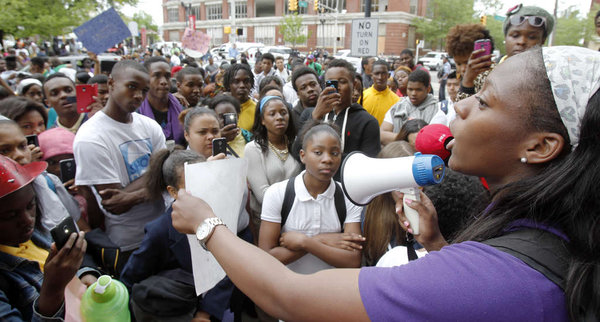
Camden residents gather on May 12, 2014 ahead of a special meeting of the school board in which Superintendent Paymon Rouhanifard announced plans to lay off educators and other staff within the school district. (Staff Photo by Jason Laday.)

CAMDEN — City education officials on Monday announced 241 layoffs across the district’s 26 schools, including 206 teachers.

Camden Superintendent Paymon Rouhanifard approved the layoffs during a special meeting of the school board Monday evening, which was marked by continuous, angry outbursts and comments made by members of the public. They included members of the Camden Education Association (CEA), parents and other residents.

The crowd reserved particular vitriol for the state-appointed superintendent, with shouts of “Go back to New York” and “You sold us out to the governor” heard throughout the beginning of the meetings.

“You work for us, not the other way around – we tell you what to do,” shouted Eulisis Delgado from his seat in the auditorium at H.B. Wilson Family School. Later, he produced a bullhorn and addressed that board and superintendent.

“You sold us out to the governor, that 800-pound gorilla,” he said.

Following an hour-long executive session of the school board, Rouhanifard attempted to address the crowd in advance of a presentation detailing the layoff plan.

However, regular outbursts from many residents, as well as a brief chant of “Whose school? Our school,” caused the superintendent to abandon the attempt in favor of moving directly to the public comment part of the agenda.

“Tonight is hard,” said Rouhanifard, prompting the audience to respond in shouts and sighs of faux sympathy. “I have been responding to a number of teachers about this, and you can shout back at me – nothing is stopping you, and I won’t stop you – but I want to say we went about this process in a way that reflects the importance of this decision.

“I want to make it immensely clear that there are many people who will lose their job (in this plan) who care deeply about their students – this is not an indictment of them,” he added. “And while I know that this may seem to contradict with what we’re doing here today, we care deeply about these teachers.”

Teachers who spoke out Monday against the layoffs, criticized the district for issuing “pink slips” during the week of the NJASK standardized tests. They also questioned the criteria used by the district in selecting which teachers are to be laid off.

According to Rouhanifard, the layoff plan follows state law and seniority requirements in the collective bargaining agreement with the CEA.

Robert Farmer, a leader in the CEA, called the layoffs the “first step” in converting more students over to charter schools at the expense of public schools.

“We will sit down with the superintendent and board in order to lessen the impact on schools employees,” he said.

The 241 layoffs made official Monday evening follows the termination of 94 central administration employees late last month.

The Camden school district began the most recent budget process with a $75 million deficit, including a $42 million operating budget shortfall. According to Rouhanifard, non-personnel cuts and the use of surplus funds have helped fill all but $28 million of that gap. However, the superintendent that remaining gap will have to be reconciled with the elimination of 575 positions.

The budget he proposed in April included the elimination of 575 positions, many of them vacant. In all, 335 central office and school employees have been laid off.

In addition to teachers, the layoffs will hit guidance counselors, nurses and other staff.

However, there are 10 positions that managed to escape the school-based layoffs. According to Lowe, those positions did not suffer any personnel cuts.

They include the district’s athletic directors, attendance and dropout prevention officers, crisis counselors and social workers, custodians, JROTC and JAG team members, psychologists, school-based youth service team members, school safety officers, special education teachers and speech therapists.

The plan also calls for one or more art teacher, guidance counselor, librarian, music teacher and nurse per school.

“So, people are going to say we cut guidance counselors, and we did, but those services will still be provided at every school,” said Lowe. “We’re reducing the total number, but every school will have at least one – Woodrow Wilson will have six, and Camden High School will have five.”

The superintendent’s plan increases the number of community school coordinators and pre-K teachers.

Camden students walk out to protest layoffs

When cellphones flashed “noon” in Ziaira Williams’ history class, students shifted in their seats, exchanged glances, and then filed out into a hallway of purple and gold, launching a two-hour protest of Camden City School District layoffs.

Williams’ history teacher received a layoff notice Monday and said goodbye to his exiting pupils with silent pats on the back and nods of appreciation, Williams said.

“They’re glad we’re doing this. They said, ‘Go ahead,’ and honestly, I don’t care if I get in trouble – I want my teachers back,” the 17-year-old junior said.

Hundreds more would join the two-mile march from Camden High to the Board of Education building downtown Wednesday afternoon, including students from Creative Arts Morgan Village Academy, Brimm Medical Arts High School, and Woodrow Wilson High School, many carrying signs and chanting, “Save our teachers!”

The walkout came in response to the district’s announcement Monday that it would lay off 272 people, 206 of them teachers, to bridge a $75 million revenue gap. Samir Nichols, a senior at Creative Arts and the school’s valedictorian, said he organized the rally.

The protest grew so large that police blocked off Haddon Avenue and Cooper Street. It apparently prompted NJ Transit to suspend for about an hour service on the RiverLine between the Walter Rand Transportation Center and the waterfront.

Don’t suspend

Superintendent Paymon Rouhanifard said he would encourage principals not to suspend students for the day’s protest. “We respect their right to peacefully protest,” he said.

“Students have an important voice, and students care about their teachers – we care about their teachers. What we care about, also, is continuing the dialogue with students.”

On the route downtown, students sat on the roofs and hoods of cars rolling alongside the pack, which filled the two-lane roadways. Students in the marching band brought along their instruments to play Camden High’s fight song.

“We feel like our teachers are being disrespected,” said Dejon Sullivan, 18, student body president of Camden High and the student representative for the school board who attends monthly meetings.

“It’s disgusting to me. I believe the education is not the greatest here, but we’re trying to progress. Our teachers have a lot to do with that progress. Camden High is my home, no matter how many fights we have, no matter what. It’s my home, and these teachers treat me like I get treated at home.”

Former Camden school board member Sara Davis watched from her porch as the students marched by.

Davis disagreed with many of the changes state-appointed superintendent Rouhanifard was bringing to the district, including two “Renaissance” schools, which will open in the fall, pending state approval.

“I’m glad to see the kids are interested in what’s happening. Hopefully it will have an effect, but the bottom line is, more people should be speaking on their behalf,” she said.

She said the last time Camden students staged a walkout was in the late 1960s.

As the crowd walked passed Hatch Middle School, little heads peered out of windows, waving at the older students, below who beckoned them to join them outside.

Security guards smiled. “That’s right, keep our jobs,” one said.

The large revenue gap comes in a district that already has one of the highest per pupil expenditures in the state at $23,500. The student-to-teacher ratio is extremely low at 9-1. It will be 11-1 after the layoffs.

Officials cut $28 million in non-personnel costs, but also cut $29 million through the layoffs. Charter school transfer funds increased to $72 million for next year.

Most students said they were upset to find teachers suddenly without jobs. Because layoffs were based on seniority, evaluations, attendance, and other qualitative measures did not come into consideration.

Critics echoed

Some echoed school-choice critics, saying they didn’t want to see public schools get turned over to private operators. The leaders of both magnet high schools in Camden, Brimm, and Creative Arts, have said they are looking into charterizing, a process they would go through with the state, not the city.

Once outside the Board of Education building, students chanted from the steps as employees peeked out from office windows.

Parents and community members from Save Our Schools joined in the protest, at times appearing to run it. Ronsha Dickerson stood at the top of the steps and yelled out to students, “They’re laying off all your teachers, they’re closing your schools.” She called for teachers to strike and make a trip to Trenton to see the governor next week.

Up on the seventh floor of the administration building, Rouhanifard heard the chants and decided to face the large crowd.

“We’re not closing any schools, no schools are closing, we’ve been saying that for the past three months,” he yelled over the crowd. “We have a budget problem; we’re trying to manage it as best we can. We’ve cut other areas, too. This is a really hard time for everybody – for you, for your teachers.”

Meet representatives

Rouhanifard said he would meet with representatives from each school in the next two weeks. Some teachers could be reappointed in the fall, but fewer positions will be available than in previous years, he said. Before heading back into the building he told students:

“This dialogue is important and we’re going to continue to have the conversation, OK? That’s my commitment to you all.”


jterruso@phillynews.com856-779-3876 @juliaterruso

Camden’s ‘Renaissance Schools’ Takeover Plans May Face Legal Challenge

kipp school camden

Latin Kings graffiti adorns the wall of a building near the new KIPP Cooper Norcross Academy now under construction in Camden.

Plans for sweeping restructuring of state-run Camden school district, including turning over four schools to charter operators, faced its first open challenge yesterday when lawyers contended that the moves violated state law and regulations on several fronts.

The Education Law Center, the Newark-based advocacy group, released a statement that said the plans failed to meet both the letter and spirit of the Urban Hope Act, the 2012 law that cleared the way for the charter-operated “renaissance schools.”

It is these “renaissance school” projects that would expand under the reorganization plan announced by Superintendent Paymon Rouhanifard last month.

Four schools would be turned over to Mastery Charter Schools and Uncommon Schools, and a fifth school would be closed outright, with most of its students attending the new KIPP Cooper Norcross Academy now under construction.

The ELC contended that the Urban Hope Act was never intended to have existing schools handed over to the charter operators.

The group said the plans also violate the state’s own procedures, under which the targeted school are already operating under improvement plans that preclude such charter conversions.

“Once again, there has been really no public process here,” said David Sciarra, the ELC’s executive director. “The superintendent doesn’t put anything out, doesn’t even post the applications, and he provides no opportunity to have any public input in this.”

Sciarra wouldn’t yet commit to a formal legal challenge, noting that the plans still require final approval from the Christie administration.“I don’t want to get into that at this point,” he said last night.

Rouhanifard’s office rejected the claim that public input had not been sought or even that the changes could even be defined as conversions. It said that the schools are actually being closed and reopened under the new management, including “substantial reconstruction” of the buildings, as allowed under the law.

That might have been semantics but it was, perhaps, a critical legal distinction as Rouhanifard had initially characterized the moves as “transformations.”

District officials said that selling or leasing of the properties to the charter operators is also still being considered.

In addition, Rouhanifard said public hearings were held last year when the first charter projects were approved and again this winter as the new plan was being considered.

“The misrepresentations and factual errors of interest groups will not distract us from the urgent cause of improving our schools,” he said in a statement. “With two out of five students not graduating from high school, it’s critical that we stay focused on improving the education of our children. We have remarkable students, but for far too long the system has come up short in providing them with the educational opportunities they deserve.”

“Over the past 18 months, I have listened to the concerns of parents from every school in Camden, at dozens of community meetings, and most recently, at four town halls,” Rouhanifard added. “I heard loudly and clearly that where our schools are struggling the most, we need to take action. These new renaissance school partnerships represent a real opportunity for us to dramatically invest in our facilities and provide new, high quality educational options for our students and families.”

The challenges to the restructuring were hardly unexpected in light of such sweeping changes and considering that two lawsuits have already been filed since the first of the renaissance-school plans were unveiled.

The first case ended when the state Legislature amended the law to address the complaint. The second lawsuit, lodged by a group of parent advocates, is pending in appellate court.

Rouhanifard is moving ahead with plans for the next school year – including door-to-door canvassing — as the proposals go through the formal review process with state Department of Education.

In each case, the state needs to sign off on the specific applications for each school, and there is also a review process for when a school is closed.

But it would be surprising if the state rejected the plans, given that Rouhanifard is a state appointee whose every move has been backed by the Christie administration

The Troubles at Cooper Continue, Part 2: Since 2005

Addressing threats to health care’s core values, especially those stemming from concentration and abuse of power. Advocating for accountability, integrity, transparency, honesty and ethics in leadership and governance of health care.

The Troubles at Cooper Continue, Lately Gruesomely, But Will Its Leadership and Governance Change This Time? – Part II: the History since 2005

Wednesday, April 01, 2015

 by

In our most recent post, we noted the latest tragic, and gruesome development at Cooper Health System, the largest hospital system in southern New Jersey.  Months after the system CEO, John F Sheridan, and his wife Joyce were found dead after a fire in their home, local law enforcement concluded that Mr Sheridan murdered his wife, set fire to the house, then committed suicide.  It turns out this is just the latest, albeit possibly most tragic and grisly, troubling news from that health care system.

Our last post summarized the history from 1978, including:
–  Seven people, including the hospital system chief financial officer, confessed to and/or found guilty of participating in an embezzlement scheme that cost the hospital more than $21 million
–  An internal investigation was suppressed for years, but later revealed several severe management problems
–  The media revealed multiple conflicts of interest affecting the system’s board of trustees, including members of the committee that performed the investigation
–  One member of the board of trustees who participated in the internal investigation was later convicted of arranging his wife’s murder
–  Resulting financial losses caused layoffs and service reductions, some of which affected the hospital system’s charitable mission
–  The stories received little attention outside the region, and apparently did not result in any fundamental changes in governance or the structure of leadership.

Since 2005, there have been other troubles at Cooper.

Conflicts of Interest Involving Local and State Politics

Board Chairman George E Norcross III

In 2006, the Philadelphia Inquirer found close ties between NJ politicians and hospital leaders (see this post).  In particular, the story noted “the board of South Jersey’s major hospital, Cooper University Hospital in Camden, is chaired by the region’s most powerful political figure, Democratic power broker George E. Norcross III.”

In 2012, as we posted here, Mr Norcross’ relationships became more evident.   The New York Times reported that a story about his conflicts of interest had been held from publication by the Inquirer because Mr Norcross was part of a business group seeking to purchase that newspaper.  When the Inquirer story finally came out, it stated firms with financial relationships to the hospital under Norcross had donated generously to Norcross’ political allies, and that Norcross had influenced the creation of relationships with these firms.  It suggested that Norcross’ political influence had resulted in an unusual level of state financial support for the hospital system.  It noted that the law firm for which Cooper CEO John F Sheridan had previously worked did lobbying for the hospital.  It noted that the hospital did millions of dollars of business with firms tied to hospital trustees, including Mr Norcross.

Trustee Emeritus Peter Driscoll

Recent reporting after Mr Sheridan’s death suggested the rehabilitation of former board chairman Peter Driscoll under Chairman Norcross.  Mr Driscoll was the former board chair who resigned in 1999 after the embezzlement scandal report and revelations about conflicts of interest affecting the board were finally made public, and the hospital system was in financial difficulty.  However, by 2014, he was identified by the board as a “trustee emeritus.”  Per the Philadelphia Inquirer, after the fire at the Sheridan house was attributed to arson,

‘If they had died because the house was on fire, that would be a terrible, terrible tragedy,’ said Cooper Health System trustee Peter E. Driscoll, a senior member of the Haddonfield law firm of Archer & Greiner. ‘. . .I don’t know what to make of it. I can’t imagine anybody that would want to do something like this.’

New Vice President Kevin O’Dowd and his Family

Also after Mr Sheridan’s death, the hospital system hired a new top manager with his own extensive political connections and conflicts of interest.  Per the Inquirer,

Gov. Christie’s chief of staff, Kevin O’Dowd, will step down this month to work for Cooper University Hospital in Camden, nearly a year after the governor named O’Dowd his pick for attorney general.

O’Dowd, whose selection as attorney general never moved forward after controversy arose over lane closures on the George Washington Bridge, will serve as senior executive vice president and chief administrative officer at Cooper, where he will focus on business development, Christie officials said. He will start at Cooper in January.

The conflict was

 O’Dowd’s wife, Mary, serves as commissioner of the state Department of Health.

A NJ.com story made that more explicit,

 State Health Commissioner Mary O’Dowd will refrain from making decisions that would directly affect Cooper University Hospital in Camden after her husband accepted a senior management job there, officials said Friday night.

The move was made to avoid any conflicts of interest as the state Department of Health licenses and inspects hospitals, and doles out money to compensate them for treating uninsured charity care patients. Cooper will receive $37.3 million in charity care payments from the state this year, the fifth highest amount in the state.

A story in the NJ Spotlight suggested that would not solve the problem,

The question that the O’Dowds will have to face is whether they can overcome even the perception of a conflict of interest when their jobs so pervasively present opportunities for such a situation.

‘It’s a very, very tenuous situation,’ said William Schluter, a former longtime member of the State Ethics Commission and state senator.

He noted that nearly everything that senior hospital executives do in their jobs is influenced by state regulations.

‘It’s a situation that I sure as heck wouldn’t want to be in,’ said Schluter, adding that he expects second-guessing in the media and by elected officials as the state handles issues affecting Cooper.

Just to ice the cake for Mr O’Dowd, the Courier-Post noted that Mr O’Dowd’s job at Cooper could be considered an example of the revolving door, albeit delayed,

O’Dowd, previously the governor’s deputy chief counsel, also worked under Christie at the U.S. Attorney’s Office for New Jersey.

During seven years as an assistant United States attorney, O’Dowdoversaw a securities and healthcare fraud unit. He also prosecuted cases ranging from child pornography distribution, cybercrime and drug trafficking.

O’Dowd served earlier as a state Deputy Attorney General, where his responsibilities included providing legal counsel to the state Department of Health.

As US Attorney, Christie, possibly with the aid of Mr O’Dowd, pursued a deferred prosecution agreement for UMDNJ, then Cooper’s primary academic affiliation, for a complicated set of allegations that we discussed extensively in the past (look at this post and follow links backward).

Late CEO John F Sheridan and Family

Apparently only after Mr Sheridan’s death did the media report extensively on his political connections.  The earliest report I found was in the Philadelphia Inquirer from September 28, 2014.  He served

on Gov. Christie’s health-care transition subcommittee in 2010.

The statement said he was New Jersey commissioner of transportation under Gov. Thomas H. Kean and served as New Jersey deputy attorney general and assistant counsel for the New Jersey Turnpike Authority, and was counsel for the New Jersey Senate majority.

Also,

 his son Mark – a prominent lawyer … has represented Christie in the Bridgegate scandal

NJ.com added,

John Sheridan Jr., the CEO of Cooper University Health System … previously spent 40 years in New Jersey government

Also,

He has held positions on Gov. Thomas Kean’s cabinet as transportation commissioner and chairman of the New Jersey Transit board, as well as held roles on transition teams for Gov. Chris Christie and Gov. Christine Todd Whitman. 

Furthermore,

 Earlier in his career, he served as Deputy Attorney General of the State of New Jersey, Assistant Counsel to Gov. William T. Cahill, General Counsel to the New Jersey Turnpike Authority and Counsel to the New Jersey Senate Majority.

Finally, his son

Mark Sheridan, a partner at Squire Patton Boggs, acts as general counsel for the New Jersey Republican State Committee.

So, in the years since conflicts of interest at the board of trustees level were noted as part of the investigation after the management embezzlement scandal at Cooper, many more apparent conflicts affecting top managers and board members have appeared, most recently in late 2014.

Settlement of Allegations of Kickbacks

In 2013, the media reported that Cooper settled federal allegations that it gave kickbacks to doctors to induce referrals.  As reported by the Inquirer,

The Cooper Health System in Camden has agreed to pay $12.6 million to settle a whistle-blower lawsuit alleging that it made improper payments to doctors in an effort to build its cardiology business, the U.S. attorney for the District of New Jersey said Thursday.

From October 2004 through 2010, local doctors were paid $18,000 to attend four meetings of the Cooper Heart Institute Advisory Board in any given year under ‘consulting’ and ‘compensation’ agreements, in possible violation of antikickback laws, state and federal law enforcement officials contended.

The whistle-blower was South Jersey cardiologist Nicholas L. DePace. He attended an advisory board meeting in 2007 and was convinced that the board’s purpose was not to provide advice to Cooper, but to be a source of patient referrals to the Heart Institute, according to a lawsuit he filed in 2008.

‘He was invited to be a member of the advisory board. He attended a meeting and it quickly became apparent to him what the advisory board really was. It was sitting and listening to lectures and not providing advisory services,’ said Michael A. Morse, a partner in Pietragallo, Gordon, Alfano, Bosick & Raspanti L.L.P. in Philadelphia, one of DePace’s lawyers.

As is typical of legal settlements involving prominent health care organizations,

Cooper admitted no liability.

‘After more than three years of extended discussions with government lawyers, we decided, in the best interests of Cooper, to settle our dispute without the admission of wrongdoing to avoid the burdens and uncertainties of a protracted litigation,’ Cooper president and chief executive officer John P. Sheridan Jr. said. ‘This allows us to focus our full energies on serving our community.’

In a note to Cooper employees, Sheridan said the board was established to ‘improve the quality and responsiveness of our cardiac programs’ and ‘was reviewed by outside legal counsel before it began operations.

However, given that the Inquirer reported that “the $12.6 million penalty is financially significant for Cooper,” one wonders why it was made if hospital leadership felt that the case against it was poor.

So years after the embezzlement scandal, another scandal involving allegations of illegal behavior was settled.  This time, there was no trial, but since the settlement was financially burdensome for the hospital, it is plausible that it resulted from managers’ realization that they would not have a good defense against the charges at trial.

The Death of the Sheridans

Mr Sheridan became CEO of Cooper in 2008.  As noted in the Gloucester County Times,

On Feb. 7 John P. Sheridan Jr., was appointed president and chief executive officer of The Cooper Health System by the Cooper Board of Trustees. Sheridan joined Cooper as senior executive vice president in July 2005 and has served as president of Cooper University Hospital since September of 2007.

‘Cooper has grown dramatically in recent years and is positioned as the academic medical leader of South Jersey,’ said George E. Norcross III, chairman of the Board of Trustees at Cooper.  ‘John Sheridan is a proven leader. He has the skills required to build-out our $500 million health care campus in Camden, implement our suburban strategy and achieve our vision of creating the premier academic health care system in South Jersey and the Delaware Valley.’

As of early 2014, he was getting substantial compensation typical for a hospital system CEO, per NJBiz, “John T. Sheridan Jr. (of the $913 million Cooper Health System) received $963,433.”

In late September, 2014, Mr Sheridan and his wife were found dead in a house fire.  Initial reports suggested the fire was accidental.  Then it was declared to be arson.  Then Joyce Sheridan’s death was found to be the result of a homicide.  Finally, as we posted here, law enforcement declared that Mr Sheridan killed his wife, set the fire, and then committed suicide.

That news was so horrendous that it dumbfounded Cooper insiders.  As reported by the Inquirer,

 ‘It’s not something I can imagine,’ said Peter Driscoll, a Cooper Health System trustee emeritus and a senior member of the Haddonfield law firm Archer & Greiner.

Also,

In a brief statement, Cooper University Health Care called the prosecutor’s findings ‘unfathomable to us.’

I can only hope that they will get over their shock and realize that the institution really has some big problems.

Summary

Since 1978, there have been multiple stories about mismanagement, conflicts of interest affecting managers and board members, and crimes committed or alleged to have been committed by management and at least one trustee at Cooper Hospital/UMC which then became Cooper Health System.  Despite these often lurid stories, there is no indication that there has been a fundamental change in the governance of the institution.  While managers have come and gone, sometimes under difficult circumstances, there is no indication that how managers were hired has changed.  Since the early 1990s, there has been no obvious effort made by management or board members to change, at least not one announced publicly.  There has been no outside investigation.

Given that the hospital system has long enjoyed a cozy relationship with state government, including both the legislative and executive branch, maybe it has been easy to go along to get along.  More cozy relationships, including some with ownership of the news media, may have helped to keep this story anechoic outside of the region.

Yet the cumulative story is so striking that it should prompt national attention, and inspire some real hard thought about how health care leadership and governance has gotten so bad.

To repeat what I have said all too often, and I admit with little impact so far….

True health care reform requires governance that is accountable, transparent, true to the organization’s mission, and honest, ethical, and without conflicts of interest; and leadership that understands health care, upholds its values, is honest, ethical, and without conflicts of interest, is transparent and open, and is willing to be accountable and subject to appropriate incentives.

Read more at: http://hcrenewal.blogspot.com/2015/04/the-troubles-at-cooper-continue-lately_3.html

The Troubles at Cooper Continue, Part 1: Historical Background

Addressing threats to health care’s core values, especially those stemming from concentration and abuse of power. Advocating for accountability, integrity, transparency, honesty and ethics in leadership and governance of health care.

The Troubles at Cooper Continue, Lately Gruesomely, But Will Its Leadership and Governance Change This Time? – Part I: Historical Background

Wednesday, April 01, 2015

 by

Allegations of Murder-Suicide by a Hospital System CEO

This will be a hard series of posts to write. It was triggered by the latest, and perhaps most gruesome chapter in the troubled history of the leadership of Cooper Health, the largest hospital system in southern New Jersey (known locally as South Jersey).  As reported by the Philadelphia Inquirer on March 28, 2015,

Cooper University Health System CEO John P. Sheridan Jr. stabbed his wife to death, set their bedroom on fire, and then took his own life, authorities have concluded, closing a six-month investigation into the deaths that shocked New Jersey’s political and civic communities.

The Somerset County Prosecutor’s Office announced its results in a news release Friday, citing forensic evidence and a lengthy probe that included more than 180 interviews.

But it offered no conclusive motive to explain why Sheridan, described by family and friends as mild-mannered, would brutally stab his wife and kill himself.

‘Many possible scenarios and theories were considered,’ the prosecutor’s office said in a statement after months of virtual silence. The evidence ‘supports the conclusion that John Sheridan fatally stabbed Joyce Sheridan, set the fire, and committed suicide.’

The Story in Context: a Long History of Leadership and Governance Problems 

We have often discussed bad leadership of health care organizations, and written a lot about the contrast between the munificent compensation paid to non-profit hospital CEOs and the lack of evidence justifying such pay.  However, a murder-suicide allegedly perpetrated by the CEO of a large non-profit hospital system is way at the tail of the curve of questionable managerial behavior.

But it turns out that Cooper Health System has a very long record of leadership and governance troubles.  The current chapter is the latest, and possibly most gruesome, in this sorry series.  However, the context of this history has been lacking in the recent coverage, which has been so far limited to local media.  The history deserves a more complete discussion, and maybe then it could lead to some reconsideration at least of this one institution’s leadership and governance, and perhaps the larger troubles in leadership and governance in health care.

Thus this post will summarize the history that I could find up to 2005.  A second post will summarize more recent history up to and through the terrible deaths of John and Joyce Sheridan.

In the interests of full disclosure, I started my faculty career at what was then Cooper Hospital – University Medical Center, the main teaching hospital for the University of Medicine and Dentistry of New Jersey (UMDNJ) – Robert Wood Johnson Medical School (RWJMS) branch at Camden, NJ.  During my four years there, 1983-87, I was impressed with the dedication of the physicians, nurses and other health care professionals there.  However, even given my naivete at a young faculty member, the leadership of the institution, which was one of the early adapters of the generic management model, seemed strange. Little did I know how strange it was.

In the late 1990s, when I became seriously concerned about what I know call leadership and governance problems in health care, I ran into some folks from South Jersey who told me that Cooper had a tumultuous history since I left.  I got around to researching it, leading to an article in our local American College of Physicians newsletter.  The article, to which I had linked here, is no longer available on the internet.  So I have reposted it below, with some minor modifications, put in square brackets .  Again, the history is of major problems with leadership and governance at Cooper that had inspired no reconsideration by 2005.

The Curiously Quiet Case of Cooper’s Corrupt CFO

Embezzlement by Top Management

In 1994, two powerful executives at Cooper admitted their guilt in an elaborate embezzlement scheme.  In 1978, John H. Crispo, the owner of Financial Management Corporation Inc., to keep his contract with the hospital, began paying monthly kickbacks of $2500-$10,000 to John M. Sullivan, the Cooper Executive Vice President for Finance.  Sullivan then referred delinquent hospital accounts for collection to a new company Crispo set up.  In turn, Crispo repaid him $340,000 in more kickbacks.  Sullivan recruited Cooper’s Controller, P. John Lashkevich, and the three devised a scheme to defraud the hospital using fabricated bills, established a fictitious company to launder money, and falsified tax returns.  A prosecutor claimed “Mr Sullivan blew this money on wine, women, parties, and a lavish lifestyle,”which included trips with girlfriends to the Plaza Hotel, and jewelry shopping at Tiffany’s.  Sullivan had driven a Porsche, and lived in a $700,000 house.  The conspirators also bought cars, boats, and racehorses.

Other conspirators were also found and prosecuted.  Helene Weinstein admitted to helping establish a shadow company as a conduit for Sullivan to send money from the hospital to his estranged wife, Elarba Pagan.  Pagan was accused of receiving money sent by Sullivan from Cooper to another firm.  Weinstein testified that Pagan carried “briefcases of cash from the hospital to shop in New York for $1500 shoes.”  Also, Cooper’s Vice President for Finance, Robert Schmid Jr, admitted embezzling money from Cooper to pay for home improvements. Finally, Thomas J. Damadio admitted helping launder up to $600,000 stolen from Cooper, and evading income taxes.

Sullivan was sentenced to 55 months in federal prison, Lashkevich, 25, Pagan, eight, Weinstein, three years of probation, Damadio, six months of house arrest.  Crispo died before serving prison time.

The Internal Report, and the Murder Conviction of One of Its Authors

After these stories became public in 1994, Cooper’s Board of Trustees established a special committee to investigate its financial operations, which included Peter E. Driscoll, Chairman of the Board, Kevin G. Halpern, Chief Executive Officer (CEO), and a local Rabbi, Fred Neulander.  The hospital pledged to make its investigation public, but then fought to keep it secret.  Its report was finally released in 1998, after a discovery motion in a civil lawsuit.  Prior to then, the Philadelphia Inquirer had revealed numerous financial conflicts of interest affecting Board members,  including those on the special committee.  For example, Cooper paid the law firm of Archer & Greiner, of which Driscoll was a senior partner, $2.1 million over three years from 1993-96.

The report revealed that the conspiracy had bilked the hospital of at least $21.8 million from 1987 to 1994, while “Cooper has been the victim of a massive crime wave.”  It stated Sullivan, Lashkevich, and Crispo “had unrestrained and absolute control of virtually all the important financial functions at Cooper and they took full criminal advantage….” It also noted that “employees who became suspicious and questioned the accounting practices or tried to alert management were intimidated, transferred, or dismissed by the high-ranking executives.”  Furthermore, it suggested “the ability to bypass or defeat controls grew from an institutional culture that delegated and outsourced too much responsibility, without developing effective controls….” The report also raised questions about how the internal investigation was conducted.  It noted that Driscoll and Halpern “often locked horns with [the other] committee members….”  Driscoll had objected when other board members called for an independent investigation.  Halpern and Driscoll resigned their positions within days of the forced release of the report.

One member of the special committee became particularly notorious.  Soon after the internal investigation was set in motion in 1994 Rabbi Neulander’s wife had been murdered.  Soon after, Neulander had failed a polygraph test when questioned about it.  He then resigned his clerical position after his extramarital affairs with members of his congregation were revealed.  In September, 1998, he was charged with hiring the “hit men” who committed the murder.  In 2002, he was convicted  and sentenced to life in prison.

The Aftermath, Financial Woes and Impact on Patient Care

By 1997, Cooper was in financial trouble, although none of its managers ever admitted a connection to the conspiracy and resulting losses.  However, during a related civil lawsuit, Cooper officials alleged “the hospital’s general operating fund was depleted” by the conspiracy.  Cooper began merger discussions with several partners, including AHERF, although none were ultimately successful. Physicians started leaving in 1997, when all but one full-time cardiologists announced their resignations.  Cooper revealed a $16 million loss for 1998, the largest ever incurred by a New Jersey hospital.  Its bonds were down-graded to junk. The hospital then announced that it would stop accepting uninsured patients for elective treatments, departing from its historic mission of charitable care.  Losses continued in 1999, again totaling $16 million, leading to additional budget cuts.  [CEO Halpern and Chairman of the Board Driscoll resigned within days of each other in 1999, both denying their actions were related to the report.]  By 2000, the hospital had cut its work-force to 3100, from 4000 in early 1999. and had closed various clinical sites and units.  Only thereafter did Cooper began posting budget surpluses.  [By 2002, more physicians quit Cooper en bloc, and the hospital was on its second new CEO since Mr Halpern.]

The Lurid Stories Remain Anechoic

The only published reaction to Cooper’s woes came from the related legal proceedings.  The prosecutor in Sullivan’s trial claimed that his thefts were so big that they “threatened the financial stability of the hospital,” and “hurt the image of the city as a whole.”  At Pagan’s sentencing hearing, Judge Joseph H. Rodriguez stated “society could not tolerate a system in which hospital executives ‘rake millions off the top’ that were intended for medical care for the poor.”

It does seem likely that Cooper’s scandals had major effects on its patient care and academic missions.  Yet, I could find nothing  published about such effects.  Despite the luridness of this case, I also found no reaction from local or national medical groups, from academic organizations, accrediting groups, or government agencies.

Summary

In 2005, I wrote,…  The case of Cooper’s corrupt executives can be viewed as the forerunner to the even more massive bankruptcy of AHERF [Allegheny Health Education and Research Foundation, see posts here].  One can only speculate that learning the lessons of the Cooper case could have mitigated the AHERF disaster.  However, as noted in my last article,  the lessons from AHERF are also not widely known.  Yet, as George Santayana wrote, “Those who cannot learn from history are doomed to repeat it.”

As I will address in another post, events at Cooper after 2005 also generated few echoes, up to the latest tragedy.  These events did not suggest much had been learned from the events through 2005.

So the unfortunate, and sometimes terrible case of Cooper Health has become one of the longest running examples  – starting in 1978 – of the troubles with leadership and governance of large health care organizations, the bad effects of these problems on health care and the values of health care professionals, the lack of public attention to and discussion of these problems and their effects, and the failure of organizations to address on their own their problems with leadership and governance.

True health care reform, as we have said endlessly, requires governance that is accountable, transparent, true to the organization’s mission, and honest, ethical, and without conflicts of interest; and leadership that understands health care, upholds its values, is honest, ethical, and without conflicts of interest, is transparent and open, and is willing to be accountable and subject to appropriate incentives.

References

Embezzlement….

Lewis L. Former official gets jail term for bilking Cooper: John M. Sullivan was sentenced to 55 months – the scheme netted $4 million.  He spent his take lavishly. Philadelphia Inquirer, April 26, 1996.

Graham M. New panel at Cooper plans review: embezzling of $3.8 million by two former top aides and a vendor prompted the study. Philadelphia Inquirer, July 27, 1994.

Lewis L. Ex-hospital executive gets 2 years: he helped steal $4 million from Cooper Hospital – his lawyer said the investigation was going to spread.  Philadelphia Inquirer, November 9, 1996.

Graham M, Turcol T. Inquiry widens into finances at Cooper Hospital: a federal grand jury subpoenaed several officials this month – the inquiry was spurred by testimony from two former Cooper executives indicted for fraud. Philadelphia Inquirer, February 27, 1996.

Lewis L. Woman admits role in bilking Cooper Hospital. Philadelphia Inquirer, September 6, 1996.

Lewis L. Ex-hospital executive admits theft: Robert Schmid Jr. pleaded guilty to embezzling about $50,000 from Cooper Hospital. Philadelphia Inquirer, September 24, 1996.

Lewis L. More charged in theft at hospital: six people have now been indicted in the embezzlement at the Camden facility. Philadelphia Inquirer, December 12, 1996.

Lewis L. Ex-wife of jailed Cooper Hospital official sentenced in scam: Elarba Pagan bought $1,500 shoes with medical center money, her business partner said. Philadelphia Inquirer, July 2, 1998. P. B5.

Lewis L. Business owner pleads: Thomas J. Damadio said he helped Cooper Hospital executives launder stolen money.  Philadelphia Inquirer, January 18, 1997.

The Internal Report…

Anonymous. Cooper forms committee. PR Newswire, July 26, 1994.

Graham M. FBI is probing Cooper Hospital for violation of securities laws. Philadelphia Inquirer, April 3, 1997.  P. A1.

Hollreiser E. Cooper urged to release audit results. Philadelphia Business Journal, May 30, 1997.

Graham M. Hospital gives state its audit: Cooper complied after the state threatened to withhold funding – the report will be kept secret.  Philadelphia Inquirer, May 14, 1997, P. B1.

Graham M. N.J. finds nothing amiss at Cooper: the Attorney General’s office reviewed an internal hospital audit – no criminal wrongdoing was uncovered. Philadelphia Inquirer, July 11, 1997. P. A1.

Graham M, Cusick F. Listing Cooper’s board deals: companies associated with the hospital’s trustees have gotten some of its largest contracts. Philadelphia Inquirer, June 15, 1997. P. A1.

Anonymous. Report says Rabbi failed polygraph on wife’s death. The (Bergen County) Record, September 5, 1996.

Burney M. Rabbi charged in wife’s killing. Associated Press State & Local Wire, September 10, 1998.

Mulvihill G. Judge declares mistrial in case of Rabbi charged with arranging wife’s murder. Associated Press State & Local Wire, November 13, 2001.

Bell T. Rabbi found guilty of murder in wife’s 1994 death. Associated Press State & Local Wire, November 20, 2002.

Mulvihill G. Jury spares life of rabbi in wife’s murder; faces life in prison.  Associated Press State & Local Wire, November 22, 2002.

The Aftermath…

Uhlman M. Cooper talks with Allegheny: the Camden hospital wants a partner, and the Pa. chain plans a further push into South Jersey. Philadelphia Inquirer, May 20, 1997. P. C1.

Gerlin A. Philadelphia hospital raids New Jersey system’s cardiology staff.  Philadelphia Inquirer, September 27, 1997.

Kastor JA. Governance of Teaching Hospitals: Turmoil at Penn and Hopkins. Baltimore:  Johns Hopkins Press, 2004. P. 41.

Goodman H. As Cooper suffers loss, it says care won’t suffer. Philadelphia Inquirer, February 11, 1999.

Rizzo N. Cooper Hospital announces cuts in staff. Associated Press State & Local Wire, March 18, 1999.

Goodman H. Cooper Health system cuts 103 employees: financial problems were cited – about 400 jobs could be lost this year, and uninsured care will be curtailed. Philadelphia Inquirer, March 19, 1999. P. A1.

Anonymous. As losses mount, Cooper Hospital’s debt rating falls. Associated Press State & Local Wire, April 16, 1999.

Goodman H. Cooper’s debt rating tumbles as losses rise: the 1998 figure is twice as bad as estimated – the poor rating means the hospital must pay more to borrow. Philadelphia Inquirer, April 16, 1999. P. B1.

Kent B. In Camden, a hospital finds itself seriously ill: Cooper, the city’s biggest employer, has ‘heavy losses.’  New York Times, May 9, 1999.

Anonymous.  Cooper Hospital announces more cuts in staff.  Associated Press State & Local Wire, May 20, 1999.

Anonymous.  Camden hospital posts $16 million loss: president sees turnaround.  Associated Press State & Local Wire, February 23, 2000.

Kiely E.  Cooper Hospital to forgo charity-care payments – the state will not reimburse the Camden facility for uninsured patients for four months – the reason: the beleaguered hospital received the money from the state in advance last year.  Philadelphia Inquirer, April 11, 2000. P B1.

Anonymous.  Cooper Hospital president quitting.  Philadelphia Business Journal, January 15, 2002.

Anonymous.  Hospital company sues six departing surgeons.  Associated Press State & Local Wire, July 4, 2002.

Read More at: http://hcrenewal.blogspot.com/2015/04/the-troubles-at-cooper-continue-lately.html

New Jersey Political Boss Loses Control Of Newspaper

download (1)

FUHGEDDABOUDIT I Posted 05.27.14 4:20 PM ET

By Olivia Nuzzi

George Norcross, the most powerful politico in New Jersey, lost control of the Philadelphia Inquirer Tuesday to his estranged business partner.
The most powerful man in New Jersey became a lot less powerful Tuesday—and it’s not Chris Christie.

George Norcross III, white-haired like a cartoon villain, is South Jersey’s Democratic boss. If Norcross’s press is to be believed, he is to Jersey politics what Voldemort was to Hogwarts. But Tuesday, he lost control of the Philadelphia Inquirer and the Philadephia Daily News, the two major newspapers in the Philadelphia metropolitan area, which includes almost all of South Jersey.

In April 2012, the well-respected Inquirer and its more tabloid-ey sister, the Daily News—were sold for the fifth time in six years, for $55 million, to a group of influential locals, led by Norcross and Lew Katz, himself a successful businessman with ties to the Democratic Party (he was an early supporter of Bill Clinton and Ed Rendell). The relationship between the partners soured and devolved into ugly squabbling and litigation. Tuesday morning Katz finally wrestled control of Interstate General Media, the parent company of the papers (and Philly.com), out of Norcross’s hands with an $88 million bid.
Norcross and Gov. Christie’s relationship has been vital to Christie getting things done with the support of Democrats (which allows him to perpetuate the image of a leader capable of working in a bipartisan fashion). At an event after Bridgegate, Norcross joked in Christie’s presence that he was the only one who could close a bridge in New Jersey.

The son of a union boss, Norcross dropped out of college and “started his [insurance] business with a fold-up card table and a phone,” New Jersey Senate President and Norcross ally Stephen Sweeney told me in a recent interview. Norcross’s business became a success and turned him into a millionaire.

Beginning in the early 1990s, Norcross began financing campaigns and installing candidates in local and state office. He became so powerful that, in his own words—according to secret recordings released after Norcross was investigated for corruption (he’s never been found guilty of a crime)—”in the end, the McGreeveys, the Corzines, they’re all going to be with me…Not that they like me, but because they have no choice.” Norcross was also recorded recalling a threat he made, “If I catch you one more time doing it, you’re going to get your fucking balls cut off.”

As the U.S. Attorney, Christie chose not to indict Norcross, saying that the attorney general had screwed up his investigation—which Democrats have long considered a political move by Christie. Whether or not it was, it no doubt helped him when he moved onto his next job: governor.

The scope of Norcross’s power extends even beyond South Jersey, making the power of Democratic bosses in North Jersey seem feeble in comparison. A relationship with Norcross would be vital to any governor, and Christie is no exception. The legislators from Norcross’s territory—Sen. Sweeney among them—allowed Christie to pass things like pension and property tax reform in his first term.

In 2012, before Norcross and Katz partnered to buy the papers, Daily News reporter Wendy Ruderman told NPR that she thought the proposed deal was “about buying access. I can’t imagine that someone like George Norcross is being philanthropic…He absolutely despises the media.”

Some sources maintain that it was Norcross’s attempt to have editorial control that created friction between him and Katz—it has been charged that Norcross’s 26-year-old daughter, Lexie, wielded editorial control over Philly.com, which some worried she was trying to turn “into BuzzFeed.”

Newsroom Shaken by Norcross Campaign Solicitation

Spokesman says solicitation was an accident; reporters worry they’re being compromised.

images

This is what inevitably comes of having a political boss as a newspaper owner, perhaps: The newsrooms of the Inquirer and Daily News are again restless after some reporters received a campaign fund-raising letter from one of the paper’s co-owners, South Jersey political boss George Norcross.

Norcross’s spokesman, Daniel Fee, said the solicitation was inadvertent and wouldn’t happen again. Nonetheless, the Inquirer reports:

Newspaper Guild president Howard Gensler said the invitations on behalf of New Jersey State Sen. Donald Norcross (D., Camden), a South Jersey congressional candidate, nevertheless raised concerns.

“The Newspaper Guild objects to the use of company e-mail and company mail delivery for any political purposes,” he said. “It puts unfair pressure on our members to get invited to a political fund-raiser by one of our owners.”

Kelly McBride, a senior faculty member and ethicist at the Poynter Institute, a journalism organization, said that whether or not the invitations were sent intentionally, they could be perceived as a conflict for George Norcross, a prominent South Jersey Democratic leader.

“As a boss, you don’t ask your employees to contribute to a cause, because it could be seen as coercive,” she said. “It could also be seen as a not-so-subtle hint to reporters to skew their coverage.”

The hubub occurs, of course, as Norcross battles fellow co-owners Lewis Katz and Gerry Lenfest in court over the paper’s ownership going forward.

Read more at http://www.phillymag.com/news/2014/03/14/newsroom-shaken-norcross-campaign-solicitation/#IVJr0afgbCDeOmzk.99