LAST UPDATED: Sunday, May 17, 2015, 11:59 PM
POSTED: Sunday, May 17, 2015, 3:01 AM
The Camden County Police Department, even as it has received praise for reducing violent crime in the city of Camden, has struggled to retain officers since it was formed two years ago.Nearly 120 officers – including large swaths of recruiting classes – have resigned or retired, making the department’s turnover one of the highest in the state.
The attrition threatens to be an obstacle for the county-run force in its quest to build a strong relationship between officers and residents. President Obama is expected to discuss that relationship Monday when he visits Camden.
Police officials outside the city say that high turnover can make a department prone to mistakes, and that it limits the ability of officers to connect with residents.
County officials blame the turnover on some officers’ struggling to adjust from the police academy to Camden’s streets, historically ranked among the nation’s most violent. The county force, through its Metro Division, currently patrols only the city of Camden.Several current and former officers cite other reasons, including having to work extremely long hours and being disciplined for minor infractions such as wearing the wrong jacket or forgetting to salute a supervisor on the street.
They say the resignations are hurting morale.
“It’s something you’re not supposed to talk about,” said one veteran Camden officer, who spoke on the condition of anonymity because he was not authorized to speak for the department. The officer said he knew of several officers in his squad departing for jobs in other towns this summer.
The resignations “are really jamming me up,” he said, alluding to staffing challenges they pose.
A Camden County spokesman said the department was limited by Civil Service laws and can’t require officers to serve for a set period of time.
Bill Wiley, who heads the police union for the rank-and-file, tied the turnover to new hires’ choosing different career paths, or wanting to be closer to their hometowns. Some are from more than 50 miles away.
“Going from the academy to working for the Camden police department is like going from college to the NFL,” he said. “It’s a very fast-paced environment. It’s not for everyone. Some find out late how hard it is.”
The number of officers – not including recruits in the current class at the police academy – stands at 359. If no other officers resign or retire before the class graduates, the overall number of officers will increase to nearly 400. The department’s ultimate goal is 411.
An analysis of the resignations shows that the average tenure of the officers who left was less than a year.
Of the 117 the county cited as departing, 27 retired and 90 resigned.
In Paterson, N.J., with a department of similar size to Camden, 15 officers resigned in the last two years. The Jersey City, N.J., department, double the size of Camden, says it had two. Atlantic City’s department says it had none.
Officers who resign can take up to a year to replace.
Paterson Police Chief Bill Fraher said background checks and the interview process generally take three to four months. Academy training there and in Camden takes an additional six months.
Fraher said that a department was more liable to make mistakes when new officers constantly arrive, and that it forces the remaining ones to shuffle around different positions.
“It’s like a juggling act,” he said. “It makes for a better, more efficient, more capable police department the more experience you have.”
Camden County Police Chief Scott Thomson did not respond to a request for comment Friday.
The county force was created in May 2013 and replaced the disbanded city department in a move officials said was intended to slash costs and hire more officers.
Asked Friday about officers’ morale, Camden County spokesman Dan Keashen said: “The president’s coming. I’d say it’s pretty good.”
The White House said that Obama would speak at Camden’s police headquarters about efforts “to build trust between their department and the community they serve.”
In February, Thomson told a presidential panel that respectful interaction between officers and residents “is how one of the country’s most unhealthy cities rapidly reversed course and with each passing day has a more promising prognosis.” Last week, Mayor Dana Redd called the department a “national model” of policing.
Among the ranks, some are less upbeat about their work environment.
One former officer, who spent about a year in Camden before transferring to another department in New Jersey, said officers were written up for minor offenses such as forgetting to wear a hat or to salute a lieutenant while on foot patrol.
The officers’ complaints mirror those of some residents, who have voiced concerns about being ticketed for petty offenses such as riding a bicycle without a bell and loitering on street corners.
According to an individual familiar with the discipline process, each write-up goes into an officer’s personnel file, and can eventually lead to more serious discipline.
The former officer who left after about a year described working 16-hour shifts from 7 a.m. to almost midnight, and then being told to return in the early morning the next day.
“I was exhausted,” said the former officer, who asked not to be named because he said he didn’t want Camden officials coming after him at his new job. “Sometimes, honestly, I kind of wanted to sleep in the police parking lot.”
Other former Camden officers have transferred to departments in the vicinity of Camden, such as Gloucester City and Haddonfield. Those officers either did not return calls or declined to comment.
One potential disincentive may be pay, the former officer indicated, saying that he started at an amount several thousand less than what he was initially promised.
The starting salary on the Camden force, $31,407, is far lower than in some nearby towns, such as Pennsauken, where it is $47,000.
Colandus “Kelly” Francis, president of the Camden County chapter of the NAACP, who has kept track of the departures and is a longtime opponent of the county-run force, said the department had become a “revolving door.”
“It has a negative impact, because the most effective police officers are police officers who know the community and know the people,” he said.
“It’s just outrageous,” he said. “It’s outrageous what’s happened.”
Michael Boren / Inquirer Staff Writer, mboren@phillynews.com
Sunday, April 26, 2015
It was not long after sundown when a Camden County Police cruiser, its emergency lights off, stopped Malik Macklin in the alley behind his home in September 2013.
The sergeant was searching for a man with a gun and asked Macklin what he was doing. Macklin, a soft-spoken 21-year-old who did not match the suspect’s description, says he was confused about why police stopped him and did not respond.
Things quickly got out of hand, and two more officers arrived.
The sergeant said Macklin charged at him and a fight ensued. A jury was skeptical of the police account, and in a move rarely seen in such cases concluded the opposite: that the officers inflamed the situation.
The violent encounter unfolded four months after a new, county-run police force took over in Camden, with the promise of making its officers trusted community guardians, not just law enforcers.
Yet since that shift in May 2013, the number of excessive-force complaints has nearly doubled, from 35 after the takeover that year to 65 in 2014 — the most in the state. Even the combined total of Newark and Jersey City — the state’s largest cities, which have hundreds more officers — was below Camden’s.
Camden’s excessive force complaint numbers are higher than cities with much larger populations and more police officers.
“A rate of 0 percent when it comes to sustaining excessive-force complaints raises serious red flags about a lack of accountability.”
Udi Ofer, executive director of the American Civil Liberties Union in New Jersey
An analysis of four incidents for which The Inquirer interviewed those detained and reviewed hospital and police reports reveals a pattern in which stops usually made for minor infractions rapidly escalate. Three of the four individuals involved either filed complaints of excessive force or initiated related claims.
At least a dozen other individuals also have filed suits or tort claims against the county, alleging that its officers used excessive force or arrested them without just cause.
Camden County Police Chief Scott Thomson says excessive-force complaints account for a tiny fraction — fewer than 1 percent — of the thousands of arrests each year. The American Civil Liberties Union is struck by another statistic: zero. That’s how many excessive-force complaints authorities in Camden have upheld against officers in recent years.
“It’s an abuse of power,” said Dana Robinson, 54, of Willingboro, who has sued the department.
Robinson walks with a limp from his arrest in July 2013, when officers took him down after he refused to leave a Camden fishing pier around curfew (police said Robinson, whose hip and eye socket were damaged, was trying to fight them; Robinson says he had put his hands behind his back). Others who filed suits have reported being punched in the face or kneed in the back.
Such incidents contrast with the image the Camden County Police Department, which this week will complete its second year, has sought to project, highlighting officers reading to children and handing out ice cream. Its efforts to improve community relations have drawn praise from the White House and Gov. Christie.
Dried blood covers the right side of Dana Robinson’s face at Cooper University Hospital in July 2013 after police arrested him at a fishing pier. His right hip also was injured during the incident.
“We train our officers to use the minimal amount of force necessary,” Thomson said. His department, which patrols just the city of Camden, replaced the former city force in a move officials said was intended to slash costs, hire more officers, and sweep criminals from the streets of a city ranked among the most violent in the country.
Thomson said he expects the number of excessive-force complaints to drop when his officers begin using body cameras, though he did not give a start date. In a letter last week to the ranks, he also announced “mentoring exercises” on correct police conduct, saying the use of minimal force “cannot be overemphasized.”
Typically, the Camden County Prosecutor’s Office investigates an excessive-force complaint first. If it decides not to criminally charge an officer, the case goes to the Police Department, which investigates whether the officer followed procedure.
“We take the use of force very seriously. We take allegations of excessive force even more seriously,” Thomson said, adding that each one is investigated “thoroughly.”
Yet of the 65 excessive-force complaints last year, all 44 that authorities completed investigating were dismissed. (Most of them were “not sustained”, meaning there was insufficient evidence to clearly prove or disprove the allegation.)
Malik Macklin’s face is swollen following an arrest by Camden County police officers in September 2013. Macklin, then 21, was stopped by a police sergeant looking for a robbery suspect. The sergeant later acknowledged that Macklin did not match the suspect’s description.
The remaining 21 were pending, according to the most recent data, obtained through a public records request. The Inquirer also reviewed excessive-force complaints dating to 2011, revealing that not one was sustained.
“A rate of 0 percent when it comes to sustaining excessive-force complaints raises serious red flags about a lack of accountability,” said Udi Ofer, executive director of the ACLU in New Jersey. Last year, the U.S. Justice Department slammed Newark police, calling the department “deeply dysfunctional” for upholding just one excessive-force complaint in six years.
The Justice Department says it is not investigating Camden. But the ACLU, whose documentation of excessive force and other issues helped spur the Newark probe, says it is planning to request data on two years’ worth of Camden police stops.
Andy McNeil, spokesman for the Prosecutor’s Office, tied the rise in excessive-force complaints to an increase in the number of officers, from fewer than 300 in 2012 — when there were 41 complaints — to nearly 400 now. He said that in 2004, when the department was of similar size, there were 102 complaints. Camden Mayor Dana Redd declined to comment.
While the new force has won plaudits from residents for tamping down serious crime, some are irked by stops for petty offenses such as loitering and riding a bicycle without a bell. The number of tickets written for such offenses has risen to its highest level in years.
“They’re harassing people that aren’t doing anything,” said Richard Hicks Jr., 33, of Camden, who was charged with improper behavior in June 2014 after an officer alleged that Hicks cursed at him.
Hicks, who was taken to the ground and handcuffed, said he was waiting for a bus by an abandoned building when the officer approached him. The officer, in his report, said he told Hicks he could not stand there and Hicks responded with cursing. Hicks says he was punched in the face when he was on the ground.
Police say their “quality of life” stops help net serious criminals.
“What you really want is people to feel secure, not to feel that they’re being harassed,” said Howard Gillette, a retired Rutgers-Camden professor who has studied the city for years. Harassment causes “all sorts of potentials for misunderstanding and conflict,” he said. And, “if it becomes widely perceived that enforcement is harassment, then the whole system is undermined.”
An ambulance took Macklin to Cooper University Hospital, where he was handcuffed to a bed.
The former Camden High School football tight end who works temp jobs and has no criminal history was charged with aggravated assault on three officers. Officer Nicholas Rao wrote in his report that Macklin “punched, kicked, and pushed myself, and Sgt. Frett,” referring to William Frett, a 16-year veteran.
Yet in an internal affairs investigation, Frett told an investigator, according to a transcript of the interview, “He didn’t punch me or nothing like that.”
Frett told the investigator that he had grabbed Macklin “up high” and hip-slammed him and that Macklin was kicking and screaming as officers struggled to control him. Frett said he believed Macklin was on PCP.
Macklin said in an interview that he had smoked marijuana before the incident, but was not on PCP. He said the officers punched him repeatedly in the face and ribs. “I was screaming, yelling for help,” Macklin, now 23, said.
Still, it was his word against the officers’. Internal affairs and the Prosecutor’s Office concluded they had not used excessive force.
“There was no evidence of wrongdoing by any officer,” said McNeil, the prosecutor’s spokesman.
So when Macklin decided to contest his charge in court, his mother was doubtful.
“I thought he didn’t have a chance,” Malika Macklin, 45, said.
“There was a lot of fear about how credible his testimony was going to sound,” said his public defender, Meg Butler.
That type of fear prevented Shaila Ballance, 39, from pursuing her son’s case further.
His left foot was disfigured when a Camden police cruiser ran over it as he ran from the pursuing car in April 2014. Doctors at Cooper called the injury “foot degloving,” because so much skin was ripped off. Police said the car hit him after he slipped.
Shaila Ballance’s teenage son’s left foot was severely disfigured when a Camden police cruiser drove over it as he ran from the pursuing car in April 2014.
Saadiq Ballance, then 16, needed surgery. He was charged with resisting arrest and loitering to commit a drug offense, the latter of which his mother said was dropped.
Saadiq Ballance said that police came up as he played cards outside with friends at night and that he ran because he heard screeching tires from a car he could not see and feared someone was about to be shot.
Yet when his mother took the case to a lawyer, she said he told her: “You most likely won’t win.”
“For him to feel it was a losing battle,” Shaila Ballance said, “it just kind of discouraged me.”
To Malik Macklin, prosecutors offered a deal: A year in jail. Or two years of probation, and no jail.
Macklin, unwilling to have a felony on his record, turned down both.
In the internal affairs investigation after Macklin filed a complaint, Frett, the sergeant, said that Macklin “had a crazy look in his eyes” and that police were fighting “for dear life.”
Jurors doubted that account.
“In my mind, that’s not how it went down,” juror Peter Heinbaugh, 54, of Gloucester Township, said in an interview.
Stephanie Aaronson/Philly.com
Camden County Police Chief J. Scott Thomson sits in a meeting room in the police department headquarters on Thursday, October 2, 2014.
Heinbaugh said the officers gave conflicting testimony about how close Macklin was to Frett before Macklin allegedly lunged at him.
“It escalated, we thought, more due to the actions of the police officers rather than Mr. Macklin,” Heinbaugh said. “And the injuries kind of support that. There were just a couple scrapes and bruises on the officers, but there were cuts and blood and things like that on Macklin.”
The jurors deliberated a few hours, then returned with the verdict.
Not guilty.
“It was amazing,” said Allen Beverly, 57, a family friend of the Macklins. “Essentially told the cops they were wrong.”
Macklin, who is not suing the department, says he now rarely walks out the back door to the alley where he was arrested.
“I’m still a little angry,” he said, adding that the 2013 arrest had changed his impression of the officers. “I thought they was good guys.”
PUBLISHED: 17:59 EST, 15 October 2012 | UPDATED: 10:35 EST, 16 October 2012
Welcome to Camden, New Jersey, where one in two people is living in poverty.
According to the U.S. Census Bureau, Camden is now the most impoverished city in the United States, with nearly 32,000 of its 77,000 residents officially struggling to survive.
The city sits just over the bridge from more affluent Philadelphia but a chronic lack of jobs and high crime rate sets it a world apart.
Camden, New Jersey, is now the most impoverished city in the United States with nearly 32,000 of Camden’s residents living below the poverty line
While New Jersey’s unemployment rate is about 9.9 per cent, Camden’s is estimated to be a staggering 19 per cent. Joblessness has been a feature of life in Camden since the city lost most of its manufacturing base in the late 1960’s and 1970’s.
The city is also crippled by crime with 48 homicides recorded already this year, and burglaries and assaults daily occurrences.
But Camden’s residents are pulling together to ensure the disadvantaged don’t go hungry.
Volunteers prepare meals at the Cathedral Kitchen, which was founded in 1976 to help Camden’s poor and disadvantaged
Reformed drug addict Bill Karwoski Jr. eats a free meal from Cathedral Hall
Empty and decrepit homes line Camden’s streets
A 21 year-old addicted to heroin looks for food in a garbage can in Camden, which is now the united States’ most impoverished city
Camden police arrest a youth following a fight. The city has a chronic crime problem with 48 recorded homicides this year alone
Scores of volunteers help out at the Cathedral Kitchen soup kitchen, which serves 300 to 600 meals a day, six days a week, to the hungry.
The Cathedral Kitchen was founded in 1976 and offers a variety of programs and life services to Camden’s poor and disadvantaged.
Even youngsters give up their time to prepare sandwiches for Cathedral Hall, which serves lunch five days a week to thousands of Camden residents having trouble affording food.
A homeless man panhandles on the street in Camden where nearly 32,000 residents are living below the poverty line
Families eat dinner at the Cathedral Kitchen soup kitchen which feeds hundreds of hungry mouths a day, six days a week
New Jersey’s unemployment rate is about 9.9 per cent, but Camden’s is estimated at 19 per cent
A youth volunteer with serves food to the needy and hungry at Camden’s Cathedral Hall
A child walks down a street in impoverished Camden, which sits just over the bridge from more affluent Philadelphia
Volunteers prepare sandwiches for the needy and hungry at Cathedral Hall
A lack of jobs has been a feature of life in Camden since the city lost most of its manufacturing base in the late 60’s and 1970’s
Cooks prepare meals at the Cathedral Kitchen soup kitchen which serves 300 to 600 meals a day to the needy
A man walks by a deserted factory in Camden where almost 20 per cent of residents are out of work
Aaron Howe had survived on an island surrounded not by water but by asphalt.
For two years, the 39-year-old was among those staying in a Camden homeless encampment some call “Little Tent City.”
The teardrop-shaped site sits on a wooded patch of land owned by the state Department of Transportation and encircled by the ramp for 10th Street between Federal Street and Admiral Wilson Boulevard.
Howe, a Riverside resident turned unofficial mayor of the encampment, found himself homeless in recent years after his trucking business tanked in the economic recession.
“I had 48 trucks at one time — lost it all,” he mused. “Lost my house, lost everything.”
Howe added the encampment to his list of losses Tuesday. With a loader and a brush cutter, workers cleared the site — also referred to as “The Bowl” — and several like it on nearby state-owned property.
While the encampments have been cleared before, officials claimed Tuesday’s effort would yield different results.
“They won’t have the option to come back as they have in the past,” said Camden County spokesman Dan Keashen.
State Department of Transportation spokesman Steve Schapiro said the push was prompted by complaints, namely from Cooper University Hospital.*
“These encampments are unhealthy — in terms of they’re unsanitary — they’re unsightly, and they’re unsafe,” Schapiro added.
Another issue, officials said, is contractors illegally dumping construction waste at a trash-strewn encampment off Admiral Wilson Boulevard.
Howe’s site was much cleaner by comparison, something he attributed to its residents abiding by self-made rules.
But the encampments also have become hot spots for drugs, according to Keashen. The Camden County spokesman said county health workers filled half of a 5-gallon bucket with used syringes.
“We’re not all drug addicts,” Howe insisted. “I don’t use.
“A lot of the guys, yeah, they might be ex-felons, but they’re trying to get their life together. They might be an ex-felon, but at least they’re trying to find a job.”
Gino Lewis, chairman of the Homeless Network Planning Committee, said everyone in the encampments has been offered shelter.
“Anyone who showed up and wanted to get into VOA (Volunteers of America) shelters, we’ve been able to accommodate them.”
Lewis said 33 beds were available as of Monday.
Howe said the encampment had 23 people living in more than a dozen tents.
About 18 people were put into shelters Tuesday, according to Keashen. Others declined help.
Howe was holding out for a shelter that would accommodate both him and his pregnant girlfriend.
“They want to split us up.”
Howe explained they can’t get into a shelter for families because their child has not yet been born.
“We don’t know where we’re going,” he added. “I have a tent in the bag over there. I might throw up a tent someplace else and keep moving it every day.”
Howe said the site once had as many as 37 people staying there. Among current residents was Melissa Tamaska.
The 27-year-old said she had worked at a school cafeteria in Washington Township for about five years. An addiction to prescription painkillers eventually led her to heroin and Camden’s streets.
Tamaska, a former Mantua resident, has been staying under an overpass near Howe’s encampment for the past few months. The fenced-off area was among the sites workers cleared out.
“Some of these people have been here for years, and it’s like you just got to get up and leave,” she observed.
According to Keashen, homeless outreach groups informed those living at the sites of the state’s plans at least a month and a half ago. Lewis said getting the encampments’ residents into shelters or more permanent housing has been an ongoing project.
Tamaska, who hopes to get clean someday, expressed concern about the availability of beds in shelters, pointing out space is not guaranteed.
“I don’t see no harm in people living right here,” she added of the encampment.
Reach Andy McNeil at amcneil@cpsj.com or (856) 486-2458. Follow him on Twitter @Andy_McNeil.
*George E. Norcross, III, is the Chairman of Cooper Hospital – Camden Civil Rights Project
There’s no easy way to say it, but Camden, New Jersey — a city right across the river from Philadelphia — has a reputation for being one of the poorest, most decrepit towns in the United States. Since the 1970s, the city has been the epitome of poverty with no solution in sight.
And when the financial crisis hit in 2006, Camden got hit hard. Really hard. Off highway I-676 at Exit 5A lies a place called Transition Park, better known as Tent City. The community even has an official website and they post strict rules for anyone looking to stay there.
If you think you’ve seen poverty, get ready to be shocked at what you’re about to see.
Aaron Howe is the “mayor” of one of Camden, N.J.’s “tent cities.” Though there was no formal vote, he has taken charge of gathering supplies, like food, clothing and propane from local aid organizations and distributing them among residents. He also sets the rules and decides who’s allowed to stay and who needs to go.
Howe arrived in the tent city two years ago after his 18-year-old trucking business collapsed as a result of the financial crisis.
“It’s just a place to call home until you get out of here,” he says.
Living conditions are far from safe, however, and some homeless people in nearby tent cities are known for picking fights.
“I was pistol-whipped and everything else. They fractured my skull,” he said. “There are guys out here who have guns, there’s guys who have baseball bats, there’s guys who have rods with spikes sticking out of them — it’s just a matter of knowing who to watch out for.”
Up until a couple of years ago, Kendall was sleeping in an abandoned house — but then he was attacked by bats.
“Something kept poking me and poking me, and then it stopped and then it poked me again, and the next thing I know I’d taken my shirt off [because they had climbed inside of it],” he said. “I’ll never go into an abandoned house again.”
He saved up enough money from his Social Security benefits to rent an apartment, but he was evicted last week for falling behind on payments. This is now the second time he has been homeless — the first time was between 2000 and 2012, after he and his wife divorced.
Despite his situation, Kendall, a former electrician, is still optimistic.
“Now I’ll be back on the street … [but] by my faith and my strength and hating to lose — I hate to lose — I will save my money and get back into my apartment.”
“I try to live good”
Name: Michael Powell
Age: 52
Michael Powell was locked up at the age of 18 for murdering two men.
He served some 22 years in jail and then spent some time in a mental institution. For more than a decade, he has been living in a tent off of a highway in Camden.
“I try to live good,” he says, wearing a black long sleeve shirt with no jacket in the 12-degree weather. He stands next to his tent, which holds a couple mattresses, some plastic drawers, a propane heater and a knife. “These people walk around here all dirty — that’s unnecessary. If you respect yourself, then you wash every day. Wet wipes — baby wipes — you wash with them.”
Between his criminal record and little work experience, Powell has had a hard time finding a job. He has picked up some occasional work — like doing carpentry for a friend — but he hasn’t had a stable income.
Even Kareim Nurdeen’s family doesn’t know he’s homeless. His two daughters tell him to come to them if he needs anything, but he is determined not to let them see him like this.
Diagnosed with schizophrenia years ago, Nurdeen stopped taking the medication for his condition because it was too expensive. He is unable to work and has fallen in and out of homelessness for the last five years.
“It’s not easy for me … there are times when I walk on the streets and I’m thinking something’s crawling on me, or I’m hearing my mother’s voice but she’s been dead for years,” he said. “All I can do is try to isolate myself.”
He recently became homeless after discovering he had been renting a room from someone who didn’t actually own the building — it was really an abandoned house. When the house was taken over by the city a couple months ago, they were both kicked out on the street.
Nurdeen has been staying at Joseph’s House for the past week after another shelter ran out of funding and was forced to shut down.
“I pray, I pray, and I think ‘I’m a good guy’ … so sometimes I ask, ‘Why me?,'” he said.
“You wake up cold”
Name: Chris Thom
Age: 31
With just one year left before getting his bachelor’s degree in advertising design from Savannah College of Art & Design, Chris Thom is now living in a tent in Camden, N.J.
“Drugs led me here,” he says. “I didn’t have a bad childhood, I have parents who are still together … when I was a teenager I started dealing with depression issues that led eventually to drugs.”
When he first arrived in Camden, he moved in with friends who were also doing drugs. But when they moved and he couldn’t afford the rent on his own, he moved into a tent right off the highway in cluster of trees, with several other homeless people.
He’s been doing odd jobs, like shoveling snow for churches, but he knows he needs to get clean before he can land a full-time gig. His family says he can move back home with them, but he is determined to get himself back on track first.
It’s been hard though — especially during such a frigid winter.
“You go to sleep cold and you wake up cold,” he said. “I never thought I’d be able to deal with what I’m able to deal with … I wake up every morning with frozen shoes — I feel like I’m putting on wooden clogs — and it’s freezing cold every night, but you deal with it.”
“So many homeless”
Name: Ar-Rasheed Bey
Age: 70
Ar-Rasheed Bey, a retired bus driver, has been living in an abandoned condominium ever since his month long stint in jail.
But now a bank is taking over the “abandominum,”as Bey likes to call it, so he will be kicked out any day. He receives $755 a month in retirement benefits and $189 per month in food stamps, so he has been trying to save up enough money to rent an apartment again.
With a growing number of homeless people looking for affordable housing, he hasn’t had much luck. “I’ve never seen so many homeless people in my life,” he says.
Bey says he would rather go to jail and get three meals a day and a bed than sleep outside on the concrete in the cold. “I would throw a brick in the window of the police department until they came to take me to jail before I would live on the streets,” he said.
Meda Bush has been homeless for a little over a year, after her boyfriend was laid off and she relapsed on heroin. Drugs are everywhere in Camden, and she said it was just too hard for her to stay clean.
“I lost myself, in Camden. I just got lost,” she said.
After bouncing between shelters and sleeping on cardboard in the streets for the past year, she recently arrived at Joseph’s House.
It’s been a nice change from the streets. “You have no idea what it’s like to get up and not knowing where you’re gonna sleep or shower, where you’re gonna’ be safe,” she said. “There’s been many of times where me and my boyfriend, we’ve been robbed — we wake up and our stuff’s missing and knives have been at us.”
Bush said she used to have a “normal” life; she was happily married, had a good relationship with her two kids and owned a house. Now her youngest son doesn’t want anything to do with her, and she has no idea where her parents or brothers are.
Bush says she has been clean since arriving at Joseph’s a week ago, and she is determined to stay out of trouble. “I knew the life that I was leading was gonna’ kill me, and I didn’t want to become another statistic in Camden,” she said.
“I’ve got to beat this drug thing”
Name: Michael Brown
Age: 47
When Michael Brown lost both his parents about six years ago, his drug addiction spun out of control. He spent all of his money on drugs and eventually lost his home. After staying with a friend for a while, he officially became homeless about a year and a half ago.
Since then, he’s been sleeping in shelters and job hunting every day. But he realizes he won’t get decent work until he can stay clean.
“You can go to all the rehabs, you can go to all the counseling, but if it’s not in your heart, you’re not gonna’ do it — and I made up my heart and my mind that this drug thing, I’ve got to beat it, because if I don’t it’s gonna beat me,” he said.
“This is heaven”
Name: Terry Hinton
Age: 46
Terry Hinton says his life started spiraling downward two years ago when his parents died within six months of one another. Shortly afterward, the home they left him caught fire. And since Hinton was unable to insure the house, he lost it.
Even before his parents passed away, Hinton was struggling with addiction. He hasn’t had a full-time job in more than 20 years. Instead, he has been taking whatever odd jobs he can get paid under the table.
While it’s cold, Hinton has been staying at Joseph’s House. Under the shelter’s program, he wakes up at 5:30 a.m. and then volunteers at a soup kitchen from 6:30 a.m. to 4 p.m. to stay warm and busy. Then he comes back to the shelter for dinner and to sleep.
“This is heaven, somewhere where you can eat, you can take a shower, somewhere where you can lay your head,” he said.
“Just a big drug market”
Name: Brian Barrett
Age: 43
Like many of Camden’s homeless, Brian Barrett’s slide into homelessness was sparked by an addiction that began several years ago. A former bricklayer, Barrett’s growing heroin habit began consuming his paychecks. It got so bad he even started stealing from his mother.
By the summer of 2012, he was homeless.
Barrett has been in jail three times for drug-related offenses over the past year. With a criminal record, it’s been challenging to find work. “Even for a dishwashing job they do background checks now, it’s just crazy,” he said.
He had been living in an abandoned storage trailer on the Rutgers University campus. But several weeks ago, when it become too cold to bear, he came to New Life Ministries, a church providing 75 cots for the homeless.
He says he’s been sober for 57 days now, and he spends days in the library and nights in the shelter to avoid the streets.
“Camden is just a big drug market, that’s all it is,” he said. “I’ve talked to [my family] every day since I’ve got out of jail and I’m just trying to make amends right now, and hopefully that will lead to me going back with them.”
Last week, Gregory J. Osberg, chief executive and publisher of the Philadelphia Media Network, which publishes The Inquirer, The Daily News and Philly.com, summoned the news organization’s three most senior editors to his office.
Over three hours, he told them he would be overseeing all articles related to the newspapers’ impending sale. If any articles ran without his approval, the editors would be fired, according to several editors and reporters briefed on the meeting who did not want to be identified criticizing the company’s leadership.
In a telephone interview Wednesday morning, Mr. Osberg said the meeting did not happen. But Larry Platt, editor of The Daily News and one of the editors in attendance, said that it did. Late Wednesday, Mr. Osberg acknowledged that the meeting had taken place but denied interfering in the editorial decisions, saying he only wished to be notified of further coverage. Mr. Platt declined to comment on specifics, but said, “We fought for what we believed in,” referring to editorial independence, “and we didn’t get all that we wanted.”
The meeting was the latest incident pitting the management of the papers against the newsroom over the proposed sale to an investor group primarily made up of the area’s most powerful Democrats.
Edward G. Rendell, the former Philadelphia mayor and Pennsylvania governor leads the group, which includes George E. Norcross III, a Democratic powerbroker in South New Jersey; the parking lot and banking magnate Lewis Katz; and Edward M. Snider, chairman of the Comcast subsidiary that owns the Philadelphia Flyers. Mr. Rendell recently told reporters he has asked the union leader John J. Dougherty Jr. (or Johnny Doc as he is known locally) to join the group.
Reporters and editors believe that coverage has been steered to favor the prospective buyers and fear what might happen once they control the papers. On Feb. 6, The Inquirer killed an article about a real estate developer who had put together a competing bid to buy the company, which went on the market earlier this month. Then, on Feb. 7, a company spokesman removed a post on The Daily News’s PhillyClout blog that mentioned other potential buyers.
The spokesman, Mark Block, said those actions were mistakes that would not be repeated. Mr. Osberg denied any editorial interference. “There is no pattern here. It doesn’t exist,” he said, adding “I have not been managing coverage of the sale and I am not doing that going forward.”
The situation in Philadelphia speaks to the vulnerability of regional newspapers. Long operated as functional monopolies with attractive margins, local papers have undergone a nosedive in earnings and advertising revenue. Having ceased to be sure-fire financial investments, these newspapers, the reporters fear, could still be attractive as a tool to advance new owners’ political and business interests.
The proposed sale could still fall through, but a completed deal with Mr. Rendell’s group would give Democrats control of the most influential newspaper in one of the most important states on the electoral map just before the 2012 elections.
“You have a former mayor and governor, the owner of a local sports team and George Norcross, who is a power player in South Jersey politics,” said Buzz Bissinger, who writes for both Philadelphia papers and wrote the book “A Prayer for the City” about the mayoralty of Mr. Rendell. Of The Inquirer, he said, “I believe it will effectively cease to be a real newspaper and become a house organ for these guys and their friends.”
The Inquirer, a 183-year-old paper with a legacy that includes 18 Pulitzer Prizes, has been battered harder than most regional papers, and its parent company ended up being bought in 2010 for $139 million, by two hedge funds, Angelo Gordon and Alden Global Capital, along with banks that held the company’s debt.
The new owners installed Mr. Osberg, who had been the president and publisher of Newsweek magazine, but the financial picture has continued to decline. According to sales documents obtained by The New York Times — marked as “highly confidential” — the company had a 13.9 percent drop in advertising revenues last year and earnings were less than $5 million. On Wednesday, the company announced a round of buyouts and potential layoffs that will eliminate 37 positions.
“The last time we were up for sale, we had a bankruptcy judge whose role was to give the orphan the best possible parents he could find,” said Karen Heller, an Inquirer columnist. “But in this sale, no one cares how people will take care of the house.”
In an interview, Mr. Rendell said his only intention in putting the group together was to save the newspapers and keep them under local control. “Any ownership group may have some interest in controlling the content of the newspaper, but ours is no more or less than that,” he said. He added that Mr. Snider is a conservative Republican. Mr. Norcross said the idea that they would buy the newspapers to push an agenda was “just silly.”
But several incidents have reinforced fears in the newsroom. An investigation about conflicts of interest among board members of the Cooper University Hospital in nearby Camden, N.J., remains unpublished after months. Mr. Norcross serves as the hospital’s chairman.
In an e-mail Mr. Norcross, who has called The Inquirer and The Daily News in the last week to discuss other coverage, said the reporter’s research “contained significant factual errors and incomplete data about the hospital and health care industry.”
Stan Wischnowski, The Inquirer’s editor in chief, said Mr. Norcross’s potential ownership has no bearing on the story. Mr. Wischnowski said that the newsroom was unhappy with the initial oversight of articles about the sale but that the issue was now being covered aggressively and without interference.
“We have a very daunting, imposing possibility in front of us,” he said. “But nothing has happened or will happen in terms of ownership that will change our rich, 183-year legacy of accountability journalism.”
On Feb. 4, a paragraph in an article on Philly.com that said the newspapers had a value of about $40 million based on historical valuations was removed from the Web site. Other media reports had said the owners were seeking $100 million.
In articles about the company’s move to an old department store building across town from its current offices, reporters were asked by management not to mention the $2.9 million tax credit the company had received for relocating within Philadelphia, according to several employees involved in the coverage.
Meanwhile, other legitimate bids for the newspapers have been blocked. Three weeks ago the billionaire investor Ronald O. Perelman approached Angelo Gordon and said his father, Raymond G. Perelman, a Philadelphia philanthropist, wanted to buy the company.
“They said, ‘Well, we’re not interested in selling it to your father,’ but they didn’t give a reason,” Raymond Perelman said. A spokesman for Angelo Gordon declined to comment.
Bart Blatstein, the local real estate developer who owns The Inquirer’s current building, said Mr. Osberg and Evercore Partners, the investment bank handling the sale, rebuffed his offers.
“It doesn’t make sense,” Mr. Blatstein said, explaining that an open auction would drive up the price. “If you’re selling a house, you’d put a sign on the lawn and let everyone know it’s for sale.”
On Tuesday, nearly 75 Teamsters marched in protest of a possible sale of The Inquirer to Mr. Rendell’s group. “They’ve stacked the deck in favor of the Rendell group and suppressed stories about other buyers, and they haven’t even bought it yet,” said John Laigaie, president of the Local 628 chapter of the Teamsters union, which represents the media group’s security guards, truck drivers and other employees.
Mr. Rendell has a complicated relationship with the media, which may have reached a low point in 1994 when he clamped his hand around the neck of Amy S. Rosenberg, an Inquirer reporter who was questioning him about potentially losing federal money for the homeless. The outbursts became so frequent the press called them “Edruptions.”
In an apology letter to Ms. Rosenberg’s editor, Mr. Rendell wrote, “Touching a reporter is inexcusable and inappropriate no matter what the circumstances.” Ms. Rosenberg, who kept the letter, said he added: “You know how Amy can get. I was just trying to slow her down.” (Mr. Rendell’s spokeswoman, Kirstin Snow, said the former governor is “an extremely engaging, friendly person and his intent has never been to harm anyone.”)
In late October, Mr. Osberg met with Mr. Norcross and Mr. Katz to discuss the Rendell group’s plans. Mr. Rendell has said Mr. Osberg is “doing a fine job” and signaled his group would keep Mr. Osberg on as chief if the deal went through.
“They can talk about civic duty all they want, but it would be naive to think they don’t want influence over a company they’re putting such significant money into,” said the Inquirer columnist Monica Yant Kinney.
On April 1st, Chris Christie, the beleaguered Republican governor of New Jersey, attended a celebrity roast, in Newark, to celebrate the ninetieth birthday of Brendan Byrne, the state’s governor from 1974 to 1982. “He’s an inspiration,” Christie told the audience, referring to Byrne, who won reëlection against long odds, because he has “shown that political comebacks can actually happen.”
Christie sat on a long dais with five former governors and five local comedians, listening to the guitarist John Pizzarelli sing an ode to the state: “I may leave for a week or two, but I’m always coming back.” Christie was seated next to former Governor Thomas Kean, a longtime supporter, but he did not say hello or shake his hand, and he glared at the comedians as they delivered their lines. “You scare the shit out of me,” Stewie Stone said to Christie during his routine.
Just five months earlier, Christie had won a sweeping reëlection, securing nineteen of New Jersey’s twenty-one counties, sixty per cent of the vote, and endorsements from Democratic officeholders. He won fifty-one per cent of the Hispanic vote and twenty-one per cent of the African-American vote. His plan was to shed part of his Jersey persona, and perhaps a few more pounds, and begin in earnest the transition from state politician to Presidential candidate.
But the past was catching up with him. In September, an unusual incident had occurred in Fort Lee, the small town on the Jersey side of the George Washington Bridge. Without warning, the number of access lanes from Fort Lee to the bridge’s toll plaza had been reduced from three to one. The lanes were closed for four days, and the resulting traffic jams caught the attention of several Democratic legislators. They opened an investigation and eventually accused the Christie administration of engineering a plot to punish the town’s Democratic mayor, Mark Sokolich, for his failure to endorse Christie’s reëlection. The accusation seemed so ludicrous that Christie belittled a reporter for asking about it. “I moved the cones, actually, unbeknownst to everybody,” he said during a press conference in early December. But on January 8th an e-mail surfaced showing that Bridget Anne Kelly, Christie’s deputy chief of staff, had instructed David Wildstein, who was the Governor’s second-highest appointee at the Port Authority, the agency that runs the bridge, to engineer the gridlock. Months of scrutiny and withering criticism followed, and Christie’s approval rating fell twenty points.
From left: Bridget Kelly, Bill Baroni, David Wildstein
Christie had spent the week before the Byrne event trying to repair the damage. He hired lawyers who, on March 27th, released a report declaring that he knew nothing about the plan and placing the blame on Kelly and Wildstein. The next weekend, Christie flew to Las Vegas and met with Sheldon Adelson, a right-wing billionaire who is looking for a Presidential candidate to fund. Christie managed to offend Adelson, who is a major supporter of the conservative Likud Party, in Israel, by publicly referring to the “occupied territories,” a term to which Adelson objects. (“Occupied territories” is common parlance among both Democrats and Republicans, but Christie, fearful of losing Adelson’s favor, apologized.)
The Newark roast wasn’t going well, either. The speakers aimed much of their fire at Christie. “You knew whose ass to kiss,” Stone said, referring to Christie’s trip to Vegas. “ ‘Whatever you say, Sheldon! Whatever you say!’ ” Vince August, a New Jersey judge turned comedian, noted, “It really is an honor to be standing next to what could be the next President of the—.” He shuffled some papers on the lectern. “I’m sorry, these are the wrong notes. I’m doing a roast next week with Jeb Bush.” Even Byrne got in a dig, about Christie’s waistline. “Somebody referred to that bronze statue of me that’s in the courthouse,” he said. “Actually, that was supposed to be Governor Christie, but they didn’t have enough money to pay for all that bronze.”
Joy Behar, the former co-host of “The View,” was even more pointed. “When I first heard that he was accused of blocking off three lanes on the bridge, I said, ‘What the hell is he doing, standing in the middle of the bridge?’ ” After another barb, Christie interrupted her. “This is a Byrne roast,” he said. He stood up and tried to grab her notes. The audience laughed awkwardly. “Stop bullying me,” Behar said as he sat down. Christie said something out of earshot and Behar responded, “Why don’t you get up here at the microphone instead of being such a coward?” Christie stood up again and moved in front of the lectern as Behar retreated. “At least I don’t get paid for this,” he said.
Christie sat down and Behar continued, though she was noticeably rattled. “I really don’t know about the Presidency,” she said. “Let me put it to you this way, in a way that you’d appreciate: You’re toast.”
Joy Behar of “The View.” (Photo by Donna Svennevik/ABC via Getty Images)
Before the bridge scandal, Christie was known as a governor who transcended New Jersey’s reputation for toxic politics and toxic dumps. He took on the exploding costs of the state’s pension system, reformed property taxes, and worked with his opponents in the legislature, and he provided decisive leadership after the devastation of Hurricane Sandy. But the scandal hinted at a darker story line: that Christie’s barrelling style, and the dealmaking that had secured his rise through New Jersey politics, might as easily undo him.
Recently, Governor Kean, during a long interview in his office, in Far Hills, New Jersey, forty-five minutes west of Manhattan, told me that he has reconsidered his support of Christie. Kean is now seventy-eight years old; he served from 1982 to 1990 and is a revered figure in state politics. He became well known nationally when, in 2002, George W. Bush appointed him chairman of the 9/11 Commission, the widely praised investigation into the 2001 terrorist attacks. Kean is also arguably the most important political figure in Christie’s career. Christie was born in Newark in 1962, but, after race riots there in the summer of 1967, his parents moved to suburban Livingston, which, like Newark, is in Essex County, the most Democratic county in New Jersey. When Christie was fourteen years old, he heard Kean, who was then a member of the state legislature, speak at his junior high school. He told his mother that he wanted to become a politician; she drove him to Kean’s house and told him to knock on the legislator’s door.
“Sir, I heard you speak,” he told Kean. “I think I want to get into politics. How do I do it?”
“I’m going up to speak in Bergen County tonight,” Kean told him. “Why don’t you come with me and see if you like it?”
Kean became Christie’s political mentor. Christie, who was class president throughout high school, practiced a kind of suburban political activism. When a local diner barred him and his friends, because, the owner said, they didn’t order any food, he organized a boycott. (The owner eventually negotiated a settlement with Christie.) When Christie’s position as the starting catcher on the high-school baseball team was threatened by a transfer student, Christie and his father briefly considered taking action to block the student’s enrollment. Christie was benched for most of the season.
Christie worked on Kean’s gubernatorial campaigns, and in 2001, when Christie was nominated by Bush to be the United States Attorney for New Jersey, Kean wrote a letter validating his qualifications. When Christie ran for governor, in 2009, Kean told me, he was the first major figure to endorse him. “I campaigned with him a lot, and raised money for him,” he said. On Election Night last November, Kean spent time with Christie and his family before his victory speech, which was nationally televised. But they hadn’t spoken since that evening. Christie has a way of distancing allies, and he and Kean have had a falling out.
“He doesn’t always try to persuade you with reason,” Kean said. “He makes you feel that your life’s going to be very unhappy if you don’t do what he says.” He added that one of Christie’s flaws “is that he makes enemies and keeps them. As long as you’re riding high, they’ll stay in the weeds, because they don’t want to get in your way. But you get in trouble, they’ll all come out of the weeds, and come at you.” Although I didn’t ask, Kean told me that if Christie ran for President he wouldn’t necessarily endorse him. “I haven’t decided whether I’m going to support him or not,” Kean said. “There are a lot of people I don’t know that well”—he mentioned John Kasich, Scott Walker, and Jeb Bush, among other potential 2016 Republican Presidential nominees—“and I’d like to get to know them better.”
Gov. Chris Christie and Former Gov. Thomas H. Kean
Christie has sometimes found himself embarrassed by his state’s unique political culture. He had a distant relative who was a mobster, whom he once visited in jail. On a trip to Washington in 1980, as a high-school senior, he and a classmate were scheduled to meet their senators, Harrison Williams and Bill Bradley. The day before they arrived, news broke of a major sting operation involving several members of Congress, among them Williams, who was later indicted. An F.B.I. agent posing as a representative of a wealthy Arab sheikh had tried to bribe them. (The scandal, known as Abscam, was the subject of last year’s film “American Hustle.”) Senator Williams cancelled his meeting with the students, and Christie later said that he and his friend were “ashamed, and we got made fun of all week,” according to “Chris Christie: The Inside Story of His Rise to Power,” Bob Ingle and Michael Symons’s thorough biography.
Christie went to the University of Delaware, where he became the student-body president, and where he met his future wife, Mary Pat Foster, who was also involved in student government. In 2009, a former college friend told the Newark Star-Ledger that she was awestruck watching Christie lobby state officials for extra funding for the school. He went to law school at Seton Hall, and when he graduated, in 1987, he joined Dughi & Hewit, a small firm in Union County, which was another Democratic stronghold.
In 1992, Christie volunteered for the George H. W. Bush campaign, where he got to know Bill Palatucci, the executive director of both of Bush’s Presidential campaigns in New Jersey, which was then a more competitive state for Republicans. “We spent virtually every day together in the fall of 1992,” Palatucci told me. “He had a bird’s-eye view of a Presidential campaign in a targeted state with a lot of resources.” After Bush lost, Palatucci, who had a law degree but hadn’t practiced, joined Christie’s law firm, and they became a team. “He was teaching me how to practice law, and I was teaching him how to practice politics,” he said. “From the ’92 campaign he had made a lot of friends and contacts, and so he started to investigate, with my help, finding the right office to run for.” There was little prospect of winning a race in Essex or Union County, and Christie moved farther west, to Mendham Township, in Morris County, which is dominated by the Republican Party.
Bill Palatucci, a Republican insider in New Jersey and a longtime political mentor to Christie. (William Perlman/Newark Star-Ledger)
Christie’s first attempts to get to Trenton, the state capital, as a lawmaker came to an ignoble end. In 1993, Christie tried to unseat the Republican state senator John Dorsey, who happened to be the majority leader, and therefore one of the most important Republicans in the state. Richard Merkt, a longtime G.O.P. politician in the area, told me that local Republicans were shocked. Sitting in a booth at the Morristown Diner, Merkt talked about Christie’s early years. “Chris was a brash kid,” he said. “He moves into Morris County and pretty quickly decides that he wants to be not a member of the governing body of the town, not a mere freeholder”—a county commissioner—“not even a mere assemblyman, but he wants to be a state senator right out of the box, because he used to deliver literature for Tom Kean during his gubernatorial campaigns. That was his credential. His reach exceeded his grasp.”
New Jersey has five hundred and sixty-six municipalities, made up of towns, townships, boroughs, and villages. About a third of these entities are smaller than two square miles. Christie began collecting petitions to get his name on the ballot in Mendham Borough, which he may not have known was not in the same municipality as his new home town, Mendham Township, and was outside the district he wanted to represent. Dorsey, his opponent, challenged Christie’s petition and officials found dozens of invalid signatures. His name wasn’t allowed on the ballot. “That campaign collapsed rather rapidly,” Merkt said.
Christie lowered his expectations and, for his second campaign, ran for freeholder. This time, he was a reform candidate, promising to restore honest government, and he produced a TV ad charging that three of his opponents in the nine-person Republican primary were being “investigated by the Morris County prosecutor,” a serious accusation that happened to be false. Christie won the primary and then the general election, in part by assuring a more socially moderate electorate, “I am pro-choice.” But his victory was marred by the divisiveness of the campaign. The three victims of Christie’s false ad, including a freeholder named Cecilia Laureys, successfully sued him for defamation, and, after he lost an appeal, as part of the settlement he was forced to apologize to them in local newspapers. Laureys died last July, but her son, Christopher, who was her communications director, told me, “This was beyond the pale of what anyone had ever done in politics in Morris County. He was a lawyer who said they were being criminally investigated. He looked into the camera and lied.”
Chris Christie’s 1994 campaign ad – The Washington Post
Within weeks of his swearing-in, Christie started planning a campaign for a state-assembly seat. In the open Republican primary in Morris County, the two candidates with the highest number of votes become the Party’s two nominees for the assembly, and candidates sometimes run together, as a pair. In 1995, Merkt teamed up with Christie. “It turned out to be the worst mistake I ever made in politics,” he told me. The incumbent assemblyman, Anthony Bucco, had supported Christie’s freeholder campaign, so he was surprised that Christie was trying to oust him from his job. Christie attacked him for supporting a repeal of New Jersey’s assault-weapons ban, calling the idea “dangerous” and “crazy.” After the campaign, Bucco described Christie’s style of politics as “character assassination.” In a Republican primary, which attracts the most conservative voters, Christie’s pro-choice record and anti-gun position were not embraced. He came in fourth.
Two years later, he lost his freeholder seat. “The folks he had torpedoed with the phony charge came back and used it against him,” Merkt said. Christie came in fifth out of five candidates. “ONCE-RISING STAR IN MORRIS FINDS IT HARD TO EMPTY DESK,” the headline in the Star-Ledger read, on December 21, 1997. Christie went back to his law firm and, in 1998, registered as a lobbyist, along with Palatucci. But that fall, when George W. Bush was reëlected governor of Texas, Christie saw an opportunity to reënter politics. Palatucci had first met Bush in 1988, when Bush came to New Jersey to campaign for his father and Palatucci picked him up at the airport. Ten years later, Palatucci bumped into Bush in a hotel in New Orleans just days after his reëlection as governor, and Bush introduced him to Karl Rove, his political strategist. Soon afterward, Palatucci took New Jersey’s top Republicans to Austin to endorse Bush’s nascent run for President. Christie tagged along. “He’s this former county official who got booted out of office!” Palatucci said. “Going there with the state senate president, the speaker, a couple of key state legislators, key county chairmen, and the best fund-raiser in New Jersey.” The group made three trips to Texas and locked up New Jersey, and Christie became Bush’s campaign lawyer for the state.
In mid-2000, a Bush victory looked plausible, and Christie became interested in the job of U.S. Attorney for New Jersey. That fall, Palatucci mailed Christie’s résumé to Rove, and Kean added his letter of support. Bush announced Christie’s nomination on December 7th. Christie—a lobbyist, fund-raiser, and failed local politician—had no criminal or prosecutorial experience. “He wasn’t the most qualified,” Kean told me. “Just on legal expertise and law-enforcement expertise, there were people who wanted the nomination who were better qualified.”
Palatucci said that Christie was a good lawyer and a good communicator, and “he’d worked really hard for George Bush.” He added, “Others had bits and pieces of those three qualifications, but they didn’t have all three the way Chris did.” The politics of 9/11 secured Christie’s confirmation. Democrats had no interest in fighting Bush, whose approval rating reached ninety per cent. “In light of current events and the need for strong and immediate actions by the U.S. Attorney’s office in the war on terrorism,” New Jersey’s two senators, Jon Corzine and Robert Torricelli, both Democrats, said in a joint statement, “it is important to honor President Bush’s choice for this position.”
U.S. Attorney Christopher J. Christie, right, looks on as former U.S. Attorney General John Ashcroft talks at a news conference in Newark, N.J., on Sept. 27, 2007, to announce that five makers of medical device implants have reached a $310 million agreement to resolve concerns over doctor kickbacks. (AP Photo/Mike Derer)
Christie was the U.S. Attorney for New Jersey from January 17, 2002, until December 1, 2008. Less than a year afterward, he was elected governor. By all accounts, he was adept at using the powers of the U.S. Attorney’s office, which has strict rules about engaging in politics, to build a public profile and consolidate power in an increasingly Democratic state.
One Democrat who benefitted from Christie’s ascent was Joseph DiVincenzo, the Essex County executive, who is considered the most powerful Democrat in North Jersey. “Anybody who runs statewide has to come through us,” he told me. Last year, he endorsed Christie’s reëlection. DiVincenzo, whom everyone calls Joe D., is sixty-one, and grew up in Newark. His father was a supervisor at a pickle company in nearby Perth Amboy, and his mother worked for the Charms candy company. I met with DiVincenzo in late February in his office, in Newark, during a weekly meeting with staff members from the county’s department of public works. They sat around a conference table in a room decorated with stuffed animals and faded forest-themed tapestry, reviewing a list of twenty-five major construction projects: a seven-million-dollar job to improve Turtle Back Zoo, in West Orange; a two-million-dollar bridge project for the Orange Reservoir. DiVincenzo had talked to Christie on the phone earlier in the day, and after the meeting he travelled to Trenton to meet with him privately. “The Republicans get upset with the Governor because of my friendship with him,” DiVincenzo told me. “They get upset because they feel Joe D. gets everything.”
DiVincenzo’s relationship with Christie began after F.B.I. agents raided the office in which we were sitting, in 2002. At the time, the office was occupied by James Treffinger, DiVincenzo’s predecessor, who was a Republican and was being investigated for corruption. Treffinger was running for the U.S. Senate against Torricelli, and DiVincenzo, who was president of the county board of freeholders, one floor above, was running to replace Treffinger. A few months after searching Treffinger’s office, federal agents arrested him on various charges, including mail fraud, leading him away in handcuffs and leg irons as the media took photos. The Star-Ledger reported that some prosecutors in Christie’s office “were appalled, and saw it as a cheap attempt to score political points.” Treffinger pleaded guilty to two of the charges against him, and served thirteen months in jail.
I asked DiVincenzo about his early impression of Christie as the U.S. Attorney. “Scared shit of him!” he said. “The guy was on a mission.” DiVincenzo said that his opponent in the 2002 race tried to connect him to Treffinger by running an ad with footage of the F.B.I. agents removing boxes from the government building in Newark that they shared. In the middle of the campaign, Christie sent DiVincenzo’s lawyers a letter saying that their client was “not a subject or target of the grand jury investigation.” DiVincenzo won the race.
Chris Christie, left, gets the endorsement of Essex County Executive Joe DiVincenzo at McLoone’s Boat House in West Orange, N.J.
Christie, intent on running for office, made corruption his central issue. Public cynicism about politicians, especially in New Jersey, was high, and the local press loved tales of political scandals. Christie already had a connection to an influential new political Web site, then known as PoliticsNJ and later as PolitickerNJ, run by an anonymous blogger, who received regular scoops from Christie’s office. In addition, New Jersey’s thirteen hundred units of local government—municipalities, school districts, fire districts, and local authorities that deal with sewage and other services—made the state a good target for political stings, with thousands of people responsible for handing out government contracts. From his days as a freeholder, when he campaigned as a reformer, Christie was intimately familiar with the patronage and pay-for-play ethos at the local level. He initiated his own Abscam-style operations. DiVincenzo recalls Christie saying, “If you’re getting an envelope with cash, it’s coming either from your mother, because it’s your birthday, or from one of my agents. Don’t take it unless it’s your mother.”
Some politicians took the envelopes, and even some who didn’t became ensnared. In 2003, Governor Jim McGreevey, a Democrat, was caught on tape using a code word that signalled to a Christie informant that McGreevey was privy to an illegal scheme for gathering campaign contributions. Christie had chosen the code word “Machiavelli.” McGreevey insisted that his use of the word was coincidental, but the scandal escalated until, on August 12, 2004, the Governor announced his resignation, revealing that he was “a gay American.” Although McGreevey’s lover had been threatening to file a sexual-harassment lawsuit that would expose their relationship, Christie’s criminal investigation seemed to be a factor in McGreevey’s decision.
Former Gov. James McGreevey announces his resignation during a 2004 press conference.
Even as Christie was investigating McGreevey, he was considering running to replace him, but when he realized that he would face a competitive primary he decided to skip the race. In 2005, Corzine, the former head of Goldman Sachs, won a relatively comfortable victory over the Republican Douglas Forrester, a former mayor of West Windsor. By early 2006, Christie had prosecuted eighty-six political figures. DiVincenzo had consolidated his power in Essex County; two people on his payroll were state senators, and still are. He told me that he regularly called Christie to vet people who wanted to work for Essex County. “If I was interested in hiring somebody,” DiVincenzo said, “I would kick it off him.” If the person had issues, Christie would tell DiVincenzo, “You should keep searching.”
As a student, Christie had expressed shame at the corruption of state politicians. As an investigator, he rooted it out with a heavy hand. In April, 2006, a con artist named Solomon Dwek was arrested for trying to cash a fraudulent twenty-five-million-dollar check at a drive-through bank window. In return for a lighter sentence, Dwek’s lawyer offered to make Dwek a confidential informant for Christie, according to “The Jersey Sting,” by Ted Sherman and Josh Margolin, a detailed insider account of the operation. Dwek promised that he could infiltrate his own Syrian Jewish community, but Christie and his prosecutors gave Dwek a second assignment: exposing political corruption. Christie unleashed Dwek on Hudson County and the surrounding area, and Dwek worked for him for the next three years.
Solomon Dwek is the central figure in a three-year undercover sting operated by the FBI and U.S. Attorney’s office that became known as Bid Rig III.
Dwek’s Hudson County sting was unlike any investigation in the state since Abscam. Dwek posed as a developer seeking to fast-track construction projects by repeatedly offering politicians FedEx envelopes filled with thousands of dollars. The future mayor of Hoboken took one. The mayor of Secaucus took one. The deputy mayor of Jersey City took one. As Dwek infiltrated the county, Christie turned his attention to Robert Menendez, then a Jersey City congressman, who was running for the Senate against the former Governor’s son, Thomas Kean, Jr. In September, 2006, weeks before Election Day, Christie subpoenaed information from a nonprofit organization that rented office space from Menendez, who had helped the group receive federal funds. News of the subpoenas, and an investigation into a potential quid pro quo, leaked to the press. Kean ran ads describing Menendez as “under federal criminal investigation.” Menendez won the race, but he became an implacable enemy of Christie. It took him five years to secure a letter from the U.S. Attorney in Philadelphia, where the case had been transferred, clearing him of any wrongdoing.
In April 2015, Sen. Robert Menendez (D-N.J.) again became the center of federal corruption investigation. He is accused of using the influence of his office to advance the business interests of a longtime friend and political supporter in exchange for luxury gifts, lavish vacations, prostitutes and more than $750,000 in campaign donations.
By the end of 2008, as Christie was preparing to run for governor, prosecutors began planning to simultaneously arrest all of their targets in the Dwek case. The lines between Christie’s political campaign and the work of the prosecutors often seemed blurry. With Barack Obama’s victory in November, Christie knew that he would soon be replaced by an Obama appointee. He resigned in December and, six weeks later, announced that he would challenge Corzine. During the campaign, Christie’s relationship with his colleagues in the U.S. Attorney’s office became a source of controversy. Michele Brown, one of the top lawyers in the office, was sending Christie five hundred dollars a month to repay a forty-six-thousand-dollar personal loan he had extended to her. Christie failed to report the payments on his state and federal ethics forms. In February, at a campaign event hosted by Bill Baroni, then a state senator, Christie noted that he had “a group of assistant U.S. Attorneys sitting down in Newark still doing their job. They are watching the newspapers. And, after we win this election, I’m going to take a whole group of them to Trenton with me and put them in every one of the departments.”
A 2008 photo of Chris Christie and acting first assistant U.S. Attorney for New Jersey Michele Brown. Jerry McCrea/The Star-Ledger.
In the early morning of July 23rd, three months before Election Day, Christie’s former colleagues arrested forty-four people, an odd mixture of New Jersey criminals connected by Dwek’s two-track sting: rabbis involved in money laundering and organ trafficking and local politicians ensnared in Dwek’s ruses. Among those targeted was Joseph Doria, a member of Corzine’s cabinet. F.B.I. agents raided his home, and though they didn’t arrest him, Corzine asked him to resign. It took Doria years to clear his name. “The night before the F.B.I. came to my house,” Doria, who now teaches at Rutgers, told me, “the individual who took the money said he never had given me the money and had told the F.B.I. he had kept all the money.” He added, “It wasn’t a pleasant time.”
Joseph Doria, a member of former Gov. Jon Corzine’s cabinet targeted in an F.B.I. corruption sting is currently an adjunct professor at Rutgers’ Eagleton Institute of Politics.
New Jersey corruption, Christie’s top issue, dominated the gubernatorial race. Christie insisted that he had no prior knowledge of the timing of the arrests, though he happened to be campaigning in Hudson County the day they occurred, and he made himself available to the press. Corzine considered getting out of the race. On Election Day, DiVincenzo told me, he called Christie. “Chris, you ran a great campaign,” he told him. “I just want to wish you the best. I’m going to be there with you. You’re always going to be my friend.” DiVincenzo added, “I think he was happy that I called him to show respect.”
Later that evening, Corzine, who had long been suspicious of DiVincenzo’s loyalties, called him, asking for the margin of victory in Essex County: “What’s your number?” In 2005, Corzine had won the county by eighty-eight thousand votes. DiVincenzo said it was going to be seventy-five thousand this time. “That’s not good enough,” the Governor shouted. DiVincenzo, who told me that the campaign’s goal was only sixty-two thousand, threw his phone across the room in frustration. Christie beat Corzine by three and a half points. Corzine, who tried to make a campaign issue out of Christie’s politicization of his office, later said that he lost the race because of high unemployment.
Former Gov. Jon Corzine and then Gov.-elect Chris Christie attend an event in Newark in November 2007. Matt Rainey/The Star-Ledger
Other New Jersey Democrats are less charitable to Christie. Jerramiah Healy, the mayor of Jersey City, complained that the July arrests had affected the voter-turnout operation in Hudson County. “Jersey City had a good turnout for Corzine in his first win,” he told me. “That’s why this character Dwek was sicced on us.” (Christie’s spokesperson, Maria Comella, said this was “absolutely not true.”) In a new book, “Ruthless Ambition,” which also accuses Christie of politicizing his office, Louis Michael Manzo, a former assemblyman unsuccessfully targeted by Dwek, reveals that a copy of Dwek’s psychiatric evaluation, released during Dwek’s sentencing hearing, showed that he had “a history of serious mental disorder.” Michele Brown and several other former colleagues from the Newark office joined the new Christie administration. In 2010, the anonymous blogger from PolitickerNJ revealed that he was David Wildstein, a member of Christie’s high-school baseball team who later went to work for him at the Port Authority.
Former Jersey City Assemblyman Louis Michael Manzo.
The day after the election, DiVincenzo attended a Christie event in Newark. With Hudson County’s political machine damaged, DiVincenzo was now even more powerful. Christie walked over and said hello. “Thanks for the call, Joe,” the Governor-elect said. He shook DiVincenzo’s hand and gave him a hug. “Let’s see what we can do together.”
Only about a quarter of the state’s population lives in South Jersey, an area that generally includes everything below Trenton. But what the south lacks in population it compensates for in political power, personified by George Norcross III, New Jersey’s most influential Democratic political boss. “By gaining control of the legislature, he’s brought a lot of stuff to South Jersey,” Kean told me. “He’s able to make sure it gets more than its fair share of everything.” He added, “His influence is huge around the state, greater than any nonelected leader in my lifetime. And he’s made a fortune in the process.”
George Norcross III, left, and Chris Christie speaking at the ribbon cutting for Cooper’s medical school at Rowan University in 2012. – (Aaron Houston / NJBIZ)
The few Democrats who agreed to talk about Norcross attested to his power. “He’s No. 1 in the state without a doubt—I don’t think anybody disputes that,” Ray Lesniak, a longtime state senator from Elizabeth, in North Jersey, said. James Florio, a Democrat who served as the governor from 1990 to 1994, said, “He’s very smart, very smart.” Like Norcross, Florio is from Camden and has known him for decades as both an enemy and an ally. “I got along with him reasonably well. He can be a—” He paused. “Strong personality.” Early in Christie’s first term, Kean advised him that he had to have a good relationship with the top Democrats in the legislature, which meant cultivating their political bosses. “He got the most powerful governorship in the country,” Kean told me, “but he can’t get everything he wants without the support of Norcross.”
Camden, across the river from Philadelphia, is one of the most dangerous cities in the country. But at its center is a core of new development, anchored by Cooper University Hospital, which Norcross helped to build and where he is the chairman of the board. In early March, Christie broke ground on the latest Norcross project, the KIPP Cooper Norcross Academy, a charter school that will be built near the hospital. When Norcross introduced Christie at the ceremony, he teased the Governor openly. He reminded the audience that, despite Christie’s impressive reëlection, he failed to win any new Republican seats in the legislature. Then he touched on a sensitive issue. Norcross sponsors an annual ten-kilometre race across the Benjamin Franklin Bridge, connecting Philadelphia and Camden. “There’s one thing the Governor, with all his power, has not been able to achieve,” he said. “I’m the one who’s able to shut down a bridge.”
George Norcross III to Chris Christie: “I’m the who’s able to shut down a bridge.”
Norcross had not warned Christie about the joke, and Christie looked surprised. As the audience laughed, Norcross went on to praise Christie for his “bold leadership.” He said, “In my lifetime there has never been a governor of either party who has worked harder and more diligently to help South Jersey, the city of Camden, and many of the things that we’re so proud of in this region.” Christie had no stinging retort. “Ol’ George is something, isn’t he?” he said. “Kicks me around, and then he says all those nice things to me right before I come up here. He’s the master.”
Afterward, I met Norcross for lunch in the cafeteria of the hospital, and then we took the elevator to the tenth floor, where he showed me the Camden skyline and outlined his plans for reviving the city. Norcross is fifty-eight, thin and compact, with a politician’s head of side-parted white hair and gleaming teeth. He told me that he couldn’t remember ever doing a taped interview with a reporter, and glared at my recording device.
In the late nineteen-seventies, the Democratic Party in Camden was divided between those loyal to Florio, then a young congressman, and those loyal to Angelo Errichetti, the mayor of Camden and a state senator. (Errichetti is the basis for the character of Carmine Polito, Camden’s corrupt mayor in “American Hustle.”) Norcross’s father had a poor relationship with Florio. “They had a bit of a falling out,” he said. “And, of course, if my father didn’t like somebody I didn’t like him, either, even though I didn’t know him. So we had this big political war, Errichetti against Florio.”
By 1981, the war in South Jersey was over: Florio became the Party’s gubernatorial candidate—he lost in the general election, to Kean, by fewer than two thousand votes—and controlled Camden’s Democratic organization. Errichetti was arrested in the Abscam scandal and served almost three years in prison. As Florio approached his next gubernatorial race, in 1989, he wanted to reform his Camden operation.
“Camden County government back in the late eighties had been the subject of a lot of ugly newspaper stories about high-level patronage, pinstripe patronage—a lot of bond houses, lawyers,” Norcross said, and added, “There’s probably some corruption involved.” In a surprise move, Florio put Norcross and Rob Andrews, a local Democratic freeholder, in charge of his machine. “He needed somebody to come in governmentally and clean it up and somebody to come in politically and clean it up,” Norcross said. “Rob Andrews became the freeholder-director of the board, and I became the political leader.”
Prior to becoming White House Chief of Staff or Mayor of Chicago, Rahm Emanuel investigated political opponents for George E. Norcross, III
Norcross brought in professional pollsters and hired opposition researchers to investigate political opponents. (His first researcher was a young Rahm Emanuel, now the mayor of Chicago.) At thirty-two, Norcross emerged as a leading Democratic power broker. He became famous in New Jersey political circles when, in 1991, he executed a political-revenge plot against a politician who had crossed his family. In 1985, Governor Kean had appointed Norcross’s father to the New Jersey Racing Commission. “My father was a two-dollar bettor, loved the ponies,” Norcross said. Lee Laskin, the Republican state senator who represented the district where his father lived, in Camden County, blocked the appointment. Laskin, a conservative, was known in the legislature as Dr. No, because he voted against almost everything.
Norcross went to see him. “Senator, I come here as a son asking for a favor for his father,” Norcross said. “I don’t want my dad to know I ever came here to see you. This would mean the world to him. It would mean the world to me, and I would be forever indebted to you personally if you did this for my dad.”
“Senator, do you want to reconsider that? This is really important to me personally, and I really want you to do this for my dad.”
“No way!”
Six years later, Norcross persuaded John Adler, a Harvard-educated councilman from upscale Cherry Hill, to run against Laskin. Norcross took out a four-hundred-thousand-dollar personal loan, late in the campaign, so that Laskin wouldn’t see it on any campaign-finance reports, and created a TV ad accusing Laskin of mixing his law-office business with his official duties in the state senate. The barrage of negative ads on Philadelphia television destroyed him. Adler won, fifty-seven per cent to forty-three per cent. “We blew him away,” Norcross said. “It was the most exciting night I’ve ever had in politics in my life to this day.”
Former N.J. State Senator, John Adler, was the beneficiary of Norcross’ political revenge
Through the nineties, Norcross extended his political operation beyond Camden and solidified control over three other southern counties and several municipalities by recruiting and financing his own candidates. By 1999, he had a bloc of seats in the state assembly that owed allegiance to him. By 2007, he had a bloc of six seats in the senate. The Norcross bloc generally votes together on issues important to South Jersey, which is smaller and more homogeneous than the north. Because North Jersey bosses are often more divided, Norcross shifts his allegiances among leaders in Middlesex, Essex, Hudson, and Union Counties, or even to the Republican Party. “We have a unified political organization that knows that, in order to serve South Jersey, you must function in that manner,” Norcross said. “There are many times when we have strong differences of opinion on things, but we settle inside of a room, and we always come out unified.”
DiVincenzo told me that he envied Norcross’s power. “His people control the assembly, and they control the senators,” DiVincenzo said. “He controls their campaigns, he funds their campaigns. They don’t always all get along, but, when it comes down to a vote, they’ll all be together. I have two senators. He has seven senators, and he has about twelve assembly people.” He explained that Norcross’s power in the legislature made his own relationship with Christie all the more important. “I don’t have what George has. George has seven and twelve! I have two senators and five assembly people.”
Right after Christie’s election in 2009, Norcross and DiVincenzo worked out an arrangement: the south got to run the senate, and the north got to run the assembly. Stephen Sweeney, a childhood friend of Norcross’s, whom Norcross helped elect, in an upset victory, in 2001, became the president of the senate. Sheila Oliver, from East Orange, in Essex County, became the speaker of the assembly. “I called George, and that’s how we put it all together,” DiVincenzo said. “We got two votes for him, for Senator Sweeney. And he delivered our votes with our assembly people we had, and we were able to get the majority and she became the speaker.”
State Senator Stephen Sweeney became the president of the state senate based on a deal between Norcross and DiVincenzo.
Short of having a legislature controlled by Republicans, the Norcross-DiVincenzo deal was the best outcome for Christie. They were the two Democratic bosses in the state with whom he had the best relationships. Some observers were suspicious of the fact that, in 2005, as U.S. Attorney, Christie had declined to indict Norcross, who was under investigation after a South Jersey town councilman told the police that he was being coerced and possibly bribed by Democrats to fire a municipal employee. The councilman, wearing a wire, recorded hours of conversations with South Jersey political figures. Norcross is heard on the tapes conducting the sometimes unpleasant business of running a small political fiefdom. “Don’t fuck with me on this one,” he says at one point. “I catch you one more time doing it, you’re going to get your fucking balls cut off.” But his most telling statement was a boast: “In the end, the McGreeveys, the Corzines, they’re all going to be with me. Not because they like me but because they have no choice.”
In January, 2006, in a six-page letter to the state attorney general that became public, Christie said that he wouldn’t indict Norcross because the investigation had been mishandled. For years, Democrats have accused Christie of dropping the case in order to turn Norcross into a political ally. Norcross, who has never discussed the case in depth, insisted that Christie would have indicted him if he had the evidence. “Christie, as I’ve come to know him now, is somebody who if he has a head shot he will take it,” Norcross told me. “If I had done something illegal, he would’ve indicted me. No doubt about it in my mind.” He said he wished that Christie had fully cleared his name. “I was very disappointed that he did not pronounce my innocence,” he said. “There are those who have speculated that that would’ve placed him in a position he didn’t want to be. People would’ve said, ‘Oh, you did a favor for the guy.’ ”
Norcross and his bloc of South Jersey legislators helped Governor Christie secure the major legislative achievements of his first term, including a bill to curb the costs of pension and health-care benefits for unionized teachers and government workers, whom Christie often attacked in his first term. “In the past, when we had difficult times, people would look for scapegoats—Jews, Catholics, Irish—and Christie provided public workers, teachers, and the civil-service system,” Florio told me. “From a policy perspective, he was very commendable in being clear. Now, I might be inclined to say it’s overly simple in the clarity, but, at times such as that, that’s what people are looking for.”
The fight against public employees made Christie a national celebrity among conservatives outside the state, and fuelled talk of him as a future Presidential candidate. That reputation was solidified when, in October, 2010, Christie cancelled a new multibillion-dollar train tunnel—the Access to the Region’s Core project—between New Jersey and midtown Manhattan, partly financed by the Port Authority. It seemed to be one of the most politically deft moves of Christie’s first term. Christie used the savings from the cancelled project to fund New Jersey’s transportation trust fund, which helped him keep a campaign commitment not to raise gasoline taxes. “He injected fifty to sixty political patronage jobs, as well as strategic political people, into Port Authority, with the view that he can use this entity to drive capital projects for New Jersey and satisfy campaign promises,” a top official at the Port Authority told me. Conservatives cheered the move, but Democrats saw it as a sign that Christie was using the Port Authority as a political tool. John Wisniewski, the head of the transportation committee in the assembly, passed a resolution granting his committee subpoena power, a rarity in the New Jersey legislature, and opened an investigation.
January 16, 2014 – New Jersey Governor Chris Christie gestures as he speaks to media and homeowners about the ongoing recovery from Hurricane Sandy in Manahawkin, New Jersey. REUTERS/Lucas Jackson (UNITED STATES –
Christie’s popularity began to dip in 2012, and leading New Jersey Democrats, including Newark Mayor Cory Booker and Stephen Sweeney, the senate president, began preparing gubernatorial campaigns. Christie’s handling of the aftermath of Hurricane Sandy, in October, caused his approval rating to soar into the seventies, and both Booker and Sweeney decided not to challenge him. “God was not going to defeat him,” Norcross told me. With those two Democrats out of the race, DiVincenzo enthusiastically endorsed Christie’s reëlection, against State Senator Barbara Buono. Other Democrats were shocked. “You can’t be coerced into supporting the candidate on your ticket all the time,” Bill Pascrell, a congressman from Paterson*, said. “But there is an unwritten rule: then keep your mouth shut if you can’t.”
DiVincenzo said that Christie’s priority was to win over Democrats so he could launch a Presidential campaign based on his bipartisan record in New Jersey. “That’s why he wanted my support,” DiVincenzo said. “My relationship with the Hispanic community and the black community. It wasn’t about winning New Jersey with Joe D.—it was about a national story.” On January 24, 2013, Christie’s top political advisers compiled a private list of twenty-one Democratic mayors whose endorsement they coveted. Mark Sokolich, the mayor of Fort Lee, was the second name on the list. “We should get the targets to ‘sign on dotted line,’ ” a top aide wrote in an e-mail.
Jersey City’s new Democratic mayor, Steven Fulop, who is thirty-seven and a former marine, quickly learned what could happen to Democrats who didn’t coöperate. After Fulop was elected, in May, 2013, Christie showered him with attention. Top Christie officials were scheduled to meet individually with Fulop on July 18th. “They were going to roll out the red carpet,” Fulop told me. He considered endorsing Christie, but decided not to, partly because he realized that, if he ran for governor in 2017, the endorsement could be used against him in a Democratic primary. Bill Baroni, Wildstein’s boss, and Christie’s top appointee at the Port Authority, called and cancelled his meeting with Fulop. Baroni gave no explanation and made no offer to reschedule it. Michele Brown and three other Christie officials made similar calls within twenty-four hours. “Yes, it’s political retribution,” Fulop told me. “And it’s amateur and immature. But if I saw any indication that they were penalizing the city on something, that would’ve been a different animal.” He added, “It’s a dick move, but it is what it is.”
Christie rarely campaigned for Republican legislative candidates, especially in the south. “He left those areas alone,” Philip Alagia, DiVincenzo’s chief of staff, said. “He was with Sweeney more in photographs than he was with any Republican senate candidate in the state.” On September 12th, as the lane closings in Fort Lee entered their fourth day, Christie unveiled his first general-election television ad of the campaign, which emphasized his bipartisan record. “They said it couldn’t be done. New Jersey was too broken, too partisan,” the ad said. “They never met Chris Christie. Working with both parties, he made tough decisions.”
March 5, 2014 – New Jersey Senate President Stephen M. Sweeney, D-West Deptford, N.J., right, gestures as New Jersey Gov. Chris Christie, left, talks with George E. Norcross III, at a groundbreaking ceremony for the Kipp Cooper Norcross Academy charter school in Camden, N.J.. As Christie potentially prepares to run for president, the Associated Press reports that Christie has rewarded political insiders with more than $2 billion in state tax breaks . (AP Photo/Mel Evans,file)
Norcross didn’t endorse Christie, but there seemed to be an informal non-compete agreement between his organization and the Governor: Christie mostly stayed away from Norcross’s candidates, and Norcross mostly stayed out of the gubernatorial race. Norcross, who appeared with Christie at a major event in Camden on October 7th, a month before Election Day, insisted that there was no formal agreement. Christie said later, “I had no deal with George Norcross on politics.” But DiVincenzo told me there was obviously a détente. “There’s no question there must have been deals that were done,” he said. Kean said, “The Governor wouldn’t campaign in certain districts, and I know he wouldn’t raise money in certain districts in South Jersey.”
Despite Christie’s sixty-per-cent victory, the legislature remained under Democratic control. The Democrats from the south retained the senate presidency under Sweeney, and the Democrats from the north retained the speakership of the assembly. But Norcross, along with others, pressed northern Democrats to remove Oliver as speaker and put Vincent Prieto, from Secaucus, in the position. Christie also wanted to make a change. Tom Kean, Jr., was the senate minority leader. Unlike Christie, Kean, who will likely run for governor in 2017, worked hard to try to win legislative seats for Republicans, especially in seven southern districts, where Norcross and Sweeney control eighteen out of twenty-one seats. Kean even ran a strong Republican candidate against Sweeney. “It was a nasty thing between Sweeney and Kean,” DiVincenzo said.
With Sweeney’s support, Christie attempted to engineer a coup against Kean for the minority leadership. Thomas Kean, Sr., told me, “The day after the election, a friend of mine called me and said, ‘You know there’s a guy calling around saying he’s got the Governor’s support running against your son.’ And I said, ‘That doesn’t make any sense, because I was with the Governor last night, and he didn’t say anything.’ ” Kean, Jr., asked his Republican colleagues to sign a pledge of support. Kean, Sr., called “one of the Governor’s top people,” who told him that Christie had nothing to do with the plot.
On Wednesday, the night before the crucial vote to elect leaders for the new session, Christie’s chief of staff, Kevin O’Dowd, who had been a prosecutor under Christie in the U.S. Attorney’s office, asked Kean, Jr., to come to the Governor’s office the following morning. There he told him that Christie wanted him to step aside. “I don’t think I’m willing to step aside,” Kean replied. O’Dowd disappeared to talk to Christie. When he returned, he told Kean that the Governor didn’t want to see him. Kean, Sr., didn’t expect his son to prevail. “I know how tough Chris is on people, and if you cross him he never forgets,” he said. “I didn’t think people were going to have the courage to take on the Governor after his reëlection.” Nevertheless, Kean retained his role as senate minority leader. Sitting in his leadership office in the basement of the Capitol, in Trenton, he smiled as we discussed his victory over Christie, at that time the most popular politician in America. “I won the vote,” he said.
In Trenton, Christie’s failed coup attempt played as a sign of his imperfections, which the bridge scandal, already percolating, revealed more fully. “It was a mistake,” DiVincenzo said. A Democrat familiar with the episode said, “Christie thought he could snap his fingers and tell the senate what to do. It was the single most devastating thing he did in his governorship.”
Tom Kean, Sr., felt betrayed by Christie’s move against his son. “I thought at some point the Governor would call me and say, ‘Hey, you gotta understand this, I had to do this for this reason or that reason.’ Whatever. But he never called me. The last time I talked to him was Election Night.”
The bridge scandal might never have been revealed if not for the sleuthing of Loretta Weinberg, a seventy-nine-year-old self-described nosy Jewish grandmother who is also a Democratic state senator from Teaneck, New Jersey, just northwest of Fort Lee. “I bungled into the Port Authority issue, just out of my curiosity,” she told me.
In September, Weinberg read an item in the Bergen Record about the traffic jam. A commuter told the paper, “Other than after the 9/11 attacks, I’ve never seen such a fiasco of delays at the inbound, upper-level part of the bridge.” A senior official at the Port Authority promised Weinberg that he would “get to the bottom of it,” but when she didn’t hear back she became suspicious. “My training comes from having raised children through their adolescent years,” she told me. “ ‘What do you mean you didn’t have a party? You weren’t even smart enough to put the beer cans in someone else’s back yard.’ That’s my investigatory background.”
New Jersey Assemblyman John Wisniewski and Senate Majority Leader Loretta Weinberg, special investigative committee co-chairs, are leading the panel of bipartisan politicians probing Bridgegate. Photo by Jennifer Brown/New York Daily News
Weinberg was elected to the state assembly in 1992 and to the state senate in 2005. In 2009, after the Dwek bust, when Corzine needed to prove his own anti-corruption bona fides, he chose Weinberg as his running mate. During Christie’s first term, she had several high-profile fights with him. The most famous incident came in 2011, after she criticized the Governor for defending DiVincenzo, who, through a quirk in state law, was drawing a pension for a job he still held. Weinberg, who was seventy-six years old and had lost her retirement savings to Bernie Madoff’s scam, was also drawing a public pension while still in office. Christie told reporters, “Can you guys please take the bat out on her for once?” On Weinberg’s desk, when I visited her recently, was a letter to the Governor that her seven-year-old granddaughter had written. “This is Loretaz grand datr,” it said. “I want you to ¡Stop ¡Bulieg Eevripati! Cris Cristi.” I asked if Christie ever apologized to her. “What, are you kidding me?” Weinberg said.
Throughout the fall, as Christie moved toward reëlection, Weinberg began attending the Port Authority’s public meetings. On October 2nd, the day after an article about the incident appeared in the Wall Street Journal, Baroni texted Wildstein that Maria Comella, Christie’s spokesperson, “didn’t think much of the story. Said nobody paying attention.” But other Christie aides were alarmed by Weinberg’s persistence and nervously monitored her actions. On October 16th, after a Port Authority meeting that Weinberg attended, Regina Egea, a top Christie aide, e-mailed three other senior staffers. “Sen Weinberg attended bd meeting but did not speak,” she wrote, adding, “Questions ensued on ft lee but holding to script of ‘all under review.’ She held post interview in hallway.”
Weinberg took Wisniewski, the transportation-committee chair, to one of the Port Authority meetings, and he soon joined the ranks of the bridge conspiracy theorists. Wisniewski, a tall, ambitious fifty-one-year-old lawyer, is from Sayreville, a suburb in Middlesex County. Like Weinberg, he had often opposed the Democratic leadership’s strategy of coöperating with Christie, and pursued numerous investigations of his administration, including the inquiry into why Christie cancelled the tunnel project in 2010. Although Wisniewski had the power to subpoena documents, the probes didn’t go anywhere.
Weinberg’s interest in the bridge scandal grew, she tried to persuade the senate, controlled by Sweeney, to give her subpoena authority, but he wasn’t interested. Some Democrats warned that the Party bosses were trying to protect Christie. Weinberg turned to Wisniewski, who had three months left before his subpoena power expired. Wisniewski asked Baroni to appear before his committee on November 25th to explain the lane closures. In the days before, Baroni worked with Christie’s senior aides to edit remarks he had prepared. Egea homed in on a picture with a bird’s-eye view of the bridge’s toll plaza that Baroni wanted to use. “Is there a picture from rush hour showing congestion?” she wrote in the margin. “Ideally w/little back up @ F.L. and more at other tolls?” Six days later, testifying before the committee, Baroni defended the closures as part of an important traffic study to determine whether Fort Lee had more than its fair share of access lanes. He came prepared with statistics on how many New Jerseyans from the committee members’ districts were potentially inconvenienced. “Every one of you on this committee has people in your communities who sit in longer traffic every day because of the special lanes for Fort Lee,” he said. He bombastically interrupted the committee members’ questions and changed the subject to the issue of political favoritism for Fort Lee. “Forty-two of your neighbors in Sayreville, they’re waiting in longer lines,” he lectured Wisniewski. “Maybe that’s O.K. When I was in the senate, I wouldn’t have gone back to my constituents and said that was fair.”
Wisniewski applauded the show. “Bravo to the theatre and to the turning of the tables,” he said to Baroni. “You’d always been good at that while you were a senator. You are a masterful dancer.” When the performance was over, Kevin O’Toole, a Republican state senator who is close to Christie, released a statement. “Why was a sweetheart deal done that gave Fort Lee three lanes and a dedicated exit?” he asked. The Governor’s office, where top aides listened to Baroni’s testimony live-streamed to their computers, also sent word of its approval. Charles McKenna, Christie’s chief counsel, and one of the former prosecutors Christie brought with him from the U.S. Attorney’s office, was apparently pleased. Wildstein texted Baroni, “Charlie said you did GREAT.”
But Weinberg and Wisniewski suspected that Baroni was lying. “I was willing to reserve judgment about what was happening until about ten minutes into Bill Baroni’s testimony,” Wisniewski told me. “It was so over the top and combative.” Wisniewski subpoenaed Wildstein, Baroni, and other Port Authority officials, and he brought Patrick Foye, the executive director of the agency, before his committee. Foye was an appointee of Governor Andrew Cuomo, of New York, and in September, when he learned what Wildstein and Baroni had done, he stopped their scheme and reopened the Fort Lee lanes. On December 9th, he was asked by Wisniewski’s committee about Baroni’s alleged traffic study. Christie listened to Foye while eating lunch. “I’m not aware of any traffic study,” Foye said.
Bill Baroni was indicted in April 2015 on conspiracy charges related to the September 2013 George Washington Bridge lane closures. (Tony Kurdzuk | The Star-Ledger)
The traffic study turned out to be an elaborate cover story. “This guy just made this up,” Weinberg said. “They tried to make this into something that everybody else would get mad at.” She added, “The coverup wasn’t even good.”
In December, as the Christie administration’s story unravelled, the Governor publicly dismissed Weinberg and Wisniewski as being “obsessed” with the issue. “It just shows you they really have nothing to do,” he said on December 2nd. But privately Christie feared that the scandal was getting too close to him. On December 5th, Michael Drewniak, his press secretary, told Christie that he had had dinner with Wildstein the previous evening. He said Wildstein had said that, on September 11th, the third day of the traffic jam, he had told Christie about the traffic issue when the two men were together at a 9/11 anniversary event. Christie told Drewniak that Wildstein and Baroni “had to go,” and the following day he forced them to resign. Christie personally edited a press statement about Wildstein’s resignation, adding language to “thank him for his service to the people of New Jersey and the region.” It still seemed as if it might all go away. “You are a great friend and this too shall pass,” Drewniak texted Wildstein on December 8th.
Incoming NJ Assembly speaker, Vincent Prieto, threatened to shut down the subpoena power of panel in GWB scandal
Despite the gathering momentum of the scandal, Vincent Prieto, the new Democratic speaker of the assembly, showed little interest in renewing Wisniewski’s subpoena authority. “We have a new speaker who wants to earn his credentials,” a Democratic legislator told me. “There was a long time there when we weren’t sure they were going to renew subpoena power.” Wisniewski knew that unless he found something explosive his investigation would be over.
In the late afternoon of December 23rd, the servers at the Office of Legislative Services, in Trenton, became overloaded as a cache of e-mails with enormous PDFs arrived. Wisniewski learned that thousands of pages of subpoenaed documents from Wildstein and Baroni had arrived. On December 26th, after Wisniewski’s family had gone to bed, he retreated to his home office and trudged through the unwieldy PDFs. He had been fruitlessly investigating Christie’s politicization of the Port Authority for four years, and he assumed there would be little of value in the new documents. “My expectation was, I’m going to go through these and there’s going to be a lot of stuff in here that’s just totally pointless,” he said. It was getting late, and he was close to giving up for the night.
Then an e-mail—one that could possibly ruin Christie’s political career—appeared on his screen. At first, Wisniewski said, he thought, “I’m not seeing this right. It just doesn’t make sense.” He started Googling the names. The e-mail was from Bridget Anne Kelly, the governor’s deputy chief of staff, to Wildstein. The time stamp said it was sent at 7:34 A.M., on August 13, 2013.
“Time for some traffic problems in Fort Lee,” she wrote.
“Got it,” Wildstein replied.
In April 2015, Former Port Authority executive David Wildstein, pled guilty to conspiracy, alleging he had conspired with former Port Authority Deputy Executive Director William Baroni and Gov. Chris Christie’s former Deputy Chief of Staff Bridget Anne Kelly to “punish” Fort Lee mayor Mark Sokolich for not endorsing Christie’s re-election bid. Kelly denies the allegations.
Christie has responded to the scandal by distancing himself from the aides who knew about the lane closures and by arguing that the incident was an aberration. After Wisniewski uncovered the evidence that the bridge plot started in Christie’s office—with someone he has described as “one of my closest aides”—Christie fired Kelly and cut ties to Bill Stepien, his campaign manager and a senior political adviser, who also seemed to know about the plot. He hired lawyers to investigate and write a report about the incident, and they pinned the blame on Kelly and Wildstein. Some of Christie’s aides regard Wildstein with particular venom, choosing to believe that he ran a rogue operation and then foisted a fake cover story on the Governor. “I could claw his eyes out, pour gasoline in the sockets and light him up,” Drewniak wrote to an unidentified recipient on January 14th. “He became deluded in his belief that he had constructed a legit traffic study.”
One problem with this theory is that Wildstein’s antics were common knowledge before the bridge scandal. “Wildstein was known by us, and we communicated to New Jersey all the time that he was a cancer,” the top Port Authority official said. “So this wasn’t a surprise that he did something bad. It was just a surprise about how bad and how manipulative it was.” He added, “There was a culture that created some of this stuff in the whole Christie world. He was running for reëlection, and he wanted the Christie-crats, to get as many endorsements as he could. There was that list of names, and the culture was to get it done.”
The greatest danger to Christie’s political future comes from Paul Fishman, his successor as U.S. Attorney, who is conducting a criminal investigation into the Fort Lee lane closures. The circle of people who could potentially coöperate with Fishman and offer damaging information about Christie keeps expanding. First, Wildstein, Baroni, Kelly, and Stepien were pushed out of Christie’s orbit. Then, after Christie’s report was released, David Samson, Christie’s close ally and the chairman of the Port Authority, resigned.
Christie’s successor as U.S. Attorney, Paul Fishman, was responsible for handing down the indictments in Operation Bid Rig III.
If Christie escapes Fishman’s inquiry, as well as Weinberg and Wisniewski’s, he still must overcome the damage to his reputation. Thomas Kean, Sr., said he believed Christie when he said that he knew nothing about it. “Now, there’s another question, about whether he created an atmosphere in which some of those people thought they were doing his will because they were getting back at people,” he said. “That’s possible.” He added, “If you cross Christie, he’ll come back at you, even years later. So his people might have picked up that kind of thing.”
“What if he did know?” I asked.
“And he’s just telling a lie to everybody?” Kean said. “Well, then he’s finished. As governor, too.” ♦
*An earlier version of this article misspelled Paterson.
(*Embedded photos and captions not part of original article)
Posted: 11/19/2012 2:38 am EST Updated: 11/19/2012 9:56 am EST
CAMDEN, N.J. — On a cold autumn night, Darran Johnson, 22, stands by the police tape strung between two trees in the housing complex where he lives with his mom and siblings. On a walkway 20 feet away, a middle-aged man lies dead, shot in the throat and head, sprawled on his back beside a battered 10-speed bicycle. His face is masked in blood that gleams bright red in the crime scene photographer’s flash.
Johnson watches tight-lipped as investigators comb the grass for shell casings. “Kids play out here. Average people live here,” he says. “I’m shaking. It’s getting too close.”
Gunfire rings out often in the neighborhood, he says, a regular reminder of the crime wave that has this city of 77,000 on pace to double its homicides in just three years, and has already shattered a nearly 20-year record for killings. With 59 homicides so far this year, the murder rate is on par with levels seen in Haiti in the chaotic aftermath of the 2010 earthquake.
“A bullet has no name. If somebody shoots and I’m walking, I could be hit,” Johnson says. “People are afraid right now. You can see it in their faces.”
The crime surge coincides with new census data identifying Camden, long battered by vanishing industry, as the most impoverished city in the U.S., with 42 percent of residents under the poverty line, and an average family income of $21,191. If trends persist, Camden may soon hold the grim title of both the country’s poorest and most dangerous city.
As residents decry the violence, local leaders are readying a radical plan that they call the only practical solution at hand to calm the streets: the dismantling of the Camden Police Department and the outsourcing of policing to a new, cheaper force run by the county government, to be called the Camden Metro Division. They say the closure of the 141-year-old department and the creation of a new agency is necessary because the existing union-negotiated police contract is no longer sustainable in a time of deep budget deficits.
The plan was sold to Camden residents as a security fix: by firing the existing police force, they were told, millions of savings would be redirected into hiring about 130 new uniformed officers — a 50 percent increase over current staffing.
“It’s time to reject the status quo and ramp this police department up to a level that it needs,” Louis Capelli, director of the Camden County Board of Freeholders, which would control the metro agency, tells The Huffington Post.
City and county leaders approved the plan last year, and it cleared major legal hurdles this summer, opening the way for full implementation. Applications are being accepted for the new force, and training for the first group of hires will begin in November, according to Dan Keashen, a county spokesman. As early as next March, the old police department will be shut down for good. Other Camden County cities have been invited to join the new department, but none have shown interest yet.
On the surface, the shift to a county-run force resembles efforts in other cities around the country to save money by merging departments and regionalizing police services. But several experts say there are few specific parallels with the Camden plan, which involves a densely populated, high-crime city, and will not include any actual merger between police departments.
“I don’t know that this has been done before,” says Louis Tuthill, a criminal justice professor at Rutgers University. “I have never heard of it.”
Some see the move to shut down the Camden Police Department and shift to a cheaper county-run model as a frontal attack on public safety unions. They warn the same strategy may soon be used to extract concessions from cops and firefighters across New Jersey, and ultimately the country.
“This is not a policing strategy. This is something more sinister,” says Eugene O’Donnell, a professor at the John Jay College of Criminal Justice in New York. “Every cop in America should worry about what’s happening in Camden.”
“The taxpayers of New Jersey aren’t going pay any more for Camden’s excesses,” Christie said in a 2011 interview on MSNBC, as the police plan began gathering steam.
Christie has unique leverage to drive the plan, as the city of Camden relies on roughly $60 million in emergency state aid every year to close deep structural budget deficits and provide basic city services. According to local leaders, Christie threatened to slash this aid in the absence of major reforms. Since Christie has veto power over much of Camden’s budget, the threat carried weight. Chief among the governor’s concerns was the structure of the policing contract, says Ian Leonard, a member of the Board of Freeholders.
“The governor’s saying this is too expensive,” Leonard says. “And when someone else is writing the checks to you, you know, he or she — as my mother used to say — who holds the pen holds the power.”
To drive the plan forward, its backers have gone on the offensive, depicting the existing police contract as laden with extravagant perks negotiated by the union in better days and out of step with the current hard times. They say they have identified between $14 million to $16 million in savings to be had by cutting out wasteful “fringe” pay from $60 million in annual police spending in the city.
“Previous administrations, they gave the store away,” Capelli says.
Keashen, the Camden County spokesman, provided HuffPost with a one-page email briefly outlining how the $14 million to $16 million in savings would be achieved. According to the outline, fringe pay — which includes pension and health care benefits — will cost the county roughly $25 million in 2012. Under the new county plan, nearly 65 percent of this spending will be eliminated.
The outline did not break down the specific spending categories that would be targeted for savings, however. And further detail on the finances of the plan is not available to the public, Keashen says.
Under the terms of the plan, the city of Camden’s remaining cops will all receive layoff notices within the next few weeks. At the same time, they have the option to apply for a new job with the county-run force, though they have no guarantee of employment. And under the city and county’s interpretation of state labor law, only 49 percent of current officers will be eligible for hire with the new force.
It is a harsh calculus for a department that already suffered sweeping layoffs in 2010 as a result of a steep budget deficit. But city leaders say it is the only way forward.
“We’ve been encouraging officers to move over, get ready for the new paradigm,” Camden Mayor Dana Redd tells HuffPost. “This is the way we’re going.”
Backing the plan are Camden’s mayor and six of seven city council members — all Democrats — together with the Democratic-controlled Camden County Board of Freeholders, which represents the county’s 400,000 residents. Those involved say New Jersey’s Republican Gov. Chris Christie has also been a crucial force behind the proposal. In interviews and town hall meetings over the past two years, Christie has repeatedly denounced the Camden police contract as “obscene” and described the county police plan as a common-sense measure to bring down public safety costs during tough economic times.
Brian Coleman is the only Camden city councilman to oppose the new metro policing plan. “The numbers don’t add up,” he says. Photo by Antonio Bolfo.
‘THE NUMBERS DON’T ADD UP’
Even as city and county leaders call the metro agency a done deal, it faces a growing outcry from critics who assail it as a harsh experiment in public sector union-busting and say it’s being forced on New Jersey’s most economically vulnerable population by state power brokers with little interest in Camden’s well-being.
They say the plan was crafted in secrecy and that basic information about the current police department’s finances, and budgeting for the new agency, have never been provided to the public.
Other critics focus on the county’s plan to replace seasoned officers with new recruits, with some community activists warning that an influx of young officers from outside the city could spark unrest on the streets.
The perception that older cops are being discarded as a cost-saving maneuver has also deeply embittered many in the department’s ranks, officers say.
“I might not have a job in a couple of months, after risking my life for years,” says one veteran cop, who spoke on condition of anonymity because he fears retaliation by his superiors.
Brian Coleman, the only Camden councilman to oppose the metro plan, says he has tried to get a full accounting of the police department’s current spending from city hall, but he’s had no success. The finances of the new police agency have never been provided to the public or discussed in detail by the city council, Coleman says.
“I’ve asked for an explanation and requested documents, but they haven’t turned them over,” he says. “The numbers don’t add up. That’s why they don’t release them.”
Brendan O’Flaherty, a Columbia University economics professor who specializes in urban finance, reviewed the one-page financial summary provided by the county to HuffPost and calls it “incomprehensible.”
“I don’t see how anybody could have made an intelligent decision on this based on the information they’ve shared,” he says. “It’s a serious breach of normal standards of transparency.”
Without a detailed financial breakdown of current spending or of the budgeting of the new metro agency, it is impossible to verify even the most basic claims being made about the proposal, says O’Donnell.
“They’re doing this under cover of darkness,” he says. “It’s beyond belief. This can’t be anything less than a scandal.”
Kevin Roberts, a spokesman for Christie, says the governor “fully supports” the policing plan. He declined to comment on questions about the plan’s finances or on issues of transparency.
“Those specific questions about the savings estimates and breakdown are best directed to the county and/or city,” Roberts said in an email.
At a press conference in September, Christie praised the Camden plan and called it a model for the rest of the state, according to a transcript of comments provided by the governor’s office.
“I think this should be a wave of the future in places that are challenged like this, and so we’re certainly going to be full partners in it,” Christie said.
According to Keashen, the county spokesman, the governor’s office is currently in negotiations to provide about $5 million in start-up funds for the new metro agency. Those negotiations are in their final stages, he says.
As the plan grows nearer to reality, any chance for a smooth transition between the two agencies appears increasingly dim. The Camden Fraternal Order of Police, the city’s police union, is fiercely resisting the creation of the metro agency. Its president, John Williamson, continues to blast city and county leaders for what he calls a shameless attempt to crush the union and strip away rights earned through decades of collective bargaining.
“Would you buy a car sight unseen?” Williamson asks. “This deal is not being conducted out in the open. And the math just doesn’t add up.”
County officials reject the allegation that the plan’s finances are shaky, and maintain that the metro agency’s budget is simply not ready for public consumption.
“We’re not going to go live with a budget until it’s completely done,” Keashen says. “You’ll see at the end of the day that the numbers add up.”
Efforts to block the county plan have all faltered, including a drive in 2011 to place the new police plan up to public vote. Petitioners gathered enough signatures to put the initiative on the ballot, but the city sued to have it thrown out and prevailed in state court.
Opponents of the metro police plan continue to fight, however, with a new focus on building public pressure to force the city back to the negotiating table, and to forge a compromise that will save the old department. They gained a major ally in this battle in late October, when James Harris, president of the New Jersey NAACP, appeared at a press conference called by the Camden police union.
In brief remarks, Harris denounced the plan to disband the Camden Police Department as “wrong” and “unjust,” and pledged his organization’s full support.
“The NAACP will use all of our resources to stay on this issue and to bring national attention to the disrespect and the unreasonable approach to bringing about police reform in the city of Camden,” Harris said.
“Do not eliminate the Camden Police Department. Find ways of improving it, but do not eliminate it,” he said.
CAMDEN, NJ: A Camden police officer inspects an abandoned building looking for squatters, prostiutes, and drug dealers.
‘A WAR ZONE’
At the heart of the battle over the policing plan are Camden’s 267 cops, who face the imminent loss of their jobs, even as they contend with a city that seems to some to be spinning out of control.
Times were not always so tough in Camden, which sits on the banks of the Delaware River, across the water from Philadelphia. As recently as the 1960s, the city was an industrial powerhouse, with dozens of major factories employing thousands of residents. With a population nearly 70 percent higher than today, crime was just a fraction of its current rate.
But in 1971, long-simmering racial strife exploded into riots, accelerating the flow of middle-class whites to the suburbs. Factories closed down, taking with them about 60,000 manufacturing jobs, part of a wave of de-industrialization that hollowed out the economic heart of cities across the county. As the economy tanked, crime soared.
It has remained that way for decades, making Camden among the toughest beats in all of local law enforcement, often topping the FBI’s annual list of most dangerous cities.
Today, thousands of abandoned homes blight the streets, their porches often doubling as tombstones, with spray-painted tributes to murder victims. Across broad quarters of the city, drug dealers and prostitutes roost on stoops and street corners, scattering only for a moment at the approach of a police cruiser.
The intensity of police work in Camden can reach almost unimaginable levels. Just this September, officers handled two grisly crimes involving children that made national news. In one, a mother high on PCP decapitated her 2-year-old son, then called police to report the crime. Weeks later, a young man, also high on PCP, broke into a Camden home and stabbed a 6-year-old boy to death and savagely assaulted his 12-year-old sister. Uniformed police apprehended the killer after an intensive manhunt.
Several current Camden officers spoke about their situation with HuffPost on condition of anonymity due to fears of retaliation by their superiors. They describe a department crumbling from within, whose demoralized officers feel abandoned by the city they pledged to protect. Bitterness runs deep over what they feel is a long-running campaign by city and county officials to paint Camden’s cops as ineffective, unreliable and over-compensated.
“Camden is not a joke. Some parts of this place are a war zone,” says one officer. “My friend opened up a freezer and saw a kid’s head looking back at him. He’s got to live with that the rest of his life.”
“We risk our lives every day. And this is what you get in return,” he says. “See you later and don’t let the door hit you on the way out.”
Another veteran officer warns that replacing seasoned Camden cops with large numbers of inexperienced, lower-paid recruits — as the metro plan envisions — is a recipe for disaster. He scoffs at a recent comment by Capelli, the Board of Freeholders director, announcing that the new agency had received more than 1,000 applications, including some from states as distant as Alabama.
“They’re going to be thrown to the wolves,” he says. “If some outsider from Alabama comes in and shoots a kid, it’s a potential for some civil unrest.”
In August, county leaders announced that Camden police Chief Scott Thomson would lead the metro agency once the existing force was disbanded. For months, Thomson has spoken out in favor of the new agency – while leveling harsh criticism at members of his current force, saying it is plagued by absenteeism.
Many within the department see his role in pushing the plan as a betrayal, officers say. But they add that the sense of betrayal and abandonment extends far past Thomson, from city hall to the governor’s mansion.
“It’s a feeling of being unappreciated by your boss, by your mayor, by your government,” says a long-serving officer.
Gang memorials to murder victims are a common sight on the porches of Camden’s thousands of abandoned and derelict homes.
‘PEOPLE ARE AFRAID’
In an interview with HuffPost, Thomson, the Camden police chief, did not dispute that officer morale is abysmal. He says spirits are understandably low given the challenges facing officers, from soaring crime on the streets to the looming closure of the department.
“It is tough. And nobody has it tougher than these guys on the front lines,” he says.
But he also says the department faces a crisis of absenteeism, a claim the police union calls exaggerated. According to Thomson, the department’s daily call-out rate is 30 percent — far above the average in other cities.
“There are some days when half the platoon calls in sick,” Thomson says.
Redd, the Camden mayor, regularly cites the absentee rate as a crucial reason for creating the county metro force.
“Given the recent spike in homicides and an absentee rate of nearly 30 percent within the Camden Police Department, I recently announced that the city is aggressively moving towards joining the Camden Metro Division,” Redd said in a statement in August.
Thomson, however, says the absentee problem is primarily due to abuse of a state family medical leave program overseen by the city, not any provision in the police union’s contract. He calls it peripheral to Camden’s overall public safety crisis. “You fix the 30 percent issue, that doesn’t change our situation,” he says. “We’re still at 1962 staffing levels.”
He says he has no comment on the $14 million to $16 million in fringe spending that county officials say they will eliminate by liquidating the current police force.
“I’m not intimately involved in the finance end of this. My primary focus is keeping the public safe,” he says. “I’m not bean counting in the back room.”
Thomson adds that he cannot agree with Christie’s assessment that Camden’s current police contract is “obscene” — or even say whether it is more or less generous than the average police contract in New Jersey.
“I don’t know. I don’t have a baseline of comparison,” he says. “Without knowing what the other contracts are, that’s a difficult comparison.”
Nevertheless, Thomson calls the current police contract unsustainable, given Camden’s dire economic situation. Switching to the metro agency will not solve all of Camden’s problems, but will boost the number of cops on the street and help bring crime to a more manageable level, he says.
“I don’t think there’s any other option,” he says. “The status quo cannot remain.”
Out on the streets, Camden residents call the city’s crime rate intolerable, and condemn the economic calculus by the city and state that forced deep cuts to policing even in the face of soaring violence. A few welcome the creation of the metro police force and the promised surge of cops on the beat. For many others, the move represents a worrying leap into the unknown.
“They’re experimenting with the lives of the people,” says Rev. David King, a local activist and a pastor at Community Baptist Church. “They’re using the city as a guinea pig.”
“People are afraid,” he says. “They don’t know what’s going to happen.”
By The Associated Press
on January 18, 2011 at 12:35 PM, updated January 18, 2011 at 6:06
CAMDEN — Firefighters began turning in their helmets and police officers their badges today as part of deep municipal layoffs destined to further erode the quality of life in Camden, already one of the nation’s most impoverished and crime-ridden cities.
As many as 383 workers, representing one-fourth of the local government work force, are expected to lose their jobs, including about half the police force and one-third of the city’s firefighters.
Laid-off firefighters walked eight blocks together from the police union hall to Fire Department headquarters, snaking past City Hall, then lined up their helmets in front of the building, picked them back up and started to turn them in along with their other gear.
“It’s one of the worst days in the history of Camden,” said Ken Chambers, the president of the firefighters union.
Eighty-three laid-off police officers put their work boots along the sidewalk near police headquarters to symbolize the lost jobs.
Mayor Dana Redd planned a noon news conference to talk about the layoffs in a city facing a huge budget deficit and declining state aid.
Chambers said residents should not expect to be safe as the number of fire companies is reduced. He said the union will continue to meet with city officials to try to reach a deal where some firefighters could be brought back.
Police officers had begun turning in their badges Monday as it became clear that no last-minute deal was going to save many jobs.
Located directly across the Delaware River from Philadelphia, Camden is rampant with open drug-dealing, prostitution and related crimes. More than half of Camden’s 80,000 residents, mostly black and Hispanic, live in poverty.
A local pastor says “the fear quotient has been raised,” and a police union took out a full-page newspaper advertisement last week warning that Camden would become a “living hell” if layoffs were not averted.
Mayor of Camden announces police and fire department layoffsCamden Mayor Dana Redd and Police Chief John Scott Thomson address the media regarding layoffs. 168 police and 67 firefighters were let go to help close a $26.5 million budget gap. The mayor blamed the unions for not being willing to make job saving concessions. (Video by Andre Malok/The Star-Ledger)
The city was the nation’s second-most dangerous based on 2009 data, according to CQ Press, which compiles such rankings. Camden ranked first the previous two years. In 2009, the city had 2,380 violent crimes per 100,000 residents — more than five times the national average, the FBI said.
The anti-crime volunteer group Guardian Angels also says it will patrol Camden, as it has Newark, where there were major police layoffs in November.
The Fire Department has already been relying on help from volunteer departments in neighboring towns. Interim Fire Chief David Yates, who retired Jan. 1, has warned that that layoffs will increase response times.

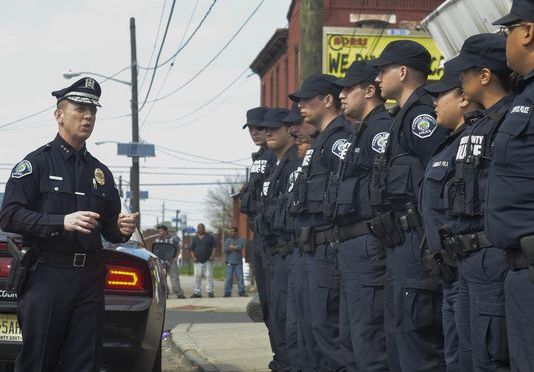



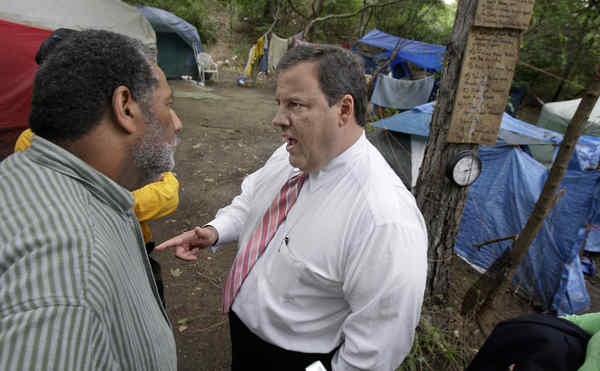





















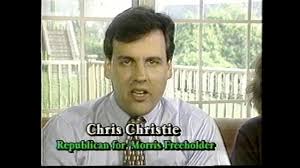








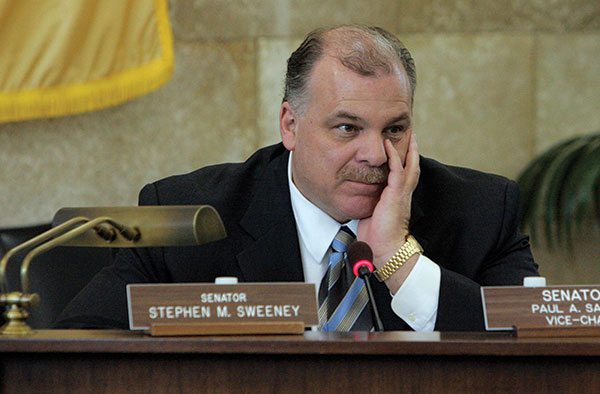

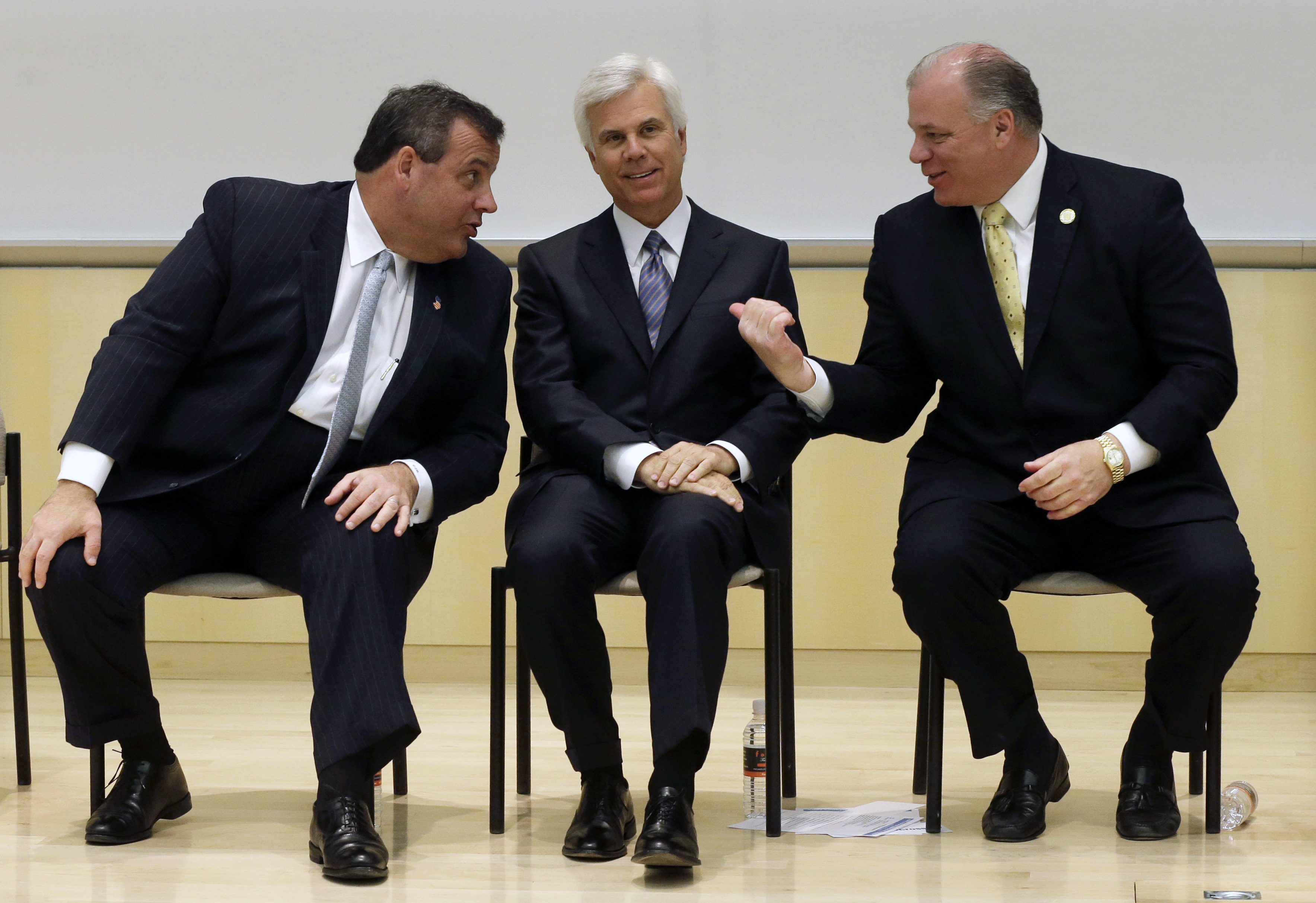










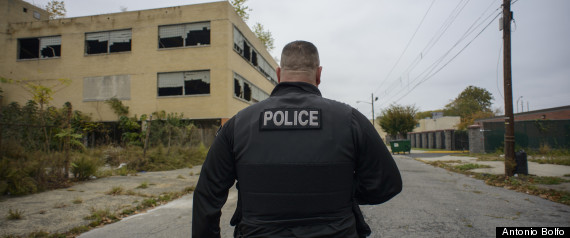
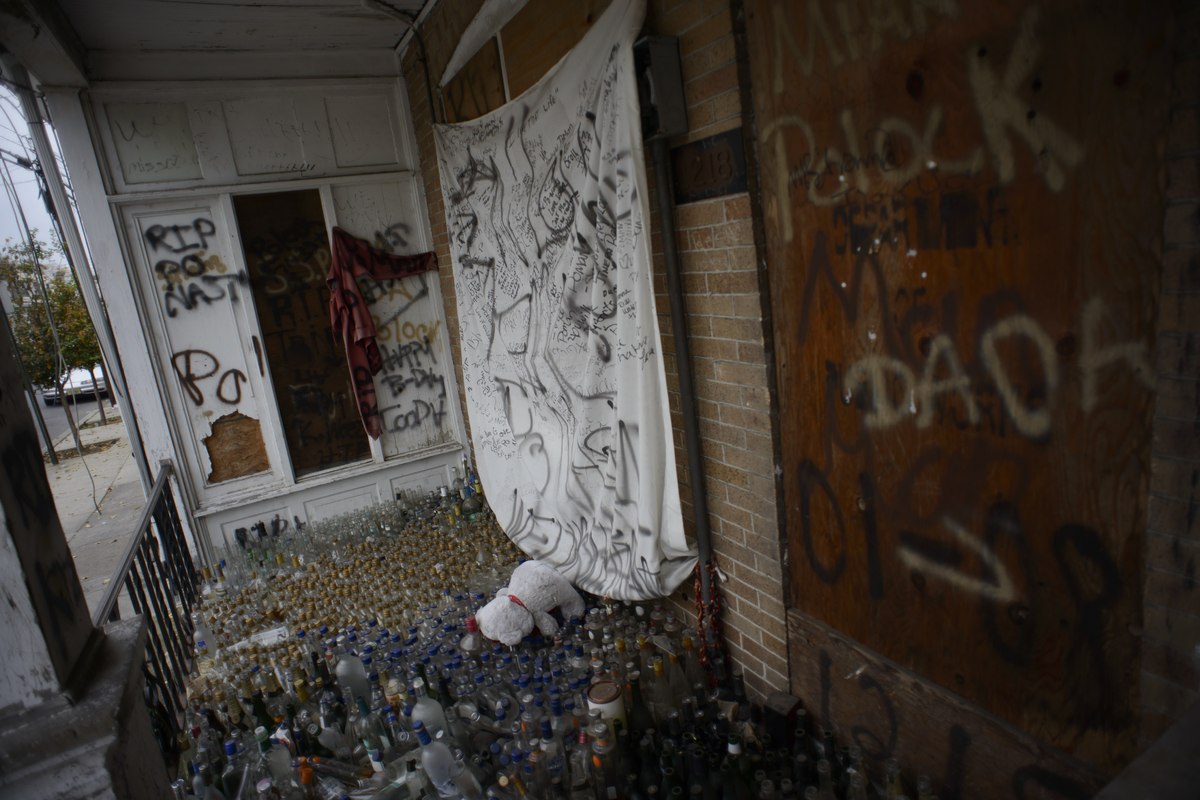


 Camden Civil Rights Project