This PBS documentary leads the viewer through the life of Malcolm X – from early adulthood to his untimely death. The story is told via short interviews with friends and family who were closest to the prominent civil rights leader. It reflects one man’s triumphant journey to overcome racial injustice in America while struggling to overcome his own negative racial perceptions.
Between 1865 and 1869, thousands of Chinese migrants toiled in perilous working conditions to help construct America’s first transcontinental railroad. Gordon Chang, professor of history at Stanford University, leads an ambitious international research project on that crucial emergence of modern America.
This program is presented in partnership with the Stanford Humanities Center, the Stanford Arts Institute, The Newberry Library, and the Karla Scherer Center for the Study of American Culture and the University of Chicago.
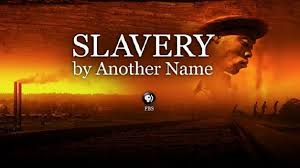
This 90-minute PBS documentary challenges one of our country’s most cherished assumptions: the belief that slavery ended with Abraham Lincoln’s Emancipation Proclamation of 1863. The film recounts how in the years following the Civil War, insidious new forms of forced labor emerged which were tolerated by the North and South, which kept hundreds of thousands of African Americans in bondage, trapping them in a brutal system that would persist until the onset of World War II. The documentary premiered at the 2012 Sundance Film Festival.
This Emmy Award-winning PBS series explores the cultural identity of African-Americans. Professor Henry Louis Gates, Jr. introduces viewers to the variety of religious, cultural and social perspectives which have shaped the African-American culture throughout our nation’s history, by consulting America’s top historians on African-American history, visiting historic sites, and interviewing individuals who have helped to create social change. Dr. Gates highlights the tragedies, triumphs and contradictions experienced by the African American community and sheds new light on what it means to be African-American in contemporary America.
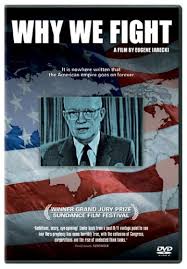
Documentary filmmaker Eugene Jarecki’s in-depth look at how the United States has built the largest peace time military/corporate/industrial complex in the history of the World. The filmreceived the Grand Jury Prize at the 2005 Sundance Film Festival and raises important moral and ethical questions about the underlying economic decisions which influence U.S. policymakers to lead the nation into war.
Fair Use Notice
This video contains copyrighted material. Such material is made available for educational purposes only in an effort to advance the understanding of human rights and social justice issues and is distributed without profit to those who have expressed a prior interest in receiving the included information for research and educational purposes. This constitutes a ‘fair use’ of any such copyrighted material in accordance with Title 17 U.S.C. Section 107 of the U.S. Copyright Law.
Award winning PBS documentary which tells the story of a courageous band of civil rights activists calling themselves Freedom Riders, who challenged racial segregation in the American South in 1961.
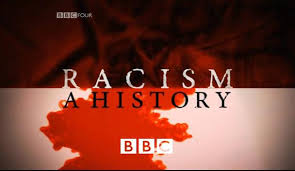
A BBC documentary series examining the historical evolution of Racism over the last 500 years, which reveals some uncomfortable truths about how racist attitudes developed and were spread throughout the European culture. The three part series was first broadcast on BBC Four in March 2007 to celebrate the bicentennial anniversary of the Slave Trade Act of 1807 which abolished the slave trade in the British Empire.
Human Resources is a documentary by Scott Noble which examines the history of Behaviorism and government funded research programs designed to learn what motivates human behavior. The film raises important ethical questions about the acceptable parameters of psychological research and the morality of social control mechanisms.
An award winning BBC documentary series which explores the progression of social engineering in the United states through the use of Psychoanalysis. The four part series raises important ethical questions about whether the utilization of psychological conditioning techniques to direct group behaviors is consistent with Democratic ideals.






 Camden Civil Rights Project