Category Archives: Public Corruption

Ex-Prosecutors in Trenton Respond to U.S. Scolding

Two former New Jersey attorneys general on Thursday defended their office’s investigation into the political dealings of George E. Norcross III, the Democratic power broker, and said they were bewildered that federal prosecutors had accused them of botching the case.In a scathing letter dated Tuesday, Christopher J. Christie, the United States attorney for New Jersey, wrote that his office would be unable to bring charges against Mr. Norcross because lawyers for the state attorney general had mishandled their investigation under two administrations before turning it over to his office in 2004.

Mr. Christie’s pointed critique startled many in the legal community because prosecutors rarely publicly criticize other law enforcement officials or explain their decisions not to prosecute.

While Mr. Christie did not release the letter to the press, his office did give it to two witnesses whose complaints against Mr. Norcross led to the investigation, and who have been aggressive in seeking news coverage about the case.

In his six-page letter, Mr. Christie chastised state officials for failing to use rudimentary investigative techniques like wiretaps and telephone records to corroborate their suspicions that Mr. Norcross and his political allies were engaged in a plot to deprive two political rivals of jobs and government contracts.

His letter also harshly criticized state prosecutors for deciding not to secretly tape conversations at a Camden County Democratic fund-raiser in 2001, where Mr. Norcross and his associates were expected to discuss a wide variety of political deals. Mr. Christie said that that decision was so inexplicable that it raised the possibility that state investigators were trying to shield political figures.

But John J. Farmer Jr., who was attorney general in 2001, called that suggestion ”utter nonsense.” Mr. Farmer said he was not personally involved in the tactical decisions, but asserted that the two assistant attorneys general who led the case were ”professional and 100 percent nonpolitical.”

”I totally reject any suggestion that any political figure was being protected by anyone in my office,” said Mr. Farmer, a political independent who worked for Govs. Christine Todd Whitman and Donald T. DiFrancesco, both Republicans.

Mr. Christie also said that former Attorney General Peter C. Harvey erred in 2003 when he agreed to allow two figures in the investigation to plead guilty to tax evasion charges, a deal Mr. Christie said was too lenient to yield meaningful cooperation.

But Mr. Harvey said the agreements were fair and helpful. ”These plea agreements were negotiated by experienced former federal prosecutors and helped lead to other convictions in this case,” he said.

The investigation and secret recordings of Mr. Norcross, a bank executive whose prowess as a fund-raiser has given him vast statewide influence, has offered a rare view of the inner workings of New Jersey’s tough, money-driven politics.

The case began in 2000, when John Gural, now the mayor of Palmyra but then a councilman, told the authorities that he had been pressured to fire the town solicitor, Ted Rosenberg, who had opposed one of Mr. Norcross’s allies in a local political race.

Investigators from the state attorney general’s office asked Mr. Gural to wear a concealed recording device. He ended up taping more than 330 hours of conversations, many of them with local officials allied with Mr. Norcross. In some of those conversations, they threatened to withhold government contracts from Mr. Gural’s employer, a local engineering firm, unless he acquiesced.

Mr. Norcross was also caught on tape boasting about his influence with then-Gov. James E. McGreevey and then United States Senator Jon S. Corzine.

Mr. Norcross’s lawyer dismissed his client’s taped comments as idle boasts, and said that Mr. Christie’s letter was proof that no crime had been committed.

Mr. Rosenberg said on Thursday that Mr. Christie, who has been mentioned as a candidate for governor himself, might have released the letter to protect his image as an ardent corruption buster.

”Chris Christie is first and foremost a political animal,” Mr. Rosenberg said. ”He gave us the letter and didn’t say anything about keeping it private, so of course we gave it to the media. The way he handled this he was freed of any responsibility for letting George Norcross get off of the hook.”

But in an interview on Thursday, Mr. Christie said he was proud of his record. Since being appointed United States attorney in 2002, he said he had brought public corruption charges against nearly 100 people. He said he felt that the attorney general’s office deserved a detailed explanation of why he was not pursing charges, since Mr. Harvey publicly referred the case to him in 2003
.

Lautenberg calls for probe into allegations Christie used office for political gain

Posted: Wednesday, October 21, 2009 7:10 am

TRENTON – U.S. Sen. Frank Lautenberg is calling for a federal investigation into allegations that Chris Christie, the Republican candidate for governor in New Jersey, used the office of U.S. attorney for political gain.

The call for a Justice Department investigation follows accusations that Christie politicized the office of the top federal prosecutor while serving there for seven years in the Bush administration. Lautenberg is asking the Justice Department to look into whether the U.S. attorney’s office aided Christie’s campaign after he resigned in December to run for governor.

Christie has been dogged for months by the allegations of inside politicking, which would violate Department of Justice policy and federal law.

The allegations against Christie reached a higher pitch Monday when The New York Times reported that a top aide in the prosecutor’s office, Michele Brown, may have tried to steer the timing of a large corruption bust to benefit Christie’s campaign and that she interceded to block potentially damaging travel records from being released.

“It is shocking to learn that a former deputy to Chris Christie was conducting a political campaign within the U.S. attorney’s Office,” Lautenberg said in a statement. “It was particularly distressing that this raw political agenda came into an office with a historic reputation for fair and unbiased dispensation of justice, and Ms. Brown went so far as to try to bring political campaign objectives into the planning of law enforcement actions.”

Christie denied the charges.

“There are a lot of presumptions being made that don’t have the facts to back them up,” Christie said Monday.

“The question was did she give any aid to my campaign, and the answer is ‘no.’ As to the specific questions that were raised in the entire story, I’ll take Michele’s word for it, it looks like she said in the story that the allegations were ‘outrageous’ and ‘inaccurate.”‘

Brown declined to comment when reached Tuesday.

Christie mounted a strong challenge to incumbent Gov. Jon Corzine, but has seen his lead evaporate as Democrats have hounded him on a signature issue – government ethics. Polls now show the race deadlocked with two weeks to go.

Corzine, like Lautenberg, said it appears that there were efforts within the U.S. Attorney’s office, even after Christie left, to advance his political career.

“If I were unkind, I would say it was a branch office of the campaign,” Corzine said in an interview with The Associated Press on Tuesday.

Corzine said there were earlier examples, too: He said issuing a subpoena to U.S. Sen. Robert Menendez two months before his 2006 election was a political act.

Christie earlier acknowledged having conversations with Bush strategist Karl Rove about a possible run for governor, which may have violated a law restricting political activity by federal employees.

Unnamed federal law enforcement officials told The Times that Brown, who had borrowed $46,000 from Christie to settle credit card debt in 2007, yielded her influence inside the U.S. attorney’s office to aid Christie’s election bid.

The sources said Brown was the lone voice within the prosecutor’s office arguing for more than 40 people targeted in a corruption and money-laundering case be arrested before July 1 so that Christie could reap the credit. The sources also said she took over a request by the Corzine campaign for public records from Christie’s tenure, including travel records for him and Brown.

The release of those records showed Christie and Brown stayed at some of the country’s most upscale hotels. The tab to taxpayers occasionally exceeded $400 per night.

Brown resigned in August after news of the loan – and her ongoing financial relationship with Christie – emerged. She took a job with a Mooristown law firm that had represented one of the medical manufacturing companies Christie had investigated for medical fraud.

On Tuesday, Christie said acting U.S. Attorney Ralph Marra decided when to bring cases, not Brown.

Marra declined to comment, as did U.S. Attorney’s office spokesman Michael Drewniak.

Christie faults N.J. on probe of JCA

POSTED: January 26, 2006


New Jersey’s top federal prosecutor has offered a scathing critique of the way the state Attorney General’s Office handled a political corruption investigation that included secretly recorded conversations with South Jersey Democratic Party kingpin George E. Norcross III.

Alluding to the “protection of political figures and the manipulation of evidence,” U.S. Attorney Christopher J. Christie said the state had botched its four-year probe of JCA Associates, a now-defunct engineering firm with ties to Norcross.

But after a 10-month review of the case, Christie said, his office will not take up the investigation into allegations of bribery and extortion. In essence, he said the Attorney General’s Office had so muddied the waters that “it would be inappropriate to initiate a federal prosecution.”

Christie’s comments were contained in a letter sent Tuesday to acting New Jersey Attorney General Nancy Kaplan, who took over after Peter Harvey stepped down this month.

A spokesman for the Attorney General’s Office said that the letter was being reviewed and that he would not comment.

Christie said the state’s probe, which began in December 2000, “was materially hampered by poor oversight, inexplicable strategic decisions, and a failure to fully develop potential evidence.”

His comments were aimed at the offices of former Attorneys General John Farmer, a Republican, and David Samson and Harvey, both Democrats.

Some of Christie’s harshest criticism was directed at the way Farmer’s office handled the early stages of the investigation. Like Farmer, Christie is a Republican appointee.

He said the “integrity of the investigation” was undermined by the office’s “illogical approach” to the probe, which lent itself “to a number of damaging inferences, including the protection of political figures and the manipulation of evidence.”

The JCA case, which resulted in minor tax charges against three JCA officials, has been a hot-button item in political and governmental circles for five years.

Norcross has not been charged with any wrongdoing, but his name has been consistently tied to the probe. He has insisted that the allegations of corruption are without foundation and part of a ploy by two disgruntled political opponents, Palmyra Mayor John Gural and Moorestown lawyer Ted Rosenberg, to discredit him.

William Tambussi, a lawyer for Norcross, said yesterday that Christie’s assessment reinforced that position.

“Christie had ample opportunity to say that a crime had been committed, and he did not,” said Tambussi, who said the federal prosecutor instead had detailed an “unholy alliance between state investigators and Rosenberg and Gural . . . to get George Norcross at any and all costs.”

Among other things, Christie referred to a “conflicted relationship” that blurred the roles of Gural and Rosenberg, who were “initially treated as investigative partners” rather than witnesses.

The case included secretly recorded conversations that Gural made for the New Jersey Division of Criminal Justice between December 2000 and February 2001, after he alleged that JCA officials had pressured him not to reappoint Rosenberg as solicitor in Palmyra.

Gural was a JCA employee. Rosenberg had fallen out of favor with Norcross, and Gural alleged that his bosses at JCA, in currying favor with Norcross to steer government contracts their way, wanted to scuttle Rosenberg’s reappointment.

In a statement yesterday, Rosenberg and Gural said Christie’s findings “in no way exonerate the culpable parties.”

“The bottom line is that once again in New Jersey politically connected individuals have escaped punishment . . . with the complicity of the New Jersey Attorney General’s Office.”

In his six-page letter, Christie detailed shortcomings in prosecutors and investigators.

Among other things, he pointed out that they “never sought a court-ordered wiretap,” even though the alleged conspiracy being investigated “was executed primarily over the telephone.”

He said Gural had been encouraged to record many meaningless conversations with “innocent third parties.” Yet, he said, when Gural offered to record conversations at “a political function” with “individuals directly associated with the case,” he was denied permission because of the risk of recording innocent third parties.

Finally, Christie blasted an agreement, negotiated in 2003 by Harvey’s office, that promised JCA president Mark Neisser, director of marketing Henry Chudzinski, and chief financial officer William Vukoder probation in exchange for their cooperation and guilty pleas to minor tax offenses unrelated to the Palmyra allegations.

Christie said the Attorney General’s Office had approved these “charitable agreements before the defendants had provided any information regarding the full scope of their criminal activity or any information about potential coconspirators.”

“Not surprisingly,” he added, the defendants then “provided no valuable information.”

Contact staff writer George Anastasia at 856-779-3846 or ganastasia@phillynews.com.

Inquirer staff writer Jennifer Moroz contributed to this article.

U.S. to probe missing Norcross video

The state said it did not know the fate of the secret recording. Gubernatorial candidates urged an investigation

POSTED: July 07, 2005


New Jersey’s top federal prosecutor took the unusual step yesterday of announcing that his office is investigating the disappearance of a secretly recorded videotape of George E. Norcross III, one of the state’s most powerful political figures.

The announcement was made after the state’s principal gubernatorial candidates, Republican Douglas Forrester and Democratic Sen. Jon S. Corzine, called on U.S. Attorney Christopher Christie to determine how the tape disappeared and who in the New Jersey Attorney General’s Office was responsible.

“The U.S. Attorney’s Office is fully investigating this matter,” Christie said in a statement late yesterday afternoon. “Therefore, we have no further comment.”

The videotape of Norcross and his attorney meeting with a top state prosecutor was made in July 2001 while the New Jersey Division of Criminal Justice was involved in a political corruption investigation of JCA Associates Inc., a Moorestown engineering firm.

The way the Attorney General’s Office handled the JCA probe is emerging as a key issue in the gubernatorial race. Both candidates have spoken out on it.

Yesterday was the first time Christie commented publicly. His office, however, has been gathering information for months.

It recently obtained a court “share order” that allowed state authorities to turn over all material gathered in the two-year probe, including transcripts of grand-jury testimony, according to individuals familiar with the investigation.

The FBI also has begun interviewing individuals and has been reviewing hundreds of hours of conversations secretly taped by state investigators.

A spokesman for the Attorney General’s Office said yesterday that the state welcomed federal involvement. John R. Hagerty also said his office would ask the state’s new Office of Government Integrity to conduct an independent examination.

“We welcome any outside review,” Hagerty said.

Yesterday’s political outcry came after state authorities admitted in court papers filed Friday that the hourlong video of Norcross, his lawyer Michael Critchley, and Prosecutor Anthony J. Zarrillo Jr. had disappeared or been destroyed.

At a court hearing a month ago, state authorities insisted that the meeting had not been videotaped and that media reports of the existence of a tape were in error.

“This reeks of Watergate-like corruption,” Forrester said in a letter to Christie. “We need an independent investigation to get the truth before more tapes are lost or altered.”

Forrester called on Corzine to “demonstrate his independence from George Norcross” by joining in asking for a federal probe.

Within hours, Corzine did just that, releasing a letter he sent to Christie asking for “a full and thorough investigation to determine whether any laws were violated and to ascertain why the correct information was not initially provided with regard to the existence of the videotape.”

As a result of civil litigation, the Attorney General’s Office has already released dozens of tapes from the JCA investigation. But until it was reported in The Inquirer, the office never disclosed that Norcross had met with a top prosecutor and that authorities had secretly audiotaped and videotaped that session.

At that meeting, Norcross urged Zarrillo to discontinue the JCA investigation, contending the allegations were politically motivated.

After the report of the meeting, the Attorney General’s Office released an audiotape of the session but denied that the meeting had been videotaped.

Last month, in fact, a state investigator and a state prosecutor told a state Superior Court judge that there was no videotape. After Judge John A. Sweeney asked for further proof, the prosecutor and two investigators reversed the state’s position, acknowledging that a videotape had been made. They claimed, however, that it had been misplaced or inadvertently destroyed.

Norcross has never been charged with a crime and has insisted that the investigation was sparked by two disgruntled political opponents, Palmyra Mayor John Gural and lawyer Ted Rosenberg.

Gural and Rosenberg contend that the Attorney General’s Office failed to diligently pursue a probe into bribery and influence peddling.

Three JCA executives pleaded guilty to minor tax charges.

“Long before this became a political football, George Norcross called for the release of these tapes,” William Tambussi, another Norcross lawyer, said yesterday. “Now he is suffering the brunt of this comedy of errors.”

Rosenberg said yesterday that he intended to file a motion in Superior Court, where the tape issue is being argued, asking that the Attorney General’s Office be held in contempt for misleading the court about the existence of the videotape.

In his filing, Rosenberg said he will ask for permission to depose all the Attorney General’s Office personnel involved in the handling of the videotape in an attempt to determine whether it exists within the Division of Criminal Justice.

Contact staff writer George Anastasia at 856-779-3846 or ganastasia@phillynews.com.

In Camden, Another Mayor Is Indicted on Corruption Charges

CAMDEN, N.J., March 30— The ills of this desperate city deepened today with the indictment of its mayor, Milton Milan, on 19 charges of corruption, ranging from laundering drug money and taking bribes from organized crime leaders to stealing his own computer, collecting the insurance and then selling it to a naive office volunteer for three times its worth.

Mr. Milan, who was elected in 1997, is the third Camden mayor to be indicted in the last 20 years. He was ensnared in a rolling investigation into drug dealing and official corruption that federal officials have conducted for more than a year. As one defendant after another pointed the finger at Mr. Milan, the expectation grew that he would one day follow them into the dock.

This morning, trailing a parade of Cabinet members, other city officials and friends, the mayor walked the two blocks from City Hall to the new federal courthouse on Cooper Street to surrender to a United States marshal. He was handcuffed, and entered a plea of not guilty. After he was released on $150,000 bail, Mr. Milan was jaunty at a news conference on the courthouse steps in which he said the charges against him were unfounded and insisted that he would not step down.

”I’m a fighter; I’ve always been a fighter,” said Mr. Milan, 37, who was wearing a Camden Library team jacket. ”And just because you get hit once and fall down doesn’t mean I’m not going to get up and keep fighting.”

Later, Robert J. Cleary, the United States attorney for New Jersey, was just as combative. ”The mayor designed his pay-for-play system for his own selfish benefit, and the rest of the public be damned,” Mr. Cleary read from a statement that touched on elements of the indictment. ”He put the office of mayor in this city up for sale, and anything you wanted, you could buy from him. You want a contract? Buy him a car. You want to get paid faster? Install windows in his house. You want a job? Bribe the mayor.”

The maximum penalties for all 19 counts add up to 119 years in prison, said Renee M. Bumb, the assistant United States attorney and a lead prosecutor in the investigation of Mr. Milan. If convicted, the mayor could also face hundreds of thousands of dollars in fines.

In all, 16 local men have been convicted or pleaded guilty to narcotics distribution in the federal investigation. In addition, the city’s former municipal prosecutor, Joseph S. Caruso, has admitted to conspiring with Mr. Milan to solicit a $5,000 campaign contribution from the public defender, an action that forms one of the counts in today’s indictment. And Mr. Milan’s business partner in the Atlas Construction Company, Gholam Joseph Darakshan, was indicted two weeks on charges that he laundered drug money with the mayor.

The mayor has his supporters on the City Council, but this afternoon several Council members said they would try to seek enough votes to force Mr. Milan to step down. Legally, he can remain in office unless he is convicted.

Mr. Milan’s indictment is one more blow to Camden, the poorest city in New Jersey. With most of its jobs and money having fled to suburbs like Cherry Hill in the last 40 years, the city teetered on the edge of bankruptcy last summer and required a state financial rescue, along with spending controls. Many city police functions have been taken over by state troopers, and Camden’s failing schools were recently investigated by state officials, who urged financial and educational reforms.

Mr. Milan’s predecessor, Arnold B. Webster, pleaded guilty to federal wire fraud charges in 1998 and was sentenced last August to six months’ house arrest and three years’ probation. An earlier mayor, Angelo J. Errichetti, was convicted of federal corruption charges and went to prison in 1981.

Mr. Milan, the city’s first Hispanic mayor, rose from poverty in Camden to start his own construction company. He ran as an outsider for City Council and, after being embraced by the Camden County Democratic Party, was elected mayor.

His indictment was handed up by a grand jury on Wednesday, and an arrest warrant was issued this morning. The crimes he is accused of committing either before or after he became mayor fall into six broad categories: fraud, accepting bribes, attempted extortion, wire and mail fraud, illegal currency transactions and money laundering. And perhaps the most serious of the charges — one that Mr. Cleary hammered at a news conference — was the accusation that the mayor was involved in taking bribes from associates of the Philadelphia organized crime boss Ralph Natale.

Although today’s indictment was voluminous, it did not mention any of the accusations of drug dealing by the mayor that several of the convicted dealers had made from the stand. And although Mr. Milan is accused of taking tens of thousands of dollars in cash and services, the federal document paints a picture of a corrupt mayor with small-bore ambitions to skim a dollar here and a dollar there — a trip to Florida with his girlfriend, some free carpet for his home — rather than a man bent on a grand criminal scheme.

The indictment charges that Mr. Milan began accepting bribes from an unnamed associate of Mr. Natale as early as March 1996. In exchange, it alleges, Mr. Milan helped crime figures win city contracts that directly benefited Mr. Natale.

In all, Mr. Milan took more than $30,000 from the Philadelphia mobster’s organization by trying to funnel city business to Cosa Nostra operatives, the indictment alleges. Mr. Natale is in prison on a narcotics conspiracy conviction, and newspaper reports have said he is cooperating with federal agents in their Camden investigation.

For example, the indictment alleges that on Oct. 30, 1997, the mayor met in his office with a Natale associate, called an unindicted co-conspirator by federal officials, to discuss the associate’s desire to win a contract to be a collector of fines and other charges by the Camden Municipal Court. When the city’s chief judge later objected to the contract, the mayor wrote a letter asking him to reconsider, and a week later the Natale associate, called Individual No. 2 in the indictment, paid $1,433 for the mayor’s Florida vacation, the indictment alleges.

The indictment also says that the mayor accepted two vehicles from a towing operator with a contract with the city, and that a second contractor seeking city work performed a garage demolition worth $4,000 and installed $700 worth of carpet in the mayor’s home.

A third contractor is said to have installed 25 new windows in the mayor’s North Camden home for the cost of materials only, in exchange for getting speedier payment from the Camden Housing Services Department. In another count, a city heating and air-conditioning contractor is said to have installed a $3,346 central air-conditioning system in the mayor’s home.

The money-laundering charge accuses Mr. Milan of borrowing $65,000 in drug money and then, with his partner Mr. Darakshan, parceling the money out to numerous friends to evade the $10,000 federal threshold for reporting cash deposits. The friends then wrote checks in the amount given them to Atlas Contracting, and the money was used as a surety deposit on a home-building project, the indictment says.

The mayor collected $4,743 in insurance for a staged theft at the Atlas Construction office in 1997, the indictment charges. He then sold one of the ”stolen” computers, worth $500, to a mayoral intern for $1,500, the United States attorney said.

”These crimes, described in painstaking detail, show a mayor more interested in serving himself than serving the people of Camden,” Mr. Cleary said in a statement, adding later, ”We believe this indictment is an important step forward for Camden.”

Photo: Mayor Milton Milan of Camden, N.J., on his motorcycle, said the charges against him were unfounded. (Associated Press)

Former New Jersey mob boss takes witness stand against Camden mayor

Published: Tuesday, November 21, 2000


CAMDEN, N.J. {AP} Mob boss Ralph Natale used code names when he talked on the telephone. Whenever he discussed Mafia business at his apartment, he would crank up the TV or the radio. At his “office” a restaurant at a racetrack he would whisper or take associates for a walk down the hall. “And I was right, because I’m sitting here,” he said earlier this month, eliciting chuckles from a standing-room-only crowd in the federal courtroom where he testified for the government in the corruption trial of Camden Mayor Milton Milan.

The former boss of the Philadelphia-South Jersey mob has become the highest-ranking American Mafia figure ever to turn government witness.

Natale began cooperating with prosecutors in 1999 after being charged with running a methamphetamine ring. Apparently, Natale wasn’t paranoid enough: His telephone had been tapped, his kitchen, TV room and balcony were bugged, and, worst of all, a top associate had worn a wire and recorded hundreds of conversations with Natale and other mob figures.

Milan’s trial is the first in which Natale testified. He is expected to take the stand in a series of trials that could put organized crime figures from Philadelphia to Boston behind bars.

During four days on the stand, Natale, 65, pleasantly explained the workings of the underworld to jurors and a gallery that included mob wives and girlfriends, FBI agents, and attorneys of former associates.

Natale was a mix of braggadocio and charm full of hubris one moment, contrition the next as he detailed his efforts to tuck the mayor of New Jersey’s poorest city into his pocket.

A fit-looking figure with a shaved head, a gray goatee and crisp, tailored suits, Natale sometimes bragged about his prestige and position, and told of how his underlings needed his approval before acting.

In a 1996 conversation recorded by the FBI at his apartment in Pennsauken, a city across the Delaware River from Philadelphia, Natale talked about beating up some guy “cause he answered me in a tone that he wasn’t supposed to be doing.”

Natale told of how friends and associates would keep their distance from him to avoid overhearing any conversations. “When I always talk to anyone, being the boss of the Mafia, they would never stand too close to me,” he said. “They would always stand 5 or 6 feet away.”

Natale detailed for jurors how, through an intermediary, he gave $30,000 to $50,000 to Milan to steer city contracts to mob-backed businesses. The bagman, Daniel Daidone, allegedly gave the money to Milan in $100 bills in white envelopes.

“I wouldn’t insult the man by giving him 20s,” Natale said.

Natale said he wanted Milan to be beholden to him. “I wanted him to feel he had to rely on me and nobody else,” Natale said. “If he had a headache, I would send him an aspirin.”

Under cross-examination by one of Milan’s lawyers, Natale admitted involvement in nearly a dozen murders committed as retaliation, during battles for control or simply to save face.

“Failure to pay homage to you was a death sentence, correct?” asked Carlos A. Martir Jr.

“Correct,” Natale answered.

The defense failed to rattle him. When pressed to remember a date, he said with a shrug and a grin, “If I thought I was going to be up here, I would have marked it down.”

Milan, 38, is accused of taking payoffs from mob figures and others seeking contracts or favorable treatment, and laundering drug mon Prosecutors are still presenting their case.

The mayor has denied the allegations and has said all along that the government “made a deal with the devil.” After Natale took the stand, Milan said: “The devil himself came up to testify.”

Natale pleaded guilty in May to murder, attempted murder, extortion, gambling and drug trafficking. Prosecutors have said he would be spared the death penalty. He could get up to life in prison instead.

He is expected to testify next year against his reputed handpicked successor as mob boss, Joseph “Skinny Joey” Merlino, whose lawyer, Edwin Jacobs Jr., was unimpressed with Natale as a witness.

Jacobs gave the government credit for “cleaning up” Natale, but called his testimony “fiction.”

“It’s theater,” he said. “The government has dressed him up, taught him to enunciate, glossed over his criminal background and his propensity for violence. None of that means he’s telling the truth.”

Natale said it was the looks on his family members’ faces when he went to court on the methamphetmaine charges a few years ago that made him decide to give up his life of crime.

“I found out, truly, what I did to them, and right then and there, I did enough for La Cosa Nostra,” he said. “No more. I said, ‘If there’s any life left for me, I’ll give it to that family. No more La Cosa Nostra.”‘

Original Source: http://lubbockonline.com/stories/112100/nat_112100040.shtml#.VmxTttIrLcs

Business Owner Pleads: Thomas J. Damadio Said He Helped Cooper Hospital Executives Launder Stolen Money

POSTED: January 18, 1997


The owner of a Philadelphia check-cashing service admitted yesterday in federal court in Camden that he helped launder up to $600,000 that had been stolen from Cooper Hospital-University Medical Center by corrupt executives.

Thomas J. Damadio, 47, the owner of B & K Check Cashing in the 4200 block of Frankford Avenue in the northeast section of the city, said he took part in currency transactions exceeding $10,000 with the executives and did not file the required federal reports.

Since the 1980s, financial institutions have been required to report large currency transactions, as the government sought to crack down on drug-dealing and money-laundering.

Damadio told U.S. District Judge Joseph H. Rodriguez that he cashed large checks for Cooper executives John M. Sullivan and John H. Crispo Jr. in 1991 and 1992 and did not submit the written documents.

He also pleaded guilty to filing false income-tax returns in 1991 and 1992 and avoiding taxes on money the Cooper executives paid him to give them cash for hospital checks in their embezzlement scheme.

Damadio, who lives in Medford in Burlington County, was released on a $50,000 personal recognizance bond. He is to be sentenced on April 18.

Sullivan and Crispo and five associates, so far, were accused of stealing $4 million from the hospital.

Crispo has since died. Sullivan, 47, who was executive vice president of finance, is serving 55 months in federal prison.

Assistant U.S. Attorney Paul H. Zoubek said Sullivan and Crispo would send batches of checks to the cashing service.

The checks would be drawn on Cooper Hospital accounts and be made out to bogus collection agencies and fabricated vending companies.

Damadio said in court yesterday that at times he personally delivered large amounts of cash to Sullivan’s $700,000 mansion in Moorestown and to Crispo’s sprawling horse farm in Vineland.

Listing Cooper’s Board Deals Companies Associated With The Hospital’s Trustees Have Gotten Some Of Its Largest Contracts

POSTED: June 15, 1997


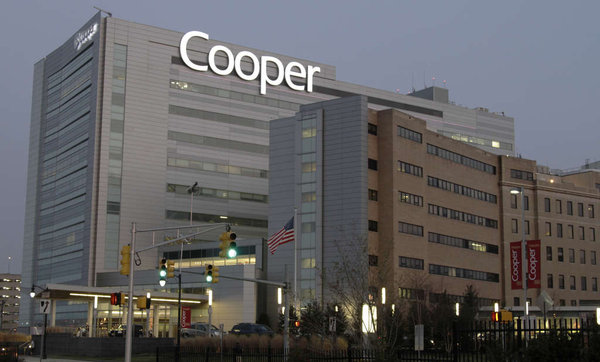
Cooper Hospital paid a total of $8.2 million in 1993-1996 to private businesses in which two of its board members had a financial interest. The contracts were approved by a 27-member board, 17 of whose members or their businesses or relatives were listed by the hospital as having business affiliations with Cooper in 1996.

According to Cooper Hospital’s income-tax returns – which are public record because of the hospital’s nonprofit status – the firms of the chairman of the board of trustees and the former chairman of the hospital’s foundation board have been among the highest-paid professional contractors doing business with the hospital. Both board members’ law firms had business relationships with the hospital decades before the two men went on the board.

Cooper board chairman Peter Driscoll is a senior partner in the Haddonfield law firm of Archer & Greiner. The hospital’s tax records show that Cooper paid Archer & Greiner a total of $2.1 million in legal fees for 1993, 1995 and 1996. Archer & Greiner’s fees for 1994 were not available.

Driscoll declined requests for an interview. Peggy Leone, a hospital spokeswoman, said Driscoll recuses himself on issues involving his firm.

Cooper board member George Weinroth – who also chaired Cooper’s foundation board, its fund-raising arm – had a major interest in two businesses that were paid $6.1 million by the hospital from 1993 through 1996 for collecting money to pay for medical services. Also, Weinroth’s wife is employed as a billing specialist in the hospital’s department of pediatrics. Her salary was unavailable.

Cooper officials and Weinroth have said in interviews that the contracts were proper. Weinroth said his businesses did the work for which they were paid. He said he always recuses himself “even from any conversations” regarding his businesses.

The Camden hospital, which is formally known as Cooper Hospital- University Medical Center, paid various board members or their businesses for legal work, bill collections, banking, architectural and other services. Some board members work in salaried positions at the hospital; others have relatives employed by the institution, according to the tax returns.

It is not uncommon or illegal for board members at teaching hospitals to do business with their own hospitals, or their relatives or companies to do so.

The Cooper board met on June 2 and discussed the financial ties of board members to the hospital. In interviews, two current and two former board members said they were troubled by the issues raised in the board’s dealings.

Hospital officials said the board members’ businesses provided services needed by the hospital and the charges were fair.

The Internal Revenue Service requires that a nonprofit hospital disclose in its tax returns each year the names of board members who have business affiliations with the hospital. Before 1994, Cooper did not make such disclosures in its tax returns. Kevin Halpern, president and CEO of Cooper Hospital, has said the information had been left off in error, and he blamed the hospital’s former accountants for the mistake. Since 1994, the hospital has provided the information to the IRS.

Cooper officials also supplied lists concerning board members’ business affiliations for 1993 and 1996 to The Inquirer, although Cooper’s 1996 tax returns have not yet been filed.

Hospital officials have not provided a total dollar figure for the amount of money paid to the businesses of its board members or their relatives. Under law, the hospital need only reveal how much was paid to its five highest-paid contractors for professional services. The Archer & Greiner law firm was put in that category in 1993 and 1995. Weinroth’s law firm – Greenberg, Schmerelson & Weinroth – was among the top five for all three years. Another company in which Weinroth was a part-owner and CEO, C-Care, was listed in 1994 and 1995.

In an interview, hospital board member Weinroth described his contract work with Cooper.

“I am an entrepreneur,” he said, describing how he formed C-Care. He said that in the early 1990s New Jersey was revising its reporting requirements for hospitals providing charity care to the working poor. Under New Jersey’s charity care laws, people otherwise ineligible for Medicaid could receive some medical benefits from the state if they met certain criteria. Weinroth, with seven others, saw an opportunity for a new business, he said.

C-Care, located in the 500 block of Cooper Street in Camden, was designed to identify those patients and fill out the paperwork necessary to obtain state reimbursement to the hospital for their care. Weinroth said C-Care was paid between 3.5 and 8.5 percent of what it collected for Cooper.

According to hospital records, Cooper Hospital paid C-Care $1,170,703 in 1994; $531,858 for 1995; $456,080 for 1996.

C-Care has employed as many 16 people, Weinroth said, most of them retired police officers.

He said he believed the C-Care contracts with the hospital were not put out for public bid. Few companies do the type of work that C-Care does, he said, and his firm received the contract after presenting a proposal to the hospital. He said he began C-Care with five clients other than Cooper.

Weinroth said he sold C-Care last year. He still works for the company under an employment contract.

Weinroth also said his law firm collects unpaid hospital bills.

In 1993, Cooper Hospital paid the firm $1,175,355 for billing collection services; in 1994, $1,600,135; in 1995, $628,757; and in 1996, $591,500. Weinroth’s law firm began providing services for the hospital in the mid-1970s. Weinroth joined the hospital foundation board in 1992, and joined the board of trustees in 1995.

Cooper president Halpern has said Cooper contracts out bill collection work so that it can compare the success rate of different services.

According to the income-tax reports, Archer & Greiner, the law firm in which board chairman Driscoll is a partner, received these fees from Cooper Hospital: $584,395 in 1993; $803,071 in 1995; and $742,015 in 1996. According to the income tax reports and information supplied by the hospital, “members of the law firm, other than Mr. Driscoll, provide legal services to Cooper Hospital.”

According to Cooper Hospital officials, Archer & Greiner has been doing the hospital’s legal work for more than 40 years. Driscoll has been chairman of the hospital board since 1986.

Cooper’s records show that Cooper president Halpern serves on the board of directors for CoreStates/NJ National Bank. The records also show that Thomas Bracken, a market president of CoreStates/NJ National Bank, is a board member at Cooper Hospital. CoreStates/NJ National Bank provided banking services for Cooper in 1993, 1994, 1995 and 1996.

Halpern was paid $417,718 in 1995 as a salary from Cooper, and is currently paid a fee of $15,000 a year and $500 per meeting by CoreStates to serve on CoreStates board, according to a spokeswoman for the bank. Halpern declined requests for an interview.

In an interview, Bracken said CoreStates had served Cooper since well before he became a board member. In addition, he said, he recuses himself from any board discussions of banking business at both the hospital and at the bank.

George E. Norcross 3d, former chairman of the Camden County Democratic Party and chief executive officer of Keystone National Insurance Co. Inc., serves on the Cooper Hospital board of directors. In 1993, 1994 and 1995, his business was paid by Cooper for providing insurance-brokerage services to the hospital during those three years. In an interview, Norcross said he received only a “minimal” amount of money. He would not say how much he earned in commissions or fees from the hospital. Norcross, who is still a board member, did no business with the hospital in 1996.

Of the 27 Cooper board members in 1996, 17 were listed by Cooper as having business affiliations with the hospital or relatives or businesses that do. In addition to Driscoll, Weinroth, Halpern and Bracken, the hospital also lists:

* Joseph Tarquini of Tarquini Associates, an architectural firm that provided architectural services to Cooper for the years 1993, 1994, 1995 and 1996, according to the forms. Tarquini did not return several calls requesting an interview.

* Edward D. Viner, a full-time physician at Cooper. His daughter also is an employee, according to the tax returns. In a statement released through his office, Viner said his daughter works part-time doing secretarial work for Cooper.

* Michael Cresci, a trustee of H.A. DeHart, a trucking company in Thorofare that provided services to Cooper. Cresci did not respond to requests for an interview.

* Jeannine LaRue, whose niece is employed in Cooper’s Human Resources Department. LaRue said in an interview that her niece works at the hospital part-time.

* Mark Pello, medical staff president at Cooper. His wife is a part-time employee in the department of surgery. In an interview, Pello said the information supplied by Cooper was correct, and he declined to comment further.

* Barbara Schraeder, whose husband is a full-time employee of Cooper. Schraeder’s term on the board expired in March 1996. In a statement, she said the information supplied by Cooper was correct, and she declined further comment.

* Patrick Abiuso, a full-time physician at Cooper. His wife is a part-time employee in the Department of Medicine. In an interview, Abiuso said that the medical staff of the hospital voted him as the medical representative to serve on the board in 1993, when he was in private practice. After that, he said, he and his wife were hired as employees.

* Miller Biddle, a full-time physician at Cooper. His term expired in March 1996. His wife is the hospital’s assistant vice president of marketing. The Biddles did not return phone calls requesting interviews.

* Dr. Steven Levine, a former partner in a company that owned an office building that Cooper Hospital purchased. In an interview, Levine said he also receives a salary for performing part-time medical services for the hospital. His term on the board expired in September 1996.

* Carolyn Brann, president of the Women’s Board, which runs three small retail businesses whose funds go to Cooper. Brann’s husband is an employee of Johnson & Johnson, which sells pharmaceuticals and medical products to Cooper. In an interview, Brann said that neither she nor her husband had made any money as a result of her role on the board. She said she worked for the hospital as a volunteer.

* Joan Davis, chairperson of CamCare, an entity related to Cooper Hospital that provides health services to Camden residents, with fees on a sliding-scale basis. She did not return phone requests for an interview.

* Dr. Harold Paz, dean of the University of Medicine and Dentistry of New Jersey/Robert Wood Johnson Medical School which has an institutional affiliation with Cooper.

* Gary Lamson, vice president of mental health services of the University of Medicine and Dentistry of New Jersey, and acting president and CEO of University Healthcare Corp.

In a statement released by the University of Medicine and Dentistry of New Jersey, Stuart Goldstein said that Cooper Hospital bylaws require that two board members come from UMDNJ. Paz and Lamson are those designees, the statement said. They are not paid for serving on the board.

Inside Job (2010)

https://vimeo.com/39018226

From Academy Award nominated filmmaker, Charles Ferguson, comes “Inside Job,” the first film to expose the shocking truth behind the economic crisis of 2008. The global financial meltdown, at a cost of over $20 trillion, resulted in millions of people losing their homes and jobs. Through extensive research and interviews with major financial insiders, politicians and journalists, “Inside Job” traces the rise of a rogue financial industry and unveils the corrosive relationships which have corrupted politics, regulation and academia.

185 Camden cases tossed, ‘corrupt’ police work blamed

April 03, 2010

Post Staff Report

CAMDEN, N.J. — Josephine Skinner’s grandson Dequan was 11 or 12 years old a few summers ago when she says he had a run-in with a Camden police officer who neighbors claim terrorized them for years.

As the youth crossed the street to buy a soda at a store, she said Officer Jason Stetser — known on the streets as “Fat Face” — sprang from his cruiser.

“He grabbed my grandson and said he had $100 of stuff on him,” Skinner said. “They tried to lock him up.”

For years, residents say some police officers have bullied them in this impoverished city, making cases by planting drugs on suspects, falsifying police reports, and conducting searches without warrants. Now four officers, including Stetser, are being investigated by a federal grand jury.

And prosecutors say they’ve had to drop charges or vacate convictions in 185 criminal cases because of possibly corrupt police work — meaning scores of criminals could end up returning to drug-infested streets.

Another of Skinner’s grandchildren, 15-year-old Artice Skinner, said he witnessed the episode between Stetser and Dequan and saw Stetser hold out his hand, overflowing with crack cocaine that the police officer said came from Dequan’s pocket.

Skinner said Dequan was released after an aunt explained that he wasn’t the neighborhood child police were looking for.

“The cops were more of a problem than the crime was,” said Josephine Skinner.

Their Waterfront South neighborhood has breathed a little easier since November, when Stetser and at least three other officers were taken off the streets as authorities began their investigation.

Stetser’s lawyer, Richard Madden, did not return a call.

Among those suspended was 29-year-old patrolman Kevin Parry. On March 19, he admitted in court that he stole drugs from some suspects, planted them on others, bribed prostitutes with drugs for information, conducted searches without warrants, lied on police reports and in testimony, and roughed up suspects. He acknowledged 50-70 acts of police misconduct from May 2007 to October 2009.

Residents say it was not uncommon for some officers to greet locals by punching them, using force to intimidate. The threat of criminal charges was the main police currency.

In Waterfront South, lovingly tended row homes sit uneasily alongside crumbling empty ones and monstrous warehouses loom beyond back yards. The stench from a nearby sewage plant hangs in the air. Daffodils have begun to bloom in a trash-strewn vacant lot.

A church group has painted poetry on sheets of plywood nailed over windows of vacant buildings — like Pablo Neruda’s lines, “I want to do with you what the spring does with cherry trees.”

The same day Parry pleaded guilty last month, authorities spoke publicly about the investigation for the first time. Camden County Prosecutor Warren Faulk said several officers were being investigated by the federal grand jury. Only Parry has been criminally charged.

Faulk also revealed that 185 cases had been compromised because of possibly corrupt police work. It’s not that all the suspects weren’t guilty, he said, but that without using the reports of the officers, there was no more credible evidence.

Lawyers have now begun filing claims notifying the city of their intention to sue based on the actions of Parry and the other officers.

The investigation has cast doubt — at least in Josephine Skinner’s neighborhood — over even more drug cases.

Bodega owner Manuel Torres says that he thinks his sons, Jonathan and Sterling, were set up by police for their drug arrests a few years ago. Neither has had his conviction vacated.

The scandal is the latest blow to crimefighting in a city that can ill afford it.

In report after report, Camden ranks as one of the nation’s most dangerous cities. Known as the drug marketplace for locals and suburbanites, the city has a constant presence of U.S. Marshals and state police, along with city police.

But, there have been some promising signs. The murder rate began falling in the summer of 2008 when police reworked their schedules and strategies. They started using more sophisticated data to figure out when and where crime was highest. They used that information to make sure they had more officers on the streets at those times.

Residents of Waterfront South said their problems with the police predated those changes.

Among those whose drug convictions were vacated in December was Josephine Skinner’s 46-year-old son, Mark. He said he had been arrested in November 2005, just weeks after he was released from jail on a previous drug-dealing conviction.

Mark Skinner said that 2005 arrest came as he sat on the stoop in front of his mother’s home, and that police — including Stetser — slammed him against the wall. Police failed to find drugs on him or in the house, then showed up with a trash bag full of small orange bags of crack worth about $4,000.

He said he pleaded guilty to get a three-year sentence, rather than risk up to 20 years with no chance of parole for a decade if he’d been found guilty at trial.

“I did three years for nothing,” he said as he stood on the corner of Broadway and Viola Streets, near a new maritime museum — and a well-known drug spot.

The neighborhood has plenty of stories about problems caused by the police in recent years.

Jamar Dorsey, then a 20-year-old student at Camden County College, said Stetser planted marijuana on him in 2007 and threatened him with drug charges if he didn’t lead Stetser to more drugs or weapons.

When Dorsey said he didn’t know where drugs could be found, he was charged.

He pleaded guilty to drug possession, taking three years of probation instead of risking a stiffer penalty at trial — even though it meant losing his college financial aid and dropping out of college.

“Who were they going to believe?” Dorsey said. “Me or him?”

Another neighbor, Michelle Kellum, said her disabled son, Gregory, was 15 when he went to a corner store with money from his disability check. Stetser threw him in the back of a police car and took the money, she said, a little more than $100.

Kellum said the officer let her son go after she showed a receipt to prove where the money came from.

“Fat Face had everybody terrified,” she said. “You wouldn’t see anybody walking out here” when he was around.

And in the end, she said, the questionable police work failed its main objective — taking drugs off the streets.

“If we desire respect for the law, we must first make the law respectable.” – U.S. Supreme Court Justice Louis D. Brandeis