“The Trap” is a three part documentary series by award-winning producer Adam Curtis which explores whether the economic model that human behavior is motivated by rational self interest has created a culture of suspicion which actually threatens individual liberties and reduces the quality of our lives.
The series chronicles how the introduction of game theory has led political leaders to adopt a simplistic model of human behavior which views social interaction as series of self interested transactions designed to maximize individual outcomes. This paradigm shift has transitioned governments away from their traditional role in promoting the public interest into institutions which act to appease the wants of citizens. At the same time, citizens have begun to identify themselves as simplistic beings whose freedom is associated with the fulfillment of desires. As a result, both politicians and the masses have embraced an egocentric concept of freedom which has caused us to accept an economical model of supply and demand politics which seeks to maintain relevance by meeting short term desires rather than improving our overall social condition.
Curtis proposes a more substantive and fulfilling form of freedom which allows us not only to fill immediate wants and desires, but to transform the overall quality of our living standards. This hope of improving the society we live in, he suggests, has been abandoned by policymakers in favor of a safer, less satisfying form of democracy which robs our lives of their intrinsic value.
Episode 1: F**k You Buddy
Part one examines how Game Theory and the idea that human behavior is driven by rational self interest has molded the political, economic and social behavior of Western Democracies.
Episode one explores John Nash’s hypothesis that human behavior is motivated by rational, self interested decisions to maximize potential outcomes. Using self interest as his first premise, Nash proposes that individual behavior is motivated by rational choices, rather than any sense of duty towards others. Therefore, in any social transaction an individual maximizes their potential benefits by acting in their own self interest. Curtis chronicles how this concept has influenced politicians, economists, anthropologists and even geneticists to embrace a market based supply and demand approach which has transformed the goal of government from seeking the public good to fulfilling public demand.
Episode 2: The Lonely Robot
Part two chronicles how a transition to an economic model of government administration has produced a controlling, dispassionate system of bureaucratic management driven by statistical analysis and desired outcomes. Curtis shows how the call for increased government efficiency and delivery of services, measured by numerical calculations, has resulted in increased institutional rigidity, inefficiency and corruption as administrators have resorted to manipulating statistics to meet performance targets rather than enacting the desired reforms.
Episode 3: We Will Force You To Be Free
Part three focuses on how the introduction of Isaiah Berlin’s concept of positive and negative liberties has influenced the Western concept of social progress. Berlin argues that the negative consequences of social revolutions can be avoided by enforcing negative, rather than positive liberties. Berlin reasons that the exercise of positive liberty always brings oppression because it requires the government to coerce an unwilling populace into embracing the desired social change. Therefore, Berlin suggests that it is safer for democracies to limit the government’s ability to cause harm through the exercise of negative liberty, allowing individuals greater autonomy over their own lives. However, Berlin warns, the idea of negative liberty can never become so absolute and inflexible, that democracy evolves into the very tyranny it seeks to avoid.
Curtis chronicles how Western leaders have ignored Berlin’s warning through an extreme vision of negative liberty which seeks to end global tyranny and maintain the peace through the use of state sponsored violence. At the same time, Western democracies have attempted to maintain domestic tranquility by suppressing passionate dissent and retreating to the safety of rational objectivism. As a result, Curtis argues, we are trapped within a false paradigm which stifles democracy and robs our lives of meaning.
Fair Use Notice
This video may contain copyrighted material. Such material is made available for educational purposes only in an effort to advance the understanding of human rights and social justice issues and is distributed without profit to those who have expressed a prior interest in receiving the included information for research and educational purposes. This constitutes a ‘fair use’ of any such copyrighted material in accordance with Title 17 U.S.C. Section 107 of the U.S. Copyright Law.
In the 20th century, the United States moved from an economy based on high wages and reliable benefits to a system of low wages and cheap consumer prices, to the detriment of workers. What’s next?
The problem of low pay has dominated headlines this year thanks to striking fast food workers, tone-deaf employers, and a spate of successful campaigns to raise state and local minimum wages.
Behind the news cycle, however, there’s a deeper issue than what Walmart or McDonald’s pay their workers today. Americans are once again wrestling with what they fundamentally want from the social contract—the basic bargain most of us can expect from the economy throughout our lives.
A generation ago, the country’s social contract was premised on higher wages and reliable benefits, provided chiefly by employers. In recent decades, we’ve moved to a system where low wages are supposed to be made bearable by low consumer prices and a hodgepodge of government assistance programs. But as dissatisfaction with this arrangement has grown, it is time to look back at how we got here and imagine what the next stage of the social contract might be.
The story of the modern social contract can be divided into two parts, with the first beginning in the aftermath of the Great Depression. The New Deal era of the 1930s through the 1970s was largely defined by high and rising wages, which were pushed up by strong unions, limited global competition, low energy and commodity prices, and more stringent regulations on businesses. At the same time, the ability to automate and innovate in the dominant manufacturing sector made it possible to offer workers high pay while keeping prices on consumer goods low.
But the social contract didn’t just encompass paychecks. During the mid-century boom, many employers—led by industrial giants like General Motors and General Electric—acted as “welfare capitalists” that were also primarily responsible for providing benefits like a pension to workers and their families. Part of the motivation was cultural: Before the notion of shareholder capitalism took root in the 1980s, companies viewed it as part of their mission to act in the interests of all of their stakeholders, including workers and their communities, rather than in the interests of investors alone. However, companies also favored the arrangement because providing benefits to workers directly gave them some leverage against labor unions. Ultimately, the welfare-capitalist social contract became the norm.
Starting in the 1980s, however, the social contract underwent a profound change. Deregulation of industry, increasing global competition, and the increasing cost and volatility of raw materials all led companies to move away from the New Deal era consensus. In its place grew what we term the “low-wage social contract” that has dominated through the current day.
After the New Deal, a Worse Deal
The low-wage social contract seeks to balance poor private sector pay with cheap consumer goods, low taxes, and government subsidies that boost after-tax incomes. What does this mean in practice? Cheap imports from countries like China are one big part of it, as are policies like the Earned Income Tax Credit and Child Tax Credit that allow Washington to supplement low-income workers’ pay through the tax code.
Proponents of the low-wage social contract on both the left and the right have argued that the combination of inexpensive goods and low taxes should give consumers more spending power than they would have in a high-wage, high-price economy. In a famous paper entitled “Wal-Mart: A Progressive Success Story,” Jason Furman, now Chairman of the President’s Council of Economic Advisors, argued that the low-wage model actually made low-income consumers better off overall.
For many, though, the bargain has clearly failed. It is true that tax credits and cheap goods have boosted the standard of living for otherwise impoverished workers. Yet, according to the Census Bureau’s Supplemental Poverty Measure, which takes into account wage subsidies and additional costs like taxes and medical costs, almost 10 percent of the total working population still lives in poverty. This includes roughly 5 million Americans who work full-time, year-round.
A key reason for this is that the low-wage social contract does not do much to help families in the areas they need most. Clothing, food, and other items found at Wal-Mart might be cheap for low-wage workers. But other necessary services—health care, daycare, eldercare, and college—have simultaneously become less affordable and more important as most mothers work outside of the home and the wage premium for college remains high. In 1960, the average family spent about $12,000 in inflation-adjusted dollars on childcare, education, and healthcare over the course of 17 years raising a child. Four decades later, the average family spends almost $63,000 per child. Medical out-of-pocket expenses now push more people below the poverty line than tax credits can lift above it.
The low-wage social contract has also contributed to a lack of aggregate demand. Because workers are also consumers, and because low-income households spend more of their money than do wealthier households, the low wage system limits the power of workers to help the economy grow by purchasing goods and services.
The Next Social Contract
That’s how we got here—but what might lie ahead?
While the “low wage” social contract may not be much of a bargain for many workers, there’s no pretending we can go back to the New Deal-era system of old. The combination of conditions that allowed for high wages, high profits, and low prices no longer exists in a service-based economy with more unstable employment and in which the declining number of manufacturing jobs are more subject to global competition. And while the welfare capitalist model did benefit many in the middle class, it often excluded African-American workers and was reliant on a family model based on a sole male breadwinner. The next social contract needs to adapt to these new economic conditions and further the huge strides we have made toward equality for women and minorities in the workforce.
What, then, would a better social contract look like?
First, we could accept the basic shape of the low-wage economy while softening its edges by asking government to do even more. With higher taxes on the wealthy, Washington could use the tax code to provide poor and middle-class families more generous means-tested subsidies to pay for childcare, education, and healthcare. Since the Clinton era, much of the Democratic Party has embraced this version of the social contract. It is essentially the model behind Obamacare.
The downside, besides the challenge of raising taxes, is that subsidies don’t guarantee affordability. They can even encourage industries to raise their prices; see, for example, the proliferation of cheap student loans, which have not made college much more affordable. What’s more, means-tested programs for the poor often lack the political support needed to keep them strong.
Another possibility, which would please many progressives, would be to nudge the economy toward a social democratic model such as that of Scandinavia. This social contract would entail high wages, a high cost of living, and a universal welfare state paid for with high, relatively flat taxes.
But transplanting the Nordic model as a whole to the U.S. would be difficult in the face of fierce resistance to higher levels of spending. It would also be hard to import a system of benefits paid for by broad and flat taxes, like payroll taxes and consumption taxes, on a country like the U.S. with much greater inequality.
In our own work at the New America Foundation, we have outlined a third idea we call the “middle-income social contract.” It assumes that many service industries won’t be able to offer their workers middle-income salaries, which means that, in addition to raising wages somewhat, the government will have to take a more active role in making essential services like education, child care and health care more affordable. The best way to do this is to provide these programs directly, such as through universal Pre-K, single-payer health insurance, or subsidies to the states for taking care of the elderly. Policymakers can begin to build a middle-income social contract by raising the federal minimum wage closer to a true living wage and expanding public early education, both of which are widely popular proposals.
The current low-wage social contract between American workers, employers, and the government has been a raw deal for most Americans. Just as the New Deal contract shifted to the low wage model, we need to shift once again to a system more suited to the current economy and needs of workers and citizens. The options for the next social contract are many—we just have to choose the right one.
THE MESSAGE ARRIVES on my “clean machine,” a MacBook Air loaded only with a sophisticated encryption package. “Change in plans,” my contact says. “Be in the lobby of the Hotel ______ by 1 pm. Bring a book and wait for ES to find you.” ¶ ES is Edward Snowden, the most wanted man in the world. For almost nine months, I have been trying to set up an interview with him—traveling to Berlin, Rio de Janeiro twice, and New York multiple times to talk with the handful of his confidants who can arrange a meeting. Among other things, I want to answer a burning question: What drove Snowden to leak hundreds of thousands of top-secret documents, revelations that have laid bare the vast scope of the government’s domestic surveillance programs? In May I received an email from his lawyer, ACLU attorney Ben Wizner, confirming that Snowden would meet me in Moscow and let me hang out and chat with him for what turned out to be three solid days over several weeks. It is the most time that any journalist has been allowed to spend with him since he arrived in Russia in June 2013. But the finer details of the rendezvous remain shrouded in mystery. I landed in Moscow without knowing precisely where or when Snowden and I would actually meet. Now, at last, the details are set.
I am staying at the Hotel Metropol, a whimsical sand-colored monument to pre-revolutionary art nouveau. Built during the time of Czar Nicholas II, it later became the Second House of the Soviets after the Bolsheviks took over in 1917. In the restaurant, Lenin would harangue his followers in a greatcoat and Kirza high boots. Now his image adorns a large plaque on the exterior of the hotel, appropriately facing away from the symbols of the new Russia on the next block—Bentley and Ferrari dealerships and luxury jewelers like Harry Winston and Chopard.
I’ve had several occasions to stay at the Metropol during my three decades as an investigative journalist. I stayed here 20 years ago when I interviewed Victor Cherkashin, the senior KGB officer who oversaw American spies such as Aldrich Ames and Robert Hanssen. And I stayed here again in 1995, during the Russian war in Chechnya, when I met with Yuri Modin, the Soviet agent who ran Britain’s notorious Cambridge Five spy ring. When Snowden fled to Russia after stealing the largest cache of secrets in American history, some in Washington accused him of being another link in this chain of Russian agents. But as far as I can tell, it is a charge with no valid evidence.
I confess to feeling some kinship with Snowden. Like him, I was assigned to a National Security Agency unit in Hawaii—in my case, as part of three years of active duty in the Navy during the Vietnam War. Then, as a reservist in law school, I blew the whistle on the NSA when I stumbled across a program that involved illegally eavesdropping on US citizens. I testified about the program in a closed hearing before the Church Committee, the congressional investigation that led to sweeping reforms of US intelligence abuses in the 1970s. Finally, after graduation, I decided to write the first book about the NSA. At several points I was threatened with prosecution under the Espionage Act, the same 1917 law under which Snowden is charged (in my case those threats had no basis and were never carried out). Since then I have written two more books about the NSA, as well as numerous magazine articles (including two previous cover stories about the NSA for WIRED), book reviews, op-eds, and documentaries.
But in all my work, I’ve never run across anyone quite like Snowden. He is a uniquely postmodern breed of whistle-blower. Physically, very few people have seen him since he disappeared into Moscow’s airport complex last June. But he has nevertheless maintained a presence on the world stage—not only as a man without a country but as a man without a body. When being interviewed at the South by Southwest conference or receiving humanitarian awards, his disembodied image smiles down from jumbotron screens. For an interview at the TED conference in March, he went a step further—a small screen bearing a live image of his face was placed on two leg-like poles attached vertically to remotely controlled wheels, giving him the ability to “walk” around the event, talk to people, and even pose for selfies with them. The spectacle suggests a sort of Big Brother in reverse: Orwell’s Winston Smith, the low-ranking party functionary, suddenly dominating telescreens throughout Oceania with messages promoting encryption and denouncing encroachments on privacy.
Of course, Snowden is still very cautious about arranging face-to-face meetings, and I am reminded why when, preparing for our interview, I read a recent Washington Post report. The story, by Greg Miller, recounts daily meetings with senior officials from the FBI, CIA, and State Department, all desperately trying to come up with ways to capture Snowden. One official told Miller: “We were hoping he was going to be stupid enough to get on some kind of airplane, and then have an ally say: ‘You’re in our airspace. Land.’ ” He wasn’t. And since he disappeared into Russia, the US seems to have lost all trace of him.
I do my best to avoid being followed as I head to the designated hotel for the interview, one that is a bit out of the way and attracts few Western visitors. I take a seat in the lobby facing the front door and open the book I was instructed to bring. Just past one, Snowden walks by, dressed in dark jeans and a brown sport coat and carrying a large black backpack over his right shoulder. He doesn’t see me until I stand up and walk beside him. “Where were you?” he asks. “I missed you.” I point to my seat. “And you were with the CIA?” I tease. He laughs.
Snowden is about to say something as we enter the elevator, but at the last moment a woman jumps in so we silently listen to the bossa nova classic “Desafinado” as we ride to an upper floor. When we emerge, he points out a window that overlooks the modern Moscow skyline, glimmering skyscrapers that now overshadow the seven baroque and gothic towers the locals call Stalinskie Vysotki, or “Stalin’s high-rises.” He has been in Russia for more than a year now. He shops at a local grocery store where no one recognizes him, and he has picked up some of the language. He has learned to live modestly in an expensive city that is cleaner than New York and more sophisticated than Washington. In August, Snowden’s temporary asylum was set to expire. (On August 7, the government announced that he’d been granted a permit allowing him to stay three more years.)
Entering the room he has booked for our interview, he throws his backpack on the bed alongside his baseball cap and a pair of dark sunglasses. He looks thin, almost gaunt, with a narrow face and a faint shadow of a goatee, as if he had just started growing it yesterday. He has on his trademark Burberry eyeglasses, semi-rimless with rectangular lenses. His pale blue shirt seems to be at least a size too big, his wide belt is pulled tight, and he is wearing a pair of black square-toed Calvin Klein loafers. Overall, he has the look of an earnest first-year grad student.
Snowden is careful about what’s known in the intelligence world as operational security. As we sit down, he removes the battery from his cell phone. I left my iPhone back at my hotel. Snowden’s handlers repeatedly warned me that, even switched off, a cell phone can easily be turned into an NSA microphone. Knowledge of the agency’s tricks is one of the ways that Snowden has managed to stay free. Another is by avoiding areas frequented by Americans and other Westerners. Nevertheless, when he’s out in public at, say, a computer store, Russians occasionally recognize him. “Shh,” Snowden tells them, smiling, putting a finger to his lips.
DESPITE BEING THE subject of a worldwide manhunt, Snowden seems relaxed and upbeat as we drink Cokes and tear away at a giant room-service pepperoni pizza. His 31st birthday is a few days away. Snowden still holds out hope that he will someday be allowed to return to the US. “I told the government I’d volunteer for prison, as long as it served the right purpose,” he says. “I care more about the country than what happens to me. But we can’t allow the law to become a political weapon or agree to scare people away from standing up for their rights, no matter how good the deal. I’m not going to be part of that.”
Meanwhile, Snowden will continue to haunt the US, the unpredictable impact of his actions resonating at home and around the world. The documents themselves, however, are out of his control. Snowden no longer has access to them; he says he didn’t bring them with him to Russia. Copies are now in the hands of several news organizations, including: First Look Media, set up by journalist Glenn Greenwald and American documentary filmmaker Laura Poitras, the two original recipients of the documents; The Guardian newspaper, which also received copies before the British government pressured it into transferring physical custody (but not ownership) to The New York Times; and Barton Gellman, a writer for The Washington Post. It’s highly unlikely that the current custodians will ever return the documents to the NSA.
Edward Snowden explains in his own words why he decided to reveal secret details of the domestic surveillance being conducted by US intelligence services. PLATON
That has left US officials in something like a state of impotent expectation, waiting for the next round of revelations, the next diplomatic upheaval, a fresh dose of humiliation. Snowden tells me it doesn’t have to be like this. He says that he actually intended the government to have a good idea about what exactly he stole. Before he made off with the documents, he tried to leave a trail of digital bread crumbs so investigators could determine which documents he copied and took and which he just “touched.” That way, he hoped, the agency would see that his motive was whistle-blowing and not spying for a foreign government. It would also give the government time to prepare for leaks in the future, allowing it to change code words, revise operational plans, and take other steps to mitigate damage. But he believes the NSA’s audit missed those clues and simply reported the total number of documents he touched—1.7 million. (Snowden says he actually took far fewer.) “I figured they would have a hard time,” he says. “I didn’t figure they would be completely incapable.”
Asked to comment on Snowden’s claims, NSA spokesperson Vanee Vines would say only, “If Mr. Snowden wants to discuss his activities, that conversation should be held with the US Department of Justice. He needs to return to the United States to face the charges against him.”
Snowden speculates that the government fears that the documents contain material that’s deeply damaging—secrets the custodians have yet to find. “I think they think there’s a smoking gun in there that would be the death of them all politically,” Snowden says. “The fact that the government’s investigation failed—that they don’t know what was taken and that they keep throwing out these ridiculous huge numbers—implies to me that somewhere in their damage assessment they must have seen something that was like, ‘Holy shit.’ And they think it’s still out there.”
Yet it is very likely that no one knows precisely what is in the mammoth haul of documents—not the NSA, not the custodians, not even Snowden himself. He would not say exactly how he gathered them, but others in the intelligence community have speculated that he simply used a web crawler, a program that can search for and copy all documents containing particular keywords or combinations of keywords. This could account for many of the documents that simply list highly technical and nearly unintelligible signal parameters and other statistics.
And there’s another prospect that further complicates matters: Some of the revelations attributed to Snowden may not in fact have come from him but from another leaker spilling secrets under Snowden’s name. Snowden himself adamantly refuses to address this possibility on the record. But independent of my visit to Snowden, I was given unrestricted access to his cache of documents in various locations. And going through this archive using a sophisticated digital search tool, I could not find some of the documents that have made their way into public view, leading me to conclude that there must be a second leaker somewhere. I’m not alone in reaching that conclusion. Both Greenwald and security expert Bruce Schneier—who have had extensive access to the cache—have publicly stated that they believe another whistle-blower is releasing secret documents to the media.
In fact, on the first day of my Moscow interview with Snowden, the German newsmagazine Der Spiegel comes out with a long story about the NSA’s operations in Germany and its cooperation with the German intelligence agency, BND. Among the documents the magazine releases is a top-secret “Memorandum of Agreement” between the NSA and the BND from 2002. “It is not from Snowden’s material,” the magazine notes.
Some have even raised doubts about whether the infamous revelation that the NSA was tapping German chancellor Angela Merkel’s cell phone, long attributed to Snowden, came from his trough. At the time of that revelation, Der Spiegel simply attributed the information to Snowden and other unnamed sources. If other leakers exist within the NSA, it would be more than another nightmare for the agency—it would underscore its inability to control its own information and might indicate that Snowden’s rogue protest of government overreach has inspired others within the intelligence community. “They still haven’t fixed their problems,” Snowden says. “They still have negligent auditing, they still have things going for a walk, and they have no idea where they’re coming from and they have no idea where they’re going. And if that’s the case, how can we as the public trust the NSA with all of our information, with all of our private records, the permanent record of our lives?”
The Der Spiegel articles were written by, among others, Poitras, the filmmaker who was one of the first journalists Snowden contacted. Her high visibility and expertise in encryption may have attracted other NSA whistle-blowers, and Snowden’s cache of documents could have provided the ideal cover. Following my meetings with Snowden, I email Poitras and ask her point-blank whether there are other NSA sources out there. She answers through her attorney: “We are sorry but Laura is not going to answer your question.”
THE SAME DAY I share pizza with Snowden in a Moscow hotel room, the US House of Representatives moves to put the brakes on the NSA. By a lopsided 293-to-123 tally, members vote to halt the agency’s practice of conducting warrantless searches of a vast database that contains millions of Americans’ emails and phone calls. “There’s no question Americans have become increasingly alarmed with the breadth of unwarranted government surveillance programs used to store and search their private data,” the Democratic and Republican sponsors announce in a joint statement. “By adopting this amendment, Congress can take a sure step toward shutting the back door on mass surveillance.”
It’s one of many proposed reforms that never would have happened had it not been for Snowden. Back in Moscow, Snowden recalls boarding a plane for Hong Kong, on his way to reveal himself as the leaker of a spectacular cache of secrets and wondering whether his risk would be worth it. “I thought it was likely that society collectively would just shrug and move on,” he says. Instead, the NSA’s surveillance has become one of the most pressing issues in the national conversation. President Obama has personally addressed the issue, Congress has taken up the issue, and the Supreme Court has hinted that it may take up the issue of warrantless wiretapping. Public opinion has also shifted in favor of curtailing mass surveillance. “It depends a lot on the polling question,” he says, “but if you ask simply about things like my decision to reveal Prism”—the program that allows government agencies to extract user data from companies like Google, Microsoft, and Yahoo—“55 percent of Americans agree. Which is extraordinary given the fact that for a year the government has been saying I’m some kind of supervillain.”
That may be an overstatement, but not by much. Nearly a year after Snowden’s first leaks broke, NSA director Keith Alexander claimed that Snowden was “now being manipulated by Russian intelligence” and accused him of causing “irreversible and significant damage.” More recently, Secretary of State John Kerry said that “Edward Snowden is a coward, he is a traitor, and he has betrayed his country.” But in June, the government seemed to be backing away from its most apocalyptic rhetoric. In an interview with The New York Times, the new head of the NSA, Michael Rogers, said he was “trying to be very specific and very measured in my characterizations”: “You have not heard me as the director say, ‘Oh my God, the sky is falling.’”
Snowden keeps close tabs on his evolving public profile, but he has been resistant to talking about himself. In part, this is because of his natural shyness and his reluctance about “dragging family into it and getting a biography.” He says he worries that sharing personal details will make him look narcissistic and arrogant. But mostly he’s concerned that he may inadvertently detract from the cause he has risked his life to promote. “I’m an engineer, not a politician,” he says. “I don’t want the stage. I’m terrified of giving these talking heads some distraction, some excuse to jeopardize, smear, and delegitimize a very important movement.”
But when Snowden finally agrees to discuss his personal life, the portrait that emerges is not one of a wild-eyed firebrand but of a solemn, sincere idealist who—step by step over a period of years—grew disillusioned with his country and government.
Born on June 21, 1983, Snowden grew up in the Maryland suburbs, not far from the NSA’s headquarters. His father, Lon, rose through the enlisted ranks of the Coast Guard to warrant officer, a difficult path. His mother, Wendy, worked for the US District Court in Baltimore, while his older sister, Jessica, became a lawyer at the Federal Judicial Center in Washington. “Everybody in my family has worked for the federal government in one way or another,” Snowden says. “I expected to pursue the same path.” His father told me, “We always considered Ed the smartest one in the family.” It didn’t surprise him when his son scored above 145 on two separate IQ tests.
Rather than spending hours watching television or playing sports as a kid, Snowden fell in love with books, especially Greek mythology. “I remember just going into those books, and I would disappear with them for hours,” he says. Snowden says reading about myths played an important role growing up, providing him with a framework for confronting challenges, including moral dilemmas. “I think that’s when I started thinking about how we identify problems, and that the measure of an individual is how they address and confront those problems,” he says.
Soon after Snowden revealed himself as a leaker, there was enormous media focus on the fact that he quit school after the 10th grade, with the implication that he was simply an uneducated slacker. But rather than delinquency, it was a bout of mononucleosis that caused him to miss school for almost nine months. Instead of falling back a grade, Snowden enrolled in community college. He’d loved computers since he was a child, but now that passion deepened. He started working for a classmate who ran his own tech business. Coincidentally, the company was run from a house at Fort Meade, where the NSA’s headquarters are located.
Snowden was on his way to the office when the 9/11 attacks took place. “I was driving in to work and I heard the first plane hit on the radio,” he says. Like a lot of civic-minded Americans, Snowden was profoundly affected by the attacks. In the spring of 2004, as the ground war in Iraq was heating up with the first battle of Fallujah, he volunteered for the Army special forces. “I was very open to the government’s explanation—almost propaganda—when it came to things like Iraq, aluminum tubes, and vials of anthrax,” he says. “I still very strongly believed that the government wouldn’t lie to us, that our government had noble intent, and that the war in Iraq was going to be what they said it was, which was a limited, targeted effort to free the oppressed. I wanted to do my part.”
Snowden says that he was particularly attracted to the special forces because it offered the chance to learn languages. After performing well on an aptitude test, he was admitted. But the physical requirements were more challenging. He broke both of his legs in a training accident. A few months later he was discharged.
OUT OF THE Army, Snowden landed a job as a security guard at a top-secret facility that required him to get a high-level security clearance. He passed a polygraph exam and the stringent background check and, almost without realizing it, he found himself on his way to a career in the clandestine world of intelligence. After attending a job fair focused on intelligence agencies, he was offered a position at the CIA, where he was assigned to the global communications division, the organization that deals with computer issues, at the agency’s headquarters in Langley, Virginia. It was an extension of the network and engineering work he’d been doing since he was 16. “All of the covert sites—cover sites and so forth—they all network into the CIA headquarters,” he says. “It was me and one other guy who worked the late shifts.” But Snowden quickly discovered one of the CIA’s biggest secrets: Despite its image as a bleeding-edge organization, its technology was woefully out-of-date. The agency was not at all what it appeared to be from the outside.
As the junior man on the top computer team, Snowden distinguished himself enough to be sent to the CIA’s secret school for technology specialists. He lived there, in a hotel, for some six months, studying and training full-time. After the training was complete, in March 2007, Snowden headed for Geneva, Switzerland, where the CIA was seeking information about the banking industry. He was assigned to the US Mission to the United Nations. He was given a diplomatic passport, a four-bedroom apartment near the lake, and a nice cover assignment.
It was in Geneva that Snowden would see firsthand some of the moral compromises CIA agents made in the field. Because spies were promoted based on the number of human sources they recruited, they tripped over each other trying to sign up anyone they could, regardless of their value. Operatives would get targets drunk enough to land in jail and then bail them out—putting the target in their debt. “They do really risky things to recruit them that have really negative, profound impacts on the person and would have profound impacts on our national reputation if we got caught,” he says. “But we do it simply because we can.”
While in Geneva, Snowden says, he met many spies who were deeply opposed to the war in Iraq and US policies in the Middle East. “The CIA case officers were all going, what the hell are we doing?” Because of his job maintaining computer systems and network operations, he had more access than ever to information about the conduct of the war. What he learned troubled him deeply. “This was the Bush period, when the war on terror had gotten really dark,” he says. “We were torturing people; we had warrantless wiretapping.”
He began to consider becoming a whistle-blower, but with Obama about to be elected, he held off. “I think even Obama’s critics were impressed and optimistic about the values that he represented,” he says. “He said that we’re not going to sacrifice our rights. We’re not going to change who we are just to catch some small percentage more terrorists.” But Snowden grew disappointed as, in his view, Obama didn’t follow through on his lofty rhetoric. “Not only did they not fulfill those promises, but they entirely repudiated them,” he says. “They went in the other direction. What does that mean for a society, for a democracy, when the people that you elect on the basis of promises can basically suborn the will of the electorate?”
It took a couple of years for this new level of disillusionment to set in. By that time—2010—Snowden had shifted from the CIA to the NSA, accepting a job as a technical expert in Japan with Dell, a major contractor for the agency. Since 9/11 and the enormous influx of intelligence money, much of the NSA’s work had been outsourced to defense contractors, including Dell and Booz Allen Hamilton. For Snowden, the Japan posting was especially attractive: He had wanted to visit the country since he was a teen. Snowden worked at the NSA offices at Yokota Air Base, outside Tokyo, where he instructed top officials and military officers on how to defend their networks from Chinese hackers.
But Snowden’s disenchantment would only grow. It was bad enough when spies were getting bankers drunk to recruit them; now he was learning about targeted killings and mass surveillance, all piped into monitors at the NSA facilities around the world. Snowden would watch as military and CIA drones silently turned people into body parts. And he would also begin to appreciate the enormous scope of the NSA’s surveillance capabilities, an ability to map the movement of everyone in a city by monitoring their MAC address, a unique identifier emitted by every cell phone, computer, and other electronic device.
Even as his faith in the mission of US intelligence services continued to crumble, his upward climb as a trusted technical expert proceeded. In 2011 he returned to Maryland, where he spent about a year as Dell’s lead technologist working with the CIA’s account. “I would sit down with the CIO of the CIA, the CTO of the CIA, the chiefs of all the technical branches,” he says. “They would tell me their hardest technology problems, and it was my job to come up with a way to fix them.”
But in March 2012, Snowden moved again for Dell, this time to a massive bunker in Hawaii where he became the lead technologist for the information-sharing office, focusing on technical issues. Inside the “tunnel,” a dank, chilly, 250,000-square-foot pit that was once a torpedo storage facility, Snowden’s concerns over the NSA’s capabilities and lack of oversight grew with each passing day. Among the discoveries that most shocked him was learning that the agency was regularly passing raw private communications—content as well as metadata—to Israeli intelligence. Usually information like this would be “minimized,” a process where names and personally identifiable data are removed. But in this case, the NSA did virtually nothing to protect even the communications of people in the US. This included the emails and phone calls of millions of Arab and Palestinian Americans whose relatives in Israel-occupied Palestine could become targets based on the communications. “I think that’s amazing,” Snowden says. “It’s one of the biggest abuses we’ve seen.” (The operation was reported last year by The Guardian, which cited the Snowden documents as its source.)
Another troubling discovery was a document from NSA director Keith Alexander that showed the NSA was spying on the pornography-viewing habits of political radicals. The memo suggested that the agency could use these “personal vulnerabilities” to destroy the reputations of government critics who were not in fact accused of plotting terrorism. The document then went on to list six people as future potential targets. (Greenwald published a redacted version of the document last year on the Huffington Post.)
Snowden was astonished by the memo. “It’s much like how the FBI tried to use Martin Luther King’s infidelity to talk him into killing himself,” he says. “We said those kinds of things were inappropriate back in the ’60s. Why are we doing that now? Why are we getting involved in this again?”
In the mid-1970s, Senator Frank Church, similarly shocked by decades of illegal spying by the US intelligence services, first exposed the agencies’ operations to the public. That opened the door to long-overdue reforms, such as the Foreign Intelligence Surveillance Act. Snowden sees parallels between then and now. “Frank Church analogized it as being on the brink of the abyss,” he says. “He was concerned that once we went in we would never come out. And the concern we have today is that we’re on the brink of that abyss again.” He realized, just like Church had before him, that the only way to cure the abuses of the government was to expose them. But Snowden didn’t have a Senate committee at his disposal or the power of congressional subpoena. He’d have to carry out his mission covertly, just as he’d been trained.
THE SUN SETS late here in June, and outside the hotel window long shadows are beginning to envelop the city. But Snowden doesn’t seem to mind that the interview is stretching into the evening hours. He is living on New York time, the better to communicate with his stateside supporters and stay on top of the American news cycle. Often, that means hearing in almost real time the harsh assessments of his critics. Indeed, it’s not only government apparatchiks that take issue with what Snowden did next—moving from disaffected operative to whistle-blowing dissident. Even in the technology industry, where he has many supporters, some accuse him of playing too fast and loose with dangerous information. Netscape founder and prominent venture capitalist Marc Andreessen has told CNBC, “If you looked up in the encyclopedia ‘traitor,’ there’s a picture of Edward Snowden.” Bill Gates delivered a similarly cutting assessment in a Rolling Stone interview. “I think he broke the law, so I certainly wouldn’t characterize him as a hero,” he said. “You won’t find much admiration from me.”
Snowden with General Michael Hayden at a gala in 2011. Hayden, former director of the NSA and CIA, defended US surveillance policies in the wake of Snowden’s revelations.
Snowden adjusts his glasses; one of the nose pads is missing, making them slip occasionally. He seems lost in thought, looking back to the moment of decision, the point of no return. The time when, thumb drive in hand, aware of the enormous potential consequences, he secretly went to work. “If the government will not represent our interests,” he says, his face serious, his words slow, “then the public will champion its own interests. And whistle-blowing provides a traditional means to do so.”
The NSA had apparently never predicted that someone like Snowden might go rogue. In any case, Snowden says he had no problem accessing, downloading, and extracting all the confidential information he liked. Except for the very highest level of classified documents, details about virtually all of the NSA’s surveillance programs were accessible to anyone, employee or contractor, private or general, who had top-secret NSA clearance and access to an NSA computer.
But Snowden’s access while in Hawaii went well beyond even this. “I was the top technologist for the information-sharing office in Hawaii,” he says. “I had access to everything.”
Well, almost everything. There was one key area that remained out of his reach: the NSA’s aggressive cyberwarfare activity around the world. To get access to that last cache of secrets, Snowden landed a job as an infrastructure analyst with another giant NSA contractor, Booz Allen. The role gave him rare dual-hat authority covering both domestic and foreign intercept capabilities—allowing him to trace domestic cyberattacks back to their country of origin. In his new job, Snowden became immersed in the highly secret world of planting malware into systems around the world and stealing gigabytes of foreign secrets. At the same time, he was also able to confirm, he says, that vast amounts of US communications “were being intercepted and stored without a warrant, without any requirement for criminal suspicion, probable cause, or individual designation.” He gathered that evidence and secreted it safely away.
By the time he went to work for Booz Allen in the spring of 2013, Snowden was thoroughly disillusioned, yet he had not lost his capacity for shock. One day an intelligence officer told him that TAO—a division of NSA hackers—had attempted in 2012 to remotely install an exploit in one of the core routers at a major Internet service provider in Syria, which was in the midst of a prolonged civil war. This would have given the NSA access to email and other Internet traffic from much of the country. But something went wrong, and the router was bricked instead—rendered totally inoperable. The failure of this router caused Syria to suddenly lose all connection to the Internet—although the public didn’t know that the US government was responsible. (This is the first time the claim has been revealed.)
Inside the TAO operations center, the panicked government hackers had what Snowden calls an “oh shit” moment. They raced to remotely repair the router, desperate to cover their tracks and prevent the Syrians from discovering the sophisticated infiltration software used to access the network. But because the router was bricked, they were powerless to fix the problem.
Fortunately for the NSA, the Syrians were apparently more focused on restoring the nation’s Internet than on tracking down the cause of the outage. Back at TAO’s operations center, the tension was broken with a joke that contained more than a little truth: “If we get caught, we can always point the finger at Israel.”
MUCH OF SNOWDEN’S focus while working for Booz Allen was analyzing potential cyberattacks from China. His targets included institutions normally considered outside the military’s purview. He thought the work was overstepping the intelligence agency’s mandate. “It’s no secret that we hack China very aggressively,” he says. “But we’ve crossed lines. We’re hacking universities and hospitals and wholly civilian infrastructure rather than actual government targets and military targets. And that’s a real concern.”
The last straw for Snowden was a secret program he discovered while getting up to speed on the capabilities of the NSA’s enormous and highly secret data storage facility in Bluffdale, Utah. Potentially capable of holding upwards of a yottabyte of data, some 500 quintillion pages of text, the 1 million-square-foot building is known within the NSA as the Mission Data Repository. (According to Snowden, the original name was Massive Data Repository, but it was changed after some staffers thought it sounded too creepy—and accurate.) Billions of phone calls, faxes, emails, computer-to-computer data transfers, and text messages from around the world flow through the MDR every hour. Some flow right through, some are kept briefly, and some are held forever.
The massive surveillance effort was bad enough, but Snowden was even more disturbed to discover a new, Strangelovian cyberwarfare program in the works, codenamed MonsterMind. The program, disclosed here for the first time, would automate the process of hunting for the beginnings of a foreign cyberattack. Software would constantly be on the lookout for traffic patterns indicating known or suspected attacks. When it detected an attack, MonsterMind would automatically block it from entering the country—a “kill” in cyber terminology.
Programs like this had existed for decades, but MonsterMind software would add a unique new capability: Instead of simply detecting and killing the malware at the point of entry, MonsterMind would automatically fire back, with no human involvement. That’s a problem, Snowden says, because the initial attacks are often routed through computers in innocent third countries. “These attacks can be spoofed,” he says. “You could have someone sitting in China, for example, making it appear that one of these attacks is originating in Russia. And then we end up shooting back at a Russian hospital. What happens next?”
In addition to the possibility of accidentally starting a war, Snowden views MonsterMind as the ultimate threat to privacy because, in order for the system to work, the NSA first would have to secretly get access to virtually all private communications coming in from overseas to people in the US. “The argument is that the only way we can identify these malicious traffic flows and respond to them is if we’re analyzing all traffic flows,” he says. “And if we’re analyzing all traffic flows, that means we have to be intercepting all traffic flows. That means violating the Fourth Amendment, seizing private communications without a warrant, without probable cause or even a suspicion of wrongdoing. For everyone, all the time.” (A spokesperson for the NSA declined to comment on MonsterMind, the malware in Syria, or on the specifics of other aspects of this article.)
Given the NSA’s new data storage mausoleum in Bluffdale, its potential to start an accidental war, and the charge to conduct surveillance on all incoming communications, Snowden believed he had no choice but to take his thumb drives and tell the world what he knew. The only question was when.
On March 13, 2013, sitting at his desk in the “tunnel” surrounded by computer screens, Snowden read a news story that convinced him that the time had come to act. It was an account of director of national intelligence James Clapper telling a Senate committee that the NSA does “not wittingly” collect information on millions of Americans. “I think I was reading it in the paper the next day, talking to coworkers, saying, can you believe this shit?”
Snowden and his colleagues had discussed the routine deception around the breadth of the NSA’s spying many times, so it wasn’t surprising to him when they had little reaction to Clapper’s testimony. “It was more of just acceptance,” he says, calling it “the banality of evil”—a reference to Hannah Arendt’s study of bureaucrats in Nazi Germany.
“It’s like the boiling frog,” Snowden tells me. “You get exposed to a little bit of evil, a little bit of rule-breaking, a little bit of dishonesty, a little bit of deceptiveness, a little bit of disservice to the public interest, and you can brush it off, you can come to justify it. But if you do that, it creates a slippery slope that just increases over time, and by the time you’ve been in 15 years, 20 years, 25 years, you’ve seen it all and it doesn’t shock you. And so you see it as normal. And that’s the problem, that’s what the Clapper event was all about. He saw deceiving the American people as what he does, as his job, as something completely ordinary. And he was right that he wouldn’t be punished for it, because he was revealed as having lied under oath and he didn’t even get a slap on the wrist for it. It says a lot about the system and a lot about our leaders.” Snowden decided it was time to hop out of the water before he too was boiled alive.
At the same time, he knew there would be dire consequences. “It’s really hard to take that step—not only do I believe in something, I believe in it enough that I’m willing to set my own life on fire and burn it to the ground.”
But he felt that he had no choice. Two months later he boarded a flight to Hong Kong with a pocket full of thumb drives.
THE AFTERNOON OF our third meeting, about two weeks after our first, Snowden comes to my hotel room. I have changed locations and am now staying at the Hotel National, across the street from the Kremlin and Red Square. An icon like the Metropol, much of Russia’s history passed through its front doors at one time or another. Lenin once lived in Room 107, and the ghost of Felix Dzerzhinsky, the feared chief of the old Soviet secret police who also lived here, still haunts the hallways.
But rather than the Russian secret police, it’s his old employers, the CIA and the NSA, that Snowden most fears. “If somebody’s really watching me, they’ve got a team of guys whose job is just to hack me,” he says. “I don’t think they’ve geolocated me, but they almost certainly monitor who I’m talking to online. Even if they don’t know what you’re saying, because it’s encrypted, they can still get a lot from who you’re talking to and when you’re talking to them.”
More than anything, Snowden fears a blunder that will destroy all the progress toward reforms for which he has sacrificed so much. “I’m not self-destructive. I don’t want to self-immolate and erase myself from the pages of history. But if we don’t take chances, we can’t win,” he says. And so he takes great pains to stay one step ahead of his presumed pursuers—he switches computers and email accounts constantly. Nevertheless, he knows he’s liable to be compromised eventually: “I’m going to slip up and they’re going to hack me. It’s going to happen.”
Indeed, some of his fellow travelers have already committed some egregious mistakes. Last year, Greenwald found himself unable to open a large trove of NSA secrets that Snowden had passed to him. So he sent his longtime partner, David Miranda, from their home in Rio to Berlin to get another set from Poitras, who fixed the archive. But in making the arrangements, The Guardian booked a transfer through London. Tipped off, probably as a result of surveillance by GCHQ, the British counterpart of the NSA, British authorities detained Miranda as soon as he arrived and questioned him for nine hours. In addition, an external hard drive containing 60 gigabits of data—about 58,000 pages of documents—was seized. Although the documents had been encrypted using a sophisticated program known as True Crypt, the British authorities discovered a paper of Miranda’s with the password for one of the files, and they were able to decrypt about 75 pages, according to British court documents. *
Another concern for Snowden is what he calls NSA fatigue—the public becoming numb to disclosures of mass surveillance, just as it becomes inured to news of battle deaths during a war. “One death is a tragedy, and a million is a statistic,” he says, mordantly quoting Stalin. “Just as the violation of Angela Merkel’s rights is a massive scandal and the violation of 80 million Germans is a nonstory.”
Nor is he optimistic that the next election will bring any meaningful reform. In the end, Snowden thinks we should put our faith in technology—not politicians. “We have the means and we have the technology to end mass surveillance without any legislative action at all, without any policy changes.” The answer, he says, is robust encryption. “By basically adopting changes like making encryption a universal standard—where all communications are encrypted by default—we can end mass surveillance not just in the United States but around the world.”
Until then, Snowden says, the revelations will keep coming. “We haven’t seen the end,” he says. Indeed, a couple of weeks after our meeting, The Washington Post reported that the NSA’s surveillance program had captured much more data on innocent Americans than on its intended foreign targets. There are still hundreds of thousands of pages of secret documents out there—to say nothing of the other whistle-blowers he may have already inspired. But Snowden says that information contained in any future leaks is almost beside the point. “The question for us is not what new story will come out next. The question is, what are we going to do about it?”
*CORRECTION APPENDED [10:55am/August, 22 2014]: An earlier version of this story incorrectly reported that Miranda retrieved GCHQ documents from Poitras; it also incorrectly stated that Greenwald has not gained access to the complete GCHQ documents.
It’s amazing what a rigged game of Monopoly can reveal. In this entertaining but sobering talk, social psychologist Paul Piff shares his research into how people behave when they feel wealthy. (Hint: badly.) But while the problem of inequality is a complex and daunting challenge, there’s good news too — psychological encouragement seems to “nudge” individuals towards greater empathy in adopting egalitarian ideals. (Filmed at TEDxMarin.)
Pope Francis made history Thursday September 24, 2015, with his address to a joint session of Congress — the first ever by a sitting pope. His remarks touched on America’s democratic tradition, religious tolerance, immigration and economic disparity.
Pope Francis asserted:
Each son or daughter of a given country has a mission, a personal and social responsibility. A political society endures when it seeks, as a vocation, to satisfy common needs by stimulating the growth of all its members, especially those in situations of greater vulnerability or risk. Legislative activity is always based on care for the people. To this you have been invited, called and convened by those who elected you.
The pope then compared the “work” of Congress to the work of the prophet Moses:
Yours is a work which makes me reflect in two ways on the figure of Moses. On the one hand, the patriarch and lawgiver of the people of Israel symbolizes the need of peoples to keep alive their sense of unity by means of just legislation,” he explained. “On the other, the figure of Moses leads us directly to God and thus to the transcendent dignity of the human being. Moses provides us with a good synthesis of your work: you are asked to protect, by means of the law, the image and likeness fashioned by God on every human face.
After praising American values and historic American figures such as Martin Luther King, Dorothy Day, Abraham Lincoln and Thomas Merton, the pope decried the trend of religious radicalism that has caused many innocent lives to be brutally lost. Explaining that “no religion is immune from forms of individual delusion or ideological extremism,” he stressed the importance of combating religious violence:
This means that we must be especially attentive to every type of fundamentalism, whether religious or of any other kind,” Pope Francis declared. “A delicate balance is required to combat violence perpetrated in the name of a religion, an ideology or an economic system, while also safeguarding religious freedom, intellectual freedom and individual freedoms.
At a time when their is seemingly great tension towards certain religious views in America, Pope Francis argued that the “voice of faith” needs to continue to be heard in order to allow faith-based works to continue strengthening the country:
In this land, the various religious denominations have greatly contributed to building and strengthening society,” the pontiff stated. “Such cooperation is a powerful resource in the battle to eliminate new global forms of slavery, born of grave injustices which can be overcome only through new policies and new forms of social consensus.
As the son of immigrants, Pope Francis touched on how America is a land founded by immigrants and urged the United States, which takes in about 70,000 refugees every year, to continue opening its doors to the world’s refugees and even immigrants coming from Latin America.
Our world is facing a refugee crisis of a magnitude not seen since the Second World War. This presents us with great challenges and many hard decisions,” he said. “On this continent, too, thousands of persons are led to travel north in search of a better life for themselves and for their loved ones, in search of greater opportunities. Is this not what we want for our own children? We must not be taken aback by their numbers, but rather view them as persons, seeing their faces and listening to their stories, trying to respond as best we can to their situation; to respond in a way which is always humane, just and fraternal. We need to avoid a common temptation nowadays: to discard whatever proves troublesome. Let us remember the Golden Rule: ‘Do unto others as you would have them do unto you.’
Pope Francis then discussed the importance of serving the less impoverished members of society:
I would encourage you to keep in mind all those people around us who are trapped in a cycle of poverty. They too need to be given hope. It goes without saying that part of this great effort is the creation and distribution of wealth. The right use of natural resources, the proper application of technology and the harnessing of the spirit of enterprise are essential elements of an economy which seeks to be modern, inclusive and sustainable.
Information is power. But like all power, there are those who want to keep it for themselves. The world’s entire scientific and cultural heritage, published over centuries in books and journals, is increasingly being digitized and locked up by a handful of private corporations. Want to read the papers featuring the most famous results of the sciences? You’ll need to send enormous amounts to publishers like Reed Elsevier.
There are those struggling to change this. The Open Access Movement has fought valiantly to ensure that scientists do not sign their copyrights away but instead ensure their work is published on the Internet, under terms that allow anyone to access it. But even under the best scenarios, their work will only apply to things published in the future. Everything up until now will have been lost.
That is too high a price to pay. Forcing academics to pay money to read the work of their colleagues? Scanning entire libraries but only allowing the folks at Google to read them? Providing scientific articles to those at elite universities in the First World, but not to children in the Global South? It’s outrageous and unacceptable.
“I agree,” many say, “but what can we do? The companies hold the copyrights, they make enormous amounts of money by charging for access, and it’s perfectly legal — there’s nothing we can do to stop them.” But there is something we can, something that’s already being done: we can fight back.
Those with access to these resources — students, librarians, scientists — you have been given a privilege. You get to feed at this banquet of knowledge while the rest of the world is locked out. But you need not — indeed, morally, you cannot — keep this privilege for yourselves. You have a duty to share it with the world. And you have: trading passwords with colleagues, filling download requests for friends.
Meanwhile, those who have been locked out are not standing idly by. You have been sneaking through holes and climbing over fences, liberating the information locked up by the publishers and sharing them with your friends.
But all of this action goes on in the dark, hidden underground. It’s called stealing or piracy, as if sharing a wealth of knowledge were the moral equivalent of plundering a ship and murdering its crew. But sharing isn’t immoral — it’s a moral imperative. Only those blinded by greed would refuse to let a friend make a copy.
Large corporations, of course, are blinded by greed. The laws under which they operate require it — their shareholders would revolt at anything less. And the politicians they have bought off back them, passing laws giving them the exclusive power to decide who can make copies.
There is no justice in following unjust laws. It’s time to come into the light and, in the grand tradition of civil disobedience, declare our opposition to this private theft of public culture.
We need to take information, wherever it is stored, make our copies and share them with the world. We need to take stuff that’s out of copyright and add it to the archive. We need to buy secret databases and put them on the Web. We need to download scientific journals and upload them to file sharing networks. We need to fight for Guerilla Open Access.
With enough of us, around the world, we’ll not just send a strong message opposing the privatization of knowledge — we’ll make it a thing of the past. Will you join us?
An award winning BBC documentary series which explores the progression of social engineering in the United states through the use of Psychoanalysis. The four part series raises important ethical questions about whether the utilization of psychological conditioning techniques to direct group behaviors is consistent with Democratic ideals.
Religion and Science have shared a complex relationship which has historically fluctuated between cooperation and conflict. Both disciplines arise from an intellectual desire to explain the natural world, but their paths have diverged over the nature of knowledge. Holmes Rolston III, a Distinguished Professor of Philosophy at Colorado State University, sees their missions as complimentary, but different: “science operates with the presumption that there are causes to things, religion with the presumption that there are meanings to things.” [1]. Using the Aristotlean model, science generally deals the notion of efficient causation, the explanation of how phenomenon occurs, while religion deals with the notion of final causation, or why it occurs. [2].
Science claims objectivity by incorporating the scientific method. Its goal is to compile empirically observable facts in an effort to understand and predict phenomena in the Natural World. It then tries to establish cause and effect relationships and create explanatory theories of how the universe operates. Its reasoning is deductive; it observes the specific to make inferences about the general. Reality is only experienced through the senses and should remain value neutral. The purpose of Science is to explain what is, not what ought to be.
Religion agrees that the world is intelligible and is capable of being logically understood. However, natural law alone “provides only the beginning of illumination.” [3]. The understanding gained through our senses is useful, but incomplete. Its full value is realized by imparting significance, or “meaning” to the phenomenon. Reality is subject to our conscious awareness; shaped by interpretation, as well as, by experience. Religion’s purpose is to supply the meanings for why things happen; to explain what is in order to evaluate what ought to be. In this feature, Religion is more akin to Philosophy than Science.
According to Rolston, the problem occurs when the two disciplines transcend these boundaries by trying to explain the world in the other’s terms. Each discipline operates logically only within its own paradigm. Science is constrained to explaining causal events through quantitative proofs while Religion is restricted to applying qualitative proofs. This principle is exemplified by the social sciences attempts to measure abstract concepts such as Justice or Happiness. When Science enters into the realm of meanings, its method no longer retains its validity. Likewise, religious logic breaks down when it attempts to attribute causes.
Psychology can be fairly assessed as trying to accomplish both objectives. In its study of the organic biology of the brain, its course remains scientific. Psychology explores biological makeup, chemical reactions, and neural activity through synaptic nerves in an attempt to compile causal explanations for how the organic brain operates. It uses the same methodology as biologists, chemists, and physicists. Where it deviates from its sure scientific footing is through its attempt to assess how the conscious mind operates. Here it seems to enter the realm of the theosophical by trying to derive meaning for why the sentient mind interprets reality in the way that it does.
A valid critique of Psychology is justified when it turns its attention away from testable hypothesis’ to generate its theories. It often takes a philosophical approach in its inquiries and tries to legitimize subjective intellectual contemplation as objective scientific evaluation. The questions it attempts to answer, such as the origin of religious belief, however, are not always scientific in nature. It is at these times that a conflict between Psychology and Religion arises, and they become little more than competing ideologies.
For the purposes of this paper I will take a look at two competing psychological theories about the origin and nature of religious belief. The first contribution will be an analysis of Sigmund Freud’s Future of an Illusion, which offers a negative view of Religion. The second text will be William James’ lectures on The Varieties of Religious Experience which present a more optimistic view of Religion. Hopefully this will shed some light on the difficulties Psychology faces when attempting to inquire into the nature of religious belief.
Freud and Religion
Freud became aware of subconscious mental processes while treating mental patients suffering from neurosis and hysteria. Freud developed a method of analyzing human pathology termed Psychoanalysis which he viewed as an application of the scientific method to the study of human behavior. In an exercise called free association, Freud asked patients to randomly express their thoughts in therapy sessions. Freud believed this provided valuable insights into how the human mind draws conclusions about reality.
Freud theorized that the human psyche was controlled in a large part by the subconscious which sought to project primal instincts such as fear, sexuality and aggression outwardly. According to Freud, emotional symptoms and character traits were complex solutions to the unresolved conflicts of childhood. He believed that the subconscious was a composition of unrealized instincts and desires which manifested themselves in the personality of an individual. This was the basis for his analysis of religious beliefs.
Freud believed religious belief arises as a form of wish fulfillment in man’s psychological attempts to control the uncertainty of nature and fate, “life and the universe must be robbed of its terrors.” [4]. Freud saw the development of consciousness as part of the evolutionary process, with religious belief being an initial stage. In this developmental stage, which he termed “humanization of nature,” Freud suggests:
Impersonal forces and destinies cannot be approached; they remain eternally remote. But if the elements have passions that rage as they do in our own souls, if death itself is not something spontaneous but the violent act of an evil will, If everywhere in nature there are beings around us that we can know in our own society, then we can breathe freely, can feel at home in the uncanny and can deal by psychical means with our senseless psychology. [5].
Freud believed that the “humanization of nature” allowed individuals to project feelings of control over natural forces. The individual cannot comprehend the overwhelming forces of nature as his equal, therefore he makes them divine and gives them the attributes of a father. “It has an infantile prototype … For once before one has found oneself in a similar state of helplessness: as a small child, in relation to one’s parents.” [6]. Parents, like nature, cause fear in individuals by stripping them of their sense of control “thus it was natural to assimilate the two situations.” [7]. The father figure is adopted as the model for the divinity. He is to be feared for his powerful influence on the survival of the child, and yet trusted for his protection against external dangers.
At this point Freud turns toward the failing of the original model. There was a gradual shift in the understanding of the Gods’ role in controlling nature. As individuals realized that the Gods did not protect them from pain and suffering, they made the Gods subordinate to Fate. The Gods who created fate, along with nature, had arranged it so they could leave them to operate on their own. “The more autonomous nature became and the more the god’s withdrew from it … the more did morality become their domain.” [8]. The Gods attention turned towards remedying “the defects and evils of civilization.” [9]. This change in commission resulted in a handing down of divine precepts which “were elevated beyond human society and were extended to nature and the universe.” [10].
According to Freud, this led to the understanding of a higher moral order and purpose, imparting religious significance to individual lives. The divine attributes eventually evolved into a single divine entity projected as a benevolent caretaker whose rules protect us from the “merciless” forces of this world. “In the end all good is rewarded and all evil punished, if not actually in this form of life then in the later existences that begin after death.” [11]. This allows the individual to rationalize the existence of pain and suffering in the world and permits hope of a distant redress of grievances.
Freud’s conclusion is that religious teachings are not the product of experience or the end results of rational logic, but are simply illusions. Religious beliefs, in his assessment, are the product of our subconscious desires to fulfill “the oldest, strongest, and most urgent wishes of mankind.” [12]. Religious belief is wish fulfillment projected into the external world; God is simply a false archetype constructed as a form of psychological defense mechanism.
Freud’s belief is that the provability of Science is superior to that of Religion, and that the illusion will eventually pass into oblivion. On an individual level, Religion is simply cerebral self medication, whereas on a societal level, it is a means of coercing reluctant individuals into suppressing their primal instincts. According to Freud, this is the one saving grace of Religion.
A legitimate criticism of Freud is that he abandons the scientific method for the same type of philosophical inquiry into epistemology which he rejects. Freud collects no empirical data, forms no testable hypothesis, and presents no objective evidence to support his theory of Religion. His assumptions wind up being just as unproven as the dogma of religious belief. Freud acknowledges this lack of evidence, simply asking us to rely on the validity of the psychoanalytic approach.
Another critique of Freud’s “humanization of nature” model is that individuals are driven to pursue both, religious and scientific knowledge for the same reasons; the lack of control over one’s environment leads one to inquire into cause and effect relationships in an effort to control their environment. Scientific inquiry best serves these interests when attempting to control defined physical and chemical interaction, and is quite deficient in explaining social relationships. Conversely, religious practice is limited in scope to the examination of human behavior. With the exception of Occultism, Religion does not concern itself with controlling physical processes. Therefore, both disciplines serve different, but necessary, psychological needs.
An atheistic reliance on Science in the social realm simply provides a rationalization for dismissing unwanted moral restraints. “Why can’t the theist put down Freud’s rival belief? Antireligious “scientific” belief is really the same in kind, a governing Weltanschauung, and we can easily postulate it for some unconscious rebellion against one’s parents, some desire to be free from guilt or moral commandments…” [13].
Finally, Freud’s analysis fails to adequately account for the belief systems of Eastern religions. Freud’s explanation of unconscious archetypes does not account for the development of non-deistic belief systems such as Buddhism or Confucianism, which do not provide the psychological comfort of a personal deity. Neither does it adequately address the belief shared by Hindus and Deists, of an impersonal, mechanistic God whose primary function is to administer the proper functioning of divinely ordained cycles and relationships within the natural world. Not all religious belief systems fit easily into the paradigm of Freud’s psychoanalytic hypothesis.
As a result, Freud’s analysis leaves the door open for the possibility that the concept of the Divine exists as a form of innate knowledge, rather than being the result of socialization. Assuming, arguendo, the ontological arguments of Socrates and Rene Descartes, the concept of God may simply be the unconscious acknowledgement that we understand such abstract concepts as infinity, perfection, omnipotence, omniscience, and omnipresence, despite the fact they form no part of the human experience. In this scenario, it would be natural for an individual to analogize the divine attributes with comprehensible human archetypes, such as father, mother, king, teacher and healer. Perhaps, this is the most rational way to communicate abstract concepts which are not commonly experienced through sensory perception. Personalizing the divine attributes through human archetypes may simply be the best educational tool we have developed for conveying universally intuited moral understanding.
James and Religion
In 1902, distinguished psychologist and philosopher, William James, gave a series of lectures at the University of Edinburgh, entitled, The Varieties of Religious Experience. James studied the written testimony of numerous individuals attempting to describe their personal spiritual experiences, in an attempt to conduct an empirical study of religious beliefs. Like Freud, most of his observations came from individual case studies and his arguments have more of a philosophical ring to them. However, in contrast to Freud, James focuses on the personal nature of religious experience outside the context of socialized community belief structures.
James views Religion as an individual consciousness, rather than a group experience. His position is that the truly religious person is not shaped by society. James acknowledges there is a superficial mode of Religion in which the adherent follows “conventional observances” as proscribed by his culture. James agrees that in this type of simple religious observance, the adherent is not intellectually transformed, but simply conditioned to perform traditional practices and customs. James writes this off as “meaningless” religious observance. To James, the true believer is an eccentric personality and individualistic in his approach, pointing out that many religious believers are inspired to act in ways that are contrary to traditional norms. This is exhibited by the “exceptional and eccentric” demeanor of religious reformers such as George Foxx. [14].
James argues that an individual’s religious beliefs are grounded in the conscious: “All our attitudes moral, practical, or emotional, as well as religious are due to the ‘objects’ of our consciousness, the things which we believe to exist, whether real or ideally along with ourselves.” [15]. Concrete concepts such as God, as well as more abstract concepts such as mercy, justice, and holiness exist as “pure ideas” of which the individual has no prior experience. These ideals may be “present to our senses” or may merely exist as thought, but they bring forth sincere and genuine responses.
The paradox is that words like God, soul, and immortality have no sub-context in the natural world. They are theoretically devoid of any significance yet are understood in the context of religious practice much the same way as Science lends significance to words such as time and space in the material world. According to James, “This absolute determinability of our mind by abstractions is one of the cardinal facts in our human constitution.” [16].
James’ view is that attributing human characteristics to God is a consequence of the inability to meaningfully express the concepts Religion deals with. These abstract religious concepts are internalized as intuitions that operate on a deeper level than rational thought. In James’ view rationality is preconditioned for by our intuitions and is an inferior method for founding belief: “The truth is that in metaphysical and religious sphere, articulate reasons are cogent for us only when our inarticulate feelings of reality have already been impressed in favor of the same conclusion.” [17]. Our instinct leads and our intelligence follows. As a result, no belief system, whether scientific or rational, can be changed by rational argument.
James did not see the natural world as perceived through the senses as a providing a full measure of reality. James speculated “…so long as we deal with the cosmic and the general we deal only with the symbols of reality, but as soon as we deal with private and personal phenomena as such, we deal with realities in the completest sense of the term” [18].
In James’ opinion, our inner experience may be subjective and unscientific, but it has the greatest effect on shaping our reality. Inner religious motivations lead to changes in character and manifest themselves in the deeds accomplished by the religious individual. The “stronghold of religion” lies in this individuality, or self-actualization of the believer, and through this “the theologian’s contention that the religious man is moved by an external power is vindicated.” [19].
James acknowledges that proof of whether God exists is not needed for Religion to serve its purpose. James determines the way to save the utility of religious belief is by supplying justification for the illusion. His defense of Religion consigns the Divinity to the role of little more than an inspirational device. For James, the actual power of God is manifested through the individual’s belief in God.
James’ view of Religion is very individualistic in this sense. There is no sense of community, morality, or an ordered universe such as prevails in many religious traditions. James disposes of any notion of a universal purpose by assigning personal beliefs about the divine dictate as overbeliefs. In James’ view, a person is only capable of ascertaining the divine will for their own behavior and interactions.
James dismisses the notion of a personal deity, defining God is a personal experience rather than a sovereign entity. This addresses the critique that Religion is oppressive in the application of its subjective moral standards onto unwilling members of society, but it takes much of the substance away from what a Divine Being is or represents in most cultures.
At a purely subjective level Religion is vindicated. Whether or not religious tenets are correct is of no consequence as long as they prove useful to the individual. The subconscious self creates a personal entity which guides us through our personal reality, making God a “causal agent as well as a medium of communion.” [20]. This subjective perception of reality serves a rational function of empowering the individual religious believer.
Conclusions
Freud and James’ individual case studies leave us with an unsatisfactory scientific resolution as to the original source of religious faith. Ironically, both theories fall victim to the same epistemological shortcomings they originally set out to confront by examining the source of the concept of God. What we are left with is the centuries old question DeCartes left us with — does the intrinsic belief in God originate from an idea implanted by an external force which acts upon us, or is it simply the by-product of an innate desire to assign meaning to an incomprehensible world.
Neither Freud nor James provides us with a scientific solution to the problem. They offer no insights on what empirical data we should collect, form no testable hypothesis to validate their conclusions, do not control for different religious ideologies, and base their findings on a miniscule sample of humanity. Instead, each man relies on the trustworthiness of the psychoanalytic approach to correctly diagnose the subjective, unconscious motivations of their subjects. Freud and James both come to the determination that religious belief is an internalized rationalization of the outside world, but arrive at different conclusions for the utility this rationalization serves.
For Freud, religious belief is simply a psychological defense mechanism — a kind of personalized rationalization to provide us with a sense of self-control over an unpredictable and hostile environment. Its usefulness is in providing a societal control mechanism which coerces reluctant individuals into suppressing their primal instincts.
James, on the other hand, views religious belief as an individualized experience. Our inner experience helps shape our reality. The utility of Religion is in the self-actualization of the believer which empowers us to achieve greater accomplishments. Personal faith motivates us to look beyond our individual deficiencies.
Neither intellectual attributes religious belief to a pathological condition or a deficiency in critical reasoning skills. Conversely, each psychologist views Religion as a natural cognitive outgrowth of the mind’s attempt to process imperfect information which cannot be experienced through our natural senses. What motivates us to attach personal significance to mundane human experiences? Why do individuals continue in their religious faith with little or no tangible proof of its utility? Is the belief in a Divine Being helpful or harmful to our daily existence? These are qualitative inquiries which fall outside the realm of testable scientific hypothesis. As such, they are subjective experiences which become matters of personal conscience.
Psychology’s conjecture into how the mind forms abstract religious concepts requires it to resort to the same speculative ontological arguments for which it criticizes Theology. Psychology retains its sure scientific footing when it limits its scope to the ream of quantifiable proofs; it overreaches when it attempts to magnify subjective individual experiences into broad, generalized assumptions. Likewise, Religion retains its integrity when it limits its examination to the realm of individual human potential; overreaching when it attempts to extrapolate broad, generalized principles and indiscriminately apply them at an organizational level. When reduced to over-simplified, dogmatic doctrine, both fields of study are susceptible to harmful misapplication. It is at these ideological impasses that Psychology and Religion stop functioning as complimentary disciplines and become little more than competing belief systems.
By Lawrence Christopher Skufca (2007)
Some Rights Reserved
Bibliography
[1]. Holmes Rolston III, Science and Religion: A Critical Survey, pp. 22-23.
[2]. Owen Gingrich, “God’s Universe.” p. 12.
[3]. Holmes Rolston III, Science and Religion: A Critical Survey, p. 23
[4]. Sigmund Freud, The Future of an Illusion, p. 20.
[5]. Ibid., p. 20.
[6]. Ibid., p. 21.
[7]. Ibid., p. 21.
[8]. Ibid., p. 22.
[9]. Ibid., p. 22.
[10]. Ibid., p. 23.
[11]. Ibid., p. 23.
[12]. Ibid., p. 38.
[13]. Holmes Rolston III, Science and Religion: A Critical Survey, p. 163.
[14]. William James, The Varieties of Religious Experience, Lecture I. p. 4.
[15]. William James, The Varieties of Religious Experience, Lecture III. p. 1.
[16]. Ibid., p. 3.
[17]. Ibid., p. 13.
[18]. William James, The Varieties of Religious Experience, Lecture XX. p. 11.
Where should self-interest yield to self-sacrifice in promoting mutual cooperation and common dignity in a civil society? Is there an implied social contract which produces a civic or moral responsibility to provide a safety net for society’s most vulnerable citizens or does this place an unfair economic burden upon self sufficient individuals? I will attempt to navigate this minefield with the help of the Dalai Lama and Ayn Rand.
THE DALAI LAMA ON THE INTERDEPENDENCE OF HUMANITY
Our prime purpose in this life is to help others. And if you can’t help them, at least don’t hurt them.
From the moment of birth, every human being wants happiness and does not want suffering. From the very core of our being, we simply desire contentment. I don’t know whether the universe, with its countless galaxies, stars and planets, has a deeper meaning or not, but at the very least, it is clear that we humans who live on this earth face the task of making a happy life for ourselves.
From my own limited experience I have found that the greatest degree of inner tranquility comes from the development of love and compassion.
Ultimately, the reason why love and compassion bring the greatest happiness is simply that our nature cherishes them above all else. The need for love lies at the very foundation of human existence. It results from the profound interdependence we all share with one another.
Inter-dependence, of course, is a fundamental law of nature. Not only higher forms of life but also many of the smallest insects are social beings who, without any religion, law or education, survive by mutual cooperation based on an innate recognition of their interconnectedness.
It is because our own human existence is so dependent on the help of others that our need for love lies at the very foundation of our existence. Therefore we need a genuine sense of responsibility and a sincere concern for the welfare of others.
However capable and skillful an individual may be, left alone, he or she will not survive. However vigorous and independent one may feel during the most prosperous periods of life, when one is sick or very young or very old, one must depend on the support of others.
The more we care for the happiness of others, the greater our own sense of well-being becomes. Cultivating a close, warm-hearted feeling for others automatically puts the mind at ease. This helps remove whatever fears or insecurities we may have and gives us the strength to cope with any obstacles we encounter. It is the ultimate source of success in life.
– Dalai Lama
AYN RAND ON THE MORALITY OF SELF INTEREST
The basic principle of altruism is that man has no right to exist for his own sake, that service to others is the only justification of his existence, and that self-sacrifice is his highest moral duty, virtue and value.
My views on charity are very simple. I do not consider it a major virtue and, above all, I do not consider it a moral duty. There is nothing wrong in helping other people, if and when they are worthy of the help and you can afford to help them. I regard charity as a marginal issue. What I am fighting is the idea that charity is a moral duty and a primary virtue.
Do not confuse altruism with kindness, good will or respect for the rights of others. These are not primaries, but consequences, which, in fact, altruism makes impossible. The irreducible primary of altruism, the basic absolute, is self-sacrifice—which means; self-immolation, self-abnegation, self-denial, self-destruction—which means: the self as a standard of evil, the selfless as a standard of the good.
Do not hide behind such superficialities as whether you should or should not give a dime to a beggar. That is not the issue. The issue is whether you do or do not have the right to exist without giving him that dime. The issue is whether you must keep buying your life, dime by dime, from any beggar who might choose to approach you. The issue is whether the need of others is the first mortgage on your life and the moral purpose of your existence. The issue is whether man is to be regarded as a sacrificial animal.
It is altruism that has corrupted and perverted human benevolence by regarding the giver as an object of immolation, and the receiver as a helplessly miserable object of pity who holds a mortgage on the lives of others—a doctrine which is extremely offensive to both parties, leaving men no choice but the roles of sacrificial victim or moral cannibal.
Even though altruism declares that “it is more blessed to give than to receive,” it does not work that way in practice. The givers are never blessed; the more they give, the more is demanded of them; complaints, reproaches and insults are the only response they get for practicing altruism’s virtues (or for their actual virtues). Altruism cannot permit a recognition of virtue; it cannot permit self-esteem or moral innocence. Guilt is altruism’s stock in trade, and the inducing of guilt is its only means of self-perpetuation. If the giver is not kept under a torrent of degrading, demeaning accusations, he might take a look around and put an end to the self-sacrificing. Altruists are concerned only with those who suffer—not with those who provide relief from suffering, not even enough to care whether they are able to survive. When no actual suffering can be found, the altruists are compelled to invent or manufacture it.
Such is the secret core of your creed, the other half of your double standard: it is immoral to live by your own effort, but moral to live by the effort of others—it is immoral to consume your own product, but moral to consume the products of others—it is immoral to earn, but moral to mooch—it is the parasites who are the moral justification for the existence of the producers, but the existence of the parasites is an end in itself—it is evil to profit by achievement, but good to profit by sacrifice—it is evil to create your own happiness, but good to enjoy it at the price of the blood of others.
– Ayn Rand
MY THOUGHTS ON THE MATTER
I tend to embrace the Dalai Lama’s message of mutual cooperation over the Objectivist appeal to uninhibited self-interest. My personal moral imperative would be that, so much as it is within our personal control, our primary purpose in life should be to seek mutually beneficial social and economic arrangements.
The Dalai Lama’s assertion that our own human existence is dependent on the help of others is undeniable. Most intellectually honest individuals recognize that any assertion of sole-sufficiency is over-exaggerated and that success, or failure, is highly dependent on the cooperation of others. I believe It takes a tremendous amount of self-deception for anyone to believe that no one else deserves credit for the cultivation of their virtue and talent or the potential success of their ventures. No person has ever reached the age of self-sufficiency without a caretaker or become educated in how to navigate the waters of society without a mentor. And no-one has ever engaged in a successful enterprise without the cooperation of those whom have either granted them an opportunity, or tirelessly labored for their cause.
As for altruism, I believe that if there is a legitimate need, and you have the ability to alleviate another’s pain and suffering, then you should provide what charity you can afford. Charity is a mercy shown to another premised on the mutual experience and understanding, that at one point in our lives, our own well-being was dependent on the kindness or goodwill of another. On a societal level, it is simply sowing the seeds of compassion with the hope, but not the expectation, that if you or a loved one ever fall on misfortune, someone will return the kindness. It should be a voluntary act of compassion without judgment.
As Rand contends, this does not mean that individual acts of charity should be involuntarily imposed. If you feel put out or taken advantage of, you should not give a cruel gift. It would be a kinder act not to give at all than to berate or dehumanize another human being for having a need. If given the choice, I do not believe that the vast majority of humanity would ever voluntarily choose the subjugated status of dependence over the independence and self dignity that self-sufficiency provides.
In terms of societal well-being, Rand’s portrayal of altruism as a social harm stands on less solid ground. The moral impetus behind altruism is the ethic of reciprocity: you should treat others as you wish to be treated. To make her appeal to self interest more palatable, Rand prefers to attack the lesser maxim that it is better to give than receive, on the grounds that it promotes “self-sacrifice—which means; self-immolation, self-abnegation, self-denial, self-destruction.” By framing the argument in this way, Rand avoids the more repugnant task of having to question the moral sufficiency of the precept that each member of a society is required to provide the same level of respect and common dignity which they presume for themselves.
My main criticism of Objectivism is that, more often than not, it is employed as an oversimplified moral justification for rationalizing away the negative externalities caused by a dominant class’s social and economic interactions with the more vulnerable class. On the macro level, the self sacrifice demanded by Altruism is more aptly characterized as political compromise. It represents the voluntary submission of an individual’s claim to uninhibited wealth and privilege in exchange for a benefit or security which the existing social arrangement provides.
The moral deficiency of an egocentric society is in the claim that the individual duty to ensure the equitable treatment of its less fortunate members only extends so far as the transaction does not personally inconvenience an individual’s life. This is a very debilitating policy, insofar as it undermines the very existence of any express or implied social agreement amongst members of society to engage in mutual cooperation or to cultivate a common respect for one another. What develops is a highly militaristic attitude against individuals who seek a more equitable distribution of material resources. Reforms are challenged as a threat to one’s social status and competition is perceived as an adversary to be overcome, rather than a mutual entitlement to seek financial independence.
Moreover, the rationale that individual acts of charity should be voluntary does not easily translate into the moral proposition that society has no collective duty to provide an economic safety net for its most vulnerable citizens. In any civilized nation, there should sensibly be a preferential option for assisting the poor and disenfranchised. Subsidizing existing wealth at the expense of society’s less fortunate individuals tends to promote instability and crisis. A society which cruelly neglects its most vulnerable members invites violence upon its own head, whether it manifests itself in the form of rising crime rates or seditious revolution. Thus, a society which shows deliberate indifference towards a persecuted segment of its own population has no reasonable expectation of domestic tranquility.
The less a society strives for Egalitarian ideals, the more turbulent the political climate becomes. A segment of the population which is economically exploited by the existing social arrangements is not morally bound to suffer in silence. To do so would be an irrational act of preserving one’s own undignified state of existence. The calculated choice to peacefully redress one’s grievances is a magnanimous act designed to bring attention to an injustice in the hope of invoking Society’s notions of equity and fair play. However, once an affected population’s faith in peaceful reform is extinguished by the dominant society’s refusal to redress their social grievances, violence is embraced as a justifiable and necessary act to ensure one’s own self-determination. As former president John F. Kennedy warned, “Those who make peaceful revolution impossible will make violent revolution inevitable.” This model of economic tyranny being met with violent insurrection has unfailingly repeated itself throughout the course of human history. As such, no society should ever rationally encourage domestic insurgency through deliberate indifference or institutionalized cruelty.
The preservation of a civil society ultimately rests upon its maintaining an acceptable level of altruism. The competing claims made by interdependence and individuality can only be reconciled through a self-imposed moral restraint which permits members of society the freedom to determine the course of their own lives, while ensuring they do not violate the personal autonomy or self-dignity of others in the process. Objectivism undermines this civic ethic with its abolition of a moral duty to protect the most vulnerable members of society. As a result, it inflicts a greater social injustice than it initially sets out to correct.




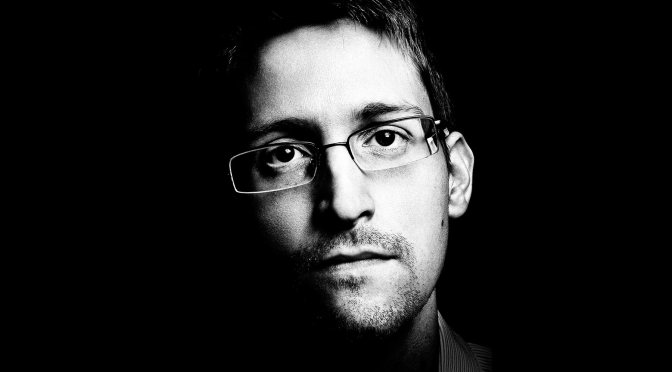

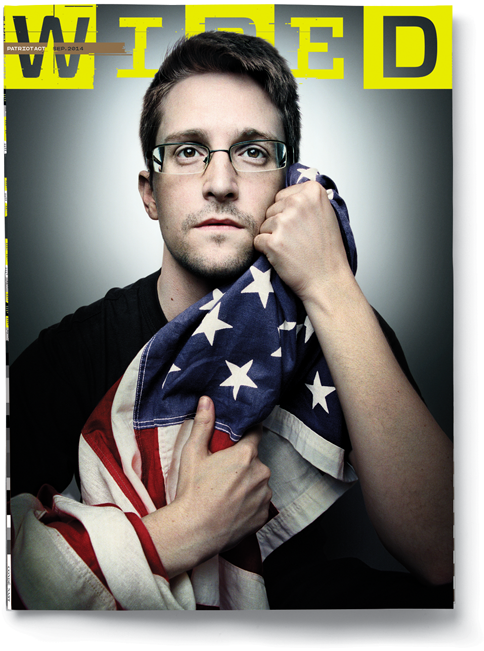

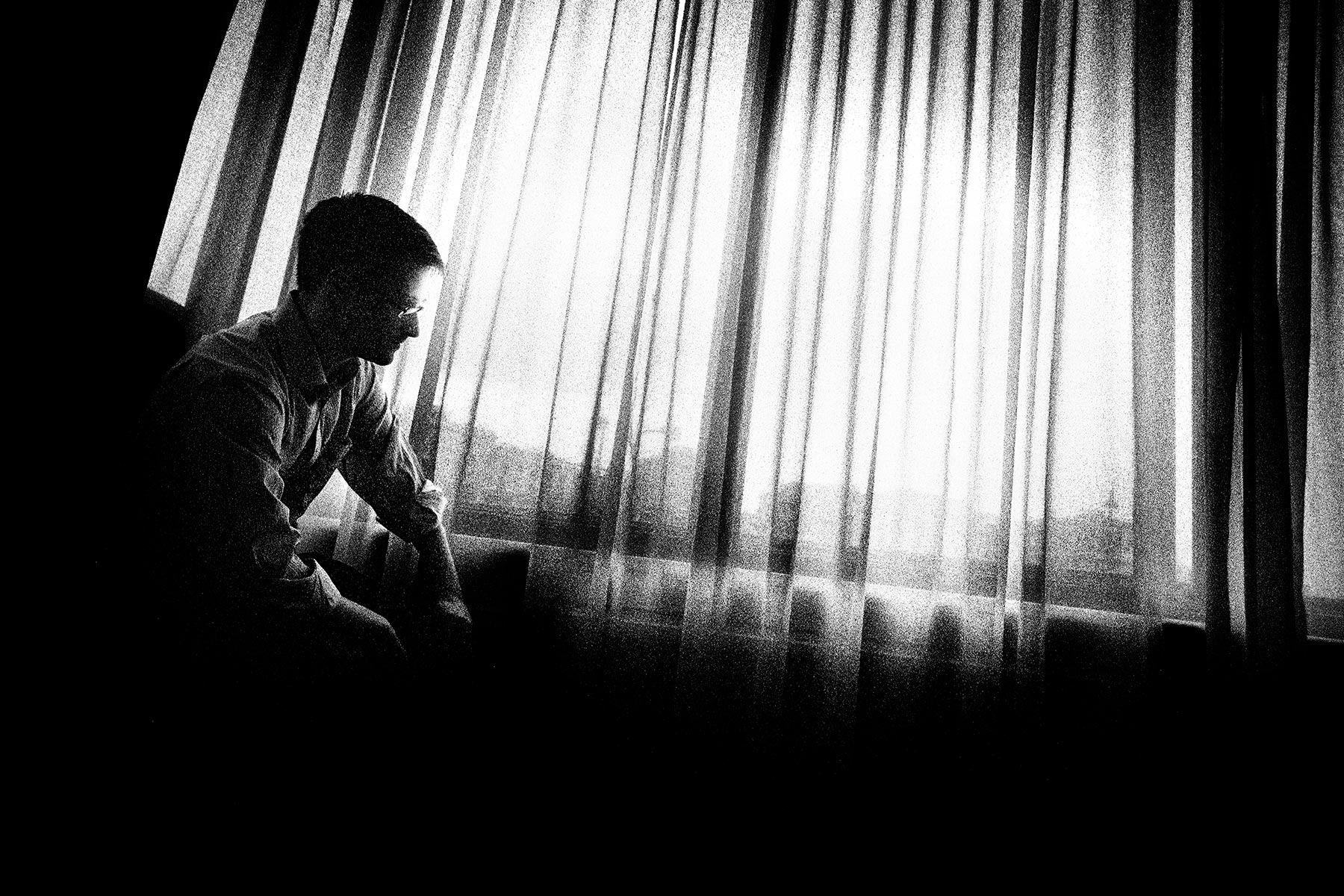
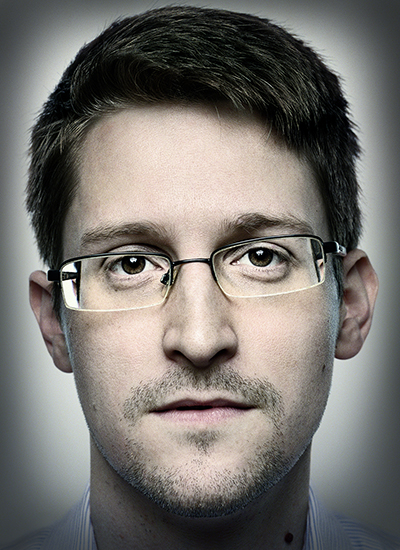


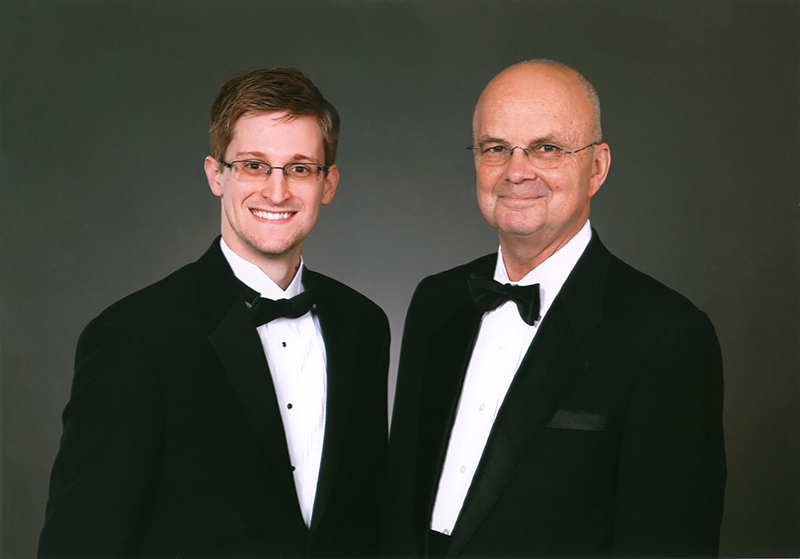


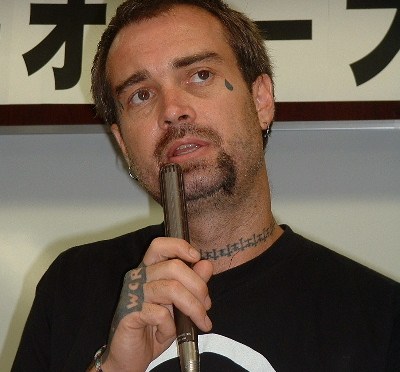

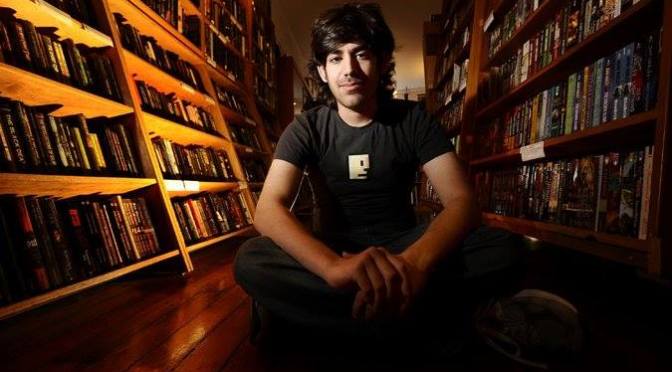


 Camden Civil Rights Project
 Our prime purpose in this life is to help others. And if you can’t help them, at least don’t hurt them.
 The basic principle of altruism is that man has no right to exist for his own sake, that service to others is the only justification of his existence, and that self-sacrifice is his highest moral duty, virtue and value.
 I tend to embrace the Dalai Lama’s message of mutual cooperation over the Objectivist appeal to uninhibited self-interest. My personal moral imperative would be that, so much as it is within our personal control, our primary purpose in life should be to seek mutually beneficial social and economic arrangements.
 Camden Civil Rights Project