Category Archives: Corporate Responsibility

Federal grand jury is investigating DRPA spending

POSTED: April 04, 2013

A federal grand jury in Philadelphia is investigating millions of dollars of politically connected “economic-development” spending by the Delaware River Port Authority, The Inquirer has learned.

The DRPA’s chief attorney and inspector general sent a memo to DRPA employees last Thursday warning them to preserve all documents related to the agency’s economic-development projects.

DRPA chief executive John Matheussen said Wednesday, “I can confirm that we have been served with a subpoena by the U.S. Attorney’s office.”

He declined to discuss the timing or the scope of the subpoena issued last week by the office of eastern Pennsylvania U.S. Attorney Zane David Memeger.

DRPA spokesman Tim Ireland said that the DRPA “will cooperate fully” and that “we will make certain our compliance with this subpoena demonstrates a renewed commitment to transparency” by the agency.

The DRPA, which operates four toll bridges and the PATCO commuter rail line between Philadelphia and South Jersey, spent nearly $500 million over 15 years to underwrite museums, sports stadiums, a concert hall, a cancer center, the Army-Navy football game, and other non-transportation projects.

Much of the money went to politically influential recipients, as the Pennsylvania and New Jersey delegations on the DRPA board got equal amounts to spend. Fourteen of the 16 board members are appointed by the governors of New Jersey and Pennsylvania (two Pennsylvania members, the state treasurer and state auditor general, are on the board by virtue of their elected offices).

Last year, New Jersey state comptroller Matthew Boxer issued a report critical of political cronyism and mismanagement at the DRPA, saying that “in nearly every area we looked at, we found people who treated the DRPA like a personal ATM, from DRPA commissioners to private vendors to community organizations. People with connections at the DRPA were quick to put their hand out when dealing with the agency, and they generally were not disappointed when they did.”

A spokeswoman for Memeger declined to comment on the grand jury investigation.

Sources close to the probe, however, said it appeared to focus on economic development spending in Pennsylvania.

The federal investigators were said to be particularly interested in spending that was funneled through the Philadelphia Industrial Development Corp., a development lender created by the city and the Greater Philadelphia Chamber of Commerce.

The PIDC, which is governed by a board appointed by the mayor and the president of the chamber, received more than $13 million from the DRPA in 2010, ostensibly to help “small, emerging and new businesses.”

In fact, most of the money was directed by DRPA officials to well-established tourism groups or nonprofits, some with close ties to DRPA board members. In one case, $500,000 was given to a multibillion-dollar commercial real estate developer.

The Philadelphia Orchestra, the National Constitution Center, public broadcaster WHYY, the Pro Cycling Tour, the Variety Club, the Independence Visitor Center, and other organizations collected $13.3 million in DRPA funds in 2010.

John Grady, president of the PIDC, said Wednesday that he could not comment other than to say that the PIDC “cooperates with all investigations” by law enforcement agencies.

He said the PIDC’s role as agent for the DRPA’s economic-development funding ended at the end of 2011, when the money ran out.

Economic-development spending by the DRPA has long been controversial, as it contributed to a $1 billion debt that now consumes more than 40 percent of the agency’s revenue. Motorists and some board members complained that the DRPA should not spend money on non-transportation projects, while borrowing hundreds of millions to maintain its bridges and rail line.

The DRPA allocated the last of its economic-development money in December 2011. Its then-chairman, Gov. Corbett, said the DRPA would no longer be involved in economic-development spending.

The scope and duration of the federal investigation was not clear Wednesday.

However, sources close to the investigation said DRPA general counsel Danielle McNichol and inspector general Thomas Raftery issued a memo late Thursday, just before the three-day weekend, telling employees not to destroy documents related to DRPA economic-development spending.


Contact Paul Nussbaum at 215-854-4587 or pnussbaum@phillynews.com

DRPA probe widens with subpoenas

POSTED: December 19, 2013

Federal prosecutors served subpoenas this week on several officials and employees of the Delaware River Port Authority, including at least three board members – Camden County Freeholder Jeffrey L. Nash, South Jersey labor leader Richard Sweeney, and Philadelphia lawyer William Sasso, The Inquirer has learned.

 B9317765363Z.1_20150617134855_000_G21B3UB8R.1-0lawyer-richard-j-sweeney-photo-1024836 (1) Sasso_Sd1

Jeffrey L. Nash, Richard Sweeney, and William Sasso (pictured left to right)

Since April, the U.S. Attorney’s Office has been investigating millions of dollars of politically connected “economic-development” spending by the DRPA.

Subpoenas issued Monday to several board members and other DRPA employees demanded materials and testimony related to that spending.

Sasso, who was appointed to the DRPA board by Gov. Corbett in 2011, said he apparently received the subpoena because he is chairman of a DRPA board committee that has been critical of several sweetheart loans granted by the agency.

He said he has been asked to provide information about those loans to investigators and would cooperate.

One of the loans was for the redevelopment of a former Radio Corp. of America building in Camden into the Victor Lofts.

In 2003, the DRPA lent the developer Carl Dranoff $3 million interest-free until 2009 to help convert the historic “Nipper Building” into 341 apartments overlooking the Delaware River and the Philadelphia skyline.

Dranoff was to start repaying the loan in 2009, with monthly installments of $23,259 until the end of 2014, at which time the $2.5 million loan balance would be paid in a lump sum, according to the loan agreement. But the agreement also states that Dranoff’s obligation to make payments is limited to Victor’s “available cash flow.” So far, no payments have been made.

The other loan, in 2001, was for $1 million to redevelop the landmark boxing venue the Blue Horizon on North Broad Street. The Blue Horizon is now closed, the loan is in default, and the DRPA has written off collecting any of the accrued interest in the hope of recovering its $1 million principal.

Nash, the vice chairman of the DRPA board, declined to comment.

Sweeney, an official with the ironworkers’ union and brother of New Jersey Senate President Stephen Sweeney (D., Gloucester), could not be reached for comment.

A spokeswoman for U.S. Attorney Zane David Memeger declined to comment, as did DRPA spokesman Tim Ireland.

The DRPA, which operates four toll bridges and the PATCO commuter rail line between Philadelphia and South Jersey, spent nearly $500 million over 15 years to underwrite museums, stadiums, a concert hall, a cancer center, the Army-Navy football game, and other non-transportation projects.

Much of the money went to politically influential recipients, as the Pennsylvania and New Jersey delegations on the DRPA board got equal amounts to spend. Fourteen of the 16 board members are appointed by the governors of New Jersey and Pennsylvania. Two Pennsylvania members – the state treasurer and auditor general – are on the board by virtue of their elected offices.

Last year, New Jersey state Comptroller Matthew Boxer issued a report critical of cronyism and mismanagement at the DRPA, saying that “in nearly every area we looked at, we found people who treated the DRPA like a personal ATM, from DRPA commissioners to private vendors to community organizations.”

One of the subpoenas issued Monday demanded records going back at least five years, casting a broad net related to economic-development spending.

Economic-development spending by the DRPA has long been controversial, as it contributed to a $1.6 billion debt that now consumes about half of the agency’s spending. Motorists and some board members complained that the DRPA should not spend money on non-transportation projects, while borrowing hundreds of millions to maintain its bridges and rail line.


pnussbaum@phillynews.com 215-854-4587

@nussbaumpaul

Hope for Camden, or Just Another Pipe Dream?

Last updated: Friday, September 25, 2015, 11:59 PM
Posted: Thursday, September 24, 2015, 7:45 PM

City Within a City.

Project Arizona.

Cherokee.

Those are just a few of the Camden redevelopment schemes that have failed over the last 50 years in this tough old town, where empty promises are almost as common as empty lots.

I’m reminded of this Thursday as a blockbuster announcement – a $1 billion mixed-use downtown waterfront complex anchored by two sleek high-rises – lures me to the Adventure Aquarium.

I sigh as I remember how often I have sat in this very room, or others like it, scribbling madly as parades of politicos and assorted developers urge an audience to look beyond the Camden all around them and focus on the Camden of the future.

It’s always there, just over the horizon. Here it comes!

But years later, so many questions. Such as, what happened to the proposed World Trade Center in North Camden? What became of the Hilton Garden Inn announced for the waterfront in . . . was it 2007?

And where, oh, where, is the new supermarket that was supposed to be open by now on Admiral Wilson Boulevard?

As I wait for the latest announcement – a story that my colleague Allison Steele already had broken in Thursday’s Inquirer – I’m distracted from my cynical reveries by the exciting buzz in the room.

The sharks in a nearby tank appear to be swimming languidly, but the humans around me are energized – glad-handing, hugging, snapping selfies. The celebratory vibe is contagious, sort of like a contact high at a ’70s rock show, without the hallucinations.

Or could I be dreaming at this very moment?

“Let’s give Camden, N.J., a round of applause,” I hear an ebullient Mayor Dana L. Redd declare, before introducing “my friend Chris Christie.”

The Republican governor and presidential candidate appears – in person, not Skyped in from New Hampshire – and gets his own round of applause. And then another.

Evidently thrilled by the unaccustomed home-state adulation, Christie offers a paean to bipartisanship. Then he gives a shoutout to top Democrat George Norcross (whom Redd calls “a friend to everyone here”), without whom, it is understood, none of this would be happening.

And not only because he’s investing $50 million of his own money in the deal.

Christie is gracious, if perfunctory; he shakes some hands, disappears. Norcross does not speak, but he’s there, beaming, in the front row, as the celebrated architect and project master planner Robert A.M. Stern narrates the on-screen series of gorgeous renderings.

Stern describes “a new urban neighborhood” with 1.7 million square feet of office space, 325 units of housing, 27,000 square feet for retail, and a hotel. He talks about reconnecting the city’s street grid with the riverfront.

It suddenly occurs to me that this announcement is serious. For a national developer like Liberty Property Trust to announce a project like this in Camden is a big deal.

If the Malvern company can replicate some of the celebrated success of its Navy Yard redevelopment project, the Camden waterfront will be on its way to becoming not merely a destination for visitors, but a real neighborhood, as Stern says.

It will no longer be a somewhat forlorn collection of isolated, island-like structures – aquarium here, concert venue there, ballpark over yonder – marooned on a bleak tundra of parking.

Liberty expects to invest between $700 million and $800 million in the project by the end of the decade, says Liberty CEO William P. Hankowsky, who publicly thanks Norcross for making his firm aware of the development opportunity.

As the event breaks up, the mayor and governor are gone, but Norcross is available to the media.

He reassures us that past development schemes failed because they left out the neighborhoods, which are now included – beneficiaries of the county police department he pushed for and the charter schools he’s building.

People in Camden also will get a shot at “thousands of jobs” that will be created by companies attracted to the city by the Christie administration’s “Grow New Jersey” tax incentives.

Could it be that decades of subsidies and tax breaks – particularly on the waterfront and in downtown – might at last bear fruit? And for whom?

Norcross, Hankowsky, Redd, Christie and others at the announcement festivities insist that everyone in the city will benefit. Says the mayor, “This is Camden’s time.”

I’d like to believe that. I really would.

kriordan@phillynews.com

856-779-3845 @inqkriordan

www.philly.com/blinq
Read more at http://www.philly.com/philly/news/new_jersey/20150925_Hope_for_Camden__Or_just_another_pipe_dream_.html#FGXKLSLOq4KAcfTb.99

Camden County Police Department struggling to keep officers

images

The Camden County Police Department, even as it has received praise for reducing violent crime in the city of Camden, has struggled to retain officers since it was formed two years ago.Nearly 120 officers – including large swaths of recruiting classes – have resigned or retired, making the department’s turnover one of the highest in the state.

The attrition threatens to be an obstacle for the county-run force in its quest to build a strong relationship between officers and residents. President Obama is expected to discuss that relationship Monday when he visits Camden.

Police officials outside the city say that high turnover can make a department prone to mistakes, and that it limits the ability of officers to connect with residents.

download (3)

County officials blame the turnover on some officers’ struggling to adjust from the police academy to Camden’s streets, historically ranked among the nation’s most violent. The county force, through its Metro Division, currently patrols only the city of Camden.Several current and former officers cite other reasons, including having to work extremely long hours and being disciplined for minor infractions such as wearing the wrong jacket or forgetting to salute a supervisor on the street.

They say the resignations are hurting morale.

“It’s something you’re not supposed to talk about,” said one veteran Camden officer, who spoke on the condition of anonymity because he was not authorized to speak for the department. The officer said he knew of several officers in his squad departing for jobs in other towns this summer.

The resignations “are really jamming me up,” he said, alluding to staffing challenges they pose.

A Camden County spokesman said the department was limited by Civil Service laws and can’t require officers to serve for a set period of time.

Bill Wiley, who heads the police union for the rank-and-file, tied the turnover to new hires’ choosing different career paths, or wanting to be closer to their hometowns. Some are from more than 50 miles away.

“Going from the academy to working for the Camden police department is like going from college to the NFL,” he said. “It’s a very fast-paced environment. It’s not for everyone. Some find out late how hard it is.”

The number of officers – not including recruits in the current class at the police academy – stands at 359. If no other officers resign or retire before the class graduates, the overall number of officers will increase to nearly 400. The department’s ultimate goal is 411.

An analysis of the resignations shows that the average tenure of the officers who left was less than a year.

Of the 117 the county cited as departing, 27 retired and 90 resigned.

In Paterson, N.J., with a department of similar size to Camden, 15 officers resigned in the last two years. The Jersey City, N.J., department, double the size of Camden, says it had two. Atlantic City’s department says it had none.

Officers who resign can take up to a year to replace.

Paterson Police Chief Bill Fraher said background checks and the interview process generally take three to four months. Academy training there and in Camden takes an additional six months.

Fraher said that a department was more liable to make mistakes when new officers constantly arrive, and that it forces the remaining ones to shuffle around different positions.

“It’s like a juggling act,” he said. “It makes for a better, more efficient, more capable police department the more experience you have.”

Camden County Police Chief Scott Thomson did not respond to a request for comment Friday.

The county force was created in May 2013 and replaced the disbanded city department in a move officials said was intended to slash costs and hire more officers.

Asked Friday about officers’ morale, Camden County spokesman Dan Keashen said: “The president’s coming. I’d say it’s pretty good.”

The White House said that Obama would speak at Camden’s police headquarters about efforts “to build trust between their department and the community they serve.”

In February, Thomson told a presidential panel that respectful interaction between officers and residents “is how one of the country’s most unhealthy cities rapidly reversed course and with each passing day has a more promising prognosis.” Last week, Mayor Dana Redd called the department a “national model” of policing.

Among the ranks, some are less upbeat about their work environment.

One former officer, who spent about a year in Camden before transferring to another department in New Jersey, said officers were written up for minor offenses such as forgetting to wear a hat or to salute a lieutenant while on foot patrol.

The officers’ complaints mirror those of some residents, who have voiced concerns about being ticketed for petty offenses such as riding a bicycle without a bell and loitering on street corners.

According to an individual familiar with the discipline process, each write-up goes into an officer’s personnel file, and can eventually lead to more serious discipline.

The former officer who left after about a year described working 16-hour shifts from 7 a.m. to almost midnight, and then being told to return in the early morning the next day.

“I was exhausted,” said the former officer, who asked not to be named because he said he didn’t want Camden officials coming after him at his new job. “Sometimes, honestly, I kind of wanted to sleep in the police parking lot.”

Other former Camden officers have transferred to departments in the vicinity of Camden, such as Gloucester City and Haddonfield. Those officers either did not return calls or declined to comment.

One potential disincentive may be pay, the former officer indicated, saying that he started at an amount several thousand less than what he was initially promised.

The starting salary on the Camden force, $31,407, is far lower than in some nearby towns, such as Pennsauken, where it is $47,000.

Colandus “Kelly” Francis, president of the Camden County chapter of the NAACP, who has kept track of the departures and is a longtime opponent of the county-run force, said the department had become a “revolving door.”

“It has a negative impact, because the most effective police officers are police officers who know the community and know the people,” he said.

“It’s just outrageous,” he said. “It’s outrageous what’s happened.”


mboren@phillynews.com856-779-3829 @borenmc

Michael Boren and Sam WoodSTAFF WRITERS

Read more at http://www.philly.com/philly/news/new_jersey/20150517_Camden_County_Police_Department_struggling_to_keep_officers.html#LLEmsRA6jd9oEgsi.99

Camden police last year drew the highest number of excessive-force complaints in the state

images

Michael Boren / Inquirer Staff Writer, mboren@phillynews.com


Sunday, April 26, 2015

It was not long after sundown when a Camden County Police cruiser, its emergency lights off, stopped Malik Macklin in the alley behind his home in September 2013.

The sergeant was searching for a man with a gun and asked Macklin what he was doing. Macklin, a soft-spoken 21-year-old who did not match the suspect’s description, says he was confused about why police stopped him and did not respond.

Things quickly got out of hand, and two more officers arrived.

The sergeant said Macklin charged at him and a fight ensued. A jury was skeptical of the police account, and in a move rarely seen in such cases concluded the opposite: that the officers inflamed the situation.

The violent encounter unfolded four months after a new, county-run police force took over in Camden, with the promise of making its officers trusted community guardians, not just law enforcers.

Yet since that shift in May 2013, the number of excessive-force complaints has nearly doubled, from 35 after the takeover that year to 65 in 2014 — the most in the state. Even the combined total of Newark and Jersey City — the state’s largest cities, which have hundreds more officers — was below Camden’s.

Camden’s excessive force complaint numbers are higher than cities with much larger populations and more police officers.
“A rate of 0 percent when it comes to sustaining excessive-force complaints raises serious red flags about a lack of accountability.”
Udi Ofer, executive director of the American Civil Liberties Union in New Jersey

An analysis of four incidents for which The Inquirer interviewed those detained and reviewed hospital and police reports reveals a pattern in which stops usually made for minor infractions rapidly escalate. Three of the four individuals involved either filed complaints of excessive force or initiated related claims.

At least a dozen other individuals also have filed suits or tort claims against the county, alleging that its officers used excessive force or arrested them without just cause.

Camden County Police Chief Scott Thomson says excessive-force complaints account for a tiny fraction — fewer than 1 percent — of the thousands of arrests each year. The American Civil Liberties Union is struck by another statistic: zero. That’s how many excessive-force complaints authorities in Camden have upheld against officers in recent years.

“It’s an abuse of power,” said Dana Robinson, 54, of Willingboro, who has sued the department.

Robinson walks with a limp from his arrest in July 2013, when officers took him down after he refused to leave a Camden fishing pier around curfew (police said Robinson, whose hip and eye socket were damaged, was trying to fight them; Robinson says he had put his hands behind his back). Others who filed suits have reported being punched in the face or kneed in the back.

Such incidents contrast with the image the Camden County Police Department, which this week will complete its second year, has sought to project, highlighting officers reading to children and handing out ice cream. Its efforts to improve community relations have drawn praise from the White House and Gov. Christie.

Dried blood covers the right side of Dana Robinson’s face at Cooper University Hospital in July 2013 after police arrested him at a fishing pier. His right hip also was injured during the incident.

“We train our officers to use the minimal amount of force necessary,” Thomson said. His department, which patrols just the city of Camden, replaced the former city force in a move officials said was intended to slash costs, hire more officers, and sweep criminals from the streets of a city ranked among the most violent in the country.

Thomson said he expects the number of excessive-force complaints to drop when his officers begin using body cameras, though he did not give a start date. In a letter last week to the ranks, he also announced “mentoring exercises” on correct police conduct, saying the use of minimal force “cannot be overemphasized.”

Typically, the Camden County Prosecutor’s Office investigates an excessive-force complaint first. If it decides not to criminally charge an officer, the case goes to the Police Department, which investigates whether the officer followed procedure.

“We take the use of force very seriously. We take allegations of excessive force even more seriously,” Thomson said, adding that each one is investigated “thoroughly.”

Yet of the 65 excessive-force complaints last year, all 44 that authorities completed investigating were dismissed. (Most of them were “not sustained”, meaning there was insufficient evidence to clearly prove or disprove the allegation.)

Malik Macklin’s face is swollen following an arrest by Camden County police officers in September 2013. Macklin, then 21, was stopped by a police sergeant looking for a robbery suspect. The sergeant later acknowledged that Macklin did not match the suspect’s description.

The remaining 21 were pending, according to the most recent data, obtained through a public records request. The Inquirer also reviewed excessive-force complaints dating to 2011, revealing that not one was sustained.

“A rate of 0 percent when it comes to sustaining excessive-force complaints raises serious red flags about a lack of accountability,” said Udi Ofer, executive director of the ACLU in New Jersey. Last year, the U.S. Justice Department slammed Newark police, calling the department “deeply dysfunctional” for upholding just one excessive-force complaint in six years.

The Justice Department says it is not investigating Camden. But the ACLU, whose documentation of excessive force and other issues helped spur the Newark probe, says it is planning to request data on two years’ worth of Camden police stops.

Andy McNeil, spokesman for the Prosecutor’s Office, tied the rise in excessive-force complaints to an increase in the number of officers, from fewer than 300 in 2012 — when there were 41 complaints — to nearly 400 now. He said that in 2004, when the department was of similar size, there were 102 complaints. Camden Mayor Dana Redd declined to comment.

While the new force has won plaudits from residents for tamping down serious crime, some are irked by stops for petty offenses such as loitering and riding a bicycle without a bell. The number of tickets written for such offenses has risen to its highest level in years.

“They’re harassing people that aren’t doing anything,” said Richard Hicks Jr., 33, of Camden, who was charged with improper behavior in June 2014 after an officer alleged that Hicks cursed at him.

Hicks, who was taken to the ground and handcuffed, said he was waiting for a bus by an abandoned building when the officer approached him. The officer, in his report, said he told Hicks he could not stand there and Hicks responded with cursing. Hicks says he was punched in the face when he was on the ground.

Police say their “quality of life” stops help net serious criminals.

“What you really want is people to feel secure, not to feel that they’re being harassed,” said Howard Gillette, a retired Rutgers-Camden professor who has studied the city for years. Harassment causes “all sorts of potentials for misunderstanding and conflict,” he said. And, “if it becomes widely perceived that enforcement is harassment, then the whole system is undermined.”

An ambulance took Macklin to Cooper University Hospital, where he was handcuffed to a bed.

The former Camden High School football tight end who works temp jobs and has no criminal history was charged with aggravated assault on three officers. Officer Nicholas Rao wrote in his report that Macklin “punched, kicked, and pushed myself, and Sgt. Frett,” referring to William Frett, a 16-year veteran.

Yet in an internal affairs investigation, Frett told an investigator, according to a transcript of the interview, “He didn’t punch me or nothing like that.”

Frett told the investigator that he had grabbed Macklin “up high” and hip-slammed him and that Macklin was kicking and screaming as officers struggled to control him. Frett said he believed Macklin was on PCP.

Macklin said in an interview that he had smoked marijuana before the incident, but was not on PCP. He said the officers punched him repeatedly in the face and ribs. “I was screaming, yelling for help,” Macklin, now 23, said.

Still, it was his word against the officers’. Internal affairs and the Prosecutor’s Office concluded they had not used excessive force.

“There was no evidence of wrongdoing by any officer,” said McNeil, the prosecutor’s spokesman.

So when Macklin decided to contest his charge in court, his mother was doubtful.

“I thought he didn’t have a chance,” Malika Macklin, 45, said.

“There was a lot of fear about how credible his testimony was going to sound,” said his public defender, Meg Butler.

That type of fear prevented Shaila Ballance, 39, from pursuing her son’s case further.

His left foot was disfigured when a Camden police cruiser ran over it as he ran from the pursuing car in April 2014. Doctors at Cooper called the injury “foot degloving,” because so much skin was ripped off. Police said the car hit him after he slipped.

Shaila Ballance’s teenage son’s left foot was severely disfigured when a Camden police cruiser drove over it as he ran from the pursuing car in April 2014.

Saadiq Ballance, then 16, needed surgery. He was charged with resisting arrest and loitering to commit a drug offense, the latter of which his mother said was dropped.

Saadiq Ballance said that police came up as he played cards outside with friends at night and that he ran because he heard screeching tires from a car he could not see and feared someone was about to be shot.

Yet when his mother took the case to a lawyer, she said he told her: “You most likely won’t win.”

“For him to feel it was a losing battle,” Shaila Ballance said, “it just kind of discouraged me.”

To Malik Macklin, prosecutors offered a deal: A year in jail. Or two years of probation, and no jail.

Macklin, unwilling to have a felony on his record, turned down both.

In the internal affairs investigation after Macklin filed a complaint, Frett, the sergeant, said that Macklin “had a crazy look in his eyes” and that police were fighting “for dear life.”

Jurors doubted that account.

“In my mind, that’s not how it went down,” juror Peter Heinbaugh, 54, of Gloucester Township, said in an interview.

Stephanie Aaronson/Philly.com
Camden County Police Chief J. Scott Thomson sits in a meeting room in the police department headquarters on Thursday, October 2, 2014.

Heinbaugh said the officers gave conflicting testimony about how close Macklin was to Frett before Macklin allegedly lunged at him.

“It escalated, we thought, more due to the actions of the police officers rather than Mr. Macklin,” Heinbaugh said. “And the injuries kind of support that. There were just a couple scrapes and bruises on the officers, but there were cuts and blood and things like that on Macklin.”

The jurors deliberated a few hours, then returned with the verdict.

Not guilty.

“It was amazing,” said Allen Beverly, 57, a family friend of the Macklins. “Essentially told the cops they were wrong.”

Macklin, who is not suing the department, says he now rarely walks out the back door to the alley where he was arrested.

“I’m still a little angry,” he said, adding that the 2013 arrest had changed his impression of the officers. “I thought they was good guys.”

mboren@phillynews.com 856-779-3829 @borenmc

Homeless and hungry: Sobering images of Camden, New Jersey

MailOnline US - news, sport, celebrity, science and health stories

Welcome to Camden, New Jersey, where one in two people is living in poverty.

According to the U.S. Census Bureau, Camden is now the most impoverished city in the United States, with nearly 32,000 of its 77,000 residents officially struggling to survive.

The city sits just over the bridge from more affluent Philadelphia but a chronic lack of jobs and high crime rate sets it a world apart.

Camden, New Jersey, is now the most impoverished city in the United States with nearly 32,000 of Camden's residents living below the poverty line

Camden, New Jersey, is now the most impoverished city in the United States with nearly 32,000 of Camden’s residents living below the poverty line

While New Jersey’s unemployment rate is about 9.9 per cent, Camden’s is estimated to be a staggering 19 per cent. Joblessness has been a feature of life in Camden since the city lost most of its manufacturing base in the late 1960’s and 1970’s.

The city is also crippled by crime with 48 homicides recorded already this year, and burglaries and assaults daily occurrences.

But Camden’s residents are pulling together to ensure the disadvantaged don’t go hungry.

Volunteers prepare meals at the Cathedral Kitchen, which was founded in 1976 to help Camden's poor and disadvantaged

Volunteers prepare meals at the Cathedral Kitchen, which was founded in 1976 to help Camden’s poor and disadvantaged

Reformed drug addict Bill Karwoski Jr. eats a free meal from Cathedral Hall

Reformed drug addict Bill Karwoski Jr. eats a free meal from Cathedral Hall

Empty and decrepit homes line Camden's streets

Empty and decrepit homes line Camden’s streets

A 21 year-old addicted to heroin looks for food in a garbage can in Camden, which is now the united States' most impoverished city

A 21 year-old addicted to heroin looks for food in a garbage can in Camden, which is now the united States’ most impoverished city

Camden police arrest a youth following a fight. The city has a chronic crime problem with 48 recorded homicides this year alone

Camden police arrest a youth following a fight. The city has a chronic crime problem with 48 recorded homicides this year alone

Scores of volunteers help out at the Cathedral Kitchen soup kitchen, which serves 300 to 600 meals a day, six days a week, to the hungry.

The Cathedral Kitchen was founded in 1976 and offers a variety of programs and life services to Camden’s poor and disadvantaged.

Even youngsters give up their time to prepare sandwiches for Cathedral Hall, which serves lunch five days a week to thousands of Camden residents having trouble affording food.

A homeless man panhandles on the street in Camden where nearly 32,000 residents are living below the poverty line

A homeless man panhandles on the street in Camden where nearly 32,000 residents are living below the poverty line

Families eat dinner at the Cathedral Kitchen soup kitchen which feeds hundreds of hungry mouths a day, six days a week

Families eat dinner at the Cathedral Kitchen soup kitchen which feeds hundreds of hungry mouths a day, six days a week

New Jersey's unemployment rate is about 9.9 per cent, but Camden's is estimated at 19 per cent

New Jersey’s unemployment rate is about 9.9 per cent, but Camden’s is estimated at 19 per cent

A youth volunteer with serves food to the needy and hungry at Camden's Cathedral Hall

A youth volunteer with serves food to the needy and hungry at Camden’s Cathedral Hall

A child walks down a street in impoverished Camden, which sits just over the bridge from more affluent Philadelphia

A child walks down a street in impoverished Camden, which sits just over the bridge from more affluent Philadelphia

Volunteers prepare sandwiches for the needy and hungry at Cathedral Hall

Volunteers prepare sandwiches for the needy and hungry at Cathedral Hall

A lack of jobs has been a feature of life in Camden since the city lost most of its manufacturing base in the late 60's and 1970's

A lack of jobs has been a feature of life in Camden since the city lost most of its manufacturing base in the late 60’s and 1970’s

Cooks prepare meals at the Cathedral Kitchen soup kitchen which serves 300 to 600 meals a day to the needy

Cooks prepare meals at the Cathedral Kitchen soup kitchen which serves 300 to 600 meals a day to the needy

A man walks by a deserted factory in Camden where almost 20 per cent of residents are out of work

A man walks by a deserted factory in Camden where almost 20 per cent of residents are out of work

Read more: http://www.dailymail.co.uk/news/article-2218283/Homeless-hungry-Sobering-images-Camden-New-Jersey-expose-poverty-plaguing-United-States-destitute-city.html#ixzz3nGhnngFB
Follow us: @MailOnline on Twitter | DailyMail on Facebook

Camden’s ‘Tent Cities’ for Homeless Cleared Again

download (3)

Andy McNeil, Courier-Post

7:55 a.m. EDT May 14, 2014

Aaron Howe had survived on an island surrounded not by water but by asphalt.

For two years, the 39-year-old was among those staying in a Camden homeless encampment some call “Little Tent City.”

The teardrop-shaped site sits on a wooded patch of land owned by the state Department of Transportation and encircled by the ramp for 10th Street between Federal Street and Admiral Wilson Boulevard.

Howe, a Riverside resident turned unofficial mayor of the encampment, found himself homeless in recent years after his trucking business tanked in the economic recession.

“I had 48 trucks at one time — lost it all,” he mused. “Lost my house, lost everything.”

Howe added the encampment to his list of losses Tuesday. With a loader and a brush cutter, workers cleared the site — also referred to as “The Bowl” — and several like it on nearby state-owned property.

While the encampments have been cleared before, officials claimed Tuesday’s effort would yield different results.

“They won’t have the option to come back as they have in the past,” said Camden County spokesman Dan Keashen.

State Department of Transportation spokesman Steve Schapiro said the push was prompted by complaints, namely from Cooper University Hospital.*

“These encampments are unhealthy — in terms of they’re unsanitary — they’re unsightly, and they’re unsafe,” Schapiro added.

Another issue, officials said, is contractors illegally dumping construction waste at a trash-strewn encampment off Admiral Wilson Boulevard.

Howe’s site was much cleaner by comparison, something he attributed to its residents abiding by self-made rules.

But the encampments also have become hot spots for drugs, according to Keashen. The Camden County spokesman said county health workers filled half of a 5-gallon bucket with used syringes.

“We’re not all drug addicts,” Howe insisted. “I don’t use.

“A lot of the guys, yeah, they might be ex-felons, but they’re trying to get their life together. They might be an ex-felon, but at least they’re trying to find a job.”

Gino Lewis, chairman of the Homeless Network Planning Committee, said everyone in the encampments has been offered shelter.

“Anyone who showed up and wanted to get into VOA (Volunteers of America) shelters, we’ve been able to accommodate them.”

Lewis said 33 beds were available as of Monday.

Howe said the encampment had 23 people living in more than a dozen tents.

About 18 people were put into shelters Tuesday, according to Keashen. Others declined help.

Howe was holding out for a shelter that would accommodate both him and his pregnant girlfriend.

“They want to split us up.”

Howe explained they can’t get into a shelter for families because their child has not yet been born.

“We don’t know where we’re going,” he added. “I have a tent in the bag over there. I might throw up a tent someplace else and keep moving it every day.”

Howe said the site once had as many as 37 people staying there. Among current residents was Melissa Tamaska.

The 27-year-old said she had worked at a school cafeteria in Washington Township for about five years. An addiction to prescription painkillers eventually led her to heroin and Camden’s streets.

Tamaska, a former Mantua resident, has been staying under an overpass near Howe’s encampment for the past few months. The fenced-off area was among the sites workers cleared out.

“Some of these people have been here for years, and it’s like you just got to get up and leave,” she observed.

According to Keashen, homeless outreach groups informed those living at the sites of the state’s plans at least a month and a half ago. Lewis said getting the encampments’ residents into shelters or more permanent housing has been an ongoing project.

Tamaska, who hopes to get clean someday, expressed concern about the availability of beds in shelters, pointing out space is not guaranteed.

“I don’t see no harm in people living right here,” she added of the encampment.

Reach Andy McNeil at amcneil@cpsj.com or (856) 486-2458. Follow him on Twitter @Andy_McNeil.

  • *George E. Norcross, III, is the Chairman of Cooper Hospital – Camden Civil Rights Project

Welcome To “Transition Park”, The Horrible Tent City In Camden, NJ

If you think you’ve seen poverty, get ready to be shocked at what you’re about to see.

This is what it looks like
this-is-what-it-looks-like
Source: Transitionpark.com

People have been living here for years.
people-have-been-living-here-for-years
Source: Transitionpark.com

Imagine living here during a blizzard
imagine-living-here-during-a-blizzard
Source: Transitionpark.com
Tents have had their roof collapse due to the snowfall in the winter
tents-have-had-their-roof-collapse-due-to-the-snowfall-in-the-winter
Source: Transitionpark.com

Some residents get completely snowed in
some-residents-get-completely-snowed-in
Source: Transitionpark.com
But, they stand together
but-they-stand-together
Source: Transitionpark.com

The rules of the tent city
hqdefault
Source: Transitionpark.com

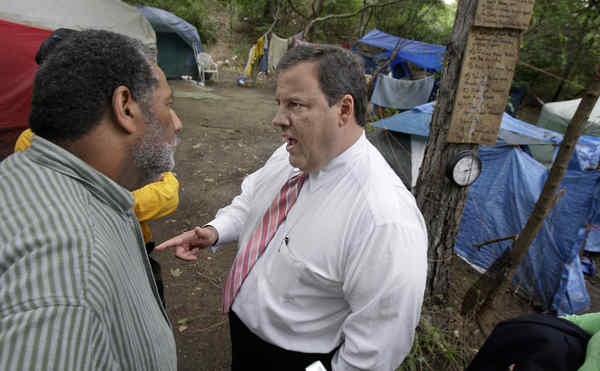
Governor Chris Christie speaks with residents
governor-chris-cristie-talks-with-residents
Source: Transitionpark.com
Residents express their concerns to the New Jersey Governor
residents-express-their-concerns-to-the-new-jersey-governor
Source: Transitionpark.com

Residents are interviewed

Transition Park from James Aom on Vimeo.

Video of Transition Park

Homeless and Living in Camden

By Blake Ellis

February 12 2014 07:58 PM ET

http://money.cnn.com/gallery/pf/2014/02/12/homeless-camden/

“A place to call home”

homelessness aaron howe
  • Name: Aaron Howe
  • Age: 39

Aaron Howe is the “mayor” of one of Camden, N.J.’s “tent cities.” Though there was no formal vote, he has taken charge of gathering supplies, like food, clothing and propane from local aid organizations and distributing them among residents. He also sets the rules and decides who’s allowed to stay and who needs to go.

Howe arrived in the tent city two years ago after his 18-year-old trucking business collapsed as a result of the financial crisis.

“It’s just a place to call home until you get out of here,” he says.

Living conditions are far from safe, however, and some homeless people in nearby tent cities are known for picking fights.

“I was pistol-whipped and everything else. They fractured my skull,” he said. “There are guys out here who have guns, there’s guys who have baseball bats, there’s guys who have rods with spikes sticking out of them — it’s just a matter of knowing who to watch out for.”

Watch: Braving the cold in Camden’s tent city

“I hate to lose”

homelessness kendall
  • Name: Kendall
  • Age: 57

Up until a couple of years ago, Kendall was sleeping in an abandoned house — but then he was attacked by bats.

“Something kept poking me and poking me, and then it stopped and then it poked me again, and the next thing I know I’d taken my shirt off [because they had climbed inside of it],” he said. “I’ll never go into an abandoned house again.”

He saved up enough money from his Social Security benefits to rent an apartment, but he was evicted last week for falling behind on payments. This is now the second time he has been homeless — the first time was between 2000 and 2012, after he and his wife divorced.

Despite his situation, Kendall, a former electrician, is still optimistic.

“Now I’ll be back on the street … [but] by my faith and my strength and hating to lose — I hate to lose — I will save my money and get back into my apartment.”

“I try to live good”

homelessness michael powell
  • Name: Michael Powell
  • Age: 52

Michael Powell was locked up at the age of 18 for murdering two men.

He served some 22 years in jail and then spent some time in a mental institution. For more than a decade, he has been living in a tent off of a highway in Camden.

“I try to live good,” he says, wearing a black long sleeve shirt with no jacket in the 12-degree weather. He stands next to his tent, which holds a couple mattresses, some plastic drawers, a propane heater and a knife. “These people walk around here all dirty — that’s unnecessary. If you respect yourself, then you wash every day. Wet wipes — baby wipes — you wash with them.”

Between his criminal record and little work experience, Powell has had a hard time finding a job. He has picked up some occasional work — like doing carpentry for a friend — but he hasn’t had a stable income.

kareim nurdeen
  • Name: Kareim Nurdeen
  • Age: 48

Even Kareim Nurdeen’s family doesn’t know he’s homeless. His two daughters tell him to come to them if he needs anything, but he is determined not to let them see him like this.

Diagnosed with schizophrenia years ago, Nurdeen stopped taking the medication for his condition because it was too expensive. He is unable to work and has fallen in and out of homelessness for the last five years.

“It’s not easy for me … there are times when I walk on the streets and I’m thinking something’s crawling on me, or I’m hearing my mother’s voice but she’s been dead for years,” he said. “All I can do is try to isolate myself.”

He recently became homeless after discovering he had been renting a room from someone who didn’t actually own the building — it was really an abandoned house. When the house was taken over by the city a couple months ago, they were both kicked out on the street.

Nurdeen has been staying at Joseph’s House for the past week after another shelter ran out of funding and was forced to shut down.

“I pray, I pray, and I think ‘I’m a good guy’ … so sometimes I ask, ‘Why me?,'” he said.

“You wake up cold”

homelessness chris thom
  • Name: Chris Thom
  • Age: 31

With just one year left before getting his bachelor’s degree in advertising design from Savannah College of Art & Design, Chris Thom is now living in a tent in Camden, N.J.

“Drugs led me here,” he says. “I didn’t have a bad childhood, I have parents who are still together … when I was a teenager I started dealing with depression issues that led eventually to drugs.”

When he first arrived in Camden, he moved in with friends who were also doing drugs. But when they moved and he couldn’t afford the rent on his own, he moved into a tent right off the highway in cluster of trees, with several other homeless people.

He’s been doing odd jobs, like shoveling snow for churches, but he knows he needs to get clean before he can land a full-time gig. His family says he can move back home with them, but he is determined to get himself back on track first.

It’s been hard though — especially during such a frigid winter.

“You go to sleep cold and you wake up cold,” he said. “I never thought I’d be able to deal with what I’m able to deal with … I wake up every morning with frozen shoes — I feel like I’m putting on wooden clogs — and it’s freezing cold every night, but you deal with it.”

“So many homeless”

homelessness ar rasheed bey
  • Name: Ar-Rasheed Bey
  • Age: 70

Ar-Rasheed Bey, a retired bus driver, has been living in an abandoned condominium ever since his month long stint in jail.

But now a bank is taking over the “abandominum,”as Bey likes to call it, so he will be kicked out any day. He receives $755 a month in retirement benefits and $189 per month in food stamps, so he has been trying to save up enough money to rent an apartment again.

With a growing number of homeless people looking for affordable housing, he hasn’t had much luck. “I’ve never seen so many homeless people in my life,” he says.

Bey says he would rather go to jail and get three meals a day and a bed than sleep outside on the concrete in the cold. “I would throw a brick in the window of the police department until they came to take me to jail before I would live on the streets,” he said.

Watch: On the street, counting the homeless

“I lost myself, in Camden”

homelessness meda bush
  • Name: Meda Bush
  • Age: 46

Meda Bush has been homeless for a little over a year, after her boyfriend was laid off and she relapsed on heroin. Drugs are everywhere in Camden, and she said it was just too hard for her to stay clean.

“I lost myself, in Camden. I just got lost,” she said.

After bouncing between shelters and sleeping on cardboard in the streets for the past year, she recently arrived at Joseph’s House.

It’s been a nice change from the streets. “You have no idea what it’s like to get up and not knowing where you’re gonna sleep or shower, where you’re gonna’ be safe,” she said. “There’s been many of times where me and my boyfriend, we’ve been robbed — we wake up and our stuff’s missing and knives have been at us.”

Bush said she used to have a “normal” life; she was happily married, had a good relationship with her two kids and owned a house. Now her youngest son doesn’t want anything to do with her, and she has no idea where her parents or brothers are.

Bush says she has been clean since arriving at Joseph’s a week ago, and she is determined to stay out of trouble. “I knew the life that I was leading was gonna’ kill me, and I didn’t want to become another statistic in Camden,” she said.

“I’ve got to beat this drug thing”

homelessness michael brown
  • Name: Michael Brown
  • Age: 47

When Michael Brown lost both his parents about six years ago, his drug addiction spun out of control. He spent all of his money on drugs and eventually lost his home. After staying with a friend for a while, he officially became homeless about a year and a half ago.

Since then, he’s been sleeping in shelters and job hunting every day. But he realizes he won’t get decent work until he can stay clean.

“You can go to all the rehabs, you can go to all the counseling, but if it’s not in your heart, you’re not gonna’ do it — and I made up my heart and my mind that this drug thing, I’ve got to beat it, because if I don’t it’s gonna beat me,” he said.

“This is heaven”

homelessness terry hinton
  • Name: Terry Hinton
  • Age: 46

Terry Hinton says his life started spiraling downward two years ago when his parents died within six months of one another. Shortly afterward, the home they left him caught fire. And since Hinton was unable to insure the house, he lost it.

Even before his parents passed away, Hinton was struggling with addiction. He hasn’t had a full-time job in more than 20 years. Instead, he has been taking whatever odd jobs he can get paid under the table.

While it’s cold, Hinton has been staying at Joseph’s House. Under the shelter’s program, he wakes up at 5:30 a.m. and then volunteers at a soup kitchen from 6:30 a.m. to 4 p.m. to stay warm and busy. Then he comes back to the shelter for dinner and to sleep.

“This is heaven, somewhere where you can eat, you can take a shower, somewhere where you can lay your head,” he said.

“Just a big drug market”

homelessness brian barrett
  • Name: Brian Barrett
  • Age: 43

Like many of Camden’s homeless, Brian Barrett’s slide into homelessness was sparked by an addiction that began several years ago. A former bricklayer, Barrett’s growing heroin habit began consuming his paychecks. It got so bad he even started stealing from his mother.

By the summer of 2012, he was homeless.

Barrett has been in jail three times for drug-related offenses over the past year. With a criminal record, it’s been challenging to find work. “Even for a dishwashing job they do background checks now, it’s just crazy,” he said.

He had been living in an abandoned storage trailer on the Rutgers University campus. But several weeks ago, when it become too cold to bear, he came to New Life Ministries, a church providing 75 cots for the homeless.

He says he’s been sober for 57 days now, and he spends days in the library and nights in the shelter to avoid the streets.

“Camden is just a big drug market, that’s all it is,” he said. “I’ve talked to [my family] every day since I’ve got out of jail and I’m just trying to make amends right now, and hopefully that will lead to me going back with them.”

Read More at: http://money.cnn.com/gallery/pf/2014/02/12/homeless-camden/

Interference Seen in Philadelphia Papers

download

Last week, Gregory J. Osberg, chief executive and publisher of the Philadelphia Media Network, which publishes The Inquirer, The Daily News and Philly.com, summoned the news organization’s three most senior editors to his office.

Over three hours, he told them he would be overseeing all articles related to the newspapers’ impending sale. If any articles ran without his approval, the editors would be fired, according to several editors and reporters briefed on the meeting who did not want to be identified criticizing the company’s leadership.

In a telephone interview Wednesday morning, Mr. Osberg said the meeting did not happen. But Larry Platt, editor of The Daily News and one of the editors in attendance, said that it did. Late Wednesday, Mr. Osberg acknowledged that the meeting had taken place but denied interfering in the editorial decisions, saying he only wished to be notified of further coverage. Mr. Platt declined to comment on specifics, but said, “We fought for what we believed in,” referring to editorial independence, “and we didn’t get all that we wanted.”

The meeting was the latest incident pitting the management of the papers against the newsroom over the proposed sale to an investor group primarily made up of the area’s most powerful Democrats.

Edward G. Rendell, the former Philadelphia mayor and Pennsylvania governor leads the group, which includes George E. Norcross III, a Democratic powerbroker in South New Jersey; the parking lot and banking magnate Lewis Katz; and Edward M. Snider, chairman of the Comcast subsidiary that owns the Philadelphia Flyers. Mr. Rendell recently told reporters he has asked the union leader John J. Dougherty Jr. (or Johnny Doc as he is known locally) to join the group.

Reporters and editors believe that coverage has been steered to favor the prospective buyers and fear what might happen once they control the papers. On Feb. 6, The Inquirer killed an article about a real estate developer who had put together a competing bid to buy the company, which went on the market earlier this month. Then, on Feb. 7, a company spokesman removed a post on The Daily News’s PhillyClout blog that mentioned other potential buyers.

The spokesman, Mark Block, said those actions were mistakes that would not be repeated. Mr. Osberg denied any editorial interference. “There is no pattern here. It doesn’t exist,” he said, adding “I have not been managing coverage of the sale and I am not doing that going forward.”

The situation in Philadelphia speaks to the vulnerability of regional newspapers. Long operated as functional monopolies with attractive margins, local papers have undergone a nosedive in earnings and advertising revenue. Having ceased to be sure-fire financial investments, these newspapers, the reporters fear, could still be attractive as a tool to advance new owners’ political and business interests.

The proposed sale could still fall through, but a completed deal with Mr. Rendell’s group would give Democrats control of the most influential newspaper in one of the most important states on the electoral map just before the 2012 elections.

“You have a former mayor and governor, the owner of a local sports team and George Norcross, who is a power player in South Jersey politics,” said Buzz Bissinger, who writes for both Philadelphia papers and wrote the book “A Prayer for the City” about the mayoralty of Mr. Rendell. Of The Inquirer, he said, “I believe it will effectively cease to be a real newspaper and become a house organ for these guys and their friends.”

The Inquirer, a 183-year-old paper with a legacy that includes 18 Pulitzer Prizes, has been battered harder than most regional papers, and its parent company ended up being bought in 2010 for $139 million, by two hedge funds, Angelo Gordon and Alden Global Capital, along with banks that held the company’s debt.

The new owners installed Mr. Osberg, who had been the president and publisher of Newsweek magazine, but the financial picture has continued to decline. According to sales documents obtained by The New York Times — marked as “highly confidential” — the company had a 13.9 percent drop in advertising revenues last year and earnings were less than $5 million. On Wednesday, the company announced a round of buyouts and potential layoffs that will eliminate 37 positions.

“The last time we were up for sale, we had a bankruptcy judge whose role was to give the orphan the best possible parents he could find,” said Karen Heller, an Inquirer columnist. “But in this sale, no one cares how people will take care of the house.”

In an interview, Mr. Rendell said his only intention in putting the group together was to save the newspapers and keep them under local control. “Any ownership group may have some interest in controlling the content of the newspaper, but ours is no more or less than that,” he said. He added that Mr. Snider is a conservative Republican. Mr. Norcross said the idea that they would buy the newspapers to push an agenda was “just silly.”

But several incidents have reinforced fears in the newsroom. An investigation about conflicts of interest among board members of the Cooper University Hospital in nearby Camden, N.J., remains unpublished after months. Mr. Norcross serves as the hospital’s chairman.

In an e-mail Mr. Norcross, who has called The Inquirer and The Daily News in the last week to discuss other coverage, said the reporter’s research “contained significant factual errors and incomplete data about the hospital and health care industry.”

Stan Wischnowski, The Inquirer’s editor in chief, said Mr. Norcross’s potential ownership has no bearing on the story. Mr. Wischnowski said that the newsroom was unhappy with the initial oversight of articles about the sale but that the issue was now being covered aggressively and without interference.

“We have a very daunting, imposing possibility in front of us,” he said. “But nothing has happened or will happen in terms of ownership that will change our rich, 183-year legacy of accountability journalism.”

On Feb. 4, a paragraph in an article on Philly.com that said the newspapers had a value of about $40 million based on historical valuations was removed from the Web site. Other media reports had said the owners were seeking $100 million.

In articles about the company’s move to an old department store building across town from its current offices, reporters were asked by management not to mention the $2.9 million tax credit the company had received for relocating within Philadelphia, according to several employees involved in the coverage.

Meanwhile, other legitimate bids for the newspapers have been blocked. Three weeks ago the billionaire investor Ronald O. Perelman approached Angelo Gordon and said his father, Raymond G. Perelman, a Philadelphia philanthropist, wanted to buy the company.

“They said, ‘Well, we’re not interested in selling it to your father,’ but they didn’t give a reason,” Raymond Perelman said. A spokesman for Angelo Gordon declined to comment.

Bart Blatstein, the local real estate developer who owns The Inquirer’s current building, said Mr. Osberg and Evercore Partners, the investment bank handling the sale, rebuffed his offers.

“It doesn’t make sense,” Mr. Blatstein said, explaining that an open auction would drive up the price. “If you’re selling a house, you’d put a sign on the lawn and let everyone know it’s for sale.”

On Tuesday, nearly 75 Teamsters marched in protest of a possible sale of The Inquirer to Mr. Rendell’s group. “They’ve stacked the deck in favor of the Rendell group and suppressed stories about other buyers, and they haven’t even bought it yet,” said John Laigaie, president of the Local 628 chapter of the Teamsters union, which represents the media group’s security guards, truck drivers and other employees.

Mr. Rendell has a complicated relationship with the media, which may have reached a low point in 1994 when he clamped his hand around the neck of Amy S. Rosenberg, an Inquirer reporter who was questioning him about potentially losing federal money for the homeless. The outbursts became so frequent the press called them “Edruptions.”

In an apology letter to Ms. Rosenberg’s editor, Mr. Rendell wrote, “Touching a reporter is inexcusable and inappropriate no matter what the circumstances.” Ms. Rosenberg, who kept the letter, said he added: “You know how Amy can get. I was just trying to slow her down.” (Mr. Rendell’s spokeswoman, Kirstin Snow, said the former governor is “an extremely engaging, friendly person and his intent has never been to harm anyone.”)

In late October, Mr. Osberg met with Mr. Norcross and Mr. Katz to discuss the Rendell group’s plans. Mr. Rendell has said Mr. Osberg is “doing a fine job” and signaled his group would keep Mr. Osberg on as chief if the deal went through.

“They can talk about civic duty all they want, but it would be naive to think they don’t want influence over a company they’re putting such significant money into,” said the Inquirer columnist Monica Yant Kinney.