Category Archives: Corporate Accountability

Camden police last year drew the highest number of excessive-force complaints in the state

images

Michael Boren / Inquirer Staff Writer, mboren@phillynews.com


Sunday, April 26, 2015

It was not long after sundown when a Camden County Police cruiser, its emergency lights off, stopped Malik Macklin in the alley behind his home in September 2013.

The sergeant was searching for a man with a gun and asked Macklin what he was doing. Macklin, a soft-spoken 21-year-old who did not match the suspect’s description, says he was confused about why police stopped him and did not respond.

Things quickly got out of hand, and two more officers arrived.

The sergeant said Macklin charged at him and a fight ensued. A jury was skeptical of the police account, and in a move rarely seen in such cases concluded the opposite: that the officers inflamed the situation.

The violent encounter unfolded four months after a new, county-run police force took over in Camden, with the promise of making its officers trusted community guardians, not just law enforcers.

Yet since that shift in May 2013, the number of excessive-force complaints has nearly doubled, from 35 after the takeover that year to 65 in 2014 — the most in the state. Even the combined total of Newark and Jersey City — the state’s largest cities, which have hundreds more officers — was below Camden’s.

Camden’s excessive force complaint numbers are higher than cities with much larger populations and more police officers.
“A rate of 0 percent when it comes to sustaining excessive-force complaints raises serious red flags about a lack of accountability.”
Udi Ofer, executive director of the American Civil Liberties Union in New Jersey

An analysis of four incidents for which The Inquirer interviewed those detained and reviewed hospital and police reports reveals a pattern in which stops usually made for minor infractions rapidly escalate. Three of the four individuals involved either filed complaints of excessive force or initiated related claims.

At least a dozen other individuals also have filed suits or tort claims against the county, alleging that its officers used excessive force or arrested them without just cause.

Camden County Police Chief Scott Thomson says excessive-force complaints account for a tiny fraction — fewer than 1 percent — of the thousands of arrests each year. The American Civil Liberties Union is struck by another statistic: zero. That’s how many excessive-force complaints authorities in Camden have upheld against officers in recent years.

“It’s an abuse of power,” said Dana Robinson, 54, of Willingboro, who has sued the department.

Robinson walks with a limp from his arrest in July 2013, when officers took him down after he refused to leave a Camden fishing pier around curfew (police said Robinson, whose hip and eye socket were damaged, was trying to fight them; Robinson says he had put his hands behind his back). Others who filed suits have reported being punched in the face or kneed in the back.

Such incidents contrast with the image the Camden County Police Department, which this week will complete its second year, has sought to project, highlighting officers reading to children and handing out ice cream. Its efforts to improve community relations have drawn praise from the White House and Gov. Christie.

Dried blood covers the right side of Dana Robinson’s face at Cooper University Hospital in July 2013 after police arrested him at a fishing pier. His right hip also was injured during the incident.

“We train our officers to use the minimal amount of force necessary,” Thomson said. His department, which patrols just the city of Camden, replaced the former city force in a move officials said was intended to slash costs, hire more officers, and sweep criminals from the streets of a city ranked among the most violent in the country.

Thomson said he expects the number of excessive-force complaints to drop when his officers begin using body cameras, though he did not give a start date. In a letter last week to the ranks, he also announced “mentoring exercises” on correct police conduct, saying the use of minimal force “cannot be overemphasized.”

Typically, the Camden County Prosecutor’s Office investigates an excessive-force complaint first. If it decides not to criminally charge an officer, the case goes to the Police Department, which investigates whether the officer followed procedure.

“We take the use of force very seriously. We take allegations of excessive force even more seriously,” Thomson said, adding that each one is investigated “thoroughly.”

Yet of the 65 excessive-force complaints last year, all 44 that authorities completed investigating were dismissed. (Most of them were “not sustained”, meaning there was insufficient evidence to clearly prove or disprove the allegation.)

Malik Macklin’s face is swollen following an arrest by Camden County police officers in September 2013. Macklin, then 21, was stopped by a police sergeant looking for a robbery suspect. The sergeant later acknowledged that Macklin did not match the suspect’s description.

The remaining 21 were pending, according to the most recent data, obtained through a public records request. The Inquirer also reviewed excessive-force complaints dating to 2011, revealing that not one was sustained.

“A rate of 0 percent when it comes to sustaining excessive-force complaints raises serious red flags about a lack of accountability,” said Udi Ofer, executive director of the ACLU in New Jersey. Last year, the U.S. Justice Department slammed Newark police, calling the department “deeply dysfunctional” for upholding just one excessive-force complaint in six years.

The Justice Department says it is not investigating Camden. But the ACLU, whose documentation of excessive force and other issues helped spur the Newark probe, says it is planning to request data on two years’ worth of Camden police stops.

Andy McNeil, spokesman for the Prosecutor’s Office, tied the rise in excessive-force complaints to an increase in the number of officers, from fewer than 300 in 2012 — when there were 41 complaints — to nearly 400 now. He said that in 2004, when the department was of similar size, there were 102 complaints. Camden Mayor Dana Redd declined to comment.

While the new force has won plaudits from residents for tamping down serious crime, some are irked by stops for petty offenses such as loitering and riding a bicycle without a bell. The number of tickets written for such offenses has risen to its highest level in years.

“They’re harassing people that aren’t doing anything,” said Richard Hicks Jr., 33, of Camden, who was charged with improper behavior in June 2014 after an officer alleged that Hicks cursed at him.

Hicks, who was taken to the ground and handcuffed, said he was waiting for a bus by an abandoned building when the officer approached him. The officer, in his report, said he told Hicks he could not stand there and Hicks responded with cursing. Hicks says he was punched in the face when he was on the ground.

Police say their “quality of life” stops help net serious criminals.

“What you really want is people to feel secure, not to feel that they’re being harassed,” said Howard Gillette, a retired Rutgers-Camden professor who has studied the city for years. Harassment causes “all sorts of potentials for misunderstanding and conflict,” he said. And, “if it becomes widely perceived that enforcement is harassment, then the whole system is undermined.”

An ambulance took Macklin to Cooper University Hospital, where he was handcuffed to a bed.

The former Camden High School football tight end who works temp jobs and has no criminal history was charged with aggravated assault on three officers. Officer Nicholas Rao wrote in his report that Macklin “punched, kicked, and pushed myself, and Sgt. Frett,” referring to William Frett, a 16-year veteran.

Yet in an internal affairs investigation, Frett told an investigator, according to a transcript of the interview, “He didn’t punch me or nothing like that.”

Frett told the investigator that he had grabbed Macklin “up high” and hip-slammed him and that Macklin was kicking and screaming as officers struggled to control him. Frett said he believed Macklin was on PCP.

Macklin said in an interview that he had smoked marijuana before the incident, but was not on PCP. He said the officers punched him repeatedly in the face and ribs. “I was screaming, yelling for help,” Macklin, now 23, said.

Still, it was his word against the officers’. Internal affairs and the Prosecutor’s Office concluded they had not used excessive force.

“There was no evidence of wrongdoing by any officer,” said McNeil, the prosecutor’s spokesman.

So when Macklin decided to contest his charge in court, his mother was doubtful.

“I thought he didn’t have a chance,” Malika Macklin, 45, said.

“There was a lot of fear about how credible his testimony was going to sound,” said his public defender, Meg Butler.

That type of fear prevented Shaila Ballance, 39, from pursuing her son’s case further.

His left foot was disfigured when a Camden police cruiser ran over it as he ran from the pursuing car in April 2014. Doctors at Cooper called the injury “foot degloving,” because so much skin was ripped off. Police said the car hit him after he slipped.

Shaila Ballance’s teenage son’s left foot was severely disfigured when a Camden police cruiser drove over it as he ran from the pursuing car in April 2014.

Saadiq Ballance, then 16, needed surgery. He was charged with resisting arrest and loitering to commit a drug offense, the latter of which his mother said was dropped.

Saadiq Ballance said that police came up as he played cards outside with friends at night and that he ran because he heard screeching tires from a car he could not see and feared someone was about to be shot.

Yet when his mother took the case to a lawyer, she said he told her: “You most likely won’t win.”

“For him to feel it was a losing battle,” Shaila Ballance said, “it just kind of discouraged me.”

To Malik Macklin, prosecutors offered a deal: A year in jail. Or two years of probation, and no jail.

Macklin, unwilling to have a felony on his record, turned down both.

In the internal affairs investigation after Macklin filed a complaint, Frett, the sergeant, said that Macklin “had a crazy look in his eyes” and that police were fighting “for dear life.”

Jurors doubted that account.

“In my mind, that’s not how it went down,” juror Peter Heinbaugh, 54, of Gloucester Township, said in an interview.

Stephanie Aaronson/Philly.com
Camden County Police Chief J. Scott Thomson sits in a meeting room in the police department headquarters on Thursday, October 2, 2014.

Heinbaugh said the officers gave conflicting testimony about how close Macklin was to Frett before Macklin allegedly lunged at him.

“It escalated, we thought, more due to the actions of the police officers rather than Mr. Macklin,” Heinbaugh said. “And the injuries kind of support that. There were just a couple scrapes and bruises on the officers, but there were cuts and blood and things like that on Macklin.”

The jurors deliberated a few hours, then returned with the verdict.

Not guilty.

“It was amazing,” said Allen Beverly, 57, a family friend of the Macklins. “Essentially told the cops they were wrong.”

Macklin, who is not suing the department, says he now rarely walks out the back door to the alley where he was arrested.

“I’m still a little angry,” he said, adding that the 2013 arrest had changed his impression of the officers. “I thought they was good guys.”

mboren@phillynews.com 856-779-3829 @borenmc

Homeless and hungry: Sobering images of Camden, New Jersey

MailOnline US - news, sport, celebrity, science and health stories

Welcome to Camden, New Jersey, where one in two people is living in poverty.

According to the U.S. Census Bureau, Camden is now the most impoverished city in the United States, with nearly 32,000 of its 77,000 residents officially struggling to survive.

The city sits just over the bridge from more affluent Philadelphia but a chronic lack of jobs and high crime rate sets it a world apart.

Camden, New Jersey, is now the most impoverished city in the United States with nearly 32,000 of Camden's residents living below the poverty line

Camden, New Jersey, is now the most impoverished city in the United States with nearly 32,000 of Camden’s residents living below the poverty line

While New Jersey’s unemployment rate is about 9.9 per cent, Camden’s is estimated to be a staggering 19 per cent. Joblessness has been a feature of life in Camden since the city lost most of its manufacturing base in the late 1960’s and 1970’s.

The city is also crippled by crime with 48 homicides recorded already this year, and burglaries and assaults daily occurrences.

But Camden’s residents are pulling together to ensure the disadvantaged don’t go hungry.

Volunteers prepare meals at the Cathedral Kitchen, which was founded in 1976 to help Camden's poor and disadvantaged

Volunteers prepare meals at the Cathedral Kitchen, which was founded in 1976 to help Camden’s poor and disadvantaged

Reformed drug addict Bill Karwoski Jr. eats a free meal from Cathedral Hall

Reformed drug addict Bill Karwoski Jr. eats a free meal from Cathedral Hall

Empty and decrepit homes line Camden's streets

Empty and decrepit homes line Camden’s streets

A 21 year-old addicted to heroin looks for food in a garbage can in Camden, which is now the united States' most impoverished city

A 21 year-old addicted to heroin looks for food in a garbage can in Camden, which is now the united States’ most impoverished city

Camden police arrest a youth following a fight. The city has a chronic crime problem with 48 recorded homicides this year alone

Camden police arrest a youth following a fight. The city has a chronic crime problem with 48 recorded homicides this year alone

Scores of volunteers help out at the Cathedral Kitchen soup kitchen, which serves 300 to 600 meals a day, six days a week, to the hungry.

The Cathedral Kitchen was founded in 1976 and offers a variety of programs and life services to Camden’s poor and disadvantaged.

Even youngsters give up their time to prepare sandwiches for Cathedral Hall, which serves lunch five days a week to thousands of Camden residents having trouble affording food.

A homeless man panhandles on the street in Camden where nearly 32,000 residents are living below the poverty line

A homeless man panhandles on the street in Camden where nearly 32,000 residents are living below the poverty line

Families eat dinner at the Cathedral Kitchen soup kitchen which feeds hundreds of hungry mouths a day, six days a week

Families eat dinner at the Cathedral Kitchen soup kitchen which feeds hundreds of hungry mouths a day, six days a week

New Jersey's unemployment rate is about 9.9 per cent, but Camden's is estimated at 19 per cent

New Jersey’s unemployment rate is about 9.9 per cent, but Camden’s is estimated at 19 per cent

A youth volunteer with serves food to the needy and hungry at Camden's Cathedral Hall

A youth volunteer with serves food to the needy and hungry at Camden’s Cathedral Hall

A child walks down a street in impoverished Camden, which sits just over the bridge from more affluent Philadelphia

A child walks down a street in impoverished Camden, which sits just over the bridge from more affluent Philadelphia

Volunteers prepare sandwiches for the needy and hungry at Cathedral Hall

Volunteers prepare sandwiches for the needy and hungry at Cathedral Hall

A lack of jobs has been a feature of life in Camden since the city lost most of its manufacturing base in the late 60's and 1970's

A lack of jobs has been a feature of life in Camden since the city lost most of its manufacturing base in the late 60’s and 1970’s

Cooks prepare meals at the Cathedral Kitchen soup kitchen which serves 300 to 600 meals a day to the needy

Cooks prepare meals at the Cathedral Kitchen soup kitchen which serves 300 to 600 meals a day to the needy

A man walks by a deserted factory in Camden where almost 20 per cent of residents are out of work

A man walks by a deserted factory in Camden where almost 20 per cent of residents are out of work

Read more: http://www.dailymail.co.uk/news/article-2218283/Homeless-hungry-Sobering-images-Camden-New-Jersey-expose-poverty-plaguing-United-States-destitute-city.html#ixzz3nGhnngFB
Follow us: @MailOnline on Twitter | DailyMail on Facebook

Homeless and Living in Camden

By Blake Ellis

February 12 2014 07:58 PM ET

http://money.cnn.com/gallery/pf/2014/02/12/homeless-camden/

“A place to call home”

homelessness aaron howe
  • Name: Aaron Howe
  • Age: 39

Aaron Howe is the “mayor” of one of Camden, N.J.’s “tent cities.” Though there was no formal vote, he has taken charge of gathering supplies, like food, clothing and propane from local aid organizations and distributing them among residents. He also sets the rules and decides who’s allowed to stay and who needs to go.

Howe arrived in the tent city two years ago after his 18-year-old trucking business collapsed as a result of the financial crisis.

“It’s just a place to call home until you get out of here,” he says.

Living conditions are far from safe, however, and some homeless people in nearby tent cities are known for picking fights.

“I was pistol-whipped and everything else. They fractured my skull,” he said. “There are guys out here who have guns, there’s guys who have baseball bats, there’s guys who have rods with spikes sticking out of them — it’s just a matter of knowing who to watch out for.”

Watch: Braving the cold in Camden’s tent city

“I hate to lose”

homelessness kendall
  • Name: Kendall
  • Age: 57

Up until a couple of years ago, Kendall was sleeping in an abandoned house — but then he was attacked by bats.

“Something kept poking me and poking me, and then it stopped and then it poked me again, and the next thing I know I’d taken my shirt off [because they had climbed inside of it],” he said. “I’ll never go into an abandoned house again.”

He saved up enough money from his Social Security benefits to rent an apartment, but he was evicted last week for falling behind on payments. This is now the second time he has been homeless — the first time was between 2000 and 2012, after he and his wife divorced.

Despite his situation, Kendall, a former electrician, is still optimistic.

“Now I’ll be back on the street … [but] by my faith and my strength and hating to lose — I hate to lose — I will save my money and get back into my apartment.”

“I try to live good”

homelessness michael powell
  • Name: Michael Powell
  • Age: 52

Michael Powell was locked up at the age of 18 for murdering two men.

He served some 22 years in jail and then spent some time in a mental institution. For more than a decade, he has been living in a tent off of a highway in Camden.

“I try to live good,” he says, wearing a black long sleeve shirt with no jacket in the 12-degree weather. He stands next to his tent, which holds a couple mattresses, some plastic drawers, a propane heater and a knife. “These people walk around here all dirty — that’s unnecessary. If you respect yourself, then you wash every day. Wet wipes — baby wipes — you wash with them.”

Between his criminal record and little work experience, Powell has had a hard time finding a job. He has picked up some occasional work — like doing carpentry for a friend — but he hasn’t had a stable income.

kareim nurdeen
  • Name: Kareim Nurdeen
  • Age: 48

Even Kareim Nurdeen’s family doesn’t know he’s homeless. His two daughters tell him to come to them if he needs anything, but he is determined not to let them see him like this.

Diagnosed with schizophrenia years ago, Nurdeen stopped taking the medication for his condition because it was too expensive. He is unable to work and has fallen in and out of homelessness for the last five years.

“It’s not easy for me … there are times when I walk on the streets and I’m thinking something’s crawling on me, or I’m hearing my mother’s voice but she’s been dead for years,” he said. “All I can do is try to isolate myself.”

He recently became homeless after discovering he had been renting a room from someone who didn’t actually own the building — it was really an abandoned house. When the house was taken over by the city a couple months ago, they were both kicked out on the street.

Nurdeen has been staying at Joseph’s House for the past week after another shelter ran out of funding and was forced to shut down.

“I pray, I pray, and I think ‘I’m a good guy’ … so sometimes I ask, ‘Why me?,'” he said.

“You wake up cold”

homelessness chris thom
  • Name: Chris Thom
  • Age: 31

With just one year left before getting his bachelor’s degree in advertising design from Savannah College of Art & Design, Chris Thom is now living in a tent in Camden, N.J.

“Drugs led me here,” he says. “I didn’t have a bad childhood, I have parents who are still together … when I was a teenager I started dealing with depression issues that led eventually to drugs.”

When he first arrived in Camden, he moved in with friends who were also doing drugs. But when they moved and he couldn’t afford the rent on his own, he moved into a tent right off the highway in cluster of trees, with several other homeless people.

He’s been doing odd jobs, like shoveling snow for churches, but he knows he needs to get clean before he can land a full-time gig. His family says he can move back home with them, but he is determined to get himself back on track first.

It’s been hard though — especially during such a frigid winter.

“You go to sleep cold and you wake up cold,” he said. “I never thought I’d be able to deal with what I’m able to deal with … I wake up every morning with frozen shoes — I feel like I’m putting on wooden clogs — and it’s freezing cold every night, but you deal with it.”

“So many homeless”

homelessness ar rasheed bey
  • Name: Ar-Rasheed Bey
  • Age: 70

Ar-Rasheed Bey, a retired bus driver, has been living in an abandoned condominium ever since his month long stint in jail.

But now a bank is taking over the “abandominum,”as Bey likes to call it, so he will be kicked out any day. He receives $755 a month in retirement benefits and $189 per month in food stamps, so he has been trying to save up enough money to rent an apartment again.

With a growing number of homeless people looking for affordable housing, he hasn’t had much luck. “I’ve never seen so many homeless people in my life,” he says.

Bey says he would rather go to jail and get three meals a day and a bed than sleep outside on the concrete in the cold. “I would throw a brick in the window of the police department until they came to take me to jail before I would live on the streets,” he said.

Watch: On the street, counting the homeless

“I lost myself, in Camden”

homelessness meda bush
  • Name: Meda Bush
  • Age: 46

Meda Bush has been homeless for a little over a year, after her boyfriend was laid off and she relapsed on heroin. Drugs are everywhere in Camden, and she said it was just too hard for her to stay clean.

“I lost myself, in Camden. I just got lost,” she said.

After bouncing between shelters and sleeping on cardboard in the streets for the past year, she recently arrived at Joseph’s House.

It’s been a nice change from the streets. “You have no idea what it’s like to get up and not knowing where you’re gonna sleep or shower, where you’re gonna’ be safe,” she said. “There’s been many of times where me and my boyfriend, we’ve been robbed — we wake up and our stuff’s missing and knives have been at us.”

Bush said she used to have a “normal” life; she was happily married, had a good relationship with her two kids and owned a house. Now her youngest son doesn’t want anything to do with her, and she has no idea where her parents or brothers are.

Bush says she has been clean since arriving at Joseph’s a week ago, and she is determined to stay out of trouble. “I knew the life that I was leading was gonna’ kill me, and I didn’t want to become another statistic in Camden,” she said.

“I’ve got to beat this drug thing”

homelessness michael brown
  • Name: Michael Brown
  • Age: 47

When Michael Brown lost both his parents about six years ago, his drug addiction spun out of control. He spent all of his money on drugs and eventually lost his home. After staying with a friend for a while, he officially became homeless about a year and a half ago.

Since then, he’s been sleeping in shelters and job hunting every day. But he realizes he won’t get decent work until he can stay clean.

“You can go to all the rehabs, you can go to all the counseling, but if it’s not in your heart, you’re not gonna’ do it — and I made up my heart and my mind that this drug thing, I’ve got to beat it, because if I don’t it’s gonna beat me,” he said.

“This is heaven”

homelessness terry hinton
  • Name: Terry Hinton
  • Age: 46

Terry Hinton says his life started spiraling downward two years ago when his parents died within six months of one another. Shortly afterward, the home they left him caught fire. And since Hinton was unable to insure the house, he lost it.

Even before his parents passed away, Hinton was struggling with addiction. He hasn’t had a full-time job in more than 20 years. Instead, he has been taking whatever odd jobs he can get paid under the table.

While it’s cold, Hinton has been staying at Joseph’s House. Under the shelter’s program, he wakes up at 5:30 a.m. and then volunteers at a soup kitchen from 6:30 a.m. to 4 p.m. to stay warm and busy. Then he comes back to the shelter for dinner and to sleep.

“This is heaven, somewhere where you can eat, you can take a shower, somewhere where you can lay your head,” he said.

“Just a big drug market”

homelessness brian barrett
  • Name: Brian Barrett
  • Age: 43

Like many of Camden’s homeless, Brian Barrett’s slide into homelessness was sparked by an addiction that began several years ago. A former bricklayer, Barrett’s growing heroin habit began consuming his paychecks. It got so bad he even started stealing from his mother.

By the summer of 2012, he was homeless.

Barrett has been in jail three times for drug-related offenses over the past year. With a criminal record, it’s been challenging to find work. “Even for a dishwashing job they do background checks now, it’s just crazy,” he said.

He had been living in an abandoned storage trailer on the Rutgers University campus. But several weeks ago, when it become too cold to bear, he came to New Life Ministries, a church providing 75 cots for the homeless.

He says he’s been sober for 57 days now, and he spends days in the library and nights in the shelter to avoid the streets.

“Camden is just a big drug market, that’s all it is,” he said. “I’ve talked to [my family] every day since I’ve got out of jail and I’m just trying to make amends right now, and hopefully that will lead to me going back with them.”

Read More at: http://money.cnn.com/gallery/pf/2014/02/12/homeless-camden/

Chris Christie Pushes Camden Police Force To Disband, Despite Questions Over New Plan’s Finances

download (3)
John Rudolf Headshot

CAMDEN, N.J. — On a cold autumn night, Darran Johnson, 22, stands by the police tape strung between two trees in the housing complex where he lives with his mom and siblings. On a walkway 20 feet away, a middle-aged man lies dead, shot in the throat and head, sprawled on his back beside a battered 10-speed bicycle. His face is masked in blood that gleams bright red in the crime scene photographer’s flash.

Johnson watches tight-lipped as investigators comb the grass for shell casings. “Kids play out here. Average people live here,” he says. “I’m shaking. It’s getting too close.”

Gunfire rings out often in the neighborhood, he says, a regular reminder of the crime wave that has this city of 77,000 on pace to double its homicides in just three years, and has already shattered a nearly 20-year record for killings. With 59 homicides so far this year, the murder rate is on par with levels seen in Haiti in the chaotic aftermath of the 2010 earthquake.

“A bullet has no name. If somebody shoots and I’m walking, I could be hit,” Johnson says. “People are afraid right now. You can see it in their faces.”

The crime surge coincides with new census data identifying Camden, long battered by vanishing industry, as the most impoverished city in the U.S., with 42 percent of residents under the poverty line, and an average family income of $21,191. If trends persist, Camden may soon hold the grim title of both the country’s poorest and most dangerous city.

As residents decry the violence, local leaders are readying a radical plan that they call the only practical solution at hand to calm the streets: the dismantling of the Camden Police Department and the outsourcing of policing to a new, cheaper force run by the county government, to be called the Camden Metro Division. They say the closure of the 141-year-old department and the creation of a new agency is necessary because the existing union-negotiated police contract is no longer sustainable in a time of deep budget deficits.

The plan was sold to Camden residents as a security fix: by firing the existing police force, they were told, millions of savings would be redirected into hiring about 130 new uniformed officers — a 50 percent increase over current staffing.

“It’s time to reject the status quo and ramp this police department up to a level that it needs,” Louis Capelli, director of the Camden County Board of Freeholders, which would control the metro agency, tells The Huffington Post.

City and county leaders approved the plan last year, and it cleared major legal hurdles this summer, opening the way for full implementation. Applications are being accepted for the new force, and training for the first group of hires will begin in November, according to Dan Keashen, a county spokesman. As early as next March, the old police department will be shut down for good. Other Camden County cities have been invited to join the new department, but none have shown interest yet.

On the surface, the shift to a county-run force resembles efforts in other cities around the country to save money by merging departments and regionalizing police services. But several experts say there are few specific parallels with the Camden plan, which involves a densely populated, high-crime city, and will not include any actual merger between police departments.

“I don’t know that this has been done before,” says Louis Tuthill, a criminal justice professor at Rutgers University. “I have never heard of it.”

Some see the move to shut down the Camden Police Department and shift to a cheaper county-run model as a frontal attack on public safety unions. They warn the same strategy may soon be used to extract concessions from cops and firefighters across New Jersey, and ultimately the country.

“This is not a policing strategy. This is something more sinister,” says Eugene O’Donnell, a professor at the John Jay College of Criminal Justice in New York. “Every cop in America should worry about what’s happening in Camden.”

“The taxpayers of New Jersey aren’t going pay any more for Camden’s excesses,” Christie said in a 2011 interview on MSNBC, as the police plan began gathering steam.

Christie has unique leverage to drive the plan, as the city of Camden relies on roughly $60 million in emergency state aid every year to close deep structural budget deficits and provide basic city services. According to local leaders, Christie threatened to slash this aid in the absence of major reforms. Since Christie has veto power over much of Camden’s budget, the threat carried weight. Chief among the governor’s concerns was the structure of the policing contract, says Ian Leonard, a member of the Board of Freeholders.

“The governor’s saying this is too expensive,” Leonard says. “And when someone else is writing the checks to you, you know, he or she — as my mother used to say — who holds the pen holds the power.”

To drive the plan forward, its backers have gone on the offensive, depicting the existing police contract as laden with extravagant perks negotiated by the union in better days and out of step with the current hard times. They say they have identified between $14 million to $16 million in savings to be had by cutting out wasteful “fringe” pay from $60 million in annual police spending in the city.

“Previous administrations, they gave the store away,” Capelli says.

Keashen, the Camden County spokesman, provided HuffPost with a one-page email briefly outlining how the $14 million to $16 million in savings would be achieved. According to the outline, fringe pay — which includes pension and health care benefits — will cost the county roughly $25 million in 2012. Under the new county plan, nearly 65 percent of this spending will be eliminated.

The outline did not break down the specific spending categories that would be targeted for savings, however. And further detail on the finances of the plan is not available to the public, Keashen says.

Under the terms of the plan, the city of Camden’s remaining cops will all receive layoff notices within the next few weeks. At the same time, they have the option to apply for a new job with the county-run force, though they have no guarantee of employment. And under the city and county’s interpretation of state labor law, only 49 percent of current officers will be eligible for hire with the new force.

It is a harsh calculus for a department that already suffered sweeping layoffs in 2010 as a result of a steep budget deficit. But city leaders say it is the only way forward.

“We’ve been encouraging officers to move over, get ready for the new paradigm,” Camden Mayor Dana Redd tells HuffPost. “This is the way we’re going.”

Backing the plan are Camden’s mayor and six of seven city council members — all Democrats — together with the Democratic-controlled Camden County Board of Freeholders, which represents the county’s 400,000 residents. Those involved say New Jersey’s Republican Gov. Chris Christie has also been a crucial force behind the proposal. In interviews and town hall meetings over the past two years, Christie has repeatedly denounced the Camden police contract as “obscene” and described the county police plan as a common-sense measure to bring down public safety costs during tough economic times.

Brian Coleman is the only Camden city councilman to oppose the new metro policing plan. “The numbers don’t add up,” he says. Photo by Antonio Bolfo.

‘THE NUMBERS DON’T ADD UP’

Even as city and county leaders call the metro agency a done deal, it faces a growing outcry from critics who assail it as a harsh experiment in public sector union-busting and say it’s being forced on New Jersey’s most economically vulnerable population by state power brokers with little interest in Camden’s well-being.

They say the plan was crafted in secrecy and that basic information about the current police department’s finances, and budgeting for the new agency, have never been provided to the public.

Other critics focus on the county’s plan to replace seasoned officers with new recruits, with some community activists warning that an influx of young officers from outside the city could spark unrest on the streets.

The perception that older cops are being discarded as a cost-saving maneuver has also deeply embittered many in the department’s ranks, officers say.

“I might not have a job in a couple of months, after risking my life for years,” says one veteran cop, who spoke on condition of anonymity because he fears retaliation by his superiors.

Brian Coleman, the only Camden councilman to oppose the metro plan, says he has tried to get a full accounting of the police department’s current spending from city hall, but he’s had no success. The finances of the new police agency have never been provided to the public or discussed in detail by the city council, Coleman says.

“I’ve asked for an explanation and requested documents, but they haven’t turned them over,” he says. “The numbers don’t add up. That’s why they don’t release them.”

Brendan O’Flaherty, a Columbia University economics professor who specializes in urban finance, reviewed the one-page financial summary provided by the county to HuffPost and calls it “incomprehensible.”

“I don’t see how anybody could have made an intelligent decision on this based on the information they’ve shared,” he says. “It’s a serious breach of normal standards of transparency.”

Without a detailed financial breakdown of current spending or of the budgeting of the new metro agency, it is impossible to verify even the most basic claims being made about the proposal, says O’Donnell.

“They’re doing this under cover of darkness,” he says. “It’s beyond belief. This can’t be anything less than a scandal.”

Kevin Roberts, a spokesman for Christie, says the governor “fully supports” the policing plan. He declined to comment on questions about the plan’s finances or on issues of transparency.

“Those specific questions about the savings estimates and breakdown are best directed to the county and/or city,” Roberts said in an email.

At a press conference in September, Christie praised the Camden plan and called it a model for the rest of the state, according to a transcript of comments provided by the governor’s office.

“I think this should be a wave of the future in places that are challenged like this, and so we’re certainly going to be full partners in it,” Christie said.

According to Keashen, the county spokesman, the governor’s office is currently in negotiations to provide about $5 million in start-up funds for the new metro agency. Those negotiations are in their final stages, he says.

As the plan grows nearer to reality, any chance for a smooth transition between the two agencies appears increasingly dim. The Camden Fraternal Order of Police, the city’s police union, is fiercely resisting the creation of the metro agency. Its president, John Williamson, continues to blast city and county leaders for what he calls a shameless attempt to crush the union and strip away rights earned through decades of collective bargaining.

“Would you buy a car sight unseen?” Williamson asks. “This deal is not being conducted out in the open. And the math just doesn’t add up.”

County officials reject the allegation that the plan’s finances are shaky, and maintain that the metro agency’s budget is simply not ready for public consumption.

“We’re not going to go live with a budget until it’s completely done,” Keashen says. “You’ll see at the end of the day that the numbers add up.”

Efforts to block the county plan have all faltered, including a drive in 2011 to place the new police plan up to public vote. Petitioners gathered enough signatures to put the initiative on the ballot, but the city sued to have it thrown out and prevailed in state court.

Opponents of the metro police plan continue to fight, however, with a new focus on building public pressure to force the city back to the negotiating table, and to forge a compromise that will save the old department. They gained a major ally in this battle in late October, when James Harris, president of the New Jersey NAACP, appeared at a press conference called by the Camden police union.

In brief remarks, Harris denounced the plan to disband the Camden Police Department as “wrong” and “unjust,” and pledged his organization’s full support.

“The NAACP will use all of our resources to stay on this issue and to bring national attention to the disrespect and the unreasonable approach to bringing about police reform in the city of Camden,” Harris said.

“Do not eliminate the Camden Police Department. Find ways of improving it, but do not eliminate it,” he said.

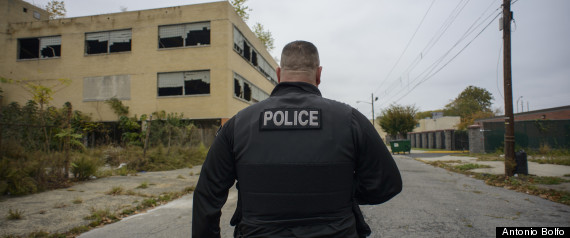
CAMDEN, NJ-OCT 25: A Camden police officer inspects an abandoned building looking for squatters, prostiutes, and drug dealers October 25, 2012 in Camden, NJ.
CAMDEN, NJ: A Camden police officer inspects an abandoned building looking for squatters, prostiutes, and drug dealers.

‘A WAR ZONE’

At the heart of the battle over the policing plan are Camden’s 267 cops, who face the imminent loss of their jobs, even as they contend with a city that seems to some to be spinning out of control.

Times were not always so tough in Camden, which sits on the banks of the Delaware River, across the water from Philadelphia. As recently as the 1960s, the city was an industrial powerhouse, with dozens of major factories employing thousands of residents. With a population nearly 70 percent higher than today, crime was just a fraction of its current rate.

But in 1971, long-simmering racial strife exploded into riots, accelerating the flow of middle-class whites to the suburbs. Factories closed down, taking with them about 60,000 manufacturing jobs, part of a wave of de-industrialization that hollowed out the economic heart of cities across the county. As the economy tanked, crime soared.

It has remained that way for decades, making Camden among the toughest beats in all of local law enforcement, often topping the FBI’s annual list of most dangerous cities.

Today, thousands of abandoned homes blight the streets, their porches often doubling as tombstones, with spray-painted tributes to murder victims. Across broad quarters of the city, drug dealers and prostitutes roost on stoops and street corners, scattering only for a moment at the approach of a police cruiser.

The intensity of police work in Camden can reach almost unimaginable levels. Just this September, officers handled two grisly crimes involving children that made national news. In one, a mother high on PCP decapitated her 2-year-old son, then called police to report the crime. Weeks later, a young man, also high on PCP, broke into a Camden home and stabbed a 6-year-old boy to death and savagely assaulted his 12-year-old sister. Uniformed police apprehended the killer after an intensive manhunt.

Several current Camden officers spoke about their situation with HuffPost on condition of anonymity due to fears of retaliation by their superiors. They describe a department crumbling from within, whose demoralized officers feel abandoned by the city they pledged to protect. Bitterness runs deep over what they feel is a long-running campaign by city and county officials to paint Camden’s cops as ineffective, unreliable and over-compensated.

“Camden is not a joke. Some parts of this place are a war zone,” says one officer. “My friend opened up a freezer and saw a kid’s head looking back at him. He’s got to live with that the rest of his life.”

“We risk our lives every day. And this is what you get in return,” he says. “See you later and don’t let the door hit you on the way out.”

Another veteran officer warns that replacing seasoned Camden cops with large numbers of inexperienced, lower-paid recruits — as the metro plan envisions — is a recipe for disaster. He scoffs at a recent comment by Capelli, the Board of Freeholders director, announcing that the new agency had received more than 1,000 applications, including some from states as distant as Alabama.

“They’re going to be thrown to the wolves,” he says. “If some outsider from Alabama comes in and shoots a kid, it’s a potential for some civil unrest.”

In August, county leaders announced that Camden police Chief Scott Thomson would lead the metro agency once the existing force was disbanded. For months, Thomson has spoken out in favor of the new agency – while leveling harsh criticism at members of his current force, saying it is plagued by absenteeism.

Many within the department see his role in pushing the plan as a betrayal, officers say. But they add that the sense of betrayal and abandonment extends far past Thomson, from city hall to the governor’s mansion.

“It’s a feeling of being unappreciated by your boss, by your mayor, by your government,” says a long-serving officer.

slide_264202_1775437_free

Gang memorials to murder victims are a common sight on the porches of Camden’s thousands of abandoned and derelict homes.

‘PEOPLE ARE AFRAID’

In an interview with HuffPost, Thomson, the Camden police chief, did not dispute that officer morale is abysmal. He says spirits are understandably low given the challenges facing officers, from soaring crime on the streets to the looming closure of the department.

“It is tough. And nobody has it tougher than these guys on the front lines,” he says.

But he also says the department faces a crisis of absenteeism, a claim the police union calls exaggerated. According to Thomson, the department’s daily call-out rate is 30 percent — far above the average in other cities.

“There are some days when half the platoon calls in sick,” Thomson says.

Redd, the Camden mayor, regularly cites the absentee rate as a crucial reason for creating the county metro force.

“Given the recent spike in homicides and an absentee rate of nearly 30 percent within the Camden Police Department, I recently announced that the city is aggressively moving towards joining the Camden Metro Division,” Redd said in a statement in August.

Thomson, however, says the absentee problem is primarily due to abuse of a state family medical leave program overseen by the city, not any provision in the police union’s contract. He calls it peripheral to Camden’s overall public safety crisis. “You fix the 30 percent issue, that doesn’t change our situation,” he says. “We’re still at 1962 staffing levels.”

He says he has no comment on the $14 million to $16 million in fringe spending that county officials say they will eliminate by liquidating the current police force.

“I’m not intimately involved in the finance end of this. My primary focus is keeping the public safe,” he says. “I’m not bean counting in the back room.”

Thomson adds that he cannot agree with Christie’s assessment that Camden’s current police contract is “obscene” — or even say whether it is more or less generous than the average police contract in New Jersey.

“I don’t know. I don’t have a baseline of comparison,” he says. “Without knowing what the other contracts are, that’s a difficult comparison.”

Nevertheless, Thomson calls the current police contract unsustainable, given Camden’s dire economic situation. Switching to the metro agency will not solve all of Camden’s problems, but will boost the number of cops on the street and help bring crime to a more manageable level, he says.

“I don’t think there’s any other option,” he says. “The status quo cannot remain.”

Out on the streets, Camden residents call the city’s crime rate intolerable, and condemn the economic calculus by the city and state that forced deep cuts to policing even in the face of soaring violence. A few welcome the creation of the metro police force and the promised surge of cops on the beat. For many others, the move represents a worrying leap into the unknown.

“They’re experimenting with the lives of the people,” says Rev. David King, a local activist and a pastor at Community Baptist Church. “They’re using the city as a guinea pig.”

“People are afraid,” he says. “They don’t know what’s going to happen.”

Christie signs bill giving EMS contract to hospital chaired by power broker Norcross

download

Susan K. Livio | NJ Advance Media for NJ.com
By Susan K. Livio | NJ Advance Media for NJ.com
on July 06, 2015 at 7:29 PM, updated July 07, 2015 at 10:33 AM


TRENTON — Gov. Chris Christie on Monday signed a bill that wrests control of emergency ambulance services in Camden from one south Jersey hospital chain and gives it its competitor, Cooper Health, overseen by south Jersey power broker George Norcross.

Virtua Health, with hospitals in Voorhees, Marlton and Berlin in suburban Camden County, has provided advanced life support and paramedic services in the city of Camden since 1977. Cooper University Hospital, the level one trauma center located in Camden and serving south Jersey, trains Virtua’s paramedics.

But under legislation that raced through the Assembly and Senate last month in the final days before the summer break, Cooper would take over emergency medical services for the city. State Assemblyman Gilbert “Whip” Wilson (D-Camden), one of the bill’s sponsors, argued Cooper was best suited to provide these services because their paramedics intend to provide follow-up care after patients — many of whom live in Camden — are discharged.

The budget Christie signed last month for the fiscal year that began July 1 also dedicates $2.5 million to Cooper to buy new ambulances and other equipment.

Norcross is the chairman of the board at Cooper, and is the widely considered the most influential Democrat in the state, with ties to Gov. Chris Christie, a Republican. There was no statement from Christie along with the announcement that he’d signed the bill on Monday.

The legislation sparked a public feud between the two hospital systems. Virtua argued the bill was a blatant power grab because it circumvents the state Health Department’s authority to decide who should provide EMS services. Virtua executives also argued they do a commendable job providing the service without needing to take money from the state budget.

Cooper supporters argued that when Virtua closed down its acute-care hospital in the city 15 years ago, it had abandoned the Camden, despite providing outpatient services there. Paramedic response time data released by Camden County the night before the legislature approved the bill on June 22 called into question Virtua’s service record.

According to the bill, (S2980), “A hospital which is designated a Level 1 trauma center shall be exclusively authorized to develop and maintain advanced life support services in the municipality in which the trauma center is located, and shall have the right of first refusal to provide both advanced life support and basic life support in the municipality.” Cooper is not named in the bill, but it is the only level one trauma center in the state does not provide EMS services to its host city’s hospital.

Cooper officials intend to bid on the basic life support ambulance service contract provided by University Hospital, based in Newark with a substation in Camden.

“The governor’s action today, in addition to the overwhelming, bipartisan support of the legislature, will allow advanced life support services in Camden to finally be fully integrated within the region’s only level 1 Trauma Center,” according to a statement released by Cooper spokeswoman Wendy Marano. “Camden residents will now receive the same level of care as others in the state.”

Richard P. Miller, Virtua President & CEO, said he was “extremely disappointed” the governor signed the bill, and hinted he may sue.

“The best practice model for EMS across the nation supports regionalization of EMS services, not creating a new program for one municipality,” Miller said in a statement released late Monday night.

“When every minute counts, Virtua paramedics are the best in the state, having served all municipalities in Camden and Burlington counties with distinction for more than 38 years,” Miller said. “For the City of Camden, Virtua exceeds the State Department of Health’s guidelines for response time, delivering even faster response times than guidelines established by the Department’s Emergency Medical Services Blue Ribbon Panel.”

“We will explore all options, including the possibility of litigation, and will provide additional information as appropriate,” according to Miller’s statement.

Susan K. Livio may be reached at slivio@njadvancemedia.com. Follow her on Twitter @SusanKLivio. Find NJ.com Politics on Facebook.

Camden superintendent announces 241 layoffs at city schools

 download

Jason Laday | South Jersey Times

By Jason Laday | South Jersey Times
Follow on Twitter
on May 12, 2014 at 8:18 PM, updated May 13, 2014 at 6:20 AM

Camden_school_layoffs_protest.jpg
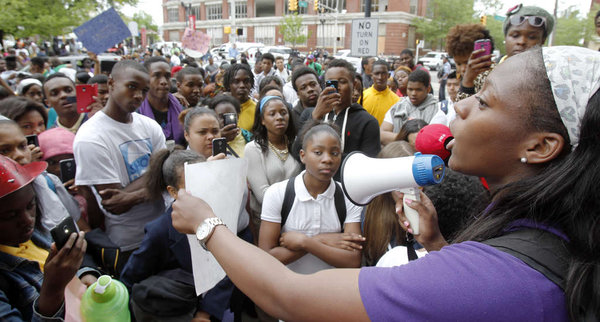
Camden residents gather on May 12, 2014 ahead of a special meeting of the school board in which Superintendent Paymon Rouhanifard announced plans to lay off educators and other staff within the school district. (Staff Photo by Jason Laday.)

CAMDEN — City education officials on Monday announced 241 layoffs across the district’s 26 schools, including 206 teachers.

Camden Superintendent Paymon Rouhanifard approved the layoffs during a special meeting of the school board Monday evening, which was marked by continuous, angry outbursts and comments made by members of the public. They included members of the Camden Education Association (CEA), parents and other residents.

The crowd reserved particular vitriol for the state-appointed superintendent, with shouts of “Go back to New York” and “You sold us out to the governor” heard throughout the beginning of the meetings.

“You work for us, not the other way around – we tell you what to do,” shouted Eulisis Delgado from his seat in the auditorium at H.B. Wilson Family School. Later, he produced a bullhorn and addressed that board and superintendent.

“You sold us out to the governor, that 800-pound gorilla,” he said.

Following an hour-long executive session of the school board, Rouhanifard attempted to address the crowd in advance of a presentation detailing the layoff plan.

However, regular outbursts from many residents, as well as a brief chant of “Whose school? Our school,” caused the superintendent to abandon the attempt in favor of moving directly to the public comment part of the agenda.

“Tonight is hard,” said Rouhanifard, prompting the audience to respond in shouts and sighs of faux sympathy. “I have been responding to a number of teachers about this, and you can shout back at me – nothing is stopping you, and I won’t stop you – but I want to say we went about this process in a way that reflects the importance of this decision.

“I want to make it immensely clear that there are many people who will lose their job (in this plan) who care deeply about their students – this is not an indictment of them,” he added. “And while I know that this may seem to contradict with what we’re doing here today, we care deeply about these teachers.”

Teachers who spoke out Monday against the layoffs, criticized the district for issuing “pink slips” during the week of the NJASK standardized tests. They also questioned the criteria used by the district in selecting which teachers are to be laid off.

According to Rouhanifard, the layoff plan follows state law and seniority requirements in the collective bargaining agreement with the CEA.

Robert Farmer, a leader in the CEA, called the layoffs the “first step” in converting more students over to charter schools at the expense of public schools.

“We will sit down with the superintendent and board in order to lessen the impact on schools employees,” he said.

The 241 layoffs made official Monday evening follows the termination of 94 central administration employees late last month.

The Camden school district began the most recent budget process with a $75 million deficit, including a $42 million operating budget shortfall. According to Rouhanifard, non-personnel cuts and the use of surplus funds have helped fill all but $28 million of that gap. However, the superintendent that remaining gap will have to be reconciled with the elimination of 575 positions.

The budget he proposed in April included the elimination of 575 positions, many of them vacant. In all, 335 central office and school employees have been laid off.

In addition to teachers, the layoffs will hit guidance counselors, nurses and other staff.

However, there are 10 positions that managed to escape the school-based layoffs. According to Lowe, those positions did not suffer any personnel cuts.

They include the district’s athletic directors, attendance and dropout prevention officers, crisis counselors and social workers, custodians, JROTC and JAG team members, psychologists, school-based youth service team members, school safety officers, special education teachers and speech therapists.

The plan also calls for one or more art teacher, guidance counselor, librarian, music teacher and nurse per school.

“So, people are going to say we cut guidance counselors, and we did, but those services will still be provided at every school,” said Lowe. “We’re reducing the total number, but every school will have at least one – Woodrow Wilson will have six, and Camden High School will have five.”

The superintendent’s plan increases the number of community school coordinators and pre-K teachers.

Camden students walk out to protest layoffs

When cellphones flashed “noon” in Ziaira Williams’ history class, students shifted in their seats, exchanged glances, and then filed out into a hallway of purple and gold, launching a two-hour protest of Camden City School District layoffs.

Williams’ history teacher received a layoff notice Monday and said goodbye to his exiting pupils with silent pats on the back and nods of appreciation, Williams said.

“They’re glad we’re doing this. They said, ‘Go ahead,’ and honestly, I don’t care if I get in trouble – I want my teachers back,” the 17-year-old junior said.

Hundreds more would join the two-mile march from Camden High to the Board of Education building downtown Wednesday afternoon, including students from Creative Arts Morgan Village Academy, Brimm Medical Arts High School, and Woodrow Wilson High School, many carrying signs and chanting, “Save our teachers!”

The walkout came in response to the district’s announcement Monday that it would lay off 272 people, 206 of them teachers, to bridge a $75 million revenue gap. Samir Nichols, a senior at Creative Arts and the school’s valedictorian, said he organized the rally.

The protest grew so large that police blocked off Haddon Avenue and Cooper Street. It apparently prompted NJ Transit to suspend for about an hour service on the RiverLine between the Walter Rand Transportation Center and the waterfront.

Don’t suspend

Superintendent Paymon Rouhanifard said he would encourage principals not to suspend students for the day’s protest. “We respect their right to peacefully protest,” he said.

“Students have an important voice, and students care about their teachers – we care about their teachers. What we care about, also, is continuing the dialogue with students.”

On the route downtown, students sat on the roofs and hoods of cars rolling alongside the pack, which filled the two-lane roadways. Students in the marching band brought along their instruments to play Camden High’s fight song.

“We feel like our teachers are being disrespected,” said Dejon Sullivan, 18, student body president of Camden High and the student representative for the school board who attends monthly meetings.

“It’s disgusting to me. I believe the education is not the greatest here, but we’re trying to progress. Our teachers have a lot to do with that progress. Camden High is my home, no matter how many fights we have, no matter what. It’s my home, and these teachers treat me like I get treated at home.”

Former Camden school board member Sara Davis watched from her porch as the students marched by.

Davis disagreed with many of the changes state-appointed superintendent Rouhanifard was bringing to the district, including two “Renaissance” schools, which will open in the fall, pending state approval.

“I’m glad to see the kids are interested in what’s happening. Hopefully it will have an effect, but the bottom line is, more people should be speaking on their behalf,” she said.

She said the last time Camden students staged a walkout was in the late 1960s.

As the crowd walked passed Hatch Middle School, little heads peered out of windows, waving at the older students, below who beckoned them to join them outside.

Security guards smiled. “That’s right, keep our jobs,” one said.

The large revenue gap comes in a district that already has one of the highest per pupil expenditures in the state at $23,500. The student-to-teacher ratio is extremely low at 9-1. It will be 11-1 after the layoffs.

Officials cut $28 million in non-personnel costs, but also cut $29 million through the layoffs. Charter school transfer funds increased to $72 million for next year.

Most students said they were upset to find teachers suddenly without jobs. Because layoffs were based on seniority, evaluations, attendance, and other qualitative measures did not come into consideration.

Critics echoed

Some echoed school-choice critics, saying they didn’t want to see public schools get turned over to private operators. The leaders of both magnet high schools in Camden, Brimm, and Creative Arts, have said they are looking into charterizing, a process they would go through with the state, not the city.

Once outside the Board of Education building, students chanted from the steps as employees peeked out from office windows.

Parents and community members from Save Our Schools joined in the protest, at times appearing to run it. Ronsha Dickerson stood at the top of the steps and yelled out to students, “They’re laying off all your teachers, they’re closing your schools.” She called for teachers to strike and make a trip to Trenton to see the governor next week.

Up on the seventh floor of the administration building, Rouhanifard heard the chants and decided to face the large crowd.

“We’re not closing any schools, no schools are closing, we’ve been saying that for the past three months,” he yelled over the crowd. “We have a budget problem; we’re trying to manage it as best we can. We’ve cut other areas, too. This is a really hard time for everybody – for you, for your teachers.”

Meet representatives

Rouhanifard said he would meet with representatives from each school in the next two weeks. Some teachers could be reappointed in the fall, but fewer positions will be available than in previous years, he said. Before heading back into the building he told students:

“This dialogue is important and we’re going to continue to have the conversation, OK? That’s my commitment to you all.”


jterruso@phillynews.com856-779-3876 @juliaterruso

Camden’s ‘Renaissance Schools’ Takeover Plans May Face Legal Challenge

kipp school camden

Latin Kings graffiti adorns the wall of a building near the new KIPP Cooper Norcross Academy now under construction in Camden.

Plans for sweeping restructuring of state-run Camden school district, including turning over four schools to charter operators, faced its first open challenge yesterday when lawyers contended that the moves violated state law and regulations on several fronts.

The Education Law Center, the Newark-based advocacy group, released a statement that said the plans failed to meet both the letter and spirit of the Urban Hope Act, the 2012 law that cleared the way for the charter-operated “renaissance schools.”

It is these “renaissance school” projects that would expand under the reorganization plan announced by Superintendent Paymon Rouhanifard last month.

Four schools would be turned over to Mastery Charter Schools and Uncommon Schools, and a fifth school would be closed outright, with most of its students attending the new KIPP Cooper Norcross Academy now under construction.

The ELC contended that the Urban Hope Act was never intended to have existing schools handed over to the charter operators.

The group said the plans also violate the state’s own procedures, under which the targeted school are already operating under improvement plans that preclude such charter conversions.

“Once again, there has been really no public process here,” said David Sciarra, the ELC’s executive director. “The superintendent doesn’t put anything out, doesn’t even post the applications, and he provides no opportunity to have any public input in this.”

Sciarra wouldn’t yet commit to a formal legal challenge, noting that the plans still require final approval from the Christie administration.“I don’t want to get into that at this point,” he said last night.

Rouhanifard’s office rejected the claim that public input had not been sought or even that the changes could even be defined as conversions. It said that the schools are actually being closed and reopened under the new management, including “substantial reconstruction” of the buildings, as allowed under the law.

That might have been semantics but it was, perhaps, a critical legal distinction as Rouhanifard had initially characterized the moves as “transformations.”

District officials said that selling or leasing of the properties to the charter operators is also still being considered.

In addition, Rouhanifard said public hearings were held last year when the first charter projects were approved and again this winter as the new plan was being considered.

“The misrepresentations and factual errors of interest groups will not distract us from the urgent cause of improving our schools,” he said in a statement. “With two out of five students not graduating from high school, it’s critical that we stay focused on improving the education of our children. We have remarkable students, but for far too long the system has come up short in providing them with the educational opportunities they deserve.”

“Over the past 18 months, I have listened to the concerns of parents from every school in Camden, at dozens of community meetings, and most recently, at four town halls,” Rouhanifard added. “I heard loudly and clearly that where our schools are struggling the most, we need to take action. These new renaissance school partnerships represent a real opportunity for us to dramatically invest in our facilities and provide new, high quality educational options for our students and families.”

The challenges to the restructuring were hardly unexpected in light of such sweeping changes and considering that two lawsuits have already been filed since the first of the renaissance-school plans were unveiled.

The first case ended when the state Legislature amended the law to address the complaint. The second lawsuit, lodged by a group of parent advocates, is pending in appellate court.

Rouhanifard is moving ahead with plans for the next school year – including door-to-door canvassing — as the proposals go through the formal review process with state Department of Education.

In each case, the state needs to sign off on the specific applications for each school, and there is also a review process for when a school is closed.

But it would be surprising if the state rejected the plans, given that Rouhanifard is a state appointee whose every move has been backed by the Christie administration

The Troubles at Cooper Continue, Part 2: Since 2005

Addressing threats to health care’s core values, especially those stemming from concentration and abuse of power. Advocating for accountability, integrity, transparency, honesty and ethics in leadership and governance of health care.

The Troubles at Cooper Continue, Lately Gruesomely, But Will Its Leadership and Governance Change This Time? – Part II: the History since 2005

Wednesday, April 01, 2015

 by

In our most recent post, we noted the latest tragic, and gruesome development at Cooper Health System, the largest hospital system in southern New Jersey.  Months after the system CEO, John F Sheridan, and his wife Joyce were found dead after a fire in their home, local law enforcement concluded that Mr Sheridan murdered his wife, set fire to the house, then committed suicide.  It turns out this is just the latest, albeit possibly most tragic and grisly, troubling news from that health care system.

Our last post summarized the history from 1978, including:
–  Seven people, including the hospital system chief financial officer, confessed to and/or found guilty of participating in an embezzlement scheme that cost the hospital more than $21 million
–  An internal investigation was suppressed for years, but later revealed several severe management problems
–  The media revealed multiple conflicts of interest affecting the system’s board of trustees, including members of the committee that performed the investigation
–  One member of the board of trustees who participated in the internal investigation was later convicted of arranging his wife’s murder
–  Resulting financial losses caused layoffs and service reductions, some of which affected the hospital system’s charitable mission
–  The stories received little attention outside the region, and apparently did not result in any fundamental changes in governance or the structure of leadership.

Since 2005, there have been other troubles at Cooper.

Conflicts of Interest Involving Local and State Politics

Board Chairman George E Norcross III

In 2006, the Philadelphia Inquirer found close ties between NJ politicians and hospital leaders (see this post).  In particular, the story noted “the board of South Jersey’s major hospital, Cooper University Hospital in Camden, is chaired by the region’s most powerful political figure, Democratic power broker George E. Norcross III.”

In 2012, as we posted here, Mr Norcross’ relationships became more evident.   The New York Times reported that a story about his conflicts of interest had been held from publication by the Inquirer because Mr Norcross was part of a business group seeking to purchase that newspaper.  When the Inquirer story finally came out, it stated firms with financial relationships to the hospital under Norcross had donated generously to Norcross’ political allies, and that Norcross had influenced the creation of relationships with these firms.  It suggested that Norcross’ political influence had resulted in an unusual level of state financial support for the hospital system.  It noted that the law firm for which Cooper CEO John F Sheridan had previously worked did lobbying for the hospital.  It noted that the hospital did millions of dollars of business with firms tied to hospital trustees, including Mr Norcross.

Trustee Emeritus Peter Driscoll

Recent reporting after Mr Sheridan’s death suggested the rehabilitation of former board chairman Peter Driscoll under Chairman Norcross.  Mr Driscoll was the former board chair who resigned in 1999 after the embezzlement scandal report and revelations about conflicts of interest affecting the board were finally made public, and the hospital system was in financial difficulty.  However, by 2014, he was identified by the board as a “trustee emeritus.”  Per the Philadelphia Inquirer, after the fire at the Sheridan house was attributed to arson,

‘If they had died because the house was on fire, that would be a terrible, terrible tragedy,’ said Cooper Health System trustee Peter E. Driscoll, a senior member of the Haddonfield law firm of Archer & Greiner. ‘. . .I don’t know what to make of it. I can’t imagine anybody that would want to do something like this.’

New Vice President Kevin O’Dowd and his Family

Also after Mr Sheridan’s death, the hospital system hired a new top manager with his own extensive political connections and conflicts of interest.  Per the Inquirer,

Gov. Christie’s chief of staff, Kevin O’Dowd, will step down this month to work for Cooper University Hospital in Camden, nearly a year after the governor named O’Dowd his pick for attorney general.

O’Dowd, whose selection as attorney general never moved forward after controversy arose over lane closures on the George Washington Bridge, will serve as senior executive vice president and chief administrative officer at Cooper, where he will focus on business development, Christie officials said. He will start at Cooper in January.

The conflict was

 O’Dowd’s wife, Mary, serves as commissioner of the state Department of Health.

A NJ.com story made that more explicit,

 State Health Commissioner Mary O’Dowd will refrain from making decisions that would directly affect Cooper University Hospital in Camden after her husband accepted a senior management job there, officials said Friday night.

The move was made to avoid any conflicts of interest as the state Department of Health licenses and inspects hospitals, and doles out money to compensate them for treating uninsured charity care patients. Cooper will receive $37.3 million in charity care payments from the state this year, the fifth highest amount in the state.

A story in the NJ Spotlight suggested that would not solve the problem,

The question that the O’Dowds will have to face is whether they can overcome even the perception of a conflict of interest when their jobs so pervasively present opportunities for such a situation.

‘It’s a very, very tenuous situation,’ said William Schluter, a former longtime member of the State Ethics Commission and state senator.

He noted that nearly everything that senior hospital executives do in their jobs is influenced by state regulations.

‘It’s a situation that I sure as heck wouldn’t want to be in,’ said Schluter, adding that he expects second-guessing in the media and by elected officials as the state handles issues affecting Cooper.

Just to ice the cake for Mr O’Dowd, the Courier-Post noted that Mr O’Dowd’s job at Cooper could be considered an example of the revolving door, albeit delayed,

O’Dowd, previously the governor’s deputy chief counsel, also worked under Christie at the U.S. Attorney’s Office for New Jersey.

During seven years as an assistant United States attorney, O’Dowdoversaw a securities and healthcare fraud unit. He also prosecuted cases ranging from child pornography distribution, cybercrime and drug trafficking.

O’Dowd served earlier as a state Deputy Attorney General, where his responsibilities included providing legal counsel to the state Department of Health.

As US Attorney, Christie, possibly with the aid of Mr O’Dowd, pursued a deferred prosecution agreement for UMDNJ, then Cooper’s primary academic affiliation, for a complicated set of allegations that we discussed extensively in the past (look at this post and follow links backward).

Late CEO John F Sheridan and Family

Apparently only after Mr Sheridan’s death did the media report extensively on his political connections.  The earliest report I found was in the Philadelphia Inquirer from September 28, 2014.  He served

on Gov. Christie’s health-care transition subcommittee in 2010.

The statement said he was New Jersey commissioner of transportation under Gov. Thomas H. Kean and served as New Jersey deputy attorney general and assistant counsel for the New Jersey Turnpike Authority, and was counsel for the New Jersey Senate majority.

Also,

 his son Mark – a prominent lawyer … has represented Christie in the Bridgegate scandal

NJ.com added,

John Sheridan Jr., the CEO of Cooper University Health System … previously spent 40 years in New Jersey government

Also,

He has held positions on Gov. Thomas Kean’s cabinet as transportation commissioner and chairman of the New Jersey Transit board, as well as held roles on transition teams for Gov. Chris Christie and Gov. Christine Todd Whitman. 

Furthermore,

 Earlier in his career, he served as Deputy Attorney General of the State of New Jersey, Assistant Counsel to Gov. William T. Cahill, General Counsel to the New Jersey Turnpike Authority and Counsel to the New Jersey Senate Majority.

Finally, his son

Mark Sheridan, a partner at Squire Patton Boggs, acts as general counsel for the New Jersey Republican State Committee.

So, in the years since conflicts of interest at the board of trustees level were noted as part of the investigation after the management embezzlement scandal at Cooper, many more apparent conflicts affecting top managers and board members have appeared, most recently in late 2014.

Settlement of Allegations of Kickbacks

In 2013, the media reported that Cooper settled federal allegations that it gave kickbacks to doctors to induce referrals.  As reported by the Inquirer,

The Cooper Health System in Camden has agreed to pay $12.6 million to settle a whistle-blower lawsuit alleging that it made improper payments to doctors in an effort to build its cardiology business, the U.S. attorney for the District of New Jersey said Thursday.

From October 2004 through 2010, local doctors were paid $18,000 to attend four meetings of the Cooper Heart Institute Advisory Board in any given year under ‘consulting’ and ‘compensation’ agreements, in possible violation of antikickback laws, state and federal law enforcement officials contended.

The whistle-blower was South Jersey cardiologist Nicholas L. DePace. He attended an advisory board meeting in 2007 and was convinced that the board’s purpose was not to provide advice to Cooper, but to be a source of patient referrals to the Heart Institute, according to a lawsuit he filed in 2008.

‘He was invited to be a member of the advisory board. He attended a meeting and it quickly became apparent to him what the advisory board really was. It was sitting and listening to lectures and not providing advisory services,’ said Michael A. Morse, a partner in Pietragallo, Gordon, Alfano, Bosick & Raspanti L.L.P. in Philadelphia, one of DePace’s lawyers.

As is typical of legal settlements involving prominent health care organizations,

Cooper admitted no liability.

‘After more than three years of extended discussions with government lawyers, we decided, in the best interests of Cooper, to settle our dispute without the admission of wrongdoing to avoid the burdens and uncertainties of a protracted litigation,’ Cooper president and chief executive officer John P. Sheridan Jr. said. ‘This allows us to focus our full energies on serving our community.’

In a note to Cooper employees, Sheridan said the board was established to ‘improve the quality and responsiveness of our cardiac programs’ and ‘was reviewed by outside legal counsel before it began operations.

However, given that the Inquirer reported that “the $12.6 million penalty is financially significant for Cooper,” one wonders why it was made if hospital leadership felt that the case against it was poor.

So years after the embezzlement scandal, another scandal involving allegations of illegal behavior was settled.  This time, there was no trial, but since the settlement was financially burdensome for the hospital, it is plausible that it resulted from managers’ realization that they would not have a good defense against the charges at trial.

The Death of the Sheridans

Mr Sheridan became CEO of Cooper in 2008.  As noted in the Gloucester County Times,

On Feb. 7 John P. Sheridan Jr., was appointed president and chief executive officer of The Cooper Health System by the Cooper Board of Trustees. Sheridan joined Cooper as senior executive vice president in July 2005 and has served as president of Cooper University Hospital since September of 2007.

‘Cooper has grown dramatically in recent years and is positioned as the academic medical leader of South Jersey,’ said George E. Norcross III, chairman of the Board of Trustees at Cooper.  ‘John Sheridan is a proven leader. He has the skills required to build-out our $500 million health care campus in Camden, implement our suburban strategy and achieve our vision of creating the premier academic health care system in South Jersey and the Delaware Valley.’

As of early 2014, he was getting substantial compensation typical for a hospital system CEO, per NJBiz, “John T. Sheridan Jr. (of the $913 million Cooper Health System) received $963,433.”

In late September, 2014, Mr Sheridan and his wife were found dead in a house fire.  Initial reports suggested the fire was accidental.  Then it was declared to be arson.  Then Joyce Sheridan’s death was found to be the result of a homicide.  Finally, as we posted here, law enforcement declared that Mr Sheridan killed his wife, set the fire, and then committed suicide.

That news was so horrendous that it dumbfounded Cooper insiders.  As reported by the Inquirer,

 ‘It’s not something I can imagine,’ said Peter Driscoll, a Cooper Health System trustee emeritus and a senior member of the Haddonfield law firm Archer & Greiner.

Also,

In a brief statement, Cooper University Health Care called the prosecutor’s findings ‘unfathomable to us.’

I can only hope that they will get over their shock and realize that the institution really has some big problems.

Summary

Since 1978, there have been multiple stories about mismanagement, conflicts of interest affecting managers and board members, and crimes committed or alleged to have been committed by management and at least one trustee at Cooper Hospital/UMC which then became Cooper Health System.  Despite these often lurid stories, there is no indication that there has been a fundamental change in the governance of the institution.  While managers have come and gone, sometimes under difficult circumstances, there is no indication that how managers were hired has changed.  Since the early 1990s, there has been no obvious effort made by management or board members to change, at least not one announced publicly.  There has been no outside investigation.

Given that the hospital system has long enjoyed a cozy relationship with state government, including both the legislative and executive branch, maybe it has been easy to go along to get along.  More cozy relationships, including some with ownership of the news media, may have helped to keep this story anechoic outside of the region.

Yet the cumulative story is so striking that it should prompt national attention, and inspire some real hard thought about how health care leadership and governance has gotten so bad.

To repeat what I have said all too often, and I admit with little impact so far….

True health care reform requires governance that is accountable, transparent, true to the organization’s mission, and honest, ethical, and without conflicts of interest; and leadership that understands health care, upholds its values, is honest, ethical, and without conflicts of interest, is transparent and open, and is willing to be accountable and subject to appropriate incentives.

Read more at: http://hcrenewal.blogspot.com/2015/04/the-troubles-at-cooper-continue-lately_3.html
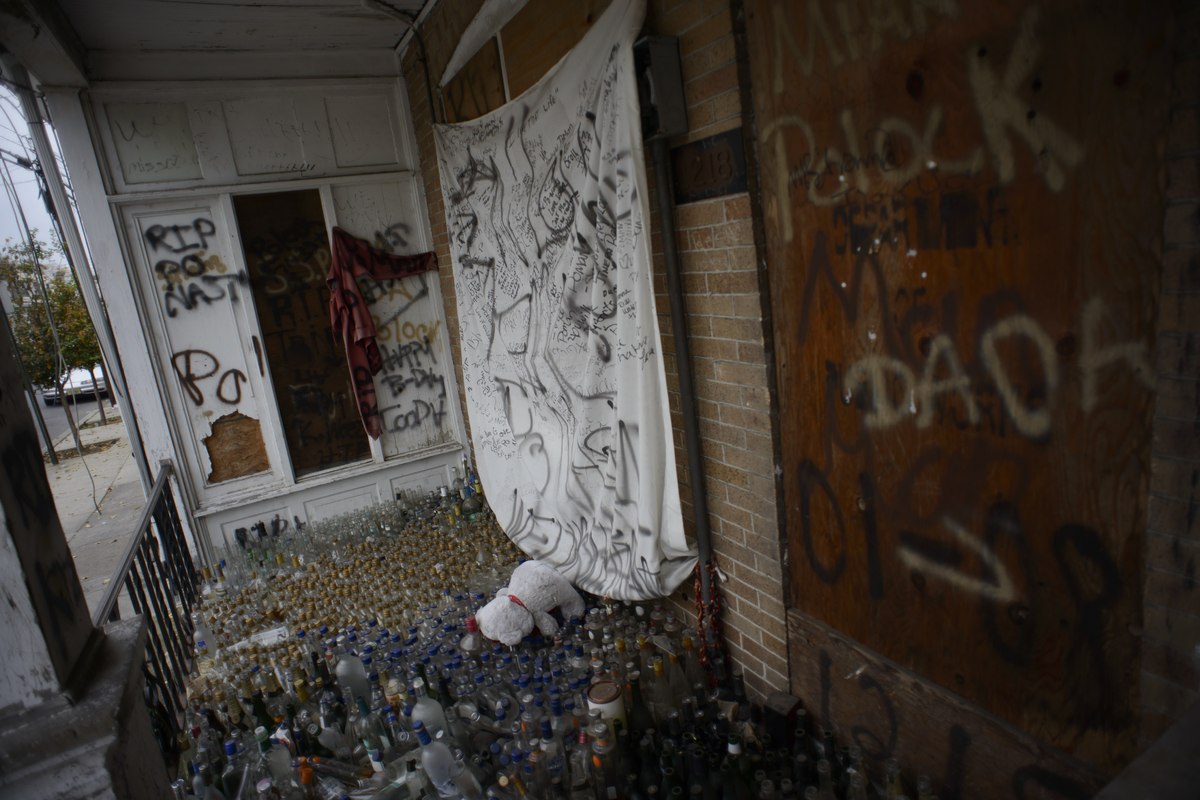
The Troubles at Cooper Continue, Part 1: Historical Background
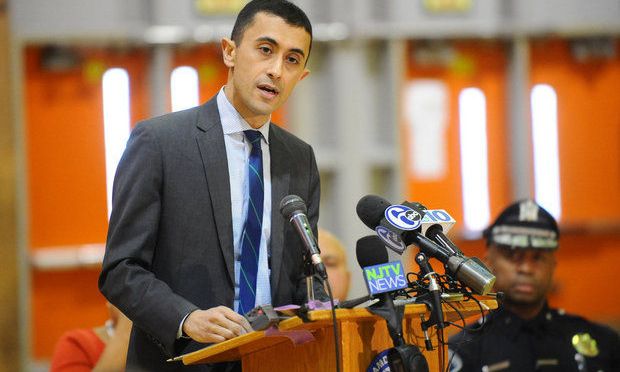
Addressing threats to health care’s core values, especially those stemming from concentration and abuse of power. Advocating for accountability, integrity, transparency, honesty and ethics in leadership and governance of health care.

The Troubles at Cooper Continue, Lately Gruesomely, But Will Its Leadership and Governance Change This Time? – Part I: Historical Background

Wednesday, April 01, 2015

 by

Allegations of Murder-Suicide by a Hospital System CEO

This will be a hard series of posts to write. It was triggered by the latest, and perhaps most gruesome chapter in the troubled history of the leadership of Cooper Health, the largest hospital system in southern New Jersey (known locally as South Jersey).  As reported by the Philadelphia Inquirer on March 28, 2015,

Cooper University Health System CEO John P. Sheridan Jr. stabbed his wife to death, set their bedroom on fire, and then took his own life, authorities have concluded, closing a six-month investigation into the deaths that shocked New Jersey’s political and civic communities.

The Somerset County Prosecutor’s Office announced its results in a news release Friday, citing forensic evidence and a lengthy probe that included more than 180 interviews.

But it offered no conclusive motive to explain why Sheridan, described by family and friends as mild-mannered, would brutally stab his wife and kill himself.

‘Many possible scenarios and theories were considered,’ the prosecutor’s office said in a statement after months of virtual silence. The evidence ‘supports the conclusion that John Sheridan fatally stabbed Joyce Sheridan, set the fire, and committed suicide.’

The Story in Context: a Long History of Leadership and Governance Problems 

We have often discussed bad leadership of health care organizations, and written a lot about the contrast between the munificent compensation paid to non-profit hospital CEOs and the lack of evidence justifying such pay.  However, a murder-suicide allegedly perpetrated by the CEO of a large non-profit hospital system is way at the tail of the curve of questionable managerial behavior.

But it turns out that Cooper Health System has a very long record of leadership and governance troubles.  The current chapter is the latest, and possibly most gruesome, in this sorry series.  However, the context of this history has been lacking in the recent coverage, which has been so far limited to local media.  The history deserves a more complete discussion, and maybe then it could lead to some reconsideration at least of this one institution’s leadership and governance, and perhaps the larger troubles in leadership and governance in health care.

Thus this post will summarize the history that I could find up to 2005.  A second post will summarize more recent history up to and through the terrible deaths of John and Joyce Sheridan.

In the interests of full disclosure, I started my faculty career at what was then Cooper Hospital – University Medical Center, the main teaching hospital for the University of Medicine and Dentistry of New Jersey (UMDNJ) – Robert Wood Johnson Medical School (RWJMS) branch at Camden, NJ.  During my four years there, 1983-87, I was impressed with the dedication of the physicians, nurses and other health care professionals there.  However, even given my naivete at a young faculty member, the leadership of the institution, which was one of the early adapters of the generic management model, seemed strange. Little did I know how strange it was.

In the late 1990s, when I became seriously concerned about what I know call leadership and governance problems in health care, I ran into some folks from South Jersey who told me that Cooper had a tumultuous history since I left.  I got around to researching it, leading to an article in our local American College of Physicians newsletter.  The article, to which I had linked here, is no longer available on the internet.  So I have reposted it below, with some minor modifications, put in square brackets .  Again, the history is of major problems with leadership and governance at Cooper that had inspired no reconsideration by 2005.

The Curiously Quiet Case of Cooper’s Corrupt CFO

Embezzlement by Top Management

In 1994, two powerful executives at Cooper admitted their guilt in an elaborate embezzlement scheme.  In 1978, John H. Crispo, the owner of Financial Management Corporation Inc., to keep his contract with the hospital, began paying monthly kickbacks of $2500-$10,000 to John M. Sullivan, the Cooper Executive Vice President for Finance.  Sullivan then referred delinquent hospital accounts for collection to a new company Crispo set up.  In turn, Crispo repaid him $340,000 in more kickbacks.  Sullivan recruited Cooper’s Controller, P. John Lashkevich, and the three devised a scheme to defraud the hospital using fabricated bills, established a fictitious company to launder money, and falsified tax returns.  A prosecutor claimed “Mr Sullivan blew this money on wine, women, parties, and a lavish lifestyle,”which included trips with girlfriends to the Plaza Hotel, and jewelry shopping at Tiffany’s.  Sullivan had driven a Porsche, and lived in a $700,000 house.  The conspirators also bought cars, boats, and racehorses.

Other conspirators were also found and prosecuted.  Helene Weinstein admitted to helping establish a shadow company as a conduit for Sullivan to send money from the hospital to his estranged wife, Elarba Pagan.  Pagan was accused of receiving money sent by Sullivan from Cooper to another firm.  Weinstein testified that Pagan carried “briefcases of cash from the hospital to shop in New York for $1500 shoes.”  Also, Cooper’s Vice President for Finance, Robert Schmid Jr, admitted embezzling money from Cooper to pay for home improvements. Finally, Thomas J. Damadio admitted helping launder up to $600,000 stolen from Cooper, and evading income taxes.

Sullivan was sentenced to 55 months in federal prison, Lashkevich, 25, Pagan, eight, Weinstein, three years of probation, Damadio, six months of house arrest.  Crispo died before serving prison time.

The Internal Report, and the Murder Conviction of One of Its Authors

After these stories became public in 1994, Cooper’s Board of Trustees established a special committee to investigate its financial operations, which included Peter E. Driscoll, Chairman of the Board, Kevin G. Halpern, Chief Executive Officer (CEO), and a local Rabbi, Fred Neulander.  The hospital pledged to make its investigation public, but then fought to keep it secret.  Its report was finally released in 1998, after a discovery motion in a civil lawsuit.  Prior to then, the Philadelphia Inquirer had revealed numerous financial conflicts of interest affecting Board members,  including those on the special committee.  For example, Cooper paid the law firm of Archer & Greiner, of which Driscoll was a senior partner, $2.1 million over three years from 1993-96.

The report revealed that the conspiracy had bilked the hospital of at least $21.8 million from 1987 to 1994, while “Cooper has been the victim of a massive crime wave.”  It stated Sullivan, Lashkevich, and Crispo “had unrestrained and absolute control of virtually all the important financial functions at Cooper and they took full criminal advantage….” It also noted that “employees who became suspicious and questioned the accounting practices or tried to alert management were intimidated, transferred, or dismissed by the high-ranking executives.”  Furthermore, it suggested “the ability to bypass or defeat controls grew from an institutional culture that delegated and outsourced too much responsibility, without developing effective controls….” The report also raised questions about how the internal investigation was conducted.  It noted that Driscoll and Halpern “often locked horns with [the other] committee members….”  Driscoll had objected when other board members called for an independent investigation.  Halpern and Driscoll resigned their positions within days of the forced release of the report.

One member of the special committee became particularly notorious.  Soon after the internal investigation was set in motion in 1994 Rabbi Neulander’s wife had been murdered.  Soon after, Neulander had failed a polygraph test when questioned about it.  He then resigned his clerical position after his extramarital affairs with members of his congregation were revealed.  In September, 1998, he was charged with hiring the “hit men” who committed the murder.  In 2002, he was convicted  and sentenced to life in prison.

The Aftermath, Financial Woes and Impact on Patient Care

By 1997, Cooper was in financial trouble, although none of its managers ever admitted a connection to the conspiracy and resulting losses.  However, during a related civil lawsuit, Cooper officials alleged “the hospital’s general operating fund was depleted” by the conspiracy.  Cooper began merger discussions with several partners, including AHERF, although none were ultimately successful. Physicians started leaving in 1997, when all but one full-time cardiologists announced their resignations.  Cooper revealed a $16 million loss for 1998, the largest ever incurred by a New Jersey hospital.  Its bonds were down-graded to junk. The hospital then announced that it would stop accepting uninsured patients for elective treatments, departing from its historic mission of charitable care.  Losses continued in 1999, again totaling $16 million, leading to additional budget cuts.  [CEO Halpern and Chairman of the Board Driscoll resigned within days of each other in 1999, both denying their actions were related to the report.]  By 2000, the hospital had cut its work-force to 3100, from 4000 in early 1999. and had closed various clinical sites and units.  Only thereafter did Cooper began posting budget surpluses.  [By 2002, more physicians quit Cooper en bloc, and the hospital was on its second new CEO since Mr Halpern.]

The Lurid Stories Remain Anechoic

The only published reaction to Cooper’s woes came from the related legal proceedings.  The prosecutor in Sullivan’s trial claimed that his thefts were so big that they “threatened the financial stability of the hospital,” and “hurt the image of the city as a whole.”  At Pagan’s sentencing hearing, Judge Joseph H. Rodriguez stated “society could not tolerate a system in which hospital executives ‘rake millions off the top’ that were intended for medical care for the poor.”

It does seem likely that Cooper’s scandals had major effects on its patient care and academic missions.  Yet, I could find nothing  published about such effects.  Despite the luridness of this case, I also found no reaction from local or national medical groups, from academic organizations, accrediting groups, or government agencies.

Summary

In 2005, I wrote,…  The case of Cooper’s corrupt executives can be viewed as the forerunner to the even more massive bankruptcy of AHERF [Allegheny Health Education and Research Foundation, see posts here].  One can only speculate that learning the lessons of the Cooper case could have mitigated the AHERF disaster.  However, as noted in my last article,  the lessons from AHERF are also not widely known.  Yet, as George Santayana wrote, “Those who cannot learn from history are doomed to repeat it.”

As I will address in another post, events at Cooper after 2005 also generated few echoes, up to the latest tragedy.  These events did not suggest much had been learned from the events through 2005.

So the unfortunate, and sometimes terrible case of Cooper Health has become one of the longest running examples  – starting in 1978 – of the troubles with leadership and governance of large health care organizations, the bad effects of these problems on health care and the values of health care professionals, the lack of public attention to and discussion of these problems and their effects, and the failure of organizations to address on their own their problems with leadership and governance.

True health care reform, as we have said endlessly, requires governance that is accountable, transparent, true to the organization’s mission, and honest, ethical, and without conflicts of interest; and leadership that understands health care, upholds its values, is honest, ethical, and without conflicts of interest, is transparent and open, and is willing to be accountable and subject to appropriate incentives.

References

Embezzlement….

Lewis L. Former official gets jail term for bilking Cooper: John M. Sullivan was sentenced to 55 months – the scheme netted $4 million.  He spent his take lavishly. Philadelphia Inquirer, April 26, 1996.

Graham M. New panel at Cooper plans review: embezzling of $3.8 million by two former top aides and a vendor prompted the study. Philadelphia Inquirer, July 27, 1994.

Lewis L. Ex-hospital executive gets 2 years: he helped steal $4 million from Cooper Hospital – his lawyer said the investigation was going to spread.  Philadelphia Inquirer, November 9, 1996.

Graham M, Turcol T. Inquiry widens into finances at Cooper Hospital: a federal grand jury subpoenaed several officials this month – the inquiry was spurred by testimony from two former Cooper executives indicted for fraud. Philadelphia Inquirer, February 27, 1996.

Lewis L. Woman admits role in bilking Cooper Hospital. Philadelphia Inquirer, September 6, 1996.

Lewis L. Ex-hospital executive admits theft: Robert Schmid Jr. pleaded guilty to embezzling about $50,000 from Cooper Hospital. Philadelphia Inquirer, September 24, 1996.

Lewis L. More charged in theft at hospital: six people have now been indicted in the embezzlement at the Camden facility. Philadelphia Inquirer, December 12, 1996.

Lewis L. Ex-wife of jailed Cooper Hospital official sentenced in scam: Elarba Pagan bought $1,500 shoes with medical center money, her business partner said. Philadelphia Inquirer, July 2, 1998. P. B5.

Lewis L. Business owner pleads: Thomas J. Damadio said he helped Cooper Hospital executives launder stolen money.  Philadelphia Inquirer, January 18, 1997.

The Internal Report…

Anonymous. Cooper forms committee. PR Newswire, July 26, 1994.

Graham M. FBI is probing Cooper Hospital for violation of securities laws. Philadelphia Inquirer, April 3, 1997.  P. A1.

Hollreiser E. Cooper urged to release audit results. Philadelphia Business Journal, May 30, 1997.

Graham M. Hospital gives state its audit: Cooper complied after the state threatened to withhold funding – the report will be kept secret.  Philadelphia Inquirer, May 14, 1997, P. B1.

Graham M. N.J. finds nothing amiss at Cooper: the Attorney General’s office reviewed an internal hospital audit – no criminal wrongdoing was uncovered. Philadelphia Inquirer, July 11, 1997. P. A1.

Graham M, Cusick F. Listing Cooper’s board deals: companies associated with the hospital’s trustees have gotten some of its largest contracts. Philadelphia Inquirer, June 15, 1997. P. A1.

Anonymous. Report says Rabbi failed polygraph on wife’s death. The (Bergen County) Record, September 5, 1996.

Burney M. Rabbi charged in wife’s killing. Associated Press State & Local Wire, September 10, 1998.

Mulvihill G. Judge declares mistrial in case of Rabbi charged with arranging wife’s murder. Associated Press State & Local Wire, November 13, 2001.

Bell T. Rabbi found guilty of murder in wife’s 1994 death. Associated Press State & Local Wire, November 20, 2002.

Mulvihill G. Jury spares life of rabbi in wife’s murder; faces life in prison.  Associated Press State & Local Wire, November 22, 2002.

The Aftermath…

Uhlman M. Cooper talks with Allegheny: the Camden hospital wants a partner, and the Pa. chain plans a further push into South Jersey. Philadelphia Inquirer, May 20, 1997. P. C1.

Gerlin A. Philadelphia hospital raids New Jersey system’s cardiology staff.  Philadelphia Inquirer, September 27, 1997.

Kastor JA. Governance of Teaching Hospitals: Turmoil at Penn and Hopkins. Baltimore:  Johns Hopkins Press, 2004. P. 41.

Goodman H. As Cooper suffers loss, it says care won’t suffer. Philadelphia Inquirer, February 11, 1999.

Rizzo N. Cooper Hospital announces cuts in staff. Associated Press State & Local Wire, March 18, 1999.

Goodman H. Cooper Health system cuts 103 employees: financial problems were cited – about 400 jobs could be lost this year, and uninsured care will be curtailed. Philadelphia Inquirer, March 19, 1999. P. A1.

Anonymous. As losses mount, Cooper Hospital’s debt rating falls. Associated Press State & Local Wire, April 16, 1999.

Goodman H. Cooper’s debt rating tumbles as losses rise: the 1998 figure is twice as bad as estimated – the poor rating means the hospital must pay more to borrow. Philadelphia Inquirer, April 16, 1999. P. B1.

Kent B. In Camden, a hospital finds itself seriously ill: Cooper, the city’s biggest employer, has ‘heavy losses.’  New York Times, May 9, 1999.

Anonymous.  Cooper Hospital announces more cuts in staff.  Associated Press State & Local Wire, May 20, 1999.

Anonymous.  Camden hospital posts $16 million loss: president sees turnaround.  Associated Press State & Local Wire, February 23, 2000.

Kiely E.  Cooper Hospital to forgo charity-care payments – the state will not reimburse the Camden facility for uninsured patients for four months – the reason: the beleaguered hospital received the money from the state in advance last year.  Philadelphia Inquirer, April 11, 2000. P B1.

Anonymous.  Cooper Hospital president quitting.  Philadelphia Business Journal, January 15, 2002.

Anonymous.  Hospital company sues six departing surgeons.  Associated Press State & Local Wire, July 4, 2002.

Read More at: http://hcrenewal.blogspot.com/2015/04/the-troubles-at-cooper-continue-lately.html