Category Archives: Camden News Archives

George Norcross’ Slippery Insurance Deal with Delaware River Port Authority Legal in N.J., For Now

April 01, 2012 at 6:13 AM
The political boss George Norcross holds no job or title at the Delaware River Port Authority. Yet in the state comptroller’s scathing report about financial mismanagement there, guess who plays a starring role?

Turns out, Norcross got kickbacks for steering insurance contracts from the state agency, according to the report. And what makes it worse is that using political juice like this, while a crime in some states such as New York, is apparently legal in New Jersey. That clearly needs to change.

State Comptroller Matthew Boxer has just completed an investigation — ordered by the governor — of the DRPA, the agency that controls several bridges connecting South Jersey to Pennsylvania. He found that it’s wasted millions. It sunk tollpayer money into the pockets of friends, political allies and profiteering middlemen, he found. And lo and behold, Norcross stands tall among them.

Not surprising, since the Democratic power broker runs South Jersey — but prefers to do so behind the scenes. Norcross, also the biggest name in the state’s insurance brokerage business, allegedly orchestrated a payment of $410,000 to his own company in return for recommending another insurance broker for the authority.

An additional payment went to a second broker, Michael Martucci, who happens to be an acquaintance of Norcross’ wife. When asked by the comptroller exactly what work he did to deserve his $45,000 cut, Martucci was succinct: “I performed nothing.”

Norcross, of course, disputes this version. He concedes he may have recommended these firms for the insurance work. He didn’t want the “reputational risk” of doing business with the tainted DRPA himself, he said, because it was under federal investigation. But Norcross insists he had no role whatsoever in the final selection.

The payments to his firm and Martucci were part of a broader agreement on sharing business, Norcross says. And even if we believe the most sinister interpretation of these facts, there’s nothing illegal about it.

Sadly, he is right on that last point. New York has a law that requires full disclosure of commission-sharing on local government contracts. It demands not only transparency, but evidence of actual work being done.

New Jersey has no such law and needs one badly. Over the past decade, more than $1.5 million in insurance commissions from DRPA contracts was shared among various brokers, but only some were doing actual work, the state comptroller reported. If others are being paid to do nothing, the state surely isn’t getting the best possible deal.

It took a two-year probe to pull the curtain back on these South Jersey shenanigans. Now imagine how many other backstage handshakes we pay for in this state.

In New Jersey, Leader of an Agency Under Investigation Is Given a Judge’s Robe

By MICHAEL POWELL


Gov. Chris Christie recently paused in his war over traffic cones, gargantuan traffic jams and accusations of political retribution to nominate a few men as judges on the state’s Superior Court.

His nomination of John J. Matheussen, a fellow Republican, caught my eye. These are important, not to mention pleasant, jobs carrying salaries of at least $165,000 and the possibility of lifetime tenure.

Mr. Matheussen served a decade as the chief executive of the Delaware River Port Authority, a vast bistate fief that governs four major bridges to Pennsylvania and a mass transit system. There is no arguing that his was a complex job.

But unfortunate facts quickly crowd in.

In Philadelphia, a federal prosecutor is investigating the Delaware River Port Authority and its unchecked spending on development projects. These projects, without fail, came tethered to the authority’s commissioners and to Mr. Matheussen, who made $220,000 and had to sign off on every deal. The prosecutor sent out the most recent round of subpoenas last month.

I scratched a little further and read a 77-page report issued by the New Jersey comptroller in 2012. It turns out the agency, with the explicit knowledge of Mr. Matheussen, doled out a spectacular number of loans and grants to politically connected organizations, pitching the authority deep into debt. The comptroller’s investigators pored through the authority’s files and reported that, without fail, every project was missing required documentation.
A few authority projects came accompanied by almost nothing. No formal application, no specs, no work plan, nothing. The money invariably was paid out.

“In every area we looked at, we found people who treated D.R.P.A. like a personal A.T.M., from commissioner to private vendors to community organization,” noted A. Matthew Boxer, the state comptroller.

At this point a reasonable observer might inquire of the governor: Say what?

I wondered if the governor saw hidden strengths in his nominee. I put these questions to Colin Reed, a spokesman for Governor Christie, sending him a detailed email on Friday, and another on Monday. I am still waiting to hear back.

Not to worry. The New Jersey State Senate offers a constitutional check. It is controlled by the Democrats and they can push, prod, ask tough questions and reject nominations if they so desire.

They did not. The Democrats on the Judiciary Committee, with one abstention, voted for Mr. Matheussen’s nomination. (The full Senate approved the nomination that same day.)

Reporters asked the State Senate president, Stephen M. Sweeney, a Democrat, if Mr. Matheussen came with more ethical dents than a demolition derby hot rod.

“I’ve known John for many years, and he’s proven to be a dedicated public servant with exceptional ability,” Mr. Sweeney replied. Mr. Sweeney is well acquainted with the authority. His brother, Richard, serves as a commissioner on the Delaware River Port Authority and has received a subpoena in the federal investigation.

Which leads me to this point:

Governor Christie loves to emphasize his bipartisan credentials (It apparently was in search of bipartisan cred that his staff turned Fort Lee into a parking lot). When it comes to the southern half of the state, he is undoubtedly correct.

Governor Christie has struck a wonderfully accommodating partnership with George E. Norcross III, who is chairman of a powerful medical center in Camden and runs a politically wired insurance agency — Mr. Norcross arranged to get another insurance agency an authority contract, and it in turn gave his firm a $455,000 taste of that commission. Mr. Norcross long ago took out a lifetime mortgage on ownership of the Democratic Party in southern New Jersey.

Mr. Sweeney, a childhood friend of Mr. Norcross, is a brigadier in this organization.

Years ago, Mr. Norcross convinced Mr. Matheussen to give up his State Senate seat and become chief executive of the Delaware River Port Authority. This allowed Mr. Norcross and the Democrats to take control of the State Senate. In exchange, he worked out a deal that allowed Mr. Matheussen to keep his state pension even as he moved over to the authority, in that way quadrupling its value.

This is known as New Jersey win-win.

Which brings me to the point of this tale: “Christie’s totally fortified the boss system,” noted a prominent Republican in Trenton, who spoke on condition of anonymity as he saw no percentage in voicing such unpleasant thoughts on the record. “He’s strengthened and empowered it.”

Mr. Matheussen came to embrace the virtues of bipartisanship. At the authority, a reform-minded staff member asked him why Mr. Norcross’s insurance company, among others, received payments even though it had no contract with the authority.

The comptroller discovered the staffer’s email, in which she described what happened next.

“All I ever got was a closed door meeting where I was told ‘you don’t want to get in the middle of this,’ ” she wrote, adding that it was as if she was dealing with the mob “or somethin’.”

Two Republican state senators voted against the nomination of Mr. Matheussen. Their reasoning was old fashioned.

“I view becoming a Superior Court judge as the capstone of an impeccable professional career,” State Senator Mike Doherty said. “When a report says you and others used a public agency as an A.T.M. and you didn’t do anything to stop the abuses, you don’t deserve a pat on the back.”

As it happened, on Friday I reached Mr. Matheussen. I asked about his decade running an agency now under federal investigation. The judge demurred.

“I think that’s a question you would have to ask those who nominated me,” he said.

The judge should be credited with offering excellent advice.

Email: powellm@nytimes.com

Twitter: @powellnyt

Inquirer Editor Reinstatement Case Brings Out the Powerful and Connected

Pennsylvania Record Report

Nov. 14, 2013, 11:33am

It was an interesting dichotomy in Judge Patricia McInerney’s sixth-floor

courtroom at Philadelphia City Hall on Wednesday, as veteran newspapermen and women sat near high-profile attorneys and the politically connected, with many of the latter serving as subjects in the journalists’ past news stories.

What brought everyone together on this day, however, was a lawsuit initiated last month by two members of the parent company that owns the Philadelphia Inquirer who are suing other controlling members over the firing of editor William Marimow.

Lewis Katz, who made his money in parking lots, and H.F. “Gerry” Lenfest, a well-known philanthropist, are two members of Interstate General Media, an investors’ group that last April purchased the Inquirer, the Philadelphia Daily News and the website Philly.com.

They are suing their counterpart, George Norcross, and the limited liability company itself over allegations that they were left out of the decision to terminate Marimow’s employment.

Katz in particular takes issue with the firing since he and Norcross are supposedly equals, with each having ponied up the same amount of money to buy the newspapers and website, and each serving as members on a management committee that have equal say on hiring’s and firings.

On Wednesday, what began as a mere procedural hearing turned into a daylong event, as witness after witness took the stand to offer testimony in the case.

McInerney, who late last month ruled the litigation could proceed at Philadelphia’s Common Pleas Court, despite the fact that Interstate General Media was incorporated in the State of Delaware, is proceeding over an injunction request in which the plaintiffs seek Marimow’s reinstatement as editor.

The plaintiffs also seek declaratory judgment that Robert Hall, the man who canned Marimow, is no longer publisher of the Inquirer.

(Hall’s name still appears as publisher on the Inquirer’s masthead).

At the heart of the lawsuit is the contention by Katz and Lenfest that Norcross and his camp breached a partnership agreement in not informing the plaintiffs of the decision to fire Marimow, who, despite not being a party to the litigation, testified during Wednesday’s proceeding.

The plaintiffs, who are being represented by veteran Philadelphia attorney and octogenarian Richard Sprague, also both testified Wednesday about their involvement with the Inquirer’s still fledgling parent company.

“Our pledge was we would not interfere,” Katz testified.

Katz and Lenfest claim that Norcross broke that pledge to not get involved in the editorial operations of the newspaper.

Norcross says Hall singlehandedly made the decision to fire Marimow.

The defense claims the plaintiffs are the ones who stuck their noses in newsroom business.

On the stand, Lenfest said he never approved of Marimow’s termination.

“I objected to the termination of Bill Marimow,” Lenfest testified.

Lenfest maintains that his colleague, Katz, needed to approve of the firing as per the terms of the management agreement because of Katz’s seat alongside Norcross on the management committee.

(Norcross, who didn’t testify on Wednesday, was accompanied to court by former U.S. Homeland Security Secretary Michael Chertoff. The relationship between the two was unclear, although one individual in court said Chertoff is part of Norcross’s inner circle).

Norcross is perhaps best known for his strong political ties to the Democratic Party in South Jersey.

His brother is New Jersey State Sen. Donald Norcross.

On the stand, Katz said he always wanted to ensure that he and Norcross shared equal power because both had shucked out the same number of dollars to purchase the newspapers and Philly.com.

Katz testified that the reason behind the decision to institute a hands-off approach when it came to newsroom operations and editorial decisions was that some in the community, including reporters themselves, shared concerns that Interstate General Media members would influence news stories because of their political ties.

Katz testified that he had wanted to hire the best editor he could find to help alleviate some of those concerns.

And that man was Marimow, a Pulitzer Prize-winning journalist who was teaching at Arizona State University when he got the call about returning to Philadelphia in the spring of 2012 to run its newsroom.

Hall, the publisher, who ended up firing Marimow on Oct. 7, had told Marimow that 60 to 70 percent of the newsroom staff had opposed the editor’s return to the paper, Marimow testified.

“I wondered whether I made a mistake in accepting the job,” he said on the witness stand.

Marimow said he was assured by Katz that Katz and Norcross had power over hiring and firing, not Hall.

At the time of his termination, Marimow said he told Hall, “I don’t think that what you’re doing is legal or proper.

“He said, ‘I have my legal opinion and you have your legal opinion,’” Marimow testified.

Marimow said he initially agreed to return to the newspaper to help alleviate some of the tension.

“I care deeply about the Inquirer and this community,” he said. “I knew I could be effective in returning.”

It has been alleged that Hall fired Marimow because of the editor’s refusal to fire top newsroom staff.

In court on Wednesday, Marimow said he believed that the firings were unnecessary to make room for new hires, which is what the publisher gave as the reason for terminating three deputy editors in particular.

It has been said that Hall fired Marimow because Marimow was not on board with the company’s goal of focusing more on local news coverage, rather than something like investigative reporting, which is what the paper is perhaps best known for.

Marimow disputed the notion that he was not on board with the local news focus goal, testifying that he “treasured local news.

“Mr. Hall, I think, knows I love local news,” he said.

Nevertheless, Marimow testified, Hall continued to press the editorial firings.

It was not immediately clear when McInerney, the judge, would rule on the injunction request seeking Marimow’s reinstatement and Hall’s ouster.

Rutgers board of governors chair will fight bill to increase political appointees

Print

the-star-ledger-logo.png

By Kelly Heyboer and Matt Friedman/The Star-Ledger
May 30, 2014

NEW BRUNSWICK — The 15-member Rutgers University board of governors is the right size and does not need Trenton lawmakers adding more political appointees, the board chairman said Thursday in his first remarks about a controversial measure to expand the school’s powerful governing body.

Gerald Harvey, the board chairman, said he planned to submit written testimony to the state Legislature on Monday calling for lawmakers to reject a proposal introduced by state Senate President Stephen Sweeney (D-Gloucester) to increase the board to 19 members.

“The bill isn’t necessary,” Harvey said. “Each of the governors I’ve spoken to have told me they don’t think the bill is a good idea.”

Sweeney riled many at Rutgers when he introduced a bill to add four members to the board, which oversees the 65,000-student state university. Under the current system, eight members are appointed by the governor and seven are chosen by the Rutgers board of trustees, a separate body made up mostly of university alumni. Proponents say the system helps keeps political influence and meddling in Rutgers affairs to a minimum.

Under Sweeney’s proposal, the four new members of the board of governors would all be political appointees, shifting the balance of the board. The governor would get to fill 10 seats, and the president of the state Senate and the speaker of the General Assembly would each get to fill one seat. The trustees would continue to control seven seats.

The Rutgers board of trustees is scheduled to hold an emergency meeting about the legislation at noon today on the New Brunswick campus. The 59-member group is expected to vote to oppose the bill.

Sweeney said Rutgers officials were overreacting to his proposal to expand the board by adding four new members — all with medical and health backgrounds — to reflect the university’s recent addition of several new medical and health science schools.

“They’re having an emergency meeting tomorrow, for what?” Sweeney said. “This is them running around saying the sky is falling, and honestly it’s not. Nowhere in the bill does it do anything to hurt the trustees.”

The showdown over the expansion of the board of governors is the latest skirmish between Sweeney and Rutgers officials. In 2012, the Rutgers board of trustees led a successful fight to derail a plan backed by Sweeney and his political patron, George Norcross, the most powerful Democrat in New Jersey, to merge Rutgers-Camden and nearby Rowan University in Glassboro.

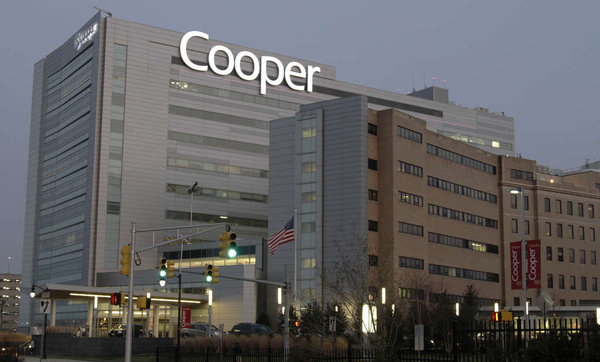
Norcross is chairman of Cooper University Hospital in Camden, which has partnered with Rowan in a new South Jersey medical school.

In what some say was political payback, Sweeney introduced legislation to eliminate the board of trustees, saying Rutgers did not need two governing bodies. But the measure failed.

Sweeney has repeatedly said Rutgers’ system of governance is antiquated and needs to be updated — especially after the school found itself at the center of several sports-related scandals in recent years.

The state Senate’s higher education committee plans to hold a hearing Monday in Trenton on Sweeney’s new bill (S-1860) to expand the board of governors. Speaker Vincent Prieto (D-Hudson) has proposed an identical bill in the Assembly.

Harvey, the board chairman, said he could not attend Monday’s hearing in Trenton, but would submit written testimony opposing the measure that would be read by a fellow board member.

Harvey said he would argue that adding four new members to the board with medical backgrounds — to reflect Rutgers’ addition of medical schools last year — is unnecessary. The board already expanded from 11 to 15 members last year after Rutgers’ merger with the former University of Medicine and Dentistry of New Jersey.

“The (Sweeney) bill addresses a need that was already addressed,” Harvey said. “This proposed bill simply muddies the water.”

In addition, he said, the board would soon have a number of open seats because the terms of several members are expiring, providing the opportunity to add more members with medical backgrounds. Harvey’s own term on the board is among those ending next month.

Sweeney is not the only one questioning whether Rutgers’ governance system needs to be reformed. Last summer, Rutgers formed a task force to study its governing boards after it merged with UMDNJ. The task force was headed by the Rev. M. William Howard Jr., pastor of Bethany Baptist Church in Newark, who is a former chairman of the Rutgers board of governors.

Howard’s group submitted its recommendations over the winter, though Harvey said he and Dorothy Cantor, the chairwoman of the board of trustees, had chosen not to make them public while the university continues to consider reforms.

The task force did not recommend expanding the board of governors or eliminating the board of trustees, Harvey said.

The two boards are continuing to study whether they need to make some changes, including reforms to their committee systems.

“Sen. Sweeney’s bills have been a distraction,” Harvey said.

Philadelphia Inquirer Chair Testifies Norcross Controls Board, Decisions

The Associated Press


on November 13, 2013 at 8:53 PM, updated November 13, 2013 at 9:29 PM

PHILADELPHIA — As feuding owners fight for control of Philadelphia’s two largest newspapers, the board chairman testified that politically powerful co-owner George Norcross runs the show.

Norcross is an insurance executive and Democratic powerbroker in New Jersey. He and five other business leaders pooled $55 million to buy The Philadelphia Inquirer and Philadelphia Daily News last year.

However, philanthropist H.F. “Gerry” Lenfest, the board chairman, said that 18 months later, “everything is really done @ the direction of Norcross.”

The declaration came as a judge weighs a lawsuit seeking to undo last month’s firing of Inquirer editor Bill Marimow, and oust the publisher who fired him.

Fellow investor Lewis Katz, the former New Jersey Nets owner, testified that he and Norcross bought equal shares of the company for $16 million apiece, so that they would both have to agree on major decisions. They had never worked together previously.

Yet Katz said Marimow was fired last month without his consent. He and Lenfest have sued their partners over the firing.

Common Pleas Judge Patricia McInerney must decide whether to return Marimow to the newsroom and oust Publisher Bob Hall, who fired him. The Norcross faction argues such a move would cause yet more turmoil in the troubled newsroom.

The hearing continues Thursday, when Katz’s testimony resumes. Norcross may also take the stand. His roster of lawyers in the City Hall courtroom includes Michael Chertoff, the former U.S. appeals court judge and Transportation Security Administration secretary.

Katz, in his testimony, said the owners signed non-interference pledges to assuage concerns that they would meddle in editorial decisions. But it’s unclear whether the pledge was meant to include hiring or firing the editor.

Lenfest called that a business decision under the owners’ domain.

Hall, though, has argued that he had the unilateral power to fire Marimow, who refused to follow Hall’s order to fire five senior editors.

Marimow said he had assurances that Hall did not control his fate.

He testified that he was hired by Katz and Norcross, after conversations mediated by then-investigative reporter Nancy Phillips, who is Katz’s longtime companion. She had worked with Marimow during his previous stints as editor and Pulitzer Prize-winning reporter.

Phillips, now the city editor, said she helped work on an “official version” of Marimow’s hiring, for public consumption, that said then-Publisher Greg Osberg had been involved. The story was meant to protect Osberg’s feelings, she said. Osberg testified that he had no part in the hiring, and quit six weeks later.

The media company also operates the free Philly.com website, now run by Norcross’ 25-year-old daughter, and fee-based websites for each newspaper.

It’s changed hands five times in the past seven years and, like its peers in the industry, dropped precipitously in value. The company sold for $515 million in 2006, nearly 10 times its purchase price last year.

George Norcross Ally Joins Rutgers Board of Governors

NEW BRUNSWICK, NJ—Amid a long line of political controversies between State Senate President Steve Sweeney and Rutgers University, the New Jersey Senate confirmed the Governor Chris Christie’s appointment of William M. Tambussi to sit on the school’s Board of Governors.

Both Sweeney and Tambussi are close allies of George Norcross III, one of the state’s most powerful unelected political players.

Tambussi is a partner at Brown and Connery, LLP, a South Jersey law firm which has represented George Norcross, as well as Cooper Health Systems, where Norcross serves as the Chairman of the Board.

On August 19, the Senate voted to approve Tambussi’s appointment to the board, which is a combination of individuals appointed by the state’s Governor and others selected from amongst the 59-member Board of Trustees.

“Rutgers is a valuable resource for all the residents of New Jersey,” Tambussi said, adding that the Camden campus would be the focus of his service on the board.

“I think the Camden campus is a very integral part of that. My primary goal is to see the Camden campus is enhanced to its full extent.”

Governor Christie had nominated Tambussi to the Board of Governors, as part of a larger package of appointments, back in May 2013.  Senator Sweeney blocked his nomination, along with several of Christie’s other nominees.

According to a 2008 PolitickerNJ report, Brown and Connery  is considered one of New Jersey’s most powerful law firms.

A 2014 Financial Disclosure Statement shows that Tambussi is a partner for Lawland Associates, a Labor Attorney for the Vineland City Housing Authority, a Municipal Attorney for Chesilhurst Borough, and a Special Counsel Professional for Pennsauken Township.

Sweeney had argued against Governor Christie appointing New Brunswick resident Martin Perez to the Board of Governors.  In his argument, Sweeney cited the new requirement of New Jersey state law to have at least one board member from Essex and Camden County.

However, the Superior Court in New Jersey ruled that Tambussi’s appointment satisfied the Camden County requirement.

RE-EDUCATING CAMDEN – ONE SCHOOL AT A TIME

logo-110
  | JUNE 10, 2011

Democratic power-broker George Norcross wants to see eight charter schools in Camden, and Gov. Christie has some ideas, too.

The Lanning Square site in downtown Camden that is slated for the state’s first “renaissance school.”

This time, Democratic power-broker George Norcross wasn’t on stage with the governor, but at the rear of the sweltering crowd gathered yesterday for Gov. Chris Christie’s second visit to Camden in a week.

The governor was introducing his “Transformation Schools” plan, a small pilot program that would permit private companies to take over the management of select poorly performing public schools.

But even though the governor was at the podium, much of the attention was on Norcross.

With good reason.

Norcross — who characterized the Camden public school system as a “prison” and a “sewer”— spoke to reporters at length and said that his family foundation and the Cooper Health System and University Hospital, of which he is chairman, plan to provide resources for what could be a chain of charter schools.

The priority for Norcross is a charter built on the site of the former Lanning Square Elementary School, adjacent to the construction site for Cooper’s medical school in downtown Camden. But that’s just the beginning.

Norcross said he has held meetings with a number of charter management organizations already in Camden, including Mastery and Camden Promise. And he said action on the proposal would come soon, even if no application has actually been filed with the state as yet.

Schools Development Authority

The property itself is in the hands of the state’s Schools Development Authority (SDA), and has been slated for a Camden district school under the court-ordered school construction program.

Those plans have been put on the back burner, and while not speaking about Lanning Square specifically, SDA officials said last week that they are considering a number of different options about a variety of properties.

“We are considering a number of possibilities on all SDA-owned properties as we determine the best approach to meet the facility needs that exist in SDA districts while ensuring fiscal responsibility,” said spokeswoman Edythe Maier. “Until decisions have been made and a public announcement is appropriate, the SDA is not in a position to discuss the future plans for any SDA-owned sites.”

A Man with a Plan

But Norcross sounded like a man who viewed those more as formalities than obstacles. He spoke at length about the crisis in Camden schools and the urgency in providing choices to families. He said some of his plans could also incorporate Christie’s for public-private partnerships, but the central point is a new school that will be located on the Lanning Square site.

“We’re moving ahead regardless,” he said. “There is no question there will be a school there, but the question is will it be a charter or something like the governor discussed today.”

He called some of Camden’s public schools little more than “juvenile prisons.”

And standing outside on South 3rd Street, where the governor’s press conference was held, Norcross said the foundations providing the same kind of financial support to Camden public schools would be equally fruitless.

“See that sewer drain?” he said, to a gathering group of a half-dozen reporters. “That is what giving them money would be like.”

Norcross wasn’t stopping with one charter school either. “I would be happy if we had eight charter schools under the Cooper engagement,” he said, roughly a quarter the size of Camden’s entire district.

Coming Out

The comments continued an extraordinary coming-out in the past few months for Norcross on school reform issues. Known to be a bit camera-shy, Norcross last week stood with Christie at a graduation to push for school vouchers and the Opportunity Scholarship Act.

A close ally of Camden Mayor Dana Redd and state Senate President Stephen Sweeney (D-Gloucester) and now a Christie stalwart, Norcross is in good position to press his visions for reform in Camden’s schools.

The new proposal from Christie and his acting Education Commissioner Chris Cerf adds some more twists to governor’s own agenda. Under the plan, local school boards would petition to the state to be one of five pilot districts that could use “education management organizations” (EMOs) to run their lowest-performing schools.

New Jersey has more restrictive rules than most, but EMOs can now run charter schools, under some conditions. Christie’s proposal would move EMOs into local district schools as well, and would be the equivalent of the districts themselves remaking their most troubled schools. Still, the new schools would be accountable to the state, Christie said.

It’s not a new idea, either, and EMOs are currently operating schools in 31 states. They have become a prime option with federal turnaround grants as well.

“We’re putting this together with our other education reforms, and hoping that the legislature will pick it up,” Christie said.

Cerf said local buy-in was critical. “It’s a different kind of public school,” he said. “It’s all about local decision-making.”

Still, the proposal will be controversial in itself, especially with both Cerf and Christie, to a lesser degree, having histories in for-profit education. Cerf in much of the 1990s was president of Edison Schools Inc., a pioneering private management company that operated schools in Philadelphia to limited success. Christie as a private lawyer lobbied for the same company.

When asked by a reporter, Christie yesterday dismissed his history with Edison as influencing his proposal, only saying all options should be considered to improve the schools. Edison also has since moved away from school management.

Christie said he was not guaranteeing that Camden would be among those chosen under his plan if the proposal is enacted, but he didn’t hide his preference as he stood before the temporary Lanning Square School.

“Let’s get the legislation passed first,” he said. “And then I can come back to Camden to sign it.”

The New Jersey Education Association (NJEA), the teachers union, quickly came out to denounce the proposal.

“While the details of Gov. Christie’s plan are very vague, the objective is clear,” said NJEA president Barbara Keshishian in a statement.

“It is part of his ongoing effort to privatize public education in New Jersey. Under the guise of helping students, he is attempting to create a system that would funnel taxpayer dollars to private companies.”

Copyright 2014 NJ Spotlight

Powerful Medicine: How George Norcross used his political muscle to pump up once-ailing Cooper Hospital

POSTED: March 25, 2012

In a city synonymous with failure, Cooper University Hospital is the grand exception.

Cooper’s new glass and metal pavilion rises 10 stories over downtown Camden. It cost $220 million.

The first class at its new $140 million medical school starts this summer. Nearby, rehabbed rowhouses on cobblestone streets create an oasis amid Camden’s burned-out buildings.

Behind it all is hospital board chairman George E. Norcross III, the insurance magnate who is now promoting Cooper with the same relentless focus that has made him very wealthy and arguably the top Democratic boss in New Jersey.

Born at Cooper, Norcross is unabashed in his enthusiasm for the hospital that he sees as performing vital medical, economic, and social roles. He also sees it as crucial to the rebirth of the city.

He adds: “I’ve come to see that Cooper’s interests and Camden’s are inseparable.”

But there’s something else that is inseparable — Norcross’ political muscle and Cooper’s agenda. In some ways, the hospital has become another piece of his political apparatus, to the mutual benefit of Democrats and Cooper.

In politics-drenched New Jersey, it’s not unusual for hospitals, with their big payrolls, big budgets, and big thirst for government money, to be political players. But few play the game as aggressively or with as much firepower as Cooper.

No other nonprofit hospital in New Jersey spends so much on lobbyists. In fact, it ranks among the top 25 nonprofit hospitals in America for lobbying expenditures according to national data.

With $775 million in annual revenue, Cooper is the largest hospital in South Jersey. And over the years, firms with ties to board members or those with a pattern of donations to Democrats in Norcross’ base of Camden County have won millions of dollars in hospital-related contracts, public records show.

Among those working at Cooper in recent years: Norcross’ insurance business and the law firm of his brother.

None of this is illegal. But the flow of campaign donations from firms doing business with the hospital has helped sustain Norcross’ Democratic organization, which over the last two decades has not only established control in towns and counties in South Jersey but has also become a driving force in the state capital.

At the same time, New Jersey Democrats have gone the extra mile for Cooper.

When Cooper wanted to stop another hospital from competing with it on a lucrative procedure, a phalanx of lawmakers lobbied on its behalf.

When Cooper challenged a rival’s ad campaign, a Democratic judge in Camden County ordered the competitor to pull its advertising — without hearing from the other hospital.

And when it comes to state funding, no hospital in the region and only a handful in the state have taken in as much as Cooper.

During a recent four-hour interview in the boardroom on the top floor of the new pavilion, Norcross said Cooper picked lawyers and other contractors “who are the best and brightest talents,” not for their connections, political or otherwise.

“Nobody’s making political contributions in return for business,” he said.

Any “inference there is some sort of pay to play is nonsense,” he said.

But he is unapologetic about using his clout to help Cooper. Asked, for instance, whether his power had spurred Gov. Jon S. Corzine in 2009 to give Cooper a medical school by executive order, he replied:

“I sure as hell hope so. Why wouldn’t it? I plead guilty. What else do you want to ask me?”

A Turnaround

In the late 1990s, Cooper University Hospital was just another down-and-out Camden institution.

Federal prosecutors had caught its vice president for finance and its controller looting the institution, siphoning out $22 million over eight years in what the hospital itself would later call “a massive crime wave.”

With Cooper suffering from record deficits, Norcross, then a top executive at Commerce Bank, helped bring the hospital back from the brink in 1999 when he arranged for the bank to lend it $8 million.

Since then, Norcross has put his imprint all over Cooper, from its lavish marketing, to its competitive fight to lure doctors, to its recent $450 million construction boom, to the political figures who work at Cooper and serve on its board.

Just as he was one of the first pols to spend heavily on television ads for lowly county races, Norcross was among the first to sell a hospital on TV, deploying Kelly Ripa as Cooper’s pitchwoman. As it happens, she’s the daughter of Joseph Ripa, the Democratic Camden County Clerk.

The milestones have been coming faster. The medical school, a must-have for any hospital with big ambitions, is finally gearing up. This year, work began on a $100 million cancer center.

Norcross, 56, a Rutgers-Camden dropout-turned-millionaire, runs one of the country’s largest insurance brokerages, Conner Strong & Buckelew, with clients from both the public and private sectors.

He’s also part of a group of wealthy investors seeking to buy Philadelphia Media Network, the parent company of The Inquirer, Daily News, and the Philly.com website. Conner Strong already provides insurance to the company and is a large advertiser.

Along with his political power, Norcross has backed Cooper with his own money. Late last year, he pledged$5 million to the hospital.

Msgr. Michael Doyle, the activist priest of Sacred Heart Church in South Camden, says he hopes Norcross is writing a fresh chapter in the grim Camden story.

“Cooper lifts the name of Camden,” he said. “It’s not people focusing on the murder rate, but on something positive.”

While critics worry about Norcross’ power, Doyle said his connections and ambition have been an asset.

“George has a lot of know-how, and a city like Camden needs know-how.”

An Economic Powerhouse

With its heavy capital spending and big operating budget, Cooper has become an economic powerhouse. It throws off millions in fees and contracts.

Consider Cooper’s heavy borrowing to pay for all that expansion. In the last decade, Cooper’s bond sales have generated $5.1 million in fees to a variety of law firms, title companies, and financial advisers. On top of that, the hospital has handed out big-ticket contracts for other legal work, such as malpractice defense, its public disclosures show.

Many of those who received work via Cooper are major political donors, giving across the state to both parties. But they have been especially generous in Camden County, Norcross’ home base.

During the last decade, firms involved with Cooper have given more than $1.5 million to Camden CountyDemocrats.

As an example, lawyers at Cozen O’Connor, a Philadelphia firm that worked on four Cooper bond issues, have given Camden Democrats $115,060 since 2002. That represented more than 70 percent of its local political contributions in . A Cozen spokeswoman said all donations reflected candidates’ merits.

In interviews, Norcross conceded he had input into who was selected to work on hospital bond issues, managed by state and local authorities.

“Have I made recommendations of quality firms?” he said. “Absolutely.”

But he insists that firms are selected solely on ability and that political donations were irrelevant.

“These people have been making major, sizable donations to the Democratic Party in this region long before any bond issue,” he said.

Lawyers offer Varying Explanations for their Giving.

Attorney Steven Weinstein, formerly with the Philadelphia firm of Blank Rome, has given steadily to South Jersey Democrats over the years, public records show. His giving hit a peak, in 2004 when he gave $30,000to the Camden County Democratic Committee.

The following year, Blank Rome was named one of four law firms to work on a $135 million Cooper bond issue, representing the investment firm Goldman Sachs.

In the six years since, Weinstein’s donations to Camden County Democrats came only to $2,850.

Weinstein said his donations had no connection to Blank Rome.

But David Lebor, another former Blank Rome partner who joined Weinstein in making Camden County donations in 2004, said the firm would sometimes request that lawyers make specific contributions. Lebor said he didn’t know the firm’s motives for making requests. “I don’t ask those questions,” he said.

Blank Rome spokeswoman Melissa Volin said she was not aware of the donations, but the firm had a long relationship with Goldman Sachs.

“I think it would be our reputation with Goldman Sachs that gets us work with them,” she said.

A New Image

For years, Norcross stayed in the shadows.

He has held no official position with the Democratic Party since he stepped down as Camden County chairman almost two decades ago, though no one disputes that he’s in charge.

In one unwanted moment of scrutiny, in 2005 secretly recorded tapes of Norcross surfaced from an earlierState Police investigation into corruption and government contracts.

Norcross was never charged, but he was caught on the tapes cursing, plotting against enemies, and bragging that “the McGreeveys, the Corzines, they’re all going to be with me. Because not that they like me, but because they have no choice.”

In recent years, Norcross has increasingly embraced the spotlight. He’s speaking out not as a party boss, but as the (unpaid) chairman of Cooper.

“It’s something I should have done many years ago. Remaining in the background in many ways defined me in a caricature,” Norcross said.

For many in the public, he said, his image was of a political hack, someone who “had horns and smoked cigars.” (Norcross quit smoking cigarettes 15 years ago.)

Now, Norcross, who joined the Cooper board in 1990 and became chairman in 2006, often talks up Camden and the role Cooper could play in its recovery. He boasts of how he topped the new pavilion with a huge sign.

“I wanted people to see the sign when they are coming over the bridge from Philadelphia,” Norcross said.

He says the fate of Cooper hinges on the health of the entire city.

Thus, while Cooper’s 65-member security force and scores of cameras keep watch on the rehabbed neighborhood around its campus, Norcross has been selling a new strategy to hire more police. He wants to pay for it by cutting police labor costs.

He and Gov. Christie have also joined forces on a law to permit nonprofit organizations to open four new schools in Camden. The measure’s prime sponsor: State Sen. Donald Norcross, one of Norcross’ three younger brothers.

Sparking a furor, Norcross and Christie have also proposed merging Rutgers-Camden with Rowan University, putting Cooper’s new medical school in the middle of what Norcross hopes will one day be an elite research university.

The plan has met with bitter protest from Rutgers-Camden students, faculty, and alumni, some of whom view it as little more than a power grab by Norcross. But Norcross says the merger would be a boon for the region.

“South Jersey for the first time will get its fair share of higher-education dollars,” he said.

Government Largesse

Late last year, the Delaware River Port Authority, its once-vast development kitty finally running dry, approved its last round of project spending. Among the lucky few recipients: Cooper University Hospital. It got $6 million for the cancer center.

No other hospital in New Jersey or Pennsylvania has ever received DRPA assistance, the authority says.

The DRPA money was one of many ways in which Cooper has benefited from government action during the Norcross era. This year, Cooper received $52 million in state funding, more than any hospital in South Jersey — and in the top five for all 72 New Jersey hospitals.

And U.S. Rep. Rob Andrews (D., Camden) has set aside $640,000 in federal earmarks for Cooper over the last decade, the most of any hospital in his district. Another Camden hospital, Our Lady of Lourdes, received nothing.

And up until this year, Cooper also benefited from a state law that sent it extra money for charity care.

To see how it worked, consider Cooper and a hospital six miles away: Kennedy University Hospital in Cherry Hill.

According to figures used to give state aid last year, both Cooper and Kennedy had about the same percentage of uninsured patients: about 10 percent.

Yet when the state provided money to cover that care, Kennedy received 67 cents on the dollar, while Cooper received 95.

Under a 2004 state law written by Assemblyman Louis Greenwald (D., Camden), hospitals generally got paid more for treating a higher proportion of uninsured patients.

But Greenwald also included a provision mandating that one hospital in each of the state’s 10 poorest cities got the top rate automatically, regardless of its uninsured-patient load.

Last year, the only hospital that benefited was Cooper.

In an interview, Greenwald, whom Norcross recruited to run for office, said the Cooper chairman had nothing to do with the bill.

Greenwald said his measure was aimed at protecting hospital access for the urban poor. “It was never designed to help one hospital,” he said.

The exemption ended last year after Christie revised the formula to streamline the funding process.

In the interview, Norcross said the extra money for Cooper made sense given its high total number of low-income patients.

“Our cost and our burden and our responsibility is so much higher than a suburban hospital,” Norcross said.

David Knowlton, president of the N.J. Health Care Quality Institute, said assessing Cooper’s political clout required a nuanced analysis.

“There are some hospitals who get extra money politically because they exert influence,” Knowlton said.

“At the same time, Camden is one of the most impoverished cities in the country. Cooper is an anchor part of making that city right. It’s a complicated picture.”

Narrow Margins

With its large number of low-income patients, plus its heavy spending on expansion, Cooper walks a delicate financial line.

As John P. Sheridan Jr., Cooper’s chief executive officer, puts it, the 5,370-employee hospital operates on a “razor thin” margin.

And that “profit” margin has been getting thinner. In 2008, Cooper’s revenue exceeded expenses by 5 percent. Last year that edge had shrunk to just 1 percent.

And Cooper’s bond rating is one level above junk status.

In 2008, Cooper took a financial hit when it agreed to pay $3.8 million to the U.S. Treasury to settle a lawsuit alleging that it had improperly inflated Medicare bills.

This allegation was leveled against Cooper and 15 other hospitals in a civil suit brought by hospital consultant Anthony Kite in concert with the U.S. Justice Department.

After studying Cooper financial data, Kite said Cooper had doubled its inpatient Medicare charges earlier in the decade, though its costs went up just 10 percent. As a result, Kite said, Cooper saw its Medicarepayments explode by more than $50 million over three years.

“They gamed the system,” Kite said recently.

Cooper didn’t admit wrongdoing and said it settled to avoid lengthy litigation. The feds also went after other U.S. hospitals, many of which settled for much larger amounts.

While Cooper had done a lot to raise its profile in the region by focusing on high-end services like cardiology and neurosurgery, its location in Camden remains a heavy burden, experts say.

“They’ve moved up,” said Jerry Katz, a health-care consultant and former top executive at Hospital of theUniversity of Pennsylvania. But high numbers of “Medicaid and no-pay patients will hit the bottom line.”

Flood the Zone

Cooper’s ability to fight for political dollars is unmatched in New Jersey.

Its lobbying effort is a $500,000-a-year operation, involving outside firms in Trenton and Washington, as well as a group of in-house staffers, not to mention Norcross and Sheridan.

The sum includes money spent on community relations and public relations, the hospital says.

Sheridan’s old law firm, Riker Danzig Scherer Hyland & Perretti L.L.P., has been a paid lobbyist for Cooper for at least a decade. More recently, the hospital put another firm on its roster.

It didn’t look far to make the hire.

In 2010, Cooper added Republican lobbyist Jeff Michaels to the team. In another lobbying venture, he is the partner of Norcross’ brother Philip.

The hospital has paid the firm solely operated by Michaels $180,000 over the last two years.

On top of the paid lobbyists, George Norcross has had a cadre of former or current politicians either on the hospital’s payroll or ready to pitch in when needed.

Some find work at the hospital, like Assemblyman Angel Fuentes, who has been a patient representative at Cooper since 1996.

Susan Bass Levin, who butted heads with Norcross as Cherry Hill mayor and later served as a cabinet member under three governors, is paid $292,000 yearly to run the Cooper Foundation, the hospital’s fund-raising arm.

Joking that at one time hospitals in Newark would have had “a ward leader as head of cardiology,” Norcross said he had hired on merit.

“There are always people who have former lives in government or politics who are extremely talented,” he said.

Dueling Ads

For other hospitals, competing against Cooper can feel like an uphill battle.

In 2009 Cooper and the Virtua health system, which operates hospitals in Camden and Burlington Counties, squared off in a bitter court battle about which one could claim it had the “most Top Docs,” based on magazine rankings.

In ads and a billboard on the Walt Whitman Bridge, Virtua said it had the largest number of “Top Docs” inSouth Jersey, a claim Cooper had been making for several years.

The struggle was nasty. In an e-mail later made public as part of the litigation, an advertising executive working on Virtua’s account said its campaign “rams it down Coopers throat.”

More than a month after Virtua launched its campaign, Cooper sued, claiming its rival’s ads were false.

On the morning of the day Cooper filed suit, its lawyer called Virtua’s 1-800 number at 7:55 a.m., leaving a message that the suit would be filed.

At a hearing a few hours later, Camden County Superior Court Judge Mary E. Colalillo ordered Virtua to stop its advertising. No lawyer from Virtua was present.

When Virtua’s lawyers finally got before Colalillo six days later, the judge said it could resume the campaign, provided it didn’t claim that its ads were based on an “independent study.”

Attorney Philip H. Lebowitz had seen enough. He moved the case to federal court.

“You don’t say ‘Why did you do this?’ to a judge,” Lebowitz said. “But we were concerned with going forward with the case in that court.”

Colalillo wouldn’t comment. During the first hearing, she described her ruling as “rare” but said the ads posed “a matter of life and death based on the decisions that are made.”

Colalillo is a former staff lawyer for the Camden County government and an assistant county prosecutor nominated to the bench in 1992 by then-Gov. James J. Florio. At the time of her nomination, an Inquirer news story described her as a Norcross political ally.

Gary Lesneski, Cooper’s general counsel, said it won the order on the strength of its case.

“Judges don’t enter temporary restraining orders because they like you,” he said.

In the end, the case was settled. Both hospitals switched to new pitches, each dumping their “Top Docs” campaign.

A Lucrative Procedure

In another bitter dispute with Virtua, Cooper again brought the heat.

Seven years ago, Cooper was fighting in court and in the capital to keep Virtua’s Marlton hospital from doing angioplasties. Cooper had already been doing the procedure, a known moneymaker.

According to documents and interviews, four New Jersey Democratic legislators wrote or called the state health commissioner to urge him to block Virtua from joining a national study that would have enabled it to do the procedures, which unblock blood vessels.

“It was very polite,” said Fred Jacobs, the former commissioner.

Those lobbying for Cooper included then-legislators John Adler, Joseph Roberts Jr., and Wayne Bryant, all Democrats from Camden County.

(Adler is now dead. Bryant is in prison on an unrelated federal corruption conviction. The new Cooper pavilion is named after Roberts, now retired from public office).

The fourth to lobby was then-Assembly Speaker Albio Sires, intervening far from his North Jersey district, sources said. Sires, now a Democratic congressman, didn’t return calls.

In the end, the campaign fell short. Jacobs wouldn’t budge and Virtua kept the right to do angioplasties.

‘Interested Persons’

In recent years, the granting of hospital business to insiders has come under increasing scrutiny, in Congressand among experts on nonprofits.

Uwe Reinhardt, an economics professor at Princeton University, has pushed for greater transparency at tax-exempt nonprofit hospitals to ensure that money is being spent properly.

“Over half of a typical hospital’s money is taxpayer money,” Reinhardt pointed out.

As Cooper has spent its millions, hospital insiders have frequently been on the receiving end.

From 2008 to 2010 Cooper paid more than $40 million to companies tied to the hospital’s board of trustees, according to public-disclosure documents the hospital filed with the IRS.

The payments included:

$1.6 million to Norcross’ Marlton insurance brokerage, Conner Strong and Buckelew.

$1.8 million to the Parker McKay law firm, where Philip Norcross is the firm’s chief executive.

$4.6 million to the former Commerce Bank and its successor, TD Bank. Norcross and a former Cooper board member were top executives at Commerce.

$277,000 to Riker Danzig, where Sheridan was once a law partner.

But of the millions in payments, the largest share — $33 million — went to a joint venture between international construction giant Turner Construction and HSC Construction and Builders in Exton.

Former board member Edward Viner’s son, Jim, serves as president of HSC.

Most of the money was passed through to subcontractors and the joint venture was paid $2.8 million in fees, Cooper said.

In 2008 and 2009, the last years for which regional data were available, Cooper initially reported more of what the IRS calls “Interested Persons” transactions than any hospital in the Philadelphia area.

In those same years, Philadelphia’s three largest hospital groups reported varying degrees of deal-making with firms tied to their boards.

The largest, Penn Medicine, reported $1.1 million in such contracts. Children’s Hospital of Philadelphiareported $19.3 million — stemming mostly from money paid to the CVS pharmacy chain, where one of its board members at the time served as an executive.

Thomas Jefferson University Hospitals reported no contracts with insiders.

After The Inquirer began working on this article, Cooper amended its 2009 IRS disclosure report, reducing the reported insider dealings by 94 percent.

Lesneski told The Inquirer that “as a result of your inquiries,” Cooper reexamined its past forms.

This prompted Cooper to remove many contracts from its disclosure, such as the large contract to Turner/HSC, he said.

Cooper concluded that the stake of Viner’s son in the construction joint venture was less than the 5 percent ownership threshold that triggers reporting, Lesneski said.

Legal interpretations of what hospitals should report vary, said Jill Manny, executive director of New York University’s National Center on Philanthropy and the Law.

The IRS rules “aren’t perfectly clear,” she said. “The accountants are the ones that make the decision on what to report and not report.”

Hospitals often try to avoid having attorneys and other professionals whom they do regular business with on their boards, said Sally Roslow, vice president of development with the N.J. Hospital Association.

“You can’t untangle that,” said Roslow, who was not speaking specifically about Cooper. “Usually in good ethical conscience, a lawyer will step down [from a hospital board] while that law firm is there.”

Cooper officials say the hospital followed all IRS rules governing disclosure of these transactions and, in those cases where there was a potential conflict, board members recused themselves from voting.

Cooper declined to provide details about its various contracts, such as the figures for competing bids. That said, there is no indication that anyone got a sweetheart deal.

A Showdown

For decades Camden officials — including Norcross’ own father, a Cooper board member before him — had pushed for a medical school for Cooper.

But it was George Norcross who got it done with his trademark mix of bluster, determination, and political juice.

In his campaign to win the school, Norcross took the Cooper helicopter to the Newark offices of theUniversity of Medicine and Dentistry of New Jersey to confront the man he saw as standing in his way.

Norcross believed that William F. Owen Jr., then UMDNJ’s president, had secretly backed away from his public support for a Camden medical school.

Norcross described the session bluntly:

“He was confronted. It was apparent that he had got caught lying, not only to us but to everyone he had pledged this medical school to.

“I’m sure it was a less than pleasant meeting for him. I don’t threaten people — I’m sure I called him a liar. He was a liar. He is a liar. He was an incompetent leader of UMDNJ.”

Owen declined to talk about the meeting, beyond issuing a brief statement saying he never had the power to authorize a medical school.

However, Richard J. Codey, New Jersey’s governor at the time, said Owen told him that he had been shocked by the episode.

Owen, according to Codey, “said he had never had a conversation like that in his life, that he [Norcross] comes in a helicopter and says: ‘This is what we’re doing, whether you like it or not. This is what’s coming down.’ ”

Norcross was right in his forecast. In June 2009, Gov. Corzine, who had succeeded Codey, issued an executive order setting aside millions in state money to open the medical school at Cooper.

In one stroke, Corzine bypassed the Legislature, angering North Jersey lawmakers.

“The way it was done was cloak-and-dagger,” Codey said recently. “This was all behind the scenes, and the timing was on purpose, ensuring the Legislature couldn’t take a look at it.”

For Norcross, though, it was another case of him besting the “Northern barons,” the people with “historic hostility to anybody who resides south of Exit Six of the turnpike.”

“Now when you do that, you are going to get some folks angry.”

Contact James Osborne at 856-779-3876 or jaosborne@phillynews.com.

Former staff writer Chelsea Conaboy contributed to this article.

___

(c) 2012 The Philadelphia Inquirer

Broad Foundation Grant Terms: Gov. Christie Must Stay in Office

NPQ-Header

By | December 14, 2012

December 13, 2012; Source: Newark Star-Ledger

Thanks to the intrepid legal work of David Sciarra of the Education Law Center in Newark, N.J., the public has learned that a $430,000 grant from the Eli and Edythe Broad Foundation to the state of New Jersey is predicated on Gov. Chris Christie staying in office. Is this a grant to the state of New Jersey or a grant to Gov. Christie’s New Jersey? Does a foundation get to tell a nonprofit board of directors not to change executive directors or a state’s voters and legislators not to change governors or else the grant is torpedoed? Does the Broad represent a foundation using its funding to dictate public policy from behind the scenes?

The Broad Foundation grant is in support of various educational reforms in the state, with performance benchmarks such as a 50 percent increase in the number of charter schools or the number of high quality charter schools, depending on which way one reads the grant language. It is not the first Broad grant to New Jersey, having been preceded by extensive support to the state’s Department of Education aimed at “’accelerat(ing)’ the pace of ‘disruptive’ and ‘transformational’” change. The Christie-contingent Broad Foundation grant raises so many troubling questions that one hardly knows where to start.

To begin with, Broad included conditions in this current grant that are astonishing, requiring that all public announcements of the program by the state have to be cleared with the Broad Foundation. The grant contains a lengthy provision about making documents, files, and records associated with the grant the property of the Foundation. Are these materials, generated and used by the government as a result of the grant, not to be disclosed to the public? Is the foundation telling government—and the legislature and the voters—what they should accept as public versus private? A foundation spokesperson’s contention that this only applies to a sliver of files containing “personal information” doesn’t seem to fit with the fact that Sciarra and his Center only found out about the terms of this Broad grant at all, much like other Broad funding in the state, by pressing for disclosure through the state’s Open Public Records Act. Giving some definition to the Foundation’s narrow commitment to transparency, the grant agreement adds, “If the state is legally required to make any of these materials public — either through subpoenas or other legal process — it must give the foundation advance notice of such disclosure so that TBF may contest the disclosure and or/seek a protective order.”

Is this what behind-the-scenes, foundation-directed government looks like? Remember that Broad has been paying for a special advisor to Christie’s education commissioner, Christopher Cerf, who himself is a product of the Broad Foundation’s training programs. Is it too much to suggest that this grant is not just predicated on Christie staying in office, but on Christie’s keeping Broad product Cerf in place? Doesn’t the legislature—and don’t the voters—have a say in who runs the government? Shouldn’t the legislature and the voters know what the government is agreeing to do or forego in return for getting money from a private foundation?

This also raises the question of whether other education funders allied with the Broad Foundation are attaching similar requirements on their grant support for New Jersey schools. For example, Facebook’s Mark Zuckerberg, already a controversial donor to Newark public schools, has committed funding behind the Broad Foundation plan to support regional assistance centers to work with superintendent Cerf on school turnarounds. A batch of Zuckerberg grant money was accepted by the state’s Board of Education at the same time as the Broad Foundation’s $430,000 grant was received. Do Zuckerberg’s grants require the continuation of Cory Booker in Newark or Christie in the state capitol, or do they establish secrecy requirements like the Broad Foundation’s grant conditions?

Sciarra thinks that the Broad grant may be “precedent-setting to require that an elected official remain in office as a condition for a grant,” but we suspect that he is wrong, especially in the arena of education reform as practiced by those promoting charter schools. Think of the pushback that arose as the Bill & Melinda Gates Foundation provided support to states for the “Race to the Top” initiative with pretty clear evidence of what states would have to do to qualify for the Gates money (see here and here). Or consider the foundations that provided funding to Washington, D.C. schools predicated on the necessary presence of Michelle Rhee as chancellor. The Broad Foundation was part of the group of foundations in that case, tying their grant support to Rhee’s continuation in office.

There is nothing wrong with foundations giving grant support to public entities such as the New Jersey Board of Education or the Newark public schools, but when foundations engage with the instruments of democracy, they have to play by the rules of democracy. That means being open and above board in their dealings, subjecting themselves, their grants, and their interactions with government to the requirements of transparency and disclosure, and not sheltering themselves from the voices of voters. Foundations know how desperate governments are for funding. They know how much leverage, despite their claims to the contrary, they can exercise over government officials. They ought to realize how their involvement can distort the democratic process, whether intentionally or otherwise.

If foundations were to open up on this matter, how many other foundation grants to public sector entities might we find that include language tying the grants to the presence of specific political figures remaining in office? How many other grants to the public sector might we find requiring a foundation to retain confidential ownership and control over documents, files, and communications that are generated and used by public sector grant recipients?—Rick Cohen

“If we desire respect for the law, we must first make the law respectable.” – U.S. Supreme Court Justice Louis D. Brandeis