
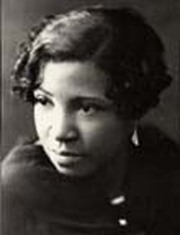
Lois Mailou Jones (1905-1998) was an American abstract-expressionist painter associated with the New Negro Movement. Jones’ numerous oils and watercolors incorporating African and Hatian motifs are her most widely recognized works. Jones’ mastery of the principles of Cubism, her affinity for bright colors and her unique ethnic style have proven to have an enduring appeal. Continue reading Lois Mailou Jones
All posts by Lawrence Christopher Skufca, J.D.

Octaroon Girl
Artist: Archibald Motley, Jr.
Medium: oil on canvas
Date: c. 1925

Birds in Flight
Artist: Aaron Douglas
Medium: oil on canvas
Date: c. 1927
In 1927, Aaron Douglas and his wife, Alta, moved to France for a yearlong period of study. While working in Paris, Douglas met his idol Henry Ossawa Tanner and greatly expanded his knowledge of modern painting, especially Cubism. The angular Cubist rhythms that animate this dynamic canvas, which Douglas made during his stay in Paris, reflect his discovery of the work of Picasso. Like Picasso, Douglas embraced African sculpture and masks as a source of imagery for his modernist abstractions, which, after his return to the United States in 1928, would make him one of the foremost visual artists of the Harlem Renaissance.
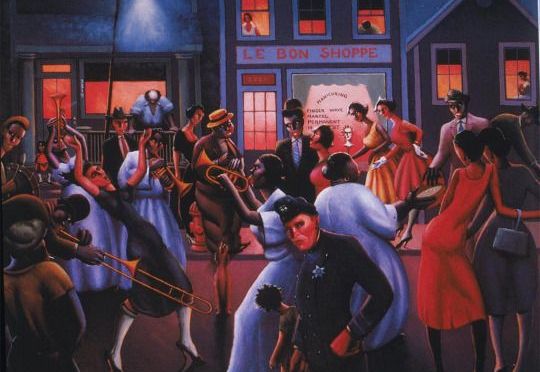
Saturday Night
Artist: Archibald Motley, Jr.
Medium: oil on canvas
Date: c. 1935

Nightlife
Artist: Archibald Motley, Jr.
Medium: oil on canvas
Date: c. 1943
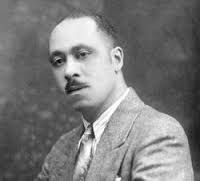
Archibald John Motley, Jr.
Archibald John Motley, Jr. (1891-1981) exemplifies the cultural diversity within the American modernist art community known as the New Negro Movement. Motley is best known for his colorful chronicling of the African-American experience during the 1920s and 1930s, depicting a vivid, urban black culture that bore little resemblance to the conventional and marginalizing rustic images of black Southerners which were common during this era. Continue reading Archibald John Motley, Jr.
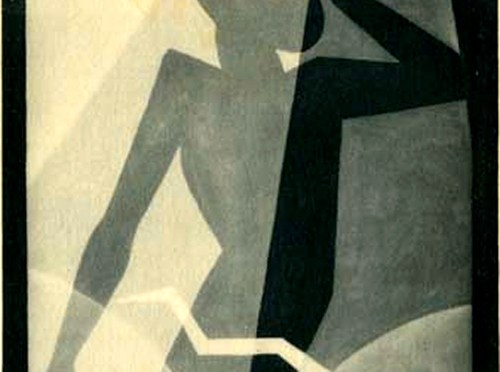
Listen Lord
Artist: Aaron Douglas

Into Bondage
Aaron Douglas, oil on canvas, c. 1936
Into Bondage premiered as one element of a four-part mural series in the Hall of Negro Life at the 1936 Texas Centennial Exposition in Dallas. It was Douglas’ intention to create and present fresh, modern images depicting the contributions of African Americans to the state’s history and achievements. This painting portrays slavery, as Douglas believed that understanding the past was essential to moving forward in the future.
The bound captives descend toward two large ships that are set to transport the Africans across the Atlantic to their future of enslavement. While most of the men’s heads are bowed low in despair, the woman on the left looks up and raises her shackled hands above the horizon line.
The large central figure’s eye slit recalls the masks of the Dan people of Africa. His profiled head and chest and twist of the hips demonstrate Douglas’ predilection for ancient Egyptian art. Although the man stands on a pedestal referencing the auction block from which he will be sold, a ray of light from the North Star, which guided slaves on the Underground Railroad, illuminates his face and foreshadows his ultimate freedom.
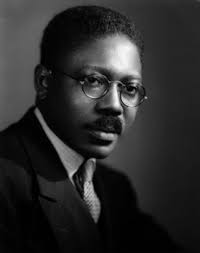
Aaron Douglas
Aaron Douglas (1898-1979) was the Harlem Renaissance artist whose work best exemplifies the New Negro Movement. Douglas was an active member of the thriving cultural milieu known as the New Negro Movement which sought to cultivate the Black American cultural experience and highlight the effects of racial injustice. Progressive at heart, he developed a distinctive painting style using silhouetted forms and fractured space to express both, the harsh struggles of African American life in 1920’s Harlem and the future hope of social progress. Continue reading Aaron Douglas

Black Belt
Artist: Archibald Motley, Jr.
Medium: oil on canvas
Date: c. 1934
 Camden Civil Rights Project