
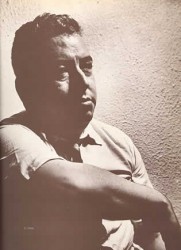
Emiliano Augusto Cavalcanti de Albuquerque Melo (1897 – 1976), known as Di Cavalcanti, was a Brazilian Modernist painter who is best known for his scenes of mulatas surrounded by the lush tropical imagery and his extravagantly colorful renditions of contemporary Brazilian culture. His work draws on a wide range of influences, including Cubism, Fauvism and Picasso’s Neoclassicism of the 1920s. While his Mexican contemporaries Rivera, Orozco, and Siqueiros idealized the struggles of the indigenous working class, Di Cavalcanti turned to the streets, bars, cafes, cabarets, nightclubs, and carnaval, to portray the diverse makeup of a youthful metropolis where socialites, the working class, and social deviants mingled in harmony in the distinctly local flavor of Brazilian urban life. Common themes included indigenous women, doves, and carnival scenes. Continue reading Emiliano Di Cavalcanti
All posts by Lawrence Christopher Skufca, J.D.

Mulher com Gato
Artist: Emiliano Di Cavalcanti
Medium: oil on canvas
Date: c. 1953
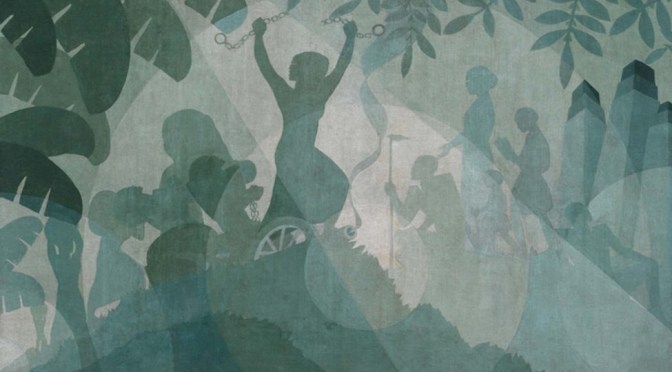
Harriet Tubman Mural
Artist: Aaron Douglas
Medium: Mural at Bennett College for Women, Greensboro, North Carolina
Date: c. 1931
Among Douglas’s most important works are large‐scale murals. Using a modernist language of geometric and abstract forms, he depicted slavery, emancipation, the power of education, and the contributions of African Americans to American culture and the nation’s economy. Allegorical and epic, the narratives draw on Egyptian wall painting and Ivory Coast sculpture as well as modern architecture, jazz, and dance. Continue reading Harriet Tubman Mural

Pablo Picasso
### BIOGRAPHY CURRENTLY UNDER CONSTRUCTION ###

The Poet of Poverty (2010)
The following video excerpts are from the 2010 documentary film Poet of Poverty. This unique documentary investigates how a city like Camden, NJ, which is annually ranked among the poorest and most dangerous cities in America, can come into existence in one of the wealthiest nations in the world. The film is based on the letters of Father Michael Doyle, a local parish priest, which are narrated by Martin Sheen.
“I Feel Safe Here”
The film’s opening segment was written in the aftermath of the terrorist attacks of Sept. 11, 2001, and accompanies the image of a child walking past boarded-up buildings and trash-filled streets on his way to school.
“A seventh grade boy in Sacred Heart School made this comment after the frightening destruction of the twin towers in New York that killed 2,700 people. ‘I feel safe here,’ he said. It was an amazing statement because most people are shocked in their shoes and scared to death. ‘You’re not afraid,’ he was asked. ‘No,’ he said. ‘I’m not afraid because if the terrorists fly over Camden, they’ll think they have done it already.’”
“Hope in Camden”
This second two minute segment, entitled “Hope in Camden”, features Martin Sheen narrating the poem The Dolphins Danced on Arlington to the visual of impoverished children in Camden at play in a makeshift pool built from a discarded hot tub and their imagination. The poem reads:
“One day God sent a message from of all places Arlington Street, and it brightened up the doorway of my mind. On Arlington, in the awful heat, on that Godforsaken street without light or life, ugly, urban decay at levels straining the imagination, seven children were splashing in cascading water like shining wet dolphins in the sun. Somehow, they had hauled a discarded hot tub from Adventure Spas on Chelton Avenue, opened a fire hydrant and the powerful pressure sent the water upward on an old sheet of plywood into the tub and sent the children into ecstasies of delight in spite of all the awful misery around them…Nothing could daunt the wild surge of their young lives and hopes. What is it about hope? Does its real inspiration only rise out of the tragic emptiness to take its pure and unsupported stand against all odds?”
Fair Use Notice
This video may contain copyrighted material. Such material is made available for educational purposes only in an effort to advance the understanding of human rights and social justice issues and is distributed without profit to those who have expressed a prior interest in receiving the included information for research and educational purposes. This constitutes a ‘fair use’ of any such copyrighted material in accordance with Title 17 U.S.C. Section 107 of the U.S. Copyright Law.
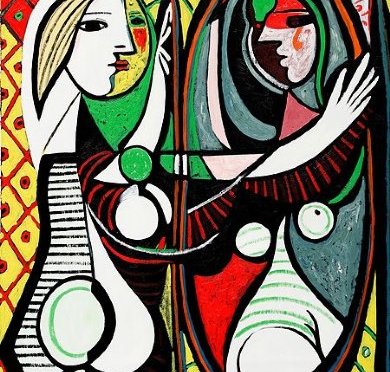
Jeune Fille Devant un Miroir
Artist: Pablo Picasso
Medium: oil on canvas
Date: c. 1932
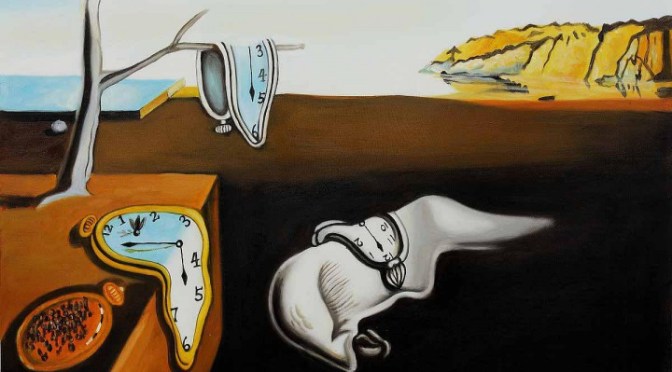
Persistence of Memory
Artist: Salvador Dalí
Medium: oil on canvas
Date: c. 1931

Promenade
Artist: Norman Lewis
Medium: oil on canvas
Date: c. 1961
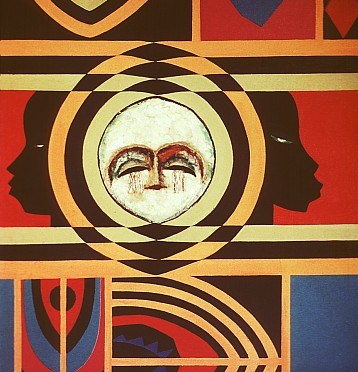
Moon Masque
Artist: Lois Mailou Jones
Medium: collage and oil on canvas
Date: c. 1971
Moon Masque (1971) includes a Kwela mask from Zaire framed by textile patterns that divide the canvas in three horizontal bands, an arrangement that also reflects West African woven strip cloths. Black, ochre and red organize the canvas in series of complex rhythms. The Haitian style, which retains a narrative sense and a realistic treatment of the figures is furthered into bolder abstraction. The narrative is gone and replaced by the juxtaposition of symbolic motifs, underlying the variety of African cultures as well as their proximity and unity, all elements of the pan-African discourse.
excerpt by Dr. Catherine Bernard (2002 Anyone Can Fly Foundation Professional Scholars Grant recipient)

From Slavery Through Reconstruction
Artist: Aaron Douglas,
Aspects of the Negro Life Series ,
Medium: Mural at Schomburg Center for Research in Black Culture, NYC, NY (formerly New York Public Library’s 135th Street branch),
Date: c. 1934
 Camden Civil Rights Project