Tag Archives: BBC

Racism: A History (2007)

Racism – A History was first broadcast on BBC Four in March 2007 to mark the bicentenary of the Slave Trade Act 1807 which abolished the slave trade in the British Empire. The three-part documentary series closely examines the development of Racism over the last 500 years, revealing some uncomfortable truths about how racist attitudes came into being and were spread into popular culture.

Though the institution of slavery dates back to ancient civilizations, the modern concept of racism began with the African Slave Trade in the sixteenth century. The self interested desire to economically exploit Africans gave birth to the European concept that different races of human beings existed, distinguished by the colour of their skin.

Episode 1: The Colour of Money

https://www.youtube.com/watch?v=efI6T8lovqY

The series begins by examining how the development of modern racist attitudes can be attributed to the colonial powers’ desire to justify the African slave trade. Professor James Walvin, Professor of History Emeritus at the University of York explains,

“the British don’t become slave traders and slavers because they are racist; they became racist because they use slaves for great profit in the Americas and devise a set of attitudes towards black people that justifies what they’ve done. The real engine behind the slave system is economics.”

It was this desire to legitimize the exploitation of Africans for cheap labor that ultimately fueled the creation of the idea that an hierarchy of the races existed. This notion was subsequently supported by religious and philosophic apologists which shifted public perception into believing the subjugation and dehumanization of Blacks was an acceptable social practice.

Episode 2: Fatal Impacts

https://www.youtube.com/watch?v=IdBDRbjx9jo

Part Two examines how the practice of racial classification and scientific racism developed in European societies during the Nineteenth Century. Religious dogmas and discredited sciences such as Phrenology created the myth that Negroes were a sub-species giving European colonists the moral justification they needed to justify the mistreatment and exploitation of indigenous populations. These theories would eventually evolve into the discipline of Eugenics and the Nazi vision of the “Master Race,”  which would lead to the forced labor and mass genocide of over eight million European Jews, Slavics and Romanians.

Episode 3: A Savage Legacy

https://www.youtube.com/watch?v=oCJHJWaNL-g

Part three of the series examines the impact of racism in the 20th Century. By 1900, European colonial expansion had reached deep into the heart of Africa. Under the rule of King Leopold II, The Belgian Congo was turned into a vast rubber plantation. Men, women and children who failed to gather their latex quotas would have their limbs dismembered. The country became the scene of one of the century’s greatest racial genocides, as an estimated 10 million Africans perished under colonial rule. The final episode also explores the Jim Crow Era in America, the Apartheid regime which developed in South Africa and the institutional racism which still affects the United Kingdom.

Fair Use Notice

This video may contain copyrighted material. Such material is made available for educational purposes only in an effort to advance the understanding of human rights and social justice issues and is distributed without profit to those who have expressed a prior interest in receiving the included information for research and educational purposes. This constitutes a ‘fair use’ of any such copyrighted material in accordance with Title 17 U.S.C. Section 107 of the U.S. Copyright Law.
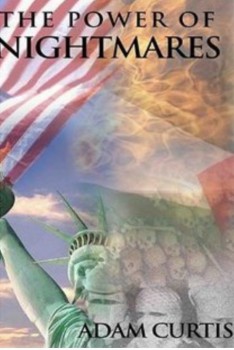
The Power of Nightmares: The Rise of the Politics of Fear (2004)

The Power of Nightmares is Adam Curtis’ documentary series about the use of fear for political purposes. It first aired on BBC Two in the Autumn of 2004 as a series of three one hour documentaries questioning whether Western concerns over terrorism and the threat of al-Qaeda were exaggerated by politicians seeking to maintain their power and authority.

The three part series assesses whether the threat from a hidden and organized terrorist network is an illusion. Should we be worried about the threat from this terrorist organization or is it simply a phantom menace being used to prevent the erosion of our faith in government?

Episode 1: Baby It’s Cold Outside

 Part one, examines the origins of the neo-conservatives and the radical Islamists in the 1950s.

In the past our politicians offered us dreams of a better world. Now they promise to protect us from nightmares.

The most frightening of these is the threat of an international terror network. But just as the dreams were not true, neither are these nightmares.

The Power of Nightmares examines whether the belief that the West is threatened by a hidden and organised terrorist network is an illusion.

UK Prime Minister and US President George W Bush stand behind a picture of Osama Bin Laden

At the heart of the story are two groups: the American neo-conservatives and the radical Islamists. Both were idealists who were born out of the failure of the liberal dream to build a better world.

These two groups have changed the world but not in the way either intended. Together they have created today’s nightmare vision of an organised terror network. This is a useful illusion which politicians have found restores faith in their leadership during a disillusioned age.

The rise of the politics of fear begins in 1949 with two men whose radical ideas would inspire the attack of 9/11 and influence the neo-conservative movement that dominates Washington.

Both these men believed that modern liberal freedoms were eroding the bonds that held society together.

The two movements they inspired set out, in their different ways, to rescue their societies from this decay. But in an age of growing disillusion with politics, the neo-conservatives turned to fear in order to pursue their vision.

They would create a hidden network of evil run by the Soviet Union that only they could see.

The Islamists were faced by the refusal of the masses to follow their dream and began to turn to terror to force the people to “see the truth”‘.

Episode 2: The Phantom Victory

Part two, the Phantom Victory, looks at how radical Islamists and neo-conservatives came together to  defeat the Soviet Union in Afghanistan

https://www.youtube.com/watch?v=7QTaJ_ZVn-4

On 25 December 1979, Soviet forces invaded Afghanistan.

Moscow was able to install a friendly government in a neighbouring country but at a price.

The invasion gave a common cause to an extraordinary alliance of radical Islamists in Afghanistan and around the world and to the neo-conservatives in the US.

It was a key battleground of the Cold War.

Washington provided money and arms including even Stinger missiles capable of shooting down Soviet helicopters.

But it was Islamic Mujahideen fighters who would fire them.

Among the many foreigners drawn to Afghanistan was a young, wealthy Saudi called Osama Bin Laden.

Mujahideen fightersAfter nearly 10 years of fighting, Soviet troops pulled out of Afghanistan.Long before 9/11, he would have been seen by neo-conservatives in Washington as one of their foot soldiers, helping fight America’s cause.

Both the neo-conservatives and the Islamists believed that it is they who defeated the “evil empire” and now had the power to transform the world.

But both failed in their revolutions.

In response, the neo-conservatives invented a new fantasy enemy, Bill Clinton, focusing on the scandal surrounding him and Monica Lewinsky.

Meanwhile, the Islamists descend into a desperate cycle of violence and terror to try to persuade the people to follow them.

Out of all this comes the seeds of the strange world of fantasy, deception, violence and fear in which we now live.

Episode 3: The Shadows in the Cave

The final episode explores how the illusion was created and who benefits from it.

https://www.youtube.com/watch?v=WD1BRE-DBsA

In the wake of the shock and panic created by the devastating attack on the World Trade Center on 11 September, 2001, the neo-conservatives reconstructed the radical Islamists in the image of their last evil enemy, the Soviet Union – a sinister web of terror run from the centre by Osama Bin Laden in his lair in Afghanistan.

There are dangerous and fanatical individuals and groups around the world who have been inspired by extreme Islamist ideas, and who will use the techniques of mass terror – the attacks on America and Madrid make this only too clear.

Osama Bin LadenBut the nightmare vision of a uniquely powerful hidden organisation waiting to strike our societies is an illusion.

Wherever one looks for this al-Qaeda organisation, from the mountains of Afghanistan to the “sleeper cells” in America, the British and Americans are chasing a phantom enemy.

But the reason that no-one questions the illusion is because this nightmare enemy gives so many groups new power and influence in a cynical age – and not just politicians.

Those with the darkest imaginations have now become the most powerful.

Fair Use Notice

This video may contain copyrighted material. Such material is made available for educational purposes only in an effort to advance the understanding of human rights and social justice issues and is distributed without profit to those who have expressed a prior interest in receiving the included information for research and educational purposes. This constitutes a ‘fair use’ of any such copyrighted material in accordance with Title 17 U.S.C. Section 107 of the U.S. Copyright Law.

PREVIOUS RESPONSE TO VIEWERS BY ADAM CURTIS

The BBC was inundated with correspondence and Viewers were invited to put their questions to the creator of the series, Adam Curtis. Here are some of the Questions and Responses:

Page 1: http://news.bbc.co.uk/2/hi/programmes/4202741.stm

Page 2: http://news.bbc.co.uk/2/hi/programmes/3973195.stm

Suggested Reading:

Hungerford, J. M.. The Exploitation of Superstitions for Purposes of Psychological Warfare. Santa Monica, CA: RAND Corporation, 1950. http://www.rand.org/pubs/research_memoranda/RM365. Available in .pdf form at:  http://www.rand.org/content/dam/rand/pubs/research_memoranda/2008/RM365.pdf

Lemnitzer, L.L. Northwoods Report: Justification for U.S. Military Intervention in Cuba. Washington, D.C.: The Joint Chiefs of Staff, 1963.  http://nsarchive.gwu.edu/news/20010430/northwoods.pdf

National Security Agency. Gulf of Tonkin Index. Washington, D.C.: NSA, 2005-06.  https://www.nsa.gov/public_info/declass/gulf_of_tonkin/