Category Archives: History

The Power of Nightmares: The Rise of the Politics of Fear (2004)

The Power of Nightmares is Adam Curtis’ documentary series about the use of fear for political purposes. It first aired on BBC Two in the Autumn of 2004 as a series of three one hour documentaries questioning whether Western concerns over terrorism and the threat of al-Qaeda were exaggerated by politicians seeking to maintain their power and authority.

The three part series assesses whether the threat from a hidden and organized terrorist network is an illusion. Should we be worried about the threat from this terrorist organization or is it simply a phantom menace being used to prevent the erosion of our faith in government?

Episode 1: Baby It’s Cold Outside

 Part one, examines the origins of the neo-conservatives and the radical Islamists in the 1950s.

In the past our politicians offered us dreams of a better world. Now they promise to protect us from nightmares.

The most frightening of these is the threat of an international terror network. But just as the dreams were not true, neither are these nightmares.

The Power of Nightmares examines whether the belief that the West is threatened by a hidden and organised terrorist network is an illusion.

UK Prime Minister and US President George W Bush stand behind a picture of Osama Bin Laden

At the heart of the story are two groups: the American neo-conservatives and the radical Islamists. Both were idealists who were born out of the failure of the liberal dream to build a better world.

These two groups have changed the world but not in the way either intended. Together they have created today’s nightmare vision of an organised terror network. This is a useful illusion which politicians have found restores faith in their leadership during a disillusioned age.

The rise of the politics of fear begins in 1949 with two men whose radical ideas would inspire the attack of 9/11 and influence the neo-conservative movement that dominates Washington.

Both these men believed that modern liberal freedoms were eroding the bonds that held society together.

The two movements they inspired set out, in their different ways, to rescue their societies from this decay. But in an age of growing disillusion with politics, the neo-conservatives turned to fear in order to pursue their vision.

They would create a hidden network of evil run by the Soviet Union that only they could see.

The Islamists were faced by the refusal of the masses to follow their dream and began to turn to terror to force the people to “see the truth”‘.

Episode 2: The Phantom Victory

Part two, the Phantom Victory, looks at how radical Islamists and neo-conservatives came together to  defeat the Soviet Union in Afghanistan

https://www.youtube.com/watch?v=7QTaJ_ZVn-4

On 25 December 1979, Soviet forces invaded Afghanistan.

Moscow was able to install a friendly government in a neighbouring country but at a price.

The invasion gave a common cause to an extraordinary alliance of radical Islamists in Afghanistan and around the world and to the neo-conservatives in the US.

It was a key battleground of the Cold War.

Washington provided money and arms including even Stinger missiles capable of shooting down Soviet helicopters.

But it was Islamic Mujahideen fighters who would fire them.

Among the many foreigners drawn to Afghanistan was a young, wealthy Saudi called Osama Bin Laden.

Mujahideen fightersAfter nearly 10 years of fighting, Soviet troops pulled out of Afghanistan.Long before 9/11, he would have been seen by neo-conservatives in Washington as one of their foot soldiers, helping fight America’s cause.

Both the neo-conservatives and the Islamists believed that it is they who defeated the “evil empire” and now had the power to transform the world.

But both failed in their revolutions.

In response, the neo-conservatives invented a new fantasy enemy, Bill Clinton, focusing on the scandal surrounding him and Monica Lewinsky.

Meanwhile, the Islamists descend into a desperate cycle of violence and terror to try to persuade the people to follow them.

Out of all this comes the seeds of the strange world of fantasy, deception, violence and fear in which we now live.

Episode 3: The Shadows in the Cave

The final episode explores how the illusion was created and who benefits from it.

https://www.youtube.com/watch?v=WD1BRE-DBsA

In the wake of the shock and panic created by the devastating attack on the World Trade Center on 11 September, 2001, the neo-conservatives reconstructed the radical Islamists in the image of their last evil enemy, the Soviet Union – a sinister web of terror run from the centre by Osama Bin Laden in his lair in Afghanistan.

There are dangerous and fanatical individuals and groups around the world who have been inspired by extreme Islamist ideas, and who will use the techniques of mass terror – the attacks on America and Madrid make this only too clear.

Osama Bin LadenBut the nightmare vision of a uniquely powerful hidden organisation waiting to strike our societies is an illusion.

Wherever one looks for this al-Qaeda organisation, from the mountains of Afghanistan to the “sleeper cells” in America, the British and Americans are chasing a phantom enemy.

But the reason that no-one questions the illusion is because this nightmare enemy gives so many groups new power and influence in a cynical age – and not just politicians.

Those with the darkest imaginations have now become the most powerful.

Fair Use Notice

This video may contain copyrighted material. Such material is made available for educational purposes only in an effort to advance the understanding of human rights and social justice issues and is distributed without profit to those who have expressed a prior interest in receiving the included information for research and educational purposes. This constitutes a ‘fair use’ of any such copyrighted material in accordance with Title 17 U.S.C. Section 107 of the U.S. Copyright Law.

PREVIOUS RESPONSE TO VIEWERS BY ADAM CURTIS

The BBC was inundated with correspondence and Viewers were invited to put their questions to the creator of the series, Adam Curtis. Here are some of the Questions and Responses:

Page 1: http://news.bbc.co.uk/2/hi/programmes/4202741.stm

Page 2: http://news.bbc.co.uk/2/hi/programmes/3973195.stm

Suggested Reading:

Hungerford, J. M.. The Exploitation of Superstitions for Purposes of Psychological Warfare. Santa Monica, CA: RAND Corporation, 1950. http://www.rand.org/pubs/research_memoranda/RM365. Available in .pdf form at:  http://www.rand.org/content/dam/rand/pubs/research_memoranda/2008/RM365.pdf

Lemnitzer, L.L. Northwoods Report: Justification for U.S. Military Intervention in Cuba. Washington, D.C.: The Joint Chiefs of Staff, 1963.  http://nsarchive.gwu.edu/news/20010430/northwoods.pdf

National Security Agency. Gulf of Tonkin Index. Washington, D.C.: NSA, 2005-06.  https://www.nsa.gov/public_info/declass/gulf_of_tonkin/

America’s True History of Religious Tolerance

The idea that the United States has always been a bastion of religious freedom is reassuring—and utterly at odds with the historical record

Smithsonian Magazine | Subscribe
October 2010

Wading into the controversy surrounding an Islamic center planned for a site near New York City’s Ground Zero memorial this past August, President Obama declared: “This is America. And our commitment to religious freedom must be unshakeable. The principle that people of all faiths are welcome in this country and that they will not be treated differently by their government is essential to who we are.” In doing so, he paid homage to a vision that politicians and preachers have extolled for more than two centuries—that America historically has been a place of religious tolerance. It was a sentiment George Washington voiced shortly after taking the oath of office just a few blocks from Ground Zero.

But is it so?

In the storybook version most of us learned in school, the Pilgrims came to America aboard the Mayflower in search of religious freedom in 1620. The Puritans soon followed, for the same reason. Ever since these religious dissidents arrived at their shining “city upon a hill,” as their governor John Winthrop called it, millions from around the world have done the same, coming to an America where they found a welcome melting pot in which everyone was free to practice his or her own faith.

The problem is that this tidy narrative is an American myth. The real story of religion in America’s past is an often awkward, frequently embarrassing and occasionally bloody tale that most civics books and high-school texts either paper over or shunt to the side. And much of the recent conversation about America’s ideal of religious freedom has paid lip service to this comforting tableau.
From the earliest arrival of Europeans on America’s shores, religion has often been a cudgel, used to discriminate, suppress and even kill the foreign, the “heretic” and the “unbeliever”—including the “heathen” natives already here. Moreover, while it is true that the vast majority of early-generation Americans were Christian, the pitched battles between various Protestant sects and, more explosively, between Protestants and Catholics, present an unavoidable contradiction to the widely held notion that America is a “Christian nation.”

First, a little overlooked history: the initial encounter between Europeans in the future United States came with the establishment of a Huguenot (French Protestant) colony in 1564 at Fort Caroline (near modern Jacksonville, Florida). More than half a century before the Mayflower set sail, French pilgrims had come to America in search of religious freedom.

The Spanish had other ideas. In 1565, they established a forward operating base at St. Augustine and proceeded to wipe out the Fort Caroline colony. The Spanish commander, Pedro Menéndez de Avilés, wrote to the Spanish King Philip II that he had “hanged all those we had found in [Fort Caroline] because…they were scattering the odious Lutheran doctrine in these Provinces.” When hundreds of survivors of a shipwrecked French fleet washed up on the beaches of Florida, they were put to the sword, beside a river the Spanish called Matanzas (“slaughters”). In other words, the first encounter between European Christians in America ended in a blood bath.

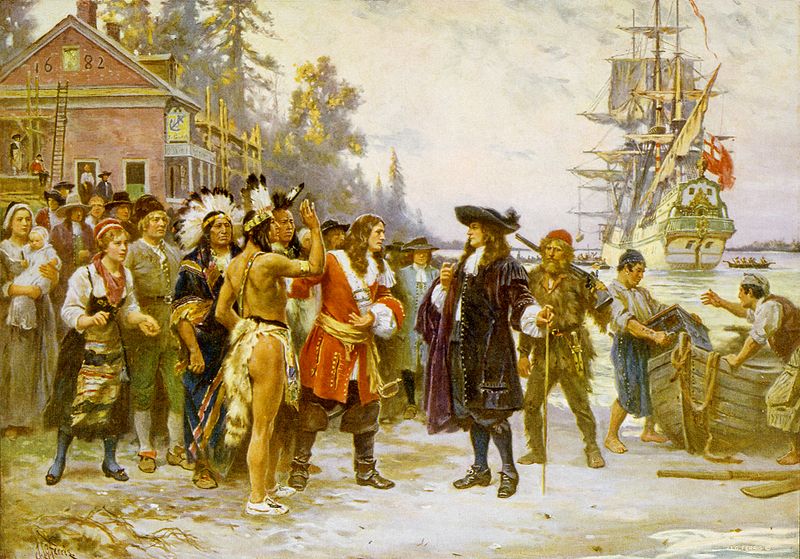
The much-ballyhooed arrival of the Pilgrims and Puritans in New England in the early 1600s was indeed a response to persecution that these religious dissenters had experienced in England. But the Puritan fathers of the Massachusetts Bay Colony did not countenance tolerance of opposing religious views. Their “city upon a hill” was a theocracy that brooked no dissent, religious or political.

indian1

The most famous dissidents within the Puritan community, Roger Williams and Anne Hutchinson, were banished following disagreements over theology and policy. From Puritan Boston’s earliest days, Catholics (“Papists”) were anathema and were banned from the colonies, along with other non-Puritans. Four Quakers were hanged in Boston between 1659 and 1661 for persistently returning to the city to stand up for their beliefs.

Throughout the colonial era, Anglo-American antipathy toward Catholics—especially French and Spanish Catholics—was pronounced and often reflected in the sermons of such famous clerics as Cotton Mather and in statutes that discriminated against Catholics in matters of property and voting. Anti-Catholic feelings even contributed to the revolutionary mood in America after King George III extended an olive branch to French Catholics in Canada with the Quebec Act of 1774, which recognized their religion.

When George Washington dispatched Benedict Arnold on a mission to court French Canadians’ support for the American Revolution in 1775, he cautioned Arnold not to let their religion get in the way. “Prudence, policy and a true Christian Spirit,” Washington advised, “will lead us to look with compassion upon their errors, without insulting them.” (After Arnold betrayed the American cause, he publicly cited America’s alliance with Catholic France as one of his reasons for doing so.)

In newly independent America, there was a crazy quilt of state laws regarding religion. In Massachusetts, only Christians were allowed to hold public office, and Catholics were allowed to do so only after renouncing papal authority. In 1777, New York State’s constitution banned Catholics from public office (and would do so until 1806). In Maryland, Catholics had full civil rights, but Jews did not. Delaware required an oath affirming belief in the Trinity. Several states, including Massachusetts and South Carolina, had official, state-supported churches.

In 1779, as Virginia’s governor, Thomas Jefferson had drafted a bill that guaranteed legal equality for citizens of all religions—including those of no religion—in the state. It was around then that Jefferson famously wrote, “But it does me no injury for my neighbor to say there are twenty gods or no God. It neither picks my pocket nor breaks my leg.” But Jefferson’s plan did not advance—until after Patrick (“Give Me Liberty or Give Me Death”) Henry introduced a bill in 1784 calling for state support for “teachers of the Christian religion.”

Future President James Madison stepped into the breach. In a carefully argued essay titled “Memorial and Remonstrance Against Religious Assessments,” the soon-to-be father of the Constitution eloquently laid out reasons why the state had no business supporting Christian instruction. Signed by some 2,000 Virginians, Madison’s argument became a fundamental piece of American political philosophy, a ringing endorsement of the secular state that “should be as familiar to students of American history as the Declaration of Independence and the Constitution,” as Susan Jacoby has written in Freethinkers, her excellent history of American secularism.

Among Madison’s 15 points was his declaration that “the Religion then of every man must be left to the conviction and conscience of every…man to exercise it as these may dictate. This right is in its nature an inalienable right.”

Madison also made a point that any believer of any religion should understand: that the government sanction of a religion was, in essence, a threat to religion. “Who does not see,” he wrote, “that the same authority which can establish Christianity, in exclusion of all other Religions, may establish with the same ease any particular sect of Christians, in exclusion of all other Sects?” Madison was writing from his memory of Baptist ministers being arrested in his native Virginia.

Bible riots
Philadelphia’s Bible Riots of 1844 reflected a strain of anti-Catholic bias and hostility that coursed through 19th-century America. (Granger Collection, New York)

As a Christian, Madison also noted that Christianity had spread in the face of persecution from worldly powers, not with their help. Christianity, he contended, “disavows a dependence on the powers of this world…for it is known that this Religion both existed and flourished, not only without the support of human laws, but in spite of every opposition from them.”

Recognizing the idea of America as a refuge for the protester or rebel, Madison also argued that Henry’s proposal was “a departure from that generous policy, which offering an Asylum to the persecuted and oppressed of every Nation and Religion, promised a lustre to our country.”

After long debate, Patrick Henry’s bill was defeated, with the opposition outnumbering supporters 12 to 1. Instead, the Virginia legislature took up Jefferson’s plan for the separation of church and state. In 1786, the Virginia Act for Establishing Religious Freedom, modified somewhat from Jefferson’s original draft, became law. The act is one of three accomplishments Jefferson included on his tombstone, along with writing the Declaration and founding the University of Virginia. (He omitted his presidency of the United States.) After the bill was passed, Jefferson proudly wrote that the law “meant to comprehend, within the mantle of its protection, the Jew, the Gentile, the Christian and the Mahometan, the Hindoo and Infidel of every denomination.”

Madison wanted Jefferson’s view to become the law of the land when he went to the Constitutional Convention in Philadelphia in 1787. And as framed in Philadelphia that year, the U.S. Constitution clearly stated in Article VI that federal elective and appointed officials “shall be bound by Oath or Affirmation, to support this Constitution, but no religious Test shall ever be required as a Qualification to any Office or public Trust under the United States.”

This passage—along with the facts that the Constitution does not mention God or a deity (except for a pro forma “year of our Lord” date) and that its very first amendment forbids Congress from making laws that would infringe of the free exercise of religion—attests to the founders’ resolve that America be a secular republic. The men who fought the Revolution may have thanked Providence and attended church regularly—or not. But they also fought a war against a country in which the head of state was the head of the church. Knowing well the history of religious warfare that led to America’s settlement, they clearly understood both the dangers of that system and of sectarian conflict.

It was the recognition of that divisive past by the founders—notably Washington, Jefferson, Adams and Madison—that secured America as a secular republic. As president, Washington wrote in 1790: “All possess alike liberty of conscience and immunity of citizenship. …For happily the Government of the United States, which gives to bigotry no sanction, to persecution no assistance requires only that they who live under its protection should demean themselves as good citizens.”

He was addressing the members of America’s oldest synagogue, the Touro Synagogue in Newport, Rhode Island (where his letter is read aloud every August). In closing, he wrote specifically to the Jews a phrase that applies to Muslims as well: “May the children of the Stock of Abraham, who dwell in this land, continue to merit and enjoy the good will of the other inhabitants, while every one shall sit in safety under his own vine and figtree, and there shall be none to make him afraid.”

As for Adams and Jefferson, they would disagree vehemently over policy, but on the question of religious freedom they were united. “In their seventies,” Jacoby writes, “with a friendship that had survived serious political conflicts, Adams and Jefferson could look back with satisfaction on what they both considered their greatest achievement—their role in establishing a secular government whose legislators would never be required, or permitted, to rule on the legality of theological views.”

Late in his life, James Madison wrote a letter summarizing his views: “And I have no doubt that every new example, will succeed, as every past one has done, in shewing that religion & Govt. will both exist in greater purity, the less they are mixed together.”

While some of America’s early leaders were models of virtuous tolerance, American attitudes were slow to change. The anti-Catholicism of America’s Calvinist past found new voice in the 19th century. The belief widely held and preached by some of the most prominent ministers in America was that Catholics would, if permitted, turn America over to the pope. Anti-Catholic venom was part of the typical American school day, along with Bible readings. In Massachusetts, a convent—coincidentally near the site of the Bunker Hill Monument—was burned to the ground in 1834 by an anti-Catholic mob incited by reports that young women were being abused in the convent school. In Philadelphia, the City of Brotherly Love, anti-Catholic sentiment, combined with the country’s anti-immigrant mood, fueled the Bible Riots of 1844, in which houses were torched, two Catholic churches were destroyed and at least 20 people were killed.

At about the same time, Joseph Smith founded a new American religion—and soon met with the wrath of the mainstream Protestant majority. In 1832, a mob tarred and feathered him, marking the beginning of a long battle between Christian America and Smith’s Mormonism. In October 1838, after a series of conflicts over land and religious tension, Missouri Governor Lilburn Boggs ordered that all Mormons be expelled from his state. Three days later, rogue militiamen massacred 17 church members, including children, at the Mormon settlement of Haun’s Mill. In 1844, a mob murdered Joseph Smith and his brother Hyrum while they were jailed in Carthage, Illinois. No one was ever convicted of the crime.

Even as late as 1960, Catholic presidential candidate John F. Kennedy felt compelled to make a major speech declaring that his loyalty was to America, not the pope. (And as recently as the 2008 Republican primary campaign, Mormon candidate Mitt Romney felt compelled to address the suspicions still directed toward the Church of Jesus Christ of Latter-day Saints.) Of course, America’s anti-Semitism was practiced institutionally as well as socially for decades. With the great threat of “godless” Communism looming in the 1950s, the country’s fear of atheism also reached new heights.
America can still be, as Madison perceived the nation in 1785, “an Asylum to the persecuted and oppressed of every Nation and Religion.” But recognizing that deep religious discord has been part of America’s social DNA is a healthy and necessary step. When we acknowledge that dark past, perhaps the nation will return to that “promised…lustre” of which Madison so grandiloquently wrote.

About the Author

Kenneth C. Davis is the author of Don’t Know Much About History and A Nation Rising, among other books.
Original Source: http://www.smithsonianmag.com/history/americas-true-history-of-religious-tolerance-61312684/#c8EfBVpuT4FxW7kC.99

Where the right to know comes from

cjr_full_logo

By Michael Schudson

OCTOBER 14, 2015

Wikimedia Commons, treatment by CJR.

IN 2003, DEAN BAQUET, then managing editor of the Los Angeles Times, along with then-Editor John S. Carroll, considered—and ultimately rejected—delaying publication of a damaging story on gubernatorial candidate  Arnold Schwarzenegger. Just five days before the October 7 special election, the paper ran the story, which detailed multiple allegations of sexual harassment. Continue reading Where the right to know comes from

Revolution: Immunity for Democracies?

PATRICK M. REGAN

Binghamton University

DANIEL JUST

New York University

AIDA PASKEVICIUTE

University of Essex, U.K.

While social revolutions have been the focus of considerable scholarly attention over the past quarter century, little effort has been made to consider the prospects for revolution in the industrialized West. This odd fact exists in spite of Goldstone’s claim that the present-day United States exhibits some of the factors consistent with historical causes of revolution, and that we “ignore the past at our peril” (1991: 497). Drawing on a wide range of scholarly perspectives, this study is designed to show that while the theoretical potential for revolutionary movements does exist in the industrialized West, it has been effectively disabled by the lack of political alternatives to the status quo and the difficulties in mobilizing contemporary societies. Our analysis suggests, however, that given recent changes in the patterns of social and economic dislocations as well as deepening ethnic, racial, or religious cleavages around the world, there is no reason to assume that Western democracies will remain immune to revolutionary changes.

Perhaps the most important and obvious but also most neglected fact about successful revolutions is that they do not occur in democratic political systems. This is not to argue that formally democratic governments are immune to revolutions.

Samuel P. Huntington (1994: 44)

Social revolutions have been the focus of considerable attention over the past quarter century. The linkages that lead to revolution generally consist of some variant of either relative deprivation, inequality, class conflict, political mobilization, or elite defection, though a more recent trend is to model the decision to participate in revolts from the perspective of a rationally calculating actor. Most of the empirical work has involved the likelihood of revolution in either a group of developing countries, or the eighteenth and the nineteenth-century Europe. Little effort has been made, however, to consider the prospects for revolution in the industrial democracies of the West. This odd fact exists in spite of Goldstone’s claim that the present-day United States exhibits some of the factors consistent with historical causes of revolution, and that we “ignore the past at our peril” (1991: 497). This essay poses two questions: a) whether there is a potential for social revolution in the industrialized countries of the West, and b) whether we might be able to evaluate the conditions under which any such revolutionary movement might gain momentum.

There are two things striking about this theoretical inquiry. First, one of the virtues of sound reasoning should be that it is widely applicable, and second, one of the objectives of both sociology and political science as scientific endeavors should be our ability to predict social changes. So if what appears to be a rather coherent body of theoretical work contributes broadly to our understanding of the workings of the political world, then it should offer insights into what the world of politics will hold. Democracy might not be the saving grace, for as Huntington (1968: 275) argues, political democracy is not the vaccine to prevent revolutions, even though Goodwin and Skocpol (1989) believe that the ballot box has in fact been the “coffin of revolutionary movements.” But predicting the onset of a revolution is supposed to be akin to predicting the next earthquake, something long sought after yet rarely if ever achieved (Eckstein 1990). Tilly (1975: 183) sets this out as a critical challenge to social scientists; we evaluate the merits of the challenge.

The thrust of this essay departs from those who attempt to predict the specific onset of a revolution, or those who seek to demonstrate the mechanisms that lead to a specific level of protest.[1] While trying to predict the actual level of protest, the timing of its onset, or the point at which protest gives way to successful revolution is a worthwhile endeavor, particularly in highly unstable countries, this essay targets a much broader level: rather than focusing on the point at which social dislocations give rise to revolutionary movements, we ask whether the theoretical linkages that tie social and structural factors to revolutionary politics are generalizable to the industrial West, and if so, if we can use this knowledge to evaluate the potential for revolution in this category of countries. In this sense, it is necessary to invoke Marx’s dictum that it is not only unstable countries but also highly advanced and industrially developed countries that are potentially prone to a social revolution. The question then is not so much when it will happen, but whether it is thinkable. If the relative stability in the industrialized democracies is interpreted in terms of a gradual alleviation of social and political oppositions, then Fukuyama’s (1992) concept of the “end of history” may be applicable across the political, economic, and social strata of societies. But if such stability proves to conceal deeper contradictions then it would be precisely the Western democracies where we would look for the threads of social revolution.

But why might one raise doubts about the apparent stability in the industrialized world? Two factors stand out: a) deepening cleavages among ethnic and racial groups, and b) changing patterns in social and economic dislocations. These two trends are often linked, and a cursory look at each should suffice to make the issue clear. Throughout the 1990s and into the early part of this century unemployment rates have been increasing across Western democracies. France, Spain, Italy, Belgium, and Finland have in the last generation rarely had unemployment rates below 10 percent (World Bank 2003). What is more, presently nearly one out of thirteen members of the workforce are officially unemployed in many leading industrial countries (Economist 2004a). Those without double-digit unemployment figures have structural unemployment resting at about seven percent, and the number of underemployed leaves countless additional workers falling far short of their potential. The effects of recent efforts to “privatize” the world’s economy appear to have quite starkly favored the wealthy at the expense of the poor and middle classes. What is more, “outsourcing” of the jobs to places like China and India and the flow of immigrants have been the cause of increasing tensions and insecurity in the labor force of Western democracies. At the same time the ability and willingness of states to temper the effects of these difficult economic times has come under rising strain. Access to education and the expanding role of technology and the Internet seems to widen the gap between rich and poor even further.

The extent of these structural problems is often exacerbated by racial and ethnic cleavages, with urban areas and minority groups suffering more severely. For example, in spite of the upward mobility of many African Americans in the United States, urban centers tend to be populated overwhelmingly by members of this racial community. And it is in these urban areas where unemployment is highest, educational facilities the poorest, teenage pregnancy most prevalent, and drug abuse nearly epidemic.

The United States is not the only country where racial and ethnic tensions and socio-economic dislocations have been on the rise. In Britain, the inflow of immigrants from its former colonies led to increasing racial tensions and a number of race riots. The budding neo-nazi movement in Germany and the anti-Muslim violence in the Netherlands is testament to the resentment felt by the majority for minority ethnic groups. German unification was similarly accompanied by a surge of violence against foreigners and the emergence of the xenophobic Republikaner Party. Tensions between the French and North Africans have erupted into violence also in southern France, fueling electoral support for the anti-immigrant National Front Party (e.g., Dalton 2002: 104). In short, at least some conditions that are theoretically linked to revolution are prevalent in the most modern countries of the world.

HOW WE THINK ABOUT REVOLUTIONS

What is meant by revolution has been a subject of intense debates in the scholarly literature. Most definitions of revolution emphasize factors such as time, class, and violence, with a consequent realignment of social, economic, and political bonds that tie societies together (Skocpol 1979, Hagopian 1993, Sztompka 1993). Skocpol’s (1979: 4) definition of revolution as a class-based revolt from below that brings rapid transformation of society’s state and class structure has been very influential in this respect. However, the problem with this definition is simply that it is outdated—revolutions from the late seventies on have not been necessarily an outcome of only internal economic problems. In the era of globalization and a low-level state intervention in capital accumulation in the West, both the state and the class become rather elusive categories. If revolution is a transformation of the social structure of the state—and not just a political transformation resulting either in a gradual democratization and opening up of the enclosed polity, or in an authoritarian monopolization of politics—then the challenge revolutions face in modern democracies is not only impeded mobilization and frustrated coalition-formation but also the vagueness of their target.

In spite of the variety of conditions that influenced revolutionary outcomes, students of social revolutions usually agreed that some form of interplay between relative deprivation, inequality/class conflict, and mobilization had to be in place for the revolution to occur. Even though the tendency now is to question sufficiency of these determinants and to point to the role of elites, scholars still believe that linkages tying social-economic conditions to revolutionary behavior cannot dismiss the role of relative deprivation, inequality, and mobilization.[2]

RELATIVE DEPRIVATION

In the late sixties and early seventies, relative deprivation was a common point of departure for many studies on social revolutions. Davies (1962), for instance, argued that a gap between value expectations and value achievements would account for the onset of revolutionary behavior. Since the expectation was a continued increase in the satisfaction of economic and social needs, any sharp or sudden decline from that trend would result in an intolerable gap between expectations and achievements. Gurr (1970) outlined the social determinants of relative deprivation and made more explicit the criteria with which to evaluate the desires and achievements of a social group. Tanter and Midlarsky (1967) found some empirical support for the hypothesis that a “revolutionary gap” contributes to the onset of revolution, though others were unable to confirm the basic tenets of this theory (Miller et al. 1977).

The concept of relative deprivation as a cause of revolution is grounded in the relationship between frustration and aggression, and has its antecedents far beyond those mentioned above. De Tocqueville and Marx each related the onset of revolution to the gap between what people were led to expect, and what they were subsequently able to achieve. On the one hand, Marx (1988) argued that it was a long historical process in which the labor class was continually impoverished by the exploits of the capitalists, leading eventually to the rising up of the proletariat to overthrow the bourgeoisie. De Tocqueville (1955), on the other hand, claimed that the French revolution was precipitated, in part, by economic and social advancements that left the French masses expecting more while the industrialization process was leading them toward increasing immiseration.

INEQUALITY

There is a rather long tradition linking patterns of inequality to revolutionary behavior, suggesting that the gap between the haves and the have-nots would perhaps play some role in revolution. Structural inequality has been linked to the mass political violence characteristic of revolutionary movements in the developing world, though the evidence is mixed as to whether it is income or land inequality that is of greatest importance (Russett 1964, Midlarsky and Roberts 1985, Midlarsky 1988, Muller and Seligson 1987). The inequality—either land or income—generates discontent among those who go without, possibly resulting in large-scale political violence, which, if coupled with the fall out of powerful elites from the state, can lead to revolution. As with evidence pertaining to relative deprivation as a cause of revolution, inequality as an explanation rests on strong theoretical foundations though the evidence is mixed (Brockett 1992). Moreover, it is clear that neither relative deprivation nor inequality can stand on their own as causes of revolutions. At the most, they can serve as a motivating force for social change.

The difference between relative deprivation and inequality as explanations for revolutions may seem subtle at first, but the underlying mechanisms are profoundly different. In the former instance, the perceived deprivation is a psychological process where judgement is made relative to one’s own expectations. The mechanisms of inequality work differently: rather than individuals judging their situation relative to their own expectations and achievements, inequality is evaluated relative to others within society. Both conditions are likely to be evident concurrently, and it would be difficult to imagine one condition existing without at least some of the other. But those who argue for inequality as the causal mechanism are implicitly positing that issues of social and economic justice generate the motives behind revolutionary movements. If inequality and injustice are considered as significant components of revolutionary impulses, their role gains a momentum only if these individual concerns can reach the level of the group.

MOBILIZATION

The ability to mobilize is key to revolutionary movements (Tilly 1978). Given that there are structural conditions for expressing discontent, it is the ability to mobilize resources that determines revolutionary behavior. To Tilly (1978), this is conceived of as groups contending over political issues, while Huntington (1968) argues that it is the incongruity between political mobilization—meaning political modernization—and political institutions that results in revolution.

Since revolutions require, among other things, revolutionary strategies, strategists are expected not only to articulate alternatives but also to mobilize the masses. Using a game-theory approach, Lichbach (1990) shows that a rational person would not rebel against inequality. But if a rational person would not rebel against situations he or she finds intolerable, then we can deduce from Lichbach’s findings that either revolution is an irrational behavior, or that revolutionary strategists are required to mobilize the masses and in doing so change the expected payoff from participation in revolutionary action. Overcoming the collective action problem appears to be a critical link in mobilizing mass action, with selective incentives appearing to be a necessary ingredient (Lichbach 1994), even though others dismiss the role of the collective goods problem in social movements altogether (Tarrow 1994). One way to conceive of a solution to the collective goods puzzle is in terms of revolutionary strategists being able to deflect some of the costs associated with participation in revolutionary politics and therefore change the potential payoff to the masses.

TOWARD SYNTHESIS

Social dislocations associated with inequality or deprivation can never, on their own, lead to the mobilization of the masses behind a revolutionary agenda. Assuming that mobilization is crucial for the revolutionary process, the important question is what facilitates the mobilization of masses. If we can identify conditions that are necessary for political mobilization, we can then develop a more comprehensive model of revolution by integrating them with other necessary organizational and structural factors. As Tarrow (1994) points out, without some form of social movement, talk of revolutionary politics is beyond the pale because only social movements mount challenges to elite authority out of which revolutions may give rise. DeNardo’s (1985) work is critical in understanding the move from issues that increase the motivation behind the mobilization of support for revolutionary behavior. DeNardo argues that both strategists and alternatives to the status quo are necessary because first, the ruling coalition has a strong incentive to repress those who advocate revolutionary politics, and, second, the masses are generally unwilling to take the risk associated with the organizational process. However, although strategists may be necessary, they are not sufficient for public mobilization—alternatives to the status quo must be presented to the discontented in order to stimulate their involvement in the struggle for changes.

From this perspective, discontent could be conceived as working through strategists who mobilize and political philosophers who articulate alternative conceptions of society. And if the two intervening factors are sufficiently strong then mobilization is possible, maybe even likely. On the one hand, El Salvador, Nicaragua, Eritrea, Vietnam, Peru, and Poland all had traces of large-scale mobilizations against the ruling coalition. In each case the mobilization of discontented masses around some alternative form of social organization was quite common. On the other hand, there are a number of societies where the conditions for discontent appear to be quite evident, yet efforts to mobilize the masses are tentative and ineffective. Two questions keep recurring: Why are alternatives and strategists not as ubiquitous as the conditions contributing to discontent? And why are successful revolutions so rare? Is it only because the level of discontent is insufficient to generate mass upheaval, or because the articulation of alternatives and the development of strategies are constrained by the ruling elite?

If repression is an effective tool to stifle the development of a revolutionary organization, the prevalence of repressive practices should help to account for the relatively low incidence of revolutions. But this does not add much to our understanding of the likelihood of revolutions in the industrial democracies of the West, where overt and violent repression is hardly the norm. Even though repression in the West relies on more subtle mechanisms such as media compared to less democratic countries, the marginalization of individuals or groups is, nevertheless, quite effective at suppressing organizers. In the past, this was done largely by identifying potential revolutionaries and discrediting their alternatives to the general public. Communism or the political organizations of religious states, for instance, have been sufficiently ideologically laden to serve as an object of disdain over the past 50 years. This distrust of the communist path permitted the wholesale purge of those who attempted to articulate alternatives, as well as those who attempted to strategize and organize revolutionary movements. The more despicable the existing alternative the easier it becomes to repress those who might facilitate the mobilization process. Furthermore, in such a climate the repression needs not be as overt as witnessed in much of the developing world. The label of “a communist” could suffice to restrict the capabilities of those willing to take the risks, and if the risk takers are constrained, then the masses will be extremely hesitant. The McCarthy era and the resulting “red files” in the United States serve as poignant examples, but the effect was much more widely felt (Whitfield 1991, Ginsberg 1986).

Through much of the Cold War, a political opponent did not even have to be articulating Marxist ideas to be labeled a Communist; any political alternative could suffice to brand one as a Communist dissident. This image of the enemy proved to have been very efficient in uniting people for their common cause, leading them thus away from any revolutionary ideas. The demise of this imaginary enemy, the Soviet Union, had to be a shock to the system. Since the West has organized much of its society in active resistance to the Soviet threat for the better part of the last half of the century, the sudden removal of that threat caught most of the attentive public by surprise. Although the fall of the Soviet Block has been celebrated as the victory of democracy, cross-national surveys conducted in early 1994 indicated that a majority of Americans, Germans, and Britons believed the world had become a more dangerous place since the end of the Cold War (Dalton 2002: 114). To give a face to this amorphous danger, a new enemy had to be invented. Terrorism and Islamic fundamentalism as axis of evil and enemy of democracy have become a target of a pre-emptive strike against potential revolutionary mobilization.

WHAT CAN WE LEARN FROM THE MORE RECENT THIRD WORLD REVOLUTIONS?

Skocpol (1979), and more recently by Lachmann (1997), demonstrated that deprivation and inequality, even if successful in gaining collective recognition by the masses and leading to a violent conflict buttressed by new ideology, have only a small chance to be carried through if not supported by elites. In French, Russian, and Chinese revolutions, either the dominant class or the army defected from the state. It was only because of this division of the ruling coalition, or its repressive forces, that popular discontent could be transformed into an organized revolution. This division could be either a direct intention of elites to initiate revolution (when the elites deem the state unable to meet their expectations) or an indirect facilitation of revolution by their withdrawal of support from the state. Highly vulnerable states at times of social tension contribute significantly to success in organizing a populist-based movement. Other factors, such as widely accepted new ideological goals and the likelihood of international support or opposition, also play their roles. The democratic uprising in Czechoslovakia in 1968, for instance, had been staged by the elites that defected from the existing regime and was widely supported by the population. What it lacked, however, was world attention and support. International pressure during the Cold War allowed the elites favoring the status quo to seek Soviet military intervention, which was unlikely to be contested by the forces from beyond the Iron Curtain.

Recent research on Third World revolutions of the twentieth century demonstrates the role of elite behavior in revolutionary politics.  Drawing on the evidence from Iran, Nicaragua and the Philippines, Parsa (2000, 1989) argues that what is crucial for the overthrow of the state in the developing countries are class coalitions. Class antagonism does not produce revolution by itself, and “intense conflict may actually reduce the likelihood of revolutions.” In repressive regimes with high state intervention in capital accumulation like Iran, Nicaragua and the Philippines, the state was an easy target to locate. The difficulty, however, was, first, in finding ways to escape the radars of repression while organizing popular opposition, and, second, to find an ideological ground for different groups to agree upon. In the developing world, too strong class antagonism and a too specific extremist ideology, as Parsa concludes, are likely to prevent a coalition-formation and thus obstruct revolutionary path.  The question remains as to whether these arguments inform us about the prospects for social revolution in the advanced industrial democracies, that is, whether the coffin of revolutions there is really nailed shut.

What implications for political stability in the West can we derive from our general understanding of revolutions?  If we can rule out revolutionary change then we must infer one of two other processes for change: 1) that these political systems remain stable and unchanging over time, or 2) any change must come by dint of evolutionary processes or by defeat in war.  We see no compelling logic that defines a particular path to change, nor any reason to speculate that the end of political history is upon us and that stability will last in perpetuity.  Theory should provide guidance for thinking about future political transformations.

PROSPECTS FOR REVOLUTION IN THE WEST

A cultural perspective on political change might suggest that traditional models of deprivation and mobilization must be tempered by the decreasing vulnerability of the state.  Modern forms of capital accumulation diffuse attention from the state to the firm and therefore reduce the propensity for revolutionary change.  But why would our current culture be any different from the previous forms of culture? Is not the current cultural shortsightedness an expression of our society in the same way previous cultures were expressions of their own social forms?

While Theodor Adorno (1973, 2002), among other social theorists, argued that capitalism has an inherent tendency to transform everything into commodities, other theorists point to political possibilities opened by the current social situation of Western democracies. In an attempt to overcome Adorno’s pessimism, Ernesto Laclau (1990: 82), for instance, argues that counter-hegemonic struggles have now become possible in many more areas and that particular issues enjoy greater autonomy. It is not always clear, however, how, according to Laclau, the masses could be mobilized in the environment of increasing social fragmentation and atomization prevalent in the advanced industrial democracies. Does the “dislocated agent” really matter on the political level? It is perhaps not a coincidence that instead of theorizing revolution, Laclau talks about a gradual process of democratic reforms.  Endorsing a slow accumulation of minor adjustments, these local revolts are the means of letting the steam out, so to speak. In the era of the mass media setting up the by now widely accepted opposition between democracy and dictatorship (ethnic and religious fundamentalism, totalitarianism, etc.), any radical change, i.e. revolution, is in advance dismissed as leading to dictatorship. Rather than threatening, limited demands for emancipation serve to rejuvenate the system—they make democracy look more democratic and help to show its openness to questions, strengthening thus its difference from dictatorship (Žižek 2000: 182).  This means that at the cultural level both perceptions of deprivation and the ability to mobilize are worked out through the system such that evolutionary change is more likely.

Working counter to this system-dampening process, Western societies are now facing a number of serious economic difficulties. Over the last several decades, they have been experiencing growing market volatility, increasing strains on their governments’ ability to regulate economy, as well as growing job insecurity and high levels of unemployment (Economist 2004b) . Of the major European countries, France, Italy, Finland, and Spain throughout the 1990s all had official unemployment rates of over 10 percent, with Spanish unemployment climbing to 22.7 percent in 1995 (World Bank 2003). Belgium, Austria, Canada, Greece, have maintained average unemployment between 8.4 and 9.1 percent over the last decade. According to data collected by the British government and reported in their annual publication, Social Trends, the gap between the rich and the poor in the United Kingdom has been growing since 1994/5, with ethnic minorities disproportionately concentrated among the poor (Office for National Statistics 2004). This trend is confirmed by data from the other Western democracies including the United States: according to the Economist (2001), economic recession in the United States hit the poor the hardest, and, more significantly, has sharply increased the gap between high-wage earners and those in the middle.

This shift in wealth and employment patterns comes at a time when direct transfer payments to the socially dislocated have also come under increasing strain, and in many instances the level of welfare provisions have been cut substantially. This is evident in the United States where the federal government has shifted much of the burden for social assistance down to the level of state governments, which in many cases are unable to cope with the increased demand. Globalization and increasing economic interdependence has lead to dismantling of the welfare state, eroding the social democratic bargain, and bolstering the interests of capital at the expense of labor (e.g., Kitschelt et al. 1999, Keohane and Milner 1996).  The path that Goldstone (1991), for instance, suggests as a way out of these social dislocations is increasing productivity to a sustained level that surpasses inflation—a task that currently appears to be difficult to achieve. With a considerable concentration of economic and political wealth in the hands of the few, the cultural constraints might be significantly weakened, making any call for social change ready to find a fertile ground in the United States.  These two competing pressures force us to consider the impact of political dynamics on the process of revolutionary versus evolutionary change.

One argument against the idea of revolutionary change in industrialized democracies might be that the political processes that underlie democratic politics will be flexible enough to forestall any movement toward radical change. This may be entirely correct. The logic of the argument follows that political parties, sensing popular disaffection with the status quo would be able to adapt to the will of the public. Anthony Down’s (1957) work quite clearly buttresses this proposition. Political parties in two party systems seeking to get reelected could move toward the center of public preferences, and if this is so, their policy positions will always represent moderate rather than extreme policy choices. In the long term, we would then expect incremental change, if at all, but not revolution. At first blush the logic of these arguments seem sound enough to obscure the prospects for revolutionary pressures, but on closer inspection there still appears to be countervailing forces at work.

Although Downs made a strong theoretical case for why we should expect party convergence to equilibrium policy positions, empirical evidence does not always support this claim (e.g., Adams 2001, Budge 1994). What is more, parties have also become large organizations that have developed entrenched interests in the current distribution of resources. As Olsen (1982) argued, large distributional coalitions are inefficient at providing a collective good because they increase the complexity of government and seek to limit the diversity of membership. If Olsen’s logic of collective action is correct, then we might not expect to see the established political parties moving toward the center of mass preferences, but rather a flourishing of small vanguard parties that champion new causes. The new organizations, or parties, may be able to provide the selective incentives necessary to woo people from the center of the spectrum out closer toward the peripheries (Lichbach 1994).

The United States can serve again as an example of how the tendency towards an incremental change in modern democracies can become their Achilles heal. With the same party dominating both the U.S. Senate and the House of Representatives, the opposition is left more or less powerless. If one of the preconditions of successful revolutions is an elite-defection, the usual reason for leaders to defect is a prolonged loss of all political influence. In such cases, a deprived elite might try to regain its position by supporting a mass mobilization. Even though nothing indicates this in the policies of the recent administration in the United States, the growing economic problems coupled with political frustration can certainly make a significant part of population wonder if incremental changes do not always lead from the desired reforms. After all, the solution to the recent problems of economic growth, poverty, and distribution of wealth in the United States has been a top down “growth” oriented strategy, one that catered considerably more to the elite than the masses.  If democracy relies on its ability to implement preferred changes by incremental transformations, and if these lead away from the changes desired by the mass public, pressure for dramatic change may find favor and in doing so facilitate the mobilization of strategists and the articulation of alternative models of political and economic organization.

The core of Parsa’s (2000: 294) arguments is that the likelihood of revolutions is lower if: 1) the country develops “democratic institutions that expand polity and permit moderate political organizations access to the state,” thus diminishing “the likelihood of coalition formation among reformist and revolutionary challengers”, and 2) governments are less interventionist and allow market forces to determine capital allocation. With figures clearly showing that average public share of fixed capital expenditure in developing countries is around 45-50%, whereas in the developed ones it is around 14%, the low profile of the state in the developed world makes the capitalist elites less likely to coalesce with other social groups. The decentralized, depoliticized, and self-regulating market diffuses and limits conflicts with the civil society. In spite of this low level of intervention, the West nevertheless developed a surprisingly small capitalist class: the percentage of employers or self-employed in the West in 1990 was on average under 10% (U.K. 7.5%, U.S. 8.1%, Germany 8.3%), whereas in the developing countries it was around 30% (going as high as 70%) (International Labor Office 1989, 1990). This suggests that the potential for revolution in democratic countries is diminished by virtue of the organization of the economic system.  As bad as it might be for some, the mechanisms for anything but gradual, system-induced, change are unavailable.

These figures, however, also strengthen the relevance of the socio-economic and political indicators that point to a deep divide in Western societies. Economic inequality and polarization of political influence are, among other factors, a result of the fact that fewer people control wealth and the means of production. A smaller capitalist class is less likely to defect from the status quo but it is also more likely to intensify the already present socio-economic and political problems—an increasingly smaller group of people will control a growing level of wealth and political power. With the current problem of outsourcing, the distribution of wealth is becoming more polarized as workers lose jobs while a small class of capitalists makes more profit by using cheaper labor and favorable tax conditions abroad.

If – or as – society polarizes along political and economic fault lines the forces of politics and those of culture may collide.  The atomized state and the diffusion of targets may impede mobilization, all the while the efficient working of political groups may strive to overcome these obstacles.  Logic provides no reason to expect that industrial democracies are immune to these competing tensions, and no reason to expect the political and economic world we occupy is unchangeable.  It is hard to assess today which force is likely to dominate this struggle, but neither is there any reason to a priori dismiss the possibility of revolutionary change.  In fact, the absence of a common enemy of the advanced industrial democracies should make easier for philosophers and strategists to articulate and organize around alternative conceptions of a political, economic, and social world.

If all these forces were to lead toward a revolutionary challenge in the West, how would it look like?  First, sweeping change of revolutionary proportions need not be violent.  While historically violence was associated with many revolutionary cases, it is not a necessary condition for revolutionary change, particularly in modern industrial societies where participatory forms of government can accommodate – and possibly facilitate – sweeping changes without violence (Sztompka 1993: 305). This was made evident by the recent revolutions in East Central Europe and the Soviet Union. Second, the process may start slowly, almost imperceptibly to most.  The prominent work of Marx and Engles was preceded by the Owenites and the St. Simon movements – experiments in collective living – by at least a generation.  The Saint Simon and the Owenite movements laid the foundation for the articulation of a society organized around the social needs of the masses upon which Marx and Engels were able to build the tenets of the Communist movement.  Had Saint Simon and Owens been repressed at an early stage, and had Owens been prevented from carrying out his ‘social experiments’, the philosophy of Marx and Engels might have never seen the light of day.  The change itself may be sudden, but the ground for it could play out over an extended period of time.  And finally, the outcome itself could represent a short-term disaster or a long sought after search for social and economic equity.  The key is that revolutionary change is neither inevitable nor impossible, but it behooves us to think about the prospects for our future.  Admittedly, however, to theorize about the onset of a revolution is a bit like predicting the next earthquake, and to imagine how it would look is, of course, even more of a speculation.

CONCLUSION

As this argument stands, it is merely an attempt to link our understanding of the causes of revolution to the prospects for social stability in a domain that remains heretofore unchallenged. In light of the breakdown of the Soviet empire, the apparent threat from Islamic terrorists, and the continuing struggle in “pacifying” Iraq, this seems like a worthwhile endeavor. At this juncture any inferences represent at best an exercise in counterfactual judgment, but thinking about the seemingly unthinkable is useful in spite of the lack of evidence. It was only a bit more than a decade ago that many would have denied the possibility of the collapse of the largest political empire in a century. Few at that time could think about the unthinkable. The argument we provide suggests that, in spite of the rhetoric of the “end of history” and in spite of the increased difficulties to mobilize for radical changes in recent times, the theoretical potential for revolution does exist in the industrialized West.

For the truly cautious and skeptical, we leave with one closing thought. As any homeowner in an industrial democracy is all too aware, insurance companies—those whose job it is to insure against loss for a given level of risk—exclude coverage for damage incurred as a result of war, acts of God, and revolution. To the God-fearing the Apocalypse is sufficient grounds to exempt the insurance companies; and acts of war are far too common in this world to hold an insurance company liable. But why would insurance companies insist on indemnity from damage resulting from revolutions, if industrial democracies were immune from such events? We think that they might be the only ones who think seriously about the prospects for social revolution in the markets in which they engage.

REFERENCES


Adams, James. 2001. Party Competition and Responsible Party Government. Ann Arbor, MI: University of Michigan Press.

Adorno, Theodor W. 1973. Negative Dialectics, translated by E.B. Ashton. New York: Seabury Press.

Adorno, Theodor W., and Max Horkheimer. 2002. Dialectic of Enlightenment: Philosophical Fragments, translated by E. Jephcott. Stanford, CA: Stanford University Press.

Brockett, Charles D. 1992. “Measuring Political Violence and Land Inequality in Central America.” American Political Science Review 86(1): 169-178.

Budge, Ian. 1994. “A New Theory of Party: Competition: Uncertainty, Ideology, and Policy Equilibria Viewed Comparatively and Temporarily.” British Journal of Political Science 24(4): 443-467.

Dalton, Russell J. 2002. Citizen Politics: Public Opinion and Political Parties in Advanced Industrial Democracies. 3rd ed. New York, London: Chatham House Publishers.

Davies, James C. 1962. “Toward a Theory of Revolution.” American Sociological Review 27(1): 5-19.

DeNardo, James. 1985. Power in Numbers: The Political Strategy of Protest and Rebellion. Princeton, NJ: Princeton University Press.

Eckstein, Harry. 1990. “More about Applied Political Science”. PS: Political Science and Politics 23(1): 54-56.

Economist. 2004a. “Economic and Financial Indicators.” 3 January: 72-73.

Economist. 2004b. “Pay or Decay.” 24 January: 12.

Economist. 2001. “The Widening Gap.” 3 February: 30.

Francisco, Ronald A. 1993. “Theories of Protest and the Revolutions of 1989.” American Journal of Political Science 37(3): 663-680.

Fukuyama, Francis. 1992. The End of History and the Last Man. London: Hamish Hamilton.

Ginsberg, Benjamin. 1986. The Captive Public: How Mass Opinion Promotes State Power. New York: Basic Books.

Goldstone, Jack A. 1991. Revolution and Rebellion in the Early Modern World. Berkeley: University of California Press.

Goodwin, Jeff, and Theda Skocpol. 1989. “Explaining Revolutions in the Contemporary World”. Politics and Society 17(4): 489-509.

Gurr, Ted Robert. 1970. Why Men Rebel. Princeton, NJ: Princeton University Press.

Gurr, Ted Robert, and Mark Irving Lichbach. 1986. “Forecasting Internal Conflict: A Competitive Evaluation of Empirical Theories.” Comparative Political Studies 19(1): 3-38.

Hagopian, Mark N. 1974. The Phenomenon of Revolution. New York: Harper & Row.

Huntington, Samuel P. 1994. “Revolution and Political Order.” Pp:  37-44 in Revolutions: Theoretical, Comparative, and Historical Studies, edited by J. A. Goldstone. Fort Worth, TX: Harcourt Brace & Company.

——. 1968. Political Order in Changing Societies. New Haven: Yale University Press.

International Labor Office. 1989-1990. Yearbook of Labor Statistics. Geneva: ILO.

Keohane, Robert O., and Helen V. Milner. Eds. 1996. Internationalization and Domestic Politics. Cambridge: Cambridge University Press.

Kitschelt, Herbert, Peter Lange, Gary Marks, and John D. Stephens. Eds. 1999. Continuity and Change in Contemporary Capitalism. Cambridge: Cambridge University Press.

Lachmann, Richard. 1997. “Agents of Revolution: Elite Conflicts and Mass Mobilization from Medici to Yeltsin.” Pp. 73-101 in Theorizing Revolutions, edited by J. Foran. New York: Routledge.

Laclau, Ernesto. 1990. New Reflections on the Revolution of Our Time. Translated by J. Barnes. London, New York: Verso.

Lichbach, Mark I. 1994. “What Makes Rational Peasants Revolutionary? Dilemma, Paradox, and Irony in Peasant Collective Action.” World Politics 46(3): 383-418.

——. 1990. “Will Rational People Rebel Against Inequality? Samson’s Choice.” American Journal of Political Science 34(4): 1049-1076.

Marx, Karl. 1988. The Communist Manifesto, edited by F.L. Bender. New York, London:  W.W. Norton & Co.

Midlarsky, Manus I. 1988. “Rulers and the Ruled: Patterned Inequality and the Onset of Mass Political Violence.” American Political Science Review 82(2): 491-509.

Midlarsky, Manus I., and Kenneth Roberts. 1985. “Class, State, and Revolution in Central America: Nicaragua and El Salvador Compared.” Journal of Conflict Resolution 29(2): 163-193.

Miller, Abraham H., Louis H. Bolce, and Mark Halligan. 1977. “The J-Curve Theory and the Black Urban Riots: An Empirical Test of Progressive Relative Deprivation Theory.” American Political Science Review 71(3): 964-982.

Moshiri, Farrokh. 1991. “Revolutionary Conflict Theory in an Evolutionary Perspective.” Pp. 4-36 in Revolutions of the Late Twentieth Century, edited by J.A. Goldstone, T.R. Gurr, and F. Moshiri. Boulder, CO: Westview.

Muller, Edward N., Henry A. Dietz, and Steven E. Finkel. 1991. “Discontent and the Expected Utility of Rebellion.” American Political Science Review 85(4): 1261-1282.

——, and Mithchell A. Seligson. 1987. “Inequality and Insurgency.” American Political Science Review 81(2): 425-452.

Office for National Statistics (ONS) 2004. Social Trends 34. On-line edition. U.K.

Olsen, Mancur. 1982. The Logic of Collective Action. Cambridge, MA: Harvard University Press.

Parsa, Misagh. 2000. States, Ideologies and Social Revolutions: A Comparative Analysis of Iran, Nicaragua and the Philippines. Cambridge, U.K., New York: Cambridge University Press.

——. 1989. Social Origins of the Iranian Revolution. New Brunswick: Rutgers University Press.

Russett, Bruce M. 1964. “Inequality and Instability: The Relation of Land Tenure to Politics.” World Politics 16(3): 442-454.

Skocpol, Theda. 1979. States and Social Revolutions: A Comparative Analysis of France, Russia, and China. Cambridge, New York: Cambridge University Press.

Sztompka, Piotr. 1993. The Sociology of Social Change. Oxford, U.K., Cambridge, MA: Blackwell.

Tanter, Raymond, and Manus Midlarsky. 1967. “A Theory of Revolution.” Journal of Conflict Resolution 11(3): 264-280.

Tarrow, Sidney G. 1994. Power in Movement: Social Movements, Collective Action and Politics. Cambridge, U.K., New York: Cambridge.

Tilly, Charles. 1978. From Mobilization to Revolution. Reading, MA: Addison-Wesley.

——. 1975. “Revolutions and Collective Violence” Pp. 483-547 in Handbook of Political Science, Volume 3: Macropolitical Theory, edited by F. I. Greenstein and N. W. Polsby. Reading, MA: Addison-Wesley.

Tocqueville, Alexis de. 1955. The Old Regime and the French Revolution. Translated by S. Gilbert. Garden City: Doubleday.

Whitfield, Stephen J. 1991. The Culture of the Cold War. Baltimore, MD: Johns Hopkins University Press.

World Bank. 2003. World Development Indicators. CD-ROM. Washington, D.C.: The World Bank.

Žižek, Slavoj. 2000. “Postface: Georg Lukács as the Philosopher of Leninism.” Pp. 151- 182 in  A Defense of History and Class Consciousness: Tailism and the Dialectic, edited by G. Lukács. London: Verso.

[1] Examples of attempts to predict the onset of revolutions include Gurr and Lichbach (1986) and Francisco (1993). For an example of efforts to demonstrate the level of protests see Muller et al. (1991).

[2] For discussion on relative deprivation see Gurr (1970), Davies (1962); for issues of inequality and class conflict see Midlarsky (1988), Midlarsky and Roberts (1985), Muller and Seligson (1987), Moshiri (1991). For discussion on mobilization see Tilly (1978), Huntington (1968), DeNardo (1985), and for structural factors see Skocpol (1979), and Goldstone (1991).


The Day President Kennedy Embraced Civil Rights—and the Story Behind It

50 years ago, the president gave his now-famous Civil Rights Address. But it was Martin Luther King Jr. and the Birmingham protesters who deserved the credit.

download

JONATHAN RIEDER   JUN 11, 2013

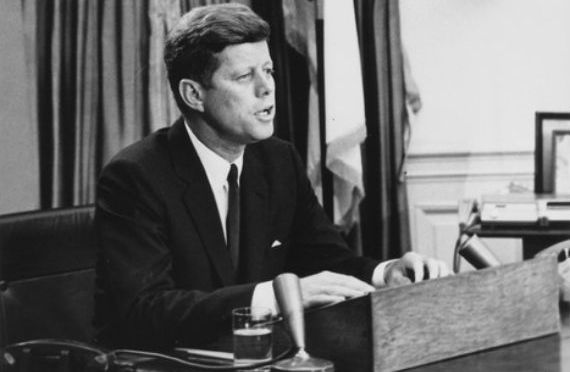
“Can you believe that white man not only stepped up to the plate, he hit it over the fence!” That was Martin Luther King, Jr.’s private verdict on President John F. Kennedy’s famous Civil Rights Address, delivered fifty years ago on June 11, 1963.

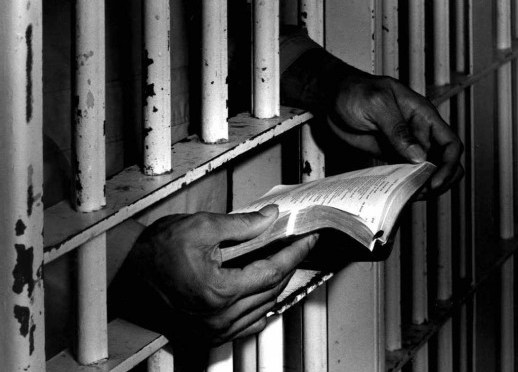
If King’s elation made sense, so did his incredulity. Kennedy had hardly been a beacon of moral resolve on civil rights. It required the Birmingham civil rights movement — and the tough-minded theory of social change that King spelled out in the “Letter from Birmingham Jail” — to provoke his speech into being. And once pushed into taking a stand with the address, Kennedy and his speechwriter Theodore Sorensen filled it with rhetoric often remarkably similar to King’s. Though the address came, ostensibly, in response to a different event — the fight over the integration at the University of Alabama — it was full of echoes of “Letter from Birmingham Jail.” In a powerful sense, King and the movement were the authors of the president’s oratory.
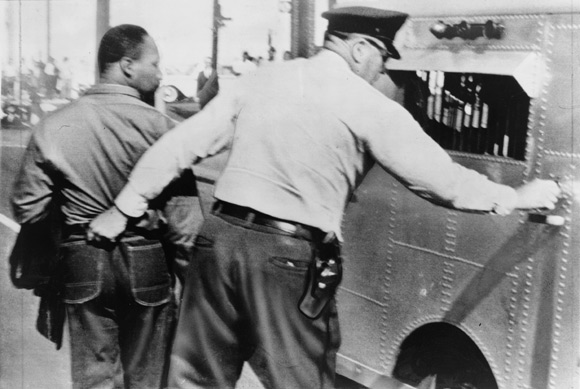
The speech was a dramatic moment in a season jammed with dramatic events, as America staggered toward non-racial democracy. In his fiery inaugural speech in January of 1963, the new governor of Alabama, George Wallace had pledged, “segregation now, segregation tomorrow, segregation forever.” In defiance of Wallace, King and the local movement launched civil rights protests in April in the furiously racist city of Birmingham. With the movement faltering, King decided to violate an injunction banning protests of any sort, and was, as a result, jailed on Good Friday, April 12.

Kennedy’s speech constituted an about-face, and King grasped that the Birmingham campaign had instigated it.
While in jail, King read a statement by eight of the leading moderate white clergy in Alabama, condemning the protests and branding King an extremist. The indignant, frazzled leader poured his rejoinder onto newspaper margins and toilet tissue. The iconic document that emerged from those jottings, the “Letter from Birmingham Jail,” was always more than a spirited defense of civil disobedience. It was an indictment of white indifference. “Few members of the oppressor race,” King insisted, “can understand the … passionate yearnings of the oppressed race.” It was also a declaration of black self-sufficiency (“If the inexpressible cruelties of slavery could not stop us, the opposition we now face will surely fail.”) and a stirring refusal of patience. “The word ‘Wait!'” wrote King, “rings in the ear of every Negro with piercing familiarity.” The “Letter” was radical in the scope of its rebuke. King’s key targets were not the Klan and Wallace but the very core of American culture, every sort of moderate “who paternalistically believes he can set the timetable for another man’s freedom.”

Neither King’s sacrificial act nor his roiling anger was enough to jumpstart the movement, even after he got out of jail on April 20. But in early May, the city’s black youth renewed the insurgency. After singing rousing verses of “I Woke Up With My Mind Stayed on Freedom,” they burst through the doors of the Sixteenth Street Baptist Church and faced down Bull Connor’s dogs and fire hoses. Within days, an agreement was forged to desegregate the city. The nation had begun its lurch toward the March on Washington, King’s “I Have a Dream” speech, and the Civil Rights Act of 1964.

Meanwhile, the federal court-ordered integration of the University of Alabama loomed on June 11. Governor Wallace vowed to stand in the schoolhouse door to block the mixing of races. Kennedy’s speech, the one that so impressed and surprised King, came just hours after forcing Wallace to step aside. “We are confronted primarily with a moral issue,” he declared. “It is as old as the scriptures and is as clear as the American Constitution.” The president was finally using language the demonstrators could appreciate: “We preach freedom around the world,” he said, “but are we to say to the world, and . . .to each other that this is the land of the free except for the Negroes …?”

Throughout the speech Kennedy seemed to be channeling the “Letter from Birmingham Jail.” King had invited white people to put themselves in a black person’s shoes: “When you have seen vicious mobs lynch your mothers and fathers at will,” or ” when your first name becomes ‘nigger,’ your middle name becomes ‘boy,’ … then you will understand why we find it difficult to wait.” Kennedy, too, used the place-trading device: “If a Negro can’t enjoy the full and free life which all of us want, then who among us would be content to have the color of his skin changed and stand in his place?”
The president’s address also resembled King’s “Letter” in rejecting the idea that blacks should have to wait for equality. “Who among us,” Kennedy demanded, “would then be content with counsels of patience and delay?” He mimicked King’s critique of “appalling silence”: “Those who do nothing are inviting shame as well as violence.” The president even picked up the mass meeting chant — “Now is the time!” Said Kennedy, “Now the time has come for this Nation to fulfill its promise.”

Despite that drumbeat of immediacy, Kennedy’s call to conscience was belated as well as brave. The president had long epitomized the moderates whom King had blasted in the “Letter” as the true “stumbling block” to justice. In his inaugural address, Kennedy promised to “pay any price” to spread freedom around the globe but he hadn’t been willing to do that for black people in the United States. Kennedy, the ever risk-averse pragmatist, kept telling King to “wait” — exactly the reaction King deplored in the “Letter.” When Attorney General Robert Kennedy, afraid that a black child might be maimed in the protests, called King to get him to call off the insurgency of the young, King retorted, “[Black children] are hurt every day.”

So Kennedy’s speech constituted an about-face, and King grasped that the Birmingham campaign had instigated it. In the May 10 mass meeting at which the victory in Birmingham was announced, a jubilant, downhome King recounted,

Those business and professional leaders were sayin’, “We’re tired of these niggers, and there’s nothing to do but tell the government to send the National Guard here and get this thing under martial law. . . . These niggers are just not gonna stop.” And when they got out for lunch, and saw all those Negroes standing on the sidewalk singing “We shall overcome” and they “Won’t let nobody turn me round,” I heard that when they got back in there after the lunch hour, they started sayin’, “Now, let’s see, I think we could grant part one,” and they moved down to part two and extended that.

NEWS FILE/ANTHONY FALLETTA June 15, 1963 Protests in Birmingham spread to other cities including Gadsden where these demonstrators gather on a sidewalk under the taunts of whites. The protests in Gadsden were not widely reported in Birmingham. Earlier the same week Gov. George Wallace came out against Vivian Malone's enrollment at the University of Alabama.
NEWS FILE/ANTHONY FALLETTA June 15, 1963 Protests in Birmingham spread to other cities including Gadsden where these demonstrators gather on a sidewalk under the taunts of whites. The protests in Gadsden were not widely reported in Birmingham. Earlier the same week Gov. George Wallace came out against Vivian Malone’s enrollment at the University of Alabama.

King had no doubt that the protests were working the same magic on the president and nudging him toward a more energetic stance on civil rights. “When things started happening down here, Mr. Kennedy got disturbed . . . He is battling for the minds and the hearts of men in Asia and Africa. . . And they’re not gonna respect the United States of America if she deprives men and women of the basic rights of life because of the color of their skin. Mr. Kennedy knows this.” On May 3, a photographer captured the iconic image of a German Shepherd that seemed to be lunging to bite a young black boy. “And when that picture went all over Asia and Africa and England and France, Mr. Kennedy said, ‘Bobby, you better get your assistant down there and look into this matter. It’s a dangerous situation for our image abroad.'”

The truth went further than King imagined, though. The picture had in fact aroused something in Kennedy beyond concerns about America’s image. At a private but recorded White House meeting on May 4, he said the picture “made him sick.” Kennedy sounds befuddled: he decries the black situation in Birmingham as “intolerable”; he exudes frustration (“what law can you pass to do anything about [local] police power”); he concedes “we have done not enough [on civil rights]”; yet he careens, “but we have shoved and pushed . . . and there’s nothing my brother’s given more time to.”

“If I were a Negro, I would be awfully sore,” the president acknowledged. And then, as if responding to King’s argument in the “Letter” that when whites said “wait” they really meant “never,” Kennedy added: “I’m not saying anybody ought to be patient.”
In the end, Kennedy’s turn-about vindicated the key premise of the “Letter from Birmingham Jail”: Blacks could not bank on moral appeal or empathy alone, let alone some intrinsic force of “American exceptionalism,” to awaken the conscience of whites. The unruliness of “creative tension” was required to galvanize the state to act on behalf of the suffering. As the president put it on June 4, “And this may be the only way these things come to a head. We’re going to end up with the National Guard in there and all sorts of trouble.”

“All sorts of trouble” underscores an ironic, unsettling truth: the white fear of violence pushed events forward too. In his June 11 address, President Kennedy observed, “The fires of frustration and discord are burning in every city, North and South … Redress is sought in the streets. . .which create[s] tensions and threaten[s] violence.” Surely, that specter of mayhem ran counter to King’s faith in nonviolence. And yet its power to transfix a president confirmed the “Letter’s” recognition: “Freedom is never voluntarily given by the oppressor; it must be demanded by the oppressed.” Fifty years ago today, as the president delivered his address, Martin Luther King, Jr., celebrated a victory wrought by that hardboiled truth.

*The recording of Martin Luther King Jr.’s remarks on May 10, celebrating the victory in Birmingham, is posted here courtesy of the Birmingham Civil Rights Institute. The recording was made by Reverend C. Herbert Oliver.

Reverend C. Herbert Oliver was a pioneering activist for racial justice in Birmingham beginning in the 1940s. He was one of the founders of the Inter-Citizens Committee, which gathered affidavits to document racist violence and police brutality. He was preparing to testify before the United States Commission on Civil Rights at hearings scheduled for late April 1963, which were cancelled when the SCLC-ACMHR campaign was launched.

ABOUT THE AUTHOR

JONATHAN RIEDER is a professor of sociology at Barnard College, Columbia University, and the author of the recently published Gospel of Freedom: Martin Luther King, Jr.’s Letter From Birmingham Jail and the Struggle That Changed a Nation and The Word of the Lord is Upon Me: The Righteous Performance of Martin Luther King, Jr.

Letter from Birmingham Jail

Dr. Martin Luther King, Jr.

16 April 1963

My Dear Fellow Clergymen:

While confined here in the Birmingham city jail, I came across your recent statement calling my present activities “unwise and untimely.” Seldom do I pause to answer criticism of my work and ideas. If I sought to answer all the criticisms that cross my desk, my secretaries would have little time for anything other than such correspondence in the course of the day, and I would have no time for constructive work. But since I feel that you are men of genuine good will and that your criticisms are sincerely set forth, I want to try to answer your statement in what I hope will be patient and reasonable terms.

I think I should indicate why I am here in Birmingham, since you have been influenced by the view which argues against “outsiders coming in.” I have the honor of serving as president of the Southern Christian Leadership Conference, an organization operating in every southern state, with headquarters in Atlanta, Georgia. We have some eighty five affiliated organizations across the South, and one of them is the Alabama Christian Movement for Human Rights. Frequently we share staff, educational and financial resources with our affiliates. Several months ago the affiliate here in Birmingham asked us to be on call to engage in a nonviolent direct action program if such were deemed necessary. We readily consented, and when the hour came we lived up to our promise. So I, along with several members of my staff, am here because I was invited here. I am here because I have organizational ties here.

But more basically, I am in Birmingham because injustice is here. Just as the prophets of the eighth century B.C. left their villages and carried their “thus saith the Lord” far beyond the boundaries of their home towns, and just as the Apostle Paul left his village of Tarsus and carried the gospel of Jesus Christ to the far corners of the Greco Roman world, so am I compelled to carry the gospel of freedom beyond my own home town. Like Paul, I must constantly respond to the Macedonian call for aid.

Birmingham-CharlesMoore

Moreover, I am cognizant of the interrelatedness of all communities and states. I cannot sit idly by in Atlanta and not be concerned about what happens in Birmingham. Injustice anywhere is a threat to justice everywhere. We are caught in an inescapable network of mutuality, tied in a single garment of destiny. Whatever affects one directly, affects all indirectly. Never again can we afford to live with the narrow, provincial “outside agitator” idea. Anyone who lives inside the United States can never be considered an outsider anywhere within its bounds.

You deplore the demonstrations taking place in Birmingham. But your statement, I am sorry to say, fails to express a similar concern for the conditions that brought about the demonstrations. I am sure that none of you would want to rest content with the superficial kind of social analysis that deals merely with effects and does not grapple with underlying causes. It is unfortunate that demonstrations are taking place in Birmingham, but it is even more unfortunate that the city’s white power structure left the Negro community with no alternative.

In any nonviolent campaign there are four basic steps: collection of the facts to determine whether injustices exist; negotiation; self purification; and direct action. We have gone through all these steps in Birmingham. There can be no gainsaying the fact that racial injustice engulfs this community. Birmingham is probably the most thoroughly segregated city in the United States. Its ugly record of brutality is widely known. Negroes have experienced grossly unjust treatment in the courts. There have been more unsolved bombings of Negro homes and churches in Birmingham than in any other city in the nation. These are the hard, brutal facts of the case. On the basis of these conditions, Negro leaders sought to negotiate with the city fathers. But the latter consistently refused to engage in good faith negotiation.

aa_king_jail_1_e

Then, last September, came the opportunity to talk with leaders of Birmingham’s economic community. In the course of the negotiations, certain promises were made by the merchants–for example, to remove the stores’ humiliating racial signs. On the basis of these promises, the Reverend Fred Shuttlesworth and the leaders of the Alabama Christian Movement for Human Rights agreed to a moratorium on all demonstrations. As the weeks and months went by, we realized that we were the victims of a broken promise. A few signs, briefly removed, returned; the others remained. As in so many past experiences, our hopes had been blasted, and the shadow of deep disappointment settled upon us. We had no alternative except to prepare for direct action, whereby we would present our very bodies as a means of laying our case before the conscience of the local and the national community. Mindful of the difficulties involved, we decided to undertake a process of self purification. We began a series of workshops on nonviolence, and we repeatedly asked ourselves: “Are you able to accept blows without retaliating?” “Are you able to endure the ordeal of jail?” We decided to schedule our direct action program for the Easter season, realizing that except for Christmas, this is the main shopping period of the year. Knowing that a strong economic-withdrawal program would be the by product of direct action, we felt that this would be the best time to bring pressure to bear on the merchants for the needed change.

Then it occurred to us that Birmingham’s mayoral election was coming up in March, and we speedily decided to postpone action until after election day. When we discovered that the Commissioner of Public Safety, Eugene “Bull” Connor, had piled up enough votes to be in the run off, we decided again to postpone action until the day after the run off so that the demonstrations could not be used to cloud the issues. Like many others, we waited to see Mr. Connor defeated, and to this end we endured postponement after postponement. Having aided in this community need, we felt that our direct action program could be delayed no longer.

You may well ask: “Why direct action? Why sit ins, marches and so forth? Isn’t negotiation a better path?” You are quite right in calling for negotiation. Indeed, this is the very purpose of direct action. Nonviolent direct action seeks to create such a crisis and foster such a tension that a community which has constantly refused to negotiate is forced to confront the issue. It seeks so to dramatize the issue that it can no longer be ignored. My citing the creation of tension as part of the work of the nonviolent resister may sound rather shocking. But I must confess that I am not afraid of the word “tension.” I have earnestly opposed violent tension, but there is a type of constructive, nonviolent tension which is necessary for growth. Just as Socrates felt that it was necessary to create a tension in the mind so that individuals could rise from the bondage of myths and half truths to the unfettered realm of creative analysis and objective appraisal, so must we see the need for nonviolent gadflies to create the kind of tension in society that will help men rise from the dark depths of prejudice and racism to the majestic heights of understanding and brotherhood. The purpose of our direct action program is to create a situation so crisis packed that it will inevitably open the door to negotiation. I therefore concur with you in your call for negotiation. Too long has our beloved Southland been bogged down in a tragic effort to live in monologue rather than dialogue.

download (1)

One of the basic points in your statement is that the action that I and my associates have taken in Birmingham is untimely. Some have asked: “Why didn’t you give the new city administration time to act?” The only answer that I can give to this query is that the new Birmingham administration must be prodded about as much as the outgoing one, before it will act. We are sadly mistaken if we feel that the election of Albert Boutwell as mayor will bring the millennium to Birmingham. While Mr. Boutwell is a much more gentle person than Mr. Connor, they are both segregationists, dedicated to maintenance of the status quo. I have hope that Mr. Boutwell will be reasonable enough to see the futility of massive resistance to desegregation. But he will not see this without pressure from devotees of civil rights. My friends, I must say to you that we have not made a single gain in civil rights without determined legal and nonviolent pressure. Lamentably, it is an historical fact that privileged groups seldom give up their privileges voluntarily. Individuals may see the moral light and voluntarily give up their unjust posture; but, as Reinhold Niebuhr has reminded us, groups tend to be more immoral than individuals.

We know through painful experience that freedom is never voluntarily given by the oppressor; it must be demanded by the oppressed. Frankly, I have yet to engage in a direct action campaign that was “well timed” in the view of those who have not suffered unduly from the disease of segregation. For years now I have heard the word “Wait!” It rings in the ear of every Negro with piercing familiarity. This “Wait” has almost always meant “Never.” We must come to see, with one of our distinguished jurists, that “justice too long delayed is justice denied.”

We have waited for more than 340 years for our constitutional and God given rights. The nations of Asia and Africa are moving with jetlike speed toward gaining political independence, but we still creep at horse and buggy pace toward gaining a cup of coffee at a lunch counter. Perhaps it is easy for those who have never felt the stinging darts of segregation to say, “Wait.” But when you have seen vicious mobs lynch your mothers and fathers at will and drown your sisters and brothers at whim; when you have seen hate filled policemen curse, kick and even kill your black brothers and sisters; when you see the vast majority of your twenty million Negro brothers smothering in an airtight cage of poverty in the midst of an affluent society; when you suddenly find your tongue twisted and your speech stammering as you seek to explain to your six year old daughter why she can’t go to the public amusement park that has just been advertised on television, and see tears welling up in her eyes when she is told that Funtown is closed to colored children, and see ominous clouds of inferiority beginning to form in her little mental sky, and see her beginning to distort her personality by developing an unconscious bitterness toward white people; when you have to concoct an answer for a five year old son who is asking: “Daddy, why do white people treat colored people so mean?”; when you take a cross county drive and find it necessary to sleep night after night in the uncomfortable corners of your automobile because no motel will accept you; when you are humiliated day in and day out by nagging signs reading “white” and “colored”; when your first name becomes “nigger,” your middle name becomes “boy” (however old you are) and your last name becomes “John,” and your wife and mother are never given the respected title “Mrs.”; when you are harried by day and haunted by night by the fact that you are a Negro, living constantly at tiptoe stance, never quite knowing what to expect next, and are plagued with inner fears and outer resentments; when you are forever fighting a degenerating sense of “nobodiness”–then you will understand why we find it difficult to wait. There comes a time when the cup of endurance runs over, and men are no longer willing to be plunged into the abyss of despair. I hope, sirs, you can understand our legitimate and unavoidable impatience. You express a great deal of anxiety over our willingness to break laws. This is certainly a legitimate concern. Since we so diligently urge people to obey the Supreme Court’s decision of 1954 outlawing segregation in the public schools, at first glance it may seem rather paradoxical for us consciously to break laws. One may well ask: “How can you advocate breaking some laws and obeying others?” The answer lies in the fact that there are two types of laws: just and unjust. I would be the first to advocate obeying just laws. One has not only a legal but a moral responsibility to obey just laws. Conversely, one has a moral responsibility to disobey unjust laws. I would agree with St. Augustine that “an unjust law is no law at all.”

mlk-birmingham

Now, what is the difference between the two? How does one determine whether a law is just or unjust? A just law is a man made code that squares with the moral law or the law of God. An unjust law is a code that is out of harmony with the moral law. To put it in the terms of St. Thomas Aquinas: An unjust law is a human law that is not rooted in eternal law and natural law. Any law that uplifts human personality is just. Any law that degrades human personality is unjust. All segregation statutes are unjust because segregation distorts the soul and damages the personality. It gives the segregator a false sense of superiority and the segregated a false sense of inferiority. Segregation, to use the terminology of the Jewish philosopher Martin Buber, substitutes an “I it” relationship for an “I thou” relationship and ends up relegating persons to the status of things. Hence segregation is not only politically, economically and sociologically unsound, it is morally wrong and sinful. Paul Tillich has said that sin is separation. Is not segregation an existential expression of man’s tragic separation, his awful estrangement, his terrible sinfulness? Thus it is that I can urge men to obey the 1954 decision of the Supreme Court, for it is morally right; and I can urge them to disobey segregation ordinances, for they are morally wrong.

Let us consider a more concrete example of just and unjust laws. An unjust law is a code that a numerical or power majority group compels a minority group to obey but does not make binding on itself. This is difference made legal. By the same token, a just law is a code that a majority compels a minority to follow and that it is willing to follow itself. This is sameness made legal. Let me give another explanation. A law is unjust if it is inflicted on a minority that, as a result of being denied the right to vote, had no part in enacting or devising the law. Who can say that the legislature of Alabama which set up that state’s segregation laws was democratically elected? Throughout Alabama all sorts of devious methods are used to prevent Negroes from becoming registered voters, and there are some counties in which, even though Negroes constitute a majority of the population, not a single Negro is registered. Can any law enacted under such circumstances be considered democratically structured?

Sometimes a law is just on its face and unjust in its application. For instance, I have been arrested on a charge of parading without a permit. Now, there is nothing wrong in having an ordinance which requires a permit for a parade. But such an ordinance becomes unjust when it is used to maintain segregation and to deny citizens the First-Amendment privilege of peaceful assembly and protest.

I hope you are able to see the distinction I am trying to point out. In no sense do I advocate evading or defying the law, as would the rabid segregationist. That would lead to anarchy. One who breaks an unjust law must do so openly, lovingly, and with a willingness to accept the penalty. I submit that an individual who breaks a law that conscience tells him is unjust, and who willingly accepts the penalty of imprisonment in order to arouse the conscience of the community over its injustice, is in reality expressing the highest respect for law.

Letter_from_a_Birmingham_Jail_fs

Of course, there is nothing new about this kind of civil disobedience. It was evidenced sublimely in the refusal of Shadrach, Meshach and Abednego to obey the laws of Nebuchadnezzar, on the ground that a higher moral law was at stake. It was practiced superbly by the early Christians, who were willing to face hungry lions and the excruciating pain of chopping blocks rather than submit to certain unjust laws of the Roman Empire. To a degree, academic freedom is a reality today because Socrates practiced civil disobedience. In our own nation, the Boston Tea Party represented a massive act of civil disobedience.

We should never forget that everything Adolf Hitler did in Germany was “legal” and everything the Hungarian freedom fighters did in Hungary was “illegal.” It was “illegal” to aid and comfort a Jew in Hitler’s Germany. Even so, I am sure that, had I lived in Germany at the time, I would have aided and comforted my Jewish brothers. If today I lived in a Communist country where certain principles dear to the Christian faith are suppressed, I would openly advocate disobeying that country’s antireligious laws.

I must make two honest confessions to you, my Christian and Jewish brothers. First, I must confess that over the past few years I have been gravely disappointed with the white moderate. I have almost reached the regrettable conclusion that the Negro’s great stumbling block in his stride toward freedom is not the White Citizen’s Counciler or the Ku Klux Klanner, but the white moderate, who is more devoted to “order” than to justice; who prefers a negative peace which is the absence of tension to a positive peace which is the presence of justice; who constantly says: “I agree with you in the goal you seek, but I cannot agree with your methods of direct action”; who paternalistically believes he can set the timetable for another man’s freedom; who lives by a mythical concept of time and who constantly advises the Negro to wait for a “more convenient season.” Shallow understanding from people of good will is more frustrating than absolute misunderstanding from people of ill will. Lukewarm acceptance is much more bewildering than outright rejection.

I had hoped that the white moderate would understand that law and order exist for the purpose of establishing justice and that when they fail in this purpose they become the dangerously structured dams that block the flow of social progress. I had hoped that the white moderate would understand that the present tension in the South is a necessary phase of the transition from an obnoxious negative peace, in which the Negro passively accepted his unjust plight, to a substantive and positive peace, in which all men will respect the dignity and worth of human personality. Actually, we who engage in nonviolent direct action are not the creators of tension. We merely bring to the surface the hidden tension that is already alive. We bring it out in the open, where it can be seen and dealt with. Like a boil that can never be cured so long as it is covered up but must be opened with all its ugliness to the natural medicines of air and light, injustice must be exposed, with all the tension its exposure creates, to the light of human conscience and the air of national opinion before it can be cured.

kinginjail

In your statement you assert that our actions, even though peaceful, must be condemned because they precipitate violence. But is this a logical assertion? Isn’t this like condemning a robbed man because his possession of money precipitated the evil act of robbery? Isn’t this like condemning Socrates because his unswerving commitment to truth and his philosophical inquiries precipitated the act by the misguided populace in which they made him drink hemlock? Isn’t this like condemning Jesus because his unique God consciousness and never ceasing devotion to God’s will precipitated the evil act of crucifixion? We must come to see that, as the federal courts have consistently affirmed, it is wrong to urge an individual to cease his efforts to gain his basic constitutional rights because the quest may precipitate violence. Society must protect the robbed and punish the robber. I had also hoped that the white moderate would reject the myth concerning time in relation to the struggle for freedom. I have just received a letter from a white brother in Texas. He writes: “All Christians know that the colored people will receive equal rights eventually, but it is possible that you are in too great a religious hurry. It has taken Christianity almost two thousand years to accomplish what it has. The teachings of Christ take time to come to earth.” Such an attitude stems from a tragic misconception of time, from the strangely irrational notion that there is something in the very flow of time that will inevitably cure all ills. Actually, time itself is neutral; it can be used either destructively or constructively. More and more I feel that the people of ill will have used time much more effectively than have the people of good will. We will have to repent in this generation not merely for the hateful words and actions of the bad people but for the appalling silence of the good people. Human progress never rolls in on wheels of inevitability; it comes through the tireless efforts of men willing to be co workers with God, and without this hard work, time itself becomes an ally of the forces of social stagnation. We must use time creatively, in the knowledge that the time is always ripe to do right. Now is the time to make real the promise of democracy and transform our pending national elegy into a creative psalm of brotherhood. Now is the time to lift our national policy from the quicksand of racial injustice to the solid rock of human dignity.

You speak of our activity in Birmingham as extreme. At first I was rather disappointed that fellow clergymen would see my nonviolent efforts as those of an extremist. I began thinking about the fact that I stand in the middle of two opposing forces in the Negro community. One is a force of complacency, made up in part of Negroes who, as a result of long years of oppression, are so drained of self respect and a sense of “somebodiness” that they have adjusted to segregation; and in part of a few middle-class Negroes who, because of a degree of academic and economic security and because in some ways they profit by segregation, have become insensitive to the problems of the masses. The other force is one of bitterness and hatred, and it comes perilously close to advocating violence. It is expressed in the various black nationalist groups that are springing up across the nation, the largest and best known being Elijah Muhammad’s Muslim movement. Nourished by the Negro’s frustration over the continued existence of racial discrimination, this movement is made up of people who have lost faith in America, who have absolutely repudiated Christianity, and who have concluded that the white man is an incorrigible “devil.”

0e1857167_blog-mlkheader

I have tried to stand between these two forces, saying that we need emulate neither the “do nothingism” of the complacent nor the hatred and despair of the black nationalist. For there is the more excellent way of love and nonviolent protest. I am grateful to God that, through the influence of the Negro church, the way of nonviolence became an integral part of our struggle. If this philosophy had not emerged, by now many streets of the South would, I am convinced, be flowing with blood. And I am further convinced that if our white brothers dismiss as “rabble rousers” and “outside agitators” those of us who employ nonviolent direct action, and if they refuse to support our nonviolent efforts, millions of Negroes will, out of frustration and despair, seek solace and security in black nationalist ideologies–a development that would inevitably lead to a frightening racial nightmare.

Oppressed people cannot remain oppressed forever. The yearning for freedom eventually manifests itself, and that is what has happened to the American Negro. Something within has reminded him of his birthright of freedom, and something without has reminded him that it can be gained. Consciously or unconsciously, he has been caught up by the Zeitgeist, and with his black brothers of Africa and his brown and yellow brothers of Asia, South America and the Caribbean, the United States Negro is moving with a sense of great urgency toward the promised land of racial justice. If one recognizes this vital urge that has engulfed the Negro community, one should readily understand why public demonstrations are taking place. The Negro has many pent up resentments and latent frustrations, and he must release them. So let him march; let him make prayer pilgrimages to the city hall; let him go on freedom rides -and try to understand why he must do so. If his repressed emotions are not released in nonviolent ways, they will seek expression through violence; this is not a threat but a fact of history. So I have not said to my people: “Get rid of your discontent.” Rather, I have tried to say that this normal and healthy discontent can be channeled into the creative outlet of nonviolent direct action. And now this approach is being termed extremist. But though I was initially disappointed at being categorized as an extremist, as I continued to think about the matter I gradually gained a measure of satisfaction from the label. Was not Jesus an extremist for love: “Love your enemies, bless them that curse you, do good to them that hate you, and pray for them which despitefully use you, and persecute you.” Was not Amos an extremist for justice: “Let justice roll down like waters and righteousness like an ever flowing stream.” Was not Paul an extremist for the Christian gospel: “I bear in my body the marks of the Lord Jesus.” Was not Martin Luther an extremist: “Here I stand; I cannot do otherwise, so help me God.” And John Bunyan: “I will stay in jail to the end of my days before I make a butchery of my conscience.” And Abraham Lincoln: “This nation cannot survive half slave and half free.” And Thomas Jefferson: “We hold these truths to be self evident, that all men are created equal . . .” So the question is not whether we will be extremists, but what kind of extremists we will be. Will we be extremists for hate or for love? Will we be extremists for the preservation of injustice or for the extension of justice? In that dramatic scene on Calvary’s hill three men were crucified. We must never forget that all three were crucified for the same crime–the crime of extremism. Two were extremists for immorality, and thus fell below their environment. The other, Jesus Christ, was an extremist for love, truth and goodness, and thereby rose above his environment. Perhaps the South, the nation and the world are in dire need of creative extremists.

f1a4b79e2

I had hoped that the white moderate would see this need. Perhaps I was too optimistic; perhaps I expected too much. I suppose I should have realized that few members of the oppressor race can understand the deep groans and passionate yearnings of the oppressed race, and still fewer have the vision to see that injustice must be rooted out by strong, persistent and determined action. I am thankful, however, that some of our white brothers in the South have grasped the meaning of this social revolution and committed themselves to it. They are still all too few in quantity, but they are big in quality. Some -such as Ralph McGill, Lillian Smith, Harry Golden, James McBride Dabbs, Ann Braden and Sarah Patton Boyle–have written about our struggle in eloquent and prophetic terms. Others have marched with us down nameless streets of the South. They have languished in filthy, roach infested jails, suffering the abuse and brutality of policemen who view them as “dirty nigger-lovers.” Unlike so many of their moderate brothers and sisters, they have recognized the urgency of the moment and sensed the need for powerful “action” antidotes to combat the disease of segregation. Let me take note of my other major disappointment. I have been so greatly disappointed with the white church and its leadership. Of course, there are some notable exceptions. I am not unmindful of the fact that each of you has taken some significant stands on this issue. I commend you, Reverend Stallings, for your Christian stand on this past Sunday, in welcoming Negroes to your worship service on a nonsegregated basis. I commend the Catholic leaders of this state for integrating Spring Hill College several years ago.

But despite these notable exceptions, I must honestly reiterate that I have been disappointed with the church. I do not say this as one of those negative critics who can always find something wrong with the church. I say this as a minister of the gospel, who loves the church; who was nurtured in its bosom; who has been sustained by its spiritual blessings and who will remain true to it as long as the cord of life shall lengthen.

When I was suddenly catapulted into the leadership of the bus protest in Montgomery, Alabama, a few years ago, I felt we would be supported by the white church. I felt that the white ministers, priests and rabbis of the South would be among our strongest allies. Instead, some have been outright opponents, refusing to understand the freedom movement and misrepresenting its leaders; all too many others have been more cautious than courageous and have remained silent behind the anesthetizing security of stained glass windows.

In spite of my shattered dreams, I came to Birmingham with the hope that the white religious leadership of this community would see the justice of our cause and, with deep moral concern, would serve as the channel through which our just grievances could reach the power structure. I had hoped that each of you would understand. But again I have been disappointed.

MLK

I have heard numerous southern religious leaders admonish their worshipers to comply with a desegregation decision because it is the law, but I have longed to hear white ministers declare: “Follow this decree because integration is morally right and because the Negro is your brother.” In the midst of blatant injustices inflicted upon the Negro, I have watched white churchmen stand on the sideline and mouth pious irrelevancies and sanctimonious trivialities. In the midst of a mighty struggle to rid our nation of racial and economic injustice, I have heard many ministers say: “Those are social issues, with which the gospel has no real concern.” And I have watched many churches commit themselves to a completely other worldly religion which makes a strange, un-Biblical distinction between body and soul, between the sacred and the secular.

I have traveled the length and breadth of Alabama, Mississippi and all the other southern states. On sweltering summer days and crisp autumn mornings I have looked at the South’s beautiful churches with their lofty spires pointing heavenward. I have beheld the impressive outlines of her massive religious education buildings. Over and over I have found myself asking: “What kind of people worship here? Who is their God? Where were their voices when the lips of Governor Barnett dripped with words of interposition and nullification? Where were they when Governor Wallace gave a clarion call for defiance and hatred? Where were their voices of support when bruised and weary Negro men and women decided to rise from the dark dungeons of complacency to the bright hills of creative protest?”

Yes, these questions are still in my mind. In deep disappointment I have wept over the laxity of the church. But be assured that my tears have been tears of love. There can be no deep disappointment where there is not deep love. Yes, I love the church. How could I do otherwise? I am in the rather unique position of being the son, the grandson and the great grandson of preachers. Yes, I see the church as the body of Christ. But, oh! How we have blemished and scarred that body through social neglect and through fear of being nonconformists.

There was a time when the church was very powerful–in the time when the early Christians rejoiced at being deemed worthy to suffer for what they believed. In those days the church was not merely a thermometer that recorded the ideas and principles of popular opinion; it was a thermostat that transformed the mores of society. Whenever the early Christians entered a town, the people in power became disturbed and immediately sought to convict the Christians for being “disturbers of the peace” and “outside agitators.”‘ But the Christians pressed on, in the conviction that they were “a colony of heaven,” called to obey God rather than man. Small in number, they were big in commitment. They were too God-intoxicated to be “astronomically intimidated.” By their effort and example they brought an end to such ancient evils as infanticide and gladiatorial contests. Things are different now. So often the contemporary church is a weak, ineffectual voice with an uncertain sound. So often it is an archdefender of the status quo. Far from being disturbed by the presence of the church, the power structure of the average community is consoled by the church’s silent–and often even vocal–sanction of things as they are.

mlk-553x290

But the judgment of God is upon the church as never before. If today’s church does not recapture the sacrificial spirit of the early church, it will lose its authenticity, forfeit the loyalty of millions, and be dismissed as an irrelevant social club with no meaning for the twentieth century. Every day I meet young people whose disappointment with the church has turned into outright disgust.

Perhaps I have once again been too optimistic. Is organized religion too inextricably bound to the status quo to save our nation and the world? Perhaps I must turn my faith to the inner spiritual church, the church within the church, as the true ekklesia and the hope of the world. But again I am thankful to God that some noble souls from the ranks of organized religion have broken loose from the paralyzing chains of conformity and joined us as active partners in the struggle for freedom. They have left their secure congregations and walked the streets of Albany, Georgia, with us. They have gone down the highways of the South on tortuous rides for freedom. Yes, they have gone to jail with us. Some have been dismissed from their churches, have lost the support of their bishops and fellow ministers. But they have acted in the faith that right defeated is stronger than evil triumphant. Their witness has been the spiritual salt that has preserved the true meaning of the gospel in these troubled times. They have carved a tunnel of hope through the dark mountain of disappointment. I hope the church as a whole will meet the challenge of this decisive hour. But even if the church does not come to the aid of justice, I have no despair about the future. I have no fear about the outcome of our struggle in Birmingham, even if our motives are at present misunderstood. We will reach the goal of freedom in Birmingham and all over the nation, because the goal of America is freedom. Abused and scorned though we may be, our destiny is tied up with America’s destiny. Before the pilgrims landed at Plymouth, we were here. Before the pen of Jefferson etched the majestic words of the Declaration of Independence across the pages of history, we were here. For more than two centuries our forebears labored in this country without wages; they made cotton king; they built the homes of their masters while suffering gross injustice and shameful humiliation -and yet out of a bottomless vitality they continued to thrive and develop. If the inexpressible cruelties of slavery could not stop us, the opposition we now face will surely fail. We will win our freedom because the sacred heritage of our nation and the eternal will of God are embodied in our echoing demands. Before closing I feel impelled to mention one other point in your statement that has troubled me profoundly. You warmly commended the Birmingham police force for keeping “order” and “preventing violence.” I doubt that you would have so warmly commended the police force if you had seen its dogs sinking their teeth into unarmed, nonviolent Negroes. I doubt that you would so quickly commend the policemen if you were to observe their ugly and inhumane treatment of Negroes here in the city jail; if you were to watch them push and curse old Negro women and young Negro girls; if you were to see them slap and kick old Negro men and young boys; if you were to observe them, as they did on two occasions, refuse to give us food because we wanted to sing our grace together. I cannot join you in your praise of the Birmingham police department.

It is true that the police have exercised a degree of discipline in handling the demonstrators. In this sense they have conducted themselves rather “nonviolently” in public. But for what purpose? To preserve the evil system of segregation. Over the past few years I have consistently preached that nonviolence demands that the means we use must be as pure as the ends we seek. I have tried to make clear that it is wrong to use immoral means to attain moral ends. But now I must affirm that it is just as wrong, or perhaps even more so, to use moral means to preserve immoral ends. Perhaps Mr. Connor and his policemen have been rather nonviolent in public, as was Chief Pritchett in Albany, Georgia, but they have used the moral means of nonviolence to maintain the immoral end of racial injustice. As T. S. Eliot has said: “The last temptation is the greatest treason: To do the right deed for the wrong reason.”

thekings01

I wish you had commended the Negro sit inners and demonstrators of Birmingham for their sublime courage, their willingness to suffer and their amazing discipline in the midst of great provocation. One day the South will recognize its real heroes. They will be the James Merediths, with the noble sense of purpose that enables them to face jeering and hostile mobs, and with the agonizing loneliness that characterizes the life of the pioneer. They will be old, oppressed, battered Negro women, symbolized in a seventy two year old woman in Montgomery, Alabama, who rose up with a sense of dignity and with her people decided not to ride segregated buses, and who responded with ungrammatical profundity to one who inquired about her weariness: “My feets is tired, but my soul is at rest.” They will be the young high school and college students, the young ministers of the gospel and a host of their elders, courageously and nonviolently sitting in at lunch counters and willingly going to jail for conscience’ sake. One day the South will know that when these disinherited children of God sat down at lunch counters, they were in reality standing up for what is best in the American dream and for the most sacred values in our Judaeo Christian heritage, thereby bringing our nation back to those great wells of democracy which were dug deep by the founding fathers in their formulation of the Constitution and the Declaration of Independence.

Never before have I written so long a letter. I’m afraid it is much too long to take your precious time. I can assure you that it would have been much shorter if I had been writing from a comfortable desk, but what else can one do when he is alone in a narrow jail cell, other than write long letters, think long thoughts and pray long prayers?

If I have said anything in this letter that overstates the truth and indicates an unreasonable impatience, I beg you to forgive me. If I have said anything that understates the truth and indicates my having a patience that allows me to settle for anything less than brotherhood, I beg God to forgive me.

I hope this letter finds you strong in the faith. I also hope that circumstances will soon make it possible for me to meet each of you, not as an integrationist or a civil-rights leader but as a fellow clergyman and a Christian brother. Let us all hope that the dark clouds of racial prejudice will soon pass away and the deep fog of misunderstanding will be lifted from our fear drenched communities, and in some not too distant tomorrow the radiant stars of love and brotherhood will shine over our great nation with all their scintillating beauty.

Yours for the cause of Peace and Brotherhood,

Martin Luther King, Jr.

Further Reading

Rieder, Jonathan. “The Day President Kennedy Embraced Civil Rights—and the Story Behind It.The Atlantic,  June 11, 2013.

The Trap: What Happened to Our Dream of Freedom? (2007)

“The Trap” is a three part documentary series by award-winning producer Adam Curtis which explores whether the economic model that human behavior is motivated by rational self interest has created a culture of suspicion which actually threatens individual liberties and reduces the quality of our lives.

The series chronicles how the introduction of game theory has led political leaders to adopt a simplistic model of human behavior which views social interaction as series of self interested transactions designed to maximize individual outcomes. This paradigm shift has transitioned governments away from their traditional role in promoting the public interest into institutions which act to appease the wants of citizens. At the same time, citizens have begun to identify themselves as simplistic beings whose freedom is associated with the fulfillment of desires. As a result, both politicians and the masses have embraced an egocentric concept of freedom which has caused us to accept an economical model of supply and demand politics which seeks to maintain relevance by meeting short term desires rather than improving our overall social condition.

Curtis proposes a more substantive and fulfilling form of freedom which allows us not only to fill immediate wants and desires, but to transform the overall quality of our living standards. This hope of improving the society we live in, he suggests, has been abandoned by policymakers in favor of a safer, less satisfying form of democracy which robs our lives of their intrinsic value.

Episode 1: F**k You Buddy

Part one examines how Game Theory and the idea that human behavior is driven by rational self interest has molded the political, economic and social behavior of Western Democracies.

Episode one explores John Nash’s hypothesis that human behavior is motivated by rational, self interested decisions to maximize potential outcomes. Using self interest as his first premise, Nash proposes that individual behavior is motivated by rational choices, rather than any sense of duty towards others. Therefore, in any social transaction an individual maximizes their potential benefits by acting in their own self interest. Curtis chronicles how this concept has influenced politicians, economists, anthropologists and even geneticists to embrace a market based supply and demand approach which has transformed the goal of government from seeking the public good to fulfilling public demand.

Episode 2: The Lonely Robot

Part two chronicles how a transition to an economic model of government administration has produced a controlling, dispassionate system of bureaucratic management driven by statistical analysis and desired outcomes. Curtis shows how the call for increased government efficiency and delivery of services, measured by numerical calculations, has resulted in increased institutional rigidity, inefficiency and corruption as administrators have resorted to manipulating statistics to meet performance targets rather than enacting the desired reforms.

Episode 3: We Will Force You To Be Free

Part three focuses on how the introduction of Isaiah Berlin’s concept of positive and negative liberties has influenced the Western concept of social progress. Berlin argues that the negative consequences of social revolutions can be avoided by enforcing negative, rather than positive liberties. Berlin reasons that the exercise of positive liberty always brings oppression because it requires the government to coerce an unwilling populace into embracing the desired social change. Therefore, Berlin suggests that it is safer for democracies to limit the government’s ability to cause harm through the exercise of negative liberty, allowing individuals greater autonomy over their own lives. However, Berlin warns, the idea of negative liberty can never become so absolute and inflexible, that democracy evolves into the very tyranny it seeks to avoid.

Curtis chronicles how Western leaders have ignored Berlin’s warning through an extreme vision of negative liberty which seeks to end global tyranny and maintain the peace through the use of state sponsored violence. At the same time, Western democracies have attempted to maintain domestic tranquility by suppressing passionate dissent and retreating to the safety of rational objectivism. As a result, Curtis argues, we are trapped within a false paradigm which stifles democracy and robs our lives of meaning.

Fair Use Notice

This video may contain copyrighted material. Such material is made available for educational purposes only in an effort to advance the understanding of human rights and social justice issues and is distributed without profit to those who have expressed a prior interest in receiving the included information for research and educational purposes. This constitutes a ‘fair use’ of any such copyrighted material in accordance with Title 17 U.S.C. Section 107 of the U.S. Copyright Law.

Salvador Dalí

Salvador Dalí (1904-1989) was a prominent Spanish Surrealist painter and is one of the most celebrated artists of the 20th Century. Dalí was a leading figure in the French Surrealist Art Movement and his fiercely technical, yet highly unconventional paintings, sculptures and public behavior ushered in a new generation of imaginative expression.  Continue reading Salvador Dalí

The Century of the Self (2002)

An award winning BBC documentary series which explores the progression of social engineering in the United states through the use of Psychoanalysis. The four part series raises important ethical questions about whether the utilization of psychological conditioning techniques to direct group behaviors is consistent with Democratic ideals.

The film can be viewed FREE online at: http://topdocumentaryfilms.com/the-century-of-the-self/

“If we desire respect for the law, we must first make the law respectable.” – U.S. Supreme Court Justice Louis D. Brandeis