Category Archives: Articles

The Invisible Crime

It’s called the invisible crime.  The $32 billion annual human trafficking industry coerces approximately 20 to 30 million adults and children into the sex trade or indentured servitude each year. What many Americans do not realize is just how prevalent human trafficking is right here in the U.S. and how varied the victims are.
Trafficking cuts across gender and ethnicity, with some victims being brought to the U.S. with false promises of a better life. Others are vulnerable U.S. citizens who have been coerced or manipulated into indentured servitude. Human trafficking is the third largest international crime industry and an estimated 14,500 to 17,500 victims are trafficked into the U.S. each year.
Human trafficking is present when a person is recruited, harbored, provided for or obtained for the purposes of exploitation — often sold as chattel property.  According to the United Nations Office on Drugs and Crime, trafficking victims, two-thirds of whom are female, are recruited by means of force, fraud, or coercion and are often subjected to sexual servitude or compelled to perform manual and service labor. Under U.S. law, any minor under the age of 18 engaging in commercial sex is a victim of sex trafficking, regardless of the presence of force, fraud, or coercion.

More Individuals are Being Trafficked Today Than at Any Other Point in History

Though the institution of slavery has been banned across the globe, more than 29 million people are living in forced servitude, the greatest number in recorded history. Trafficking laws vary from state to state, with victims often being arrested and treated like criminals, reinforcing their belief that the police can’t be trusted. Advocates are calling for a “Uniform Law,” one that will allow all agencies to properly identify victims, provide rehabilitative services, and prosecute traffickers.

Some 15,000 people are trafficked each year right here in the U.S. and they’re most likely working for you. According to slaveryfootprint.org, there’s a good chance that a number of trafficking victims have contributed to making the food you eat, the clothes you wear and the laptop on which you’re reading this story. Find out how many slaves you employ by taking the Slavery Footprint quiz and then learn how you can urge major retailers to be more transparent.


The Statistics

  • Human trafficking is the third largest international crime industry (behind illegal drugs and arms trafficking). It reportedly generates a profit of $32 billion every year. Of that number, $15.5 billion is made in industrialized countries.
  • Globally, the average cost of a slave is $90.
  • There are approximately 20 to 30 million slaves in the world today.
  • According to the U.S. State Department, 600,000 to 800,000 people are trafficked across international borders every year, of which 80% are female and half are children.
  • Between 14,500 and 17,500 people are trafficked into the U.S. each year.
  • According to some estimates, approximately 80% of trafficking involves sexual exploitation, and 19% involves labor exploitation.
  • The average age a teen enters the sex trade in the U.S. is 12 to 14 years old. Many victims are runaway girls who were sexually abused as children.
  • California harbors 3 of the FBI’s 13 highest child sex trafficking areas on the nation: Los Angeles, San Francisco and San Diego.
  • The National Human Trafficking Hotline receives more calls from Texas than any other state in the US. 15% of those calls are from the Dallas-Fort Worth area.
  • The Super Bowl has the largest annual incidence of human trafficking in the U.S. One rescued trafficking victim states that she was expected to sleep with approximately 25 men per day during such events.

Assisting a Victim is Easier than You Might Think

Learn to Recognize the Red Flags. The following is a partial list of potential red flags and indicators of human trafficking and modern slavery. If you recognize any of these signs, please call 1-888-373-7888 to report a situation to the National Human Trafficking Resource Center hotline. A number of organizations, including the Polaris Project, Not for Sale and the Project to End Human Trafficking, are also working to put an end to modern-day slavery.

The presence of these red flags is an indication that further assessment may be necessary to identify a potential human trafficking situation. This list is not exhaustive and represents only a selection of possible indicators. Also, the red flags in this list may not be present in all trafficking cases and are not cumulative. Indicators reference conditions a potential victim might exhibit.

A person may be trafficked if he or she:

  • Cannot leave his or her job to find another one
  • Does not have control over his or her wages or money
  • Works but receives little or no pay
  • Has no choice about hours worked or under what conditions
  • Shows signs of physical abuse or injury
  • Is accompanied everywhere by someone who speaks for him/her
  • Appears to be fearful of or under the control of another person
  • Has health issues that have not been attended to
  • Owes money to an employer or another person whom s/he feels bound to repay
  • May describe moving or changing jobs suddenly and often
  • Is unfamiliar with the neighborhood where they live or work
  • Is not working in the job originally promised to him/her
  • Is travelling with minimal or inappropriate luggage/belongings
  • Lacks identification, passport or other travel documents or does not have control over his or her documentation
  • Does not have control over his or her finances
  • Provides sexual services in a strip club, massage parlor, brothel or other locations and has a manager or pimp
  • Is a laborer, domestic servant or caretaker but never leave the home or workplace
  • Is unable to freely contact friends or family
  • Is not allowed to socialize or attend religious services
  • Has restricted freedom of movement
  • Is a juvenile engaged in a commercial sex act

Trafficking victims may be reluctant to report or seek services because they:

  • Do not know or understand that they are being exploited
  • Are threatened that if they tell anyone, they or their families will be hurt
  • Have complex relationships with their traffickers that involve deep levels of psychological conditioning based on fear or misplaced feelings of love
  • Are unfamiliar with their surroundings and do not know whom to trust
  • Do not know help exists or where to go for it
  • Are unfamiliar with the laws, cultures, and languages of the destination location or country
  • Fear retribution and forcible removal or deportation to countries in which they may face imprisonment or other hardship
  • Fear law enforcement and other authorities
  • Are addicted to drugs
  • Are in debt to their traffickers
  • Are sending much needed money back ‘home’ and worry about not being able to do this

Religious Intolerance in America

opposing-views-logo

Despite America’s public commitment to religious freedom, intolerance remains prevalent.

by Contributing Writer

Religious intolerance is a very broad term. It can be as private and individual as a parent forbidding a child to date someone of a particular faith or as public as the historical tar-and-feathering of Joseph Smith, founder of the Mormon religion. In every case, however, it boils down to the actions or attitudes of individuals or organizations against others over differences in religious belief or practice. The United States has struggled with this since before its early colonial days and — despite the best efforts of our founders to foster a national culture that would provide what James Madison described as “an Asylum to the persecuted and oppressed of every Nation and Religion” — religious intolerance continues to be an all-too-common occurrence against which no group is immune. .

Islam

Muslims have long been the targets of discrimination in the U.S., but following the tragedies of 9/11, anti-Muslim sentiment and activity have risen sharply. Events such as the controversies surrounding the so-called “Ground Zero Mosque” and Florida pastor, Terry Jones, who burned copies of the Quran, are well publicized but they are far from isolated incidents. The American Civil Liberties Union reports what they call “anti-mosque activities” in 31 states between December, 2005, and September, 2012, ranging in severity from simple graffiti and other minor vandalism to arson and bombings. In one case, a Muslim woman was verbally assaulted and pepper-sprayed in front of an Islamic center in Columbus, Ohio.

Christianity

Despite its dominance among American faiths, Christians have been the victims of religious intolerance throughout our nation’s history and non-Protestant denominations — particularly Catholics and Mormons — have borne the brunt of it. The same conflagration that began with Joseph Smith’s tarring and feathering also saw massacres, the forced removal of Mormons from Missouri and, ultimately, the assassination of Smith and his brother in 1844. To this day, Mormons are regularly accused of condoning polygamy, despite the fact that the denomination, also known as the Church of Jesus Christ of Latter-day Saints, has been one of the most vigorous opponents of the practice since 1890. Catholics, as well, have long been maligned by their fellow Americans. Many states had laws restricting Catholic civil rights, including the right to hold public office, and one of Benedict Arnold’s stated reasons for his betrayal was America’s alliance with Catholic France during the Revolution. Driven by nationalist fears of papal allegiance, riots and other violent incidents against Catholics persisted well into the 19th century.

Judaism

The persecution of Jews throughout history stands, perhaps, as the epitome of religious intolerance and they’ve suffered it in the United States as they have almost everywhere else. A strong current of anti-Semitism has run through American society since it’s inception and came to a peak in the years leading up to World War II. At that time, according to historian Johnathan D. Sarna, “Jews faced physical attacks, many forms of discrimination, and intense vilification in print, on the airwaves, in movies, and on stage.” This period also saw the birth of Nazism both abroad and in the U.S., and violent, anti-Semitic activity continues to be a problem in the present day. Eighty percent of the 1400 religiously motivated hate crimes reported to the FBI in 1998 were “anti-Jewish” in nature.

Native Americans

Of all the groups that have experienced religious intolerance in what is now the United States, perhaps none have suffered longer than Native Americans. Beginning with some of their first interactions with European settlers, Native Americans were driven off ancestral lands for centuries, denied access to holy sites and forced to attend government-run schools in an effort to “kill the Indian and save the man”; students were typically divorced from all aspects of tribal culture, including religion and language. The final prohibitions against practicing Native American religions were lifted in 1994. Native religious leaders continue to be surveilled by government agencies and tribes still frequently lose access to sacred sites because of urban and industrial development. A 1999 Special Report to the UN Commission on Human Rights noted that such losses were often the result of “an indifference and even hostility on the part of the various officials and other parties involved . . . with regard to the values and beliefs of the original inhabitants of the United States.”

Secular Humanists and other Non-theists

A 2003 study by the University of Minnesota on the acceptance of various racial, religious and other groups in America, found nearly half of Americans (47.6 percent) would disapprove if their child wanted to marry an atheist. In addition, 39.6 percent said atheists “do not at all agree with my vision of American society.” A 2012 report by the International Humanist and Ethical Union found seven states with constitutional prohibitions against atheists holding office. In Arkansas, non-theists are legally disqualified from bearing witness in court, despite the fact that the Supreme Court declared such provisions unconstitutional in 1961. The report found many other examples of discrimination, particularly in the military, including mandatory attendance of religious services and service members not being allowed to list “Humanist” as their religious affiliation. Finally, Secular Humanists were denied representation at the interfaith memorial service on April 18, 2013, following the Boston Marathon bombing, despite the fact that at least two of the victims of the bombing were affiliated with Boston’s secular community.

Hashtag Activism Isn’t a Cop-Out

An organizer of Ferguson protests argues that social-media tools encourage demonstrations, rather than deflating them.

download

Mainstream-media figures often portray social media as a buzzing hive of useless outrage. Thinkpieces present hashtag activism as vanity activism, in which narcissistic pronouncements substitute for actual engagement, and anger is leveraged at best for petty entertainment and at worst for coordinated harassment.

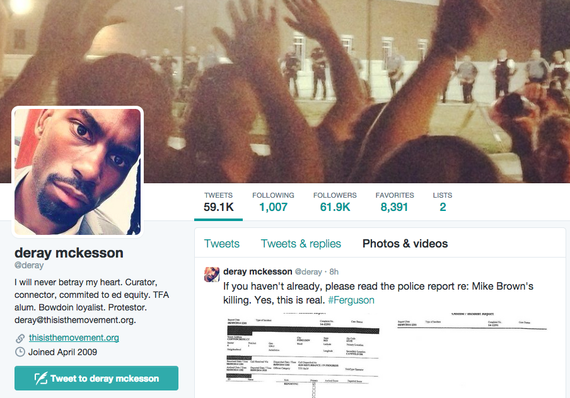
Yet activists themselves often argue that social media is important to their work. DeRay Mckesson, who has emerged as one of a number of leading organizers and activists against police brutality, has spoken on his feed about how vital Twitter is for boosting a movement. When he first drove from his home in Minneapolis—where he works as a school administrator, traveling for protests mainly on weekends—to Ferguson to participate in the protests, Mckesson knew no one; he didn’t even know where he would sleep. Facebook networks found him a couch, and social media was vital in connecting him with the community of protestors. Mckesson reports live from protests through Twitter, where his following has ballooned from 800 followers to more than 61,000 since he began his activism. He’s also used social networks to raise awareness and to organize, by for example creating a text-message alert that informed thousands the instant the grand jury in Ferguson returned a no-indictment verdict in the Michael Brown case.

I talked to Mckesson about social media, protest, and the connections between the two. This interview has been edited for length and clarity.

Noah Berlatsky: What role has social-media activism played in the movement against police brutality that started in Ferguson?

DeRay Mckesson: Missouri would have convinced you that we did not exist if it were not for social media. The intensity with which they responded to protestors very early—we were able to document that and share it quickly with people in a way that we never could have without social media. We were able to tell our own stories.

The history of blackness is also a history of erasure. Everybody has told the story of black people in struggle except black people. The black people in the struggle haven’t had the means to tell the story historically. There were a million slaves but you see very few slave narratives. And that is intentional. So what was powerful in the context of Ferguson is that there were many people able to tell their story as the story unfolded.

The other thing I will add is that Twitter specifically has been interesting because we’re able to get feedback and responses in real time. If we think about this as community building, and we think of community building as a manifestation of love, and we think about love being about accountability, and accountability about justice, what’s interesting is that Twitter has kept us honest. There’s a democracy of feedback. I’ve had really robust conversations with people who aren’t physically in the space, but who have such great ideas. And that’s proven to be invaluable.
Berlatsky: The civil-rights movement of the ’60s obviously didn’t have Twitter or social media or the Internet, but it was able to get its message out to the media in other ways. Why wouldn’t traditional media be adequate now?

Mckesson: Ferguson exists in a tradition of protest. But what is different about Ferguson, or what is important about Ferguson, is that the movement began with regular people. There was no Martin, there was no Malcolm, there was no NAACP, it wasn’t the Urban League. People came together who didn’t necessarily know each other, but knew what they were experiencing was wrong. And that is what started this. What makes that really important, unlike previous struggle, is that—who is the spokesperson? The people. The people, in a very democratic way, became the voice of the struggle.

Our access to information is also so much greater than in the past. For instance, there’s an officer in Ferguson who is really aggressive with protestors for no reason. And I was able to take a picture of him—he would cover his badge with his hand, he would not show his name. So I took a picture of him, put it online, and within 30 minutes they knew everything about him. And that’s a different way of empowering people.

Berlatsky: It sounds like you’re saying that Twitter allowed the movement to be a lot more decentralized. Is that an advantage or a disadvantage? It seems like it might be a disadvantage in terms of settling on specific goals, for example.
Mckesson: It is not that we’re anti-organization. There are structures that have formed as a result of protest, that are really powerful. It is just that you did not need those structures to begin protest. You are enough to start a movement. Individual people can come together around things that they know are unjust. And they can spark change. Your body can be part of the protest; you don’t need a VIP pass to protest. And Twitter allowed that to happen.

I think that what we are doing is building a radical new community in struggle that did not exist before. Twitter has enabled us to create community. I think the phase we’re in is a community-building phase. Yes, we need to address policy, yes, we need to address elections; we need to do all those things. But on the heels of building a strong community.

A screenshot of Mckesson's Twitter profile (Twitter)
A screenshot of Mckesson’s Twitter profile (Twitter)

Berlatsky: You also publish—along with Johnetta (Netta) Elzie—an online newsletter about the protest movement called Words to Action. Do you see yourself as a journalist? Or as an activist? Or both? How important is social media to those roles, or to combining them?

Mckesson: I see myself as a protestor who is also telling the story as it happens. The newsletter started—I remember when Trayvon died, I wanted to follow the case, but I didn’t know what was fact or fiction. I didn’t want that to be the story of Mike Brown. There was so much news; there was so much stuff that was unclear. There were so many questions. The goal was to create a space where people could go to get true news.
Now the movement has spread beyond St. Louis, we cover stories from around the country. So the goal was to be a hub of information. I think the first newsletter that went out had 400 subscribers, and we’re at a little bit less than 14,000 now. And we did a text-message alert for the no-indictment—you could sign up to get a text when the decision came out. And 21,000 people signed up in 10 days, which was wild. So the work is focused on, how can we use the tools we have access to in order to create infrastructure for the movement.

And that’s what Netta and I have been focused on. None of this takes away from our protesting. We don’t put the newsletter out when we’re out until 4 in the morning protesting. The trade-off always veers in the favor of protest. It’s rooted in the confrontation and disruption that is protest. We want to make structures to empower people. The newsletter is a way to empower people. Because we believe that the truth is actually so damning that we can just tell you all the news that’s happening and you should be radicalized. We believe that.

Berlatsky: I saw you talking about Iggy Azalea and issues of appropriation on Twitter a little bit back. That’s the sort of cultural issue that I think many people would say is just a distraction, or is just a way for people to express outrage without working for social change. Do you see cultural conversations around Iggy, or similar issues, as a distraction from your work as an organizer? Or are they complementary?
Mckesson: Good lord. Iggy. (laughs) You’re really trying to get me in trouble.

When people think about protest, they think that protest is always confrontation, protest is always disruption. But protest is also intellectual confrontation and disruption. So part of what we do when the police speak is that we question. The thing about people like Iggy is that we also question. We question what it means to have your success be on a medium and a platform that was born of black struggle, like hip-hop or rap, and what does it mean that you identify with everything but the struggle part? Which is the Iggy issue.

We question these issues of race and struggle and white privilege, because we know that those issues are real, and because those issues have real implications in black communities. And white supremacy is not only dangerous but it is deadly. We know this to be true.

Berlatsky: Do you get a lot of harassment on social media?

Mckesson: Yeah, the death threats aren’t fun. They put my address out there, that’s not fun. I get called a nigger more than I’ve ever been called that in my entire life. I’ve blocked over 9,000 people, so I don’t personally see it as much anymore, but my friends do. So that sort of stuff I don’t love.

But what social media has done is that it has exposed the intensity of hatred in America. People who you wouldn’t expect to be racist … some of the tweets are from people who are well-intentioned but racist. And I appreciate that that’s exposed. People now understand where you’re coming from. And it’s deeply problematic. But we don’t have to guess anymore; we get it.

The harassment is never a good thing. But there’s something valuable in making sure you’re not surrounded by people who think like you. It helps you understand what you think better. And I appreciate that about Twitter. It’s a cacophony of voices. Even when you don’t agree, you at least understand different perspectives. The medium itself sets that up.

Sex Trafficking in the U.S.

E-mail Print


download

 Sex trafficking is a form of modern slavery that exists throughout the United States and globally.

Sex traffickers use violence, threats, lies, debt bondage, and other forms of coercion to force women, men and children to engage in commercial sex against their will. Under federal law, any minor under the age of 18 years induced into commercial sex is a victim of sex trafficking—regardless of whether or not the trafficker used force, fraud, or coercion.

Sex traffickers may lure their victims with the false promise of a high-paying job. Others promise a romantic relationship, where they first establish an initial period of false love and feigned affection. During this period they offer gifts, compliments, and sexual and physical intimacy, while making elaborate promises of a better life, fast money, and future luxuries. However, the trafficker eventually employs a variety of control tactics, including physical and emotional abuse, sexual assault, confiscation of identification and money, isolation from friends and family, and even renaming victims.

U.S. citizens, foreign nationals, women, men, children, and LGBTQ individuals can be victims of sex trafficking. Runaway and homeless youth, victims of domestic violence, sexual assault, war or conflict, or social discrimination are frequently targeted by traffickers.

Sex trafficking exists within diverse venues including fake massage businesses, online escort services, residential brothels, in public on city streets and in truck stops, strip clubs, hotels and motels, and elsewhere.

In street-based sex trafficking, victims are often expected to earn a nightly quota, ranging from $500 to $1000 or more, which is confiscated by the pimp. Women in brothels disguised as massage businesses typically live on-site where they are coerced into providing commercial sex to 6 to 10 men a day, 7 days a week.

Learn more about sex trafficking, including specific details of the venues where sex trafficking frequently occurs, at www.traffickingresourcecenter.org.

https://www.youtube.com/watch?v=ectMO1YM5kY


KEY STATISTICS


WHAT YOU CAN DO:

  • Learn to Recognize the Signs of human trafficking in your community.
  • Call the hotline at 1-888-373-7888 if you or someone you know is a victim of human trafficking.
  • Send a text to BeFree (233733) if you need help.
  • Visit our Action Center to find opportunities to tell your elected officials to take action against sex trafficking.


America’s True History of Religious Tolerance

The idea that the United States has always been a bastion of religious freedom is reassuring—and utterly at odds with the historical record

Smithsonian Magazine | Subscribe
October 2010

Wading into the controversy surrounding an Islamic center planned for a site near New York City’s Ground Zero memorial this past August, President Obama declared: “This is America. And our commitment to religious freedom must be unshakeable. The principle that people of all faiths are welcome in this country and that they will not be treated differently by their government is essential to who we are.” In doing so, he paid homage to a vision that politicians and preachers have extolled for more than two centuries—that America historically has been a place of religious tolerance. It was a sentiment George Washington voiced shortly after taking the oath of office just a few blocks from Ground Zero.

But is it so?

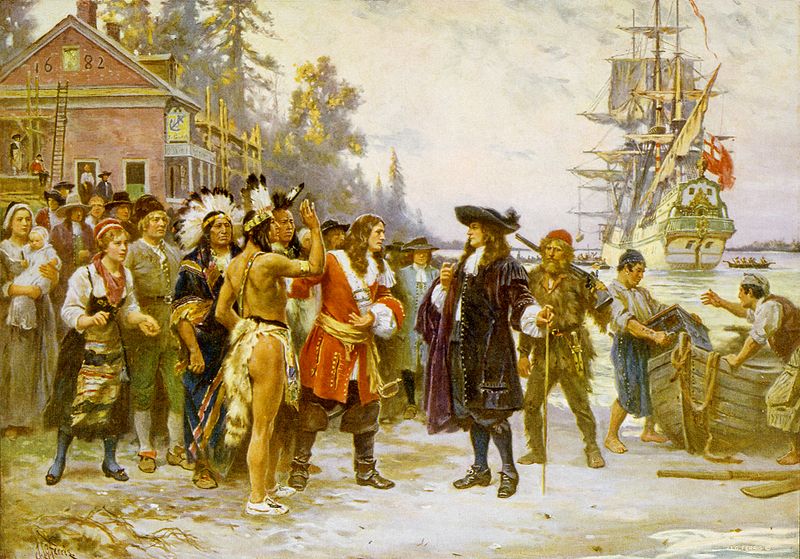
In the storybook version most of us learned in school, the Pilgrims came to America aboard the Mayflower in search of religious freedom in 1620. The Puritans soon followed, for the same reason. Ever since these religious dissidents arrived at their shining “city upon a hill,” as their governor John Winthrop called it, millions from around the world have done the same, coming to an America where they found a welcome melting pot in which everyone was free to practice his or her own faith.

The problem is that this tidy narrative is an American myth. The real story of religion in America’s past is an often awkward, frequently embarrassing and occasionally bloody tale that most civics books and high-school texts either paper over or shunt to the side. And much of the recent conversation about America’s ideal of religious freedom has paid lip service to this comforting tableau.
From the earliest arrival of Europeans on America’s shores, religion has often been a cudgel, used to discriminate, suppress and even kill the foreign, the “heretic” and the “unbeliever”—including the “heathen” natives already here. Moreover, while it is true that the vast majority of early-generation Americans were Christian, the pitched battles between various Protestant sects and, more explosively, between Protestants and Catholics, present an unavoidable contradiction to the widely held notion that America is a “Christian nation.”

First, a little overlooked history: the initial encounter between Europeans in the future United States came with the establishment of a Huguenot (French Protestant) colony in 1564 at Fort Caroline (near modern Jacksonville, Florida). More than half a century before the Mayflower set sail, French pilgrims had come to America in search of religious freedom.

The Spanish had other ideas. In 1565, they established a forward operating base at St. Augustine and proceeded to wipe out the Fort Caroline colony. The Spanish commander, Pedro Menéndez de Avilés, wrote to the Spanish King Philip II that he had “hanged all those we had found in [Fort Caroline] because…they were scattering the odious Lutheran doctrine in these Provinces.” When hundreds of survivors of a shipwrecked French fleet washed up on the beaches of Florida, they were put to the sword, beside a river the Spanish called Matanzas (“slaughters”). In other words, the first encounter between European Christians in America ended in a blood bath.

The much-ballyhooed arrival of the Pilgrims and Puritans in New England in the early 1600s was indeed a response to persecution that these religious dissenters had experienced in England. But the Puritan fathers of the Massachusetts Bay Colony did not countenance tolerance of opposing religious views. Their “city upon a hill” was a theocracy that brooked no dissent, religious or political.

indian1

The most famous dissidents within the Puritan community, Roger Williams and Anne Hutchinson, were banished following disagreements over theology and policy. From Puritan Boston’s earliest days, Catholics (“Papists”) were anathema and were banned from the colonies, along with other non-Puritans. Four Quakers were hanged in Boston between 1659 and 1661 for persistently returning to the city to stand up for their beliefs.

Throughout the colonial era, Anglo-American antipathy toward Catholics—especially French and Spanish Catholics—was pronounced and often reflected in the sermons of such famous clerics as Cotton Mather and in statutes that discriminated against Catholics in matters of property and voting. Anti-Catholic feelings even contributed to the revolutionary mood in America after King George III extended an olive branch to French Catholics in Canada with the Quebec Act of 1774, which recognized their religion.

When George Washington dispatched Benedict Arnold on a mission to court French Canadians’ support for the American Revolution in 1775, he cautioned Arnold not to let their religion get in the way. “Prudence, policy and a true Christian Spirit,” Washington advised, “will lead us to look with compassion upon their errors, without insulting them.” (After Arnold betrayed the American cause, he publicly cited America’s alliance with Catholic France as one of his reasons for doing so.)

In newly independent America, there was a crazy quilt of state laws regarding religion. In Massachusetts, only Christians were allowed to hold public office, and Catholics were allowed to do so only after renouncing papal authority. In 1777, New York State’s constitution banned Catholics from public office (and would do so until 1806). In Maryland, Catholics had full civil rights, but Jews did not. Delaware required an oath affirming belief in the Trinity. Several states, including Massachusetts and South Carolina, had official, state-supported churches.

In 1779, as Virginia’s governor, Thomas Jefferson had drafted a bill that guaranteed legal equality for citizens of all religions—including those of no religion—in the state. It was around then that Jefferson famously wrote, “But it does me no injury for my neighbor to say there are twenty gods or no God. It neither picks my pocket nor breaks my leg.” But Jefferson’s plan did not advance—until after Patrick (“Give Me Liberty or Give Me Death”) Henry introduced a bill in 1784 calling for state support for “teachers of the Christian religion.”

Future President James Madison stepped into the breach. In a carefully argued essay titled “Memorial and Remonstrance Against Religious Assessments,” the soon-to-be father of the Constitution eloquently laid out reasons why the state had no business supporting Christian instruction. Signed by some 2,000 Virginians, Madison’s argument became a fundamental piece of American political philosophy, a ringing endorsement of the secular state that “should be as familiar to students of American history as the Declaration of Independence and the Constitution,” as Susan Jacoby has written in Freethinkers, her excellent history of American secularism.

Among Madison’s 15 points was his declaration that “the Religion then of every man must be left to the conviction and conscience of every…man to exercise it as these may dictate. This right is in its nature an inalienable right.”

Madison also made a point that any believer of any religion should understand: that the government sanction of a religion was, in essence, a threat to religion. “Who does not see,” he wrote, “that the same authority which can establish Christianity, in exclusion of all other Religions, may establish with the same ease any particular sect of Christians, in exclusion of all other Sects?” Madison was writing from his memory of Baptist ministers being arrested in his native Virginia.

Bible riots
Philadelphia’s Bible Riots of 1844 reflected a strain of anti-Catholic bias and hostility that coursed through 19th-century America. (Granger Collection, New York)

As a Christian, Madison also noted that Christianity had spread in the face of persecution from worldly powers, not with their help. Christianity, he contended, “disavows a dependence on the powers of this world…for it is known that this Religion both existed and flourished, not only without the support of human laws, but in spite of every opposition from them.”

Recognizing the idea of America as a refuge for the protester or rebel, Madison also argued that Henry’s proposal was “a departure from that generous policy, which offering an Asylum to the persecuted and oppressed of every Nation and Religion, promised a lustre to our country.”

After long debate, Patrick Henry’s bill was defeated, with the opposition outnumbering supporters 12 to 1. Instead, the Virginia legislature took up Jefferson’s plan for the separation of church and state. In 1786, the Virginia Act for Establishing Religious Freedom, modified somewhat from Jefferson’s original draft, became law. The act is one of three accomplishments Jefferson included on his tombstone, along with writing the Declaration and founding the University of Virginia. (He omitted his presidency of the United States.) After the bill was passed, Jefferson proudly wrote that the law “meant to comprehend, within the mantle of its protection, the Jew, the Gentile, the Christian and the Mahometan, the Hindoo and Infidel of every denomination.”

Madison wanted Jefferson’s view to become the law of the land when he went to the Constitutional Convention in Philadelphia in 1787. And as framed in Philadelphia that year, the U.S. Constitution clearly stated in Article VI that federal elective and appointed officials “shall be bound by Oath or Affirmation, to support this Constitution, but no religious Test shall ever be required as a Qualification to any Office or public Trust under the United States.”

This passage—along with the facts that the Constitution does not mention God or a deity (except for a pro forma “year of our Lord” date) and that its very first amendment forbids Congress from making laws that would infringe of the free exercise of religion—attests to the founders’ resolve that America be a secular republic. The men who fought the Revolution may have thanked Providence and attended church regularly—or not. But they also fought a war against a country in which the head of state was the head of the church. Knowing well the history of religious warfare that led to America’s settlement, they clearly understood both the dangers of that system and of sectarian conflict.

It was the recognition of that divisive past by the founders—notably Washington, Jefferson, Adams and Madison—that secured America as a secular republic. As president, Washington wrote in 1790: “All possess alike liberty of conscience and immunity of citizenship. …For happily the Government of the United States, which gives to bigotry no sanction, to persecution no assistance requires only that they who live under its protection should demean themselves as good citizens.”

He was addressing the members of America’s oldest synagogue, the Touro Synagogue in Newport, Rhode Island (where his letter is read aloud every August). In closing, he wrote specifically to the Jews a phrase that applies to Muslims as well: “May the children of the Stock of Abraham, who dwell in this land, continue to merit and enjoy the good will of the other inhabitants, while every one shall sit in safety under his own vine and figtree, and there shall be none to make him afraid.”

As for Adams and Jefferson, they would disagree vehemently over policy, but on the question of religious freedom they were united. “In their seventies,” Jacoby writes, “with a friendship that had survived serious political conflicts, Adams and Jefferson could look back with satisfaction on what they both considered their greatest achievement—their role in establishing a secular government whose legislators would never be required, or permitted, to rule on the legality of theological views.”

Late in his life, James Madison wrote a letter summarizing his views: “And I have no doubt that every new example, will succeed, as every past one has done, in shewing that religion & Govt. will both exist in greater purity, the less they are mixed together.”

While some of America’s early leaders were models of virtuous tolerance, American attitudes were slow to change. The anti-Catholicism of America’s Calvinist past found new voice in the 19th century. The belief widely held and preached by some of the most prominent ministers in America was that Catholics would, if permitted, turn America over to the pope. Anti-Catholic venom was part of the typical American school day, along with Bible readings. In Massachusetts, a convent—coincidentally near the site of the Bunker Hill Monument—was burned to the ground in 1834 by an anti-Catholic mob incited by reports that young women were being abused in the convent school. In Philadelphia, the City of Brotherly Love, anti-Catholic sentiment, combined with the country’s anti-immigrant mood, fueled the Bible Riots of 1844, in which houses were torched, two Catholic churches were destroyed and at least 20 people were killed.

At about the same time, Joseph Smith founded a new American religion—and soon met with the wrath of the mainstream Protestant majority. In 1832, a mob tarred and feathered him, marking the beginning of a long battle between Christian America and Smith’s Mormonism. In October 1838, after a series of conflicts over land and religious tension, Missouri Governor Lilburn Boggs ordered that all Mormons be expelled from his state. Three days later, rogue militiamen massacred 17 church members, including children, at the Mormon settlement of Haun’s Mill. In 1844, a mob murdered Joseph Smith and his brother Hyrum while they were jailed in Carthage, Illinois. No one was ever convicted of the crime.

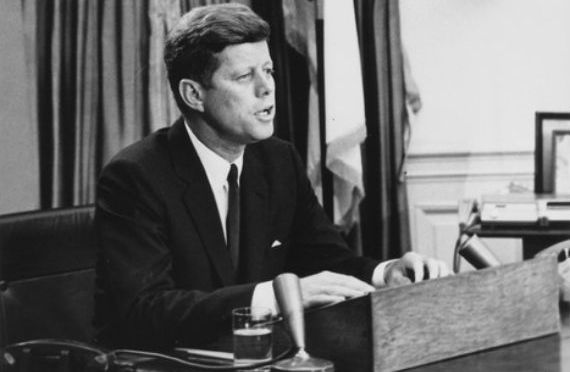
Even as late as 1960, Catholic presidential candidate John F. Kennedy felt compelled to make a major speech declaring that his loyalty was to America, not the pope. (And as recently as the 2008 Republican primary campaign, Mormon candidate Mitt Romney felt compelled to address the suspicions still directed toward the Church of Jesus Christ of Latter-day Saints.) Of course, America’s anti-Semitism was practiced institutionally as well as socially for decades. With the great threat of “godless” Communism looming in the 1950s, the country’s fear of atheism also reached new heights.
America can still be, as Madison perceived the nation in 1785, “an Asylum to the persecuted and oppressed of every Nation and Religion.” But recognizing that deep religious discord has been part of America’s social DNA is a healthy and necessary step. When we acknowledge that dark past, perhaps the nation will return to that “promised…lustre” of which Madison so grandiloquently wrote.

About the Author

Kenneth C. Davis is the author of Don’t Know Much About History and A Nation Rising, among other books.
Original Source: http://www.smithsonianmag.com/history/americas-true-history-of-religious-tolerance-61312684/#c8EfBVpuT4FxW7kC.99

Where the right to know comes from

cjr_full_logo

By Michael Schudson

OCTOBER 14, 2015

Wikimedia Commons, treatment by CJR.

IN 2003, DEAN BAQUET, then managing editor of the Los Angeles Times, along with then-Editor John S. Carroll, considered—and ultimately rejected—delaying publication of a damaging story on gubernatorial candidate  Arnold Schwarzenegger. Just five days before the October 7 special election, the paper ran the story, which detailed multiple allegations of sexual harassment. Continue reading Where the right to know comes from

Social Media as a Tool for Protest

download (3)

FEBRUARY 3, 2011 | 09:54 GMT

By Marko Papic and Sean Noonan

Internet services were reportedly restored in Egypt on Feb. 2 after being completely shut down for two days. Egyptian authorities unplugged the last Internet service provider (ISP) still operating Jan. 31 amid ongoing protests across the country. The other four providers in Egypt — Link Egypt, Vodafone/Raya, Telecom Egypt and Etisalat Misr — were shut down as the crisis boiled over on Jan. 27. Commentators immediately assumed this was a response to the organizational capabilities of social media websites that Cairo could not completely block from public access.

The role of social media in protests and revolutions has garnered considerable media attention in recent years. Current conventional wisdom has it that social networks have made regime change easier to organize and execute. An underlying assumption is that social media is making it more difficult to sustain an authoritarian regime — even for hardened autocracies like Iran and Myanmar — which could usher in a new wave of democratization around the globe. In a Jan. 27 YouTube interview, U.S. President Barack Obama went as far as to compare social networking to universal liberties such as freedom of speech.

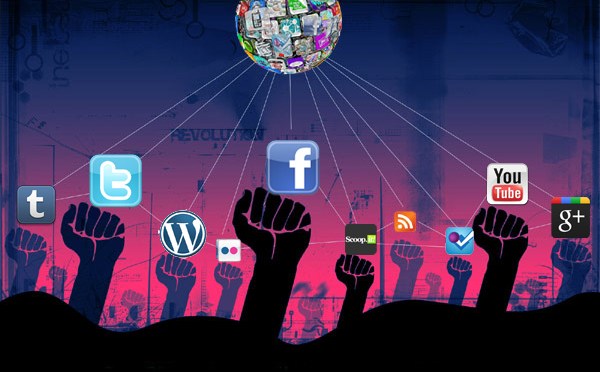
Social media alone, however, do not instigate revolutions. They are no more responsible for the recent unrest in Tunisia and Egypt than cassette-tape recordings of Ayatollah Ruholla Khomeini speeches were responsible for the 1979 revolution in Iran. Social media are tools that allow revolutionary groups to lower the costs of participation, organization, recruitment and training. But like any tool, social media have inherent weaknesses and strengths, and their effectiveness depends on how effectively leaders use them and how accessible they are to people who know how to use them.

How To Use Social Media

The situations in Tunisia and Egypt have both seen an increased use of social networking media such as Facebook and Twitter to help organize, communicate and ultimately initiate civil-disobedience campaigns and street actions. The Iranian “Green Revolution” in 2009 was closely followed by the Western media via YouTube and Twitter, and the latter even gave Moldova’s 2009 revolution its moniker, the “Twitter Revolution.”

Foreign observers — and particularly the media — are mesmerized by the ability to track events and cover diverse locations, perspectives and demographics in real time. But a revolution is far more than what we see and hear on the Internet — it requires organization, funding and mass appeal. Social media no doubt offer advantages in disseminating messages quickly and broadly, but they also are vulnerable to government counter-protest tactics (more on these below). And while the effectiveness of the tool depends on the quality of a movement’s leadership, a dependence on social media can actually prevent good leadership from developing.

The key for any protest movement is to inspire and motivate individuals to go from the comfort of their homes to the chaos of the streets and face off against the government. Social media allow organizers to involve like-minded people in a movement at a very low cost, but they do not necessarily make these people move. Instead of attending meetings, workshops and rallies, un-committed individuals can join a Facebook group or follow a Twitter feed at home, which gives them some measure of anonymity (though authorities can easily track IP addresses) but does not necessarily motivate them to physically hit the streets and provide fuel for a revolution. At the end of the day, for a social media-driven protest movement to be successful, it has to translate social media membership into street action.

The Internet allows a revolutionary core to widely spread not just its ideological message but also its training program and operational plan. This can be done by e-mail, but social media broaden the exposure and increase its speed, with networks of friends and associates sharing the information instantly. YouTube videos explaining a movement’s core principles and tactics allow cadres to transmit important information to dispersed followers without having to travel. (This is safer and more cost effective for a movement struggling to find funding and stay under the radar, but the level of training it can provide is limited. Some things are difficult to learn by video, which presents the same problems for protest organizers as those confronted by grassroots jihadists, who must rely largely on the Internet for communication.) Social media can also allow a movement to be far more nimble about choosing its day of action and, when that day comes, to spread the action order like wildfire. Instead of organizing campaigns around fixed dates, protest movements can reach hundreds of thousands of adherents with a single Facebook post or Twitter feed, launching a massive call to action in seconds.

With lower organizational and communications costs, a movement can depend less on outside funding, which also allows it to create the perception of being a purely indigenous movement (without foreign supporters) and one with wide appeal. According to the event’s Facebook page, the April 6 Movement in Egypt had some 89,250 people claiming attendance at a Jan. 28 protest when, in fact, a much smaller number of protesters were actually there according to STRATFOR’s estimates. The April 6 Movement is made up of the minority of Egyptians who have Internet access, which the OpenNet Initiative estimated in August 2009 to be 15.4 percent of the population. While this is ahead of most African countries, it is behind most Middle Eastern countries. Internet penetration rates in countries like Iran and Qatar are around 35 percent, still a minority of the population. Eventually, a successful revolutionary movement has to appeal to the middle class, the working class, retirees and rural segments of the population, groups that are unlikely to have Internet access in most developing countries. Otherwise, a movement could quickly find itself unable to control the revolutionary forces it unleashed or being accused by the regime of being an unrepresentative fringe movement. This may have been the same problem that Iranian protesters experienced in 2009.

Not only must protest organizers expand their base beyond Internet users, they must also be able to work around government disruption. Following the Internet shutdown in Egypt, protesters were able to distribute hard-copy tactical pamphlets and use faxes and landline telephones for communications. Ingenuity and leadership quickly become more important than social media when the government begins to use counter-protest tactics, which are well developed even in the most closed countries.

Countering Social Media

Like any other tool, social media have their drawbacks. Lowering the costs of communication also diminishes operational security. Facebook messages can be open for all to see, and even private messages can be viewed by authorities through search warrants in more open countries or pressure on the Internet social media firms in more closed ones. Indeed, social media can quickly turn into a valuable intelligence-collection tool. A reliance on social media can also be exploited by a regime willing to cut the country off from Internet or domestic text messaging networks altogether, as has been the case in Egypt.

The capability of governments to monitor and counteract social media developed alongside the capability of their intelligence services. In order to obtain an operating license in any country, social networking websites have to come to some sort of agreement with the government. In many countries, this involves getting access to user data, locations and network information. Facebook profiles, for example, can be a boon for government intelligence collectors, who can use updates and photos to pinpoint movement locations and activities and identify connections among various individuals, some of whom may be suspect for various activities. (Visible Technologies, a software firm that specializes in monitoring social media has received funding from In-Q-Tel, the CIA’s venture capital firm, and many Western intelligence services have start-up budgets to develop Internet technologies that will enable even deeper mining of Internet-user data.)

In using social media, the trade-off for protest leaders is that they must expose themselves to disseminate their message to the masses (although there are ways to mask IP addresses and avoid government monitoring, such as by using proxy servers). Keeping track of every individual who visits a protest organization’s website page may be beyond the capabilities of many security services, depending on a site’s popularity, but a medium designed to reach the masses is open to everyone. In Egypt, almost 40 leaders of the April 6 Movement were arrested early on in the protests, and this may have been possible by identifying and locating them through their Internet activities, particularly through their various Facebook pages.

Indeed, one of the first organizers of the April 6 Movement became known in Egypt as “Facebook Girl” following her arrest in Cairo on April 6, 2008. The movement was originally organized to support a labor protest that day in Mahalla, and organizer Esraa Abdel Fattah Ahmed Rashid found Facebook a convenient way to organize demonstrations from the safety of her home. Her release from prison was an emotional event broadcast on Egyptian TV, which depicted her and her mother crying and hugging. Rashid was then expelled from the group and no longer knows the password for accessing the April 6 Facebook page. One fellow organizer called her “chicken” for saying she would not have organized the protest if she had thought she would be arrested. Rashid’s story is a good example of the challenges posed by using social media as a tool for mobilizing a protest. It is easy to “like” something or someone on Facebook, but it is much harder to organize a protest on the street where some participants will likely be arrested, injured or killed.

Beyond monitoring movement websites, governments can also shut them down. This has been common in Iran and China during times of social unrest. But blocking access to a particular website cannot stop tech-savvy Internet users employing virtual private networks or other technologies to access unbanned IP addresses outside the country in order to access banned sites. In response to this problem, China shut down Internet access to all of Xinjiang Autonomous Region, the location ofethnic Uighur riots in July 2009. More recently, Egypt followed the same tactic for the entire country. Like many countries, Egypt has contracts with Internet service providers that allow the government to turn the Internet off or, when service providers are state-owned, to make life difficult for Internet-based organizers.

Regimes can also use social media for their own purposes. One counter-protest tactic is to spread disinformation, whether it is to scare away protesters or lure them all to one location where anti-riot police lie in wait. We have not yet witnessed such a government “ambush” tactic, but its use is inevitable in the age of Internet anonymity. Government agents in many countries have become quite proficient at trolling the Internet in search of pedophiles and wannabe terrorists. (Of course, such tactics can be used by both sides. During the Iranian protests in 2009, many foreign-based Green Movement supporters spread disinformation over Twitter to mislead foreign observers.)

The most effective way for the government to use social media is to monitor what protest organizers are telling their adherents either directly over the Internet or by inserting an informant into the group, counteracting the protesters wherever and whenever they assemble. Authorities monitoring protests at World Trade Organization and G-8 meetings as well as the Republican and Democratic national conventions in the United States have used this successfully. Over the past two years in Egypt, the April 6 Movement has found the police ready and waiting at every protest location. Only in recent weeks has popular support grown to the point where the movement has presented a serious challenge to the security services.

One of the biggest challenges for security services is to keep up with the rapidly changing Internet. In Iran, the regime quickly shut down Facebook but not Twitter, not realizing the latter’s capabilities. If social media are presenting a demonstrable threat to governments, it could become vital for security services to continually refine and update plans for disrupting new Internet technology.

Quality of Leadership vs. Cost of Participation

There is no denying that social media represent an important tool for protest movements to effectively mobilize their adherents and communicate their message. As noted above, however, the effectiveness of the tool depends on its user, and an overreliance can become a serious detriment.

One way it can hurt a movement is in the evolution of its leadership. To lead a protest movement effectively, an organization’s leadership has to venture outside of cyberspace. It has to learn what it means to face off against a regime’s counterintelligence capabilities in more than just the virtual world. By holding workshops and mingling among the populace, the core leadership of a movement learns the different strategies that work best with different social strata and how to appeal to a broad audience. Essentially, leaders of a movement that exploits the use of social media must take the same risks as those of groups that lack such networking capability. The convenience and partial anonymity of social media can decrease the motivation of a leader to get outside and make things happen.

Moreover, a leadership grounded in physical reality is one that constructs and sticks to a concerted plan of action. The problem with social media is that they subvert the leadership of a movement while opening it to a broader membership. This means that a call for action may spread like wildfire before a movement is sufficiently prepared, which can put its survival in danger. In many ways, the Iranian Green Revolution is a perfect example of this. The call for action brought a self-selected group of largely educated urban youth to protest in the streets, where the regime cracked down harshly on a movement it believed was not broad enough to constitute a real threat.

A leadership too reliant on social media can also become isolated from alternative political movements with which it may share the common goal of regime change. This is especially the case when other movements are not “youth movements” and therefore are not as tech savvy. This can create serious problems once the revolution is successful and an interim government needs to be created. The Serbian Otpor (Resistance) movement was successful in the 2000 Serbian democratic revolution precisely because it managed to bring together a disparate opposition of pro-Western and nationalist forces. But to facilitate such coalition building, leaders have to step away from computers and cell phones and into factories, rice paddies and watering holes they normally would never want to enter. This is difficult to do during a revolution, when things are in flux and public suspicion is high, especially of those who claim to be leading a revolution.

Even when a media-savvy leader has a clear plan, he or she may not be successful. For instance, Thaksin Shinawatra, the former prime minister of Thailand and telecommunications magnate, has used his skills to hold video conference calls with stadiums full of supporters, and launched two massive waves of protests involving some 100,000 supporters against the Thai government in April 2009 and April and May 2010, yet he still has not succeeded in taking power. He remains a disembodied voice, capable of rocking the boat but incapable of taking its helm.

diffusing

Shutting down the Internet did not reduce the numbers of Egyptian protesters in the streets. In fact, the protests only grew bigger as websites were shut down and the Internet was turned off. If the right conditions exist a revolution can occur, and social media do not seem to change that. Just because an Internet-based group exists does not make it popular or a threat. There are Facebook groups, YouTube videos and Twitter posts about everything, but that does not make them popular. A neo-Nazi skinhead posting from his mother’s basement in Illinois is not going to start a revolution in the United States, no matter how many Internet posts he makes or what he says. The climate must be ripe for revolution, due to problems like inflation, deflation, food shortages, corruption and oppression, and the population must be motivated to mobilize. Representing a new medium with dangers as well as benefits, social media do not create protest movements; they only allow members of such movements to communicate more easily.

Other technologies like short-wave radio, which can also be used to communicate and mobilize, have been available to protesters and revolutionaries for a long time. In reality, so has the Internet, which is the fundamental technological development that allows for quick and widespread communications. The popularity of social media, one of many outgrowths of the Internet, may actually be isolated to international media observation from afar. We can now watch protest developments in real time, instead of after all the reports have been filed and printed in the next day’s newspaper or broadcast on the nightly news. Western perceptions are often easily swayed by English-speaking, media-savvy protesters who may be only a small fraction of a country’s population. This is further magnified in authoritarian countries where Western media have no choice but to turn to Twitter and YouTube to report on the crisis, thus increasing the perceived importance of social media.

In the Middle East, where Internet penetration is below 35 percent (with the exception of Israel), if a movement grows large enough to effect change it will have been joined through word of mouth, not through social networking. Still, the expansion of Internet connectivity does create new challenges for domestic leaders who have proved more than capable of controlling older forms of communication. This is not an insurmountable challenge, as China has shown, but even in China’s case there is growing anxiety about the ability of Internet users to evade controls and spread forbidden information.

Social media represent only one tool among many for an opposition group to employ. Protest movements are rarely successful if led from somebody’s basement in a virtual arena. Their leaders must have charisma and street smarts, just like leaders of any organization. A revolutionary group cannot rely on its most tech-savvy leaders to ultimately launch a successful revolution any more than a business can depend on the IT department to sell its product. It is part of the overall strategy, but it cannot be the sole strategy.

Original Source: https://www.stratfor.com/weekly/20110202-social-media-tool-protest

Suggested Reading

Tkacheva, Olesya, Lowell H. Schwartz, Martin C. Libicki, Julie E. Taylor, Jeffrey Martini and Caroline Baxter. “Internet freedom and political space.” Santa Monica, CA: RAND Corporation, 2013. http://www.rand.org/pubs/research_reports/RR295. Also available in print form.

Kelly, Terrence K., Seth G. Jones, James E. Barnett, Keith Crane, Robert C. Davis and Carl Jensen. A Stability Police Force for the United States: Justification and Options for Creating U.S. Capabilities. Santa Monica, CA: RAND Corporation, 2009. http://www.rand.org/pubs/monographs/MG819. Also available in print form.

Revolution: Immunity for Democracies?

PATRICK M. REGAN

Binghamton University

DANIEL JUST

New York University

AIDA PASKEVICIUTE

University of Essex, U.K.

While social revolutions have been the focus of considerable scholarly attention over the past quarter century, little effort has been made to consider the prospects for revolution in the industrialized West. This odd fact exists in spite of Goldstone’s claim that the present-day United States exhibits some of the factors consistent with historical causes of revolution, and that we “ignore the past at our peril” (1991: 497). Drawing on a wide range of scholarly perspectives, this study is designed to show that while the theoretical potential for revolutionary movements does exist in the industrialized West, it has been effectively disabled by the lack of political alternatives to the status quo and the difficulties in mobilizing contemporary societies. Our analysis suggests, however, that given recent changes in the patterns of social and economic dislocations as well as deepening ethnic, racial, or religious cleavages around the world, there is no reason to assume that Western democracies will remain immune to revolutionary changes.

Perhaps the most important and obvious but also most neglected fact about successful revolutions is that they do not occur in democratic political systems. This is not to argue that formally democratic governments are immune to revolutions.

Samuel P. Huntington (1994: 44)

Social revolutions have been the focus of considerable attention over the past quarter century. The linkages that lead to revolution generally consist of some variant of either relative deprivation, inequality, class conflict, political mobilization, or elite defection, though a more recent trend is to model the decision to participate in revolts from the perspective of a rationally calculating actor. Most of the empirical work has involved the likelihood of revolution in either a group of developing countries, or the eighteenth and the nineteenth-century Europe. Little effort has been made, however, to consider the prospects for revolution in the industrial democracies of the West. This odd fact exists in spite of Goldstone’s claim that the present-day United States exhibits some of the factors consistent with historical causes of revolution, and that we “ignore the past at our peril” (1991: 497). This essay poses two questions: a) whether there is a potential for social revolution in the industrialized countries of the West, and b) whether we might be able to evaluate the conditions under which any such revolutionary movement might gain momentum.

There are two things striking about this theoretical inquiry. First, one of the virtues of sound reasoning should be that it is widely applicable, and second, one of the objectives of both sociology and political science as scientific endeavors should be our ability to predict social changes. So if what appears to be a rather coherent body of theoretical work contributes broadly to our understanding of the workings of the political world, then it should offer insights into what the world of politics will hold. Democracy might not be the saving grace, for as Huntington (1968: 275) argues, political democracy is not the vaccine to prevent revolutions, even though Goodwin and Skocpol (1989) believe that the ballot box has in fact been the “coffin of revolutionary movements.” But predicting the onset of a revolution is supposed to be akin to predicting the next earthquake, something long sought after yet rarely if ever achieved (Eckstein 1990). Tilly (1975: 183) sets this out as a critical challenge to social scientists; we evaluate the merits of the challenge.

The thrust of this essay departs from those who attempt to predict the specific onset of a revolution, or those who seek to demonstrate the mechanisms that lead to a specific level of protest.[1] While trying to predict the actual level of protest, the timing of its onset, or the point at which protest gives way to successful revolution is a worthwhile endeavor, particularly in highly unstable countries, this essay targets a much broader level: rather than focusing on the point at which social dislocations give rise to revolutionary movements, we ask whether the theoretical linkages that tie social and structural factors to revolutionary politics are generalizable to the industrial West, and if so, if we can use this knowledge to evaluate the potential for revolution in this category of countries. In this sense, it is necessary to invoke Marx’s dictum that it is not only unstable countries but also highly advanced and industrially developed countries that are potentially prone to a social revolution. The question then is not so much when it will happen, but whether it is thinkable. If the relative stability in the industrialized democracies is interpreted in terms of a gradual alleviation of social and political oppositions, then Fukuyama’s (1992) concept of the “end of history” may be applicable across the political, economic, and social strata of societies. But if such stability proves to conceal deeper contradictions then it would be precisely the Western democracies where we would look for the threads of social revolution.

But why might one raise doubts about the apparent stability in the industrialized world? Two factors stand out: a) deepening cleavages among ethnic and racial groups, and b) changing patterns in social and economic dislocations. These two trends are often linked, and a cursory look at each should suffice to make the issue clear. Throughout the 1990s and into the early part of this century unemployment rates have been increasing across Western democracies. France, Spain, Italy, Belgium, and Finland have in the last generation rarely had unemployment rates below 10 percent (World Bank 2003). What is more, presently nearly one out of thirteen members of the workforce are officially unemployed in many leading industrial countries (Economist 2004a). Those without double-digit unemployment figures have structural unemployment resting at about seven percent, and the number of underemployed leaves countless additional workers falling far short of their potential. The effects of recent efforts to “privatize” the world’s economy appear to have quite starkly favored the wealthy at the expense of the poor and middle classes. What is more, “outsourcing” of the jobs to places like China and India and the flow of immigrants have been the cause of increasing tensions and insecurity in the labor force of Western democracies. At the same time the ability and willingness of states to temper the effects of these difficult economic times has come under rising strain. Access to education and the expanding role of technology and the Internet seems to widen the gap between rich and poor even further.

The extent of these structural problems is often exacerbated by racial and ethnic cleavages, with urban areas and minority groups suffering more severely. For example, in spite of the upward mobility of many African Americans in the United States, urban centers tend to be populated overwhelmingly by members of this racial community. And it is in these urban areas where unemployment is highest, educational facilities the poorest, teenage pregnancy most prevalent, and drug abuse nearly epidemic.

The United States is not the only country where racial and ethnic tensions and socio-economic dislocations have been on the rise. In Britain, the inflow of immigrants from its former colonies led to increasing racial tensions and a number of race riots. The budding neo-nazi movement in Germany and the anti-Muslim violence in the Netherlands is testament to the resentment felt by the majority for minority ethnic groups. German unification was similarly accompanied by a surge of violence against foreigners and the emergence of the xenophobic Republikaner Party. Tensions between the French and North Africans have erupted into violence also in southern France, fueling electoral support for the anti-immigrant National Front Party (e.g., Dalton 2002: 104). In short, at least some conditions that are theoretically linked to revolution are prevalent in the most modern countries of the world.

HOW WE THINK ABOUT REVOLUTIONS

What is meant by revolution has been a subject of intense debates in the scholarly literature. Most definitions of revolution emphasize factors such as time, class, and violence, with a consequent realignment of social, economic, and political bonds that tie societies together (Skocpol 1979, Hagopian 1993, Sztompka 1993). Skocpol’s (1979: 4) definition of revolution as a class-based revolt from below that brings rapid transformation of society’s state and class structure has been very influential in this respect. However, the problem with this definition is simply that it is outdated—revolutions from the late seventies on have not been necessarily an outcome of only internal economic problems. In the era of globalization and a low-level state intervention in capital accumulation in the West, both the state and the class become rather elusive categories. If revolution is a transformation of the social structure of the state—and not just a political transformation resulting either in a gradual democratization and opening up of the enclosed polity, or in an authoritarian monopolization of politics—then the challenge revolutions face in modern democracies is not only impeded mobilization and frustrated coalition-formation but also the vagueness of their target.

In spite of the variety of conditions that influenced revolutionary outcomes, students of social revolutions usually agreed that some form of interplay between relative deprivation, inequality/class conflict, and mobilization had to be in place for the revolution to occur. Even though the tendency now is to question sufficiency of these determinants and to point to the role of elites, scholars still believe that linkages tying social-economic conditions to revolutionary behavior cannot dismiss the role of relative deprivation, inequality, and mobilization.[2]

RELATIVE DEPRIVATION

In the late sixties and early seventies, relative deprivation was a common point of departure for many studies on social revolutions. Davies (1962), for instance, argued that a gap between value expectations and value achievements would account for the onset of revolutionary behavior. Since the expectation was a continued increase in the satisfaction of economic and social needs, any sharp or sudden decline from that trend would result in an intolerable gap between expectations and achievements. Gurr (1970) outlined the social determinants of relative deprivation and made more explicit the criteria with which to evaluate the desires and achievements of a social group. Tanter and Midlarsky (1967) found some empirical support for the hypothesis that a “revolutionary gap” contributes to the onset of revolution, though others were unable to confirm the basic tenets of this theory (Miller et al. 1977).

The concept of relative deprivation as a cause of revolution is grounded in the relationship between frustration and aggression, and has its antecedents far beyond those mentioned above. De Tocqueville and Marx each related the onset of revolution to the gap between what people were led to expect, and what they were subsequently able to achieve. On the one hand, Marx (1988) argued that it was a long historical process in which the labor class was continually impoverished by the exploits of the capitalists, leading eventually to the rising up of the proletariat to overthrow the bourgeoisie. De Tocqueville (1955), on the other hand, claimed that the French revolution was precipitated, in part, by economic and social advancements that left the French masses expecting more while the industrialization process was leading them toward increasing immiseration.

INEQUALITY

There is a rather long tradition linking patterns of inequality to revolutionary behavior, suggesting that the gap between the haves and the have-nots would perhaps play some role in revolution. Structural inequality has been linked to the mass political violence characteristic of revolutionary movements in the developing world, though the evidence is mixed as to whether it is income or land inequality that is of greatest importance (Russett 1964, Midlarsky and Roberts 1985, Midlarsky 1988, Muller and Seligson 1987). The inequality—either land or income—generates discontent among those who go without, possibly resulting in large-scale political violence, which, if coupled with the fall out of powerful elites from the state, can lead to revolution. As with evidence pertaining to relative deprivation as a cause of revolution, inequality as an explanation rests on strong theoretical foundations though the evidence is mixed (Brockett 1992). Moreover, it is clear that neither relative deprivation nor inequality can stand on their own as causes of revolutions. At the most, they can serve as a motivating force for social change.

The difference between relative deprivation and inequality as explanations for revolutions may seem subtle at first, but the underlying mechanisms are profoundly different. In the former instance, the perceived deprivation is a psychological process where judgement is made relative to one’s own expectations. The mechanisms of inequality work differently: rather than individuals judging their situation relative to their own expectations and achievements, inequality is evaluated relative to others within society. Both conditions are likely to be evident concurrently, and it would be difficult to imagine one condition existing without at least some of the other. But those who argue for inequality as the causal mechanism are implicitly positing that issues of social and economic justice generate the motives behind revolutionary movements. If inequality and injustice are considered as significant components of revolutionary impulses, their role gains a momentum only if these individual concerns can reach the level of the group.

MOBILIZATION

The ability to mobilize is key to revolutionary movements (Tilly 1978). Given that there are structural conditions for expressing discontent, it is the ability to mobilize resources that determines revolutionary behavior. To Tilly (1978), this is conceived of as groups contending over political issues, while Huntington (1968) argues that it is the incongruity between political mobilization—meaning political modernization—and political institutions that results in revolution.

Since revolutions require, among other things, revolutionary strategies, strategists are expected not only to articulate alternatives but also to mobilize the masses. Using a game-theory approach, Lichbach (1990) shows that a rational person would not rebel against inequality. But if a rational person would not rebel against situations he or she finds intolerable, then we can deduce from Lichbach’s findings that either revolution is an irrational behavior, or that revolutionary strategists are required to mobilize the masses and in doing so change the expected payoff from participation in revolutionary action. Overcoming the collective action problem appears to be a critical link in mobilizing mass action, with selective incentives appearing to be a necessary ingredient (Lichbach 1994), even though others dismiss the role of the collective goods problem in social movements altogether (Tarrow 1994). One way to conceive of a solution to the collective goods puzzle is in terms of revolutionary strategists being able to deflect some of the costs associated with participation in revolutionary politics and therefore change the potential payoff to the masses.

TOWARD SYNTHESIS

Social dislocations associated with inequality or deprivation can never, on their own, lead to the mobilization of the masses behind a revolutionary agenda. Assuming that mobilization is crucial for the revolutionary process, the important question is what facilitates the mobilization of masses. If we can identify conditions that are necessary for political mobilization, we can then develop a more comprehensive model of revolution by integrating them with other necessary organizational and structural factors. As Tarrow (1994) points out, without some form of social movement, talk of revolutionary politics is beyond the pale because only social movements mount challenges to elite authority out of which revolutions may give rise. DeNardo’s (1985) work is critical in understanding the move from issues that increase the motivation behind the mobilization of support for revolutionary behavior. DeNardo argues that both strategists and alternatives to the status quo are necessary because first, the ruling coalition has a strong incentive to repress those who advocate revolutionary politics, and, second, the masses are generally unwilling to take the risk associated with the organizational process. However, although strategists may be necessary, they are not sufficient for public mobilization—alternatives to the status quo must be presented to the discontented in order to stimulate their involvement in the struggle for changes.

From this perspective, discontent could be conceived as working through strategists who mobilize and political philosophers who articulate alternative conceptions of society. And if the two intervening factors are sufficiently strong then mobilization is possible, maybe even likely. On the one hand, El Salvador, Nicaragua, Eritrea, Vietnam, Peru, and Poland all had traces of large-scale mobilizations against the ruling coalition. In each case the mobilization of discontented masses around some alternative form of social organization was quite common. On the other hand, there are a number of societies where the conditions for discontent appear to be quite evident, yet efforts to mobilize the masses are tentative and ineffective. Two questions keep recurring: Why are alternatives and strategists not as ubiquitous as the conditions contributing to discontent? And why are successful revolutions so rare? Is it only because the level of discontent is insufficient to generate mass upheaval, or because the articulation of alternatives and the development of strategies are constrained by the ruling elite?

If repression is an effective tool to stifle the development of a revolutionary organization, the prevalence of repressive practices should help to account for the relatively low incidence of revolutions. But this does not add much to our understanding of the likelihood of revolutions in the industrial democracies of the West, where overt and violent repression is hardly the norm. Even though repression in the West relies on more subtle mechanisms such as media compared to less democratic countries, the marginalization of individuals or groups is, nevertheless, quite effective at suppressing organizers. In the past, this was done largely by identifying potential revolutionaries and discrediting their alternatives to the general public. Communism or the political organizations of religious states, for instance, have been sufficiently ideologically laden to serve as an object of disdain over the past 50 years. This distrust of the communist path permitted the wholesale purge of those who attempted to articulate alternatives, as well as those who attempted to strategize and organize revolutionary movements. The more despicable the existing alternative the easier it becomes to repress those who might facilitate the mobilization process. Furthermore, in such a climate the repression needs not be as overt as witnessed in much of the developing world. The label of “a communist” could suffice to restrict the capabilities of those willing to take the risks, and if the risk takers are constrained, then the masses will be extremely hesitant. The McCarthy era and the resulting “red files” in the United States serve as poignant examples, but the effect was much more widely felt (Whitfield 1991, Ginsberg 1986).

Through much of the Cold War, a political opponent did not even have to be articulating Marxist ideas to be labeled a Communist; any political alternative could suffice to brand one as a Communist dissident. This image of the enemy proved to have been very efficient in uniting people for their common cause, leading them thus away from any revolutionary ideas. The demise of this imaginary enemy, the Soviet Union, had to be a shock to the system. Since the West has organized much of its society in active resistance to the Soviet threat for the better part of the last half of the century, the sudden removal of that threat caught most of the attentive public by surprise. Although the fall of the Soviet Block has been celebrated as the victory of democracy, cross-national surveys conducted in early 1994 indicated that a majority of Americans, Germans, and Britons believed the world had become a more dangerous place since the end of the Cold War (Dalton 2002: 114). To give a face to this amorphous danger, a new enemy had to be invented. Terrorism and Islamic fundamentalism as axis of evil and enemy of democracy have become a target of a pre-emptive strike against potential revolutionary mobilization.

WHAT CAN WE LEARN FROM THE MORE RECENT THIRD WORLD REVOLUTIONS?

Skocpol (1979), and more recently by Lachmann (1997), demonstrated that deprivation and inequality, even if successful in gaining collective recognition by the masses and leading to a violent conflict buttressed by new ideology, have only a small chance to be carried through if not supported by elites. In French, Russian, and Chinese revolutions, either the dominant class or the army defected from the state. It was only because of this division of the ruling coalition, or its repressive forces, that popular discontent could be transformed into an organized revolution. This division could be either a direct intention of elites to initiate revolution (when the elites deem the state unable to meet their expectations) or an indirect facilitation of revolution by their withdrawal of support from the state. Highly vulnerable states at times of social tension contribute significantly to success in organizing a populist-based movement. Other factors, such as widely accepted new ideological goals and the likelihood of international support or opposition, also play their roles. The democratic uprising in Czechoslovakia in 1968, for instance, had been staged by the elites that defected from the existing regime and was widely supported by the population. What it lacked, however, was world attention and support. International pressure during the Cold War allowed the elites favoring the status quo to seek Soviet military intervention, which was unlikely to be contested by the forces from beyond the Iron Curtain.

Recent research on Third World revolutions of the twentieth century demonstrates the role of elite behavior in revolutionary politics.  Drawing on the evidence from Iran, Nicaragua and the Philippines, Parsa (2000, 1989) argues that what is crucial for the overthrow of the state in the developing countries are class coalitions. Class antagonism does not produce revolution by itself, and “intense conflict may actually reduce the likelihood of revolutions.” In repressive regimes with high state intervention in capital accumulation like Iran, Nicaragua and the Philippines, the state was an easy target to locate. The difficulty, however, was, first, in finding ways to escape the radars of repression while organizing popular opposition, and, second, to find an ideological ground for different groups to agree upon. In the developing world, too strong class antagonism and a too specific extremist ideology, as Parsa concludes, are likely to prevent a coalition-formation and thus obstruct revolutionary path.  The question remains as to whether these arguments inform us about the prospects for social revolution in the advanced industrial democracies, that is, whether the coffin of revolutions there is really nailed shut.

What implications for political stability in the West can we derive from our general understanding of revolutions?  If we can rule out revolutionary change then we must infer one of two other processes for change: 1) that these political systems remain stable and unchanging over time, or 2) any change must come by dint of evolutionary processes or by defeat in war.  We see no compelling logic that defines a particular path to change, nor any reason to speculate that the end of political history is upon us and that stability will last in perpetuity.  Theory should provide guidance for thinking about future political transformations.

PROSPECTS FOR REVOLUTION IN THE WEST

A cultural perspective on political change might suggest that traditional models of deprivation and mobilization must be tempered by the decreasing vulnerability of the state.  Modern forms of capital accumulation diffuse attention from the state to the firm and therefore reduce the propensity for revolutionary change.  But why would our current culture be any different from the previous forms of culture? Is not the current cultural shortsightedness an expression of our society in the same way previous cultures were expressions of their own social forms?

While Theodor Adorno (1973, 2002), among other social theorists, argued that capitalism has an inherent tendency to transform everything into commodities, other theorists point to political possibilities opened by the current social situation of Western democracies. In an attempt to overcome Adorno’s pessimism, Ernesto Laclau (1990: 82), for instance, argues that counter-hegemonic struggles have now become possible in many more areas and that particular issues enjoy greater autonomy. It is not always clear, however, how, according to Laclau, the masses could be mobilized in the environment of increasing social fragmentation and atomization prevalent in the advanced industrial democracies. Does the “dislocated agent” really matter on the political level? It is perhaps not a coincidence that instead of theorizing revolution, Laclau talks about a gradual process of democratic reforms.  Endorsing a slow accumulation of minor adjustments, these local revolts are the means of letting the steam out, so to speak. In the era of the mass media setting up the by now widely accepted opposition between democracy and dictatorship (ethnic and religious fundamentalism, totalitarianism, etc.), any radical change, i.e. revolution, is in advance dismissed as leading to dictatorship. Rather than threatening, limited demands for emancipation serve to rejuvenate the system—they make democracy look more democratic and help to show its openness to questions, strengthening thus its difference from dictatorship (Žižek 2000: 182).  This means that at the cultural level both perceptions of deprivation and the ability to mobilize are worked out through the system such that evolutionary change is more likely.

Working counter to this system-dampening process, Western societies are now facing a number of serious economic difficulties. Over the last several decades, they have been experiencing growing market volatility, increasing strains on their governments’ ability to regulate economy, as well as growing job insecurity and high levels of unemployment (Economist 2004b) . Of the major European countries, France, Italy, Finland, and Spain throughout the 1990s all had official unemployment rates of over 10 percent, with Spanish unemployment climbing to 22.7 percent in 1995 (World Bank 2003). Belgium, Austria, Canada, Greece, have maintained average unemployment between 8.4 and 9.1 percent over the last decade. According to data collected by the British government and reported in their annual publication, Social Trends, the gap between the rich and the poor in the United Kingdom has been growing since 1994/5, with ethnic minorities disproportionately concentrated among the poor (Office for National Statistics 2004). This trend is confirmed by data from the other Western democracies including the United States: according to the Economist (2001), economic recession in the United States hit the poor the hardest, and, more significantly, has sharply increased the gap between high-wage earners and those in the middle.

This shift in wealth and employment patterns comes at a time when direct transfer payments to the socially dislocated have also come under increasing strain, and in many instances the level of welfare provisions have been cut substantially. This is evident in the United States where the federal government has shifted much of the burden for social assistance down to the level of state governments, which in many cases are unable to cope with the increased demand. Globalization and increasing economic interdependence has lead to dismantling of the welfare state, eroding the social democratic bargain, and bolstering the interests of capital at the expense of labor (e.g., Kitschelt et al. 1999, Keohane and Milner 1996).  The path that Goldstone (1991), for instance, suggests as a way out of these social dislocations is increasing productivity to a sustained level that surpasses inflation—a task that currently appears to be difficult to achieve. With a considerable concentration of economic and political wealth in the hands of the few, the cultural constraints might be significantly weakened, making any call for social change ready to find a fertile ground in the United States.  These two competing pressures force us to consider the impact of political dynamics on the process of revolutionary versus evolutionary change.

One argument against the idea of revolutionary change in industrialized democracies might be that the political processes that underlie democratic politics will be flexible enough to forestall any movement toward radical change. This may be entirely correct. The logic of the argument follows that political parties, sensing popular disaffection with the status quo would be able to adapt to the will of the public. Anthony Down’s (1957) work quite clearly buttresses this proposition. Political parties in two party systems seeking to get reelected could move toward the center of public preferences, and if this is so, their policy positions will always represent moderate rather than extreme policy choices. In the long term, we would then expect incremental change, if at all, but not revolution. At first blush the logic of these arguments seem sound enough to obscure the prospects for revolutionary pressures, but on closer inspection there still appears to be countervailing forces at work.

Although Downs made a strong theoretical case for why we should expect party convergence to equilibrium policy positions, empirical evidence does not always support this claim (e.g., Adams 2001, Budge 1994). What is more, parties have also become large organizations that have developed entrenched interests in the current distribution of resources. As Olsen (1982) argued, large distributional coalitions are inefficient at providing a collective good because they increase the complexity of government and seek to limit the diversity of membership. If Olsen’s logic of collective action is correct, then we might not expect to see the established political parties moving toward the center of mass preferences, but rather a flourishing of small vanguard parties that champion new causes. The new organizations, or parties, may be able to provide the selective incentives necessary to woo people from the center of the spectrum out closer toward the peripheries (Lichbach 1994).

The United States can serve again as an example of how the tendency towards an incremental change in modern democracies can become their Achilles heal. With the same party dominating both the U.S. Senate and the House of Representatives, the opposition is left more or less powerless. If one of the preconditions of successful revolutions is an elite-defection, the usual reason for leaders to defect is a prolonged loss of all political influence. In such cases, a deprived elite might try to regain its position by supporting a mass mobilization. Even though nothing indicates this in the policies of the recent administration in the United States, the growing economic problems coupled with political frustration can certainly make a significant part of population wonder if incremental changes do not always lead from the desired reforms. After all, the solution to the recent problems of economic growth, poverty, and distribution of wealth in the United States has been a top down “growth” oriented strategy, one that catered considerably more to the elite than the masses.  If democracy relies on its ability to implement preferred changes by incremental transformations, and if these lead away from the changes desired by the mass public, pressure for dramatic change may find favor and in doing so facilitate the mobilization of strategists and the articulation of alternative models of political and economic organization.

The core of Parsa’s (2000: 294) arguments is that the likelihood of revolutions is lower if: 1) the country develops “democratic institutions that expand polity and permit moderate political organizations access to the state,” thus diminishing “the likelihood of coalition formation among reformist and revolutionary challengers”, and 2) governments are less interventionist and allow market forces to determine capital allocation. With figures clearly showing that average public share of fixed capital expenditure in developing countries is around 45-50%, whereas in the developed ones it is around 14%, the low profile of the state in the developed world makes the capitalist elites less likely to coalesce with other social groups. The decentralized, depoliticized, and self-regulating market diffuses and limits conflicts with the civil society. In spite of this low level of intervention, the West nevertheless developed a surprisingly small capitalist class: the percentage of employers or self-employed in the West in 1990 was on average under 10% (U.K. 7.5%, U.S. 8.1%, Germany 8.3%), whereas in the developing countries it was around 30% (going as high as 70%) (International Labor Office 1989, 1990). This suggests that the potential for revolution in democratic countries is diminished by virtue of the organization of the economic system.  As bad as it might be for some, the mechanisms for anything but gradual, system-induced, change are unavailable.

These figures, however, also strengthen the relevance of the socio-economic and political indicators that point to a deep divide in Western societies. Economic inequality and polarization of political influence are, among other factors, a result of the fact that fewer people control wealth and the means of production. A smaller capitalist class is less likely to defect from the status quo but it is also more likely to intensify the already present socio-economic and political problems—an increasingly smaller group of people will control a growing level of wealth and political power. With the current problem of outsourcing, the distribution of wealth is becoming more polarized as workers lose jobs while a small class of capitalists makes more profit by using cheaper labor and favorable tax conditions abroad.

If – or as – society polarizes along political and economic fault lines the forces of politics and those of culture may collide.  The atomized state and the diffusion of targets may impede mobilization, all the while the efficient working of political groups may strive to overcome these obstacles.  Logic provides no reason to expect that industrial democracies are immune to these competing tensions, and no reason to expect the political and economic world we occupy is unchangeable.  It is hard to assess today which force is likely to dominate this struggle, but neither is there any reason to a priori dismiss the possibility of revolutionary change.  In fact, the absence of a common enemy of the advanced industrial democracies should make easier for philosophers and strategists to articulate and organize around alternative conceptions of a political, economic, and social world.

If all these forces were to lead toward a revolutionary challenge in the West, how would it look like?  First, sweeping change of revolutionary proportions need not be violent.  While historically violence was associated with many revolutionary cases, it is not a necessary condition for revolutionary change, particularly in modern industrial societies where participatory forms of government can accommodate – and possibly facilitate – sweeping changes without violence (Sztompka 1993: 305). This was made evident by the recent revolutions in East Central Europe and the Soviet Union. Second, the process may start slowly, almost imperceptibly to most.  The prominent work of Marx and Engles was preceded by the Owenites and the St. Simon movements – experiments in collective living – by at least a generation.  The Saint Simon and the Owenite movements laid the foundation for the articulation of a society organized around the social needs of the masses upon which Marx and Engels were able to build the tenets of the Communist movement.  Had Saint Simon and Owens been repressed at an early stage, and had Owens been prevented from carrying out his ‘social experiments’, the philosophy of Marx and Engels might have never seen the light of day.  The change itself may be sudden, but the ground for it could play out over an extended period of time.  And finally, the outcome itself could represent a short-term disaster or a long sought after search for social and economic equity.  The key is that revolutionary change is neither inevitable nor impossible, but it behooves us to think about the prospects for our future.  Admittedly, however, to theorize about the onset of a revolution is a bit like predicting the next earthquake, and to imagine how it would look is, of course, even more of a speculation.

CONCLUSION

As this argument stands, it is merely an attempt to link our understanding of the causes of revolution to the prospects for social stability in a domain that remains heretofore unchallenged. In light of the breakdown of the Soviet empire, the apparent threat from Islamic terrorists, and the continuing struggle in “pacifying” Iraq, this seems like a worthwhile endeavor. At this juncture any inferences represent at best an exercise in counterfactual judgment, but thinking about the seemingly unthinkable is useful in spite of the lack of evidence. It was only a bit more than a decade ago that many would have denied the possibility of the collapse of the largest political empire in a century. Few at that time could think about the unthinkable. The argument we provide suggests that, in spite of the rhetoric of the “end of history” and in spite of the increased difficulties to mobilize for radical changes in recent times, the theoretical potential for revolution does exist in the industrialized West.

For the truly cautious and skeptical, we leave with one closing thought. As any homeowner in an industrial democracy is all too aware, insurance companies—those whose job it is to insure against loss for a given level of risk—exclude coverage for damage incurred as a result of war, acts of God, and revolution. To the God-fearing the Apocalypse is sufficient grounds to exempt the insurance companies; and acts of war are far too common in this world to hold an insurance company liable. But why would insurance companies insist on indemnity from damage resulting from revolutions, if industrial democracies were immune from such events? We think that they might be the only ones who think seriously about the prospects for social revolution in the markets in which they engage.

REFERENCES


Adams, James. 2001. Party Competition and Responsible Party Government. Ann Arbor, MI: University of Michigan Press.

Adorno, Theodor W. 1973. Negative Dialectics, translated by E.B. Ashton. New York: Seabury Press.

Adorno, Theodor W., and Max Horkheimer. 2002. Dialectic of Enlightenment: Philosophical Fragments, translated by E. Jephcott. Stanford, CA: Stanford University Press.

Brockett, Charles D. 1992. “Measuring Political Violence and Land Inequality in Central America.” American Political Science Review 86(1): 169-178.

Budge, Ian. 1994. “A New Theory of Party: Competition: Uncertainty, Ideology, and Policy Equilibria Viewed Comparatively and Temporarily.” British Journal of Political Science 24(4): 443-467.

Dalton, Russell J. 2002. Citizen Politics: Public Opinion and Political Parties in Advanced Industrial Democracies. 3rd ed. New York, London: Chatham House Publishers.

Davies, James C. 1962. “Toward a Theory of Revolution.” American Sociological Review 27(1): 5-19.

DeNardo, James. 1985. Power in Numbers: The Political Strategy of Protest and Rebellion. Princeton, NJ: Princeton University Press.

Eckstein, Harry. 1990. “More about Applied Political Science”. PS: Political Science and Politics 23(1): 54-56.

Economist. 2004a. “Economic and Financial Indicators.” 3 January: 72-73.

Economist. 2004b. “Pay or Decay.” 24 January: 12.

Economist. 2001. “The Widening Gap.” 3 February: 30.

Francisco, Ronald A. 1993. “Theories of Protest and the Revolutions of 1989.” American Journal of Political Science 37(3): 663-680.

Fukuyama, Francis. 1992. The End of History and the Last Man. London: Hamish Hamilton.

Ginsberg, Benjamin. 1986. The Captive Public: How Mass Opinion Promotes State Power. New York: Basic Books.

Goldstone, Jack A. 1991. Revolution and Rebellion in the Early Modern World. Berkeley: University of California Press.

Goodwin, Jeff, and Theda Skocpol. 1989. “Explaining Revolutions in the Contemporary World”. Politics and Society 17(4): 489-509.

Gurr, Ted Robert. 1970. Why Men Rebel. Princeton, NJ: Princeton University Press.

Gurr, Ted Robert, and Mark Irving Lichbach. 1986. “Forecasting Internal Conflict: A Competitive Evaluation of Empirical Theories.” Comparative Political Studies 19(1): 3-38.

Hagopian, Mark N. 1974. The Phenomenon of Revolution. New York: Harper & Row.

Huntington, Samuel P. 1994. “Revolution and Political Order.” Pp:  37-44 in Revolutions: Theoretical, Comparative, and Historical Studies, edited by J. A. Goldstone. Fort Worth, TX: Harcourt Brace & Company.

——. 1968. Political Order in Changing Societies. New Haven: Yale University Press.

International Labor Office. 1989-1990. Yearbook of Labor Statistics. Geneva: ILO.

Keohane, Robert O., and Helen V. Milner. Eds. 1996. Internationalization and Domestic Politics. Cambridge: Cambridge University Press.

Kitschelt, Herbert, Peter Lange, Gary Marks, and John D. Stephens. Eds. 1999. Continuity and Change in Contemporary Capitalism. Cambridge: Cambridge University Press.

Lachmann, Richard. 1997. “Agents of Revolution: Elite Conflicts and Mass Mobilization from Medici to Yeltsin.” Pp. 73-101 in Theorizing Revolutions, edited by J. Foran. New York: Routledge.

Laclau, Ernesto. 1990. New Reflections on the Revolution of Our Time. Translated by J. Barnes. London, New York: Verso.

Lichbach, Mark I. 1994. “What Makes Rational Peasants Revolutionary? Dilemma, Paradox, and Irony in Peasant Collective Action.” World Politics 46(3): 383-418.

——. 1990. “Will Rational People Rebel Against Inequality? Samson’s Choice.” American Journal of Political Science 34(4): 1049-1076.

Marx, Karl. 1988. The Communist Manifesto, edited by F.L. Bender. New York, London:  W.W. Norton & Co.

Midlarsky, Manus I. 1988. “Rulers and the Ruled: Patterned Inequality and the Onset of Mass Political Violence.” American Political Science Review 82(2): 491-509.

Midlarsky, Manus I., and Kenneth Roberts. 1985. “Class, State, and Revolution in Central America: Nicaragua and El Salvador Compared.” Journal of Conflict Resolution 29(2): 163-193.

Miller, Abraham H., Louis H. Bolce, and Mark Halligan. 1977. “The J-Curve Theory and the Black Urban Riots: An Empirical Test of Progressive Relative Deprivation Theory.” American Political Science Review 71(3): 964-982.

Moshiri, Farrokh. 1991. “Revolutionary Conflict Theory in an Evolutionary Perspective.” Pp. 4-36 in Revolutions of the Late Twentieth Century, edited by J.A. Goldstone, T.R. Gurr, and F. Moshiri. Boulder, CO: Westview.

Muller, Edward N., Henry A. Dietz, and Steven E. Finkel. 1991. “Discontent and the Expected Utility of Rebellion.” American Political Science Review 85(4): 1261-1282.

——, and Mithchell A. Seligson. 1987. “Inequality and Insurgency.” American Political Science Review 81(2): 425-452.

Office for National Statistics (ONS) 2004. Social Trends 34. On-line edition. U.K.

Olsen, Mancur. 1982. The Logic of Collective Action. Cambridge, MA: Harvard University Press.

Parsa, Misagh. 2000. States, Ideologies and Social Revolutions: A Comparative Analysis of Iran, Nicaragua and the Philippines. Cambridge, U.K., New York: Cambridge University Press.

——. 1989. Social Origins of the Iranian Revolution. New Brunswick: Rutgers University Press.

Russett, Bruce M. 1964. “Inequality and Instability: The Relation of Land Tenure to Politics.” World Politics 16(3): 442-454.

Skocpol, Theda. 1979. States and Social Revolutions: A Comparative Analysis of France, Russia, and China. Cambridge, New York: Cambridge University Press.

Sztompka, Piotr. 1993. The Sociology of Social Change. Oxford, U.K., Cambridge, MA: Blackwell.

Tanter, Raymond, and Manus Midlarsky. 1967. “A Theory of Revolution.” Journal of Conflict Resolution 11(3): 264-280.

Tarrow, Sidney G. 1994. Power in Movement: Social Movements, Collective Action and Politics. Cambridge, U.K., New York: Cambridge.

Tilly, Charles. 1978. From Mobilization to Revolution. Reading, MA: Addison-Wesley.

——. 1975. “Revolutions and Collective Violence” Pp. 483-547 in Handbook of Political Science, Volume 3: Macropolitical Theory, edited by F. I. Greenstein and N. W. Polsby. Reading, MA: Addison-Wesley.

Tocqueville, Alexis de. 1955. The Old Regime and the French Revolution. Translated by S. Gilbert. Garden City: Doubleday.

Whitfield, Stephen J. 1991. The Culture of the Cold War. Baltimore, MD: Johns Hopkins University Press.

World Bank. 2003. World Development Indicators. CD-ROM. Washington, D.C.: The World Bank.

Žižek, Slavoj. 2000. “Postface: Georg Lukács as the Philosopher of Leninism.” Pp. 151- 182 in  A Defense of History and Class Consciousness: Tailism and the Dialectic, edited by G. Lukács. London: Verso.

[1] Examples of attempts to predict the onset of revolutions include Gurr and Lichbach (1986) and Francisco (1993). For an example of efforts to demonstrate the level of protests see Muller et al. (1991).

[2] For discussion on relative deprivation see Gurr (1970), Davies (1962); for issues of inequality and class conflict see Midlarsky (1988), Midlarsky and Roberts (1985), Muller and Seligson (1987), Moshiri (1991). For discussion on mobilization see Tilly (1978), Huntington (1968), DeNardo (1985), and for structural factors see Skocpol (1979), and Goldstone (1991).

Race Equality Is Still a Work in Progress

download

AUG. 22, 2013

Fewer than one in three black Americans and not even half of whites say the United States has made “a lot” of progress toward achieving racial equality in the half-century since the Rev. Dr. Martin Luther King Jr. declared he had “a dream” that one day freedom, justice and brotherhood would prevail and that his children would “not be judged by the color of their skin but by the content of their character.”

As the nation is poised to observe the 50th anniversary next week of the March on Washington that Dr. King led, the poll and an analysis of racial disparities by the Pew Research Centerconclude that while five decades’ progress has been palpable on some fronts, Dr. King’s goal remains elusive on others.

Blacks and whites generally agree that the two races get along well, but about 7 in 10 blacks and more than 1 in 4 whites also concur that blacks are treated unequally by the criminal justice system. A majority of blacks also say they are treated less fairly than whites in public schools and in the workplace. Fully 1 in 3 blacks, 1 in 5 Hispanic Americans and 1 in 10 whites said they were treated unfairly within the last year because of perceptions of their race.

Though gaps in life expectancy and high school graduation rates have all but been eliminated, disparities in poverty and homeownership rates are about the same. Compared with five decades ago, imbalances in household income and wealth, marriage and incarceration rates have widened.

Rich Morin, an author of the Pew report, said he was struck by the disparity in perceptions of progress by race and political affiliation. “Whites and blacks view their communities very differently in terms of how blacks are treated,” Mr. Morin said. Over all, he said, “we’re clearly headed in the right direction.”

“People saw progress,” he said, “but they want more.”

The average three-member black household makes about 59 percent of what a similar white household makes — up from 55 percent in 1967 — but the income gap in actual dollars widened to $27,000 from $19,000. (The gap has widened between whites and Hispanic people, too.)

The median net worth of white households is 14 times that of black households, and blacks are nearly three times as likely to be living below the federal poverty threshold. The disparity in homeownership rates is the widest in four decades. As the Pew study noted, those realities are not lost on most Americans, only 1 in 10 of whom said the average black person is better off financially than the average white person (although more than 4 in 10 white and Hispanic respondents said the average black is about as well off as the average white).

Though marriage rates have generally declined over all, about 55 percent of whites and 31 percent of blacks 18 and older are married, compared with 74 percent of whites and 61 percent of blacks in 1960, a reflection, in part, of differences in educational attainment.

The gap in college completion rates rose to 13 percentage points from 6 (although the black completion rate, as a percentage of the white rate, has improved to 62 percent from 42 percent. The Hispanic rate remains at 42 percent).

In 1960, black men were five times as likely as white men to be in local, state or federal prison. Fifty years later, black men are six times as likely as white men to be incarcerated and Hispanic men three times as likely.

The historic disparity in voter turnout evaporated in 2012 with the re-election of President Obama, yet euphoria over his election has faded. Both blacks and whites were much less likely this year to say black people were better off than five years earlier than they did in a 2009 Pew survey after Mr. Obama’s first election. The latest nationwide survey of 2,200 adults was conducted this month after the Supreme Court in June effectively gutted the Voting Rights Act of 1965, freeing nine states to change their election laws without advance federal approval.

“Our country has changed,” Chief Justice John G. Roberts Jr. wrote for the majority.

Not so much, though, that nearly half of all Americans — 49 percent in all, or 44 percent of whites, 48 percent of Hispanics and 79 percent of blacks — said a lot more progress needed to be made to achieve Dr. King’s vision of a colorblind society. Republicans are more likely than Democrats to believe there has been racial progress. Fully 80 percent of all Americans say at least some more needs to be done.

The Day President Kennedy Embraced Civil Rights—and the Story Behind It

50 years ago, the president gave his now-famous Civil Rights Address. But it was Martin Luther King Jr. and the Birmingham protesters who deserved the credit.

download

JONATHAN RIEDER   JUN 11, 2013

“Can you believe that white man not only stepped up to the plate, he hit it over the fence!” That was Martin Luther King, Jr.’s private verdict on President John F. Kennedy’s famous Civil Rights Address, delivered fifty years ago on June 11, 1963.

If King’s elation made sense, so did his incredulity. Kennedy had hardly been a beacon of moral resolve on civil rights. It required the Birmingham civil rights movement — and the tough-minded theory of social change that King spelled out in the “Letter from Birmingham Jail” — to provoke his speech into being. And once pushed into taking a stand with the address, Kennedy and his speechwriter Theodore Sorensen filled it with rhetoric often remarkably similar to King’s. Though the address came, ostensibly, in response to a different event — the fight over the integration at the University of Alabama — it was full of echoes of “Letter from Birmingham Jail.” In a powerful sense, King and the movement were the authors of the president’s oratory.
The speech was a dramatic moment in a season jammed with dramatic events, as America staggered toward non-racial democracy. In his fiery inaugural speech in January of 1963, the new governor of Alabama, George Wallace had pledged, “segregation now, segregation tomorrow, segregation forever.” In defiance of Wallace, King and the local movement launched civil rights protests in April in the furiously racist city of Birmingham. With the movement faltering, King decided to violate an injunction banning protests of any sort, and was, as a result, jailed on Good Friday, April 12.

Kennedy’s speech constituted an about-face, and King grasped that the Birmingham campaign had instigated it.
While in jail, King read a statement by eight of the leading moderate white clergy in Alabama, condemning the protests and branding King an extremist. The indignant, frazzled leader poured his rejoinder onto newspaper margins and toilet tissue. The iconic document that emerged from those jottings, the “Letter from Birmingham Jail,” was always more than a spirited defense of civil disobedience. It was an indictment of white indifference. “Few members of the oppressor race,” King insisted, “can understand the … passionate yearnings of the oppressed race.” It was also a declaration of black self-sufficiency (“If the inexpressible cruelties of slavery could not stop us, the opposition we now face will surely fail.”) and a stirring refusal of patience. “The word ‘Wait!'” wrote King, “rings in the ear of every Negro with piercing familiarity.” The “Letter” was radical in the scope of its rebuke. King’s key targets were not the Klan and Wallace but the very core of American culture, every sort of moderate “who paternalistically believes he can set the timetable for another man’s freedom.”

Neither King’s sacrificial act nor his roiling anger was enough to jumpstart the movement, even after he got out of jail on April 20. But in early May, the city’s black youth renewed the insurgency. After singing rousing verses of “I Woke Up With My Mind Stayed on Freedom,” they burst through the doors of the Sixteenth Street Baptist Church and faced down Bull Connor’s dogs and fire hoses. Within days, an agreement was forged to desegregate the city. The nation had begun its lurch toward the March on Washington, King’s “I Have a Dream” speech, and the Civil Rights Act of 1964.

Meanwhile, the federal court-ordered integration of the University of Alabama loomed on June 11. Governor Wallace vowed to stand in the schoolhouse door to block the mixing of races. Kennedy’s speech, the one that so impressed and surprised King, came just hours after forcing Wallace to step aside. “We are confronted primarily with a moral issue,” he declared. “It is as old as the scriptures and is as clear as the American Constitution.” The president was finally using language the demonstrators could appreciate: “We preach freedom around the world,” he said, “but are we to say to the world, and . . .to each other that this is the land of the free except for the Negroes …?”

Throughout the speech Kennedy seemed to be channeling the “Letter from Birmingham Jail.” King had invited white people to put themselves in a black person’s shoes: “When you have seen vicious mobs lynch your mothers and fathers at will,” or ” when your first name becomes ‘nigger,’ your middle name becomes ‘boy,’ … then you will understand why we find it difficult to wait.” Kennedy, too, used the place-trading device: “If a Negro can’t enjoy the full and free life which all of us want, then who among us would be content to have the color of his skin changed and stand in his place?”
The president’s address also resembled King’s “Letter” in rejecting the idea that blacks should have to wait for equality. “Who among us,” Kennedy demanded, “would then be content with counsels of patience and delay?” He mimicked King’s critique of “appalling silence”: “Those who do nothing are inviting shame as well as violence.” The president even picked up the mass meeting chant — “Now is the time!” Said Kennedy, “Now the time has come for this Nation to fulfill its promise.”

Despite that drumbeat of immediacy, Kennedy’s call to conscience was belated as well as brave. The president had long epitomized the moderates whom King had blasted in the “Letter” as the true “stumbling block” to justice. In his inaugural address, Kennedy promised to “pay any price” to spread freedom around the globe but he hadn’t been willing to do that for black people in the United States. Kennedy, the ever risk-averse pragmatist, kept telling King to “wait” — exactly the reaction King deplored in the “Letter.” When Attorney General Robert Kennedy, afraid that a black child might be maimed in the protests, called King to get him to call off the insurgency of the young, King retorted, “[Black children] are hurt every day.”

So Kennedy’s speech constituted an about-face, and King grasped that the Birmingham campaign had instigated it. In the May 10 mass meeting at which the victory in Birmingham was announced, a jubilant, downhome King recounted,

Those business and professional leaders were sayin’, “We’re tired of these niggers, and there’s nothing to do but tell the government to send the National Guard here and get this thing under martial law. . . . These niggers are just not gonna stop.” And when they got out for lunch, and saw all those Negroes standing on the sidewalk singing “We shall overcome” and they “Won’t let nobody turn me round,” I heard that when they got back in there after the lunch hour, they started sayin’, “Now, let’s see, I think we could grant part one,” and they moved down to part two and extended that.

NEWS FILE/ANTHONY FALLETTA June 15, 1963 Protests in Birmingham spread to other cities including Gadsden where these demonstrators gather on a sidewalk under the taunts of whites. The protests in Gadsden were not widely reported in Birmingham. Earlier the same week Gov. George Wallace came out against Vivian Malone's enrollment at the University of Alabama.
NEWS FILE/ANTHONY FALLETTA June 15, 1963 Protests in Birmingham spread to other cities including Gadsden where these demonstrators gather on a sidewalk under the taunts of whites. The protests in Gadsden were not widely reported in Birmingham. Earlier the same week Gov. George Wallace came out against Vivian Malone’s enrollment at the University of Alabama.

King had no doubt that the protests were working the same magic on the president and nudging him toward a more energetic stance on civil rights. “When things started happening down here, Mr. Kennedy got disturbed . . . He is battling for the minds and the hearts of men in Asia and Africa. . . And they’re not gonna respect the United States of America if she deprives men and women of the basic rights of life because of the color of their skin. Mr. Kennedy knows this.” On May 3, a photographer captured the iconic image of a German Shepherd that seemed to be lunging to bite a young black boy. “And when that picture went all over Asia and Africa and England and France, Mr. Kennedy said, ‘Bobby, you better get your assistant down there and look into this matter. It’s a dangerous situation for our image abroad.'”

The truth went further than King imagined, though. The picture had in fact aroused something in Kennedy beyond concerns about America’s image. At a private but recorded White House meeting on May 4, he said the picture “made him sick.” Kennedy sounds befuddled: he decries the black situation in Birmingham as “intolerable”; he exudes frustration (“what law can you pass to do anything about [local] police power”); he concedes “we have done not enough [on civil rights]”; yet he careens, “but we have shoved and pushed . . . and there’s nothing my brother’s given more time to.”

“If I were a Negro, I would be awfully sore,” the president acknowledged. And then, as if responding to King’s argument in the “Letter” that when whites said “wait” they really meant “never,” Kennedy added: “I’m not saying anybody ought to be patient.”
In the end, Kennedy’s turn-about vindicated the key premise of the “Letter from Birmingham Jail”: Blacks could not bank on moral appeal or empathy alone, let alone some intrinsic force of “American exceptionalism,” to awaken the conscience of whites. The unruliness of “creative tension” was required to galvanize the state to act on behalf of the suffering. As the president put it on June 4, “And this may be the only way these things come to a head. We’re going to end up with the National Guard in there and all sorts of trouble.”

“All sorts of trouble” underscores an ironic, unsettling truth: the white fear of violence pushed events forward too. In his June 11 address, President Kennedy observed, “The fires of frustration and discord are burning in every city, North and South … Redress is sought in the streets. . .which create[s] tensions and threaten[s] violence.” Surely, that specter of mayhem ran counter to King’s faith in nonviolence. And yet its power to transfix a president confirmed the “Letter’s” recognition: “Freedom is never voluntarily given by the oppressor; it must be demanded by the oppressed.” Fifty years ago today, as the president delivered his address, Martin Luther King, Jr., celebrated a victory wrought by that hardboiled truth.

*The recording of Martin Luther King Jr.’s remarks on May 10, celebrating the victory in Birmingham, is posted here courtesy of the Birmingham Civil Rights Institute. The recording was made by Reverend C. Herbert Oliver.

Reverend C. Herbert Oliver was a pioneering activist for racial justice in Birmingham beginning in the 1940s. He was one of the founders of the Inter-Citizens Committee, which gathered affidavits to document racist violence and police brutality. He was preparing to testify before the United States Commission on Civil Rights at hearings scheduled for late April 1963, which were cancelled when the SCLC-ACMHR campaign was launched.

ABOUT THE AUTHOR

JONATHAN RIEDER is a professor of sociology at Barnard College, Columbia University, and the author of the recently published Gospel of Freedom: Martin Luther King, Jr.’s Letter From Birmingham Jail and the Struggle That Changed a Nation and The Word of the Lord is Upon Me: The Righteous Performance of Martin Luther King, Jr.

“If we desire respect for the law, we must first make the law respectable.” – U.S. Supreme Court Justice Louis D. Brandeis