All posts by Lawrence Christopher Skufca, J.D.

My name is Lawrence Christopher Skufca. I am a civil rights activist and community organizer in the Camden, New Jersey area. I hold a Juris Doctor from Rutgers School of Law; a B.A. in Political Science from Furman University; and an A.A. in the Social Sciences from Tri-County Technical College.

The Troubles at Cooper Continue, Part 2: Since 2005

Addressing threats to health care’s core values, especially those stemming from concentration and abuse of power. Advocating for accountability, integrity, transparency, honesty and ethics in leadership and governance of health care.

The Troubles at Cooper Continue, Lately Gruesomely, But Will Its Leadership and Governance Change This Time? – Part II: the History since 2005

Wednesday, April 01, 2015

 by

In our most recent post, we noted the latest tragic, and gruesome development at Cooper Health System, the largest hospital system in southern New Jersey.  Months after the system CEO, John F Sheridan, and his wife Joyce were found dead after a fire in their home, local law enforcement concluded that Mr Sheridan murdered his wife, set fire to the house, then committed suicide.  It turns out this is just the latest, albeit possibly most tragic and grisly, troubling news from that health care system.

Our last post summarized the history from 1978, including:
–  Seven people, including the hospital system chief financial officer, confessed to and/or found guilty of participating in an embezzlement scheme that cost the hospital more than $21 million
–  An internal investigation was suppressed for years, but later revealed several severe management problems
–  The media revealed multiple conflicts of interest affecting the system’s board of trustees, including members of the committee that performed the investigation
–  One member of the board of trustees who participated in the internal investigation was later convicted of arranging his wife’s murder
–  Resulting financial losses caused layoffs and service reductions, some of which affected the hospital system’s charitable mission
–  The stories received little attention outside the region, and apparently did not result in any fundamental changes in governance or the structure of leadership.

Since 2005, there have been other troubles at Cooper.

Conflicts of Interest Involving Local and State Politics

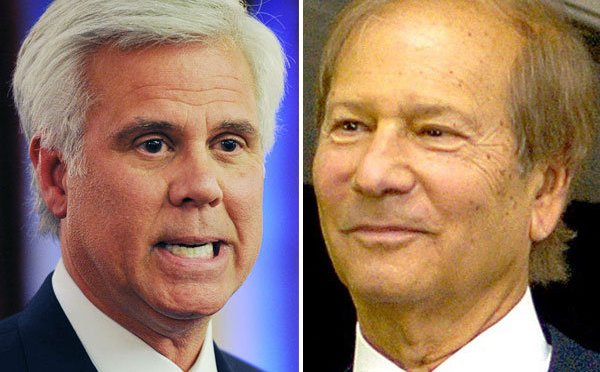
Board Chairman George E Norcross III

In 2006, the Philadelphia Inquirer found close ties between NJ politicians and hospital leaders (see this post).  In particular, the story noted “the board of South Jersey’s major hospital, Cooper University Hospital in Camden, is chaired by the region’s most powerful political figure, Democratic power broker George E. Norcross III.”

In 2012, as we posted here, Mr Norcross’ relationships became more evident.   The New York Times reported that a story about his conflicts of interest had been held from publication by the Inquirer because Mr Norcross was part of a business group seeking to purchase that newspaper.  When the Inquirer story finally came out, it stated firms with financial relationships to the hospital under Norcross had donated generously to Norcross’ political allies, and that Norcross had influenced the creation of relationships with these firms.  It suggested that Norcross’ political influence had resulted in an unusual level of state financial support for the hospital system.  It noted that the law firm for which Cooper CEO John F Sheridan had previously worked did lobbying for the hospital.  It noted that the hospital did millions of dollars of business with firms tied to hospital trustees, including Mr Norcross.

Trustee Emeritus Peter Driscoll

Recent reporting after Mr Sheridan’s death suggested the rehabilitation of former board chairman Peter Driscoll under Chairman Norcross.  Mr Driscoll was the former board chair who resigned in 1999 after the embezzlement scandal report and revelations about conflicts of interest affecting the board were finally made public, and the hospital system was in financial difficulty.  However, by 2014, he was identified by the board as a “trustee emeritus.”  Per the Philadelphia Inquirer, after the fire at the Sheridan house was attributed to arson,

‘If they had died because the house was on fire, that would be a terrible, terrible tragedy,’ said Cooper Health System trustee Peter E. Driscoll, a senior member of the Haddonfield law firm of Archer & Greiner. ‘. . .I don’t know what to make of it. I can’t imagine anybody that would want to do something like this.’

New Vice President Kevin O’Dowd and his Family

Also after Mr Sheridan’s death, the hospital system hired a new top manager with his own extensive political connections and conflicts of interest.  Per the Inquirer,

Gov. Christie’s chief of staff, Kevin O’Dowd, will step down this month to work for Cooper University Hospital in Camden, nearly a year after the governor named O’Dowd his pick for attorney general.

O’Dowd, whose selection as attorney general never moved forward after controversy arose over lane closures on the George Washington Bridge, will serve as senior executive vice president and chief administrative officer at Cooper, where he will focus on business development, Christie officials said. He will start at Cooper in January.

The conflict was

 O’Dowd’s wife, Mary, serves as commissioner of the state Department of Health.

A NJ.com story made that more explicit,

 State Health Commissioner Mary O’Dowd will refrain from making decisions that would directly affect Cooper University Hospital in Camden after her husband accepted a senior management job there, officials said Friday night.

The move was made to avoid any conflicts of interest as the state Department of Health licenses and inspects hospitals, and doles out money to compensate them for treating uninsured charity care patients. Cooper will receive $37.3 million in charity care payments from the state this year, the fifth highest amount in the state.

A story in the NJ Spotlight suggested that would not solve the problem,

The question that the O’Dowds will have to face is whether they can overcome even the perception of a conflict of interest when their jobs so pervasively present opportunities for such a situation.

‘It’s a very, very tenuous situation,’ said William Schluter, a former longtime member of the State Ethics Commission and state senator.

He noted that nearly everything that senior hospital executives do in their jobs is influenced by state regulations.

‘It’s a situation that I sure as heck wouldn’t want to be in,’ said Schluter, adding that he expects second-guessing in the media and by elected officials as the state handles issues affecting Cooper.

Just to ice the cake for Mr O’Dowd, the Courier-Post noted that Mr O’Dowd’s job at Cooper could be considered an example of the revolving door, albeit delayed,

O’Dowd, previously the governor’s deputy chief counsel, also worked under Christie at the U.S. Attorney’s Office for New Jersey.

During seven years as an assistant United States attorney, O’Dowdoversaw a securities and healthcare fraud unit. He also prosecuted cases ranging from child pornography distribution, cybercrime and drug trafficking.

O’Dowd served earlier as a state Deputy Attorney General, where his responsibilities included providing legal counsel to the state Department of Health.

As US Attorney, Christie, possibly with the aid of Mr O’Dowd, pursued a deferred prosecution agreement for UMDNJ, then Cooper’s primary academic affiliation, for a complicated set of allegations that we discussed extensively in the past (look at this post and follow links backward).

Late CEO John F Sheridan and Family

Apparently only after Mr Sheridan’s death did the media report extensively on his political connections.  The earliest report I found was in the Philadelphia Inquirer from September 28, 2014.  He served

on Gov. Christie’s health-care transition subcommittee in 2010.

The statement said he was New Jersey commissioner of transportation under Gov. Thomas H. Kean and served as New Jersey deputy attorney general and assistant counsel for the New Jersey Turnpike Authority, and was counsel for the New Jersey Senate majority.

Also,

 his son Mark – a prominent lawyer … has represented Christie in the Bridgegate scandal

NJ.com added,

John Sheridan Jr., the CEO of Cooper University Health System … previously spent 40 years in New Jersey government

Also,

He has held positions on Gov. Thomas Kean’s cabinet as transportation commissioner and chairman of the New Jersey Transit board, as well as held roles on transition teams for Gov. Chris Christie and Gov. Christine Todd Whitman. 

Furthermore,

 Earlier in his career, he served as Deputy Attorney General of the State of New Jersey, Assistant Counsel to Gov. William T. Cahill, General Counsel to the New Jersey Turnpike Authority and Counsel to the New Jersey Senate Majority.

Finally, his son

Mark Sheridan, a partner at Squire Patton Boggs, acts as general counsel for the New Jersey Republican State Committee.

So, in the years since conflicts of interest at the board of trustees level were noted as part of the investigation after the management embezzlement scandal at Cooper, many more apparent conflicts affecting top managers and board members have appeared, most recently in late 2014.

Settlement of Allegations of Kickbacks

In 2013, the media reported that Cooper settled federal allegations that it gave kickbacks to doctors to induce referrals.  As reported by the Inquirer,

The Cooper Health System in Camden has agreed to pay $12.6 million to settle a whistle-blower lawsuit alleging that it made improper payments to doctors in an effort to build its cardiology business, the U.S. attorney for the District of New Jersey said Thursday.

From October 2004 through 2010, local doctors were paid $18,000 to attend four meetings of the Cooper Heart Institute Advisory Board in any given year under ‘consulting’ and ‘compensation’ agreements, in possible violation of antikickback laws, state and federal law enforcement officials contended.

The whistle-blower was South Jersey cardiologist Nicholas L. DePace. He attended an advisory board meeting in 2007 and was convinced that the board’s purpose was not to provide advice to Cooper, but to be a source of patient referrals to the Heart Institute, according to a lawsuit he filed in 2008.

‘He was invited to be a member of the advisory board. He attended a meeting and it quickly became apparent to him what the advisory board really was. It was sitting and listening to lectures and not providing advisory services,’ said Michael A. Morse, a partner in Pietragallo, Gordon, Alfano, Bosick & Raspanti L.L.P. in Philadelphia, one of DePace’s lawyers.

As is typical of legal settlements involving prominent health care organizations,

Cooper admitted no liability.

‘After more than three years of extended discussions with government lawyers, we decided, in the best interests of Cooper, to settle our dispute without the admission of wrongdoing to avoid the burdens and uncertainties of a protracted litigation,’ Cooper president and chief executive officer John P. Sheridan Jr. said. ‘This allows us to focus our full energies on serving our community.’

In a note to Cooper employees, Sheridan said the board was established to ‘improve the quality and responsiveness of our cardiac programs’ and ‘was reviewed by outside legal counsel before it began operations.

However, given that the Inquirer reported that “the $12.6 million penalty is financially significant for Cooper,” one wonders why it was made if hospital leadership felt that the case against it was poor.

So years after the embezzlement scandal, another scandal involving allegations of illegal behavior was settled.  This time, there was no trial, but since the settlement was financially burdensome for the hospital, it is plausible that it resulted from managers’ realization that they would not have a good defense against the charges at trial.

The Death of the Sheridans

Mr Sheridan became CEO of Cooper in 2008.  As noted in the Gloucester County Times,

On Feb. 7 John P. Sheridan Jr., was appointed president and chief executive officer of The Cooper Health System by the Cooper Board of Trustees. Sheridan joined Cooper as senior executive vice president in July 2005 and has served as president of Cooper University Hospital since September of 2007.

‘Cooper has grown dramatically in recent years and is positioned as the academic medical leader of South Jersey,’ said George E. Norcross III, chairman of the Board of Trustees at Cooper.  ‘John Sheridan is a proven leader. He has the skills required to build-out our $500 million health care campus in Camden, implement our suburban strategy and achieve our vision of creating the premier academic health care system in South Jersey and the Delaware Valley.’

As of early 2014, he was getting substantial compensation typical for a hospital system CEO, per NJBiz, “John T. Sheridan Jr. (of the $913 million Cooper Health System) received $963,433.”

In late September, 2014, Mr Sheridan and his wife were found dead in a house fire.  Initial reports suggested the fire was accidental.  Then it was declared to be arson.  Then Joyce Sheridan’s death was found to be the result of a homicide.  Finally, as we posted here, law enforcement declared that Mr Sheridan killed his wife, set the fire, and then committed suicide.

That news was so horrendous that it dumbfounded Cooper insiders.  As reported by the Inquirer,

 ‘It’s not something I can imagine,’ said Peter Driscoll, a Cooper Health System trustee emeritus and a senior member of the Haddonfield law firm Archer & Greiner.

Also,

In a brief statement, Cooper University Health Care called the prosecutor’s findings ‘unfathomable to us.’

I can only hope that they will get over their shock and realize that the institution really has some big problems.

Summary

Since 1978, there have been multiple stories about mismanagement, conflicts of interest affecting managers and board members, and crimes committed or alleged to have been committed by management and at least one trustee at Cooper Hospital/UMC which then became Cooper Health System.  Despite these often lurid stories, there is no indication that there has been a fundamental change in the governance of the institution.  While managers have come and gone, sometimes under difficult circumstances, there is no indication that how managers were hired has changed.  Since the early 1990s, there has been no obvious effort made by management or board members to change, at least not one announced publicly.  There has been no outside investigation.

Given that the hospital system has long enjoyed a cozy relationship with state government, including both the legislative and executive branch, maybe it has been easy to go along to get along.  More cozy relationships, including some with ownership of the news media, may have helped to keep this story anechoic outside of the region.

Yet the cumulative story is so striking that it should prompt national attention, and inspire some real hard thought about how health care leadership and governance has gotten so bad.

To repeat what I have said all too often, and I admit with little impact so far….

True health care reform requires governance that is accountable, transparent, true to the organization’s mission, and honest, ethical, and without conflicts of interest; and leadership that understands health care, upholds its values, is honest, ethical, and without conflicts of interest, is transparent and open, and is willing to be accountable and subject to appropriate incentives.

Read more at: http://hcrenewal.blogspot.com/2015/04/the-troubles-at-cooper-continue-lately_3.html

The Troubles at Cooper Continue, Part 1: Historical Background

Addressing threats to health care’s core values, especially those stemming from concentration and abuse of power. Advocating for accountability, integrity, transparency, honesty and ethics in leadership and governance of health care.

The Troubles at Cooper Continue, Lately Gruesomely, But Will Its Leadership and Governance Change This Time? – Part I: Historical Background

Wednesday, April 01, 2015

 by

Allegations of Murder-Suicide by a Hospital System CEO

This will be a hard series of posts to write. It was triggered by the latest, and perhaps most gruesome chapter in the troubled history of the leadership of Cooper Health, the largest hospital system in southern New Jersey (known locally as South Jersey).  As reported by the Philadelphia Inquirer on March 28, 2015,

Cooper University Health System CEO John P. Sheridan Jr. stabbed his wife to death, set their bedroom on fire, and then took his own life, authorities have concluded, closing a six-month investigation into the deaths that shocked New Jersey’s political and civic communities.

The Somerset County Prosecutor’s Office announced its results in a news release Friday, citing forensic evidence and a lengthy probe that included more than 180 interviews.

But it offered no conclusive motive to explain why Sheridan, described by family and friends as mild-mannered, would brutally stab his wife and kill himself.

‘Many possible scenarios and theories were considered,’ the prosecutor’s office said in a statement after months of virtual silence. The evidence ‘supports the conclusion that John Sheridan fatally stabbed Joyce Sheridan, set the fire, and committed suicide.’

The Story in Context: a Long History of Leadership and Governance Problems 

We have often discussed bad leadership of health care organizations, and written a lot about the contrast between the munificent compensation paid to non-profit hospital CEOs and the lack of evidence justifying such pay.  However, a murder-suicide allegedly perpetrated by the CEO of a large non-profit hospital system is way at the tail of the curve of questionable managerial behavior.

But it turns out that Cooper Health System has a very long record of leadership and governance troubles.  The current chapter is the latest, and possibly most gruesome, in this sorry series.  However, the context of this history has been lacking in the recent coverage, which has been so far limited to local media.  The history deserves a more complete discussion, and maybe then it could lead to some reconsideration at least of this one institution’s leadership and governance, and perhaps the larger troubles in leadership and governance in health care.

Thus this post will summarize the history that I could find up to 2005.  A second post will summarize more recent history up to and through the terrible deaths of John and Joyce Sheridan.

In the interests of full disclosure, I started my faculty career at what was then Cooper Hospital – University Medical Center, the main teaching hospital for the University of Medicine and Dentistry of New Jersey (UMDNJ) – Robert Wood Johnson Medical School (RWJMS) branch at Camden, NJ.  During my four years there, 1983-87, I was impressed with the dedication of the physicians, nurses and other health care professionals there.  However, even given my naivete at a young faculty member, the leadership of the institution, which was one of the early adapters of the generic management model, seemed strange. Little did I know how strange it was.

In the late 1990s, when I became seriously concerned about what I know call leadership and governance problems in health care, I ran into some folks from South Jersey who told me that Cooper had a tumultuous history since I left.  I got around to researching it, leading to an article in our local American College of Physicians newsletter.  The article, to which I had linked here, is no longer available on the internet.  So I have reposted it below, with some minor modifications, put in square brackets .  Again, the history is of major problems with leadership and governance at Cooper that had inspired no reconsideration by 2005.

The Curiously Quiet Case of Cooper’s Corrupt CFO

Embezzlement by Top Management

In 1994, two powerful executives at Cooper admitted their guilt in an elaborate embezzlement scheme.  In 1978, John H. Crispo, the owner of Financial Management Corporation Inc., to keep his contract with the hospital, began paying monthly kickbacks of $2500-$10,000 to John M. Sullivan, the Cooper Executive Vice President for Finance.  Sullivan then referred delinquent hospital accounts for collection to a new company Crispo set up.  In turn, Crispo repaid him $340,000 in more kickbacks.  Sullivan recruited Cooper’s Controller, P. John Lashkevich, and the three devised a scheme to defraud the hospital using fabricated bills, established a fictitious company to launder money, and falsified tax returns.  A prosecutor claimed “Mr Sullivan blew this money on wine, women, parties, and a lavish lifestyle,”which included trips with girlfriends to the Plaza Hotel, and jewelry shopping at Tiffany’s.  Sullivan had driven a Porsche, and lived in a $700,000 house.  The conspirators also bought cars, boats, and racehorses.

Other conspirators were also found and prosecuted.  Helene Weinstein admitted to helping establish a shadow company as a conduit for Sullivan to send money from the hospital to his estranged wife, Elarba Pagan.  Pagan was accused of receiving money sent by Sullivan from Cooper to another firm.  Weinstein testified that Pagan carried “briefcases of cash from the hospital to shop in New York for $1500 shoes.”  Also, Cooper’s Vice President for Finance, Robert Schmid Jr, admitted embezzling money from Cooper to pay for home improvements. Finally, Thomas J. Damadio admitted helping launder up to $600,000 stolen from Cooper, and evading income taxes.

Sullivan was sentenced to 55 months in federal prison, Lashkevich, 25, Pagan, eight, Weinstein, three years of probation, Damadio, six months of house arrest.  Crispo died before serving prison time.

The Internal Report, and the Murder Conviction of One of Its Authors

After these stories became public in 1994, Cooper’s Board of Trustees established a special committee to investigate its financial operations, which included Peter E. Driscoll, Chairman of the Board, Kevin G. Halpern, Chief Executive Officer (CEO), and a local Rabbi, Fred Neulander.  The hospital pledged to make its investigation public, but then fought to keep it secret.  Its report was finally released in 1998, after a discovery motion in a civil lawsuit.  Prior to then, the Philadelphia Inquirer had revealed numerous financial conflicts of interest affecting Board members,  including those on the special committee.  For example, Cooper paid the law firm of Archer & Greiner, of which Driscoll was a senior partner, $2.1 million over three years from 1993-96.

The report revealed that the conspiracy had bilked the hospital of at least $21.8 million from 1987 to 1994, while “Cooper has been the victim of a massive crime wave.”  It stated Sullivan, Lashkevich, and Crispo “had unrestrained and absolute control of virtually all the important financial functions at Cooper and they took full criminal advantage….” It also noted that “employees who became suspicious and questioned the accounting practices or tried to alert management were intimidated, transferred, or dismissed by the high-ranking executives.”  Furthermore, it suggested “the ability to bypass or defeat controls grew from an institutional culture that delegated and outsourced too much responsibility, without developing effective controls….” The report also raised questions about how the internal investigation was conducted.  It noted that Driscoll and Halpern “often locked horns with [the other] committee members….”  Driscoll had objected when other board members called for an independent investigation.  Halpern and Driscoll resigned their positions within days of the forced release of the report.

One member of the special committee became particularly notorious.  Soon after the internal investigation was set in motion in 1994 Rabbi Neulander’s wife had been murdered.  Soon after, Neulander had failed a polygraph test when questioned about it.  He then resigned his clerical position after his extramarital affairs with members of his congregation were revealed.  In September, 1998, he was charged with hiring the “hit men” who committed the murder.  In 2002, he was convicted  and sentenced to life in prison.

The Aftermath, Financial Woes and Impact on Patient Care

By 1997, Cooper was in financial trouble, although none of its managers ever admitted a connection to the conspiracy and resulting losses.  However, during a related civil lawsuit, Cooper officials alleged “the hospital’s general operating fund was depleted” by the conspiracy.  Cooper began merger discussions with several partners, including AHERF, although none were ultimately successful. Physicians started leaving in 1997, when all but one full-time cardiologists announced their resignations.  Cooper revealed a $16 million loss for 1998, the largest ever incurred by a New Jersey hospital.  Its bonds were down-graded to junk. The hospital then announced that it would stop accepting uninsured patients for elective treatments, departing from its historic mission of charitable care.  Losses continued in 1999, again totaling $16 million, leading to additional budget cuts.  [CEO Halpern and Chairman of the Board Driscoll resigned within days of each other in 1999, both denying their actions were related to the report.]  By 2000, the hospital had cut its work-force to 3100, from 4000 in early 1999. and had closed various clinical sites and units.  Only thereafter did Cooper began posting budget surpluses.  [By 2002, more physicians quit Cooper en bloc, and the hospital was on its second new CEO since Mr Halpern.]

The Lurid Stories Remain Anechoic

The only published reaction to Cooper’s woes came from the related legal proceedings.  The prosecutor in Sullivan’s trial claimed that his thefts were so big that they “threatened the financial stability of the hospital,” and “hurt the image of the city as a whole.”  At Pagan’s sentencing hearing, Judge Joseph H. Rodriguez stated “society could not tolerate a system in which hospital executives ‘rake millions off the top’ that were intended for medical care for the poor.”

It does seem likely that Cooper’s scandals had major effects on its patient care and academic missions.  Yet, I could find nothing  published about such effects.  Despite the luridness of this case, I also found no reaction from local or national medical groups, from academic organizations, accrediting groups, or government agencies.

Summary

In 2005, I wrote,…  The case of Cooper’s corrupt executives can be viewed as the forerunner to the even more massive bankruptcy of AHERF [Allegheny Health Education and Research Foundation, see posts here].  One can only speculate that learning the lessons of the Cooper case could have mitigated the AHERF disaster.  However, as noted in my last article,  the lessons from AHERF are also not widely known.  Yet, as George Santayana wrote, “Those who cannot learn from history are doomed to repeat it.”

As I will address in another post, events at Cooper after 2005 also generated few echoes, up to the latest tragedy.  These events did not suggest much had been learned from the events through 2005.

So the unfortunate, and sometimes terrible case of Cooper Health has become one of the longest running examples  – starting in 1978 – of the troubles with leadership and governance of large health care organizations, the bad effects of these problems on health care and the values of health care professionals, the lack of public attention to and discussion of these problems and their effects, and the failure of organizations to address on their own their problems with leadership and governance.

True health care reform, as we have said endlessly, requires governance that is accountable, transparent, true to the organization’s mission, and honest, ethical, and without conflicts of interest; and leadership that understands health care, upholds its values, is honest, ethical, and without conflicts of interest, is transparent and open, and is willing to be accountable and subject to appropriate incentives.

References

Embezzlement….

Lewis L. Former official gets jail term for bilking Cooper: John M. Sullivan was sentenced to 55 months – the scheme netted $4 million.  He spent his take lavishly. Philadelphia Inquirer, April 26, 1996.

Graham M. New panel at Cooper plans review: embezzling of $3.8 million by two former top aides and a vendor prompted the study. Philadelphia Inquirer, July 27, 1994.

Lewis L. Ex-hospital executive gets 2 years: he helped steal $4 million from Cooper Hospital – his lawyer said the investigation was going to spread.  Philadelphia Inquirer, November 9, 1996.

Graham M, Turcol T. Inquiry widens into finances at Cooper Hospital: a federal grand jury subpoenaed several officials this month – the inquiry was spurred by testimony from two former Cooper executives indicted for fraud. Philadelphia Inquirer, February 27, 1996.

Lewis L. Woman admits role in bilking Cooper Hospital. Philadelphia Inquirer, September 6, 1996.

Lewis L. Ex-hospital executive admits theft: Robert Schmid Jr. pleaded guilty to embezzling about $50,000 from Cooper Hospital. Philadelphia Inquirer, September 24, 1996.

Lewis L. More charged in theft at hospital: six people have now been indicted in the embezzlement at the Camden facility. Philadelphia Inquirer, December 12, 1996.

Lewis L. Ex-wife of jailed Cooper Hospital official sentenced in scam: Elarba Pagan bought $1,500 shoes with medical center money, her business partner said. Philadelphia Inquirer, July 2, 1998. P. B5.

Lewis L. Business owner pleads: Thomas J. Damadio said he helped Cooper Hospital executives launder stolen money.  Philadelphia Inquirer, January 18, 1997.

The Internal Report…

Anonymous. Cooper forms committee. PR Newswire, July 26, 1994.

Graham M. FBI is probing Cooper Hospital for violation of securities laws. Philadelphia Inquirer, April 3, 1997.  P. A1.

Hollreiser E. Cooper urged to release audit results. Philadelphia Business Journal, May 30, 1997.

Graham M. Hospital gives state its audit: Cooper complied after the state threatened to withhold funding – the report will be kept secret.  Philadelphia Inquirer, May 14, 1997, P. B1.

Graham M. N.J. finds nothing amiss at Cooper: the Attorney General’s office reviewed an internal hospital audit – no criminal wrongdoing was uncovered. Philadelphia Inquirer, July 11, 1997. P. A1.

Graham M, Cusick F. Listing Cooper’s board deals: companies associated with the hospital’s trustees have gotten some of its largest contracts. Philadelphia Inquirer, June 15, 1997. P. A1.

Anonymous. Report says Rabbi failed polygraph on wife’s death. The (Bergen County) Record, September 5, 1996.

Burney M. Rabbi charged in wife’s killing. Associated Press State & Local Wire, September 10, 1998.

Mulvihill G. Judge declares mistrial in case of Rabbi charged with arranging wife’s murder. Associated Press State & Local Wire, November 13, 2001.

Bell T. Rabbi found guilty of murder in wife’s 1994 death. Associated Press State & Local Wire, November 20, 2002.

Mulvihill G. Jury spares life of rabbi in wife’s murder; faces life in prison.  Associated Press State & Local Wire, November 22, 2002.

The Aftermath…

Uhlman M. Cooper talks with Allegheny: the Camden hospital wants a partner, and the Pa. chain plans a further push into South Jersey. Philadelphia Inquirer, May 20, 1997. P. C1.

Gerlin A. Philadelphia hospital raids New Jersey system’s cardiology staff.  Philadelphia Inquirer, September 27, 1997.

Kastor JA. Governance of Teaching Hospitals: Turmoil at Penn and Hopkins. Baltimore:  Johns Hopkins Press, 2004. P. 41.

Goodman H. As Cooper suffers loss, it says care won’t suffer. Philadelphia Inquirer, February 11, 1999.

Rizzo N. Cooper Hospital announces cuts in staff. Associated Press State & Local Wire, March 18, 1999.

Goodman H. Cooper Health system cuts 103 employees: financial problems were cited – about 400 jobs could be lost this year, and uninsured care will be curtailed. Philadelphia Inquirer, March 19, 1999. P. A1.

Anonymous. As losses mount, Cooper Hospital’s debt rating falls. Associated Press State & Local Wire, April 16, 1999.

Goodman H. Cooper’s debt rating tumbles as losses rise: the 1998 figure is twice as bad as estimated – the poor rating means the hospital must pay more to borrow. Philadelphia Inquirer, April 16, 1999. P. B1.

Kent B. In Camden, a hospital finds itself seriously ill: Cooper, the city’s biggest employer, has ‘heavy losses.’  New York Times, May 9, 1999.

Anonymous.  Cooper Hospital announces more cuts in staff.  Associated Press State & Local Wire, May 20, 1999.

Anonymous.  Camden hospital posts $16 million loss: president sees turnaround.  Associated Press State & Local Wire, February 23, 2000.

Kiely E.  Cooper Hospital to forgo charity-care payments – the state will not reimburse the Camden facility for uninsured patients for four months – the reason: the beleaguered hospital received the money from the state in advance last year.  Philadelphia Inquirer, April 11, 2000. P B1.

Anonymous.  Cooper Hospital president quitting.  Philadelphia Business Journal, January 15, 2002.

Anonymous.  Hospital company sues six departing surgeons.  Associated Press State & Local Wire, July 4, 2002.

Read More at: http://hcrenewal.blogspot.com/2015/04/the-troubles-at-cooper-continue-lately.html

The Fight for the Future of Philadelphia’s Newspapers

Two years after they teamed up to buy the Philadelphia Inquirer and Daily News, power players George Norcross and Lewis Katz are at each other’s throats amidst firings, broken agreements, accusations of meddling and a protracted court fight. The inside story of a deal gone bad—and a feud that once again puts Philadelphia’s newspapers in peril

images

CRASH OF THE TITANS Clockwise from upper left, Lexie Norcross, Bob Hall, Bill Marimow, Nancy Phillips, Lewis Katz and George Norcross. Illustration by Britt Spencer

The meeting is lore, now: a story about a table for two that likely caused all South Jersey to wobble, ever so slightly, on its axis. The setting: Lamberti’s, aflutter with white tablecloths, occupied by the swellegant, an Italian seafood restaurant that serves as something of a home field for one of the men at the table, George Norcross III.

His name means different things to different people. Norcross earned millions in the insurance business, as executive chairman of Conner Strong & Buckelew. He earned a scary reputation as the grinding stone of the Democratic Party in South Jersey, choosing who ran for what political office till he accumulated so much wealth and power that he became downright kingly.

Critics plaster Norcross with uncomplimentary terms, like “the Jersey Devil.” Admirers cite his more recent run of philanthropy, thanking him for building a better South Jersey. Friends and enemies often see his avalanche of thick white hair at Lamberti’s, in Cherry Hill, but the 57-year-old Norcross added this March 2012 stop to his calendar upon request, and reluctantly. He would maybe order a bowl of linguine or something.

Across from him sat Lewis Katz. His name also means different things to different people: An entrepreneur of many trades, Katz has worked, successfully, as an attorney, a political power broker to governors Jim Florio and Ed Rendell, a shareholder in the New York Yankees and New Jersey Nets and Devils. But he made his biggest bundles of loot in comparatively schlubby businesses like parking lots and billboards. Tall and trim, with thinning hair he combs over a wide bald spot, Katz was the one who called and asked for this meeting.

Critics plaster Katz with invective, too, citing his vanity, his operatic ego, his success at leveraging political connections into cash. Admirers cite his philanthropy, including a recent $25 million gift to Temple University, and say that at 72, he is doing it right at the end, ladling wealth on good causes.

In what is likely the most accurate rendering of this encounter, Katz spoke first: “George,” he said, “I am not sure you’re comfortable with this deal. And I want you to be comfortable, George.”

Katz and Norcross were deep into their run at buying this city’s largest media organization: the Philadelphia Inquirer, Daily News and Philly.com. Norcross took in Katz’s opening salvo, the reason he had been called here to eat linguine for which he was not particularly hungry, and responded, “I’m comfortable. I’m moving ahead with this deal. But I think you’re uncomfortable. … ”

Was Katz trying to avoid the embarrassment of queering the deal by getting Norcross to bail first?

“George,” Katz told Norcross, “I just want to be sure you keep the passion I’ve seen in you throughout this deal. I don’t want to be that heavily involved, and I just want to be sure you’ll make it work.”

“I’ll make it work,” replied Norcross.

Less than two years later, the business pairing of Lewis Katz and George Norcross looms as a master class in how things fall apart. Neither man recognized that this moment at Lamberti’s forecast worrisome levels of indecision and mistrust. And so this is a story about how one brief dinner foreshadowed a dessert of legal briefs and lawyers’ fees.

The two men bought into a business deal for very different reasons: Katz for romance, nostalgia, love; Norcross for money, power, challenge. The different perspectives meant each man had a different view of the path ahead. And the result is Philadelphia’s highest-profile feud in years, featuring two men who can’t abide losing in a battle for a prize that relinquishes a little more luster with every lawsuit.

“None of this makes sense anymore,” says a local businessman who has known both men for decades. “Because it isn’t about business. It isn’t about money. It’s all ego now. It’s face.”

“DARLING,’ THE EMAIL BEGINS.The sender, Nancy Phillips; the recipient, Lewis Katz; the date, March 17, 2012, as Phillips goes on to elucidate a comprehensive strategy to turn around the Inquirer.

“Company needs a new publisher,” she writes.

“Paper needs a new editor.

“Philly.com needs a new leader.

Daily News has to be seriously evaluated with a view toward possible elimination or curtailment as in a move to the website with pared down staff and a paper product one day a week if at all.”

At the time, Phillips worked in the newsroom of the Inquirer as a reporter. And in roughly two weeks, George Norcross III would close a deal with her boyfriend, Lewis Katz, to acquire the desk, the chair, the whole shebang that was her workplace. In this sense, Phillips’s letter was business advice, a “honey do” list, and the fantasy of any working stiff made manifest.

In 10 paragraphs, Phillips advised Katz to fire or demote and replace six people: her boss, editor Stan Wischnowski; publisher Greg Osberg; Philly.com chief Wendy Warren; and the COO, the CFO, and the head of the advertising department. She also alerted Katz to Mark Block, “the lovely PR guy,” because she’d just noticed he held a VP title and probably made too much dough. “Maybe he plays a larger role that I don’t understand,” she wrote.

Of all the people in this story, Phillips, 50, might be the most complicated. For years she has swept into the newsroom each Monday, a big bunch of fresh-cut flowers clutched before her. She speaks in stately, almost Victorian cadences, coming off like Mary Poppins. As her colleagues faced a never-ending stream of furloughs, buyouts, layoffs and pay cuts, her Twitter stream read like an ongoing accounting of relative wealth and privilege. (“Am I the only one who finds creme fraiche evocative of caviar? Even in the absence of that glorious pairing, it reminds me + transports me.”)

But for all her blue-blooded posturing, Phillips has logged 30 years of blue-collar effort, slogging across the grittiest terrain, tugging at the most tangled secrets, to get the story. She obtained a hit man’s confession in the infamous murder of rabbi Fred Neulander’s wife. She wrote the first story accusing venerable Daily News sports columnist Bill Conlin of child molestation. And today, in her role as city editor, she is equally well-regarded as both skillful and a good boss.

But she happened to have that rich, politically connected boyfriend. For years, the relationship between Katz and Phillips, who met in the early 80s, was the Inquirer newsroom’s open secret. Katz never divorced his wife, Margie, for years appearing beside her at family functions. (Margie Katz passed away in late December.) But many years ago, he and Phillips moved into a condominium overlooking Rittenhouse Square.

Katz wouldn’t be interviewed for this story. (Through his spokesman, Jay Devine, he denies the specific accounting of his dinner at Lamberti’s with Norcross but doesn’t provide any details.) However, a few dozen interviews and a torrent of emails leaked to media all over town tell the story well enough. Katz entered the newspaper bidding in early 2012 after receiving a call from Ed Rendell, who knew that the company—which had been bought out of bankruptcy by several hedge funds and banks in 2010—was again for sale. For years, Rendell and Katz enjoyed a close partnership: Katz helped fund Rendell’s political runs while making a mint off those parking garages and billboards.

Katz expressed interest in the papers and looked around for partners. Meanwhile, Rendell looped in cable mogul H.F. “Gerry” Lenfest. The other investors, including Liberty Property Trust CEO Bill Hankowsky, insurance executive Joe Buckelew and tech
CEO Kris Singh, all arrived via George Norcross—who had started exploring a bid to buy the company a few months earlier, after talking to Greg Osberg and John Angelo of Angelo, Gordon, one of the hedge funds that owned the papers.

There were questions, before the deal was even finalized, about men with such deep political connections running the region’s largest, most powerful media organization. In press coverage at the time, the new owners declared that they bought the company out of a sense of civic duty. But people close to the process say the owners talked, a lot, about making money. The papers and website had dropped in price from more than $515 million when former adman Brian Tierney bought them in 2006 to a little more than $55 million when Katz and Norcross allied to buy them.

But there are public reasons and private ones, and Katz likely had many motivations.

A Camden native, he was raised by his mother after his father died. He graduated first in his class from Dickinson School of Law, and spent time interning for Drew Pearson, the syndicated newspaper columnist and NBC radio personality. The relationship meant a lot to Katz, who asked Pearson to serve as the best man at his wedding and later named his only son after the newsman. Owning the Inquirer, in this context, likely appealed to a sense of nostalgia.

Of course, Katz must also have been motivated by Phillips, and people who know him say this personal tie certainly “added value” to the transaction. Even as Katz told Norcross he didn’t want to be involved in day-to-day operations, he started a major move without his new partner’s knowledge, and with Phillips by his side.

AT FIRST GLANCE, if there is a hero in this story, it would seem to be Bill Marimow.

The 66-year-old Marimow is a legend in modern American journalism, winner of two Pulitzer Prizes as a young reporter at the Inquirer and a symbol of the paper’s greatest days in the ’80s and ’90s. He left for the Baltimore Sun (where he eventually became editor), then became vice president for news at NPR. But in 2006 he returned for his dream job, serving as editor in chief of the Inquirer under the doomed ownership of Tierney. Marimow led the paper for four years, till the hedge funds took over. Then the new publisher, Greg Osberg, citing Marimow’s lack of expertise—and perhaps interest—in digital journalism, demoted him back to investigative reporting.

The ending hurt. But Marimow moved on, engaging in his second-best love, teaching, at Arizona State University. It was in Arizona, in early February of 2012, that he received a visit from Lewis Katz, who wanted to talk about the newspaper industry. The two men were friendly acquaintances, having dined together on couples’ dates with Phillips and Marimow’s wife. At the time of the Arizona visit, Katz seemed like a businessman prospecting a new venture. More discussions followed. And then, maybe six weeks after Katz’s initial visit, Phillips and Marimow started working out, by email, the terms of a deal for Marimow to return, including salary, autonomy, and the ability to hire two or three key editors.

For Phillips, the conversation must have been filled with promise. When Marimow became New Jersey editor in the late ’80s, he inherited Phillips, who’d been a correspondent in the bureau since 1985. He had mentored her, saw to it, through legendary editor Gene Roberts, that she was hired on full-time. Now she sat in a position to bring him back so he could end his career the right way, in the city where he was born.

What Marimow means to Philadelphia is difficult to quantify. But longtime political operative Tom Massaro tells a story that gives a sense of his importance: In the early ’80s, Massaro arrived to run the housing department for then-mayor Bill Green and conferred with some of the city’s leading African-Americans.

“I need to know how a young white guy can gain the support of the people in the neighborhoods, who are mostly black,” Massaro said. “If I’m going to do any good, I’m going to need their help and their trust.”

“Talk to Bill Marimow,” they told him.

Massaro, new to town, could only ask: “Who’s Bill Marimow?”

Congressman William Gray answered: “Every day,” he said, “Bill Marimow is the guy who keeps hundreds of black boots out of thousands of black asses.”

Marimow, himself a young white guy, had gained the trust of dozens and dozens of neighborhood sources by exposing a litany of civil rights abuses by the city police, from beatings to dogs loosed on innocent citizens. He shook the city’s bones, dropped a dose of justice into its DNA, and delivered a master class on doing journalism in the process. “Bill would call his sources back,” says longtime Marimow colleague Vernon Loeb, now with the Houston Chronicle, “including the people we might consider his ‘targets,’ and say, ‘This is what I am planning to write,’ point by point, and give them another chance to respond.”

Marimow was tenacious about getting the truth out. “Sometimes,” says Loeb, “if he didn’t have all the sourcing or information, he would encourage sources to come forward or just make his point by writing a story in which he articulated the remaining questions.”

Writing about the 1985 MOVE tragedy, in which then-mayor Wilson Goode ordered a bomb dropped on a house occupied by black activists, Marimow questioned the official story that five of the 11 victims actually emerged from the fiery house only to retreat back inside, of their own accord, to die.

“If [the officers] are accurate in saying that either four or five people escaped from the MOVE house,” wrote Marimow, “their accounts raise questions about exactly what transpired in the back alley. … Did [Conrad Africa] choose to retreat into the flaming garage, where he died in the fire? If not, how did his body end up back in the house?”

The reputation Marimow forged, for toughness and integrity, gave him a unique allure in later years, particularly to owners with entrenched political and business interests. His old boss, Brian Tierney, saw him that way, even after leaving the papers. “Bringing [Marimow] on board will immediately and powerfully answer the concerns of editorial independence and integrity,” he wrote to new owners in an email later leaked to the media. “It makes the issue go away.”

Katz, too, felt that Marimow’s innate ability to quell people’s suspicions just by being there was a primary part of his value. Hiring Marimow, he’d later say in court testimony, meant landing an editor who’d “remove the stigma” from his ownership group. For a guy who earned his reputation asking questions, being known as the man who eliminates them is an odd niche to occupy. But as the deal moved closer, Katz and Phillips arranged for Norcross to meet with them and Marimow at Rembrandt’s restaurant in Fairmount.

Norcross’s spokesman claims Norcross didn’t know that Katz was engaged in a search for a new editor in chief for the Inquireror that he was involved romantically in a long-term relationship with an Inquirer reporter—until a couple weeks before closing the deal. Katz’s spokesman says Norcross knew “of the search for an editor long before” the meeting at Rembrandt’s.

The stress of being responsible for managing the deal wore on Norcross: six partners, $55 million in play, hedge funds to be satisfied. Because the media already questioned the group’s fitness to own a media company, they were working on a pledge to assure their non-interference in editorial “either directly or indirectly.” They also needed to define their own corporate governance.

In the end, the new company, Interstate General Media, included in its decision-
making process a six-man board consisting of all of its investors. But major business decisions would require the approval of both participants in a two-member management committee: Katz and Norcross.

All of these pieces were still coming together as the foursome sat down at Rembrandt’s. Katz left after the introductions. But Norcross went ahead and stuck around for about an hour.

The image is compelling: George Norcross, one of the most investigated men in the region, sitting across from Bill Marimow, the legendary investigator. Norcross has done a lot to change his image in recent years, plowing time and effort into Camden, opening a new charter school and guiding an ongoing expansion of Cooper Hospital. But he remains the all-powerful political boss of South Jersey. And anyone who does business with Norcross would be advised to listen to the Palmyra tapes, a series of 13-year-old recordings, captured by law enforcement, in which he can be heard seeking political retribution on all who dare oppose him and popping off angry fucks like gunshots. Norcross faced no legal trouble from the investigation, but the tapes comprise an unalloyed look into his thinking at the time. They also suggest not just a willingness to fight, and hurt, but a thirst. And the most memorable part of Norcross’s conversation with Marimow that day at Rembrandt’s suggests he never lost the taste.

“Don’t try to be friends with me,” Norcross cautioned Marimow. “I don’t become friends with the people that I work with. The white hat isn’t me. I’m the black hat.”

THE NEW GROUP, already mired in complex relationships, got off to a difficult start. Marimow’s new tenure began that May. But beforehand, the then-editor, Stan Wischnowski, had to oversee coverage of the paper’s new owners. He planned to disclose Katz’s relationship with Phillips.

Citing fears that Katz’s wife was “frail,” Phillips wrote to Norcross in a March 31st email: “I can’t tell you how much I worry about the potential consequences of such a story. … I have tried to dissuade Stan from this, and I might yet succeed. But maybe not. If not, that may be too high a cost. Part of me wants to kill the whole deal over this. … ”

That line, suggesting that a reporter at the Inquirer had the power to kill his deal, must have been a knee-meets-groin moment for the usually all-powerful Norcross. But Phillips’s attempts to dissuade Wischnowski are even more interesting, journalistically.

In journalism, reporters are taught to reveal any potential conflicts of interest. Considering that Phillips’s role at the paper might ultimately influence Katz’s business decisions, and the degree to which her relationship with Katz might raise questions about the paper’s coverage, there really wasn’t any other choice for Wischnowski but to disclose. Furthermore, the new owners were taking a pledge not to do exactly what Phillips was doing—interfere in editorial. But she was undeterred.

“[T]he relationship poses no conflict for the newspaper,” she wrote to Norcross in another email that same day. “I have always stayed out of stories involving Lewis. Also argued that there was really no relevance to this, beyond gossip appeal.” But Wischnowski pressed on. “Katz and his wife, Marjorie, have two children,” read a disclosure in an April 3rd Inquirer story. “The couple have lived apart for many years. Katz is in a long-term relationship with Nancy Phillips, an award-winning Inquirer investigative reporter.”
The passage is strikingly restrained, even French, in its attitude toward what remains, technically, a long affair. But it was accurate.

The same could not be said for the announcement, that same week, that Marimow was returning to his editor’s post.

“Who shall I say hired me?” the new-again editor had asked Phillips when they were closing the deal.

She helped craft what she later called “the official version”—that Osberg happily hired Marimow back.

In reality, Greg Osberg demoted Bill Marimow in 2010 and recommended against rehiring him in 2013. So did then-chief operating officer Bob Hall, who told the new ownership group that Marimow had “problems” with women and minorities. Nonetheless, Osberg signed and sent Marimow a letter of employment. Osberg also issued quotes for a press release about how glad he was to have Marimow back in charge, just 18 months after he’d demoted him.

For anyone who even remotely followed happenings at the local paper, the official version was an unbelievable fiction. And Marimow waved in the general direction of the facts: “I think the local owners might have suggested it’d be great if I returned,” he said.

The official version served as a white lie, not unlike allowing fired employees to declare they resigned. Yet the tale remains unsavory: The new, politically connected ownership group, fresh from its vow not to interfere, brings in a peerlessly ethical editor to buff up its image, while fobbing off an at-best-incomplete story of how it all came to pass to the public, and even its own reporters.

As one person close to the formation of the ownership group told me: “The pledge always struck me as Lemon Pledge. Something to clean up the surface.”

RIGHT OUT OF the gate, the new ownership group divided. Norcross, a data hound, presented a thick stack of findings from a survey of current and former readers to advocate for major change. Katz, backing Marimow, argued for what amounted to a comparative status quo.

Norcross’s was the more clear-eyed, modern vision: Working with Hall (who replaced Osberg as publisher in mid-2012), he advocated a significant redesign of the print product; a complete overhaul of the company’s Web strategy; a reduction in editorial op-ed pages from two to one; and a renewed focus on local news by eliminating the jobs of five editors and replacing them with seven reporters.

The list isn’t perfect: Do readers really reject “op-ed columns” as a concept, or just the version the Inquirer had been producing? Will mere data-crunching ever deliver something truly innovative or visionary?

Still, the list, particularly in terms of a redesign, more local news, and an awareness of the digital product as preeminent, comports with the newspaper industry’s current direction. And the initiatives triggered a proxy war: Norcross pressed for change behind Bob Hall; Katz pushed back wherever Marimow (and presumably Phillips) required assistance.

Hall submitted a list of editors to be demoted or fired. But Marimow resisted, with Katz acting as his benefactor. In one email to Hall, Katz wrote that he was invoking his blocking rights to prevent the changes.

“Bob,” Marimow would say, “we need evolution, not revolution.”

As slogans go, an appeal to Darwinism is a bit of a drag. But Marimow contends he only used the “evolution” line to slow the redesign and avoid alienating subscribers with an unrecognizable paper. Of course, keeping readers at all is a tricky business. After decades of crushing losses in readership, the Inquirer has spiraled a further 25 percent in recent years, its subscriber base dropping from 350,000 in 2007 to roughly 258,000 now. But in whatever context Marimow meant the words, they seem to capture something of the man.

In person, Marimow is anachronistic, as slow-talking, literal and polite as 1955. But he can also be intimidating. “He’s got the Pulitzers,” says one staffer, a fan. “And if he hears you’re stuck on a story, it’s kind of like a software program has kicked in, and the computer is whirring to life, and some of what he says will be so basic. It’s stuff like, ‘I would get a notebook, and a pen’ and then somewhere in there will be some incredible nugget of good advice. But some people won’t think of the basic stuff as, you know, just some quirk of Bill’s. They’ll take it personally.”

Marimow isn’t, as Hall seemed to imply, racist or sexist. Lots of phone calls to staffers who worked with Marimow over the decades confirm that. He is merely, well, Bill Marimow—with a sense of his own accomplishments. And in some fundamental way, that sense of self-possession leaches into the staff around him—as if they all won Pulitzers, too. The paper isn’t selling? Advertisers are departing? Well, it can’t be the fault of the editorial department. “What we do is rock- solid,” one staff writer told me. “The problem is how we’re marketed and sold.”

The Inquirer staff is still big enough, at around 250 people, that generalizing about it is unwise. Still, as I called around the newsroom for this story, numerous staffers expressed the same idea: The Inquirer’s revenue problem is purely a function of the business side. And their self-satisfaction is only compounded by their fear of the man pushing change.

Take, for example, this: George Norcross III and the board gathered data that the Inquirer’s ownsubscribers are rarely able to recall the name of a single columnist.

Pffft! goes the response. So what? Norcross is a political hack. The same firm that does his political polling gathered reader data. Never mind that the same company also conducts polling for the Los Angeles Times. The subject shifts from any kind of meaningful self-reflection on how the Inquirer might be better to Norcross: Is he secretly eager to cut editorial pages and columns only because he nurses a grudge against the sections of the paper that, traditionally, dole out the most severe beatings to guys like him?

Norcross’s history and his outside pursuits demand we ask this sort of question. And so the largest media organization in town, its revenues so low it was thought to be losing $50,000 per day, immediately fell into a damaging stasis. The guy pushing for meaningful change, George Norcross, enjoyed no one’s trust. And the guy everyone trusted, Bill Marimow, presided over a newsroom that saw no need for change.

THE DAILY NEWSreadied a redesign of its print product in about six weeks. The evolutionists at the Inquirer took nine months.

By February 2013, Norcross, and Hall, grew increasingly frustrated with Marimow. And meetings among the new company’s owners got bizarre. Norcross kicked into boardroom-brawl mode: “Lewis,” he said at one point, “why do I even talk to you? Shouldn’t I just talk to Nancy?”

That talk incensed Katz. But on most occasions, he seemed bent on calming Norcross’s growing fury. “Hey,” Katz said once, standing up from the meeting table and spreading his arms wide. “C’mon. Hug me. Let’s be friends again.”

By last March, the entire ownership group discussed a complete overhaul of the management team. By July, still locked in a stalemate, Hall told the board he wanted to fire Marimow.

“You can’t,” Katz warned Hall, telling him he would invoke his blocking rights.

The operating agreement they’d formed, in which Norcross and Katz had to agree on all major business decisions, had come to serve as a tar pit, trapping the company. The pair had failed to create a tiebreaker system, believing a total sharing of power would force them to resolve conflicts. In hindsight, it’s hard to imagine teenagers agreeing to run their fantasy football team by such unworkable rules. But Katz and Norcross succumbed to some tyranny of ego: “These are men who are used to getting their own way,” says one highly placed executive in town.

As time passed, the entire battle became hugely personal.

Hall even added Nancy Phillips to the list of staff members he wanted to fire. And Norcross’s daughter, Lexie, then a 25-year-old with no journalism experience, took on a supervisory role at Philly.com, where her greenness shows up like a grass stain. In May 2013, when the site launched a regular column by Governor Tom Corbett, she responded to criticism by knocking the newspapers across the hall: “Considering that the Inquirer and Daily News slam him every day,” she said, “I think it’s actually equal, giving him a chance to speak.”

Unable to conceal her political genes, Lexie tweeted a link to an article in which her dad backed Cory Booker’s Senate run, with the message: “Go @corybooker go!”

The general tenor of Philly.com’s original content also did her no favors, pushing the site further into vapid, celebrity-driven click bait. But whatever Lexie Norcross’s current merits and future potential, the two sides now had every reason to dig in for a corporate cage match. Katz sought to protect the interests of his girlfriend and the editor she idolized. Norcross needed to look out for the long-term interests of his daughter, who seemed to have found the career she wanted to pursue. Two of the region’s most powerful and politically connected residents didn’t have just money and ego at stake, but also skin, blood and love.

ON JANUARY 11, 2013, Chris Brennan of the Daily News filed a story titled, “8th and Market enters running as potential casino location.”

About midway through the story, Brennan wrote: “The Goldenberg Group owns 60 percent of that land. Lewis Katz, a managing partner of the company that owns the Daily News, the Inquirer, and Philly.com, is a limited partner in Goldenberg but is not involved in the casino application.”

This is the sort of disclosure news organizations make so readers can know any conflicts of interest that might exist.

The Inquirer and Daily News have since published more than 20 stories that include the possibility of a casino being erected at the Goldenberg site. But Katz’s involvement was never mentioned again until columnist Karen Heller finally noted it in January 2014.

Were the papers seeking to tuck Katz out of sight? There is some evidence to suggest Katz might prefer it that way. In 2006, during a separate, earlier casino application process, Katz’s daughter, Melissa Silver, appeared on a casino license application. After questions were raised about Katz’s involvement in the project, he finally came forward—in 2010, four years into the process—as an applicant.

With the current casino project, publisher Bob Hall sent a group email to Katz and the other owners, asking them to divulge any ties they or their families had to possible casino groups or locations so the paper could disclose any potential conflicts of interest.

“I have no relationships,” Katz wrote back, “nor am I involved.”

Was this an oversight on Katz’s part? Katz’s spokesman, Jay Devine, provided the following statement: “[Lewis Katz] does not have any interest in the Goldenberg casino entity or the 8th & Market land. The land is owned by a trust for the benefit of Lewis Katz’s grandchildren, which is not controlled by Lewis Katz.”

Is Katz related to his grandkids?

In December, more questions were raised when Temple University decided to drop seven student athletic programs. The Inquirer’s first story, on December 7th, mentioned and quoted Katz, identifying him as “a member of the Temple board of trustees and chair of the board’s athletic committee,” and “a co-owner of the Inquirer” who “recently pledged to donate $25 million to the school.”

Katz chairs the committee that put forward the restructuring plan for the school’s athletics department, so he is integral to the story. As coverage evolved, however, he wasn’t mentioned by the Inquirer again—either in the sports section or in a follow-up piece that appeared in the local section.

There were complaints from some staffers, not on Team Marimow, that Katz sat in on a 10 a.m. news meeting. An obituary writer also complained when a funeral director sent over an obit and claimed that Katz had said it would be published. (The funeral director provided Katz’s cell-phone number as evidence of the owner’s involvement.) Katz, through his spokesman, Devine, “categorically denies any involvement in any editorial decision by an editor or journalist,” calling this story “absolutely false.”

True, Phillips had long recused herself from writing about any issues that might relate to her boyfriend. In 2013, when she was named city editor, she never edited stories that involved Katz. And when Temple shut down the sports, Phillips recused herself from edit meetings on the subject.

But reporters and editors in the Inquirer newsroom don’t seem to much care about these sorts of issues. Because they have the ownership group they have. And given Katz’s desire to please Phillips, and Phillips’s respect for Marimow, they’ll take that trio, gladly. As multiple staff members told me: “Just look at the alternative.”

IN JANUARY OF 2013, Norcross held a lunch meeting with Bill Marimow at the downtown Marriott. There, Norcross pushed the data about columns and editorial opinion pages across the table. The stats, which pollsters had presented three months earlier, suggested readers didn’t particularly like or follow the Inquirer’s op-eds or columnists.

For old Inquirer hands, whispering like POWs behind barbed wire, the meeting is evidence that Norcross, a political bully, sought to intimidate Marimow into making editorial changes, in violation of the pledge he took when he purchased the papers. (Norcross says he “doesn’t remember” ever handing Marimow the data.)

I also obtained an email from Bob Cauthorn, an Internet consultant, that was sent to Marimow. The consultant lists “directives” Cauthorn says he received from Norcross, who hired him, including one to oversee the redesign of the Inquirer’s website.

Norcross says he saw Cauthorn’s role as organizational and aesthetic, “overseeing design.” But editors typically oversee the work of art directors and Web designers—not the other way around.

The Big Fear is that Norcross will somehow leverage his Inquirer ownership to serve his political and business interests. Again, there is a small evidence trail to follow. I obtained a document from January 2013 involving Philly.com in which management sought and received a legal opinion exploring whether giving columns to Cory Booker and Governor Chris Christie would violate any “equal time” requirements (no, the lawyers said) or political contribution laws (likely yes).

Booker and Christie never got columns. But Pennsylvania Governor Tom Corbett did.

Norcross told me he never spoke to Corbett about the column. The Governor’s former spokesman, Kevin Harley, says Norcross approached Corbett about joining the New Voices program at Philly.com when the pair met, for the first time, in January 2013 at the Academy of Music’s annual ball.

Harley says he subsequently met on behalf of the Governor with Lexie Norcross before any agreement was struck, and that no quid pro quo was ever raised or resulted.

Suspicions are likely to remain high, however, as long as Norcross is involved. Bill Graham, of the Graham Company insurance brokerage, says he is “rooting for Katz.” Graham says Norcross has tried to buy out his entire company in the past, and he “can only speculate that George, given his political interests, is not interested in investigative journalism, and that the paper, for him, is a way to help those political interests along.”

There is a sense here, of course, that Norcross can never win. His status as political strongman guarantees him constant scrutiny and conspiracy mongering. And in this way, his ownership of the paper guarantees that the Inquirer can never win—that to many in the region, if not the newsroom itself, its every edition will seem somehow suspect.

As I worked on this story, I was urged by multiple staff members at the Inquirer to look into specific allegations they raised about Norcross’s supposed bad behavior.

In March 2013, for example, Bob Hall complained to Bill Marimow about a story involving a possible conflict of interest for Judge Seamus McCaffery. Hall questioned whether the story should be played on page one. (In fact, the piece, by veteran reporter Craig McCoy, sparked an FBI investigation.)

Hall calls any claim that Norcross put him up to it “complete bullshit.” But the rumors are triggered by circumstance: McCaffery is a major figure in Philadelphia’s Democratic Party, and Norcross is the boss of South Jersey’s Democratic Party; the beleaguered Inquirer staff needs no more evidence than this to start talking.

I also looked into a contract Norcross’s insurance agency, Conner Strong & Buckelew, got with the Pennsylvania Turnpike. To those on Team Marimow, the Turnpike deal catches Shady George in action, leveraging his new presence in Pennsylvania, his ownership of the Inquirer and Tom Corbett’s new column into a government contract. But none of the timing supports this theory. The contract was awarded in July 2012, six months before Corbett and Norcross ever met and 10 months before the Governor started his column. Besides that, Turnpike contracts are subject to a strong level of scrutiny.

Is Norcross seeking to undermine the paper’s investigative reporting, or divest it of the opinion pages that sometimes sway voters? The better question might be this: Would he even need to?

I started receiving tips from Inquirer staff members precisely because they weren’t going to pursue stories about Norcross themselves. All of the new owners took a pledge not to interfere. But they interfered the day they bought the company. What staffer is going to walk into the Inquirer newsroom and say, “Hey: Let’s investigate our owners!”?

George Norcross III now owns an empire that spans the insurance industry, hospitals, politics and publishing. And the lesson here is that he doesn’t actually have to intimidate anyone to be intimidating.

ON OCTOBER 7TH, Bob Hall’s secretary sent an email to Bill Marimow. Subject: “Catch Up With Bob.”

When Marimow arrived, Hall soon brought him up to speed—with a show-stopping sentence: “I’m terminating your employment,” he said.

“Have you talked to all the owners?” Marimow asked. “Did Lewis Katz support this?”

Hall, by this time, had a legal opinion declaring he could fire Marimow without the management committee’s approval. But Marimow knew about the operating agreement, left Hall’s office, and called Katz.

A TRIBE OF reporters gathered in Courtroom 630 in City Hall over the course of four days of testimony this fall, watching as an increasingly animated Lewis Katz, a plaintiff, kvetched and rubbed incessantly at the deep worry lines of his face.

Following Marimow’s firing, Katz and Gerry Lenfest brought suit against Norcross and the other owners. Katz’s courtroom antics made great theater. And during a long last-ditch effort to negotiate some resolution, he and his attorneys shuttled repeatedly from the courtroom to the judge’s chambers. Speaking loudly, Katz even declared, “I don’t want to go back there,” his wary eyes looking at the door to the judge’s office.

On the other side of the room, George Norcross looked comparatively giddy, like a guest at a cocktail party.

Katz tapped Dick Sprague to lead his legal team—the attorney of choice among the city’s most powerful citizens—and Sprague pursued the case on legal grounds. But Norcross’s attorneys waged a political campaign. They embarrassed Nancy Phillips, grilling her on what attorney Robert Heim called the “fabrication” she helped invent for who had hired Marimow in the first place. It was for “public relations,” Phillips offered.

“But this statement was a fabrication,” Heim tried again, forcing Phillips to offer a concession: “This is, as I explained, yes.”

Katz’s legal team asked for three things: the firing of Hall; the upholding of the company’s operating agreement, which calls for Katz and Norcross to agree on big business decisions, like firing the editor; and, finally, the reinstatement of Marimow.

The suit split the ownership group in two, with three owners joining Norcross while Lenfest sided with Katz. And for what, exactly? Lenfest and Katz thundered from the stand that firing Marimow would do irreparable harm to the Inquirer, but what kind of culture had Marimow really built if the whole place fell apart whenever he walked out the door? Besides, Marimow’s employment agreement only ran through April 2014, while Hall’s contract was due up in December 2013. Were these guys really fighting, this hard, over who would be able to keep his job for a few more months?

In the end, the judge put both men back in their jobs—reasoning that Hall still had a valid contract, but that the firing of Marimow violated Katz’s rights as co-manager.

The ruling set the stage for further legal proceedings: Katz has since petitioned the court to dissolve the company and make its properties available in a public auction. Norcross is arguing that the papers should be auctioned only among the current owners. Both men have vowed to bid in whatever auction occurs. And the newspapers themselves seemed strangely lost in all the tumult—stuck, without a full-time long-term publisher; lacking clarity on who will run the Inquirer newsroom; and without any will to experiment or innovate.

Still, the judge’s ruling did trigger movement of a kind.

Nancy Phillips disappeared from the office after Marimow’s firing. Upon his reinstatement, she arrived, as she always did on Mondays, fronted by an armful of fresh-cut flowers.

Later, the Newspaper Guild complained on behalf of a staffer, alleging that Phillips arranged her blossoms, then walked around the newsroom urging staff to stand and applaud when Marimow returned to his office. (Phillips vigorously denies this.) Given her status as a city editor and an owner’s longtime girlfriend, the guild’s complaint contended, this was like ordering employees to create a fake standing ovation. But the joke is that even if the applause erupted spontaneously, the scene could only represent an illusion: that Marimow could really be the answer when what the Inquirer needs, first, is an ownership group that raises fewer questions.

Read more at http://www.phillymag.com/articles/fight-for-philadelphia-newspapers/#76cm6gDjH1TFSECP.99

Rutgers under attack again

Bob Braun’s Ledger

Education, taxes, housing, immigration, politics, and other issues that affect the people of New Jersey

JUNE 30, 2013

The biggest threat to the integrity of Rutgers University has nothing to do with its basketball program. The most shameful scandal involving the university isn’t whether its president, Robert Barchi, did or did not look at a video or properly vet a new athletic director. Rutgers is in deep trouble because the governor of the state, abetted by political bosses, is out to seek revenge. Rutgers

Gov. Chris Christie is out for revenge because, a year ago, the university’s trustees had the courage to stand up to the bully-boy governor and refuse to go along with his plan to ensure a regular revenue stream to institutions favored by the political boss of Camden County, George Norcross. The governor, accustomed to obsequious fawning from everyone around him, got a black eye from a group of men and women whose allegiance was to something other than Christie for President 2016. The Rutgers trustees.

Now, Christie’s surrogate, Steve Sweeney, a creature of the Norcross machine, is trying to subvert both the university’s governance and also the democratic process by pushing for a bill that would eliminate the trustee board. Christie has openly supported Sweeney’s move and the tactics that threaten to make the New Jersey Legislature look about as independent as North Korea’s Supreme People’s Assembly on a good day.

Christie says Rutgers’ governance is “confusing” and needs to be “streamlined.” Sweeney says it is “cumbersome.’’ Many might remember both Christie and Sweeney last year endorsed a plan for running Rutgers and Rowan that would create nearly a score of committees and panels to run the universities.

“Sweeney’s intentions are transparent,’’ says Linda Stamato, who once led both the university’s trustees and its board of governors. “The plan is to place the governance of the university totally in the hands of political appointees who serve on the board of governors.’’

Linda Stamato
Linda Stamato

“Last year, the trustee board was a voice of reason and acted to protect the integrity of Rutgers as the state university of New Jersey in the face of significant political pressure,’’ says Stamato, who also served on the now defunct state Board of Higher Education.

Stamato calls the effort an “unseemly, unconscionable move, an overt political power play’’ engineered by the “good old boys in the State House and the Legislature.’’

Let’s remember what happened last year. Norcross wanted Rutgers-Camden taken away from the state university and made part of Rowan University. The Cooper Medical School, established when a different man with different debts to Norcross was governor, would become part of this new Rowan—a school once known as Glassboro State College, a teacher training school. No studies were done to determine whether New Jersey needed or could afford a new medical school or a new university.

The Rutgers trustees said no to the university’s dismemberment, despite Christie’s insistence and his typical name-calling tactics. (Remember he called an Iraqi vet a “jerk” and an “idiot” for disagreeing with him about Rutgers?) You cross Chris Christie at your peril. Inevitably, he would have his revenge on the trustees and here it is.

So, the Legislature won’t hold hearings. Sweeney will just force this bill through and the one-party junta that increasingly runs New Jersey policy will demonstrate it is bigger and tougher than all of us, tougher than democracy itself.

And the attack on Rutgers comes in a bad time. The absurd public hanging of Robert Barchi for the basketball “scandal” has weakened him. He may believe he owes his job to the kindness of strangers like Chris Christie and Steve Sweeney and may not feel strong enough to stand up to the bullies. It’s not at all clear that the newly reconstituted Board of Governors—which starts its work today—has the political courage to stand up to the governor and legislative leaders who appoint the majority of its members.

So, it’s up to the trustees again to demonstrate its courage in the face of dictatorial tactics from the Bully Who Would Be President and his cheerleaders in the Democratic leadership.

New Jersey Political Boss Loses Control Of Newspaper

download (1)

FUHGEDDABOUDIT I Posted 05.27.14 4:20 PM ET

By Olivia Nuzzi

George Norcross, the most powerful politico in New Jersey, lost control of the Philadelphia Inquirer Tuesday to his estranged business partner.
The most powerful man in New Jersey became a lot less powerful Tuesday—and it’s not Chris Christie.

George Norcross III, white-haired like a cartoon villain, is South Jersey’s Democratic boss. If Norcross’s press is to be believed, he is to Jersey politics what Voldemort was to Hogwarts. But Tuesday, he lost control of the Philadelphia Inquirer and the Philadephia Daily News, the two major newspapers in the Philadelphia metropolitan area, which includes almost all of South Jersey.

In April 2012, the well-respected Inquirer and its more tabloid-ey sister, the Daily News—were sold for the fifth time in six years, for $55 million, to a group of influential locals, led by Norcross and Lew Katz, himself a successful businessman with ties to the Democratic Party (he was an early supporter of Bill Clinton and Ed Rendell). The relationship between the partners soured and devolved into ugly squabbling and litigation. Tuesday morning Katz finally wrestled control of Interstate General Media, the parent company of the papers (and Philly.com), out of Norcross’s hands with an $88 million bid.
Norcross and Gov. Christie’s relationship has been vital to Christie getting things done with the support of Democrats (which allows him to perpetuate the image of a leader capable of working in a bipartisan fashion). At an event after Bridgegate, Norcross joked in Christie’s presence that he was the only one who could close a bridge in New Jersey.

The son of a union boss, Norcross dropped out of college and “started his [insurance] business with a fold-up card table and a phone,” New Jersey Senate President and Norcross ally Stephen Sweeney told me in a recent interview. Norcross’s business became a success and turned him into a millionaire.

Beginning in the early 1990s, Norcross began financing campaigns and installing candidates in local and state office. He became so powerful that, in his own words—according to secret recordings released after Norcross was investigated for corruption (he’s never been found guilty of a crime)—”in the end, the McGreeveys, the Corzines, they’re all going to be with me…Not that they like me, but because they have no choice.” Norcross was also recorded recalling a threat he made, “If I catch you one more time doing it, you’re going to get your fucking balls cut off.”

As the U.S. Attorney, Christie chose not to indict Norcross, saying that the attorney general had screwed up his investigation—which Democrats have long considered a political move by Christie. Whether or not it was, it no doubt helped him when he moved onto his next job: governor.

The scope of Norcross’s power extends even beyond South Jersey, making the power of Democratic bosses in North Jersey seem feeble in comparison. A relationship with Norcross would be vital to any governor, and Christie is no exception. The legislators from Norcross’s territory—Sen. Sweeney among them—allowed Christie to pass things like pension and property tax reform in his first term.

In 2012, before Norcross and Katz partnered to buy the papers, Daily News reporter Wendy Ruderman told NPR that she thought the proposed deal was “about buying access. I can’t imagine that someone like George Norcross is being philanthropic…He absolutely despises the media.”

Some sources maintain that it was Norcross’s attempt to have editorial control that created friction between him and Katz—it has been charged that Norcross’s 26-year-old daughter, Lexie, wielded editorial control over Philly.com, which some worried she was trying to turn “into BuzzFeed.”

Newsroom Shaken by Norcross Campaign Solicitation

Spokesman says solicitation was an accident; reporters worry they’re being compromised.

images

This is what inevitably comes of having a political boss as a newspaper owner, perhaps: The newsrooms of the Inquirer and Daily News are again restless after some reporters received a campaign fund-raising letter from one of the paper’s co-owners, South Jersey political boss George Norcross.

Norcross’s spokesman, Daniel Fee, said the solicitation was inadvertent and wouldn’t happen again. Nonetheless, the Inquirer reports:

Newspaper Guild president Howard Gensler said the invitations on behalf of New Jersey State Sen. Donald Norcross (D., Camden), a South Jersey congressional candidate, nevertheless raised concerns.

“The Newspaper Guild objects to the use of company e-mail and company mail delivery for any political purposes,” he said. “It puts unfair pressure on our members to get invited to a political fund-raiser by one of our owners.”

Kelly McBride, a senior faculty member and ethicist at the Poynter Institute, a journalism organization, said that whether or not the invitations were sent intentionally, they could be perceived as a conflict for George Norcross, a prominent South Jersey Democratic leader.

“As a boss, you don’t ask your employees to contribute to a cause, because it could be seen as coercive,” she said. “It could also be seen as a not-so-subtle hint to reporters to skew their coverage.”

The hubub occurs, of course, as Norcross battles fellow co-owners Lewis Katz and Gerry Lenfest in court over the paper’s ownership going forward.

Read more at http://www.phillymag.com/news/2014/03/14/newsroom-shaken-norcross-campaign-solicitation/#IVJr0afgbCDeOmzk.99

Commerce Bank, founder Vernon Hill square off in federal court in $20 million lawsuit

download
May 09, 2013 at 6:00 AM, updated May 23, 2013 at 9:31 AM

A former giant of New Jersey’s banking sector and the empire he built are squaring off in a trial that quietly got underway this week in Camden federal court.

In one corner is the parent company of Commerce Bank, once the largest and fastest-growing bank in the Garden State.

In the other is Vernon Hill, the hard-charging founder of Commerce whose philosophy of customer-first both upended the staid culture of bank branches and turned him into a wealthy superstar of the banking industry.

At dispute is nearly $20 million that Hill says he is owed as a result of being fired in 2007. He was let go after the bank settled a federal probe into real estate transactions that allegedly benefited Hill’s family.

The jury trial before Judge Robert Kugler is over a lawsuit that Hill filed five years ago. It is expected to last several weeks.

Several notable names are slated to be called as witnesses. These include George Norcross, the South Jersey Democratic power broker, executive chairman of Conner Strong & Buckelew and former member of Commerce’s board of directors. Defense attorneys want him to testify on the impact of the federal probe on Commerce’s business, according to a court filing.

Also expected to be called is Joseph Buckelew, another former Commerce board member and founding member of the Conner Strong & Buckelew insurance agency. Senior officials from TD Bank also will be called to the witness stand. The Canada-based lender acquired Commerce in March 2008 in a stock and cash transaction worth about $8.5 billion.

Hill, too, is slated to testify, possibly as early as today.

An owner of Burger King franchises, Hill started Commerce in 1973 with a single branch in Marlton.

Over the next 34 years, he built his bank business into a vast empire of more than 425 branches, 11,000 employees, $47 billion in assets and 2.4 million customers in the region.

The bank’s rapid expansion and strong profits endeared Hill to Wall Street investors and analysts, at least one of whom hailed him as the Michael Jordan of his field.

Crowd-pleasing tactics were part of the reason for Commerce’s growth: seven-day-a-week operating hours, free coin-counting machines in lobbies and red lollipops helped drive customers to its branches.

But Commerce’s rapid expansion by building brick-and-mortar branches also contributed to Hill’s downfall, and Commerce’s eventual sale to TD, a U.S.-based subsidiary of Canada’s Toronto-Dominion Bank.

In 2006 and 2007, investigators with the Office of the Comptroller of the Currency and the Federal Reserve Board sounded alarms over real-estate dealings to build out Commerce’s branch network in which members of Hill’s family, including his wife, allegedly profited.

The OCC advised Commerce Bank in April 2007 that it would freeze approvals for new branches, attorneys for the bank’s holding company allege in a court filing. Less than three months later, on June 28, 2007, the bank’s board of directors signed a consent order with the regulator over Hill’s alleged dealings. That same day, the board unanimously voted to fire Hill.

Both sides agree that Hill was terminated “without cause,” court filings show.

Hill’s attorneys, who did not return a call for comment, argue this entitles the former CEO to his entire compensation package due through 2010, plus interest, stock options and attorneys fees. That amounts to just under $20 million, according to a court filing.

But attorneys for Commerce Bancorp, which still exists as a legal entity despite being bought by TD Bank, counter Hill’s claims by arguing that federal rules on “golden parachutes” limit its ability to make such a payment, even though it was contractually obligated to do so.

The OCC’s consent order put Commerce in a troubled condition. Under those circumstances, the bank would have to seek regulators’ permission to pay Hill his severance. But as part of that application, the bank would have to certify that it had no reason to believe Hill had committed fraud, breached his fiduciary duty or abused his insider status.

Commerce said it cannot make that certification, particularly in light of a separate OCC consent order it reached with Hill in November 2008. In this case, the regulator said it found Hill had engaged in “unsafe and unsound practices” and breached his fiduciary duty. Hill signed the agreement without admitting or denying wrongdoing.

William Tambussi, an attorney with Brown & Connery who is representing Commerce, did not return a call. A TD Bank spokeswoman declined to comment.

Norcross, bank enjoy marriage of convenience

download (3)

 Aug. 23, 2007

Vernon W. Hill II (above), CEO and founder of Commerce Bancorp, heads a profitable company that benefits from more than 1,000 government accounts in four states. Government deposits increased ninefold after South Jersey power broker George E. Norcross III (below) joined the bank in 1996. / STAFF FILE PHOTOS

 CHERRY HILL — South Jersey’s most influential power broker and the institution that calls itself “America’s Most Convenient Bank” have proved to be a winning combination — both George E. Norcross III and Commerce Bancorp have profited from their relationship.
In 23 years, Commerce’s share of government deposits — the money towns and counties use for payroll and other expenses — has tripled, from 7 percent of total bank deposits in 1981 to 21 percent in 2003, with more than 1,000 government accounts in four states. The industry average is less than 5 percent.At least part of that success is attributed to Norcross, CEO of Commerce’s insurance division.

“George helped to grow the government deposits and the insurance — and that’s important,” said Claire Percarpio, a financial analyst with the Philadelphia investment bank Janney Montgomery Scott, who has covered Commerce for eight years. “It’s also helpful to be politically connected in opening new branches because it really speeds the approval process.”

Last year, Norcross was paid $1.23 million at Commerce, second only to CEO and founder Vernon W. Hill II.

Norcross owns, or has an interest in, Commerce stock that is valued at more than $60 million, according to Securities and Exchange Commission filings.

The Cherry Hill-based company consistently generates record earnings, reporting a net profit of $194 million in 2003.

On Wall Street, Commerce stock has outperformed Microsoft over the past decade. If you invested $10,000 in both Commerce and Microsoft on Dec. 31, 1993, and cashed it out on Dec. 31, 2003, the bank investment would have been worth $115,820 vs. $108,631 for the software giant.

Norcross declined requests for an interview and did not respond to written questions.

Commerce National Insurance, headed by Norcross, generated $66.5 million in revenue in 2003, making it one of the top sources of non-interest income for the bank.

The company said that approximately 15 percent to 20 percent of that business is from negotiated, or no-bid, contracts with municipalities.

“We have a lot of business in New Jersey because we’re the biggest broker in the region,” Commerce spokesman David Flaherty said.

He attributed the growth to acquisitions rather than political influence.

“Most of our insurance business was gained by acquiring firms that already had municipal business,” Flaherty said.

Commerce brokers insurance for 31 of 37 municipalities in its home base of Camden County. Commerce also administers the Municipal Excess Liability Joint Insurance Fund, which includes more than 300 of New Jersey’s 566 municipalities. The fund is a protection pool for the member towns in case one is hit with a huge liability case or judgment.

Throughout the first half of the 1980s, when Commerce had fewer than 10 locations, it held less than $5 million in government deposits, constituting less than 5 percent of overall deposits. Those figures began to climb as the company grew and as it became more closely aligned with Norcross.

Today, the bank’s government deposits alone would more than double the total deposits of its biggest South Jersey-based competitor, Sun National Bancorp Inc. of Vineland.

Banker Gerard M. Banmiller said that before 1990, when Commerce began to take a dominant role in government banking, his former Community National Bank had some government deposits, along with the forerunners of Wachovia and PNC.

“Commerce was simply not a player in government deposits,” said Banmiller, now president of 1st Colonial National Bank, based in Collingswood. “It was spread among many banks. Simply stated, that is not the case now.”

By 1991, the ties between Commerce and Norcross had solidified. That year, as chairman of the Camden County Democrats, Norcross faced the task of Democrats retaking control of the Board of Freeholders from the Republicans.

To finance that critical election, Commerce lent the county Democrats $450,000, or nearly half the money spent in the successful campaign. The practice was legal at the time, but new laws have since restricted the amount a supporter may lend to a candidate or party, ranging from $2,200 to $37,000.

The money helped to fund a successful media blitz, which included television commercials for the local Democrats aired during the World Series in October. The Democrats won, taking control of the board.

In 1992, Norcross moved his firm, Keystone National Insurance Cos., to space inside the Commerce Bank Atrium building on Route 70. Although he was not formally associated with the bank, he was a business partner with Hill in the development of Galloway National Golf Club near Atlantic City.

Banking deregulation provided Norcross with an opportunity to officially join Commerce. The repeal of the federal Glass-Steagall Act of 1933, phased out between 1989 and 1999, permitted banks to market insurance and other products.

“The idea is to cross-sell,” said Kasturi Rangan, a banking professor at Case Western Reserve University in Cleveland. “The whole name of the game is you make a loan to a firm, and then you try and sell it insurance, you try and sell it risk-management services, you try and underwrite its securities, you do (mergers and acquisitions) .’.’. for it.”

In 1996, Commerce purchased Keystone, and Norcross became the chief executive of Commerce National Insurance.

The bank also acquired Buckelew & Associates of Toms River, owned by former Ocean County Republican Chairman Joseph Buckelew. The deal paid the owners of the two firms a total of about $25 million in Commerce stock, according to SEC filings.

Commerce also has helped Norcross to prosper in other business pursuits.

In 2002, the bank approved a $32.5 million line of credit for Norcross; his brother, Philip; Commerce board member William Schwartz Jr.; and Assembly Majority Leader Joseph J. Roberts Jr., D-Camden, to buy a majority share in Glendora-based U.S. Vision Inc. Schwartz is CEO of the provider of eyeglasses and contact lenses.

Roberts and Philip Norcross have since sold their interests.

In 1998, Commerce added to its Central Jersey board then-state Sen. John A. Lynch Jr., the Middlesex County Democratic superboss, and Dale Florio, the Somerset County Republican boss whose lobbying firm works for Commerce.

But Commerce’s political involvement has been a double-edged sword. Its political action committee, Compac, was closed in 2003 following criticism from the financial community.

Earlier this year in Philadelphia, federal prosecutors indicted a former Commerce regional board member and two bank executives, among a dozen people accused in an alleged kickback scheme to win business from City Hall.

The former and current Commerce officials pleaded innocent. The bank has not been charged with wrongdoing.

After the indictment, Commerce said it would no longer participate in no-bid bond deals but did not mention any change in its no-bid insurance work.

In a conference call with analysts earlier this year, CEO Hill promised to establish a “gold standard” for ethical behavior at the company.

A Banker’s Last Day at the Office, in a Bank He Built Aggressively

MOORESTOWN, N.J., July 24 — There are no grand sendoffs planned. No speeches, either. In fact, Vernon W. Hill II, who founded Commerce Bank 34 years ago, is not even planning to go to the office on Tuesday.

Faced with a federal threat of not being allowed to open any more bank branches unless he stepped aside, the board members of Commerce Bancorp, which Mr. Hill hand-picked, voted last month to remove him as chairman and chief executive effective July 31.

How Mr. Hill rose to become so influential a figure in New Jersey business and politics is the story of an ambitious real estate developer who cultivated powerful friends as he built a network of Burger Kings and then banks across the state. It is also a story of pride and excess.

“It’s a Greek tragedy,” said Allen Starkie, an executive recruiter at Knightsbridge Advisers, who lured several senior managers to Commerce. “Vernon was an incredibly gifted protagonist who challenged the fates and won, but he developed such extreme hubris that in the end, it undermined his success.”

Mr. Hill’s career has been defined more than anything else by a willingness to defy the establishment. He founded Commerce with a plan to make retail banking more like retail shopping, opening spacious branches when the rest of the industry was scaling back. And in the highly regulated world of public corporations, he openly awarded tens of millions of dollars of contracts to friends and relatives, including about $50 million for his wife, who decorated and designed many of the nearly 450 branches.

In Moorestown, the well-heeled South Jersey town he calls home, he built a 46,000-square-foot Tuscan-style mansion where a farmhouse once stood. Construction of the home, complete with a 4,000-square-foot gym and fountains inside and out, so alienated his neighbors that Moorestown established a historic preservation commission.

But last month the establishment pushed back.

Under the terms of a cease-and-desist order with federal bank regulators, Commerce agreed to stop signing contracts that entangled the bank with businesses run by its board members, officers and members of their families.

But his troubles have not ended there. The federal Office of the Comptroller of the Currency, the bank’s primary regulator, says it is continuing to look into possible insider dealing at Commerce, and two people close to the investigation say the 61-year-old Mr. Hill is at the center of the examination.

Mr. Hill’s lawyer, Robert S. Bennett, said in a telephone interview that his client did not believe he had done anything improper. “I can’t believe that he would ever put his interests above those of the bank,” Mr. Bennett said, noting that the business deals in question were all publicly disclosed. “These things were done in the sunshine.”

Mr. Hill declined to be interviewed for this article.

This was not Commerce Bank’s first brush with the law. In 2004, a federal grand jury indicted two Commerce executives, Glenn K. Holck and Stephen M. Umbrell, on charges of giving loans to the Philadelphia city treasurer in exchange for the city’s financial business. In 2005, the two executives were convicted of conspiracy and the treasurer was found guilty of fraud and conspiracy. Although investigators disclosed that they had taped Mr. Hill talking about business with the treasurer, Mr. Hill was never charged.

The son of a prosperous Virginia real estate developer, Mr. Hill ran the bank as if it were his own personal patronage system. He hired numerous people with deep connections to New Jersey municipal and state governments, and then he hired their relatives. He befriended George E. Norcross III, one of New Jersey’s most influential Democratic politicians, and appointed him chief executive of Commerce Bank’s insurance business. The bank has done business for more than 30 years with the law firm in which Mr. Norcross’s brother is a managing partner, and last year it paid the firm $1.4 million for legal services, a move the bank said in a regulatory filing was not approved by the board.

Ever since he opened the first Commerce branch in Marlton, N.J., in 1973 at the age of 27, Mr. Hill was a self-styled maverick with little patience for tradition. Owner of more than 40 Burger Kings, he brought a retail mindset to the banking industry, which never operated that way.

When rivals were closing their branches, Commerce aggressively opened new “stores,” as Mr. Hill called them, and kept them open long past the closing times of other banks. Today it is New Jersey’s largest bank and has reached into New York City, Washington and Palm Beach, Fla. In light of its recent legal troubles, Commerce has scaled back plans to open new branches this year from 65 to about 50.

As its presence in the state grew, so did its political influence. Today the Commerce board includes not only Mr. Norcross, but also a former Senate president and acting governor,Donald T. DiFrancesco, who came on in 2002, and a former chairman of the Ocean County Republican Party, Joseph Buckelew. On the same day in 1996, Mr. Hill purchased the insurance businesses of both Mr. Norcross and Mr. Buckelew and folded them into Commerce.

As much as Mr. Hill’s departure from Commerce raises questions about how the bank, based in Cherry Hill, N.J., will fare without its founder — analysts have already speculated that it will soon be sold — it also raises questions about the possible collateral damage to Mr. Norcross.

3commerce

“The power in South Jersey has been George Norcross,” said Senator Raymond J. Lesniak, a Democratic senator from Union County and former chairman of the Budget and Appropriations Committee. “Vernon was just part of the political empire built by George Norcross.”

As Alene Ammond, a former Democratic senator in New Jersey who has clashed publicly with Mr. Norcross, put it: “They formed a cartel. It was a very happy marriage. With George Norcross’s clout as a political boss, he then paved the way throughout the state for them to establish themselves with bonds, insurance — town by town, county by county.”

In the late 1990s and early 2000s, Commerce Bank was the largest underwriter of municipal bonds in New Jersey. Indeed, by 2002 it was underwriting more than half of them.

Even as its bond business grew, Commerce was making contributions to Democratic and Republican politicians alike through its political action committees. It stopped making the political donations in 2003, as Wall Street analysts and others questioned whether they created conflicts of interest.

As far back as 1993 a state grand jury was investigating whether the design company operated by Mr. Hill’s wife, Shirley, was awarded business from Camden County, where Mr. Norcross was then the Democratic Party chairman. When the grand jury subpoenaed phone records, the county said they were inadvertently destroyed. Neither Mrs. Hill nor any county official was ever charged.

The business arrangement at Commerce that has attracted the most scrutiny is its relationship with InterArch, the architectural and design company owned by Mrs. Hill. Over the past decade, the bank has paid the company about $50 million to design and furnish bank branches. Last year alone, it paid Mrs. Hill $9.2 million for her services.

In addition to her role as the bank’s chief interior designer, Mrs. Hill became the bank’s de facto protocol officer, making surprise inspections — sometimes with her Yorkie, Sir Duffield, in tow — to ensure that employees were complying with company standards.

050113_vernonhill_600

Mrs. Hill and her husband shared a flare for the flamboyant.

At Christmas, he has held lavish parties at their home, Villa Collina, with a different theme, and food, in each room after being greeted by trumpeters and served canapés while Broadway entertainers performed.

The bank held annual “Wow Awards” to honor its best employees, renting out Radio City Music Hall for a night of festivities for hundreds of workers, with Mr. Hill escorted to the stage arm-in-arm with two sequined Rockettes.

Mr. Hill’s neighbors are familiar with his grand scale. When the couple was building their mansion on a wooded 44 acres here, they complained of a parade of construction vehicles: earth movers, dump trucks, water tankers to fill the artificial ponds on the property. Then there were the helicopters overhead at all hours. One neighbor said she asked why the helicopters were necessary, and was told by a construction worker it was so Mrs. Hill could give orders to construction crews through a megaphone.

“I work at home, and when I say there was one dump truck a minute going in and out, I’m not kidding,” said Jeannie Roulet, a quilt maker who lives on the street the Hills use to get to their service entrance. “I have the cracks in our plaster to prove it.”

Power Broker Flexing Muscle, Caught on Tape

download

APRIL 1, 2005

By DAVID KOCIENIEWSKI

TRENTON, March 31 – In a series of secretly recorded conversations, the Democratic power broker George E. Norcross III made threats, discussed patronage jobs and offered vaguely worded inducements to persuade a small-town councilman to fire a defiant municipal employee. The conversations were on audio tapes released on Thursday by the New Jersey attorney general’s office.

The tapes, which were recorded in early 2001 by a Palmyra councilman, John Gural, offer a rare glimpse of the volatile but media-shy Mr. Norcross flexing his political muscle: bragging about his access to powerful elected officials like United States Senator Jon S. Corzine and flaunting his ability to shower his allies with coveted jobs and to destroy the careers of his adversaries. At one point in the conversations, Mr. Norcross says he wants to make an example of a Democrat who defied him, Ted Rosenberg, and urges Mr. Gural to fire Mr. Rosenberg as the Palmyra town solicitor.

In subsequent discussions, Mr. Norcross offers to help place Mr. Gural in a patronage job at the Board of Elections in exchange for firing Mr. Rosenberg. And on January 29, 2001, when Mr. Gural says his employers told him that Mr. Norcross had promised to steer extra municipal contracts to the firm as a reward for firing Mr. Rosenberg, Mr. Norcross replies, “We’d like to see you derive a little bit of that benefit.”

Release of the tapes came after a long court battle between the attorney general’s office, which had fought to keep them private, and Mr. Rosenberg, who argued that they held evidence of attempted extortion. Several news organizations, including The New York Times, also pressed for release of the tapes and, given the succession of corruption scandals in the state, they stoked furious speculation by reporters and political analysts.

But many of Mr. Norcross’s most provocative statements had already been leaked to the press, so the tapes released yesterday offered more insight into his particularly Hobbesian political style than into his efforts to topple Mr. Rosenberg.

Mr. Norcross’s lawyer, William Tambussi, had urged the attorney general to release the tapes, saying they would show that the allegations by Mr. Gural and Mr. Rosenberg were baseless. In a statement released last night, Mr. Tambussi said that the entire episode was a vendetta by Mr. Gural and Mr. Rosenberg because Mr. Norcross had not supported their candidacies for party and legislative offices.

“These two men are nothing more than malcontents and political shakedown artists, and the tapes prove it,” Mr. Tambussi said. Mr. Rosenberg and Mr. Gural had said that Mr. Norcross would be heard making death threats, but no such remarks were found on the tapes. “The tapes show that Mr. Gural and Mr. Rosenberg invented, fabricated and lied in all their wild accusations,” Mr. Tambussi said.

The investigation ended with three officials of Mr. Gural’s company, JCA Associates, pleading guilty to tax fraud and campaign finance charges. Mr. Norcross was not charged with any wrongdoing.

Advertisement

Continue reading the main story
Advertisement

Continue reading the main story

Mr. Gural and Mr. Rosenberg have strongly criticized Attorney General Peter Harvey for not pursuing Mr. Norcross more aggressively in the case, and at one point, a Superior Court judge also criticized the attorney general’s office for offering JCA officials a plea deal the judge found too lenient.

However they are interpreted legally, the tapes offer vibrant sound bites for government watchdog groups that complain about New Jersey’s political culture being marred by backroom deals intended to benefit insiders.

During his conversation with Mr. Gural on January 3, 2001, Mr. Norcross recounts the ways he helped JCA win government contracts, and unapologetically justifies the practice of steering government contracts to political allies.

“To be the most qualified, the best, the honest — you know, all that stuff — and not that you don’t do what’s right, but you consider politics,” Mr. Norcross said. “And there’s nothing wrong with considering if you can help a friend, as long as a friend’s doing a good job.”

Mr. Norcross also took credit for helping South Jersey residents get a larger share of tax dollars and political appointments by challenging the other Democratic leaders who backed Mr. Corzine’s candidacy for the United States Senate in 2000. Mr. Norcross’s decision to back Gov. James Florio for the Democratic nomination ignited a fierce battle within the party, and Mr. Norcross joked that it cost Mr. Corzine an $35 million by forcing him to run in a contested primary. But Mr. Norcross said the turmoil was worth it because that move had transformed his South Jersey organization into a major player in state politics and would prevent the region from being shortchanged in the future.

“Never again will that happen,” he said. “Because we put up the gun and we pulled the trigger and we blew their brains out. They know it. We’re just like Hudson County and Essex County now. That’s the way it works.”