
Thom Hartman speaks with sex trade survivor Rachel Moran, author of the book “Paid for: My Journey Through Prostitution” in tonight’s second Conversations with Great Minds. The interview begins at the 29:30 mark.

Thom Hartman speaks with sex trade survivor Rachel Moran, author of the book “Paid for: My Journey Through Prostitution” in tonight’s second Conversations with Great Minds. The interview begins at the 29:30 mark.


Yes, that means using a great array of spycraft and snoopery, including planned electronic surveillance, wiretapping, information warfare, infiltration, dumpster diving and so much more.
The evidence abounds.
For example, six years ago, based on extensive documentary evidence, James Ridgeway reported in Mother Jones on a major corporate espionage scheme by Dow Chemical focused on Greenpeace and other environmental and food activists.
Greenpeace was running a potent campaign against Dow’s use of chlorine to manufacture paper and plastics. Dow grew worried and eventually desperate.
Ridgeway’s article and subsequent revelations produced jaw-dropping information about how Dow’s private investigators, from the firm Beckett Brown International (BBI), hired:
• An off-duty DC police officer who gained access to Greenpeace trash dumpsters at least 55 times;
• a company called NetSafe Inc., staffed by former National Security Agency (NSA) employees expert in computer intrusion and electronic surveillance; and,
• a company called TriWest Investigations, which obtained phone records of Greenpeace employees or contractors. BBI’s notes to its clients contain verbatim quotes that they attribute to specific Greenpeace employees.
Using this information, Greenpeace filed a lawsuit against Dow Chemical, Dow’s PR firms Ketchum and Dezenhall Resources, and others, alleging trespass on Greenpeace’s property, invasion of privacy by intrusion, and theft of confidential documents.
Yesterday, the D.C. Court of Appeals dismissed Greenpeace’s lawsuit. In her decision, Judge Anna Blackburne-Rigsby notes that “However Greenpeace’s factual allegations may be regarded,” its “legal arguments cannot prevail as a matter of law” because “the common law torts alleged by Greenpeace are simply ill-suited as potential remedies.” At this time Greenpeace has not decided whether to appeal.
The Court’s opinion focused on technicalities, like who owned the trash containers in the office building where Greenpeace has its headquarters and whether the claim of intrusion triggers a one year or three year statute of limitations. But, whether or not the Court’s legal analyses hold water, the outcome — no legal remedies for grave abuses — is lamentable.
Greenpeace’s lawsuit “will endure in the historical record to educate the public about the extent to which big business will go to stifle First Amendment protected activities,” wrote lawyer Heidi Boghosian, author of Spying on Democracy. “It is crucially important that organizations and individuals continue to challenge such practices in court while also bringing notice of them to the media and to the public at large.”
This is hardly the only case of corporate espionage against nonprofits. Last year, my colleagues produced a report titled Spooky Business, which documented 27 sets of stories involving corporate espionage against nonprofits, activists and whistleblowers. Most of the stories occurred in the US, but some occurred in the UK, France and Ecuador. None of the U.S.-based cases has resulted in a verdict or settlement or even any meaningful public accountability. In contrast, in France there was a judgment against Electricite de France for spying on Greenpeace, and in the UK there is an ongoing effort regarding News Corp/News of the World and phone hacking.
Spooky Business found that “Many of the world’s largest corporations and their trade associations — including the U.S. Chamber of Commerce, Walmart, Monsanto, Bank of America, Dow Chemical, Kraft, Coca-Cola, Chevron, Burger King, McDonald’s, Shell, BP, BAE, Sasol, Brown & Williamson and E.ON — have been linked to espionage or planned espionage against nonprofit organizations, activists and whistleblowers.”
Three examples:
• In 2011, the U.S. Chamber of Commerce, its law firm Hunton & Williams, and technology and intelligence firms such as Palantir and Berico were exposed in an apparent scheme to conduct espionage against the Chamber’s nonprofit and union critics.
• Burger King was caught conducting espionage against nonprofits and activists trying to help low-wage tomato pickers in Florida.
• The Wall Street Journal reported on Walmart’s surveillance tactics against anti-Walmart groups, including the use of eavesdropping via wireless microphones.
Here’s why you should care.
This is a serious matter of civil liberties.
The citizen’s right to privacy and free speech should not be violated by personal spying merely because a citizen disagrees with the actions or ideas of a giant multinational corporation.
Our democracy can’t function properly if corporations may spy and snoop on nonprofits with impunity. This espionage is a despicable means of degrading the effectiveness of nonprofit watchdogs and activists. Many of the espionage tactics employed appear illegal and are certainly immoral.
Powerful corporations spy on each other as well, sometimes with the help of former NSA and FBI employees.
How much? We’ll never begin to know the extent of corporate espionage without an investigation by Congress and/or the Department of Justice.
While there is a congressional effort to hold the NSA accountable for its privacy invasions, there is no such effort to hold powerful corporations accountable for theirs.
Nearly 50 years ago, when General Motors hired private investigators to spy on me, it was held to account by the U.S. Senate. GM President James Roche was publicly humiliated by having to apologize to me at a Senate hearing chaired by Senator Abraham Ribicoff (D-CT). It was a memorable, but rare act of public shaming on Capitol Hill. GM also paid substantially to settle my suit for compensation in a court of law (Nader v. General Motors Corp., 307 N.Y.S.2d 647).
A public apology and monetary settlement would have been a fair outcome in the Greenpeace case too.
But in the intervening half-century our Congress has been overwhelmed by lethargy and corporate lobbyists. Today, Congress is more lapdog than watchdog.
Think of the Greenpeace case from the perspective of executives at Fortune 500 companies.
They know that Dow Chemical was not punished for its espionage against Greenpeace, nor were other US corporations held to account in similar cases.
In the future, three words may well spring to their minds when contemplating whether to go after nonprofits with espionage: Go for it. Unless the buying public votes with its pocketbook to diminish the sales of these offending companies.
Follow Ralph Nader on Twitter: www.twitter.com/RalphNader
More information about the Center for Corporate Policy is available at www.corporatepolicy.org.
The Spooky Business report is available at: http://www.corporatepolicy.org/spookybusiness.pdf.

POSTED: April 04, 2013
A federal grand jury in Philadelphia is investigating millions of dollars of politically connected “economic-development” spending by the Delaware River Port Authority, The Inquirer has learned.
The DRPA’s chief attorney and inspector general sent a memo to DRPA employees last Thursday warning them to preserve all documents related to the agency’s economic-development projects.
DRPA chief executive John Matheussen said Wednesday, “I can confirm that we have been served with a subpoena by the U.S. Attorney’s office.”
He declined to discuss the timing or the scope of the subpoena issued last week by the office of eastern Pennsylvania U.S. Attorney Zane David Memeger.
DRPA spokesman Tim Ireland said that the DRPA “will cooperate fully” and that “we will make certain our compliance with this subpoena demonstrates a renewed commitment to transparency” by the agency.
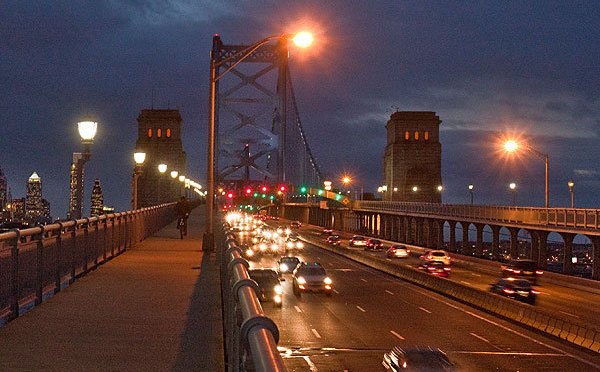
The DRPA, which operates four toll bridges and the PATCO commuter rail line between Philadelphia and South Jersey, spent nearly $500 million over 15 years to underwrite museums, sports stadiums, a concert hall, a cancer center, the Army-Navy football game, and other non-transportation projects.
Much of the money went to politically influential recipients, as the Pennsylvania and New Jersey delegations on the DRPA board got equal amounts to spend. Fourteen of the 16 board members are appointed by the governors of New Jersey and Pennsylvania (two Pennsylvania members, the state treasurer and state auditor general, are on the board by virtue of their elected offices).
Last year, New Jersey state comptroller Matthew Boxer issued a report critical of political cronyism and mismanagement at the DRPA, saying that “in nearly every area we looked at, we found people who treated the DRPA like a personal ATM, from DRPA commissioners to private vendors to community organizations. People with connections at the DRPA were quick to put their hand out when dealing with the agency, and they generally were not disappointed when they did.”
A spokeswoman for Memeger declined to comment on the grand jury investigation.
Sources close to the probe, however, said it appeared to focus on economic development spending in Pennsylvania.
The federal investigators were said to be particularly interested in spending that was funneled through the Philadelphia Industrial Development Corp., a development lender created by the city and the Greater Philadelphia Chamber of Commerce.
The PIDC, which is governed by a board appointed by the mayor and the president of the chamber, received more than $13 million from the DRPA in 2010, ostensibly to help “small, emerging and new businesses.”
In fact, most of the money was directed by DRPA officials to well-established tourism groups or nonprofits, some with close ties to DRPA board members. In one case, $500,000 was given to a multibillion-dollar commercial real estate developer.
The Philadelphia Orchestra, the National Constitution Center, public broadcaster WHYY, the Pro Cycling Tour, the Variety Club, the Independence Visitor Center, and other organizations collected $13.3 million in DRPA funds in 2010.
John Grady, president of the PIDC, said Wednesday that he could not comment other than to say that the PIDC “cooperates with all investigations” by law enforcement agencies.
He said the PIDC’s role as agent for the DRPA’s economic-development funding ended at the end of 2011, when the money ran out.
Economic-development spending by the DRPA has long been controversial, as it contributed to a $1 billion debt that now consumes more than 40 percent of the agency’s revenue. Motorists and some board members complained that the DRPA should not spend money on non-transportation projects, while borrowing hundreds of millions to maintain its bridges and rail line.
The DRPA allocated the last of its economic-development money in December 2011. Its then-chairman, Gov. Corbett, said the DRPA would no longer be involved in economic-development spending.
The scope and duration of the federal investigation was not clear Wednesday.
However, sources close to the investigation said DRPA general counsel Danielle McNichol and inspector general Thomas Raftery issued a memo late Thursday, just before the three-day weekend, telling employees not to destroy documents related to DRPA economic-development spending.
Contact Paul Nussbaum at 215-854-4587 or pnussbaum@phillynews.com
POSTED: December 19, 2013
Federal prosecutors served subpoenas this week on several officials and employees of the Delaware River Port Authority, including at least three board members – Camden County Freeholder Jeffrey L. Nash, South Jersey labor leader Richard Sweeney, and Philadelphia lawyer William Sasso, The Inquirer has learned.

Jeffrey L. Nash, Richard Sweeney, and William Sasso (pictured left to right)
Since April, the U.S. Attorney’s Office has been investigating millions of dollars of politically connected “economic-development” spending by the DRPA.
Subpoenas issued Monday to several board members and other DRPA employees demanded materials and testimony related to that spending.
Sasso, who was appointed to the DRPA board by Gov. Corbett in 2011, said he apparently received the subpoena because he is chairman of a DRPA board committee that has been critical of several sweetheart loans granted by the agency.
He said he has been asked to provide information about those loans to investigators and would cooperate.
One of the loans was for the redevelopment of a former Radio Corp. of America building in Camden into the Victor Lofts.
In 2003, the DRPA lent the developer Carl Dranoff $3 million interest-free until 2009 to help convert the historic “Nipper Building” into 341 apartments overlooking the Delaware River and the Philadelphia skyline.
Dranoff was to start repaying the loan in 2009, with monthly installments of $23,259 until the end of 2014, at which time the $2.5 million loan balance would be paid in a lump sum, according to the loan agreement. But the agreement also states that Dranoff’s obligation to make payments is limited to Victor’s “available cash flow.” So far, no payments have been made.
The other loan, in 2001, was for $1 million to redevelop the landmark boxing venue the Blue Horizon on North Broad Street. The Blue Horizon is now closed, the loan is in default, and the DRPA has written off collecting any of the accrued interest in the hope of recovering its $1 million principal.
Nash, the vice chairman of the DRPA board, declined to comment.
Sweeney, an official with the ironworkers’ union and brother of New Jersey Senate President Stephen Sweeney (D., Gloucester), could not be reached for comment.
A spokeswoman for U.S. Attorney Zane David Memeger declined to comment, as did DRPA spokesman Tim Ireland.
The DRPA, which operates four toll bridges and the PATCO commuter rail line between Philadelphia and South Jersey, spent nearly $500 million over 15 years to underwrite museums, stadiums, a concert hall, a cancer center, the Army-Navy football game, and other non-transportation projects.
Much of the money went to politically influential recipients, as the Pennsylvania and New Jersey delegations on the DRPA board got equal amounts to spend. Fourteen of the 16 board members are appointed by the governors of New Jersey and Pennsylvania. Two Pennsylvania members – the state treasurer and auditor general – are on the board by virtue of their elected offices.
Last year, New Jersey state Comptroller Matthew Boxer issued a report critical of cronyism and mismanagement at the DRPA, saying that “in nearly every area we looked at, we found people who treated the DRPA like a personal ATM, from DRPA commissioners to private vendors to community organizations.”
One of the subpoenas issued Monday demanded records going back at least five years, casting a broad net related to economic-development spending.
Economic-development spending by the DRPA has long been controversial, as it contributed to a $1.6 billion debt that now consumes about half of the agency’s spending. Motorists and some board members complained that the DRPA should not spend money on non-transportation projects, while borrowing hundreds of millions to maintain its bridges and rail line.
pnussbaum@phillynews.com 215-854-4587
@nussbaumpaul
Last updated: Friday, September 25, 2015, 11:59 PM
Posted: Thursday, September 24, 2015, 7:45 PM
City Within a City.
Project Arizona.
Cherokee.
Those are just a few of the Camden redevelopment schemes that have failed over the last 50 years in this tough old town, where empty promises are almost as common as empty lots.
I sigh as I remember how often I have sat in this very room, or others like it, scribbling madly as parades of politicos and assorted developers urge an audience to look beyond the Camden all around them and focus on the Camden of the future.
It’s always there, just over the horizon. Here it comes!
But years later, so many questions. Such as, what happened to the proposed World Trade Center in North Camden? What became of the Hilton Garden Inn announced for the waterfront in . . . was it 2007?
And where, oh, where, is the new supermarket that was supposed to be open by now on Admiral Wilson Boulevard?
As I wait for the latest announcement – a story that my colleague Allison Steele already had broken in Thursday’s Inquirer – I’m distracted from my cynical reveries by the exciting buzz in the room.
The sharks in a nearby tank appear to be swimming languidly, but the humans around me are energized – glad-handing, hugging, snapping selfies. The celebratory vibe is contagious, sort of like a contact high at a ’70s rock show, without the hallucinations.
Or could I be dreaming at this very moment?
“Let’s give Camden, N.J., a round of applause,” I hear an ebullient Mayor Dana L. Redd declare, before introducing “my friend Chris Christie.”
The Republican governor and presidential candidate appears – in person, not Skyped in from New Hampshire – and gets his own round of applause. And then another.
Evidently thrilled by the unaccustomed home-state adulation, Christie offers a paean to bipartisanship. Then he gives a shoutout to top Democrat George Norcross (whom Redd calls “a friend to everyone here”), without whom, it is understood, none of this would be happening.
And not only because he’s investing $50 million of his own money in the deal.
Christie is gracious, if perfunctory; he shakes some hands, disappears. Norcross does not speak, but he’s there, beaming, in the front row, as the celebrated architect and project master planner Robert A.M. Stern narrates the on-screen series of gorgeous renderings.
Stern describes “a new urban neighborhood” with 1.7 million square feet of office space, 325 units of housing, 27,000 square feet for retail, and a hotel. He talks about reconnecting the city’s street grid with the riverfront.

It suddenly occurs to me that this announcement is serious. For a national developer like Liberty Property Trust to announce a project like this in Camden is a big deal.
If the Malvern company can replicate some of the celebrated success of its Navy Yard redevelopment project, the Camden waterfront will be on its way to becoming not merely a destination for visitors, but a real neighborhood, as Stern says.
It will no longer be a somewhat forlorn collection of isolated, island-like structures – aquarium here, concert venue there, ballpark over yonder – marooned on a bleak tundra of parking.
Liberty expects to invest between $700 million and $800 million in the project by the end of the decade, says Liberty CEO William P. Hankowsky, who publicly thanks Norcross for making his firm aware of the development opportunity.
As the event breaks up, the mayor and governor are gone, but Norcross is available to the media.
He reassures us that past development schemes failed because they left out the neighborhoods, which are now included – beneficiaries of the county police department he pushed for and the charter schools he’s building.
People in Camden also will get a shot at “thousands of jobs” that will be created by companies attracted to the city by the Christie administration’s “Grow New Jersey” tax incentives.
Could it be that decades of subsidies and tax breaks – particularly on the waterfront and in downtown – might at last bear fruit? And for whom?
Norcross, Hankowsky, Redd, Christie and others at the announcement festivities insist that everyone in the city will benefit. Says the mayor, “This is Camden’s time.”
I’d like to believe that. I really would.
856-779-3845 @inqkriordan
www.philly.com/blinq
Read more at http://www.philly.com/philly/news/new_jersey/20150925_Hope_for_Camden__Or_just_another_pipe_dream_.html#FGXKLSLOq4KAcfTb.99
Thom Hartman discusses Bernie’s impressive third quarter fundraising in tonight’s special edition of Conversations with Great Minds with Jonathan Tasini, author of the new book “The Essential Bernie Sanders and His Vision for America.”

Published time: 2 Oct, 2015 16:08
Edited time: 2 Oct, 2015 16:10
Fellow artists have described the shooting as random, saying Antonio Ramos, 27, had had an argument with a passerby who wasn’t part of the group working on the Mural Project. The argument quickly escalated, and the offender used his gun on Ramos and ran away.
“How do you do something positive and still get shot for it?” a childhood friend of Ramos told the San Francisco Chronicle.
Many took to Twitter to express their sorrow and a profound feeling of injustice.
https://twitter.com/AlanWangABC7/status/649043312058302464/photo/1?ref_src=twsrc%5Etfw
Ramos died of multiple gunshot wounds and now the team he worked with is gathering funds to hold a funeral for him.
The Oakland Super Heroes Mural Project, that Ramos was part of, was a collaboration of 60 artists and West Oakland middle-school students. It was organized by community group Attitudinal Healing Connection. It’s a follow up to a 2014 project, when West Oakland Middle School students re-imagined themselves as superheroes that solve problems in their communities.
Attitudinal Healing Connection’s Facebook page is reaching out to the community to get involved and boost security to help the artists feel safer when they resume work on the unfinished mural.
One Twitter user wrote that hundreds of people showed up at the Mural to pay their respects.
https://twitter.com/arasmusKTVU/status/649265422928211968/photo/1?ref_src=twsrc%5Etfw
People are bringing candles, flowers, writing inspirational quotes and messages to Antonio Ramos to thank him for what he was doing for the community with this project.
https://twitter.com/lisayamani/status/649707719776075776/photo/1?ref_src=twsrc%5Etfw
David Burke, the mural project’s art director says the artists will carry on with their work. “We are going to dedicate the rest of this project to him,” he told CBS San Francisco.
Although everyone close to Ramos is still in shock, those working on the project, plan to resume painting on Monday.
The police have issued a $10,000 reward for any information that could lead to the arrest of Ramos’s killer.
Who wants us to live in fear and hate – me or Fox News? You decide.
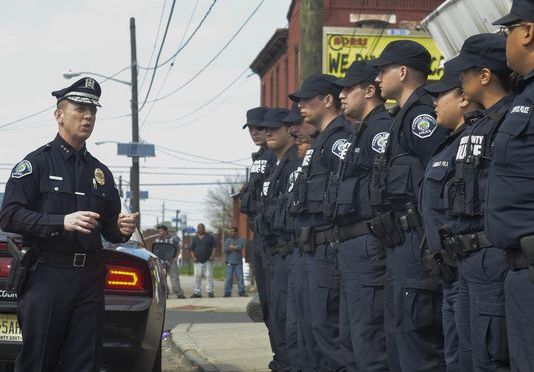
The Camden County Police Department, even as it has received praise for reducing violent crime in the city of Camden, has struggled to retain officers since it was formed two years ago.Nearly 120 officers – including large swaths of recruiting classes – have resigned or retired, making the department’s turnover one of the highest in the state.
The attrition threatens to be an obstacle for the county-run force in its quest to build a strong relationship between officers and residents. President Obama is expected to discuss that relationship Monday when he visits Camden.
Police officials outside the city say that high turnover can make a department prone to mistakes, and that it limits the ability of officers to connect with residents.

County officials blame the turnover on some officers’ struggling to adjust from the police academy to Camden’s streets, historically ranked among the nation’s most violent. The county force, through its Metro Division, currently patrols only the city of Camden.Several current and former officers cite other reasons, including having to work extremely long hours and being disciplined for minor infractions such as wearing the wrong jacket or forgetting to salute a supervisor on the street.
They say the resignations are hurting morale.
“It’s something you’re not supposed to talk about,” said one veteran Camden officer, who spoke on the condition of anonymity because he was not authorized to speak for the department. The officer said he knew of several officers in his squad departing for jobs in other towns this summer.
The resignations “are really jamming me up,” he said, alluding to staffing challenges they pose.
A Camden County spokesman said the department was limited by Civil Service laws and can’t require officers to serve for a set period of time.
Bill Wiley, who heads the police union for the rank-and-file, tied the turnover to new hires’ choosing different career paths, or wanting to be closer to their hometowns. Some are from more than 50 miles away.
“Going from the academy to working for the Camden police department is like going from college to the NFL,” he said. “It’s a very fast-paced environment. It’s not for everyone. Some find out late how hard it is.”
The number of officers – not including recruits in the current class at the police academy – stands at 359. If no other officers resign or retire before the class graduates, the overall number of officers will increase to nearly 400. The department’s ultimate goal is 411.
An analysis of the resignations shows that the average tenure of the officers who left was less than a year.
Of the 117 the county cited as departing, 27 retired and 90 resigned.
In Paterson, N.J., with a department of similar size to Camden, 15 officers resigned in the last two years. The Jersey City, N.J., department, double the size of Camden, says it had two. Atlantic City’s department says it had none.
Officers who resign can take up to a year to replace.
Paterson Police Chief Bill Fraher said background checks and the interview process generally take three to four months. Academy training there and in Camden takes an additional six months.
Fraher said that a department was more liable to make mistakes when new officers constantly arrive, and that it forces the remaining ones to shuffle around different positions.
“It’s like a juggling act,” he said. “It makes for a better, more efficient, more capable police department the more experience you have.”
Camden County Police Chief Scott Thomson did not respond to a request for comment Friday.
The county force was created in May 2013 and replaced the disbanded city department in a move officials said was intended to slash costs and hire more officers.
Asked Friday about officers’ morale, Camden County spokesman Dan Keashen said: “The president’s coming. I’d say it’s pretty good.”
The White House said that Obama would speak at Camden’s police headquarters about efforts “to build trust between their department and the community they serve.”
In February, Thomson told a presidential panel that respectful interaction between officers and residents “is how one of the country’s most unhealthy cities rapidly reversed course and with each passing day has a more promising prognosis.” Last week, Mayor Dana Redd called the department a “national model” of policing.
Among the ranks, some are less upbeat about their work environment.
One former officer, who spent about a year in Camden before transferring to another department in New Jersey, said officers were written up for minor offenses such as forgetting to wear a hat or to salute a lieutenant while on foot patrol.
The officers’ complaints mirror those of some residents, who have voiced concerns about being ticketed for petty offenses such as riding a bicycle without a bell and loitering on street corners.
According to an individual familiar with the discipline process, each write-up goes into an officer’s personnel file, and can eventually lead to more serious discipline.
The former officer who left after about a year described working 16-hour shifts from 7 a.m. to almost midnight, and then being told to return in the early morning the next day.
“I was exhausted,” said the former officer, who asked not to be named because he said he didn’t want Camden officials coming after him at his new job. “Sometimes, honestly, I kind of wanted to sleep in the police parking lot.”
Other former Camden officers have transferred to departments in the vicinity of Camden, such as Gloucester City and Haddonfield. Those officers either did not return calls or declined to comment.
One potential disincentive may be pay, the former officer indicated, saying that he started at an amount several thousand less than what he was initially promised.
The starting salary on the Camden force, $31,407, is far lower than in some nearby towns, such as Pennsauken, where it is $47,000.
Colandus “Kelly” Francis, president of the Camden County chapter of the NAACP, who has kept track of the departures and is a longtime opponent of the county-run force, said the department had become a “revolving door.”
“It has a negative impact, because the most effective police officers are police officers who know the community and know the people,” he said.
“It’s just outrageous,” he said. “It’s outrageous what’s happened.”
mboren@phillynews.com856-779-3829 @borenmc










 Camden Civil Rights Project